Tag: atp

  • Facing Federer: Gilles Muller’s Take

    Facing Federer: Gilles Muller’s Take

    Scoop Malinowski, who contributes to the Tennis Frontier, has released his new book “Facing Federer“.

    Here is the second of three excerpts:

    Gilles Muller

    Gilles Muller: “Well, it’s always a nice feeling Roger because it’s what you work for, those moments to play on the stadium, big court, against a guy like Roger. It’s always an amazing feeling. It’s actually nice to play him because you go on court and you know you have nothing to lose, you have everything to win. And if you lose 0 and 0 it’s not a bad thing actually. It’s not the end of the world. If you beat him or you get a close match with him, it’s fun. I enjoy those moments. I’ve always been one of those guys who loved to have those big matches and I always played well in them. So I’m always looking forward to have those matches.”

    Question: Is Roger very hard for you to play against?

    Gilles Muller: “Of course. He’s one of the greatest of all time, if not the greatest. And obviously he’s a very good player. To be honest, I prefer to play him than to play Nadal, for example, or Djokovic. Because they make you suffer on the court. They make you physically suffer on the court. And Roger’s more the guy who hits winners. So it’s not as hard physically to play him. That’s what I felt. Of course, in tennis, of what he’s able to do with the ball – it’s just amazing.”

    Question: What is your most memorable match with Roger?

    Gilles Muller: “The one I remember the most is the one at the U.S. Open when I lost in three close sets in quarterfinals. The first time I played him was pretty amazing too. I played him the first time in Indian Wells. That was back in 2005. And he had his long hair [laughs]. That was a pretty nice moment also because it was only my first year at the high level playing the big tournaments. So that was a nice moment. I like to remember the time we played at the U.S. Open because that was a close match, at least close to winning one set. So far, I’ve never won a set against him. So I was very close there.”

    Question: How are your relations with Roger off court?

    Gilles Muller: “Well, he’s very laid back. I mean, he’s always friendly to everybody, so that makes him special. Because you have a lot of those guys you barely see and they barely talk to you. And that’s probably also because we speak the same language. He speaks French-German like me too, so it’s easy to communicate with him. He’s a pretty nice person. He’s laid back. You don’t feel like he’s mad at stuff all the time. He seems like…I’ve never seen him in a bad mood. That makes him a pretty good person I think.”

    Question: Can you share a lasting memory on or off court, maybe a conversation or an anecdote?

    Gilles Muller: “I spoke to him the day before we played in the quarterfinals at the U.S. Open. And I was just surprised. Because, for me, it was the first time I was at that stage in the tournament. All the press work with all the interviews and everything. And because I’m coming from a country where they’re not traveling to the tournaments so I have to make calls all the time and speak and give interviews in three or four different languages. So that’s always tough for me. At that point, that was the first time that happened to me, so it was very tough for me. On the other hand, I just saw him and he was doing the same thing. And I guess he was doing that everyday. I was just asking how he does it. It was pretty nice to speak with him. I mean, he could have not answered to me, because we played each other the next day. I think there’s a couple of guys who would not like to do that – speak to the guy or be nice to the guy you play the next day. But he was just very relaxed and he told me, ‘Yeah, you get used to that. And it’s tough, but…’ But it was nice. It was a nice memory.”

    Question: Your first memory of Roger Federer?

    Gilles Muller: “I think…I can’t remember against who he was playing but I’m pretty sure it was at the Basel tournament and I watched it on TV. And everybody was talking about this Federer guy being the next No. 1 and being a very good junior. And I just remember that the racquet flew everywhere on the court [laughs]. He threw his racquet like almost every point he lost. And then people said that’s one of his problems, he used to be crazy on the court, and very emotional. It’s amazing how he developed in that manner. He’s so calm on the court now, you barely see him say a word on the court now. That was pretty funny. I remember watching that match. I can’t remember who he played but the guy hit a winner against him and he just threw the racquet from the baseline to his bag. I thought that was pretty funny because when you see him now he’s a totally different person.”

    2005 Indian Wells Masters Round of 32 Federer 3-6, 2-6
    2005 Bangkok Quarterfinal Federer 4-6, 3-6
    2008 U.S. Open Quarterfinal Federer 6-7, 4-6, 6-7

    The previous “Facing Federer” excerpt was with Dmitry Tursunov.

    You can purchase the whole book at Amazon:

    [divider]

    Discuss with fellow tennis fans on the Tennis Frontier message boards.

    [divider]

    Cover Photo: The Cosmopolitan of Las Vegas (Creative Commons License)

  • Joao Sousa Wins the Malaysian Open

    Joao Sousa Wins the Malaysian Open

    Joao Sousa claimed his first ATP title at the Malaysian Open by beating veteran Frenchman Julien Benneteau 2-6, 7-5, 6-4. The 24-year-old is the first ever Portugal native to win an ATP Tour title.

    Sousa, ranked 77, had already upset seeds David Ferrer and Jurgen Melzer en route to the final.

    Benneteau, the favorite, dominated the opening set by breaking twice and looked the likely winner when he had match point on the Sousa serve at 4-5 in the second set.

    Unnerved, the Portuguese held serve and broke Benneteau in the following game to set up an opportunity to take the match to a deciding set. He served it out. Momentum carried into the decider, with Sousa breaking Benneteau again in the opening stanza.

    The remainder of the match went with serve although Sousa was forced to save four break points before closing out the match 6-4 to take the title.

    [divider]

    Share your views on the Malaysian Open in the Tennis Frontier Message Forums.

    [divider]

    Cover Photo: Si Robi (Creative Commons License)

  • Gilles Simon Triumphs at the Open de Moselle

    Gilles Simon Triumphs at the Open de Moselle

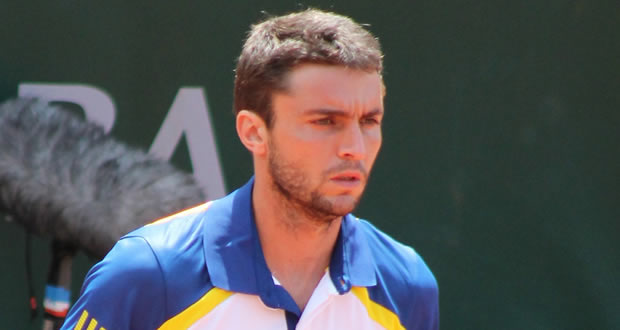
    Gilles Simon defeated fellow frenchman Jo-Wilfried Tsonga to win the Open de Moselle in Metz 6-4, 6-3 to win his first title of the year and 11th title of his career.

    It was Tsonga’s first tournament back after recovering from an injury at Wimbledon in July. The players were seeded 1 (Tsonga) and 2 (Simon), respectively.

    Simon broke Tsonga twice in each set and took advantage of a multitude of unforced errors to seal the match.

    “I felt that I could take my chance and I’m very happy,” said Simon, post-match. “I saw that Jo wasn’t able to serve at his best.”

    [divider]

    Discuss this article with fellow tennis fans on the Tennis Frontier message board.

    [divider]

    Cover Photo: si.robi, Creative Commons License.

  • Gulbis Stages Dramatic Comeback to Win St. Petersburg Open

    Gulbis Stages Dramatic Comeback to Win St. Petersburg Open

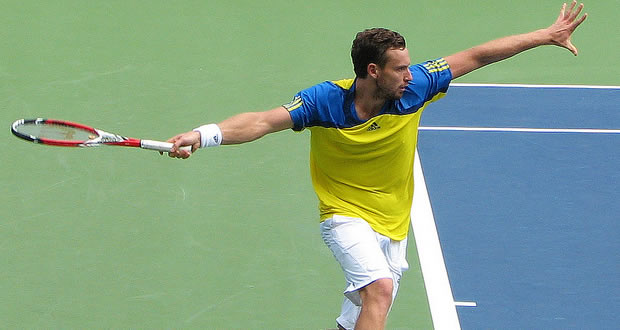
    Ernests Gulbis fought back from a set down to overcome Spaniard Guillermo Garcia-Lopez 3-6, 6-4, 6-0 in the final of the St. Petersburg Open.

    Gulbis, ranked 36, was broken three times in the opening set (he broke Garcia-Lopez once) and fell behind 4-1 in the second set before staging a dramatic comeback to win 11 consecutive games to seize the second set, and administer a third set bagel to the stunned Spaniard.

    “The main key why I’m not yet a top player is the consistency. Everybody knows I can play well for a tournament or a match and then I go downhill. I just need to bring this consistency to bigger tournaments, especially Grand Slams. Then I believe I am a Top 20 player for sure, and not so far from Top 10,” said Gulbis after the match.

    It was the Latvian’s fourth career title and earned him $78,000.

    [divider]

    Discuss this story with fellow tennis fans on the Tennis Frontier message board.

    [divider]

    Cover Photo: Kenneth Hong, Creative Commons License.

  • Cilic Suspended for 9 Months after Doping Violation

    Cilic Suspended for 9 Months after Doping Violation

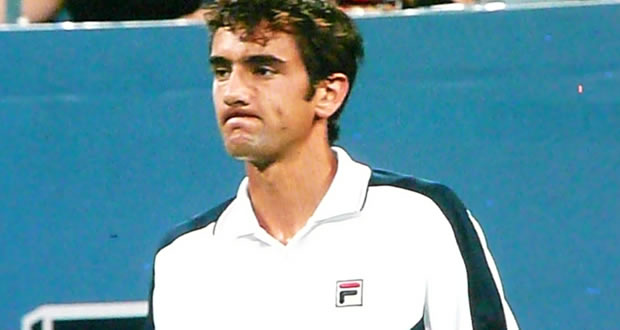
    Croatian Marin Cilic has been suspended for nine months by the International Tennis Federation (ITF) for failing a doping test at the BMW Munich Open back in May.

    Cilic, a former Top 10 player, withdrew from Wimbledon citing injury when advised of test results that showed he had used a banned stimulant. Cilic pleaded innocence stating he had taken some glucose tablets purchased over-the-counter by his mother at a pharmacy.

    During the hearing, ITF officials accepted Cilic’s use of the stimulant was inadvertent and reduced his suspension period from two years to nine months. This will be applied from the date of the failed test and retroactively applied from May 1, 2013. It will mean he will not be eligible for the remainder of the year and the Australian Open in January.

    [divider]

    Discuss with tennis fans on the Tennis Frontier Message Board

    [divider]

    Cover Photo:  Angela N. (Creative Commons License)

  • Wawrinka Shocks Murray in New York

    Wawrinka Shocks Murray in New York

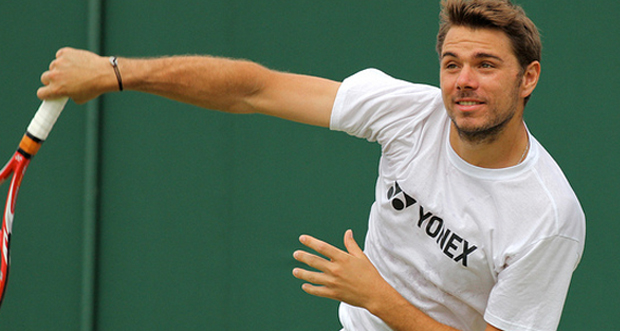
    Andy Murray’s reign as the US Open champion was brought to an abrupt end in New York by the Swiss Stanislas Wawrinka.

    Wawrinka dominated the encounter in Arthur Ashe stadium, prevailing in straight sets 6-4, 6-3, 6-2.

    [divider]

    Discuss this match and more with fellow tennis fans on the Tennis Frontier forums.

    [divider]

    It was a lacklustre performance by the third seeded Scot.  He failed to earn a single break point opportunity on the Wawrinka serve throughout the entire match, and lost the first set after being 40-0 up at 4-5.  In a critical game, lasting over 15 minutes, the Swiss finally converted his sixth set point to take the opening stanza.

    Murray’s woes continued in set two, as Wawrinka got even better, hitting winners from both wings in an impressive display of controlled aggression that Murray seemingly had no answer for.

    Devoid of energy, the Scot found himself a double break down and could not recover as Wawrinka served out the set to take a comfortable lead.

    The third set continued in the same fashion. Murray’s game was littered with uncharacteristic errors and his second serve was being attacked with impunity by the Swiss.  Wawrinka secured another early break to jump out to a 1-3 lead.  A second break to go 2-5 all but ended the Scot’s title defense.

    After 2 hours and 15 minutes, Wawrinka wrapped the match up by first executing a powerful overhead to set up match point, and then a netted Murray return secured it. He won 107 points to Murray’s 78 — a clear reflection of his dominant display.

    Post-match, Murray stated: “He played exceptional tennis and served very, very well. He hit a lot of lines on big points, went for his shots, and they all went in today. He played too well.”

    Wawrinka, seeded 9, will meet the winner of Novak Djokovic and Mikhail Youzhny for a place in the final.

    Cover Photo: Marianne Bevis (Creative Commons)

  • Those Lethal Cocktails

    Those Lethal Cocktails

    US Open, Fourth Round Recap

    A brief survey of the men’s quarterfinalists for this year’s US Open is revealing. For starters all eight men are Europeans, of whom three, naturally, are Spanish. Unsurprisingly, one of them is Swiss. Three of these men are over thirty, while the youngest is twenty-six. Unbelievably, none of these elderly Continental gents is Roger Federer.

    [divider]

    Discuss this article and more in the Tennis Frontier Forum

    [divider]

    (21) Youzhny d. Hewitt, 6-3, 3-6, 6-7(3), 6-4, 7-5

    The match of the day, and probably of the round, was the terrific dust-up between Lleyton Hewitt and Mikhail Youzhny, which stretched to five sinuous sets, the last of which was eventually won by the Russian. Hewitt led by two sets to one, and by 4-1 in the fourth. Hewitt’s mental fortitude was duly praised, or, as it happened, overpraised. Contrary to popular opinion, he was never an accomplished frontrunner, and even during his eighty weeks atop the rankings would often permit leads disastrously to slip. There have been a few players more habituated to producing monuments, but Hewitt is nearly unmatched in his capacity to make routines matches unnecessarily monumental.

    From that perilous position, Youzhny clawed back, and won the next six games, in the process taking the fourth set and moving ahead by a break early in the fifth. From there it was Hewitt’s turn, winning five of the next six, moving to 5-2. Winning a sixth game would have snared him the match, but it wasn’t to be. Youzhny surged again, broke, held, broke, and served out the match, which is an exceedingly rapid way of describing a process that was fraught, frequently brilliant, and occasionally approached genius. A quarterfinal would have been a fitting result for Hewitt, who’d performed so mightily to defeat Juan Martin del Potro a few rounds ago. Alas.

    It is equally as fitting a result for Youzhny, if not to say a surprising one. I confess, watching on as he struggled to overcome Matthew Ebden in five sets in Melbourne in January, I’d believed that Youzhny’s best days were fast receding behind him. Ebden was actually pushing him around. One should have more faith, though that’s an easy thing to misplace when an aggressive player loses confidence. Tentative where once he’d been reckless, he now appeared indecisive and error-prone, and it was easy to assume, too, he’d never regain his speed and certainty. I am pleased to be wrong, but surely not as pleased as he was today, saluting the crowd. It would’ve been nice to hear what he had to say, but instead Eurosport cut away to Barbara Schett, who was bringing her weaponised vivacity to bear on Victoria Azarenka. “You haven’t just been busy on the court, but off the court as well! I hear you’ve been involved in a photo-shoot for a campaign to help ex-smokers! Can you tell us a little bit about that?!” “Well, I’ve never smoked myself so I can’t really relate. But I do find them very inspirational.”

    (1) Djokovic d. Granollers, 6-3, 6-0, 6-0

    Sadly this lethal cocktail of bonhomie couldn’t go on indefinitely. There was live tennis to be had, though live is perhaps a misleading term, if not an ironic one, in the case of the sadly lifeless Marcel Granollers. One presumes he hadn’t held out much hope against Novak Djokovic, though he probably hoped for more than he got, or at any rate hoped that his inevitable beating might be less savage. He won only three games, all of which came in the first set, although this should not lead one to believe he was any closer to winning that set than the others. He failed to win a single point on Djokovic’s first six service games. Then he failed to win a game on his own serve for the rest of the match. Chris Bowers on Eurosport suggested that had it been a boxing match the referee would have stopped the bout. But it was a tennis match, and so Djokovic was permitted to continue pummelling Granollers for our entertainment, until the Spaniard lay unmoving on the side of the court and even his groans had ceased.

    Afterwards, Djokovic granted Brad Gilbert the brief contractually-obligated interview, thus augmenting his total time on court by about a third. The world No. 1 was typically classy, smoothly stepping around his opponent’s body, though if asked he’d no doubt subscribe to Andre Agassi’s view that one should not deny any opponent so rich a learning-experience. When quizzed about his magisterial serving stats, Djokovic took due care to praise John Isner, to scattered applause from the sparse American crowd. Realistically the assembled onlookers might have filled a less extravagant facility, but even sizeable crowds can be lost within Arthur Ashe Stadium. Presumably many of those absent had stepped out to relieve themselves or seek sustenance after the previous match, and couldn’t make it back in time. Tournament officials had by now scraped Granollers’s remains off the court, and Djokovic respectfully followed the procession up the tunnel. “He’s good, isn’t he?” asked one Eurosport commentator. “Djokovic or Brad Gilbert? Djokovic, yes,” responded the other.

    We were returned to Schett. “He was just better in every compartment!” she declared breathlessly. Apparently denied a studio of their own, she and Wilander were once more anchoring the Eurosport coverage from the grounds. Djokovic soon joined them, looking as relaxed as a man who’d just won a tennis match as easily as he had should. He summoned a sensible response when queried about Federer’s loss, and the persistent demands for the great man to retire, although he might have pointed out that the persistent demands largely consist of the media asking questions like that. He didn’t think Federer should retire. He did point out that time catches up to us all, and that younger players are always appearing, making the tour, stronger, and faster than ever. Presumably by younger players he was speaking of his own “generation”, and not the next one.

    (19) Robredo d. (7) Federer, 7-6(3), 6-3, 6-4

    He was mostly right, although it should equally be pointed out that Federer did not lose to a younger player yesterday, but to Tommy Robredo, a veteran to whom he’d never lost. In some ways this was the most telling aspect of yesterday’s upset, not least because it continues a trend that has underscored Federer’s long decline. Defining when such things begin is mostly idle folly, and would serve no special purpose even if consensus were possible. But one cannot help but think back to late 2009, when there was still a large pool of very good players who had either never beaten Federer, or at any rate hadn’t beaten him for a very long time. Prominent among this group were Nikolay Davydenko, Robin Soderling, Andy Roddick, Lleyton Hewitt, Mikhail Youzhny, David Ferrer, and Robredo. Ferrer and Youzhny are still winless, but the rest of them have since defeated Federer at least once, in every case inspiring onlookers to recycle Vitas Gerulaitis‘s venerable quip about no one beating him seventeen times in a row. The significance is that these players are all around Federer’s age. Failure to sustain his domination of them cannot be ascribed to advanced years, to being overrun by the race.

    On the other hand, Federer going undefeated against these guys for so long is probably more amazing than any eventual loss proved to be, a fact we tend to overlook. Winning streaks work the strange trick of making it seem as though constant victory is the natural way of things, or normalising what is in fact exceptional. It is a paradox of sport that although the longest streaks are the most difficult to compile, they work to make any eventual loss seem aberrant. Even sprinting along a tightrope can look easy after a while, such that one forgets it is only growing harder. Sooner or later there will be a misstep.

    These are broadly satisfactory musings, perhaps, but they don’t tell us much about any specific encounter. They don’t quite explain how Federer actually managed to lose to Robredo yesterday. The answer, I suspect, is that everyone has bad days, and sometimes they occur on a big stadium against a guy you’ve never lost to. Federer had a very bad day, bad in almost every direction at once. His movement was sluggish, his decisions were poor, his returning patchy, his serve lacked bite, and his outfit didn’t match. It was altogether a worse performance than the one that saw him lose to an inspired Sergiy Stakhovsky in Wimbledon. He was unfortunate that he had this bad day against a player as solid as Robredo, though the truth is that because the bad days are now coming more often, they’re more likely to come when it matters. Part of it is age, but I maintain that he’s mostly just short on form.

    Robredo was admittedly outstanding, but Federer was still correct in declaring that he had largely beaten himself. Robredo pulled off any number of improbable passing shots, but they wouldn’t have been possible at all if Federer hadn’t so consistently failed to put balls away into the open court, or essay approaches with greater venom. Time and again Robredo simply stood his ground. By the third set even he stopped looking surprised when Federer hit the ball straight back to him. Often these came on crucial points, such as the many break points on Robredo’s serve. Federer grabbed at handfuls of these after the first set, but could hang on to none of them, and that’s really the whole deal with break points. Similarly Robredo was dictating most of the rallies. It tells you everything about Federer’s lethargy that the Spaniard was permitted to maintain pressure from ten feet behind the baseline while maintaining high clearance over the net and rarely going for the lines. On a reasonably quick hardcourt – Federer afterward said Armstrong if anything plays faster than Ashe – this should never happen.

    But it did happen, and it does seem to be happening with gathering regularity. As with Youzhny earlier in the year, Federer looked like a temperamentally aggressive player very low on confidence, plagued with uncertainty. Even comparing them feels odd. I hold Youzhny in the highest esteem, but Federer’s career has instilled in us a belief that even when his form was off, he remained in a separate class. His bad patches were not like others, and even when he played badly he still won. Now when he plays badly, he looks like anyone else playing badly, which is to say he looks lost.
  • Federer Crashes Out of the US Open

    Federer Crashes Out of the US Open

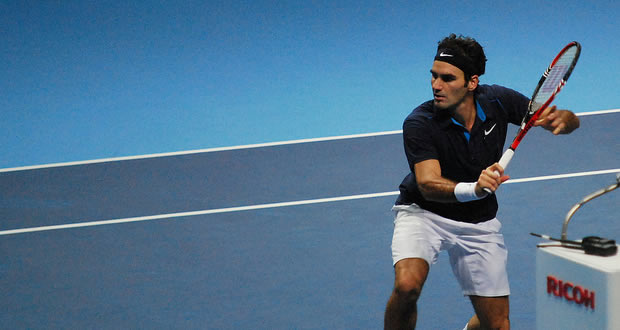
    Roger Federer crashed out of the US Open in a stunning straight sets upset at the hands of veteran Tommy Robredo in their 4th round clash at Flushing Meadows.

    Federer was defeated 7-6(3), 6-3, 6-4 by the Spaniard who sealed victory with a thumping ace down the middle.

    Robredo took the first set tie break 7-3 and then broke Federer at 4-3 in the second set to move within a game of establishing a two set lead. Federer had two break points to restore parity but 19th seed Robredo held firm to take the set. In all, the Swiss squandered 12 break points in the second set.

    Robredo seized the opportunity in the third set breaking Federer to love, and held onto take the set and match to confirm his place in the quarterfinals.

    Federer, a five-time former champion, had never lost any of ten previous encounters with Robredo. It is also the first time in a decade that he has failed to make the quarterfinal stages in New York, thwarting a potential showdown with Rafael Nadal.

    Robredo will now meet the winner of the Nadal and Philip Kohlschreiber match.

    [divider]

    Discuss the Robredo/Federer match in our tennis forums.

    [divider]

    Cover Photo: asterix611 (Creative Commons License)

  • Life on the Big Stage

    Life on the Big Stage

    Day One at the US Open 2013

    You know you’re a tennis fan when, on a crisp August evening, under a plumb colored sky, you’re sitting at the Greek Theatre in Berkeley, California, where cello virtuoso Yo-Yo Ma introduces his quartet, The Goat Rodeo Sessions, by saying, “I bet you’ve never seen four goats on a stage before,” and your immediate reaction is to look around for Roger Federer—or Rafael Nadal; or Serena; or even Djokovic.

    [divider]

    You can discuss this and more on our tennis message boards.

    [divider]

    Yep, that’s how you know you’re a tennis fan: you have forgotten that goats exist in the real world, where they have four legs and horns, and don’t know a forehand from a fingerboard. As it was explained to the audience, a “goat rodeo” is a metaphor for a risky and chaotic situation, not unlike the creative process, or an arena filled with angry goats and cowboys, or Super Saturday at the US Open. In fact, I’m pretty sure the musicians named their collaboration in honor of an especially blustery Super Saturday. You know what it’s like, when courts boil and roil from the inside, hurricanes blow from the outside, and the world’s best players don’t get to play much tennis. That’s essentially the definition of a goat rodeo.

    Along with Edgar Meyer on bass, Stuart Duncan on fiddle, and Chris Thile—the only mandolin player I’ve ever seen perform while wearing a meticulously tailored hipster suit—Mr. Ma played two hours of music that was almost as exciting as the running slice-slash-stab passing shot Rafael Nadal hit off Ryan Harrison’s overhead smash to earn the first of many, many break points on the American’s serve. But though Nadal did hit several thrilling shots, I have to admit that overall, the single set of music performed by The Goat Rodeo Sessions on Saturday was more engaging than all three sets of the Nadal-Harrison match. I should point out, before I upset a significant number of my readers, this was not Rafa’s fault.

    Perched— and chirping away—in the ESPN booth, John McEnroe made the accurate observation that there is simply not a single thing that Harrison does anywhere near as well as Nadal does everything. Ryan Harrison is now 0-20 against Top 10 opponents, a stat he might appreciate more if those losses had occurred at a slightly more advanced stage of important tennis tournaments. When asked, Harrison is always quick to point out that he relishes playing the best “on the big stage,” but I bet he’d trade the biggest and the best for a shot at the second round, or more importantly, a better split-step after his serve.

    Shortly after Nadal broke Harrison’s serve and then held his own with ease, McEnroe went on to note— with a delightful disregard for sense—that Ryan Harrison has never won a five set match, and therefore “the longer this goes, the worse it gets for Harrison.” Fortunately for the 21-year-old, it didn’t go on very long. Nadal won 6-4, 6-2, 6-2 in just over two hours. Harrison actually lost the final point from the seated position, having toppled over just in time to watch Nadal bury a short ball in the opposite corner of the court.

    To go on citing opinions of broadcast commentators, one of the online ESPN announcers (possibly Taylor Dent) said that while Nadal is playing for the title, Harrison is playing for respect. This struck me as a poor choice of motivators for the 21-year-old. After all, it presumes an essential lack in the self that has nothing to do with tennis technique. If he’s not playing to win—which would make a kind of sense in this case—Harrison should be playing to better understand himself, not to try to get other people to understand him better.

    In any case, the one-sided nature of the contest made it difficult to judge the Spaniard’s form, but two hours and five minutes was plenty of time for me to form a decided opinion on Rafa’s new pointillist headband: I like it. Like a well-tailored hipster suit on a mandolin player, it works.

    What hasn’t worked, on account of the rain delay, was my plan to steal everything Yo-Yo Ma said during his between-song chats at the Greek Theatre — Ma is hands down the jolliest and most insightful world-famous cello player I have ever heard talk about goats— and apply it to the GOATs who were to perform on the Arthur Ashe stage during Day 1 of the Open. Mr. Ma spoke eloquently about his continued love of playing his instrument, and of the undying human need for invention and risk. He said our passions deserve practice, and referred to himself as an old goat who never wanted to stop learning new tricks. (He put both hands to his head as he said this last bit, index fingers pointed skyward, to show us his goat horns. See, a jolly cellist.)

    I had intended to lift all these lovely Yo-Yo sentiments and stick them directly to the goatiest of all the current GOATs: Roger Federer. Had all gone according to plan, it would have been very inspirational, like a Blue Mountain card, but with horns. However, as you know, it rained. And like the Greek Theatre in Berkeley, Arthur Ashe stadium is—for now— wide open to the night sky. (Except, I’d like to point out, it does not rain in Berkeley in August.) So, no Federer primetime match, and no making little horns with my fingers while I type. (Probably easier that way.)

    Oh, what the heck. I’ll write it anyhow. How often does a tennis blogger get to use a Presidential-Medal-of-Freedom-winning classical musician discussing domesticated ruminants as her muse?

    OK, there. You probably can’t see, but I’ve just done the horns. (To do it properly you’ve got to get the index fingers aligned precisely with the edges of your eyebrows.) Now for the typing:

    Leading into the Open, there has been much talk concerning the exact moment when the 32-year-old Roger Federer ought to retire.* Yesterday, today, tomorrow, and ten years from now have all been suggested to Roger via helpful tweets. Already the Swiss has fallen to No. 7 in the rankings, which makes it statistically difficult for him to qualify for membership in the Big 4. Moreover, nobody wants to see the sheen rubbed off his GOAT coat if he tumbles any lower.

    But the problem with quitting while you’re ahead, or even quitting when there is any possibility at all of getting ahead, is that you’ll never know where you could have gone. In place of the secure knowledge that every avenue was exhausted, there will be uncertainty. And uncertainty is the GOAT of difficult states of being—most of us go to great lengths to avoid it most of the time.

    After my initial confusion about goats on the stage at the Greek Theatre, I didn’t think about tennis during The Goat Rodeo Sessions’ performance. Mostly I enjoyed the pleasure of listening to and watching four accomplished musicians work and play at something they so clearly love. But at the end of the evening, just before the encore, I did think about tennis again. The quartet finished their set with a rousing tune called Attaboy. Then, they thanked the audience for being there, and Yo-Yo Ma instructed us, with something very like joy in his voice, all to go home and always practice our passions. He sounded sincere.

    The essence of sports depends on laying down a firm line between the experiences of victory and defeat, but for a split-second I wished it didn’t. What if Federer and the Williams, and the struggling Harrison, and James Blake—who did announce his retirement, effective immediately after his final round at the Open— could all pick up their stringed instruments and collaborate—practicing, performing, and enjoying? Wouldn’t it be nice if the goal was for each person to become the best they could become on that very day, instead of “better than everyone else for all eternity”—an enterprise doomed to failure?

    Well, it would be nice. But it would also be a lot less like tennis.

    So instead, we’ll wait and watch, and be uncertain. And if Roger Federer —or Venus Williams, or James Blake, or Tommy Haas, or any other people too old to know how to twerk like Hannah Montana — do manage to win the US Open, I am going to put on my best hipster jacket, break out my mandolin, and totally pretend I know how to play it. Attaboy!

    *They say the champions –from Venus Williams to Roger Federer to Francesca Schiavone—always think they can get it back. Federer is 32. Venus and Fran are 33. But come September, Serena Williams, who allowed Schiavone only six points in six games, will also be 32-years-old. And Tommy Haas, as we all know, is 142. Age is not the only deciding factor.

  • One More Time, With Feeling

    One More Time, With Feeling

    The Western & Southern Open ATP Final, 2013

    Rafael Nadal [3] def. John Isner 7-6 (8), 7-6(3)

    Three tournaments, three crowns: With his 7-6, 7-6 win over John Isner in the final of the Western & Southern Open in Cincinnati, Rafael Nadal remains unbeaten on North American hard tennis courts in 2013. The Spaniard also reclaims the No. 2 world-ranking; earns his 26th career Masters title, the second in as many weeks; and gets to take home a floral-themed vessel adorned with an earthier-than-ever-before glaze palette of burgundy and green. (I am not making that last bit up.) Indeed, there is talk of crowning him King of Concrete, or, at the very least, considering him as a favorite to win the US Open.

    Last week, in the Montreal final, Nadal demolished his 6’ 5” Canadian opponent, Milos Raonic, 6-2, 6-2. Raonic’s performance was decidedly muted, and Nadal calibrated his victory celebration accordingly. (It involved little more than warm, heartfelt smiles and a a few thankyouverymucheverybodys.) Today, at the Lindner Family Tennis Center in Mason, Ohio, Rafael Nadal again faced a native son. But unlike Raonic in Canada, the 6’ 10” American played a fantastic final.

    Although, from my perspective, today’s two tiebreak-sets still weren’t as thrilling as the first two sets of Nadal’s quarterfinal victory over Roger Federer on Friday evening. (Read about it here.) Gargantuan serves like Isner’s are more fun for me to see in person than on TV. (In fact, they are almost impossible to see on TV, because although they are beastly in size, they are also avoidant creatures, and tend to scurry off the television frame before you can get a good look at them.) Nadal earned exactly zero break points in twelve Isner service games. John managed to get three break points of his own, but converted none. Isner’s forehand was tremendous, which was both enjoyable and visible, but his return let him down at crucial moments, most notably at 3-5 in the second set tiebreaker.

    It’s possible Nadal was every bit as good in the Cincinnati final as he was against Federer in the quarters, but with Isner on the other side of the net, the conversation wasn’t half as eloquent. Which isn’t to say it wasn’t deep and meaningful—Isner’s presence in the final means Americans who have heard of tennis can tell foreigners that we once again have a top twenty player in the ATP computer rankings. It will be good for our collective sense of numerical self-worth. It should also be good for John Isner’s sense of his tennis self as he prepares to enter the US Open with the weight of American expectations on his broad shoulders.

    Speaking of American pride, the U.S. crowd was with Isner from first point to last. Yet Nadal had a fair measure of support from the stands, and no small amount of their admiration. After all, he has put together a highly entertaining two weeks of tennis. And, like any great big-stage performer, when it came time—on his first of three available match points— for Rafa to bury his final forehand winner of the tournament down the line, he sensed the moment had arrived to let loose his inner celebratory animal.

    After collapsing flat onto his back (with impressive alacrity), the Spaniard screamed, tensing all his muscles, thereby paradoxically releasing all the tension accumulated during two taut hours of competition. Then, beaming like a ray of tennis-ball-colored sunshine, Nadal jogged to the net, shook the American’s proffered hand (resting his head briefly on Isner’s vast midsection) before going on delightedly screaming and jumping around the court. Oh, and he also wagged his No. 1 finger at the sky—just as he did after defeating Novak Djokovic in the Montreal semifinals.

    Given that finger-wagging was officially trademarked by RF, Inc. during the spring of 2011, Nadal’s infringement on copyright has not gone unnoticed—or unanalyzed. For my part, it was the finger-wag more than the third straight hardcourt title that reminded me of Mark Antony’s famous lines in Shakespeare’s Julius Caesar: “I thrice presented him a kingly crown, Which he did thrice refuse. Was this ambition?”

    Antony goes on to say that Brutus, an honorable man, did indeed think Caesar was a hair ambitious and ought therefore to be stabbed to death by a group of his buddies, making a mess of at least a dozen nice togas in the process. (I believe similar suggestions for summary execution have been put forth many-a-time on twitter in regards to Nadal, Federer, and also Gilles Simon.) But the reason Caesar had to be got rid of wasn’t because of his ambition; it was to do with how he applied it. Caesar sought to raise himself above the rules of the game, and to do so secretly— indirectly. Romans did not want to be ruled by a king (not when they could be gently guided by the classic democratic principles of bribery and corruption!). But tennis? Tennis craves kings. Every year—every week, even— tennis chooses the guy with the No. 1 finger.

    So, the thing I enjoyed most about this tournament—besides watching James Blake catch fire in his second round match against Jerzy Janowicz, of course—was seeing Rafael Nadal execute his tennis game with such clarity. He almost looked, well, entitled, out there. If I had a quarter for every time I saw Nadal move inside the baseline to hit groundstrokes, and go for winners, I could park my car at a meter in Oakland for long enough to do my grocery shopping and get a coffee. (For instance, during his semifinal match against Berdych, Nadal hit 19 forehand winners, 38 overall. That’s $9.50 for me, which roughly comes out to 11 minutes and 28 seconds of metered parking. See? Perfect.)

    One of the points from the final that sticks with me now was, I believe, the very first point of the second set tiebreaker. Nadal not only hit a winning forehand down the line, he managed to bend it so the ball struck the line as if it were an inside-out forehand hit from his backhand corner. Jim Courier, who was in the CBS booth, exclaimed, “Explain to me, how do you create an angle when you hit down-the-line?!” Then he told Mary Carillo how to do it. But even if Mary knows how to do it, that doesn’t mean she could. Which is why it is such a pleasure to watch a player capable of so much play so near that capacity.

    Without losing contact with his defensive skills, Nadal has spent the last two weeks executing the aggressive aspects of his game with remarkable openness. It’s refreshing; and it’s time.

    Not to play favorites for the Open, but if this is ambition—I like it.

    [divider]

    Discuss this article and the match on our tennis forums.