Tag: atp

  • Djokovic Outlasts Federer in Epic Wimbledon Final

    Djokovic Outlasts Federer in Epic Wimbledon Final

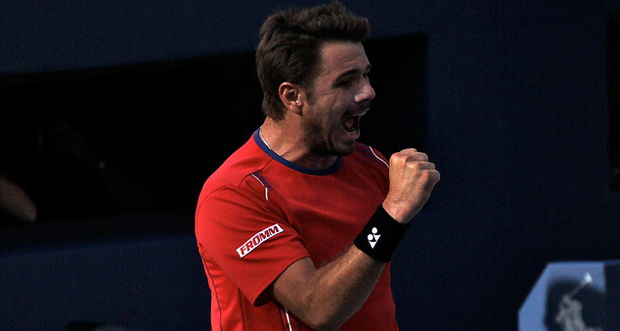
    Novak Djokovic

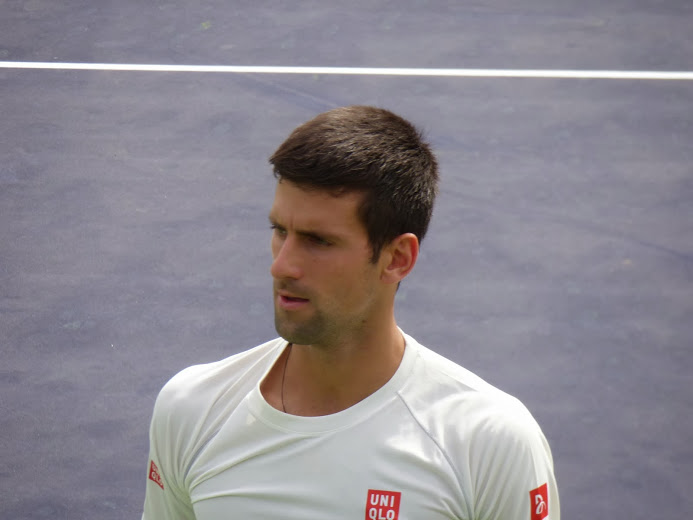
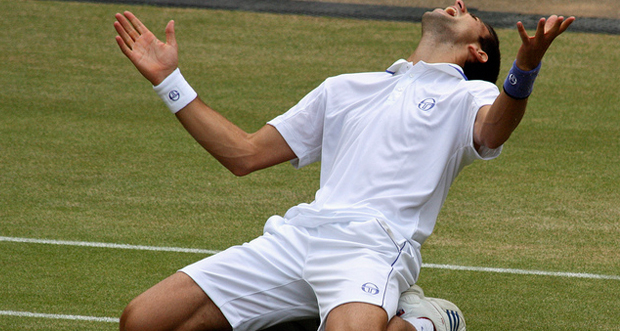
    Novak Djokovic beat Roger Federer in five sets to take his second Wimbledon title, 6-7(7), 6-4, 7-6(4), 5-7, 6-4.

    It was a high quality match from start to finish, lasting nearly four hours. Neither player saw a break point in the first set, which went to Federer in a tiebreak, but Djokovic shook it off and broke the Swiss in the third game of the second set, which proved to be all that was needed to even the match at a set a piece. There were no breaks of serve in the third set, and this time the tiebreak went to the Serb.

    In the fourth, Djokovic was up 5-2 and saw championship points at 5-4, but Federer held his resolve as Novak got tight. Federer broke again to take the set 7-5 and force the decider. In the fifth, each player had chances, but it was Djokovic who broke Federer in the final game to take the title. Roger Federer was vying for his eighth Wimbledon crown and his 18th Major title overall, but it was Djokovic who won his second Wimbledon in his third final, giving him seven Majors to date.

    The win also returns Novak Djokovic to the world No. 1 in the ATP rankings. [divider] Cover Photo (Creative Commons License): Marianne Bevis

  • Unforgettable Forever

    Unforgettable Forever

    2014 RG Winner - Nadal III

    2014 Roland Garros Mens Final

    [1] Rafael Nadal def. [2] Novak Djokovic 3-6, 7-5, 6-2, 6-4

    Once, years ago, I heard a horse racing enthusiast quip that races aren’t really decided by the horses, or even the trainers or the jockeys, and certainly not by the owners, but by the finish line. Give that line a little nudge one way or the other, and you’ve crowned a new winner. Saturday, at Belmont Park, this moveable finish line was too far away for California Chrome, the horse trying to become the first to claim American horse racing’s illustrious Triple Crown since Affirmed won it back in 1978. It’s been a decade since a horse has even come close. In 2004 Smarty Jones won the Kentucky Derby and the Preakness, only to finish a heartbreaking second-place at the third and final race, the Belmont Stakes.

    Racing is hard on horses, even when they’re bred for it. Three months after his Belmont loss, at the ripe old age of three-years-old, Smarty Jones retired due to chronic bruising on his ankle bones, and has been happily siring expensive children ever since. The same spring that Smarty Jones first stood stud at Three Chimneys Farm in Midway, Kentucky—reportedly occupying the stall that once housed legendary Triple Crown winner Seattle Slew—Rafael Nadal won his first French Open. It’s uncanny to consider how long a single player has been winning at one of the world’s most elite tennis tournaments. As of today, the King of Clay’s record on the Roland Garros dirt stands at a whopping 66-1. Even if it turned out that all of the bones in his body are bruised and Nadal had to retire tomorrow, his record cannot be broken in less than a decade. It’s not difficult to imagine it standing forever. The finish line keeps moving, and—somehow— the Spaniard keeps crossing it.

    Unlike the five-set 2013 French Open semifinal contest between the then World No. 3 Rafael Nadal and World No. 1 Novak Djokovic, today’s match was not an unforgettable thriller. (It was, however, a good sight more engaging than last year’s final, even without the glow of the roadside flares.) Lasting four sets and three-and-a-half-hours, Nadal’s defeat of Novak Djokovic revealed no new secret plan of attack from either player. Apart from a fistful of break points near the end of the first set, the match wasn’t especially well-stocked with dramatic tension either. Each set was won by the man who played the better set, and that man was not difficult to identify. The match did feature its fair share of those time-warping ‘amazing gets’ and brilliantly angled forehands (Nadal) and backhands (Djokovic) that we’ve come to expect from the Rafole mash-up, but it also offered plenty of nervous errors and gloomy low patches. (In a combined effort, the world’s top two tennis players racked up 82 winners, 92 unforced errors, and 24,830 ATP rankings points.)

    For those entertained by impossible hypotheticals, today’s Roland Garros final made for good evidence that the best slam finals are often played in earlier rounds of the tournament, such as in last year’s semifinals, or this year in the first round, when the Frenchman Julien Benneteau lost to Facundo Bagnis 16-18 in the fifth. (By the by, if you’ve ever felt sympathy for Julien Benneteau—a 32-year-old player who has contested nine ATP finals and lost all of them—you’d do well to watch his reaction to winning Saturday’s doubles title with countryman Edouard Roger-Vasselin.) As commentator Mary Carillo put it, both Nadal and Djokovic were “feeling the burden of the pressure,” which is akin to feeling the pressure of the burden, or even the pressure of the pressure. (The burden of the burden?) However you describe it, the feeling is a heavy one, and can drag a tennis match down with it.

    Rafael Nadal, as we all know, was trying to defend his eighth Roland Garros title by winning his ninth, while Novak Djokovic was trying to earn his seventh slam title and complete the illusive Career Grand Slam. Aside from feeling the pressure, both men were, at one time or another during the match, feeling plain bad. Djokovic was in ill-humor, by which I mean his tummy appeared to be filled with nothing but bile, as was demonstrated to television viewers in an (unnecessarily) extreme slow-motion close-up shot at the beginning of the fourth set. [So etched in my mind was the image of the Serb vomiting bubbles onto the terre bateau, that I was startled to learn from John McEnroe’s interview of Nadal afterward that Rafa hadn’t even noticed Djokovic’s upset tummy. Such is the high-level of his internal-bloodless-warrior focus.] Furthermore, Djokovic is still tending to a wrist injury he earned some weeks ago, while Nadal has had kinesio tape running the length of his lower back for months. I wouldn’t be surprised to learn both men also suffer from chronic bruising on their ankle bones.

    Nadal’s back didn’t appear to hamper his play at all through the first three-and-a-half sets. In fact, Rafa appeared to be moving and hitting more freely as the match wore on. There were patches in the second and third sets where two-thirds of the Spaniard’s forehands looked to be kicking off the dirt within two or three inches from whichever line was farthest from his opponent (according to my sophisticated measurements). And his body serves were actually hitting Djokovic in the body (which could not have been good for the tummy). But then, midway through the fourth set, Nadal’s back did seem to seize up—either that, or he was, as he seemed to say later, seized by a sudden bout of nervous body-cramping exhaustion. Whatever it was, it caused him to serve poorly, double-fault, and stuff up an overhead on his way to returning his early break advantage to Djokovic.

    Then, two games later, after holding serve for 5-4, Rafa nearly caused himself grievous bodily harm with a vigorous, twisty fist-pump. His fans began to fear, and vigorously tweet, the likelihood of a fifth-set breakdown. But, despite almost upending himself on his way to his chair, Nadal’s body proved sound enough to win four of the next six points, enough to claim his ninth Coupe des Mousquetaires, his fourteenth major title. The Spaniard has now pulled even with Pete Sampras on the slam-title leader board, second only to Roger Federer.

    Twenty-four hours earlier, back in Elmont, New York, California Chrome finished the Belmont Stakes in a dead heat for fourth place. Horse racing is a brutal sport for many reasons, one of which is that only one horse is celebrated in the winner’s circle. Finishing second means nothing. Fourth means even less. The leaden hush that fell over the thousands of fans who’d gathered excitedly to watch history make itself in under two-and-a-half minutes was eventually broken by the bitter sound one of California Chrome’s distraught owners, Steve Coburn. When asked to say a few words after the race, Coburn succumbed to an all-too-human impulse to rail against the unfairness of life. His horse had worked so hard to win back-to-back races, and had been upset in the end by fresher, better-rested beasts who hadnt even run the earlier races. Non-contenders. Cowards. The rules, he said, at unfortunate length, ought to be changed.

    But, a part of the essence of sports is to provide a way for us humans to process the joy and heartbreaks of reality—which rarely proffers anything approaching a level playing field. Nadal and Djokovic are defensive-minded players who excel, as Carillo noted, at hitting “big shots from bad positions.” Tennis is hard on the body as it is. The way Nadal and Djokovic play makes it even harder, which is why it’s so impressive to see them reaching big tournament finals over, and over again. I’m not sure if it’s a testament to skill, or heart, or will, or talent, or what—but it’s, well, a big deal. And, unlike Coburn, as much of their essence as they put into crossing the finish line first, neither man is less than gracious in defeat.

    Today was no exception. Novak Djokovic must have been devastated to lose this final, especially since he has bested Nadal in the past four, one of which was on Rafa’s favorite surface. He must also have felt disappointed by the way it ended, with a double-fault. It’s a deflating point on which to finish a slam, even if it wasn’t an unfitting way to end that particular set of tennis. When Djokovic’s final serve was called long, the disappointment from the crowd in Philippe Chatrier was palpable. It was nothing like the grim silence that fell across Belmont Park when the well-rested Tonalist crossed the wire three horses ahead of the Triple-Crown-hopeful—Nadal does have some fans in Paris—but the crowd had thrown their full-throated support behind the Serb, and their man had fallen short. The match had come up short.

    But—and this was one of those moments in sports that I love, sentimental as it might be—the crowd moved beyond the match and into the moment. When Djokovic was awarded his runner-up plate he was given a massive ovation. It seemed to go on forever, and it brought the Serb to tears. Today wasn’t his day, but, he’s given tennis almost all his days, and there have been so many good ones. It was nice to see this greater effort recognized, and made me think of how few words there are in the English language express the bittersweet nature of reality; living and losing are so closely intertwined. Maybe there are more of these words in French, and maybe Djokovic used some of them when he delivered his poised speech to an appreciative crowd in that same language.

    The French crowd also gave Nadal—nine years their conqueror— a warm applause when he was awarded his trophy, complete with conveniently bite-able wings. After Novak Djokovic double-faulted on championship point, Rafael Nadal did as Maria Sharapova and Julien Benneteau had before him—he fell to his knees and he cried. It was an attitude of release as much as ebullience. Later, on the podium, before making his thank-yous in his signature admixture of English, French, and Catalan, Nadal listened to his national anthem and sobbed his heart out. This one clearly meant much. In words that gestured to the pressured burden, and burdensome pressure, of becoming a major champion fourteen times over, Rafael Nadal called the experience of winning his ninth Roland Garros title “unforgettable forever.”  It’s a redundant phrase, but l like it. (Sounds like a perfect name for the next Triple Crown winner.) And for Rafa’s sake, I hope it’s true. 

    Cover Photo (Creative Commons License): Marianne Bevis

  • His Heart’s His Mouth

    His Heart’s His Mouth

    Rome Masters, Men’s Final

    [2] Novak Djokovic def. [1] Rafael Nadal 4-6, 6-3, 6-3

    “He would not flatter Neptune for his trident,
    Or Jove for’s power to thunder. His heart’s his mouth:
    What his breast forges, that his tongue must vent;
    And, being angry, does forget that ever
    He heard the name of death.”

    Not for a moment did today’s final in Rome fail to command my attention. It felt, until almost the very finish, as if the match could have gone either way. It was—not unexpectedly, but nonetheless interestingly— less a game of inches or strategy, than it was one of fear and resolve. But, as raptly as the spectacle fixed my attention in the present, my thoughts couldn’t resist ranging back over the week of tennis in the Foro Italico to marvel at the processes by which both Rafael Nadal and Novak Djokovic made their way through their respective sides of the draw. The World Nos. 1 and 2 seemed to progress toward the final as if through a painstaking annealing process. From Simon to Youzhny, to Murray (what a match!) for Nadal; from Kohlschreiber to Ferrer, to Raonic for Djokovic—each match three-sets long— the tennis and passions of both men were heated and cooled, and eventually pounded into supreme toughness, seemingly in preparation for Sunday’s final battle.

    This mid-match association of mine—to the effortful forging of the tools of tennis warfare—downed the mental drawbridge to an onslaught of martial metaphors. My mind was quickly conquered by hawkish language, as was my field of vision. (War metaphors are almost as dangerous to a sports-writer as getting lost on a sea of superlatives, or reveries about ballet.) Every winner off Novak Djokovic’s racquet suddenly looked like a bullet ricocheting off the dusty pitch of battle. Each time Rafa charged the net, head down, shoulders pulling forward, he became a human siege-engine. The Spaniard’s yellow Babolat racquet was no longer decorated with red-clay-colored stripes in a gimmicky marketing ploy to move merchandise. No, it dripped with the blood of his vanquished foes. The annoyed glance Djokovic shot a toddler (who had himself thrown an ill-timed tantrum behind the Serb’s baseline) became as awesome and terrible as Saturn’s devouring glare. I even imagined I could hear the stirring melody of “Chariots of Fire” rising with the sun over the Northern California hills. Clearly, I needed to clear my head.

    Breakfast, I was sure, would do the trick.

    So, armed with a butter knife—with eyes still fixed on the action on TV— I commenced slaughtering a bagel. Just as I was about to deliver the killing blow to my gluten-rich prey, and while Rafa returned serves from the way, way back, I was visited by a vision of Tom Hiddleston. He was clad as a battle-weary but triumphant Roman general. Now, it’s possible the British actor came to mind simply because any warm-blooded woman who enjoys an eloquent tough guy—regardless of whether he wields words or racquets—is likely to think of Tom Hiddleston at some point during the day, such as while attacking her breakfast. [In case you’ve not heard, Hiddleston has been conquering leading actor roles the way Nadal and Djokovic have been claiming ATP rankings points; that is to say, rapaciously.] But, frankly, it’s probably more to do with the martial metaphors that were on the march through the caffeinated neuronal tangles of my mind. Because last time I saw Tom Hiddleston he was putting on a masterful performance of the Roman general Coriolanus in Shakespeare’s tragedy of the same name—and now here he was again, dressed in his bloodied toga, watching me watch Roman tennis and chew on a sesame bagel from the Boogie-Woogie Bagel Boy. The synchronous significance of all but the Boogie-Woogie bagel could not be ignored (though the BWBB does make a quality bagel if you’re ever in the neighborhood).

    It’d be an exaggeration to say that my vision of Coriolanus-slash-Tom-Hiddleston spoke to me. He didn’t. He just stood there in the cheerful morning sunshine, looking martial. But the visitation did remind me that I occasionally enjoy thieving lines from Shakespeare and reapplying them to tennis. Moreover, there is a passage from Coriolanus—and about Coriolanus—that makes a fitting description of the way both Nadal and Djokovic play tennis. Not only that, but it makes a suitably heroic post title: “His heart’s his mouth.” His body is his soul. His game is unfiltered. For better and for worse, nothing is held back.

    Thus did my Hiddlestonian Vision make for a relaxing moment in an otherwise tense morning of tennis-watching. Partly because Tom Hiddleston has a soothing gaze, but mostly because I was aware my quotation-inspired post heading would do equally well for whomever won the tournament. I had my title even if I did not yet know who had Rome’s.

    At the start of this post I wrote that the outcome of Nadal and Djokovic’s 41st meeting turned more on fear and resolution than it did on strategy and execution, which isn’t to say that strategy and execution are unimportant. On the contrary, the strategy is everything— and nothing without execution. It’s just that both players know the strategy, and are fully capable of executing. Not a lot had changed since last time, or the time before last.* Therefore, today wasn’t as much about whose strategy broke his opponent’s game, but who flinched, and when—

    Even in the first set—while Djokovic was still either tense or enervated (it’s sometimes hard to tell the difference with him) and Rafa’s game-plan was working fairly well, his deep shots drawing relatively easy errors from the Serb’s forehand—even then, there were signs of anxiety from Nadal. The kind of anxiety we’ve been seeing less and less of as we moved through the last two weeks, but that is still visible, especially in his small hesitations. For instance, when Nadal was serving up 4-1, but down a break point, he hit a good body serve and earned a weak reply. Instead of driving the ball at Djokovic’s forehand, which was at that point still wobbly, he hesitated and then settled on a rally ball to the Serb’s backhand. Djokovic promptly broke serve with an angled backhand winner. Rafa was still ahead in the match, but he still looked uncertain of himself, while Djokovic looked like he was just beginning to take heart.

    In the second set, in the 2-3 game, Nadal handed Djokovic the break with a nervous double-fault. I know it was an especially nervous double-fault because it’s been text-validated. (As in, before he hit the second serve a fellow Rafa-fan and I crossed texts that formally announced our guy was about to “DF :(” We could feel it coming. This is the kind of highly scientific research I conduct on Sunday mornings after receiving visitations from celebrities dressed in togas.) Djokovic, who was by now playing pretty, and pretty fearless, tennis, took the break and ran with it, closing out the second set three games later with an ace.

    But like I said, the Serb didn’t run away with the championship. Rafa was in the second and third sets until the end. By now you’ve probably read various technical accounts of the match, and know all about the importance of Nadal’s poor second serve stats and Djokovic’s improved forehand (which has been improved for quite some time as far as I can tell). However, the two moments I found most significant in the third set were—surprise, surprise—largely psychological. The first of the two arrived on Rafa’s serve at 1-3, 30-15, when he and Djokovic found themselves in cozy quarters near net after a let-cord, which had set up a relatively easy put-away for the Serb. This time it was Djokovic who hesitated. For a split-second his humanity—or maybe it was simply good manners— broke through the warrior casing. It looked almost as if the Serb felt he didn’t deserve to hit the winner. If it hadn’t been for the let-cord, Djokovic knew he wouldn’t have been in the position to win the point. So, instead of going at Nadal with the shot, he tried to lob. Rafa wasted no time in putting the ball away.

    Indeed, the Spaniard used this hard-fought service hold to haul himself back into the final set. After winning game point, Nadal let out a tremendous fist-pumping bellow. At that moment his heart was in his mouth, and on his sleeve. (And Tom Hiddleston and I were up out of our seats clapping. Yes, Tom was still with me. I’d given him half my bagel.) Rafa followed the hold with an immediate break of serve. But—and I believe this was crucial—in the process of breaking, Rafa again found himself opposite Novak at the net. This time he had the easy ball to put away. Nadal could have passed Djokovic, but instead he went at him. The unspoken message—ordinarily one I’d favor—was that he would give no quarter. It was the move of a consummate warrior.

    Unfortunately for Nadal, the lasting impact of his aggressive play was to make Djokovic just a little bit angry, and to remind the Serb that he was also a ruthless warrior, also meant to show no mercy—or, for that matter, fear. And from that point on, he didn’t. “And, being angry, does forget that ever He heard the name of death…” For the final three games of the match, Novak Djokovic was suitably heroic. He broke back immediately, and his two championship points were brought up with a service return that polished the baseline. He couldn’t have struck the ball more aggressively had he hit it with a battle axe. Then, after shaking the hand of his rival, the newly named Champion of Rome used his racquet to draw a massive heart in the clay. (No doubt Tom Hiddleston had visited him on a changeover.)

    Rafael Nadal claims to be encouraged by his performance in the final, and I don’t have difficulty believing him. He usually means what he says. Sure, he won Madrid, but he played better in Rome. And if the past is any indication of the future, the types of niggling fears and hesitations that undermined Nadal in Rome are exactly the type of fears he most enjoys pummeling into oblivion. Should he and Djokovic meet again in the final at Roland Garros I wouldn’t call Nadal the favorite (that would be upsetting for him), but neither would I call him not the favorite.

    As far as Djokovic is concerned, there was much to admire this week. His is a harder character to decipher than Nadal’s. Sometimes Djokovic seems like exactly the kind of guy who would flatter Neptune for his trident, or sweet talk Jove out of his thunder. But on court his ambition is easy to read. When he goes for his shots like he did today, when his game shows so much complexity in terms of pace and spin, it’s exciting to see. And there’s no questioning how hard he tries, even after the match is done.

    The Rome trophy presentation was an oddly pieced together ceremony. The strangest aspect was probably that the winner was asked to give his speech before the runner-up spoke, but there was also an extended period of time before the talking bits when both men were left standing on stage with their trophies while a recording of “Chariots of Fire” really did play—maybe a few times over— in the background. It made for a long Kodak-moment that was more awkward than inspiring. Glancing almost cautiously around the stadium, and sensitive to the crowd vibe, Djokovic did a quick hip-shaking jig in time with the music. This is one of the best tennis players on earth, and he puts almost all his heart into his game—except for that little bit he reserves for our comic relief.

    * For his part, Nadal needs to target Djokovic’s forehand, drive his own down the line, serve well and with variety, and stand somewhere in the approximate vicinity of the baseline. Novak Djokovic must pin Rafa to his forehand side, redirect his own backhand, return well, and take time from Nadal by flattening out his groundstrokes and going for winners early. It’s this element that gives Djokovic the strategic advantage. Nadal depends on taking his time (which might be why he gets so anxious serving in the face of Djokovic’s blistering returns). If the Serb is able to flatten out that acutely-angled crosscourt backhand as well as his signature shot down the line, Nadal has nowhere to hide, and, more importantly, no time to get there. Yet, despite this strategic advantage, Djokovic can still lose if Rafa plays close to his best (especially on the rare occasion when Rafa flattens out his own shots for winners, as he did at last year’s US Open).
  • Nadal Takes Madrid Title as Nishikori Retires

    Nadal Takes Madrid Title as Nishikori Retires

    Rafael-Nadal

    In a stunning turn of events at the Mutua Madrid Open, Kei Nishikori went from dominating the defending champion Rafael Nadal, to struggling to serve or even walk, and finally throwing in the towel in the third set. Nadal was rather gifted over the title, 2-6, 6-4, 3-0 Ret.

    Nishikori, who will become the first Japanese man ever in the men’s Top 10 when the rankings come out tomorrow, had a game plan against the world No. 1, and he was executing it for a full set and a half. Nadal, for his part, was helping his opponent’s cause with a rash of uncharacteristic errors. After having won the first set, and up a break in the second, before serving at 4-2 up, Nishikori called for the trainer. He’d been seen by the trainer for his back in the long semifinal yesterday against Ferrer. After that, he clearly struggled on serve and was broken by Nadal to even the set at 4-4. Nadal won the second, but Nishikori was clearly not the player he had been, and in the third set, he could hardly move, and had to concede the match. The win is Nadal’s fourth in Madrid, and third since it has been contested on clay.

    [divider]

    Cover Photo (Creative Commons License): Marianne Bevis

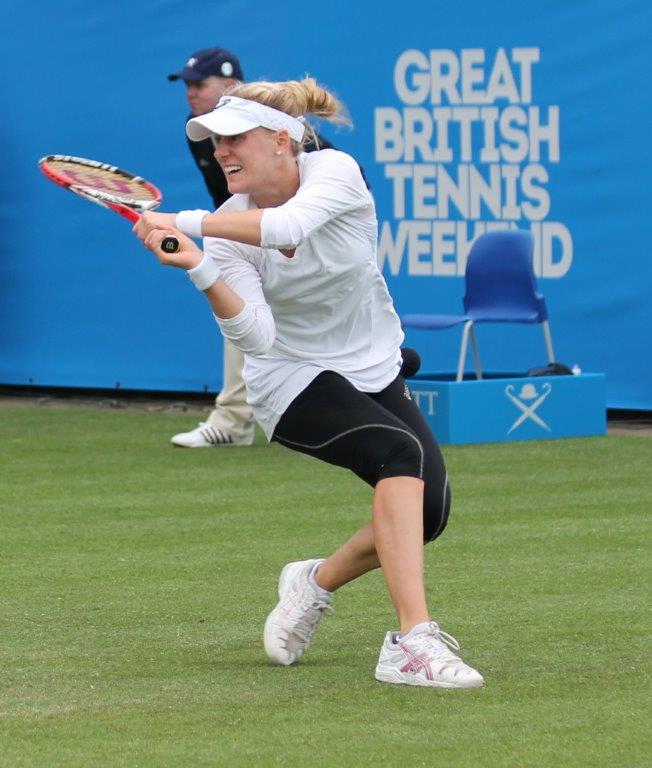
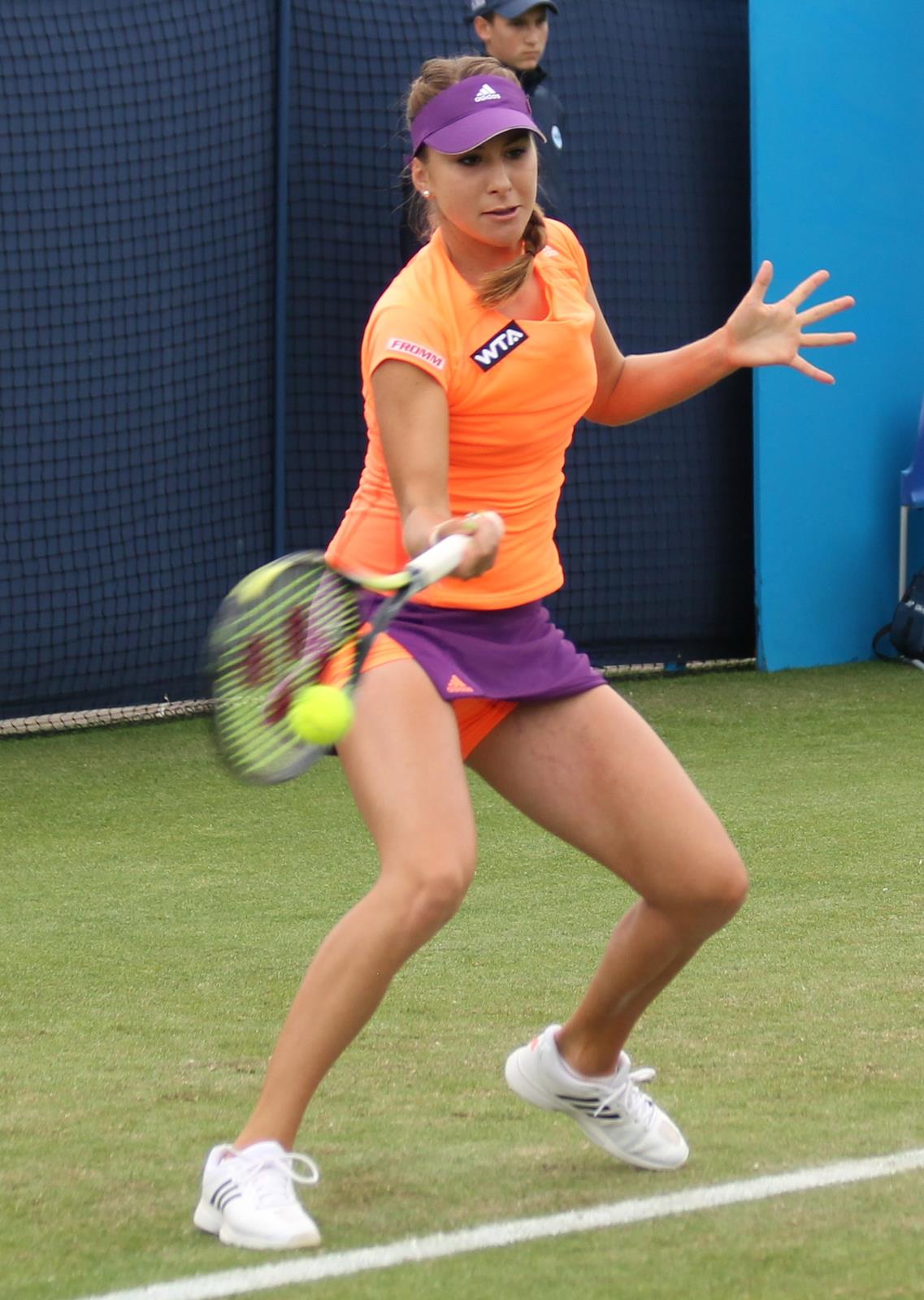
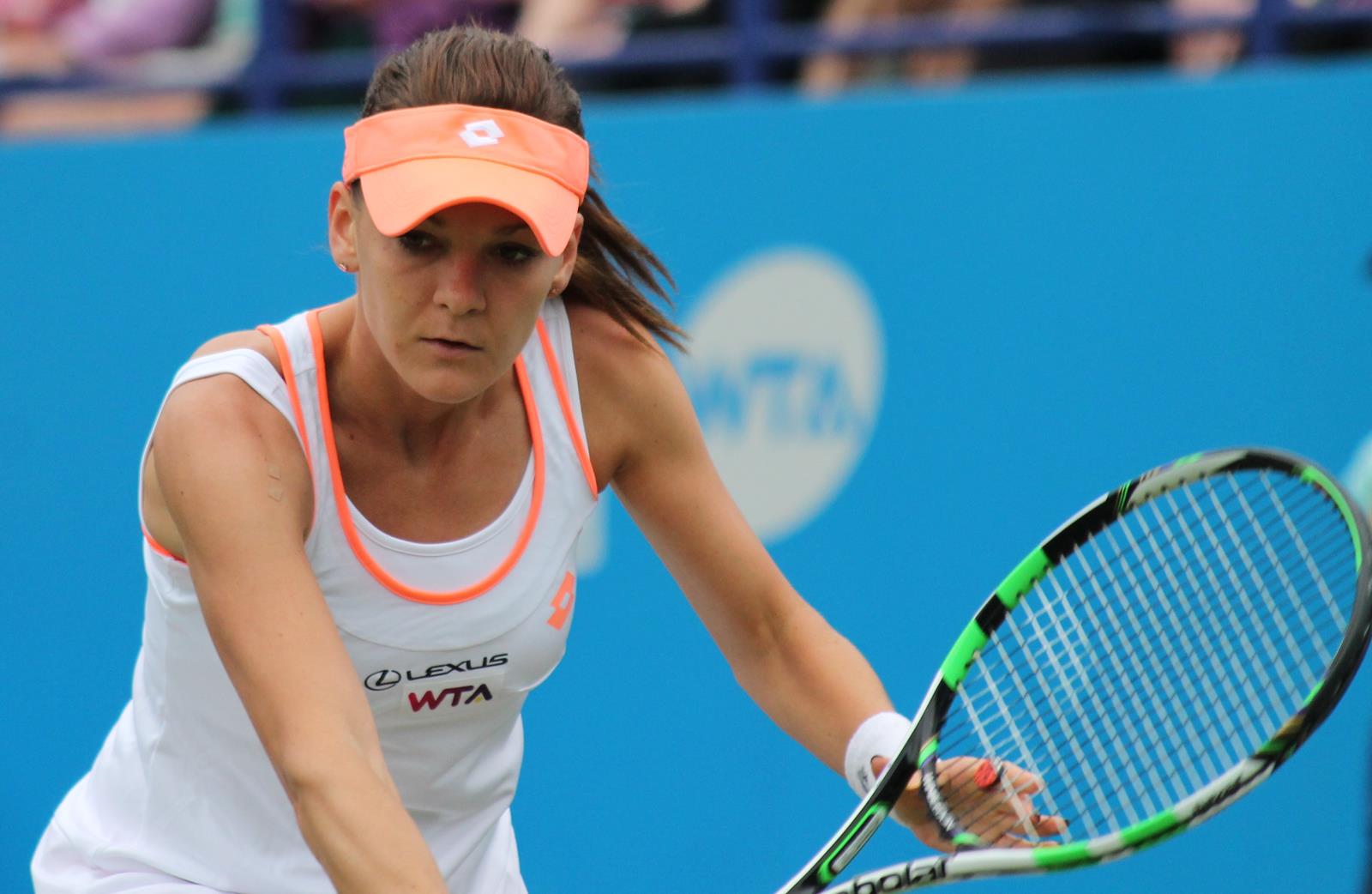
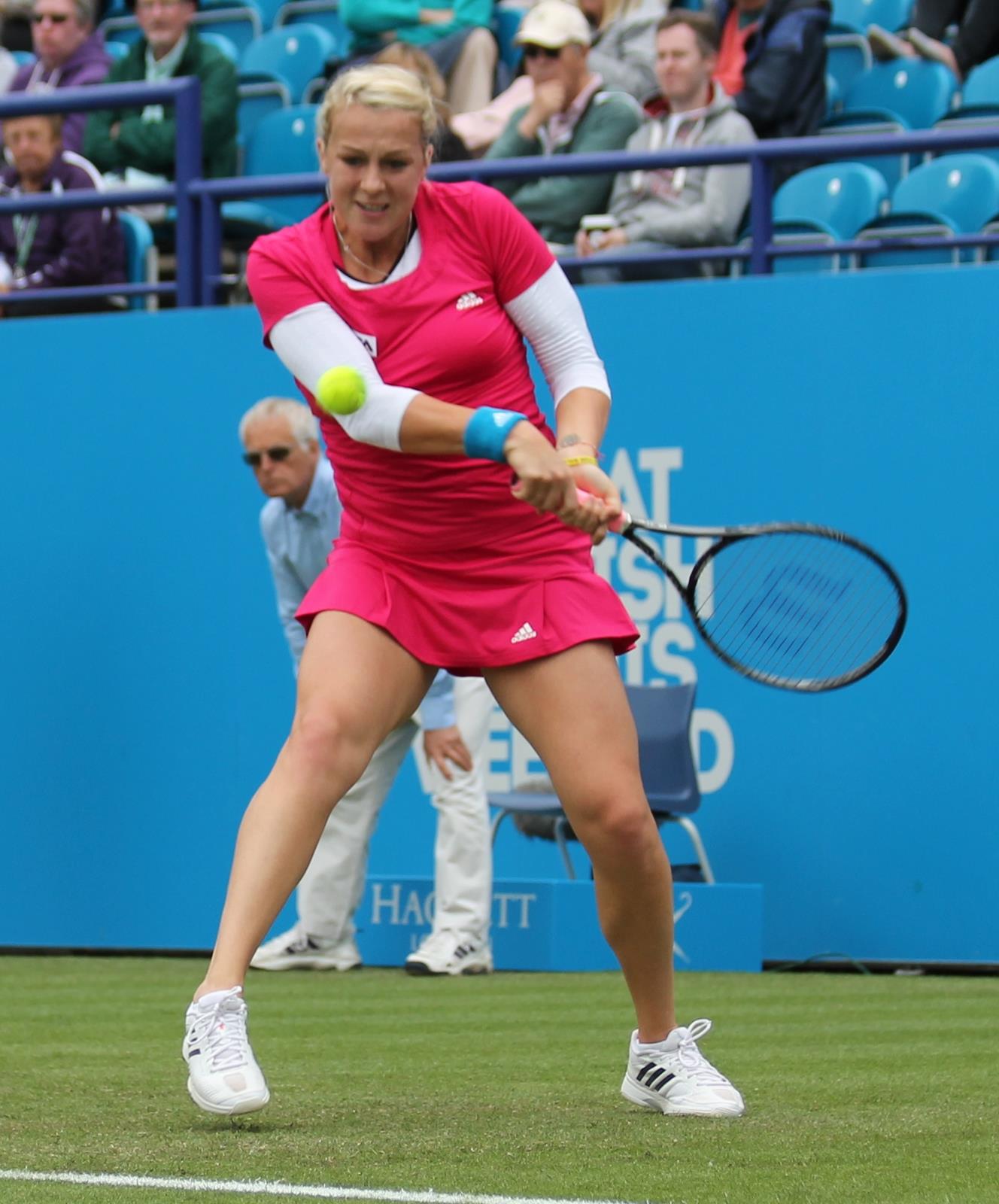
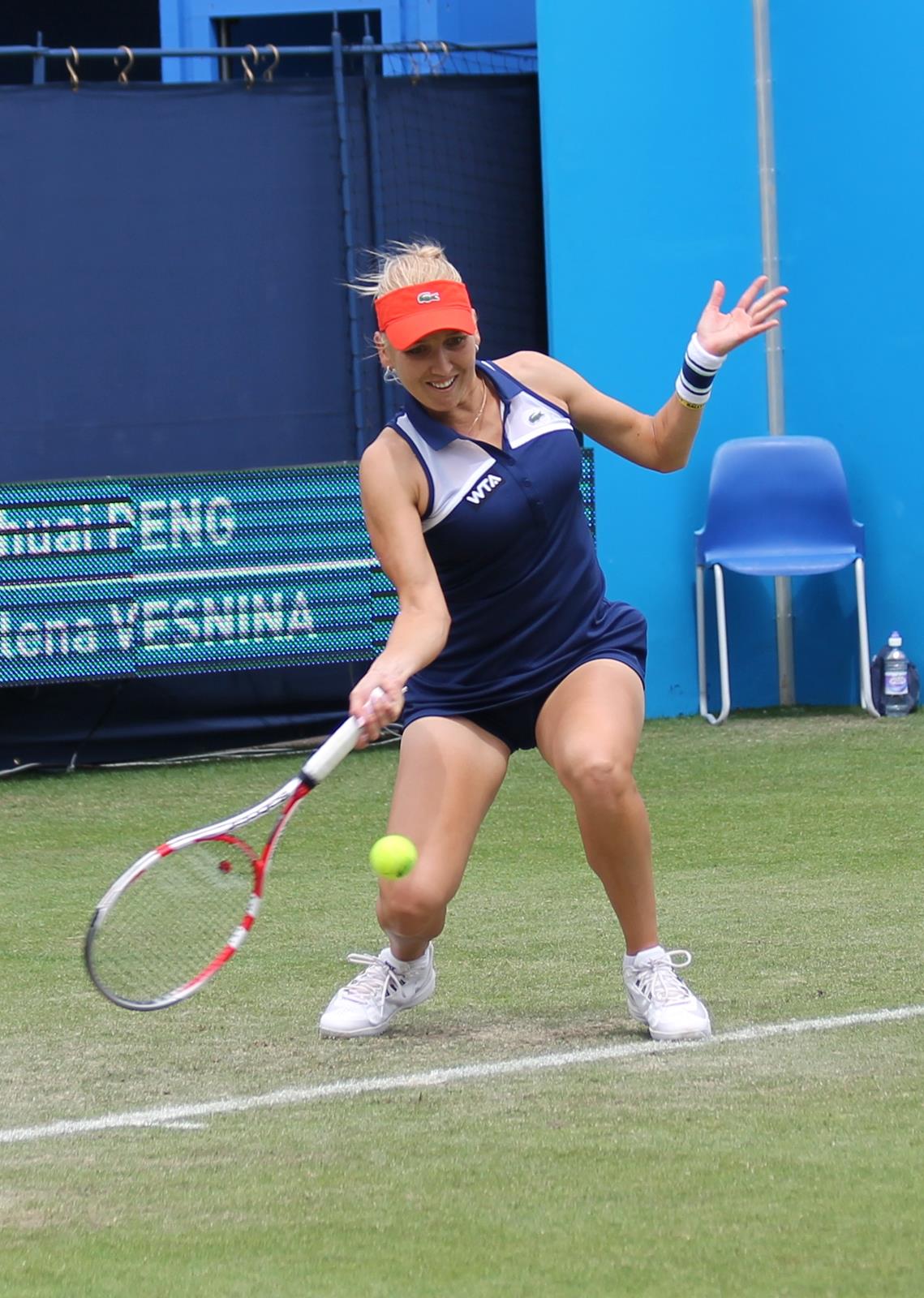
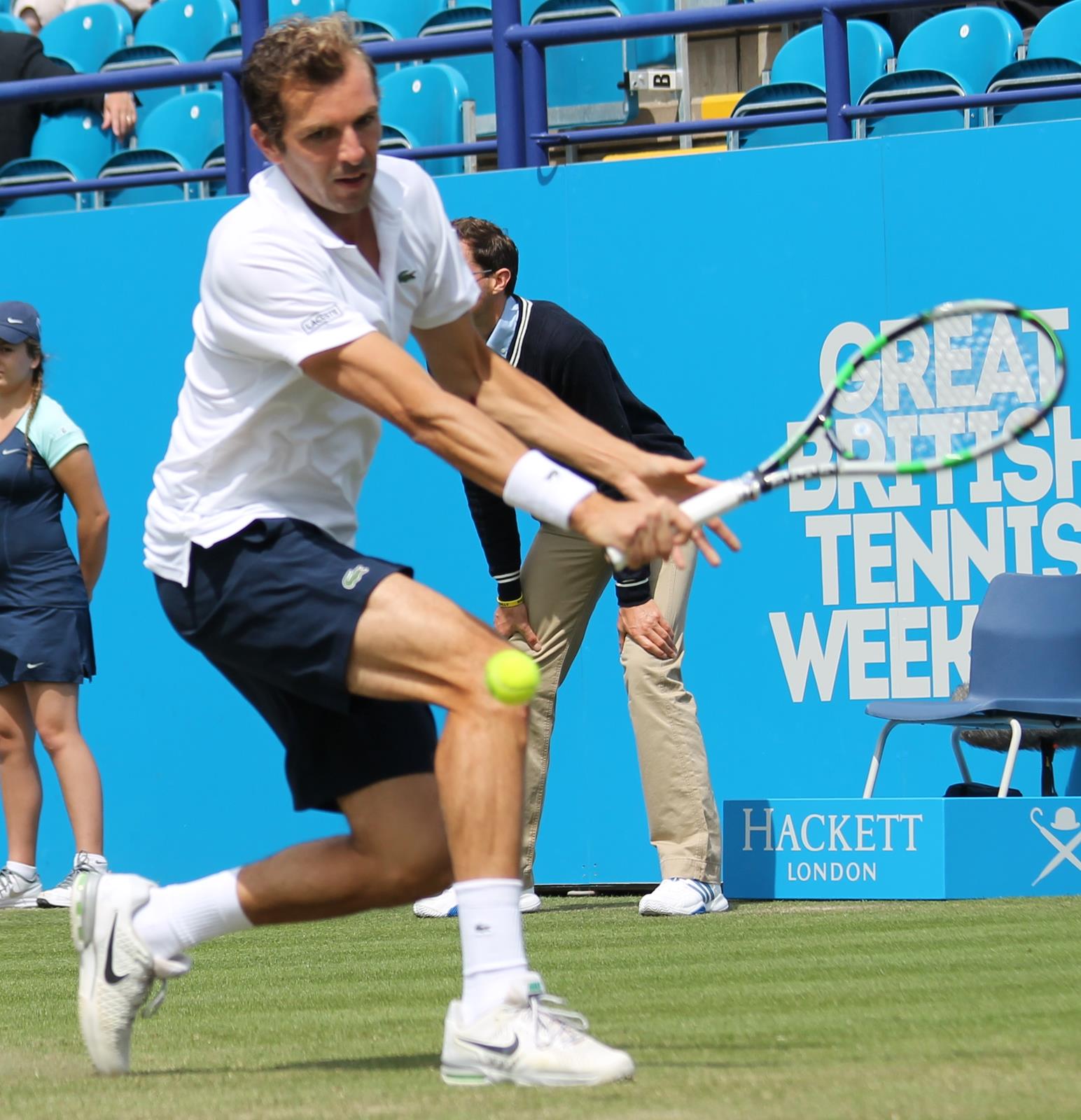
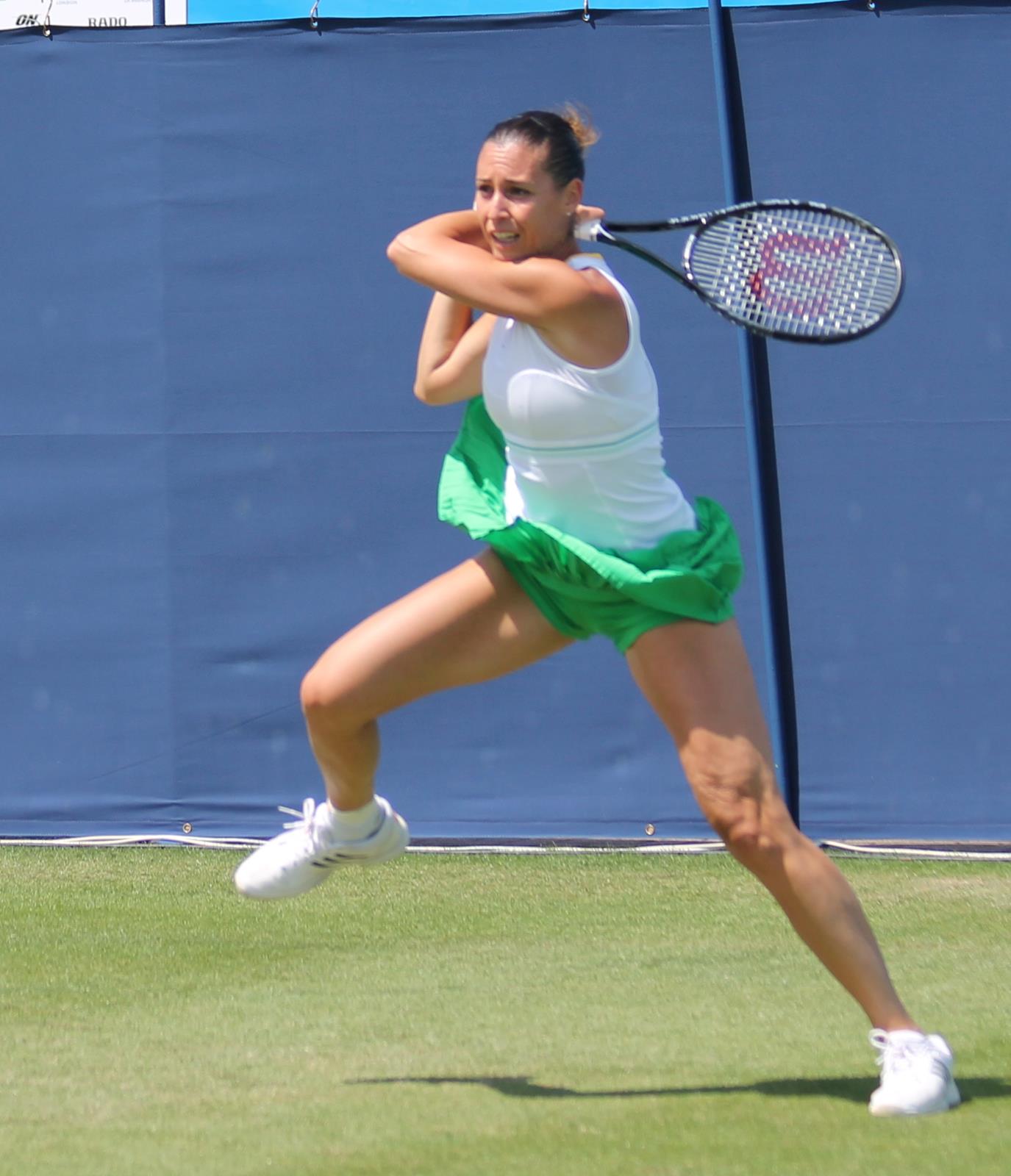
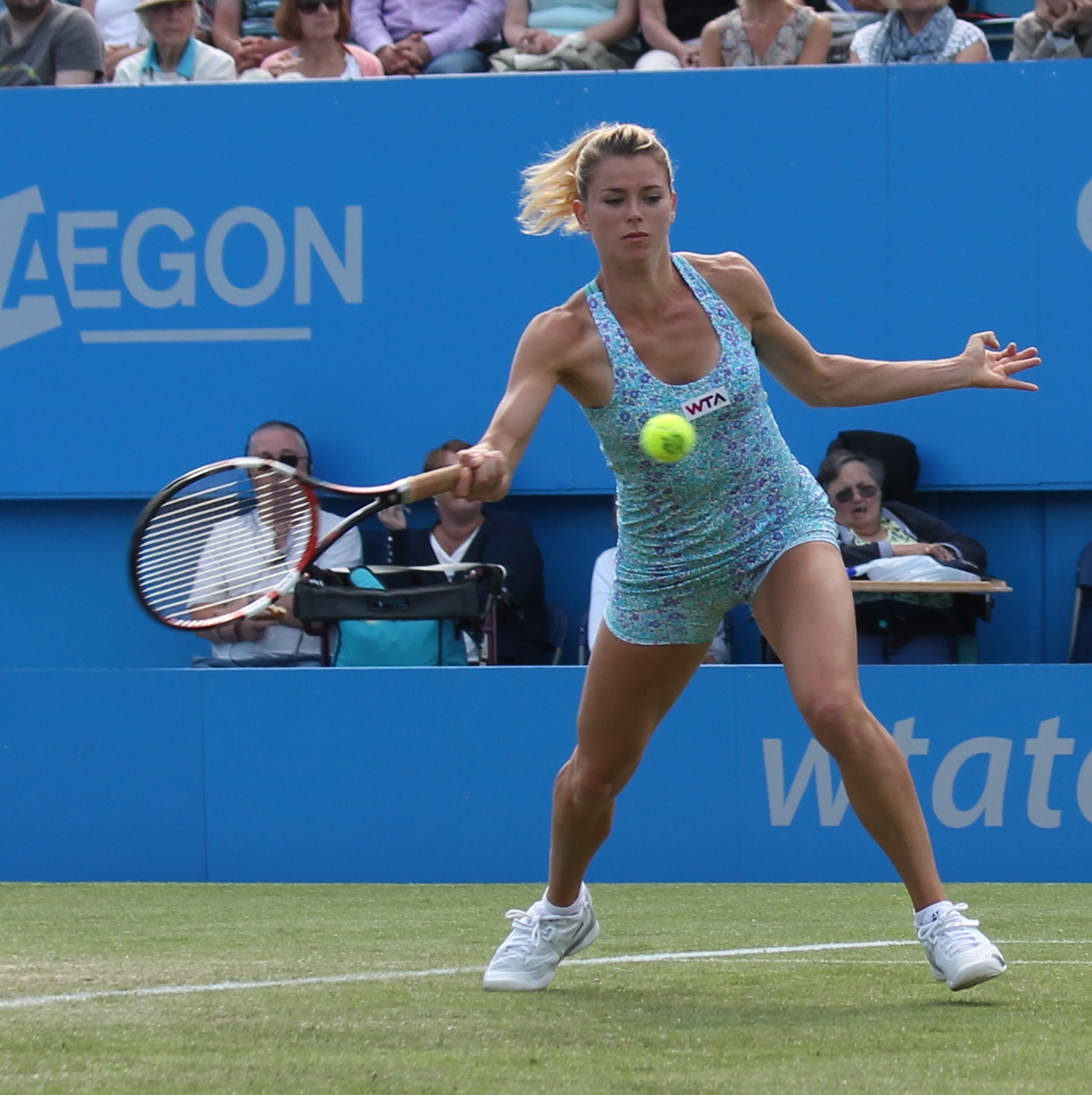
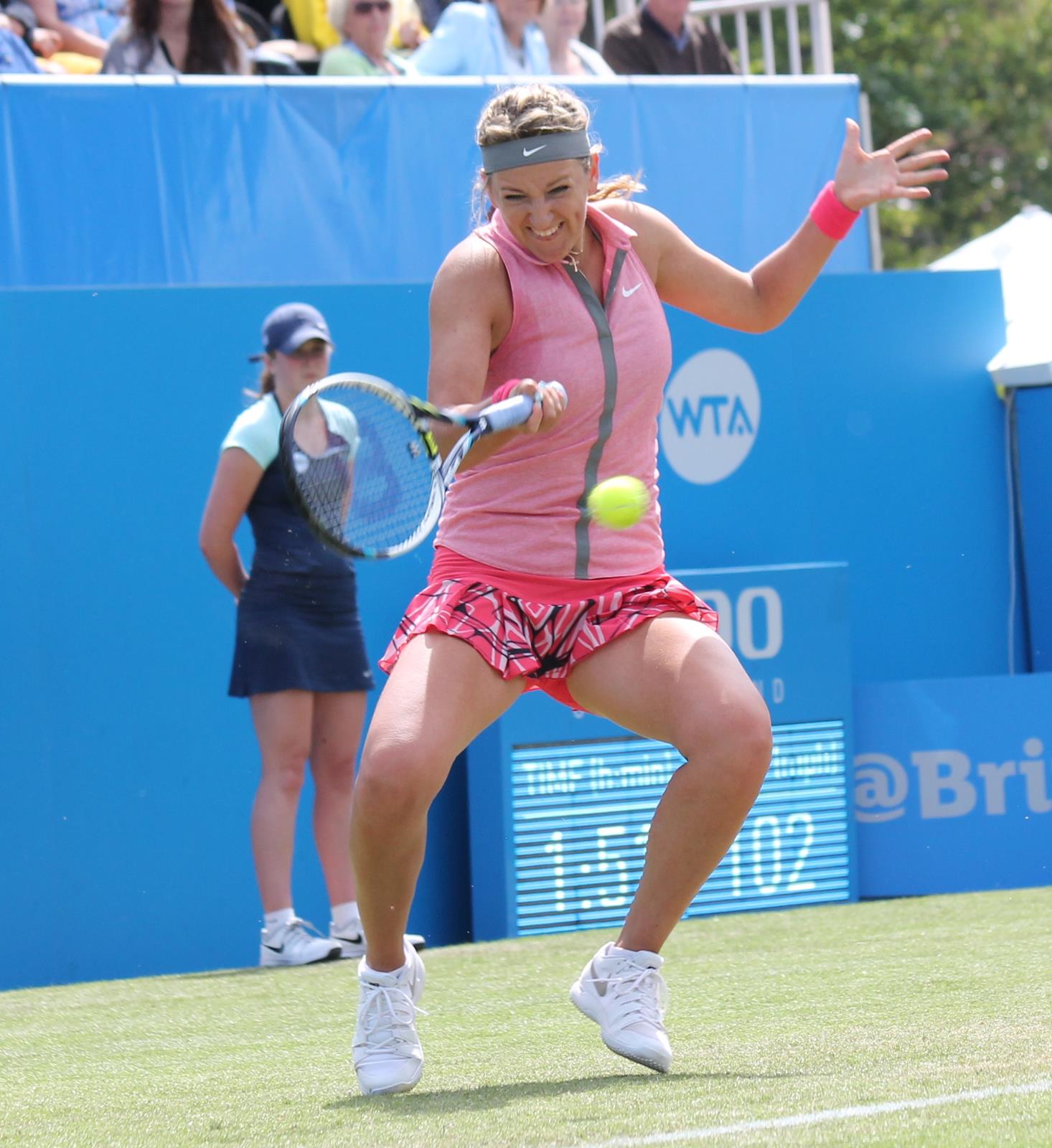
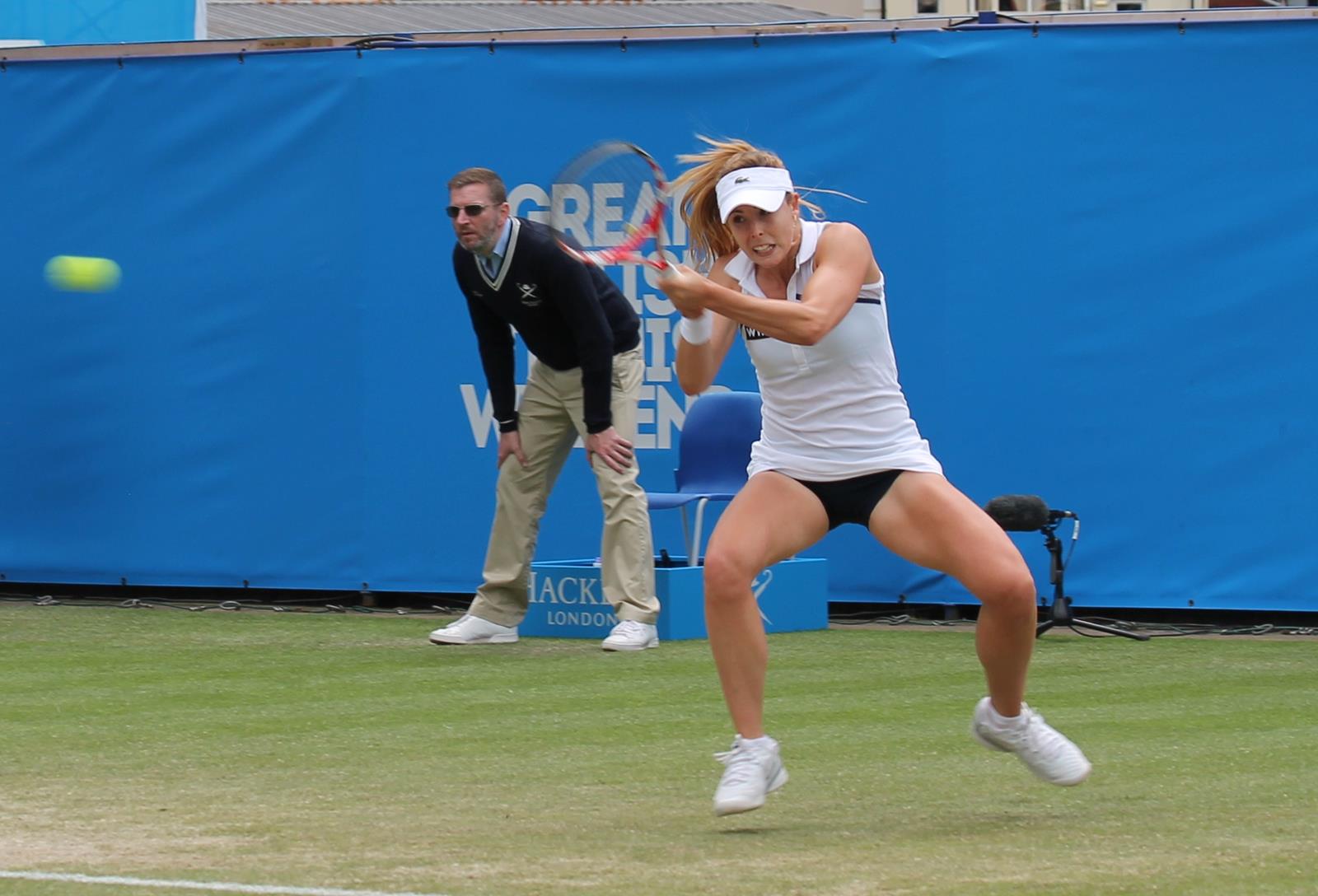
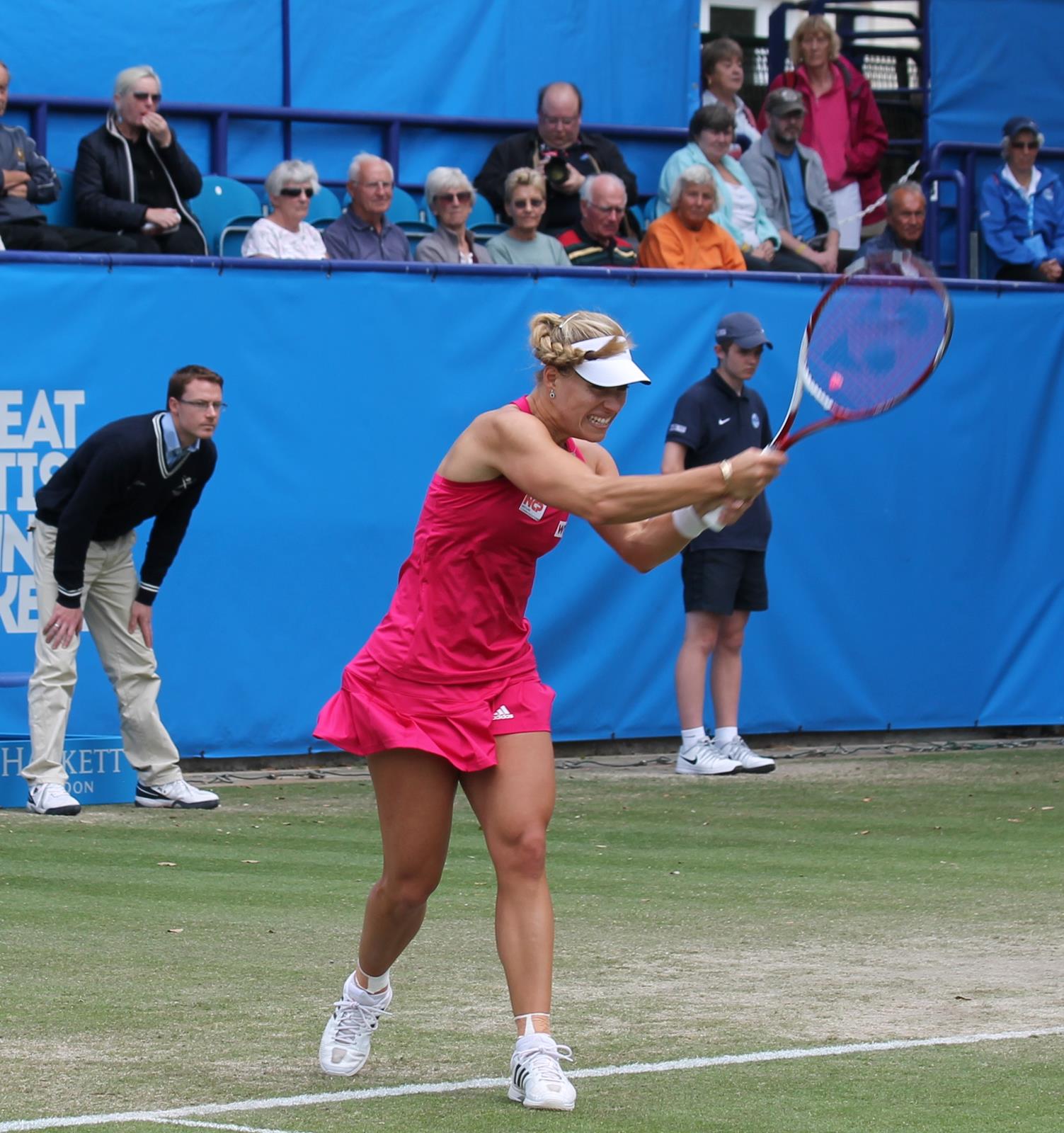
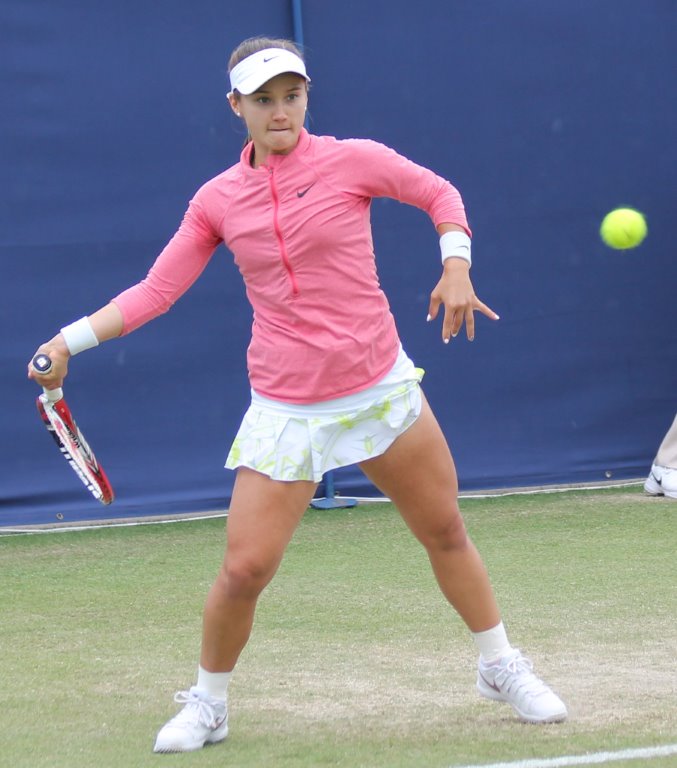
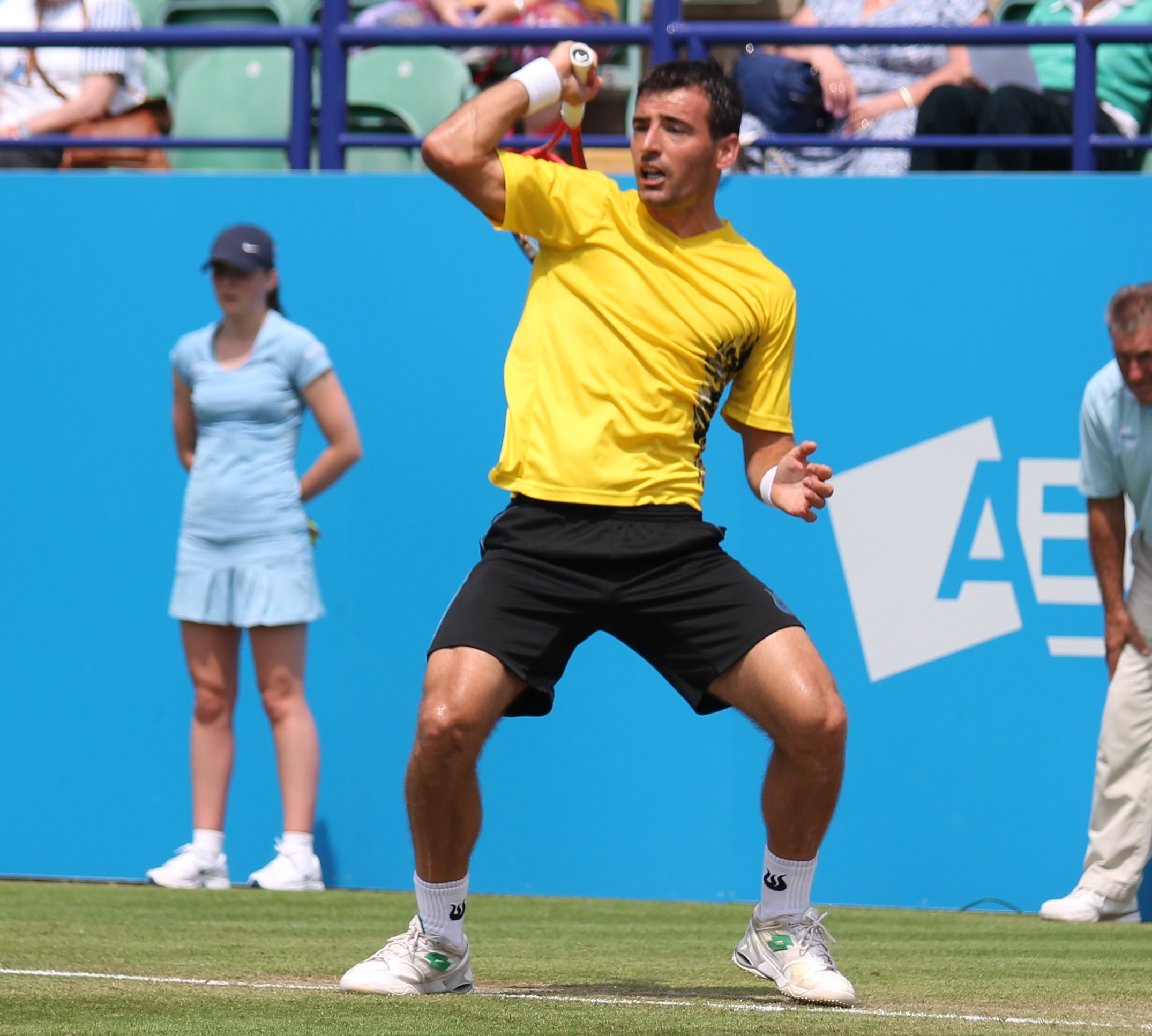
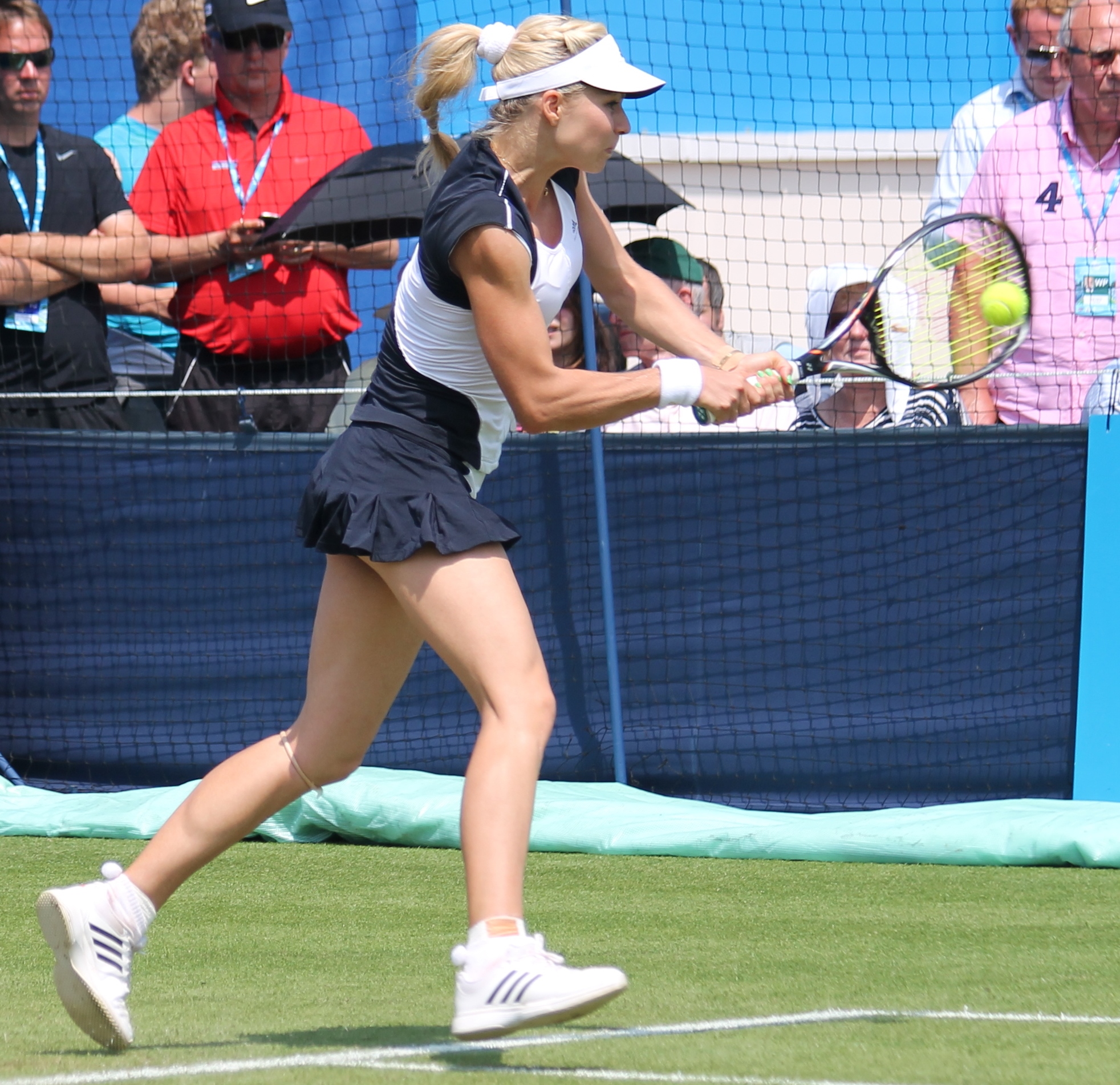
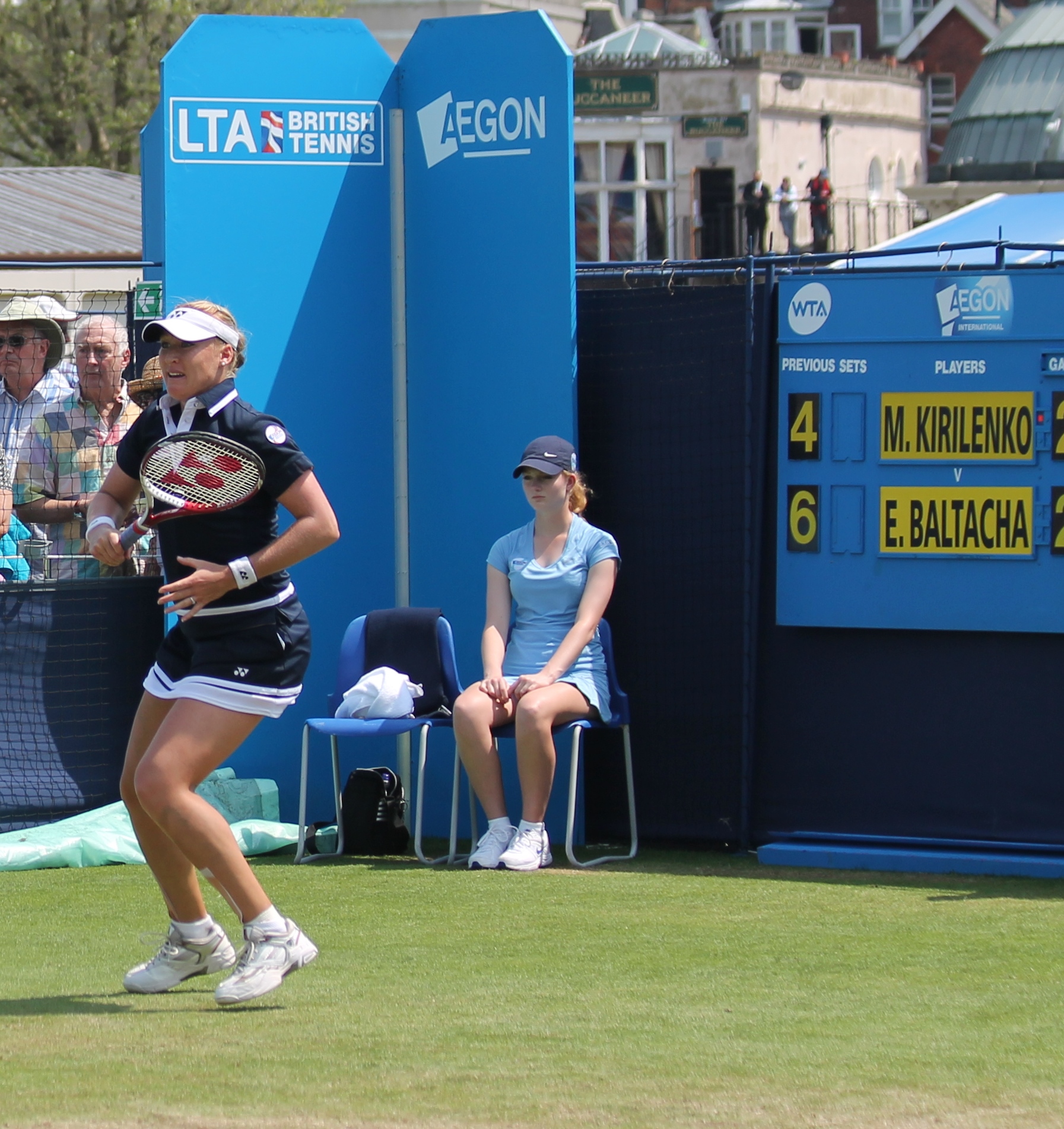
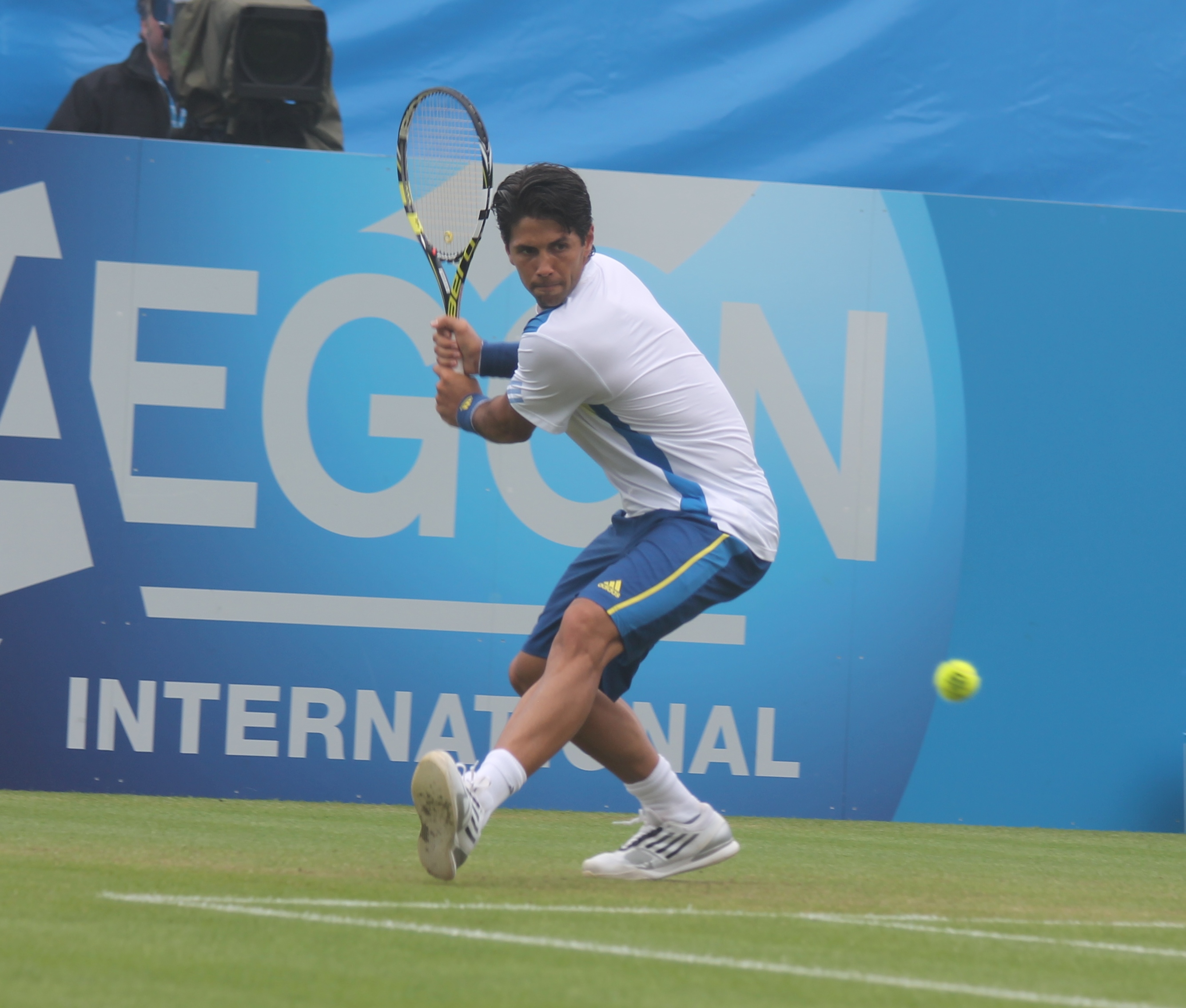
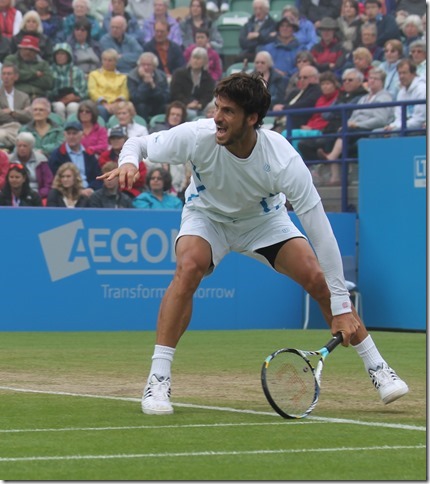
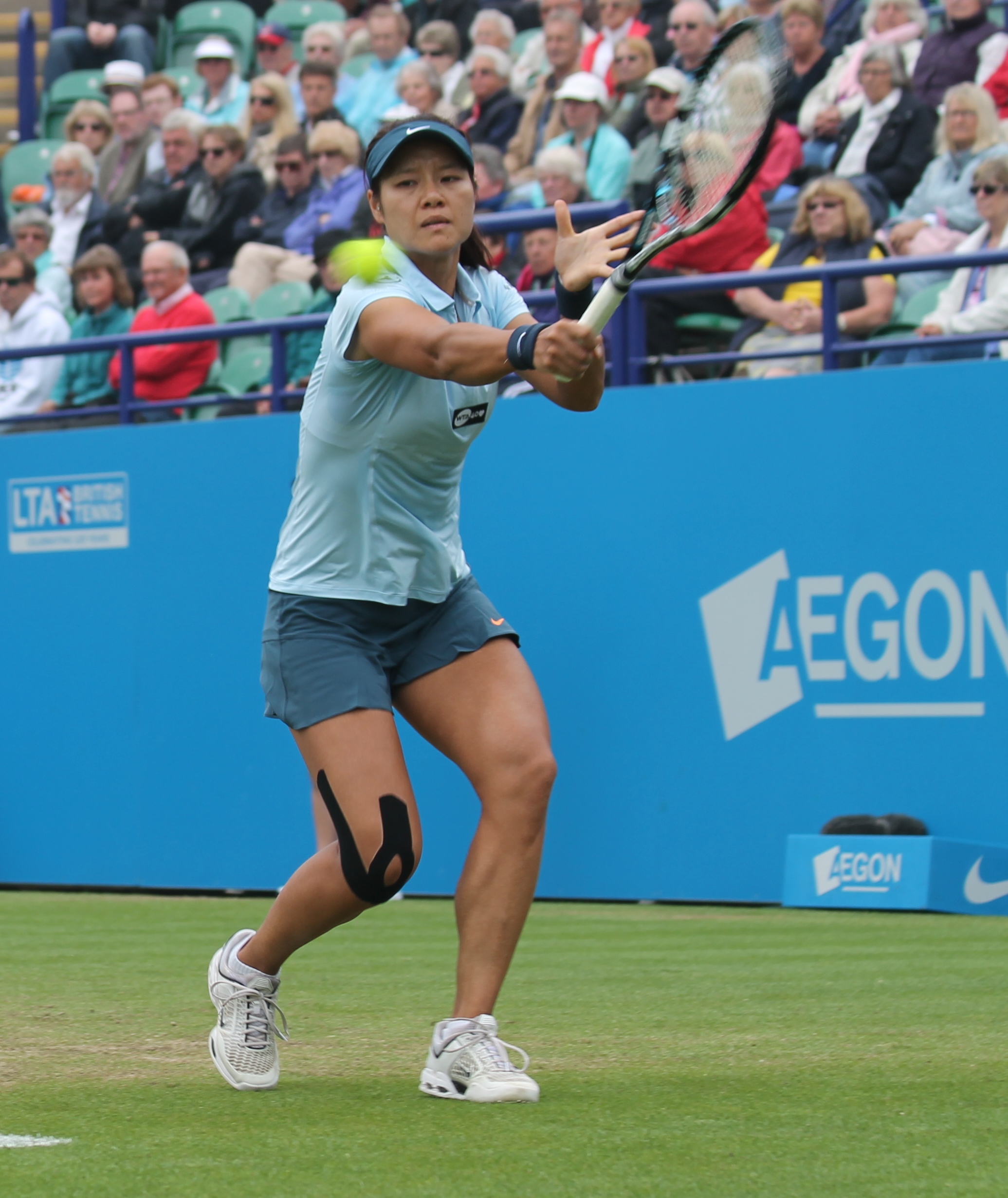
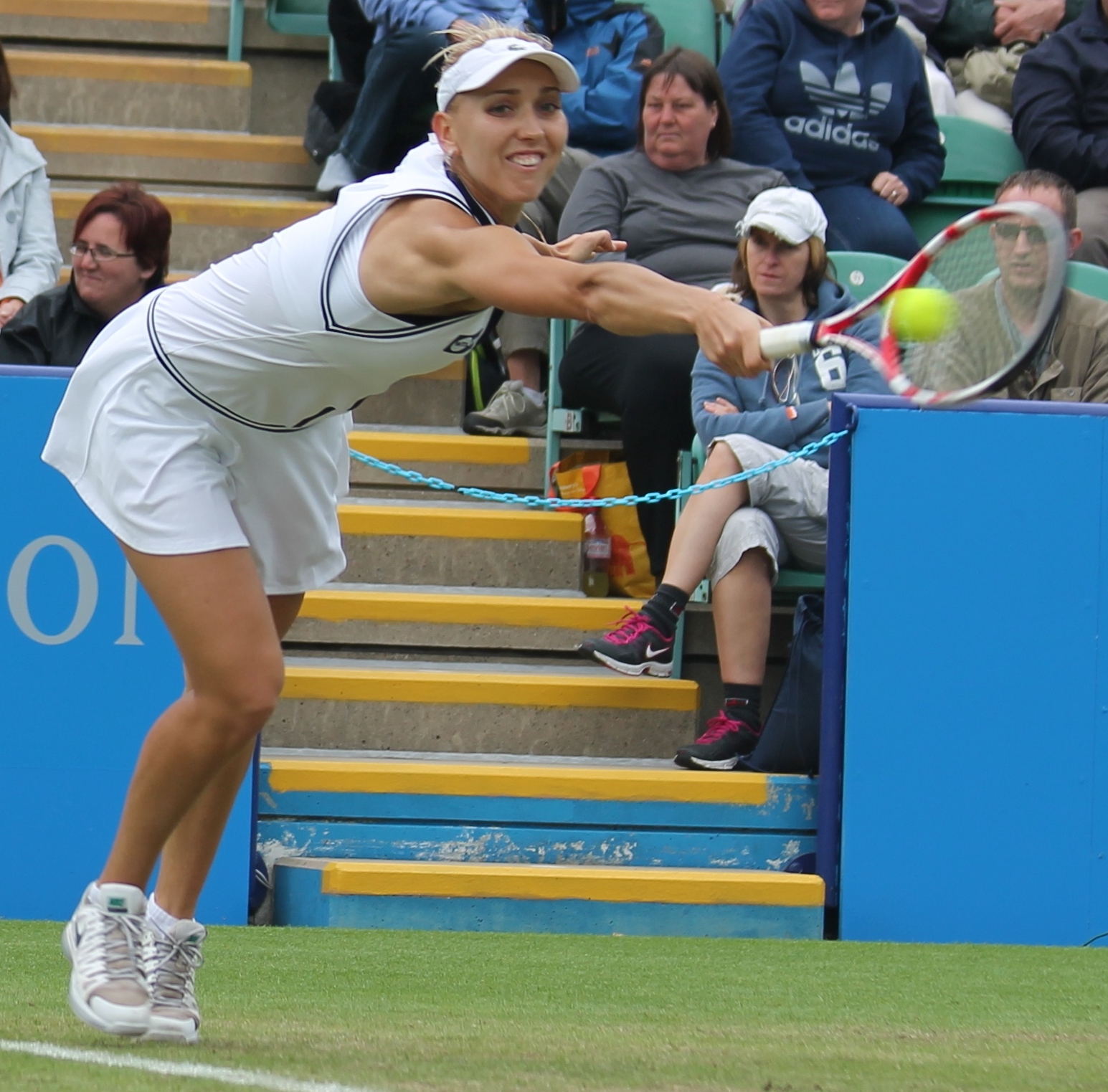
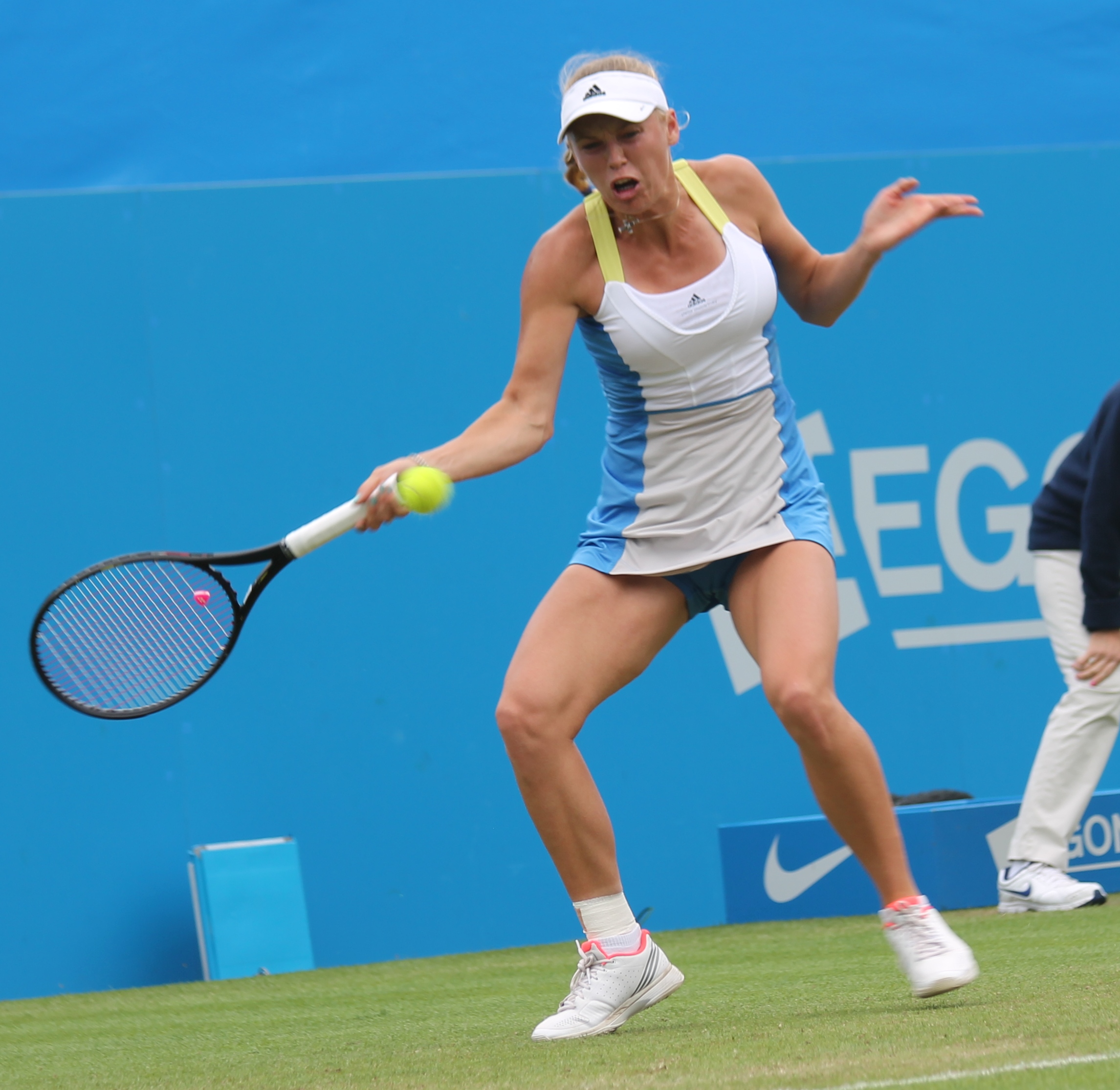
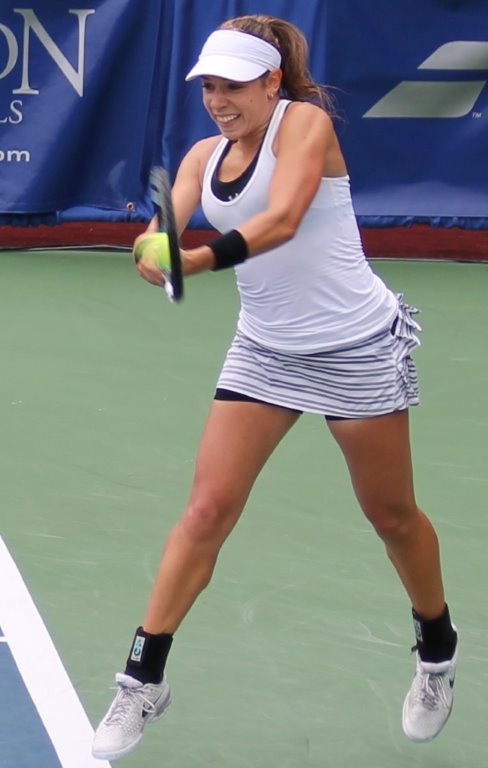
  • Aegon International, Eastbourne, UK, 2014

    Aegon International, Eastbourne, UK, 2014

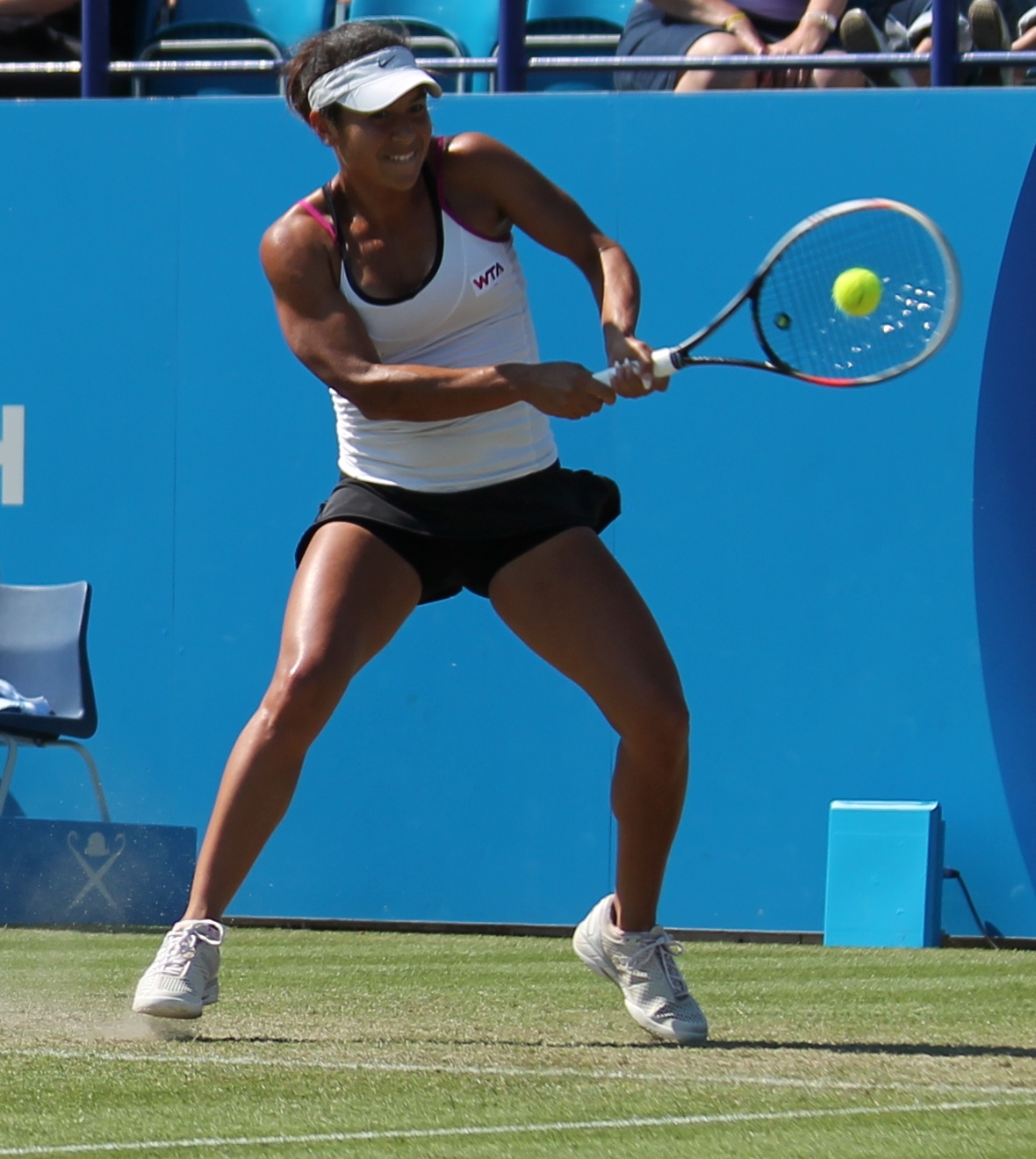
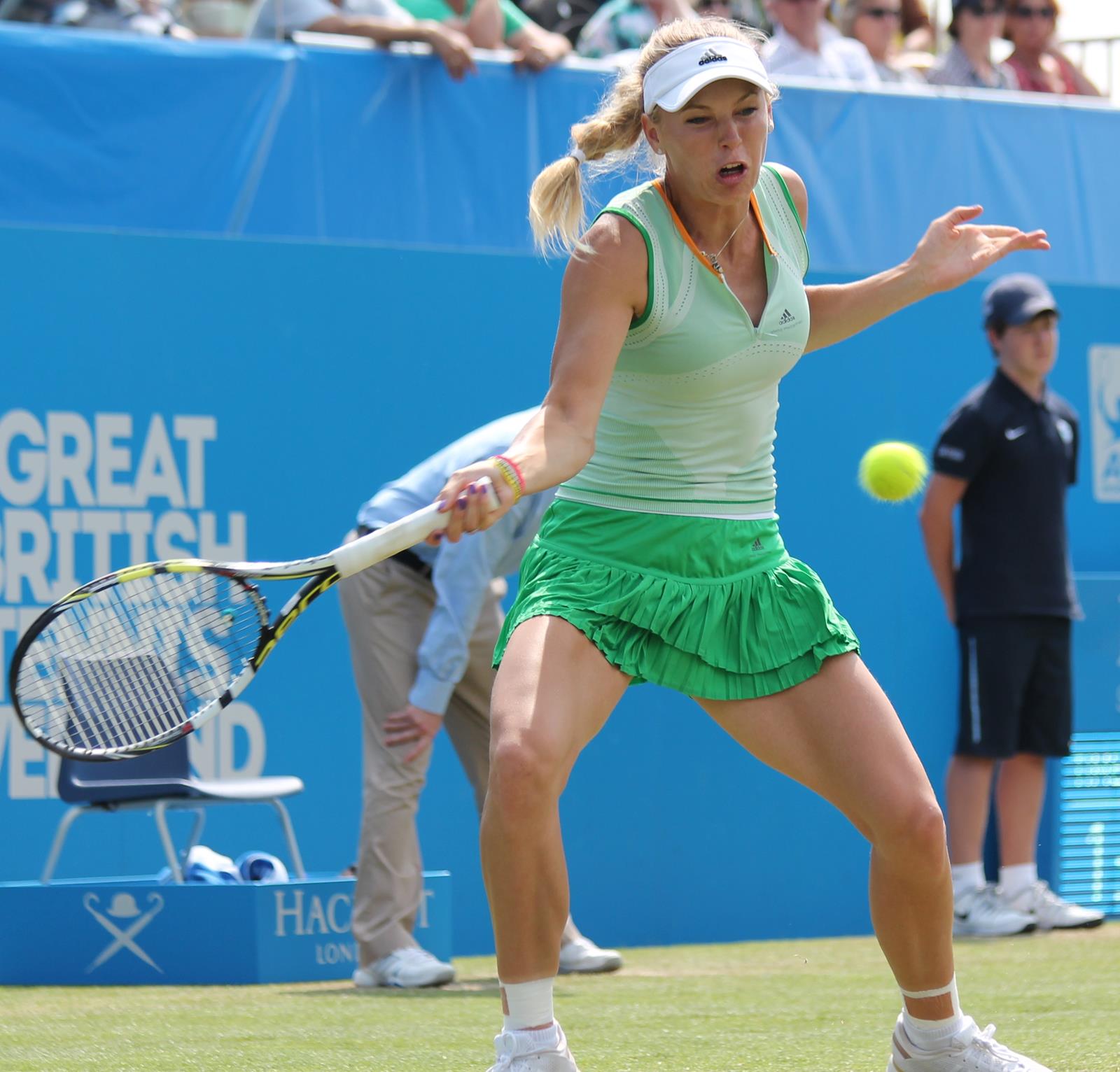
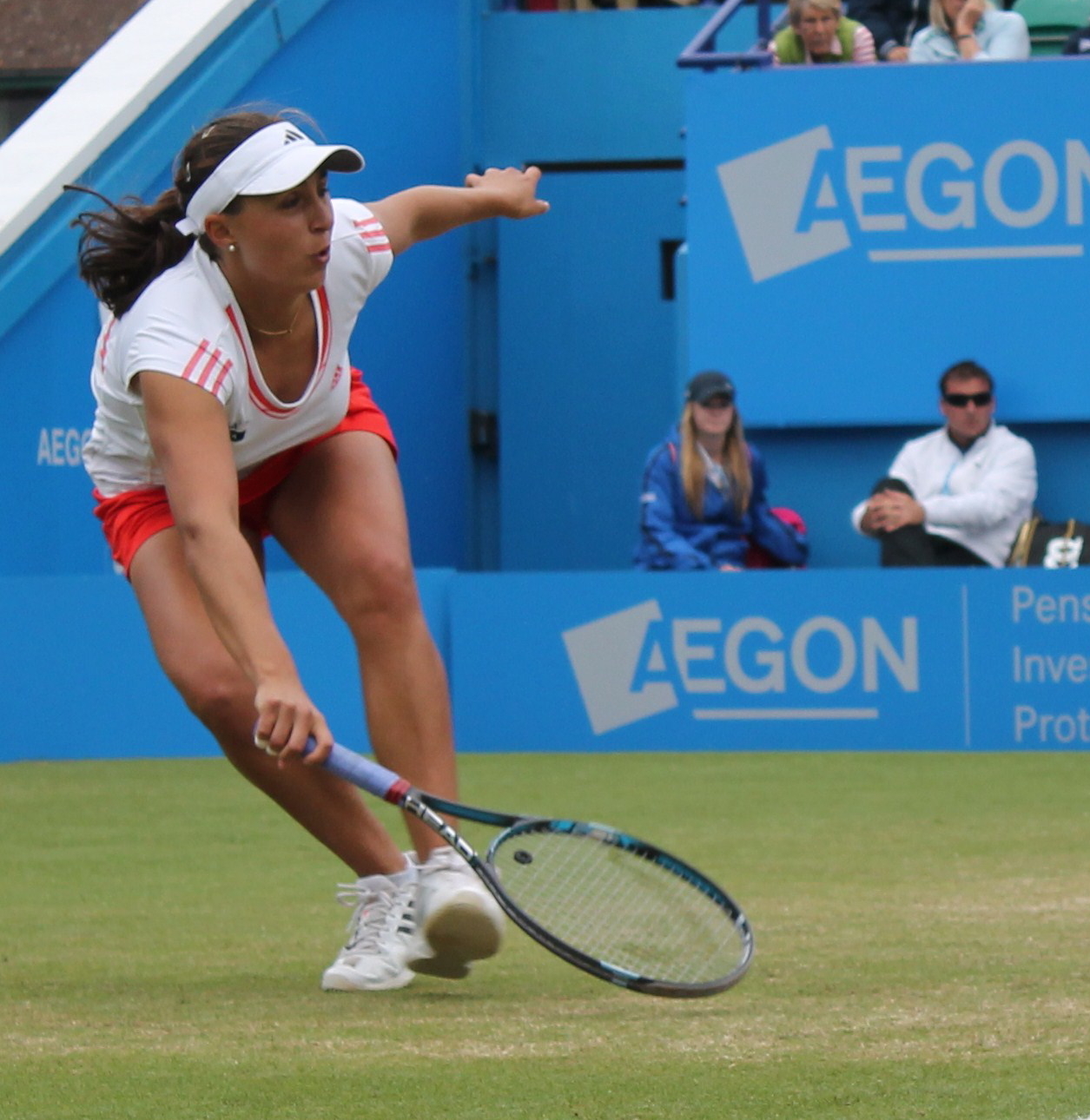
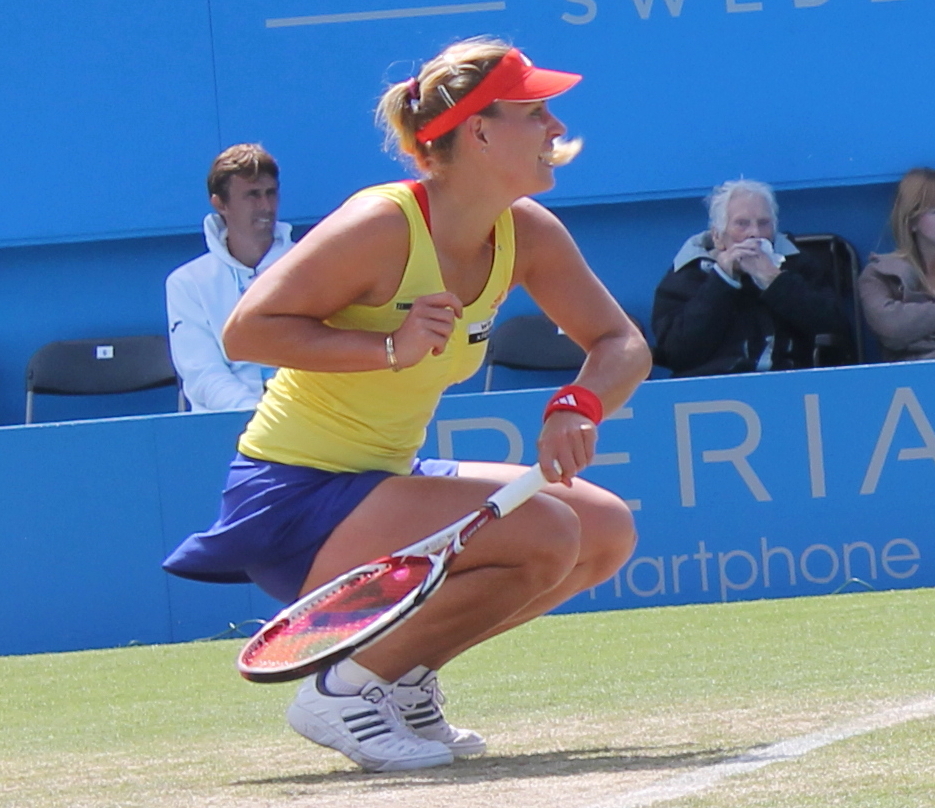
    Photos courtesy of Dave Rubenstein.

  • Nadal Bombs Out in Barcelona

    Nadal Bombs Out in Barcelona

    Nadal

    After ten straight defeats at the hands of Rafael Nadal, Nicolas Almagro found his game and his nerve to beat the World No. 1 on the clay at the Conde de Godó in Barcelona, while Nadal continues to struggle with his form and confidence. Nadal broke Almagro in the first game of the first set, but was broken straight back. However, Rafa broke twice more to take the first comfortably, 6-2.

    In the second set, Nadal seemed to be finding his form, but failed to convert several break chances. In the tiebreak, it was Almagro who prevailed to take only his third set off Nadal in the history of their head-to-head.

    Rafa started strong in the third, going up 3-1, before Almagro won three consecutive games. Nadal broke back in the eighth game, evening things up at 4-4. It seemed he had regained control of the match, however Almagro immediately broke back at love, going up 5-4. Serving for the match, he quickly went down 15-40, but Nadal failed to convert both break points. The situation got tricky when Nadal saved the first match point, but a determined Almagro won it on his second, closing out the match 2-6, 7-6(5), 6-4.

    It was the World No. 1’s second clay-court loss in a week, following his defeat to Ferrer in Monte Carlo. It was the first time he has lost in Barcelona since 2003. After losing in the quarterfinals in two consecutive tournaments which he has won eight times each, many questions now surround his ability to defend Roland Garros.

    Cover Photo (Creative Commons License): Marianne Bevis

  • The Eighth Wonder of the Learned Alchemists

    The Eighth Wonder of the Learned Alchemists

    Wawrinka

    Monte Carlo Masters 2014: A round-about wrap-up & some psychology.

    Near the middle of the day, near the middle of last week, I opened my internet browser to the news that Gabriel Garcia Márquez had died at the age of 87.

    Aww, no,” I exclaimed to no one in particular.

    A colleague—a fellow psychologist who happened to be within earshot—responded to my expression of disappointment with concern. “What’s wrong?”

    “Gabriel Garcia Márquez is dead.”

    Aww, no,” her expression was resonant with compassion. Therapists learn, almost without intention, to pack our monosyllabic murmurings with rich, affirming emotion. I felt immediately understood, and my colleague and I shared a moment of heavy silence as I pondered the impermanence of all things, including authors (and also my lunch, which I’d forgotten on my kitchen counter before work that morning). But, as the sad seconds ticked by and my colleague continued to honor my feelings with quiet empathy, I decided I ought to say something to lighten the mood. After all, it’s not like the Nobel-Prize-winning author was a friend of mine. 
    “Truth be told,” said I, “until this moment I wasn’t aware he was still alive.” 

    “Well,” said my colleague, “truth be told, until this moment, I’d never been aware of him at all. Who is he?”

    It’d been one of those days at work. In fact, it’d been one of those weeks— one of those months. We were both tired and worn-down. The sudden, mutual realization that my colleague and I were sharing grief over the death of a man neither of us had known was alive…well, it was just too much. We burst into fits of irrational laughter. Then—once I regained control of my capacity to inhale—I told her I thought she’d enjoy Márquez’s novel, One Hundred Years of Solitude, she replied that maybe she’d give it a try, and we got back to work, both of us feeling much lighter at heart than before we were saddened by the death of one the literary world’s greats.

    Rafael Nadal’s straight-sets defeat at the hands of David Ferrer in the Monte Carlo quarterfinals took place in the middle of the California night, and I slept straight through it. When I woke up to news of the loss, I was both surprised and not. My reaction was more Hrmm than Aww. Whether it’s mental (as Nadal says it is), or physical (as he might prefer not to discuss with the media), or both (as the two are often intertwined), whatever is going on for Rafa is familiar. We’ve been here before. Nobody rises from the ashes quite like Rafael Nadal, but once he’s risen—once his muscular wings are fully spread, with Nike microfiber plumage shining in the sunlight as he perches at the summit of a mountain made entirely of ranking points and the broken racquets of his shattered opponents—he gets a tad bit uncomfortable. From where I sit, on the summit of my sofa pillows, it seems that something (a significant something) inside Nadal’s psyche prefers to fight the powers that be rather than be one— or at least, prefers not to be World No. 1.

    Unfortunately for (what I am assuming is) Nadal’s conflicted relationship with his own greatness, Novak Djokovic, the current World No. 2, has a wrist injury that looks to keep him sidelined for no small amount of time. The Serb’s injury is a real shame, considering the stunning performance Djokovic delivered in the Miami final. He looked, then, as if nothing would suit him better than an extended, dusty turf war for the No. 1 ranking.

    For now, unless Djokovic’s wrist manages a miraculous Easter recovery, Rafael Nadal is stranded at the top. Unless the King of Clay is suffering physically, or unless he has an abiding desire to abandon tennis for the gambling table, I expect Rafa to be able to convince himself—if not the tennis world at large—that he’s not the favorite to win every title contested on the dirt, thereby freeing himself to do just that. He might even get things sorted this week in the relative shade of Barcelona’s 500-level tournament. Or, the process might take months and he won’t run the metaphorical clay tables again until 2015. Either way, I’ll leave him to it for the moment and turn my attention to the No. 3 and 4 players in the world, who also happen to be the Swiss No. 1 and No. 2.

    [3] Stanislas Wawrinka def. [4] Roger Federer 4-6, 7-6(5), 6-2

    During the 2014 Monte Carlo final—which began very early in the California morning, and spanned three sets containing many brilliant points and scintillating shots but never quite constellated into a beautiful match—and as I watched Roger Federer fend off a break point in the third set with a threaded backhand down-the-line followed by a fearsome overhead smash, I was suddenly moved to pull my copy of One Hundred Years of Solitude down from its resting place on the bookshelf in my living room. It’s probably been fifteen years since I last read the novel, but a passage in the opening paragraph brought much of the story flooding back: “The world was so recent that many things lacked names, and in order to indicate them it was necessary to point.” It’s a passage that lets the reader know the story will begin at the very beginning—in an Eden of wonder—and move in circles from there. What is old is also new. It’s also a sentence that made me think of enraptured tennis fans at a Federer match.

    What Roger Federer does, he’s been doing for well over a decade, but when he does it well, it still feels impossible to replicate. It’s still so new—so recent—that it’s necessary to point. And to gasp. And maybe even to exclaim in an elongated monosyllable resonant with deep emotion. Toward the end of the first set of Federer’s semifinal win over Novak Djokovic, while Federer was struggling to hold his nerves together and Djokovic’s arm was beginning to fall apart, the commentators opened the familiar chapter of the unresolvable GOAT debate. Can Roger Federer truly be called the greatest of all time, or even of his time, since he doesn’t hold a winning record over Nadal or Murray? 

    A half-hour later the Swiss could boast an 18-16 record over the Serb, but he’s still 10-11 against Murray, and 10-23 against Nadal. There was a silence in the booth as those numbers sank in, and then somebody—it might have been Nick Lester—said, somewhat sheepishly, “Aww, I still think he’s the best.” And everyone else agreed with him. Because he’s Federer; and because they know how it feels to watch and to be reduced to wordless gestures, when what you’re paid to do is talk. Márquez’s fascinating gypsies from Solitude might put the Swiss right up there with the invention of magnets, which, they tell us, were originally known as “the eighth wonder of the learned alchemists.” He is a little bit magic.

    Still, as supernatural as Federer’s tennis can be, and as healed as his back appears to be, he’s still struggling with the reality of closing out big points, and big matches. If you spend any time at tournaments with avid Federer fans—something I’ve done on multiple occasions already this year—they will be able to tell you the very instant the typically aggressive Swiss player goes passive. But they will not be able to tell you why. Instead, they will probably ask you, or, if they’ve got a powerful set of lungs, him: “Why didn’t he follow that ball in?”, “Why did he chip that return?”, “Why does he approach to Nadal’s forehand? He’s going to get killed doing that!”, “Why?!?” I don’t know. Maybe he truly believes it’s a good idea to approach Rafa’s forehand, or to remain passively in the backcourt. Or maybe he’s busy thinking about how quickly his daughters are growing up; or whether his capped shirt-sleeves mightn’t be a bit preppy, even for him; or the fact that he’s about to be father three times over; or about the tragic impermanence of the lunch-hour. It could be a thousand things. All we can do is guess. So here’s mine: 

    At the trophy ceremony after the final, Federer told the crowd that he hoped to be back in Monte Carlo for “many, many years.” Thirty-two is by no means old, but there’s no denying that Federer is nearer the end of his career than the beginning, probably much nearer. One day, hopefully many, many, many years from now, when Federer is well past 87, someone will read the news and say, “Aww, Roger Federer died today.” And someone else will respond, “Aww … Who is he?”

    Recognition—the experience human beings crave most— is an impermanent experience. It shifts and alters, as we do, even if you are the most wonderful attraction of the tennis world has ever seen. And when we struggle against accepting inevitable endings and limitations, we start to get confused about what we can control in life and what we can’t. We panic. We try to stem impossible tides instead of focusing on making good decisions about where to place an approach shot, or when not to get too cute with the drop shots. We try to tell ourselves we have all the time in the world, while we secretly freak out that our time might have already come and gone. From my vantage point—again the sofa cushions—Federer looks to me like a man trying to win titles without falling into a mind-twisting pothole of panic. He does just fine, as long as he doesn’t catch a glimpse of the abyss. But, I think it’s possible that if Federer can let go of the need for “one more great run” he’ll have one. Or several. At the very least he’ll stop fading away in deciding sets. Federer might not have “many, many years” left on tour, but he’s got time. And he still inspires plenty of wordless, gestural wonders.

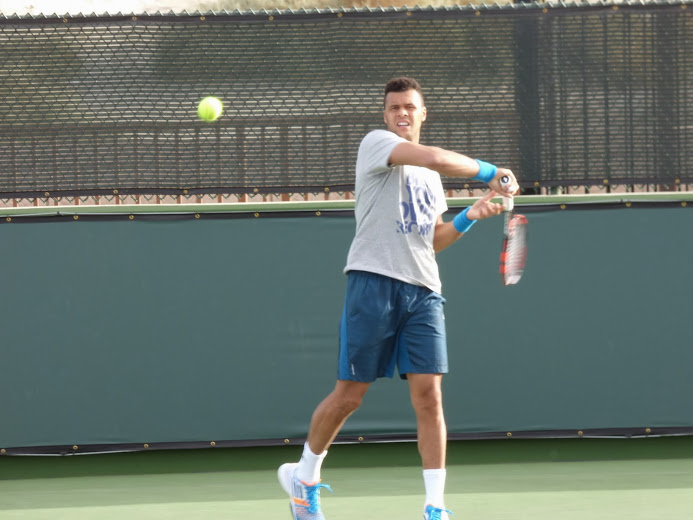
    If trying to prevent the inevitable is a task doomed to failure, then attempting to recover from it is another story altogether—which is why Stanislas Wawrinka’s week at Monte Carlo had the psychologist in me thrilled to her fingertips. There’s little that is more fundamental to life (and therefore tennis) than loss. We all lose in the end. For those of us interested in infant attachment theory (or biblical studies, for that matter) we lose in the beginning, too. But when were able to survive these losses—whether it’s a five-hour, five-set loss to the World No. 1 on center court at a slam; or a seven-hour Davis Cup defeat; or 13 losses to the Eighth Wonder of the World; or a brief loss of dignity along the way to your first slam victory—that’s when change becomes possible, if only we’re helped to keep at it. (Please, somebody tell Jo-Wilfried Tsonga to consider a cozy stay at Magnus Norman’s academy in Sweden.)

    For the most part, substantive change happens gradually, intermittently, with great effort, and only eventually, with easy grace—which pretty much sums up the trajectory of the Monte Carlo final for Stanislas Wawrinka. He started off tense, making easy errors, and losing the first set to the combined force of Federer and his nerves. But, gradually, intermittently, and with a few effortful bellows, Wawrinka began to recover. Watching him clear a channel for his talent to flow was an almost palpable experience. Essentially, this is the kind of stuff I spend my days helping people do. I help people learn how to learn. Yet, whenever I watch somebody integrate intention with action, or insight with experience, becoming more himself along the way, it’s like I’m seeing it happen for the first time. I’m enthralled. 

    By the time the newly made Swiss No. 1 arrived at the third set he was standing well within the baseline, powering through the court with one audacious forehand after another. His serving was equally imperious (if my count is accurate, he dropped only four points on serve in the third set), and his backhand potent. In breaking Federer in the first and third games of the final set, Wawrinka played very much as he had when he nearly bagelled David Ferrer in the semifinals, or when he did bagel Marin Cilic in the second round — which is to say, wonderfully well. 

    Fittingly, Wawrinka closed the match, earning his first-ever Masters title, on a forehand winner. It was this shot that Stan used most aggressively all week. Also fittingly, Roger Federer gave his younger countryman a warm hug and congratulations at the net. A moment of recognition from one learned alchemist to another.

    Cover Photo (Creative Commons License): Marianne Bevis

  • Tennis Frontier Celebrates One Year

    Tennis Frontier Celebrates One Year

    Anniversary White smallest

    On this day last year, 14 April, 2013, Tennis Frontier first hung out its shingle. We thought we’d wish ourselves a happy anniversary, and remind you how far we’ve come in just one year.

    Founding partners Owen Gigg, Trent Curtis, and Susan DePalma started the site as a way to keep a wandering tennis community together. In our maiden year, while we have been steadily adding to our growing list of Discussion Forum members, we have also become a lot more.

    Twitter, Facebook, Pinterest, LinkedIn, and Google+ social media channels have all been launched. Tennis Frontier now has two to three times as many Twitter followers as Forum members. We’re delighted that not only have we maintained such a loyal following amongst old friends, but have also added so many new voices to the conversation.

    According to Google Analytics, Tennis Frontier currently gets between 15,000 – 25,000 unique visitors a month, and between 130,000 and 200,000 page views — noteworthy growth since last April.

    Down The T”, one of our trademark blogs, has featured exclusive interviews with Major winners Johan Kriek and Michael Chang, plus Wimbledon finalist Chris Lewis. Participants have also included Andy Murray’s former coach, Ben Saunders, and the recently-retired Wimbledon finalist David Nalbandian.

    Coming soon will be another exclusive interview: tennis legend Margaret Court, winner of a record 24 singles Majors.

    In order to provide additional original content, we have also been adding to our blog roll.

    Our thanks to bloggers (in alphabetical order):  Brian Canever, Warren Casreo, Colin Chambers, Samer Kadi, Johan Kriek, Arienna Lee, Chris Lewis, Scoop Malinowski, John Masters, Jonathan Northrop, and Jesse Pentecost.

    We are also grateful to those who have contributed through their efforts as moderators.

    We’ve surprised even ourselves by how far we’ve come in just one year, but we’re even more excited about what the coming year will bring.

    Thank you for helping to make Tennis Frontier such a success.

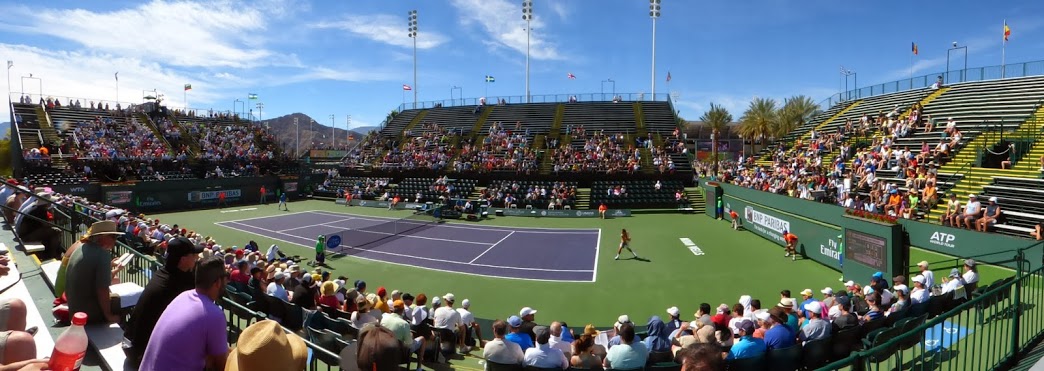
  • On Location… At Indian Wells

    On Location… At Indian Wells

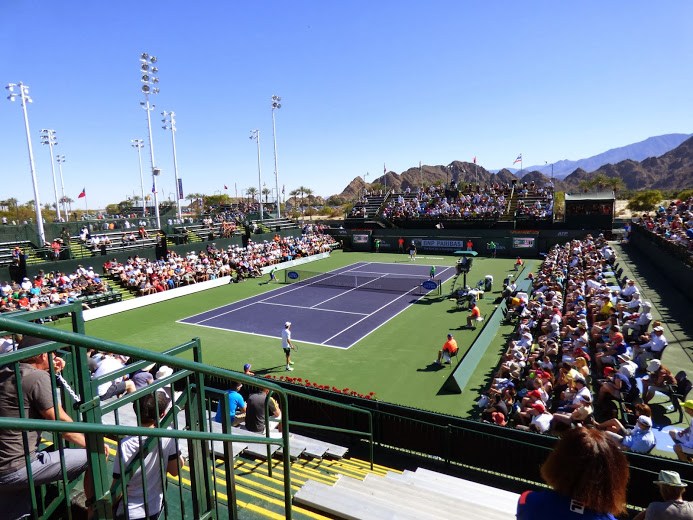
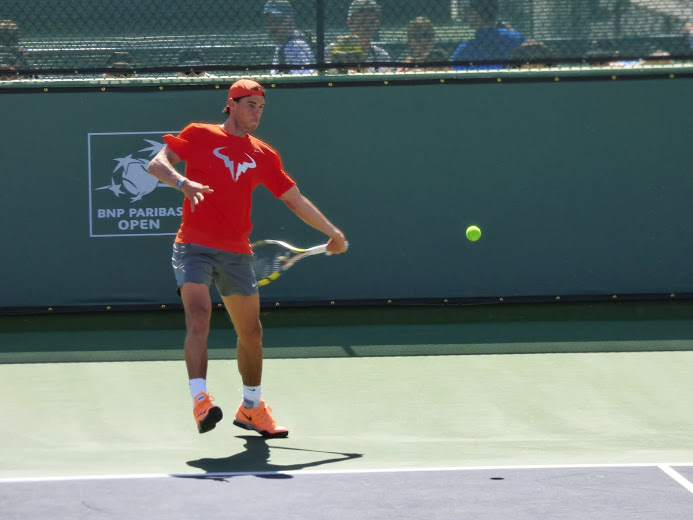
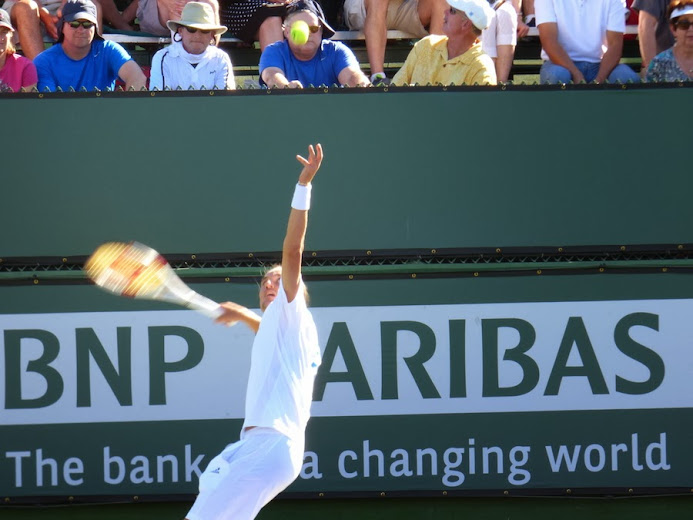
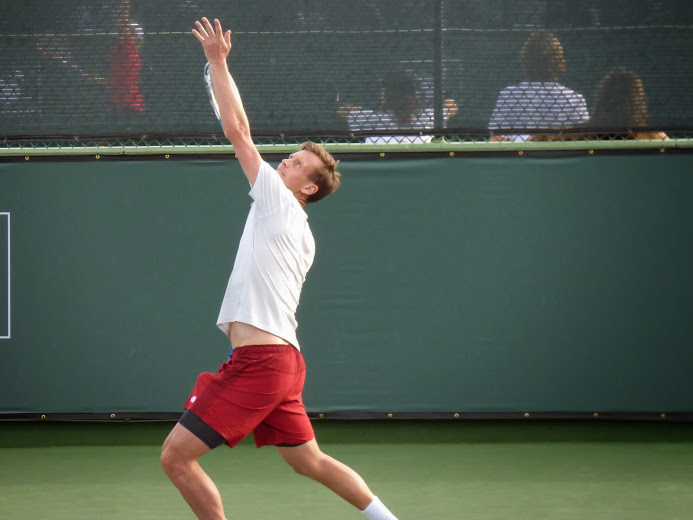
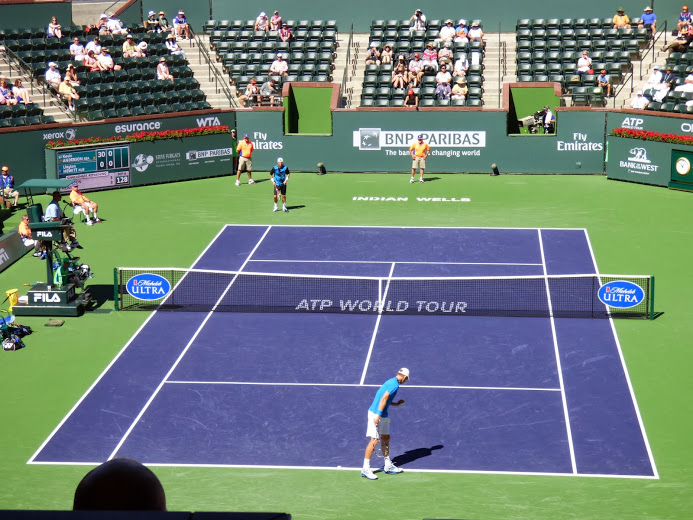
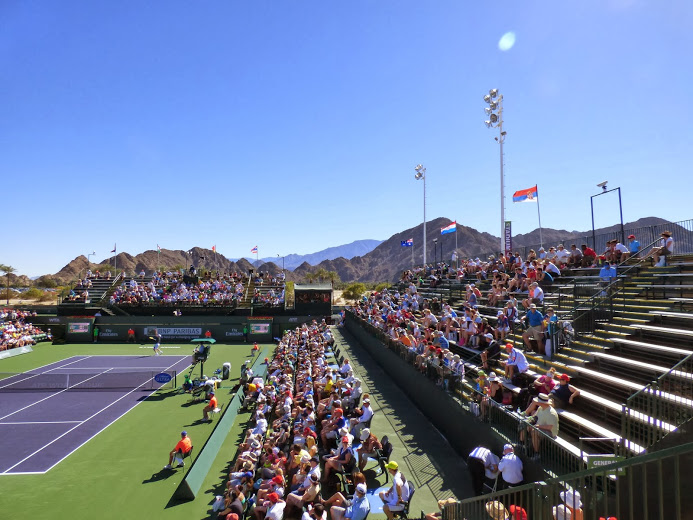
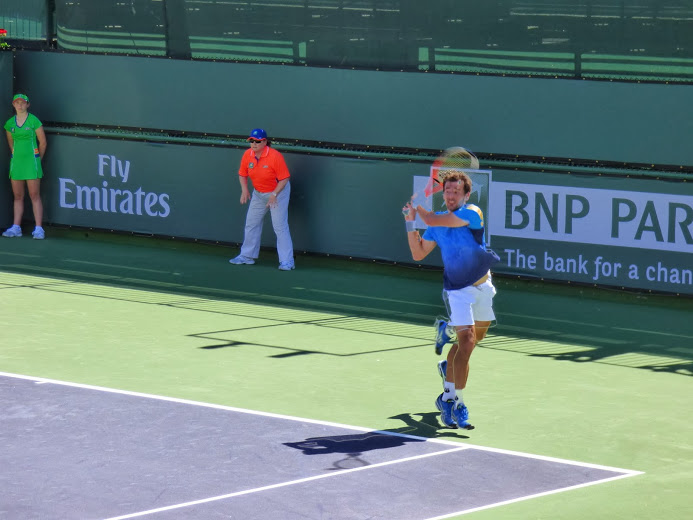
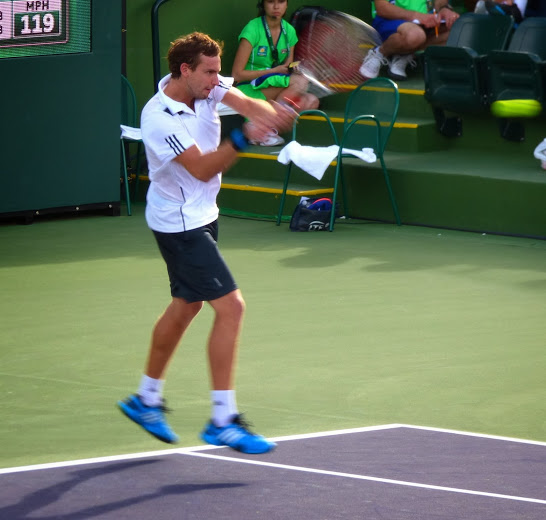
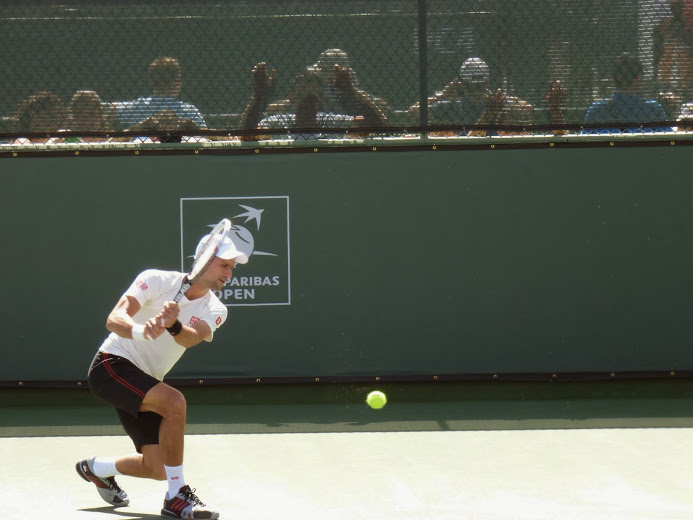
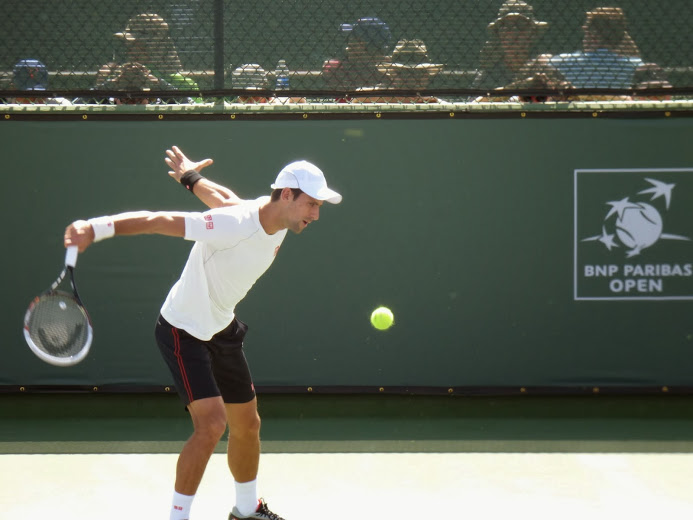
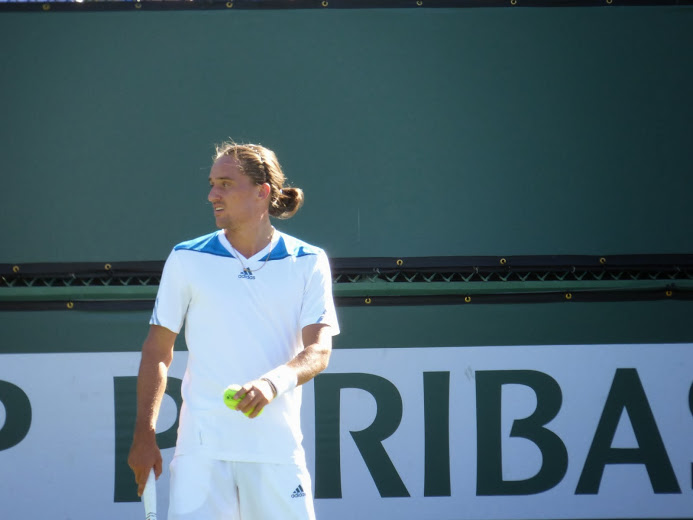
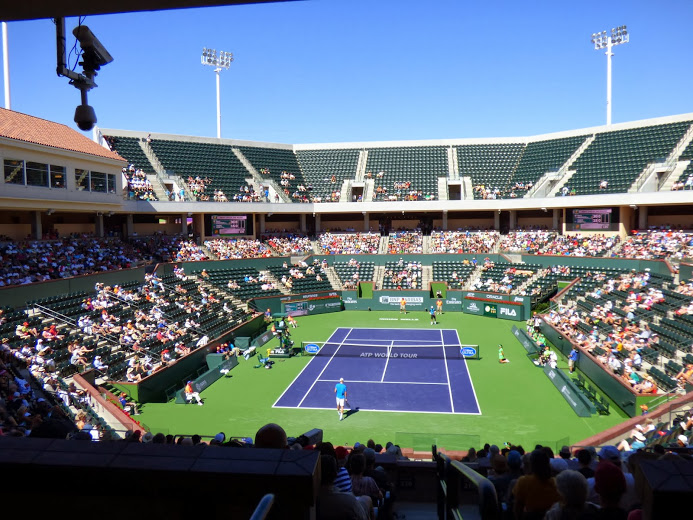
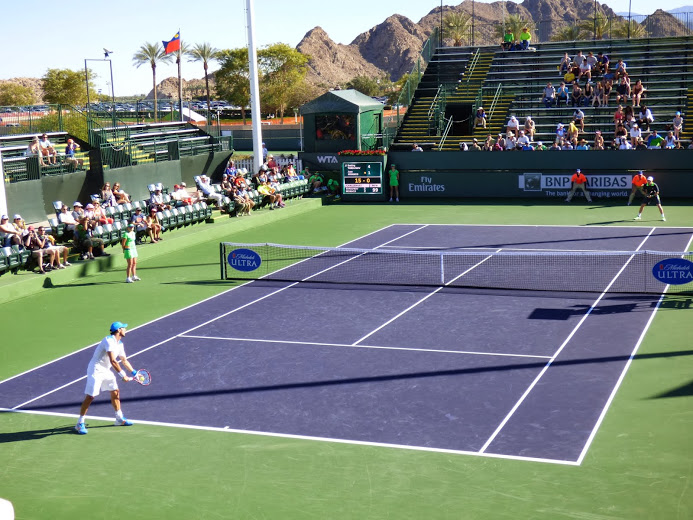
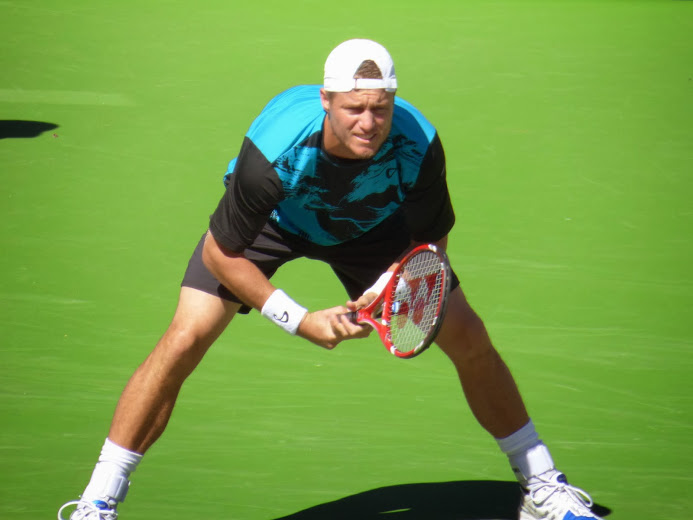
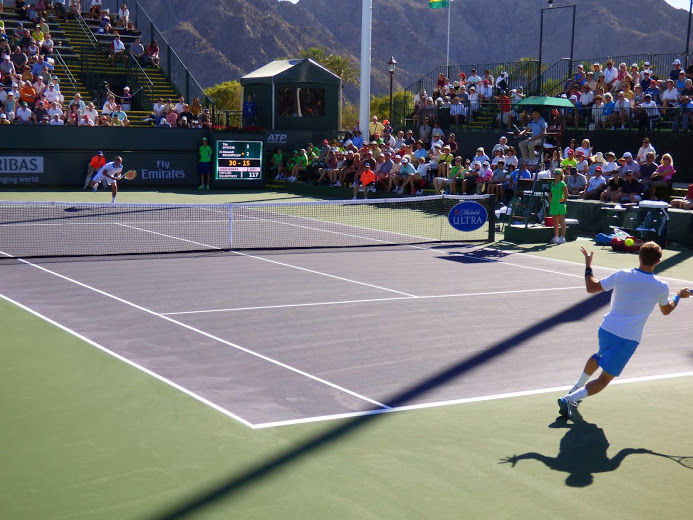
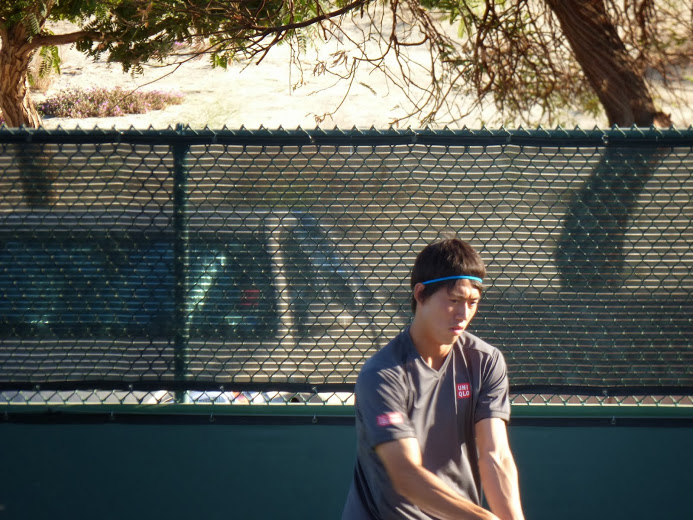
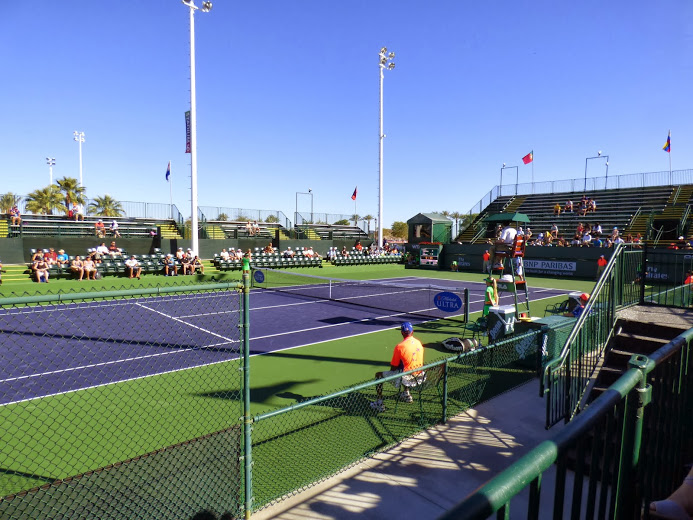
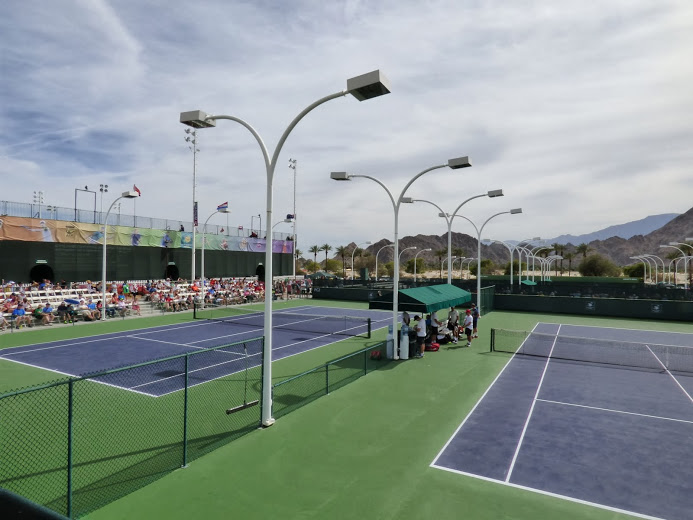
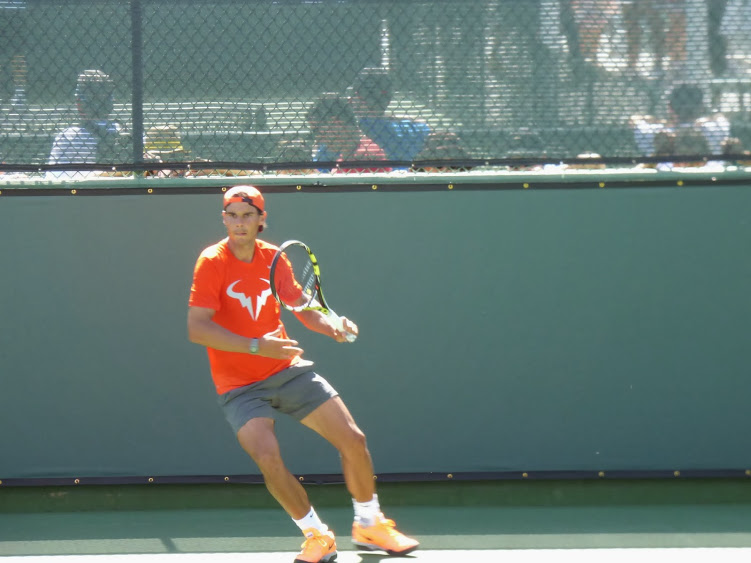
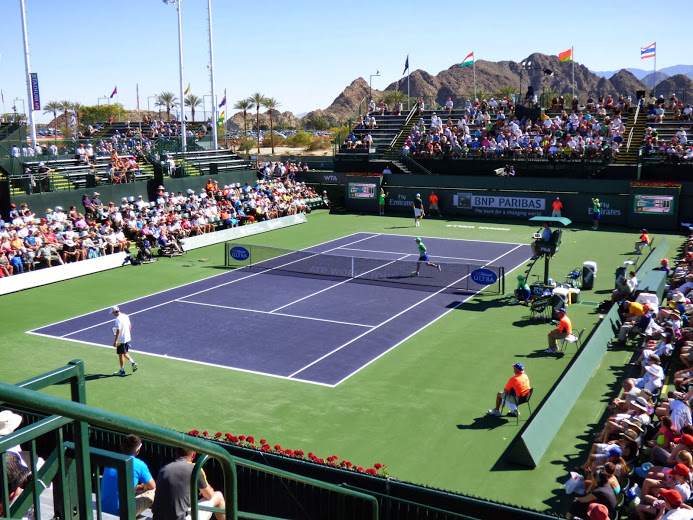
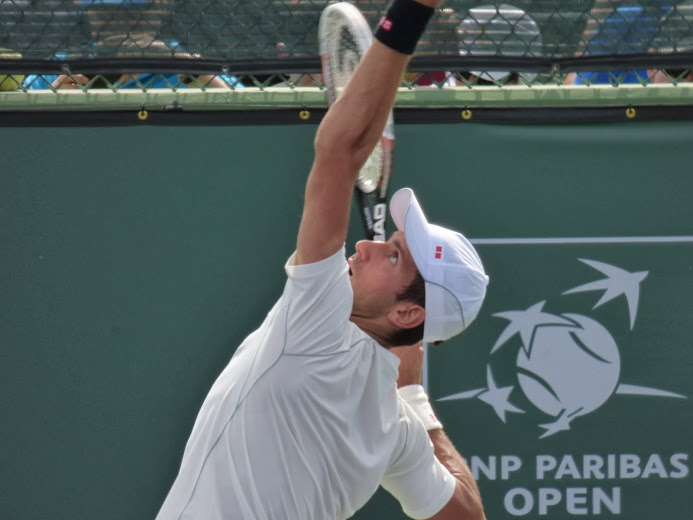
    A photo gallery from Indian Wells, all credits to Tennis Frontier contributor “Luxilon Borg”.

    Click on an image to enlarge…

  • Giants of Serve Do Battle at Delray Beach

    Giants of Serve Do Battle at Delray Beach

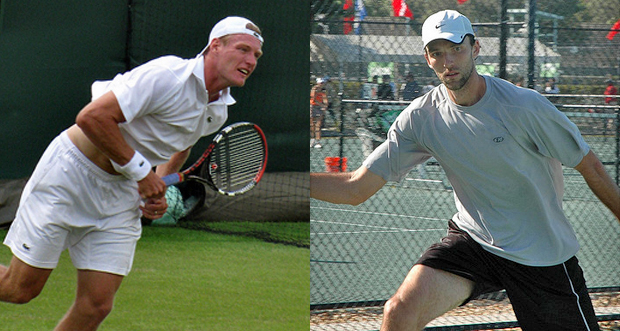
    Sam Groth Ivo Karlovic

    In a meeting between two of professional tennis’s giants of serve, Ivo Karlović, of Croatia, defeated the Australian Sam Groth 7-6(4), 6-3 in the first round of the Delray Beach Open.

    It was the first encounter between the two men, who stand 6 ft. 10 and 6 ft. 4, respectively. And it was probably the most unique of the first-round matches in Las Vegas, not only for the serve-and-volley style that both players employed, but for the fact that Groth was the first man to surpass the Croatian’s record for biggest serve in a professional tournament in 2012.

    Although the ATP doesn’t officially recognize serve speed records because of the diversity of radar equipment used on the tour, the Australian earned the unofficial honor at a Challenger event in Busan, South Korea, in 2012. In his second-round match against Uladzimir Ignatik, Groth blasted a 163.7 mph serve to break Karlović’s earlier record of 156 mph registered at the 2011 Davis Cup.

    Since then, the Croat’s prior record has been equaled or bested by two others. But it was that first record-breaker from Groth that was the more interesting because of the discourse that ensued. Legendary former player and coach Paul Annacone jumped in, saying, “I can’t believe it. I’ve seen Groth play. I haven’t seen him play in a year, but I’ve seen him. It’s got to be the radar gun.” Fellow big server Milos Raonic added that readings do vary depending on the tournament and location, though in the end he believed players cared little about the actual figures.

    Interestingly enough, the technology used at the Busan tournament, FlightScope, is the same implemented at many ATP World Tour events. A representative from the company verified that the reading was accurate.

    In Grand Slam tournaments, IBM provides the radar guns used to measure serve speed. For those who doubted Groth’s big serve potential because of his status in the second-tier of pro tennis, he actually recorded the fastest serve in Australian Open history this year with a 145.4 shot against Vasek Pospisil. Across the Slams, only two serves have been faster: Andy Roddick, 2004 US Open, 152 mph; Taylor Dent, 2010 Wimbledon, 148 mph.

    While it’s easy to get lost in the numbers, suffice it to say that both Karlović and Groth are some of the biggest servers in the game. To some extent, they are also breaths of fresh air with their willingness to come to the net and volley rather than hug the baseline like most modern-day pros.

    The Australian is certainly the more athletic, though both are enjoying very good starts to the year. Groth reached as high as world No. 157 in January after years outside the Top 200. At 34 years old, Karlović reached the final in Memphis last week, however he did retire after only one game today, while playing fellow giant Kevin Anderson of South Africa.