Blog

  • Dokic Looking for Return to the WTA Tour

    Dokic Looking for Return to the WTA Tour

    Jelena Dokic

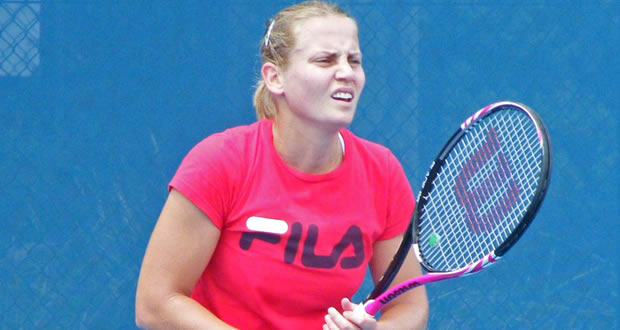
    Jelena Dokic, the former World No. 4, is hoping to return to the WTA tour at the Australian Open in 2014. The 30-year-old Australian-based Serb has been working out with Todd Woodbridge, the head of professional tennis down under.

    ”She wants to get back into the game,” stated Craig Tiley, the chief executive of Tennis Australia. ”She’s training every day with a focus on next year.”

    Dokic was a Wimbledon semifinalist in 2000 before a spate of family issues with a domineering father and subsequent injuries derailed her career.

    In 2009, she made a strong return by reaching the quarterfinals of the Australian Open before injuries once again sabotaged her comeback.

    It would be a remarkable return that almost certainly hinges on Tennis Australia awarding a wildcard entry.

    [divider]

    Cover Photo: NAPARAZZI, Creative Commons License

  • Johan Kriek On His Coaching Philosophy

    Johan Kriek On His Coaching Philosophy

    Johan Kriek Coaching
    My coaching philosophy…

    If one thinks there is just “one right way” to hit a shot, a serve or he/she is playing too flat, too much topspin or he/she is playing too defensively or too aggressively, etc. I say it is shortsighted. If a coach wants kids to play like he/she did, I say it is shortsighted and will shortchange the student’s tennis development.

    I was very aggressive as a player, and it showed in my fines!… Lol! Although that is what I liked to do as a pro, as a tennis coach and mentor to my academy kids, I really study a kid’s “tennis persona” and coach accordingly. However, I also teach my students every shot imaginable. Some shots we work on a weekly basis I call “specialty shots” such as clay court sliding low and close to the net drop-shot gets, drop-shot get lobs, topspin volleys off both sides, backhand and forehand topspin lobs in every direction, backhand jump overheads while moving backwards down the line and crosscourt, etc. My reason is that I would like to send my kids into the tennis battlefield with as many “tennis tools in their tennis toolbox” as I can. Only then will I be comfortable, regardless if they win or lose, that I have done my job. Obviously, the mental side is a huge factor in executing everything in the match, starting with the shots, then the tactics, etc. But I will talk about mental issues in later articles. It is the most neglected part in US kids’ tennis development. I see a lot of “mental midgets” (just like I was at that age) running around playing tournaments.

    Let’s return to my previous comment about a kid’s “persona.” I have girls in the under 12′s that hit quite flat and parents asked me if I should change their shots. Heck no! I will, however, make sure they understand that to be a little bit more effective and safer with their groundstrokes, is to dip the racket a little more in the “rally mode,” to use the forearm/wrist a little more in creating topspin, aim a little higher over the net, and keep the same good intensity in footwork, reading skills and look for that opportunity to attack, be it an outright winner with their favorite “flatter” shot or to come in and attack the short ball or put away the volley or overhead.

    Just listen to the commentators talk about Nadal and his “flatter shots” suddenly magically appearing, as if it were the biggest thing since sliced bread! I know they gear their commentary mostly towards a “low information” tennis public, but it is so clear that all sorts of spins and flat shots have their place in a match. A very clear example of spin is Stosur’s kick serve that puts a lot of pressure on right handers especially returning Stosur’s second serves on the ad court. Another super topspin that is in the history of our sport — probably the biggest and most effective shot — is Rafa’s forehand. He pins Federer in the ad corner with huge high and heavy topspins, especially on clay, and then plays ping-pong from there. Winners start popping everywhere off his forehand.

    However, I also saw James Blake beat Nadal some years ago twice in a row by hitting flat! Blake hit his forehand to Nadal’s forehand so hard that Nadal could not create the same power or topspin to neutralize Blake’s penetrating and skidding forehand. That was very smart! Blake was so confident doing that over and over that he ended playing incredible tennis in all other areas of his game. As we say it, he played “in the zone.” Pretty simple concept but to execute it well all together to win is another story.

    In closing, I teach my kids all the shots they may need in a battle. But I also know some like to play more baseline-based tennis, be it a runner retriever, or an aggressive runner and a big hitter while others are more aggressive moving to the net quicker. But all need to know what to do in all situations. It all comes down to executing the right shots for the right application in a particular situation. The rest is “luck of the draw”…

  • Annacone: Federer Split Was a Mutual Decision

    Annacone: Federer Split Was a Mutual Decision

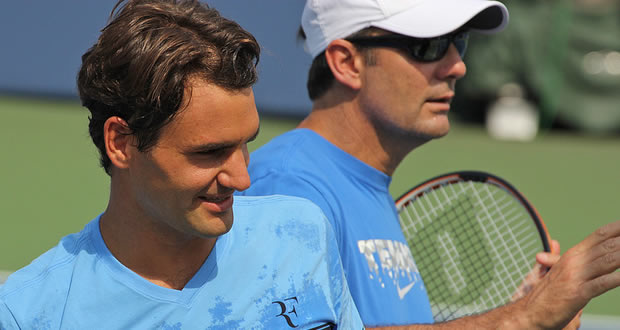
    Roger Federer and Paul Annacone

    Roger Federer’s coaching split with Paul Annacone has been described as a mutual parting of ways by Annacone in an interview with the newspaper USA Today.

    “After a number of very good, heartfelt, and really thoughtful conversations about what’s best in timing for Roger and also for me,” they concluded it was best to move on, said Annacone. “I think we both feel good about it. I know I do.”

    Annacone still believes 32-year-old Federer has another Major title in him. “I can’t imagine anything other than success coming his way. For me, it’s not a matter of if. It’s a matter of when.”

    [divider]

    Cover Photo: Marianne Bevis, Creative Commons License

  • Tracking All Those Streaks

    Tracking All Those Streaks

    Shanghai Masters, Final

    (1) Djokovic d. (6) del Potro, 6-1, 3-6, 7-6(3)

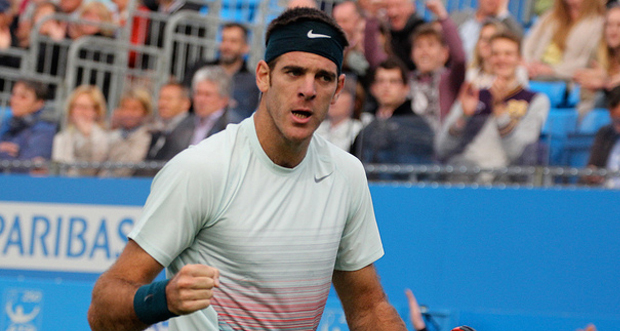
    Novak Djokovic this evening won his second straight Shanghai title, and fifteenth Masters title overall. It was also his twentieth consecutive victory in China. He was of course thrilled, though it’s tough to ascertain which particular achievement meant the most to him. Perhaps, in the moment, it was just winning this one fine match. Either way, it’s hard to quell one’s sense of scepticism when he insists that losing the No. 1 ranking has not steeled his resolve. It’s also hard not to feel sympathetic towards Juan Martin del Potro, who fell agonisingly short of claiming his first Masters title, and didn’t seem consoled by the knowledge that he’s never looked closer. His runner-up streak at this level now stands at three.

    Djokovic this week also extended his winning streak against Frenchman to twenty-eight, despite Gael Monfils’s best efforts to abbreviate it. There was also a two-game period in the first set of the first semifinal when Jo-Wilfried Tsonga looked threatening, and really showed us what he can do. He was out-rallying Djokovic from the backhand, pushing him around with his forehand, and moving beautifully. Then came a much longer stretch of games in which Tsonga demonstrated that he can’t do it often or for long enough. Thus was dispelled any  lingering mystery of why he isn’t ranked No. 1 or 2 in the world, and has yet to claim a Major.

    Djokovic, on the other hand, is ranked No. 1 or 2 in the world, and was hardly fazed by his opponent’s brief resurgence. He hasn’t lost to Tsonga in three and a half years, and learned long ago that these little spots of brilliance soon tarnish. The second set was closer – breaks were traded, lovingly – but even as a tiebreak hove gradually into view it never much felt like Tsonga would win it. As it happened, the tiebreak never arrived. Djokovic broke late, and that was that: his nineteenth straight victory in China, and eighth in a row against Tsonga. More streaks.

    I’ve no doubt various others were augmented, as well. We are living through an era in which records both grand and minor tumble every other week. It turns out there’s such a thing as milestone fatigue. It can be taxing to get too excited for the more trivial of these. Those achieved in a particular country or against citizens of a different country are about my limit. It’s conceivable that I might one day regale grandchildren with tales of where I was when, say, Jerzy Janowicz captured the calendar Grand Slam (I predict I’ll be at home debating whether I should buy some bread or just keep spooning marmalade from the jar). I haven’t yet decided whose grandchildren they will be; boring random kids will be my right as a lonely old loon in a shopping mall. Whoever they are, I doubt they’ll stand still while I explain that Djokovic went unbeaten throughout his career while facing left-handed Canadians in Paraguay.

    It’s also conceivable they won’t really care that for just the second time in 2012, Rafael Nadal failed to reach the final of an event in which he was entered. (The first time was, of course, at Wimbledon, when he fell in straight sets to Steve Darcis. Mentioning that one will surely result in stunned disbelief from all future generations, notwithstanding the carefully preserved documentary evidence.) Nadal, by his own admission, played fine, but was unlucky to run afoul of Juan Martin del Potro in truly fearsome touch. The first set in particular was astonishing from the Argentine. The second was merely very, very good. Nadal’s peculiar post-US Open record continues. Since 2005 he has claimed only one title in this part of the season, which was in Tokyo three years ago. You can bet the grandkids will hear about that.

    Del Potro no doubt extracted a healthy portion of hope from his semifinal performance, not to mention his excellent run to the Tokyo title last week. He was thus well-placed to relearn the lesson that when faced with Djokovic (in China) hope sometimes provides no more nourishment than a mouthful of ashes. Del Potro admittedly didn’t reproduce his level from the day before – faced with a superior returner he was compelled to go after more first serves, and thus missed a lot – but he was still decent. He has won plenty of matches playing worse. The difference was that the bludgeoning groundstrokes that pushed Nadal around left Djokovic unmoved, and were faultlessly redirected up the line. Twice Djokovic gained a point for the first set bagel, but didn’t take either, though he served it out in the next game.

    The change came in the second game of the next set. Djokovic has shown a tendency in those parts of the season staged outside China for his focus to waver. It would be tempting to say something similar happened here, but the issue really seemed more physical than mental. Perhaps it was spiritual. Whatever it was, suddenly Djokovic forgot how to use his feet when hitting forehands, at a very fundamental level. He was lurching all over the place, spraying balls everywhere, as though someone had spiked his magic tennis player water. “Bambi on ice” was Marcus Buckland’s apt description. This enabled del Potro to break. Improved serving helped him eventually hold for the set.

    Last year’s Shanghai final was superb for two sets, then rather faded away in the third as Andy Murray’s legs and will gave way. Today’s final, by contrast, only really got going in the third. As these things go, this is probably the more memorable configuration. Djokovic had by now untangled his feet, while del Potro continued to blast away with that forehand. Finally, the best two players of this year’s Asian swing were playing well at the same time. Break points came and went for both, and in nearly every case were saved with heroic, fearless play. Djokovic gained a couple of match points at 4-5, with del Potro serving, but wasted one with a tight return, and as punishment was obliged to hand back the other as well. The tiebreak never felt inevitable, but it arrived anyway, and once it did it felt fitting. Sadly for Argentine hopes, once it started it was almost entirely Djokovic. There seemed to be hundreds of Argentines present in the Qizhong Forest Sports City Arena, most of whom had ignored the signs at the entrance warning them to abandon all hope. It didn’t help that the signs were written in Serbian. They looked terribly disappointed, but tearfully and rightfully proud of their man, who’d made a mighty effort.

    Djokovic sealed it with a last backhand winner up the line, his 47th winner of the match, whereupon he and his opponent availed themselves of their usual hug at the net. Del Potro wandered to his chair and buried his face in his towel. Djokovic launched himself into more extravagant celebrations. Until 2012 the Shanghai Masters had never produced a great final. Now it’s threatening to become a habit. Its streak of great finals is now two, and counting. I hope you’re all keeping track. This stuff is important.

  • Novak Djokovic Wins the Shanghai Masters

    Novak Djokovic Wins the Shanghai Masters

    Novak Djokovic has won the Shanghai Rolex Masters by defeating Juan Martin Del Potro 6-1, 3-6, 7-6 (3) in a close final played out over 2 hours and 32 minutes.

    Djokovic was in full command throughout the opening stanza, breaking the Argentine twice en route to grabbing the first set 6-1.

    Del Potro, the conqueror of World No. 1 Rafael Nadal in the semifinals, began to find his rhythm in the second set and dictated early proceedings behind his monstrous forehand. He broke Djokovic and held on to level the match.

    In a hard fought final set decider that went all the way to a tiebreak, Djokovic finally pulled clear to seize opportunities in the breaker to win 7-3 and wrap up the match.

    Djokovic has now won 20 consecutive matches in China, having won the 2012-2013 Beijing titles, and the 2012-2013 Shanghai trophies. He extended his personal head-to-head record with Del Potro to 10-3.

    Doubles

    Ivan Dodig and Marcelo Melo won the mens doubles defeating David Marrero and Fernando Verdasco 7-6, 6-7, (10-2).  It rounded off an impressive week for the pair who also defeated the top ranked Bryan brothers in the semifinals.

    [divider]

    Discuss the Shanghai Open in the Tennis Frontier Forums.

    [divider]

    Cover Photo: Marianne Bevis, Creative Commons License

  • Federer and Annacone Part Ways

    Federer and Annacone Part Ways

    Roger Federer and coach Paul Annacone have parted ways.  The 32-year-old Swiss superstar revealed the news in a statement posted on his official website.  The break comes after a poor run of form for the world No. 1, including an early exit at the Shanghai Masters to Gail Monfils.

    Federer’s statement on the split:

    After a terrific 3 ½ years working together, Paul and I have decided to move on to the next chapter in our professional lives. When we started together we had a vision of a 3 year plan to win another Grand Slam title and get back to the number #1 ranking. Along with many other goals and great memories, these 2 main goals were achieved. After numerous conversations culminating at the end of our most recent training block, we felt like this was the best time and path for both of us. Paul remains a dear friend, and we both look forward to continuing our friendship. I want to thank Paul for his help and the value he has added to me and my team.

    [divider]
    Talk about the split in the Tennis Frontier Forum

    [divider]

  • Opinion: Federer Should Rehire Coach Peter Lundgren

    Opinion: Federer Should Rehire Coach Peter Lundgren

    OLYMPUS DIGITAL CAMERA

    Paul Annacone has been dropped by Roger Federer as his coach.

    Clearly, Team Federer needs a change in chemistry.

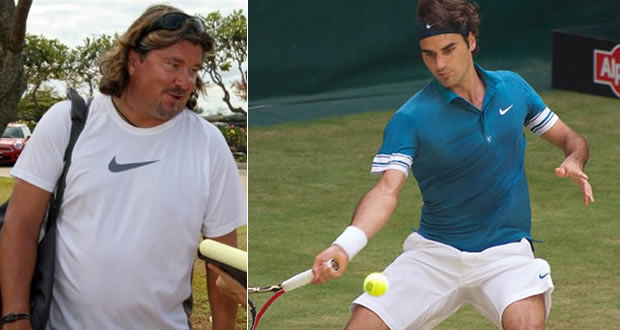
    Perhaps a good choice to replace Annacone would be former coach Peter Lundgren, who was able to spark the best out of Federer during his early years on the ATP World Tour.

    Lundgren is a jovial, fun-loving sort of person who also has a proven track record of knowing how to maximize a player’s talent.

    Lundgren and Federer had a special chemistry, as former ATP player, opponent, and sometime practice partner Attila Savolt remarked about Roger for my book “Facing Federer.”

    “He was very friendly at practice. With Lundgren, they would always be laughing, relaxed, always in a very good mood. It was a nice energy around them, even on the practice court. They don’t take it so serious. They were joking around, they were very relaxed, really enjoying time together. I really thought that they really fit together very well.

    “I think also Lundgren was an effect on him. He’s a very open guy, very relaxed, very nice guy too. I found that they really fit together. There was always a smile on both of their faces.”

    Could Peter Lundgren be the missing piece of the puzzle? Could Peter Lundgren be the guy to kindle the Federer fire once again? Could Peter Lundgren be the guy to make tennis fun again for Roger?

    Lundgren is likely available right now. He worked with Francesca Schiavone at the US Open this year but the Italian was bombed out in the first round by eventual champion Serena Williams.

    [divider]

    Talk about the split in the Tennis Frontier Forum

  • Down the T #3: Michael Chang Interview

    Down the T #3: Michael Chang Interview

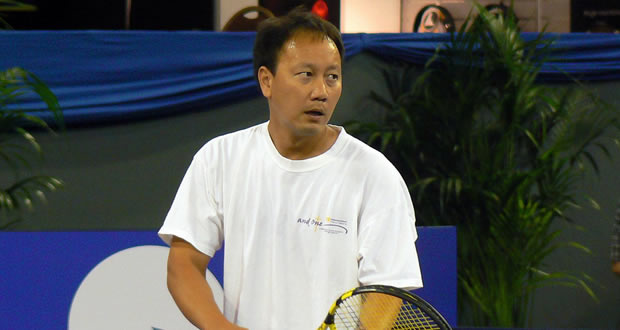
    We’re joined on our latest installment of “Down The T” by Michael Chang, the 1989 French Open champion, and winner of multiple singles titles on the men’s tour. A big thank you to Rebecca Brown of the Chang Family Foundation for helping to facilitate the interview.

    [divider]

    Michael Chang

    Owen (Tennis Frontier): Michael, Thank you for agreeing to be interviewed by the Tennis Frontier.  We really appreciate you taking the time out.  I took the opportunity to ask members of our online tennis community if they would like to contribute some questions and we had a big response. I narrowed it down to ten, as I know your time is valuable!

    [divider]

    Q1. You rose through the ranks alongside a particularly strong peer group of American tennis players including Pete Sampras, Andre Agassi, and Jim Courier. 

    In his autobiography, Sampras identified you as his personal measuring stick for his progress and level of play.  How did you look upon the other members of your peer group and who (if anyone) did you compare your progress with when coming through the junior ranks and moving into the pros? (A Question from Britbox)

    I think the reason Pete said that was because I had a very good record against him in our latter junior years, as well as the first couple of years playing him as pros.  My results were pretty high up there during that time and we obviously competed against each other a lot.

    As far as my peers, I can’t say I really compared myself to anybody just because everyone was in the same boat and no one player really accomplished any real breakthroughs until Andre’s year in 1988 and my French Open win in 1989.

    [divider]

    Q2. You were the “youngest-ever” to do a lot of things in your career, most notably, win a Major. What do you think the unique pressures are to winning things at such a young age? (A Question from Moxie629)

    I actually don’t think there are too many pressures at that young of an age if they are playing professional.  No one expects anything and the only pressures might be coming from sponsors or media hype.

    For me, I really didn’t feel pressure until after winning the French Open because who would really expect a 17 year old to win on the ATP Tour, much less a Grand Slam?!

    [divider]

    Q3. Why do you think the transition from juniors to pros is taking much longer in the current era, and do you think we’ll see teenage Major winners again? (A Combined Question from Didi, Moxie629)

    I think the transition is much more difficult today because tennis is a lot more physical.  Guys are hitting harder and playing more physically demanding tennis.  On top of that, the technology of the current rackets and strings allow players to generate so much more spin and power.

    It’s tough for a teenager to compete with that now from a strength perspective.  Obviously, it can still be done but it’s certainly much more difficult.

    [divider]

    Q4. Winning the French Open Final against Stefan Edberg was a stunning breakthrough.  Tell us a little bit more about the day – your ritual before and after the match, and how you felt as the match unfolded. (A Question from britbox)

    I didn’t change anything before the final at Roland Garros.  The only thing I made sure of was to hydrate a bit more because I had serious cramping issues in two prior matches.  It was a warm day on that final so hydration was important, especially as it ended up being another five-setter.

    [divider]

    Q5. The match with Lendl at Roland Garros earlier in the tournament has been described as one of the most memorable in tennis history. The underarm serve, moving up to the service box to receive, and the various strategies to unsettle Ivan, while at the same time dealing with cramps.  Did you decide on the tactics beforehand or during the match, and have you ever discussed the match with Lendl since? (A Combined Question from 1972Murat, Jesse Pentecost, JLLB)

    I have never discussed the match with Ivan although I have talked to him about many other things since.  I don’t plan on bringing it up with him either!

    The underhand serve was never planned (not sure how you could plan that actually) and in fact, the thought to do it only occurred moments prior to me hitting it.

    [divider]

    Q6. You were on the tour at the same time as some great players – Sampras, Courier, Agassi, Edberg, Becker, Lendl, just to name a few..  Who did you enjoy playing the most and which players were you “friendliest” on a social level with during your career? (A Question from Denisovich)

    I enjoyed playing against all those players through the years.  I have beaten them all but I have lost to every one, too!

    To know that I played against so many tennis great through my career was pretty exciting though.  It didn’t make it easier to win titles but it was fun and exciting!

    If you think about it, how many players get to compete against so many Hall of Famers in one span of a career.  And that is still not including McEnroe, Connors, and Federer.

    [divider]

    Q7. One of our contributing writers, Scoop Malinowski, is currently penning a book on Lleyton Hewitt.  How did you find playing Lleyton? And what was your most memorable match or anecdote? (A Question from Scoop)

    I only played Lleyton twice in my career and unfortunately, it was toward the end of my career.

    He is a great champion and certainly one of the toughest competitors out there.  He has a great game but we all know he’s won even more matches because of his tenacity.

    [divider]

    Q8. Do you think the physicality of the modern game poses a disadvantage to smaller players such as Kei Nishikori?  This question is really twofold:  How do you think you’d have adapted your game in the current era, and what kind of advice would you give Kei? (A Combined Question from Broken Shoelace, Masterclass)

    I would never say a smaller player has a disadvantage in tennis.

    They may not be able to hit as hard or serve as big but tennis is not all about that.  Being one of the smaller players on tour, there are always ways to beat the bigger players and being smaller and quicker has its advantages.  I do think a smaller player does need to be able to play different styles, though, because it keeps bigger players off balance and guessing.

    I do believe I could have adapted to this current era as well just because the same questions were asked of me when I first played on tour.  I would get plenty of comments like, he’s too small, his serve isn’t big enough, he doesn’t have enough weapons, etc.

    You believe what you want to believe but for me, I know where my strength is, and I would never listen to what other people think I can or can not do.  If I did that, I never would have even turned pro.

    [divider]

    Q9. There has been plenty of discussion about the homogenization of surfaces, strings, racquet technology in the current era. What do you like and dislike about today’s game? What kind of changes would you make, if any? (A Combined Question from Arienna Lee, Front242, Riotbeard, Denisovich, Moxie629)

    Homogenization will never truly happen.

    The simple reason is because there are way too many differing factors in different places where pros play around the world.  They tried to do that with something as simple as balls being played each week and it couldn’t be done.

    Weather conditions, altitude, humidity already make each city different in playing conditions.  I think it’s exciting and fun that players play with different equipment, and surfaces are changing during the seasons.  Everyone is unique and special and that should be celebrated!

    [divider]

    Q10. Of the players in the current era, who do you particularly like watching and why? (A Question from Denisovich)

    It’s fun watching the top players like Rafa and Novak go at it but also, it’s great watching the players in general, playing at their best.

    I would hope a few more Asian players would succeed and do well, though, especially on the men’s side.  I think that would be great for tennis and for the growth of tennis in Asia.

    [divider]

    Finally, please tell us about your Foundation work in recent years, integrating tennis, family, and faith, and the meaning this has brought to your own life. (A Question from Masterclass)

    The Chang Family Foundation has been a wonderful way to not only give back to the community but also to share the Gospel message through sports like tennis, basketball, and volleyball.

    It has been very rewarding and we have the opportunity to touch many lives along the way!  When you think about sports, its real purpose is to bring people together, and through various events and leagues, we can use those opportunities to encourage others in life while sharing the love of Christ.  To do both of those things through sports, particularly tennis, is satisfying knowing that you’re touching hearts and making a difference.  That’s what our Foundation is all about.

    Find out more about the Chang Family Foundation at mchang.com

    Chang Family Foundation

    [divider]

    Discuss Michael’s Interview on the Tennis Frontier Message Boards

    [divider]

    Cover Photo: maartmeister, Creative Commons License
  • Drug Testing: Would You Postpone a Breath Test?

    Drug Testing: Would You Postpone a Breath Test?

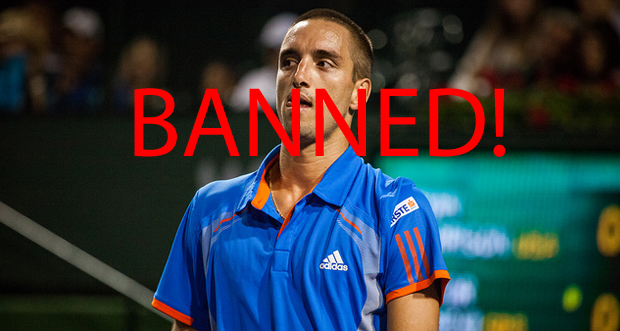
    With the high profile drug related bans this year from Viktor Troicki and Marin Cilic among others the whole concept of drug use, testing, and the issue of cheating in tennis is back in the spotlight.

    I don’t know about you but the more I learn about the area of cheating, particularly in the context of drugs, the more I realise how complex the issue really is. In particular my eyes were opened while studying sport science where I learnt that all the banned drugs have very serious side effects. By serious I mean life threatening. There are also known performance-enhancing drugs that are not banned, like creatine, because they do not pose a risk to health in the quantities the drugs are used.

    [divider]

    Discuss this article in the Tennis Frontier Forum

    [divider]

    This changed my view from drugs being a performance-enhancement issue to a health and safety one because their ability to enhance performance was irrelevant. Only their ability to cause harm was relevant. Banning them puts them off limits to protect the health and safety of athletes taking part in sport, just like banning or limiting the use of alcohol while driving to make roads safer.

    Obviously this is a huge statement but I wanted to expand on this in a later post. For now I just wanted to introduce drug regulation as a health and safety challenge where boundaries are set and penalties are imposed for crossing the boundaries, and making the sport unsafe or even dangerous for those involved. The aim is to encourage safe competition. The level playing field being that only safe acceptable risks should be taken. The health of athletes should be paramount.

    So I started to think along lines we all understand. First I considered work and the workplace. What would be expected of us in a similar situation?

    Tennis players at the top level are workers like the rest of us, and the ATP, the tournaments, and everything related is either an employer or a market for services. So in any market or employment contract there become legally binding contracts and levels of service that should be maintained by both parties. Boring but key. My point is that all of us turn up for work, often when we really don’t want to, because if we don’t we could be fired. In the same way we also expect to be treated equally in our work. If someone else is doing something dangerous to get the job done, then they should be stopped. As workers, contractors, or suppliers there should be a system that ensures high standards but not at a human cost. Pushing boundaries and getting more from ourselves on a daily basis is what we should all be doing, but not when there is strong evidence it will harm us or others.

    That is how I am viewing all these cases. Once I see them as part of a market like any other I can then start to think of what is fair and right on a much more general and real scale, and one I can understand with real experience and insight. All of us work, have worked, or will work. So what is fair to expect of us? How many things at work would you reschedule if you were ill? A meeting or presentation? Maybe. But an interview or product release or court date? Probably not. Definitely not a hearing where you obtain your license to practice your profession. I don’t think I would let anything intervene. What do you think?

    Then I started thinking about whether I accept Troicki’s explanation that he wasn’t well which led me to the idea that failing a drugs test is like failing a breathalyser test when you are driving. This is another thing that we are all subject to. Driving is a privilege and not a right. In the UK I understand that refusing a breath test could be grounds for an instant driving ban. However, if you submit to the test but the test is inconclusive or even positive you have a right to appeal and should ask to be tested with a more accurate device at the station.

    My point is that a breath test is to prevent dangerous driving and save lives so the rules and regulations are strictly enforced. A drug test in tennis is to prevent the dangers of the substances being tested for both on the individual and his peers. The reasons for the tests are similar. Shouldn’t their enforcement be similar, too?

    Should you be able to postpone a breath test or at least tell the officer that you’re ill and agree to take the test later? Not something that I believe is allowed by law. You must submit to the test there and then regardless. The point being that ignorance of the law is not a defence and neither is illness. There is a big difference between refusing a test and not being able to produce a sample.

    You can see that I consider this a criminal issue because the side effects of banned drugs are so serious. I don’t consider it as simple as cheating. I consider it as important as life and death because of that. Remember, if adult athletes are taking such dangerous substances, then what are child athletes taking and who is protecting them? See it in that light and you might change your view on drugs. I certainly have.

    In summary, by participating in competition all athletes must accept they will be tested. Regulating health and safety must be part of any sport. To compete safely must be a given, not a hope. Regulation is part of all industries for the exact same reason that CEOs of companies must take medical tests, on-call surgeons and doctors must respond when they are needed, and we all must make a court date if we have one. We don’t get to reschedule these things for our own reasons.

    Regulating drugs is such a complex issue that sport should not try to find its own solution. There are plenty of known, tried and trust approaches devised by experts in other industries. Learn from these instead. Hence my example of a breathalyser test. My point simply being that anyone at any point could be stopped while driving to be tested. It happens to us all. Should we be able to postpone it or should we be deemed guilty for refusing? I personally cannot see a reason I would not take the test. We are all subject to this so you form your own opinion.

    You may start to understand why I would suggest they introduce a license to play tennis on tour — something that could be revoked for not passing a test, and something you must achieve in order to be on tour. The licence is your privilege, and your right to practice. Much like becoming a doctor, barrister, or accountant, your fitness to practice is continually assessed and rigorously enforced.

  • Monfils Stuns Federer in Shanghai

    Monfils Stuns Federer in Shanghai

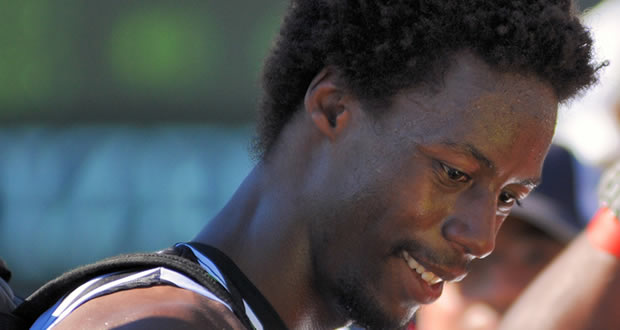
    Gael Monfils

    Gael Monfils recorded only his second career victory over former world No. 1 Roger Federer to progress to the quarterfinals of the Shanghai Masters.  The Frenchman prevailed 6-4, 6-7(5), 6-3 in just over two hours.

    Federer pushed the match to a third set coming back from 3-5 down in the second set to break Monfils and take the eventual tiebreak.

    Monfils was not to be denied, breaking Federer again in the fourth game of the deciding set. It proved to be crucial, as the remainder of the match went with serve.

    Monfils will now meet the winner of Novak Djokovic and Fabio Fognini in the next round.

    Federer will now have increased concerns about qualifying for the World Tour Finals following a poor run of form.

    [divider]

    Discuss the Shanghai Masters with fellow tennis fans in the Tennis Frontier Forum.

    [divider]

    Photo: Christian Mesiano, Creative Commons