Blog

  • Wawrinka Reigns in Monte Carlo

    Wawrinka Reigns in Monte Carlo

    AO ATP Winner - Stan 2

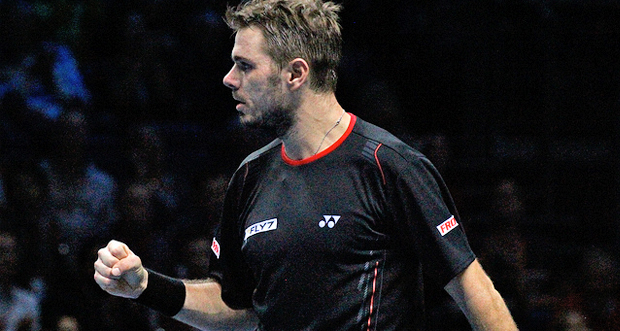
    Backing up his first Major title in Australia in January, Stanislas Wawrinka, of Switzerland, beat his countryman Roger Federer to win his first Masters 1000 title in Monaco today, 4-6, 7-6(5), 6-2.

    As the two men are friends, Davis Cup teammates, and co-winners of the 2008 Olympic gold medal in doubles, the match started a little tentatively, and rather lacking in kill shots. Federer took the first set on the strength of one early break. In the second, Wawrinka drew the first break, but Federer broke back immediately, and so it was decided in a tiebreak, which Stan took hold of with the first mini-break and never relinquished control from there. He carried that aggressive attitude into the third set, going up two breaks immediately, for a 4-0 lead before Federer held serve. Wawrinka served it out at 5-2.

    With the win, Wawrinka retains the No. 3 slot in the world rankings, as well as his claim to the Swiss No. 1 spot.

  • Nadal Ousted in Monte Carlo

    Nadal Ousted in Monte Carlo

    AO ATP Winner - Nadal 1

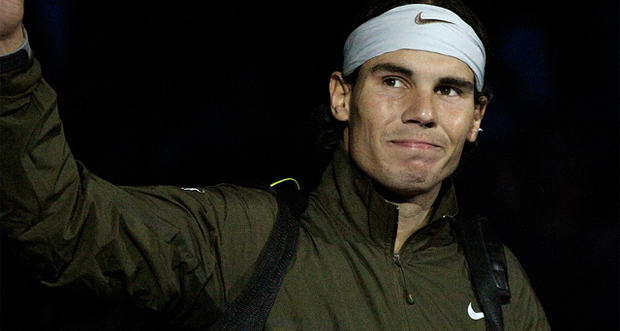
    David Ferrer did what is one of the tougher tasks in tennis today by handing Rafael Nadal a loss in Monte Carlo. Only yesterday, Nadal marked his 50th win in the principality, as well as his 300th win overall on clay. Nadal lost to Guillermo Coria in 2003 when he was 16 years old, then went on to win the title here a record eight times consecutively, before having his streak snapped last year in the final by Novak Djokovic.

    Today the world No. 1 was uncharacteristically error-prone (27 in the first set, 44 total unforced errors), while his fellow Spaniard was focused and committed to attacking the Nadal backhand. The first set was long and hard-fought, with breaks of serve traded, but Nadal lost the tiebreak at 1, after an 85 minute first set. Ferrer was up by two service breaks in the second set before Rafa got one back, but couldn’t fight off Ferrer on his next attempt to serve out the match, which he did to win 7-6 (1), 6-4.  Ferrer next faces Stan Wawrinka and will be looking to win his second Masters 1000 title.

  • Tennis Frontier Celebrates One Year

    Tennis Frontier Celebrates One Year

    Anniversary White smallest

    On this day last year, 14 April, 2013, Tennis Frontier first hung out its shingle. We thought we’d wish ourselves a happy anniversary, and remind you how far we’ve come in just one year.

    Founding partners Owen Gigg, Trent Curtis, and Susan DePalma started the site as a way to keep a wandering tennis community together. In our maiden year, while we have been steadily adding to our growing list of Discussion Forum members, we have also become a lot more.

    Twitter, Facebook, Pinterest, LinkedIn, and Google+ social media channels have all been launched. Tennis Frontier now has two to three times as many Twitter followers as Forum members. We’re delighted that not only have we maintained such a loyal following amongst old friends, but have also added so many new voices to the conversation.

    According to Google Analytics, Tennis Frontier currently gets between 15,000 – 25,000 unique visitors a month, and between 130,000 and 200,000 page views — noteworthy growth since last April.

    Down The T”, one of our trademark blogs, has featured exclusive interviews with Major winners Johan Kriek and Michael Chang, plus Wimbledon finalist Chris Lewis. Participants have also included Andy Murray’s former coach, Ben Saunders, and the recently-retired Wimbledon finalist David Nalbandian.

    Coming soon will be another exclusive interview: tennis legend Margaret Court, winner of a record 24 singles Majors.

    In order to provide additional original content, we have also been adding to our blog roll.

    Our thanks to bloggers (in alphabetical order):  Brian Canever, Warren Casreo, Colin Chambers, Samer Kadi, Johan Kriek, Arienna Lee, Chris Lewis, Scoop Malinowski, John Masters, Jonathan Northrop, and Jesse Pentecost.

    We are also grateful to those who have contributed through their efforts as moderators.

    We’ve surprised even ourselves by how far we’ve come in just one year, but we’re even more excited about what the coming year will bring.

    Thank you for helping to make Tennis Frontier such a success.

  • Luxilon Borg’s Davis Cup Photos – US v. GB 2014

    Luxilon Borg’s Davis Cup Photos – US v. GB 2014

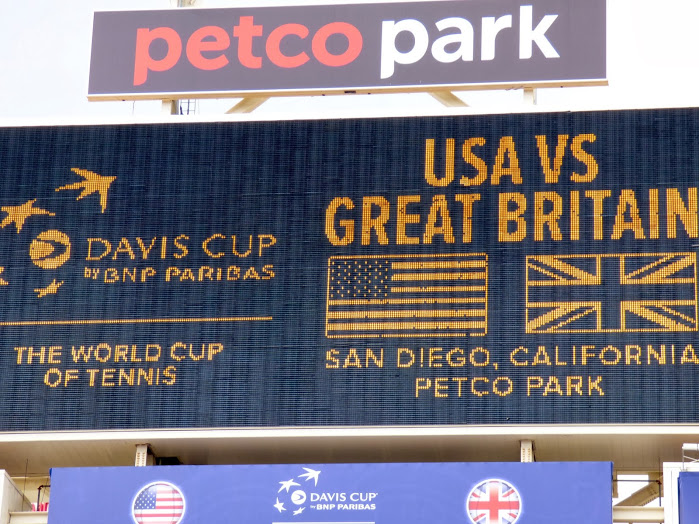
    Luxilon Borg was in attendance when Great Britain beat the US team 3-1 in San Diego this year.  He offered these photos:

    MurrayMurray2Murray3Murray4MurrayserveQuerryCourierWideshotCourierCourier1CourierMurrayDonaldyoungMurrayMurray3Murray4Murray5Murray6Murray7Murray8MurrayCU.jpg.MurrayinterviewMurrayserve1MurraywatchingQuerrey2CourierQuerryQuerryservingScoreboardteambritainCourierCourier1CourierMurrayDonaldyoungDonaldyoung1


  • A Deflating Innovation

    A Deflating Innovation

    Miami Masters 1000, Final

    (2) Djokovic d. (1) Nadal, 6/3 6/3

    Novak Djokovic today won the Miami Masters for the fourth time, a mere two weeks after winning Indian Wells, thus re-establishing his pre-eminence on hardcourts just in time for the clay season, and leaving the rest of us with almost nothing new to say. Any point made after Indian Wells remains more or less true after Miami, if not more so. The finalists in California had appeared divinely favoured as all foreseeable impediments were removed from their path. In Florida the gods left even less to chance, excising the draw of likely threats by the quarterfinals, and then striking down both semifinalists before another ball was struck.

    Having both semifinals decided via walkover proved to be a deflating innovation, one that went unappreciated by the local crowd. They booed lustily at the news of Tomas Berdych’s default, although one imagines a large portion of the disapproval can be attributed to the discovery that no tickets refunds were forthcoming. Word is Berdych had a crook gut. Nishikori is notorious for withdrawals and retirements anyway, and his default grew more or less inevitable after he posted a pair of marathon upsets over David Ferrer and Roger Federer. The vexing hypothetical question of what would have happened had Berdych and Nishikori been drawn to face each other and then withdrawn was duly raised. Is there a rule, and if so should it be changed? This matter was addressed by Peter Fleming with devastating practicality. He pointed out that after the first guy withdraws, the second keeps his mouth shut and takes the free passage to the next round. It’s a question of whoever blinks first. Faced with Nadal and Djokovic in rampant form, however, it was probably a pretty easy decision.

    And so it came down to yet another final between this pair, the seven hundred and fourteenth overall, yet, somehow, the first of this year. The hadn’t met since the final of the World Tour Finals, a best of three hardcourt match that Djokovic won quite comfortably. Today’s best-of-three hardcourt match didn’t feel functionally very different. I can only repeat what I said last time they met. Surface homogenisation has eroded the concept of surface specialists, but not entirely. At their best, Nadal is still better on clay and Djokovic is better on a hardcourt. Today Nadal wasn’t really at his peak, but that was mostly thanks to Djokovic, who was.

    The only vaguely fraught moment came early in the first set, when Djokovic fended off a break point, although it was early enough that he would have fancied his chances to break back. As it happened, he didn’t need to, and set about running the Spaniard hither and yon beneath the Miami sun. The air was presumably as thick up Djokovic’s end of the court, but he seemed to be moving more easily through it, and his shots certainly penetrated it more readily. His crosscourt backhand was particularly dangerous. Djokovic’s technical excellence is such that when he is playing this well it’s hard to believe he cannot go on playing like this indefinitely, in stark contrast to the million moving parts of Nadal’s technique, which seems mostly miraculous in that it doesn’t desynchronise more. Today even Djokovic’s rare errors looked purposeful.

    Nadal was broken at the start of the second set, and thereafter the only tension seemed to accrue in his following service games, as he grimly held on to remain only one break behind. Djokovic was typically marvellous on return. Has anyone ever been so good at consistently landing returns within a foot of the baseline? Nadal won only 59% of first serve points for the match. He tried at various points to get the crowd into it, with some success, but it didn’t affect the outcome. A fine final point saw them both finish up at the net, though Djokovic was the one who collapsed in triumph. He sprang up soon enough, and shared a handshake with Nadal that lacked any outward sign of warmth. The world number one looked like he really didn’t want to hang around.

    Fortunately he didn’t have to, since the trophy ceremony was abbreviated for American television. No doubt there was some pressing commitment to broadcast amateur sport played by university students. There were the usual bubbles, confetti and crystal trophies, and that was that. Sky Sports had nowhere else to be, though. Annabel Croft asked Djokovic whether at a certain point today he could feel that he’d broken Nadal’s spirit. ‘Of course,’ responded the champion, and began to riff on the concept of confidence from a position of plenty. He was probably justified in feeling a little cocky.

    The imperious manner in which Djokovic smothers and thereby neutralises those parts of Nadal’s game that have tormented the tour for a decade have been amply catalogued, although there have been few occasions in which the Serb has showcased it better. One such was the first set of last year’s Monte Carlo final, which Sky Sports handily demonstrated by showing highlights of after today’s final. Network programmers have learned to set aside at least four hours for any best-of-three match between Nadal and Djokovic. When today’s final concluded in a mere 83 minutes, there was time to kill, and Greg Rusedski – mercifully – can only go on for so long.

    Djokovic and Nadal between them now hold all nine Masters 1000 events, as well at the World Tour Finals and two of the four Majors. If this isn’t unprecedented, it’s awfully close. (In 2006 Federer and Nadal held all four Majors, the Tennis Masters Cup and six of the nine Masters. I’ll leave it to others to rank these achievements.) Six of the nine Masters 1000 events are played back-to-back, in three groups of two. It has almost grown commonplace for a single player to grab a pair. Last year Nadal won Madrid and Rome in consecutive weeks, and Canada and Cincinnati. In 2011 Djokovic won Indian Wells and Miami consecutively, as well as Madrid-Rome. This doesn’t speak to the modesty of the achievement, but to the high quality of the players achieving it. Winning two of these things in a row – especially Indian Wells and Miami with their absurd 96 draws, abrupt shift from desert to swamp, and over-reliance on Kiss-Cam – is still a mighty accomplishment.

    Overall, it is Djokovic’s eighteenth Masters title, which puts him one clear of Andre Agassi at third on the all-time winner list, trailing only Nadal and Federer. Speaking of Federer, the Swiss has returned to the top four, while David Ferrer by failing to defend his runner-up points has fallen to number six, which should hopefully ensure a few more balanced draws in the coming months. Andy Murray, who was defending champion but lost early, has fallen to number eight. Nadal remains at number one, though his margin has been more than halved in recent weeks. Djokovic, champion in Indian Wells and now Miami, is right on his heels.

  • Djokovic Sweeps Past Nadal in Miami

    Djokovic Sweeps Past Nadal in Miami

    Novak Djokovic

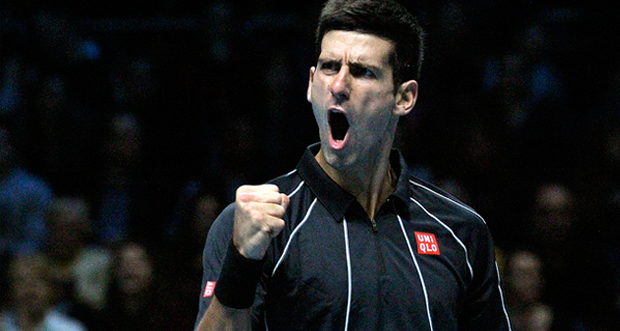
    Playing at top form, Novak Djokovic took out Rafael Nadal in the Sony Open final, 6-3, 6-3.  Nadal had a break point in Djokovic’s first service game, but failed to convert, where Djokovic broke the world No. 1 in the sixth game of the first set, and again in the first game of the second. The Spaniard had a point to break back in the second, but Djokovic held on. He won the second set and the championship by breaking Nadal again at 3-5.

    The Serbian has now won the last four Masters Series 1000 titles; additionally, he and Nadal combine to currently hold all nine.

    [divider]

    Cover Photo (Creative Commons License): Marianne Bevis


  • Serena Williams Wins Record Seventh Title in Miami

    Serena Williams Wins Record Seventh Title in Miami

    Serena Williams

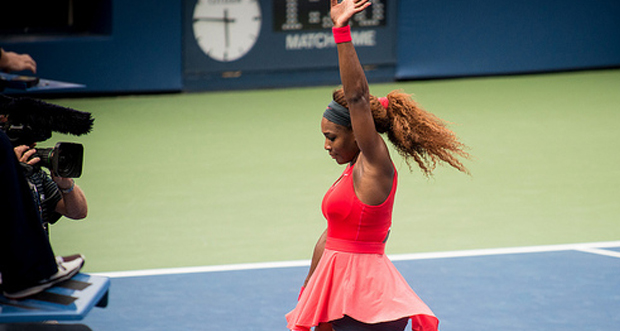
    World No. 1 Serena Williams won her record-breaking seventh title in Miami on Saturday, beating Li Na in the final, 7-5, 6-1.

    After a shaky opening game, Li Na, the No. 2 seed, broke to open the set. She then held, and looked to be in control of the match, eventually going up a double break, to 5-2. However, despite error-riddled play from Williams, Li Na failed to capitalize on the lead, and got broken both times she served for the set. It was exactly what Williams needed to gain confidence, and she began playing remarkably better.

    When serving to stay in the set at 5-6, Li Na was broken a third consecutive time, giving Williams the first set 7-5.

    Each player held to open the second set, but Williams broke Li Na’s second service game, giving her a 4-1 lead. Trouble on serve continued for the Chinese No. 1, as Williams, in true dominant form, broke again to go up 5-1 after another lengthy game, then held easily, serving it out 6-1. It was Williams’ 59th career title.

    [divider]

    Cover Photo (Creative Commons License): Francisco Carbajal

  • The Big Four by Winning Percentage

    The Big Four by Winning Percentage

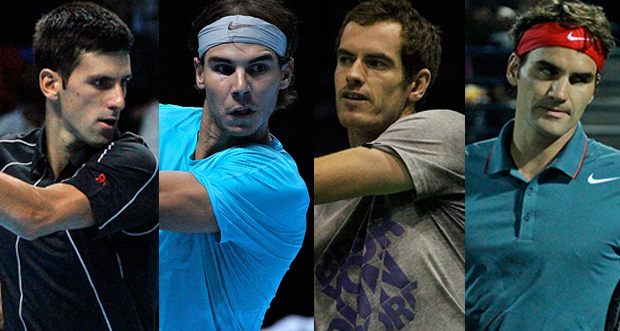
    Novak Djokovic Rafael Nadal Andy Murray Roger Federer

    I was looking at Wikipedia pages for a variety of players and was surprised to notice that Roger’s win percentage this year is the same as 2012, which supports the notion that he’s really resurged well. Certainly he’s only played 23 matches this year, but that’s already more than a third of his total from last year (62) so gives us a large enough sample size to get a sense of his performance level so far. For comparison, through Indian Wells last year he was 13-4 (76%).

    Anyhow, this isn’t meant to be about Roger but the Big Four, and to look at their careers through the lens of win percentage.  Without further ado, here’s a chart:

    20140322063149
    A few notes on each player:

    Roger Federer – this chart really displays a clear peak in 2004-06, with the downturn beginning in 2007, although this could also be because by 2007 both Djokovic and Murray were on the map, with year-end rankings of No. 3 and No. 11, respectively, although Roger had winning records against both Nadal (3-2) and Djokovic (3-1), with no matches against Murray in 2007, so his overall win percentage without those two only goes down a few percentage points.

    Anyhow, the big thing to notice about Roger now is that he’s playing at a similar clip this year as he did in 2012. Hopefully this means we’re back to “post-peak plateau Roger,” as he’s been relatively consistent in terms of winning percentage since 2008, ranging between 81% and 86%, except for 2013’s 73%.

    Rafael Nadal – The thing that really stands out for me is just how consistent Rafa has been in his win percentage since 2005, never dipping below 82% or rising above 91%. In other words, no matter his ups and downs and injuries, he’s been consistent and steady in his performance level. His dip in 2009 is well chronicles because of Robin Soderling and injury, and then in 2011 it was entirely due to Novak’s 6-0 record against him that year. Remove those six matches and he’s at 88% for the year.

    Novak Djokovic – The most interesting part of this chart for Novak is what happened between 2009 and 2011. In 2009 he had finished his third straight year as the clear third best player in the game, and then in 2010 – while he retained his No. 3 ranking – he slipped a bit, winning only two titles and appearing in only four finals. And then 2011 happened. Was it going gluten free or something else? Regardless, it is easily the best year other than Roger’s three great seasons, and in many ways rivals those – certainly one of the ten best seasons in Open Era history. His fans may be disappointed that he’s dropped a notch since, but this chart shows that his level has remained very high – and that he’s been a better player after his career year than he was before.

    Andy Murray – the red-headed stepchild in the family of contemporary greats, both the least loved and least hated of the Big Four – perhaps because he’s the clear No. 4. This chart brought out a couple of minor, but interesting, points. First of all, he had the best debut year by win percentage of the four. It isn’t by much, and it isn’t all that significant, but it’s worth mentioning. Secondly, I was surprised to notice that in 2009 he had the highest win percentage of the Big Four. While 2012 or 2013 are certainly considered his best years because of his Slam wins, in 2009 he won six titles (a career high) and lost only 11 matches, winning 66 (again, a career high).

    Anyhow, it will be interesting to see what this chart looks like by year’s end.

    [divider]

    Image courtesy of rainycat via Creative Commons license

  • Juan Martin Del Potro Sidelined for Rest of Season

    Juan Martin Del Potro Sidelined for Rest of Season

    Juan Martin Del Potro

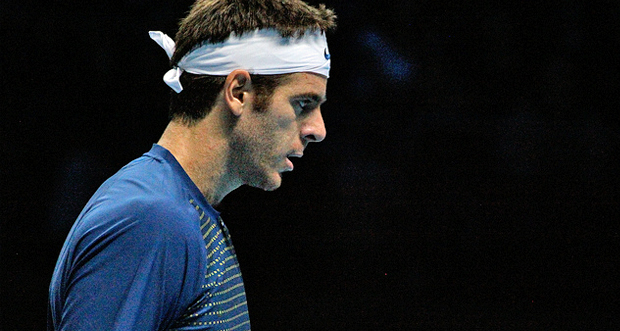
    Juan Martin Del Potro has been sidelined for the rest of the season, due to surgery on his left wrist, according to a report from Tennis World Magazine.

    The Argentine, who is currently ranked No. 8 in the Emirates ATP Rankings, retired after losing the first set of his opening match in Dubai last month, and hasn’t played since. He withdrew first from the Indian Wells Masters 1000, and most recently cited a wrist injury as the reason for withdrawing from the Miami Masters 1000.

    According to the report, the surgery will require an 8-10 month recovery period, thus precluding him from playing for the rest of 2014.

    In 2010, the former US Open champion had surgery on his right wrist, which took him out of the game for a year. It wasn’t until the end of January, 2012, before he got back into the Top 10.

    [divider]

    Cover Photo (Creative Commons License): Marianne Bevis

  • Flavia Pennetta – “Straight to the Heart”

    Flavia Pennetta – “Straight to the Heart”

    Flavia-Pennetta-dalla-racchetta-alla-penna_v_gdv

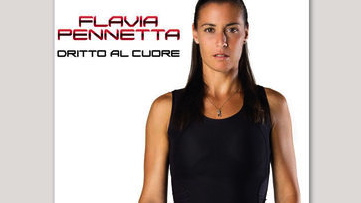
    Recent Indian Wells champion Flavia Pennetta has written about her trials and heartbreaks in the very honest and personal memoir “Dritto al Cuore” (“Straight to the Heart”), published last November by Mondadori.

    Asked why she wrote the book, Pennetta said,  “I was tired of the usual interviews, where I always said the same things: I talked about sport, which doesn’t have anything to do with who I really am. I come off as cold, less spontaneous. People watch me play tennis and they often had no idea how I got here, what was inside of me, how much I counted on my family …. I wrote the book so the people could really know me, in all my fragility and my emotions. So that they could know that we athletes are real people. I might have chosen not to reveal so much, but the book would have been less true.”

    She’s very frank about her relationship with Carlos Moyá, and how much their break-up hurt her. For Flavia, her relationship with Moyá “was one of the most important in my life.”  After three years together, and having discussed becoming a family, Flavia discovered that Carlos was cheating on her with the Spanish actress Carolina Cerezuela (with whom he is now involved and has a child). He admitted it only when it came out in the gossip columns. It was a hard blow for Flavia. She lost 10 kilos (22 pounds) in a short space of time, as well as all strength and motivation to get back on the courts.

    Pennetta describes their relationship as less than equally balanced. “Perhaps the one I lost was not Carlos, but me. He’s a bastard, what more can I say, but if I made a mistake it was in dedicating myself too much to him, at the loss of myself.

    “I had created a reality completely full of Carlos: our friends were Carlos’s, we lived where Carlos wanted to, when we saw family it was Carlos’s. We even spoke Carlos’s language. Carlos has a problem? I’m there. Carlos wants to go out to eat? Even if I’m dead tired, fine, out we go. Carlos is playing Playstation and he doesn’t want to go out with me to see a match, have dinner, or a drink? OK, I’ll stay home.”

    She also says of the relationship: “I thought that the rare times we were able to be together were beautiful, sharing our profession. I closed the door to Flavia and opened it to [being in a couple]. After three years I thought I’d arrived: a complete woman and ready to take on a family.”

    However, that all fell apart when Moyá’s infidelity came to light.

    “You feel pain, and you have to confront it, like everyone,” Flavia told the Italian magazine Grazia“But at a certain point, it’s not a private problem: the whole world knows. And the public face of pain is strained. People tried to pity me, and I couldn’t even defend myself against that. It was as if I’d lost joy in everything. I tried to anesthetize myself from encounters in life, so as not to invite pain.” She said she’d even lost the ability to feel physical pain.

    In difficult times, her therapist told her, “Draw a line in the sand. Move past it, then draw another one. Look inside yourself: you’ll see that the situation is not so bad. It’s you who wants to see it that way.” Pennetta told herself, “I’m twenty-five years old and I have a lot to give. Because of Carlos, I’ve distanced myself from Italy, from my family, from my friends. He was my passion, I gave myself completely, and I lost my balance. I have to get it back. I have to start over from there. I have no boyfriend, no home, no dreams, no future plans. The only certain thing is all the work I’ve done to get to a really good place on the circuit. I’ve played tennis since I was five years old, [been professional] since fifteen, for what? To lie on the couch suffering for some bastard? Never. Finally, the right thing. Finally me, finally my arm, or what was left of it, again free to move. Time to pack my bags. To go back to America to take back my life.

    “I was betrayed, but I betrayed myself [too].” As to the notion of loving again, she says she looked into the mirror and told herself, “Flavia, sooner or later the right person will come along, until then, you’re better off alone than with the wrong one!”

    She adds a note about the current state of her love life. “I’m in a relationship that’s [in the early stages], with a person I’ve known for a long time. But I’m not prepared to make it public. I’ve learned that I want a man who completes me, but without swallowing me up …. I don’t want to make that mistake again. Even if I come off as a bit of an asshole.”

    Flavia also talks tennis, of course:  “I live on airplanes: I’ve had to have my passport reissued in Tokyo because there weren’t enough pages for the stamps. The only advantage is … tournaments are nearly always played in heat. I live in a permanent summer.”

    Part of her resurgence came from her partnership with Gisela Dulko of Argentina. “[She] and I got dumped within a few months of each other, by two handsome tennis players who were all-too media-prominent.” (Dulko had been seeing Fernando Verdasco of Spain.) “We were suffering at the same time, we talked for hours and then figured it was just time to laugh. We decided to play doubles together, even getting to number 1 in the world.” Dulko/Pennetta won the WTA Tour Championships in doubles in 2010, and the Australian Open Women’s Doubles in 2011.

    Pennetta talks also about beating Serena Williams in an exhibition in Milan in 2011, saying that Williams is a player who “never loses concentration, who has no fear,” and calls the win a watershed for her career. However, she says the greatest pleasure was the Fed Cup win for Italy in 2010.

    In her book she writes: “At the introductions, I was white as a ghost, I couldn’t get over my anxiety. Before the match I was weeping with tension …. tight as a drum, I went out onto the court.” Italy was playing the US in the final. Pennetta won her opening match, and sealed the win for Italy in the fourth round.

    “At match point against Oudin I tell myself, ‘Don’t mess up, don’t mess up, don’t mess up ….’ I win and the Cup is ours. My father starts to cry in the stands. It’s only the second time I’ve ever seen him cry. And I, the woman who always exhibits perfect control, had a choice to make: I let go of a few big, fat tears before pulling myself together to flash my tried and true smile.”

    [divider]

    Excerpts from “Dritto al Cuore”