Tag: tennis

  • Opinion: Federer Should Rehire Coach Peter Lundgren

    Opinion: Federer Should Rehire Coach Peter Lundgren

    OLYMPUS DIGITAL CAMERA

    Paul Annacone has been dropped by Roger Federer as his coach.

    Clearly, Team Federer needs a change in chemistry.

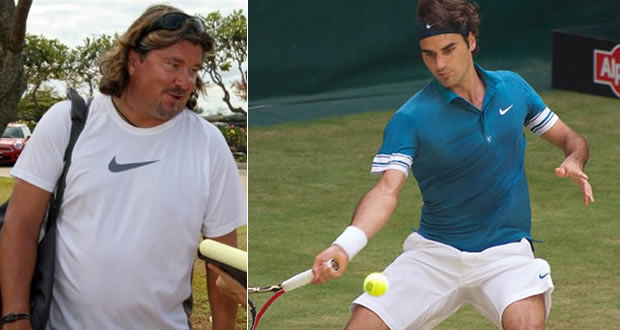
    Perhaps a good choice to replace Annacone would be former coach Peter Lundgren, who was able to spark the best out of Federer during his early years on the ATP World Tour.

    Lundgren is a jovial, fun-loving sort of person who also has a proven track record of knowing how to maximize a player’s talent.

    Lundgren and Federer had a special chemistry, as former ATP player, opponent, and sometime practice partner Attila Savolt remarked about Roger for my book “Facing Federer.”

    “He was very friendly at practice. With Lundgren, they would always be laughing, relaxed, always in a very good mood. It was a nice energy around them, even on the practice court. They don’t take it so serious. They were joking around, they were very relaxed, really enjoying time together. I really thought that they really fit together very well.

    “I think also Lundgren was an effect on him. He’s a very open guy, very relaxed, very nice guy too. I found that they really fit together. There was always a smile on both of their faces.”

    Could Peter Lundgren be the missing piece of the puzzle? Could Peter Lundgren be the guy to kindle the Federer fire once again? Could Peter Lundgren be the guy to make tennis fun again for Roger?

    Lundgren is likely available right now. He worked with Francesca Schiavone at the US Open this year but the Italian was bombed out in the first round by eventual champion Serena Williams.

    [divider]

    Talk about the split in the Tennis Frontier Forum

  • Down the T #3: Michael Chang Interview

    Down the T #3: Michael Chang Interview

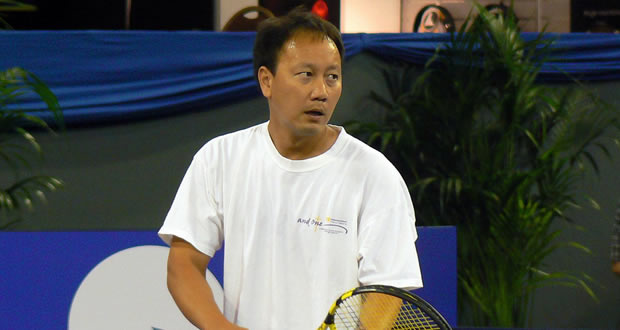
    We’re joined on our latest installment of “Down The T” by Michael Chang, the 1989 French Open champion, and winner of multiple singles titles on the men’s tour. A big thank you to Rebecca Brown of the Chang Family Foundation for helping to facilitate the interview.

    [divider]

    Michael Chang

    Owen (Tennis Frontier): Michael, Thank you for agreeing to be interviewed by the Tennis Frontier.  We really appreciate you taking the time out.  I took the opportunity to ask members of our online tennis community if they would like to contribute some questions and we had a big response. I narrowed it down to ten, as I know your time is valuable!

    [divider]

    Q1. You rose through the ranks alongside a particularly strong peer group of American tennis players including Pete Sampras, Andre Agassi, and Jim Courier. 

    In his autobiography, Sampras identified you as his personal measuring stick for his progress and level of play.  How did you look upon the other members of your peer group and who (if anyone) did you compare your progress with when coming through the junior ranks and moving into the pros? (A Question from Britbox)

    I think the reason Pete said that was because I had a very good record against him in our latter junior years, as well as the first couple of years playing him as pros.  My results were pretty high up there during that time and we obviously competed against each other a lot.

    As far as my peers, I can’t say I really compared myself to anybody just because everyone was in the same boat and no one player really accomplished any real breakthroughs until Andre’s year in 1988 and my French Open win in 1989.

    [divider]

    Q2. You were the “youngest-ever” to do a lot of things in your career, most notably, win a Major. What do you think the unique pressures are to winning things at such a young age? (A Question from Moxie629)

    I actually don’t think there are too many pressures at that young of an age if they are playing professional.  No one expects anything and the only pressures might be coming from sponsors or media hype.

    For me, I really didn’t feel pressure until after winning the French Open because who would really expect a 17 year old to win on the ATP Tour, much less a Grand Slam?!

    [divider]

    Q3. Why do you think the transition from juniors to pros is taking much longer in the current era, and do you think we’ll see teenage Major winners again? (A Combined Question from Didi, Moxie629)

    I think the transition is much more difficult today because tennis is a lot more physical.  Guys are hitting harder and playing more physically demanding tennis.  On top of that, the technology of the current rackets and strings allow players to generate so much more spin and power.

    It’s tough for a teenager to compete with that now from a strength perspective.  Obviously, it can still be done but it’s certainly much more difficult.

    [divider]

    Q4. Winning the French Open Final against Stefan Edberg was a stunning breakthrough.  Tell us a little bit more about the day – your ritual before and after the match, and how you felt as the match unfolded. (A Question from britbox)

    I didn’t change anything before the final at Roland Garros.  The only thing I made sure of was to hydrate a bit more because I had serious cramping issues in two prior matches.  It was a warm day on that final so hydration was important, especially as it ended up being another five-setter.

    [divider]

    Q5. The match with Lendl at Roland Garros earlier in the tournament has been described as one of the most memorable in tennis history. The underarm serve, moving up to the service box to receive, and the various strategies to unsettle Ivan, while at the same time dealing with cramps.  Did you decide on the tactics beforehand or during the match, and have you ever discussed the match with Lendl since? (A Combined Question from 1972Murat, Jesse Pentecost, JLLB)

    I have never discussed the match with Ivan although I have talked to him about many other things since.  I don’t plan on bringing it up with him either!

    The underhand serve was never planned (not sure how you could plan that actually) and in fact, the thought to do it only occurred moments prior to me hitting it.

    [divider]

    Q6. You were on the tour at the same time as some great players – Sampras, Courier, Agassi, Edberg, Becker, Lendl, just to name a few..  Who did you enjoy playing the most and which players were you “friendliest” on a social level with during your career? (A Question from Denisovich)

    I enjoyed playing against all those players through the years.  I have beaten them all but I have lost to every one, too!

    To know that I played against so many tennis great through my career was pretty exciting though.  It didn’t make it easier to win titles but it was fun and exciting!

    If you think about it, how many players get to compete against so many Hall of Famers in one span of a career.  And that is still not including McEnroe, Connors, and Federer.

    [divider]

    Q7. One of our contributing writers, Scoop Malinowski, is currently penning a book on Lleyton Hewitt.  How did you find playing Lleyton? And what was your most memorable match or anecdote? (A Question from Scoop)

    I only played Lleyton twice in my career and unfortunately, it was toward the end of my career.

    He is a great champion and certainly one of the toughest competitors out there.  He has a great game but we all know he’s won even more matches because of his tenacity.

    [divider]

    Q8. Do you think the physicality of the modern game poses a disadvantage to smaller players such as Kei Nishikori?  This question is really twofold:  How do you think you’d have adapted your game in the current era, and what kind of advice would you give Kei? (A Combined Question from Broken Shoelace, Masterclass)

    I would never say a smaller player has a disadvantage in tennis.

    They may not be able to hit as hard or serve as big but tennis is not all about that.  Being one of the smaller players on tour, there are always ways to beat the bigger players and being smaller and quicker has its advantages.  I do think a smaller player does need to be able to play different styles, though, because it keeps bigger players off balance and guessing.

    I do believe I could have adapted to this current era as well just because the same questions were asked of me when I first played on tour.  I would get plenty of comments like, he’s too small, his serve isn’t big enough, he doesn’t have enough weapons, etc.

    You believe what you want to believe but for me, I know where my strength is, and I would never listen to what other people think I can or can not do.  If I did that, I never would have even turned pro.

    [divider]

    Q9. There has been plenty of discussion about the homogenization of surfaces, strings, racquet technology in the current era. What do you like and dislike about today’s game? What kind of changes would you make, if any? (A Combined Question from Arienna Lee, Front242, Riotbeard, Denisovich, Moxie629)

    Homogenization will never truly happen.

    The simple reason is because there are way too many differing factors in different places where pros play around the world.  They tried to do that with something as simple as balls being played each week and it couldn’t be done.

    Weather conditions, altitude, humidity already make each city different in playing conditions.  I think it’s exciting and fun that players play with different equipment, and surfaces are changing during the seasons.  Everyone is unique and special and that should be celebrated!

    [divider]

    Q10. Of the players in the current era, who do you particularly like watching and why? (A Question from Denisovich)

    It’s fun watching the top players like Rafa and Novak go at it but also, it’s great watching the players in general, playing at their best.

    I would hope a few more Asian players would succeed and do well, though, especially on the men’s side.  I think that would be great for tennis and for the growth of tennis in Asia.

    [divider]

    Finally, please tell us about your Foundation work in recent years, integrating tennis, family, and faith, and the meaning this has brought to your own life. (A Question from Masterclass)

    The Chang Family Foundation has been a wonderful way to not only give back to the community but also to share the Gospel message through sports like tennis, basketball, and volleyball.

    It has been very rewarding and we have the opportunity to touch many lives along the way!  When you think about sports, its real purpose is to bring people together, and through various events and leagues, we can use those opportunities to encourage others in life while sharing the love of Christ.  To do both of those things through sports, particularly tennis, is satisfying knowing that you’re touching hearts and making a difference.  That’s what our Foundation is all about.

    Find out more about the Chang Family Foundation at mchang.com

    Chang Family Foundation

    [divider]

    Discuss Michael’s Interview on the Tennis Frontier Message Boards

    [divider]

    Cover Photo: maartmeister, Creative Commons License
  • Drug Testing: Would You Postpone a Breath Test?

    Drug Testing: Would You Postpone a Breath Test?

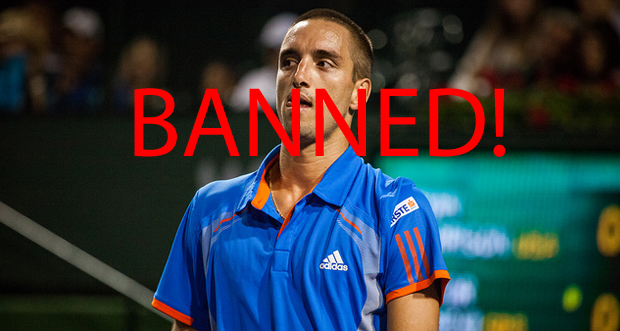
    With the high profile drug related bans this year from Viktor Troicki and Marin Cilic among others the whole concept of drug use, testing, and the issue of cheating in tennis is back in the spotlight.

    I don’t know about you but the more I learn about the area of cheating, particularly in the context of drugs, the more I realise how complex the issue really is. In particular my eyes were opened while studying sport science where I learnt that all the banned drugs have very serious side effects. By serious I mean life threatening. There are also known performance-enhancing drugs that are not banned, like creatine, because they do not pose a risk to health in the quantities the drugs are used.

    [divider]

    Discuss this article in the Tennis Frontier Forum

    [divider]

    This changed my view from drugs being a performance-enhancement issue to a health and safety one because their ability to enhance performance was irrelevant. Only their ability to cause harm was relevant. Banning them puts them off limits to protect the health and safety of athletes taking part in sport, just like banning or limiting the use of alcohol while driving to make roads safer.

    Obviously this is a huge statement but I wanted to expand on this in a later post. For now I just wanted to introduce drug regulation as a health and safety challenge where boundaries are set and penalties are imposed for crossing the boundaries, and making the sport unsafe or even dangerous for those involved. The aim is to encourage safe competition. The level playing field being that only safe acceptable risks should be taken. The health of athletes should be paramount.

    So I started to think along lines we all understand. First I considered work and the workplace. What would be expected of us in a similar situation?

    Tennis players at the top level are workers like the rest of us, and the ATP, the tournaments, and everything related is either an employer or a market for services. So in any market or employment contract there become legally binding contracts and levels of service that should be maintained by both parties. Boring but key. My point is that all of us turn up for work, often when we really don’t want to, because if we don’t we could be fired. In the same way we also expect to be treated equally in our work. If someone else is doing something dangerous to get the job done, then they should be stopped. As workers, contractors, or suppliers there should be a system that ensures high standards but not at a human cost. Pushing boundaries and getting more from ourselves on a daily basis is what we should all be doing, but not when there is strong evidence it will harm us or others.

    That is how I am viewing all these cases. Once I see them as part of a market like any other I can then start to think of what is fair and right on a much more general and real scale, and one I can understand with real experience and insight. All of us work, have worked, or will work. So what is fair to expect of us? How many things at work would you reschedule if you were ill? A meeting or presentation? Maybe. But an interview or product release or court date? Probably not. Definitely not a hearing where you obtain your license to practice your profession. I don’t think I would let anything intervene. What do you think?

    Then I started thinking about whether I accept Troicki’s explanation that he wasn’t well which led me to the idea that failing a drugs test is like failing a breathalyser test when you are driving. This is another thing that we are all subject to. Driving is a privilege and not a right. In the UK I understand that refusing a breath test could be grounds for an instant driving ban. However, if you submit to the test but the test is inconclusive or even positive you have a right to appeal and should ask to be tested with a more accurate device at the station.

    My point is that a breath test is to prevent dangerous driving and save lives so the rules and regulations are strictly enforced. A drug test in tennis is to prevent the dangers of the substances being tested for both on the individual and his peers. The reasons for the tests are similar. Shouldn’t their enforcement be similar, too?

    Should you be able to postpone a breath test or at least tell the officer that you’re ill and agree to take the test later? Not something that I believe is allowed by law. You must submit to the test there and then regardless. The point being that ignorance of the law is not a defence and neither is illness. There is a big difference between refusing a test and not being able to produce a sample.

    You can see that I consider this a criminal issue because the side effects of banned drugs are so serious. I don’t consider it as simple as cheating. I consider it as important as life and death because of that. Remember, if adult athletes are taking such dangerous substances, then what are child athletes taking and who is protecting them? See it in that light and you might change your view on drugs. I certainly have.

    In summary, by participating in competition all athletes must accept they will be tested. Regulating health and safety must be part of any sport. To compete safely must be a given, not a hope. Regulation is part of all industries for the exact same reason that CEOs of companies must take medical tests, on-call surgeons and doctors must respond when they are needed, and we all must make a court date if we have one. We don’t get to reschedule these things for our own reasons.

    Regulating drugs is such a complex issue that sport should not try to find its own solution. There are plenty of known, tried and trust approaches devised by experts in other industries. Learn from these instead. Hence my example of a breathalyser test. My point simply being that anyone at any point could be stopped while driving to be tested. It happens to us all. Should we be able to postpone it or should we be deemed guilty for refusing? I personally cannot see a reason I would not take the test. We are all subject to this so you form your own opinion.

    You may start to understand why I would suggest they introduce a license to play tennis on tour — something that could be revoked for not passing a test, and something you must achieve in order to be on tour. The licence is your privilege, and your right to practice. Much like becoming a doctor, barrister, or accountant, your fitness to practice is continually assessed and rigorously enforced.

  • Monfils Stuns Federer in Shanghai

    Monfils Stuns Federer in Shanghai

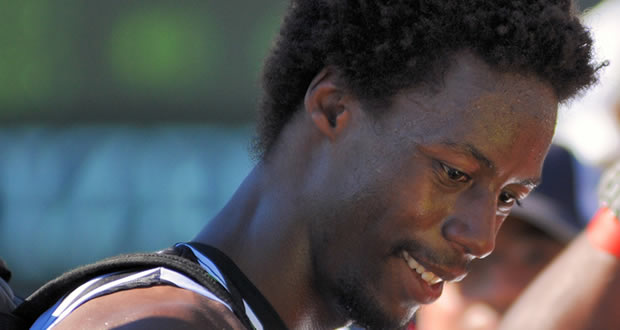
    Gael Monfils

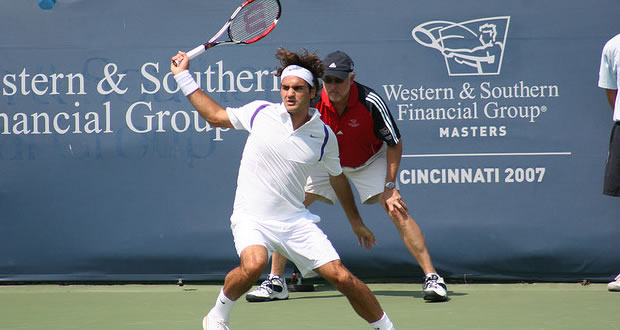
    Gael Monfils recorded only his second career victory over former world No. 1 Roger Federer to progress to the quarterfinals of the Shanghai Masters.  The Frenchman prevailed 6-4, 6-7(5), 6-3 in just over two hours.

    Federer pushed the match to a third set coming back from 3-5 down in the second set to break Monfils and take the eventual tiebreak.

    Monfils was not to be denied, breaking Federer again in the fourth game of the deciding set. It proved to be crucial, as the remainder of the match went with serve.

    Monfils will now meet the winner of Novak Djokovic and Fabio Fognini in the next round.

    Federer will now have increased concerns about qualifying for the World Tour Finals following a poor run of form.

    [divider]

    Discuss the Shanghai Masters with fellow tennis fans in the Tennis Frontier Forum.

    [divider]

    Photo: Christian Mesiano, Creative Commons

  • David Nalbandian Retires from Tennis

    David Nalbandian Retires from Tennis

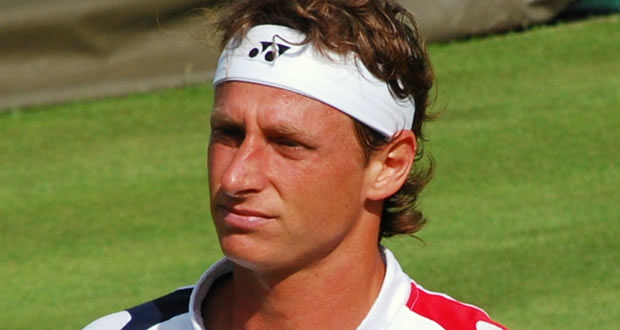
    David Nalbandian

    David Nalbandian has retired from the ATP Tour. The 31-year-old Argentine announced it at a press conference Tuesday, citing long-term injuries as the main reason.

    Nalbandian is a former world No. 3 who won 11 ATP singles titles and represented Argentina in three Davis Cup finals.  He also reached the semifinal of all four Majors, and won the runner-up trophy at the 2002 Wimbledon championships.

    [divider]

    Discuss with fellow tennis fans on the Tennis Frontier message board forums.

    [divider]

    Cover Photo: Carine06 (Creative Commons License)

  • Petra Kvitova Wins the Pan Pacific Open

    Petra Kvitova Wins the Pan Pacific Open

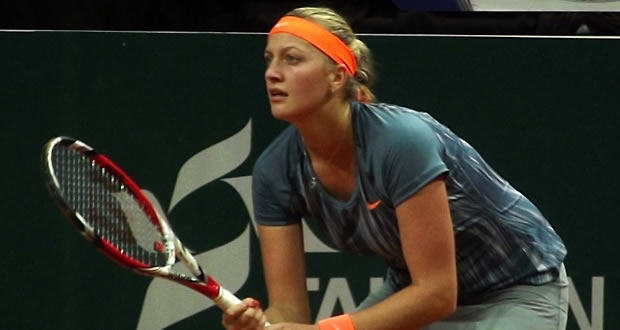
    Czech star Petra Kvitova defeated Angelique Kerber of Germany 6-2, 0-6, 6-3 to secure the Pan Pacific Open title in Japan.

    The former Wimbledon champion earned it the hard way. It was a roller-coaster ride of a match that featured several momentum swings before Kvitova sealed the contest with a rapier-like crosscourt forehand winner.

    Kvitova dropped six straight games en route to a second set bagel before recovering her poise and going on to win the deciding set.

    “Angie came back at me but I tried to stay focused and it’s amazing to win such a big tournament,” stated the champion after the match.

    It was Kvitova’s first title success since Dubai in February.

    [divider]

    Discuss the Pan Pacific Open on the Tennis Frontier message boards.

    [divider]

    Cover Photo: Piotr Drabik (Creative Commons License)

  • Joao Sousa Wins the Malaysian Open

    Joao Sousa Wins the Malaysian Open

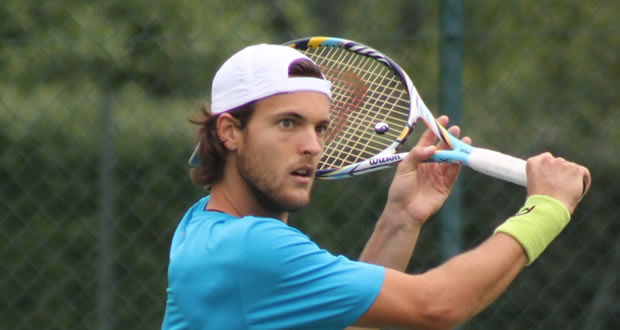
    Joao Sousa claimed his first ATP title at the Malaysian Open by beating veteran Frenchman Julien Benneteau 2-6, 7-5, 6-4. The 24-year-old is the first ever Portugal native to win an ATP Tour title.

    Sousa, ranked 77, had already upset seeds David Ferrer and Jurgen Melzer en route to the final.

    Benneteau, the favorite, dominated the opening set by breaking twice and looked the likely winner when he had match point on the Sousa serve at 4-5 in the second set.

    Unnerved, the Portuguese held serve and broke Benneteau in the following game to set up an opportunity to take the match to a deciding set. He served it out. Momentum carried into the decider, with Sousa breaking Benneteau again in the opening stanza.

    The remainder of the match went with serve although Sousa was forced to save four break points before closing out the match 6-4 to take the title.

    [divider]

    Share your views on the Malaysian Open in the Tennis Frontier Message Forums.

    [divider]

    Cover Photo: Si Robi (Creative Commons License)

  • Facing Federer: Dimitry Tursonov’s take

    Facing Federer: Dimitry Tursonov’s take

    Scoop Malinowski, who contributes to the Tennis Frontier, has released his new book “Facing Federer“.

    Here is the first of three exclusive excerpts:

    Dmitry Tursunov:

    “It depends. If everyone talks about Roger as being the greatest, then you come out on the court against him feeling a little threatened. So you start making a little bit of mistakes that you normally don’t do. So I think a lot of it sort of happens in your head. You think to yourself a little bit, you force yourself to play too good for your own level. And if you get used to playing him, then you start playing a little bit within yourself and usually that’s the best chance for you to do your best. It doesn’t matter who you’re playing, if you’re trying to force yourself to play outside of your comfort zone, you’re always going to make mistakes, whether it’s against Roger, my grandmother, it doesn’t matter, so.”

    “Obviously, he’s a great player. There’s no point in denying that. He’s able to play consistently, play well consistently, he’s a very good tactician, so if something doesn’t work for him, he’s able to switch the game patterns. He’s able to come into net, he’s able to slice, he can hit topspin. He can be aggressive, he can be defensive. So that allows him to be very flexible with his gameplans.”

    Question: What was your most memorable match with him?

    Dmitry Tursunov: “I think, again, usually when you ask players like that it makes it sound like you played against such a great player. We’re all professionals. The guy can do a lot of things better than me but it’s not like playing him is such an awe-inspiring moment, like you meet Jesus for the first time in your life. And I think that’s what a lot of people tend to make it to be. His fans and the press make him sound a lot more threatening than he is. And he’s a very good player, there’s no doubt about that. But again, he’s lost plenty of matches. And it’s not that you don’t have a chance going out against him. He’s a very good tactician. Physically he’s talented. But he’s not the most talented person in the world. He has great timing. He’s able to slice and he’s able to use his slice in an offensive way which not a lot of people can do.”

    “But again, the most memorable moment…I’ve played three matches against him. I’ve lost all three of them. In one of them, I did take a set off of him. In my last match against him, it was in the Olympics. I kind of defeated myself there in that final set. I was so nervous playing him that I made a lot of mistakes and all he had to do was show up on the court. If that makes him the greatest player of all time – by forcing players to crap their pants when they come out to play against him, then I guess that’s the definition of a great player. And I’m not a great player. But I think I probably have the same effect maybe at a lower level. If I come out playing in Challengers, maybe I’d put a lot of pressure on the person. He’s thinking, ‘Oh f***, it’s Tursunov, he’s won two rounds at an ATP tournament last week. Now I have to do something extra to beat him.’ And that’s not the case. And a lot of times I beat players like that.”

    “Again, I’m not trying to downsize Roger and he doesn’t need downsizing. I don’t think it’s necessary to bring him up to like a deity level of a player. He’s not. He’s defeatable. And Rafa’s proved it. Rafa doesn’t get affected by that. Mentally, he’s very disciplined. He’s able to just play his game pattern regardless of who he’s playing. He could be playing you, me, Roger, he doesn’t care. If Jesus comes down and starts floating on the court, he still plays the way he’s playing. And that’s why he’s able to defeat Roger, in large part. There’s a lot of other things. It’s not like Rafa doesn’t have any weapons. My point is, a lot of defeats against Roger happen psychologically. Players force themselves to step out of their comfort zone and they start making mistakes. It’s like going out on a date with a really hot girl. You’re probably going to try to make stupid jokes and then you’re going to feel like an idiot after that. That’s kind of how it feels. Just to sum it up [smiles].”

    Question: Your lasting memory of Roger on court or off court? An anecdote?

    Dmitry Tursunov: “Well, he can’t. He’s got an image to uphold. So he can’t do anything less than, you know, like his hair is glowing.”

    Question: But you stole his bag once and hid it on him?

    Dmitry Tursunov: “I did, in Toronto. I think that’s probably why I got the set off of him [smiles]. I mean, he’s a pretty mellow guy off the court. I’m pretty sure that he knows that he’s really good in tennis and he’s got a lot of records. And I think of Roger showed up at the Corona Bar (adjacent to our interview at a practice court at SONY Open in Miami) we’d have like 15 heart attacks in the Corona Bar. And people would just start praying and, but, I think, again, it’s a part of the image. And a lot of it is press and how you present yourself. I really can’t say any anecdotes because he’s not going to put himself in a position where he can be embarrassed in some way. He’s not gonna fart in front of people [smiles]. And then, after a certain amount of time, you start feeling like Roger never farts. So that’s probably the anecdote in itself. That he’s never farted in his lifetime. He never has to take a shower after his match. He doesn’t smell. He smells like vanilla [laughter].”

    Tursunov’s record against Roger:

    2006 Miami Masters Round of 16 Federer 3-6, 3-6
    2006 Toronto Masters Round of 16 Federer 3-6, 7-5, 6-0
    2008 Beijing Olympics Round of 64 Federer 4-6, 2-6

    Tomorrow: Read Gilles Muller’s take on “Facing Federer”

    You can purchase the whole book at Amazon:

    [divider]

    Discuss with fellow tennis fans on the Tennis Frontier message boards.

    [divider]

  • Gilles Simon Triumphs at the Open de Moselle

    Gilles Simon Triumphs at the Open de Moselle

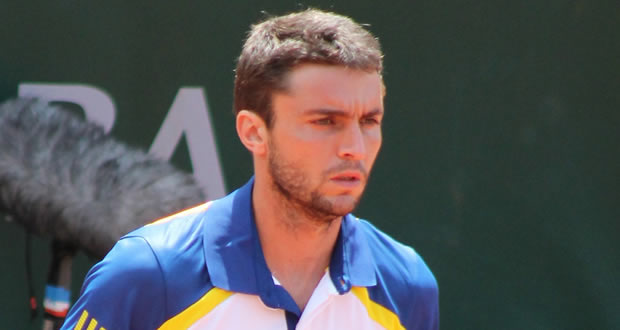
    Gilles Simon defeated fellow frenchman Jo-Wilfried Tsonga to win the Open de Moselle in Metz 6-4, 6-3 to win his first title of the year and 11th title of his career.

    It was Tsonga’s first tournament back after recovering from an injury at Wimbledon in July. The players were seeded 1 (Tsonga) and 2 (Simon), respectively.

    Simon broke Tsonga twice in each set and took advantage of a multitude of unforced errors to seal the match.

    “I felt that I could take my chance and I’m very happy,” said Simon, post-match. “I saw that Jo wasn’t able to serve at his best.”

    [divider]

    Discuss this article with fellow tennis fans on the Tennis Frontier message board.

    [divider]

    Cover Photo: si.robi, Creative Commons License.

  • Gulbis Stages Dramatic Comeback to Win St. Petersburg Open

    Gulbis Stages Dramatic Comeback to Win St. Petersburg Open

    Ernests Gulbis fought back from a set down to overcome Spaniard Guillermo Garcia-Lopez 3-6, 6-4, 6-0 in the final of the St. Petersburg Open.

    Gulbis, ranked 36, was broken three times in the opening set (he broke Garcia-Lopez once) and fell behind 4-1 in the second set before staging a dramatic comeback to win 11 consecutive games to seize the second set, and administer a third set bagel to the stunned Spaniard.

    “The main key why I’m not yet a top player is the consistency. Everybody knows I can play well for a tournament or a match and then I go downhill. I just need to bring this consistency to bigger tournaments, especially Grand Slams. Then I believe I am a Top 20 player for sure, and not so far from Top 10,” said Gulbis after the match.

    It was the Latvian’s fourth career title and earned him $78,000.

    [divider]

    Discuss this story with fellow tennis fans on the Tennis Frontier message board.

    [divider]

    Cover Photo: Kenneth Hong, Creative Commons License.