Tag: tennis history

  • My Journal Essay: Andy Murray

    My Journal Essay: Andy Murray

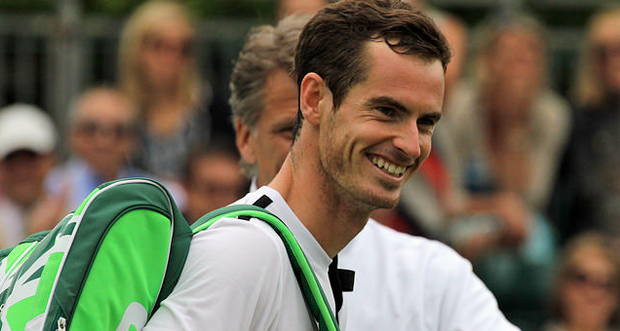
    Andy Murray

    By Martin Young

    While the dust settles on the remarkable milestone of Novak Djokovic winning the French Open and thus becoming one of only 5 men in the modern era to win all 4 major titles, and being the first man since Rod Laver to hold all 4 at the same time it would be easy to overlook the relative achievements of his opponent at Roland Garros and his own story and legacy, not least because it is actually likely to be one the key factors in Djokovic’s own story and legacy…

    Let me explain!

    Ever since Murray had a breakthrough summer in 2008, the most pertinent question from analysts and tennis fans is to ask whether or not there was such a thing as the ‘big 4’ or a ‘big 3 + 1’ in men’s tennis.

    Whilst to those outside the inner sanctum of the game, this might seem like a pointless discussion for board posters to debate, to those who live and breathe the sport it is absolutely at the heart of how Murray and his legacy will be remembered long after he retires and crucially how we will order Djokovic, Nadal and Federer and everyone else worthy of inclusion.

    For Murray, at face value 2 slam titles an Olympic Gold and a Davis Cup win, suggests a player who on his day was able to produce the goods but in the main was never really a force to be reckoned with. Since the mid to late 70’s and early 80’s right through today, the players we remember with such fond nostalgia are all players with multiple slam titles across various surfaces and define themselves and their era not just with the titles they won, but who they beat to win those titles. The list is a who’s who of men’s tennis and seamlessly demonstrates the evolution of the game across the sporting generations and evokes memories of rivalries and their names are synonymous with greatness. From Connors, Borg, Vilas, McEnroe, Wilander, Lendl, Edberg, Becker, Courier, Sampras, Agassi, Federer, Nadal through to Djokovic, 40 years of Tennis evolutionary history is appropriately defined just by this roll call of names.

    So why is Murray important to this discussion? His record of wins certainly does not merit inclusion in the above roll call but when you look beyond just the win column you realise that here lies a unique player who deserves a wide lensed appraisal of his career, not only as stated for helping to decide where Djokovic sits but also to ensure that Murrays own place in history is understood and appreciated appropriately.

    So how to go about this? Stats? References? Technical appraisal? Even gut? Perhaps a mixture of all, or perhaps none – I mean as I write this it is clear to me that I have formed my own opinion already but am I doing this for you the reader to agree and to convince you of some unknown truth or am I using this piece to help me justify what I already believe???? It is important at this point to make you aware that I am a big Andy Murray fan and have been since he won the US Open Junior title in 2004. As a Scotsman who was more of a watcher than player, I’d actually heard of the Murray brothers even before this win – there really was not much a precedent of any kind of success in Scottish tennis so naturally among those that were involved we invested early and at every stage through the Junior ranks he continued to deliver and “we” (“we” being the collectively small band of tartan tennis fans – and when I say “fans”, I mean the true fans like you !!!) continued to invest. This very day I sit dejected after watching Murray being well and truly defeated by Djokovic but instead of lamenting his play in sets 2 & 3, or bemoaning his bad luck to be playing in this era I feel compelled to get under the bonnet (or hood if you are not Anglicised) of what I have thought for a long time and that is, the feeling that the world of tennis continues to ‘under-appreciate’  Murray the tennis player, Murray the man and thus the legacy he will leave on the sport in a global sense.

    The complexities of sport often boil down to the binary and in 1 vs 1 tennis this truly is the case – there are probably fewer sports where this is more pronounced – even in the top individual athlete sports, there are few that really follow the seeding/ranking like men’s tennis where the best are the best and they have to prove it by beating the best with so little room to hide. So when you boil down the numbers: 2 GS, 1 Olympic Gold, 1 Davis Cup and a career high ranking of 2, it makes the case for Murray being considered for the era defining list much much harder.

    So beyond the emotional investment that I made early in this Scottish sportsman, there has to be something else that leads me to believe that he has a place amongst the pantheon of evolutionary defining tennis greats? Or am I gripped with blinkered fandom? Am I seduced by nationalistic pride? Is it that I feel some kind of need to protect the now not so young man from the cruelty of tennis fans who I believe under-appreciate his tennis but also don’t appreciate the virtues of the man himself?

    Well clearly it is all these things, but to understand it and admit it is not to say my argument is wrong. Before delving deeper into the tennis, I feel the need to exhort the virtues of the man and to counter his critics. Humility, awareness, preparation and his insatiable work ethic are all on display and known by most. His humour is perhaps less obvious to the casual observer as he is quite introverted when in public, due in part to his nature and also in part to being very unfairly portrayed as anti-English by UK tabloid media when still a teenager – but still to those in the inner sanctum of the game his humour and likability is no secret. The biggest virtue that perhaps gets missed or misunderstood with Murray is his honesty. This honesty can easily be seen through his work ethic, his preparation and that insatiable need to get better and better but it is honesty on the court that actually makes him very appealing to me and very unappealing to many people. He shouts at those in his box, he berates them when things are not going well (even when things in the grand scheme of things are actually going pretty well!). But herein lies the absolutely stripped bare honesty of the man. He is not berating those in his box, he is 100% berating himself – they are merely the face of his own self-loathing and his fear that he is not able or worthy to execute the detailed plans they have collectively agreed on and put in place. There are many who are put off by his ‘antics’ on account of taste and decency; there are many who are put off as it is seen as disrespectful to those on the team. I am not saying anyone is wrong if they feel like this but they perhaps don’t appreciate that this is pure honesty and it is all directed at his own need to try and be the best he can be. The manifestation of this virtue is actually something that many in Scotland and the UK actually understand and ultimately appreciate – it’s the raw and obvious human imperfections that draw us in.

    It is actually something that is acutely juxtaposed with Novak Djokovic and is very interesting as he also pursues his legacy. Has a top tennis player ever tried as hard to be liked on the court as much as Novak Djokovic? He works the crowd so beautifully (apart from the now very occasional outburst) when playing and being interviewed (very often in local tongue), he is polite, humble and in the case of the rare defeat is always very gracious in praising the good play of his opponent – You could construe me mentioning this as being the juxtaposition of Murrays honesty and think in some way I am calling what Djokovic does as fraudulent. This is absolutely not the case instead it is actually a reflection of how 2 men playing the same sport born a week apart are at very different points in their career and pursuit of legacy. Murray probably feels like he has under-achieved, not necessarily because he has, but because he pursues perfection and does so not to enjoy winning but because of the hatred of losing. Novak on the other hand has moved on from this and instead of being driven by a fear of losing he fights a different battle. That is because no matter how hard he has worked, what talent he has displayed and what wonderful achievements he has to date, there probably hasn’t been a commensurate amount of love and recognition thrown his way from the casual fan right through to the diehard tennis fan. That he isn’t Federer or Nadal is not his fault, but you can sense it is actually what drives him. Murray will get the love when playing in the UK and that is obviously a boost, but love is not what he seeks – he seeks his own perfection and unless that comes in the next few years it will not be the pursuit of love but the honest management of his own self-loathing that will drive him on.

    So that’s Murray the man, and although it is cathartic to write this and to perhaps offer a view of him that makes people think differently it really doesn’t do anything in isolation to make a case for his place in the pantheon of greats… So what about Murray the player? Technical advances in equipment and surfaces make comparisons across the eras difficult (and potentially foolhardy – I have no doubt that the vast majority of people taking the time to read this actually have better appreciation of technique than I have)!   Nonetheless I will forego the fear of ridicule and give it a go!

    He possess incredible reflexes and anticipation on the return of serve, so often getting the ball in and deep off first serve.  His ability to immediately take the upper hand on second serve makes him a physical and mental nightmare for a lot of players. His defensive positioning and anticipation are perhaps only ever bettered by Djokovic himself. His 2 handed crosscourt backhand has depth, bite and metronomic reliance – these skills allied to a very good in-match tennis brain makes him make a top player in this era and I believe would match up very well with any player in that list above. Like any top player of any era he has no major weaknesses in his game though his DTL forehand and recently his DTL backhand (a previous strength) can go missing at big moments – and he also has a huge differential between his A game serving and his B/C game serving (perhaps more so than most at the top level) – but again these are not particularly new or insightful observations and again don’t help me make or break the central case, merely they help in painting the landscape.

    So what really underpins the central argument has to come down to the numbers, but instead of boiling them down to the bones, perhaps I can sway the argument with a gentle reduction to bring out the hints of flavour.

    There are perhaps more elegant ways to portray the numbers, but to you the sports fan I think I can just as easily and effectively list the salient achievements and key points to articulate his legacy beyond what we know from above:

    • 10 Slam finals reached – In all finals he has either faced Roger Federer (0-3) or Novak Djokovic (2-5) unarguably 2 of the greatest players to have ever played the game. This has him equal 12th in the open era with Boris Becker
    • Equal 10th all-time on the number of semi-finals at 19 (with McEnroe, Edberg, Emerson and Crawford) – Equal 8th in the Open era
    • Finalist at all 4 slams – Only 10th man to do so
    • 10th on the Open era list of Masters series titles with 12 when reaching a Masters series final (18 times), he has only been beaten 6 times (5 by Djokovic and once by Nadal – exactly the same winning record against each opponent in reverse – beaten Djokovic 5 times and Nadal once)
    • The ‘weight of a nation’ factor though difficult to judge, clearly had some kind of effect on him – his conversion rate of Masters finals (though clearly not as important as slams) of 12-6 vs his slam success rate of 2-8 suggests that he has not fulfilled his potential at the crucial points in those biggest of big matches and that some demons exist.
    • All of this at a time when his main competitors are not just fighting for their legacy to be considered alongside the very best, they have fought and continue to fight to be considered the very best of the best. Perhaps the challenge of this era has spurred Murray onto a performance level that he otherwise would never have reached or perhaps being part of this era has deprived him from the wins that he otherwise would have got? Who knows?

    Perhaps this is the appropriate moment to summarise the argument and come full circle back to the question that I think is rightly posed by many about Murray and his position in the ‘Big 4’. It is perhaps that inability to have done it enough times at the biggest of big moments that will ultimately define Murrays place in tennis history. Just 2 or 3 more conversions and there wouldn’t really be the need to debate – instead there is a pantheon of open era greats with 14 tennis gods inside and Murray, as has so often been the case in all of these hypothetical discussions, is leading the charge of those on the porch banging the door to get in. In other words there is not an open era ‘big 15’, there is instead the big 14 + 1, but 1 who perhaps still has some time left to get a few more slams and force through the door to take his place with everyone else or else could always remain that unique outlying enigma as the best of the rest…

    So where does that leave Novak? Ok this piece is clearly about Murray, but when Novak’s career does come to an end it is likely that the majority of his achievements will have come at a time when Murray will be his primary challenger. And should he get close to, equal or surpass Roger Federer’s titles it might just be that Murray’s inability to have won more against Djokovic, might ironically actually be the most compelling argument against his own place at the very top of that list. That is to say the success of Andy Murray is arguably the most important factor in where Djokovic sits in terms of overall greatness.
  • Looking for the Next Great Player – Part Two: Candidates of Greatness

    Looking for the Next Great Player – Part Two: Candidates of Greatness

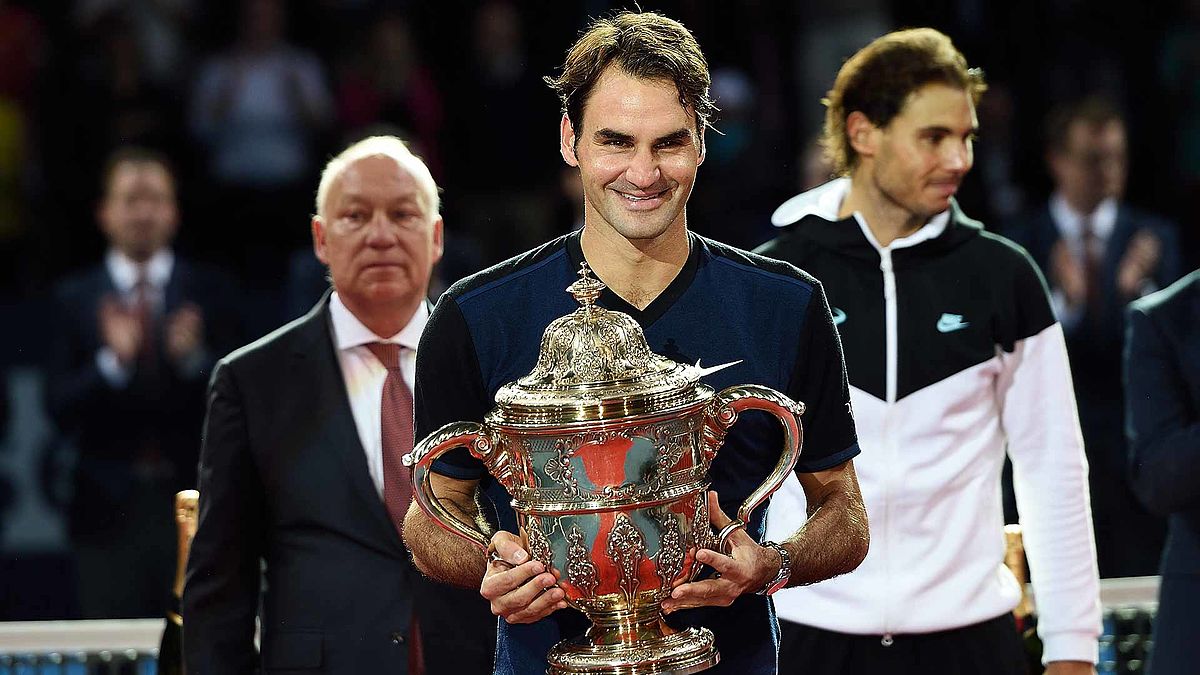
    Fedex basel.jpeg

    Revisiting the Benchmarks: the Pace of Greatness
    To recap the last installment, we have clear benchmarks that all true greats (6+ Slam winners) hold in common:

    Before their 19th birthday: Ranked in the top 100
    Before their 20th birthday: Ranked in the top 50
    Before their 21st birthday: Ranked in the top 10; won a title; made it to a Slam QF
    Before their 22nd birthday: Ranked in the top 5
    Before their 25th birthday: Ranked number 1, won a Slam

    We also found that there are about 70 players in the ATP ranking era (1973-present) who met that first benchmark—a top 100 ranking at age 18. Of those 70, 17 are active today, a list we’ll get to in a moment.

    “Failed Greats”
    Now just because a player meets all of those criteria does not mean they will become a great player. There are players who met all of those criteria and only won a Slam or two. There are also players who met all of the criteria except for one or both of the “fruition” benchmarks met by age 25, the Slam and number one ranking. These two groups combined are players that we could call “failed greats”–they passed all, or almost all, of the benchmarks, but failed to become true greats.

    Here are two lists of players, the first being those who accomplished all benchmarks, the second all but the age 25 criteria, the Slam and number one ranking:

    All benchmarks: Jim Courier, Michael Chang, Marat Safin, Lleyton Hewitt, Andy Roddick
    All except age 25: Goran Ivanisevic, Andrei Medvedev, Juan Martin del Potro

    So these are eight players in the Open Era who were on the “pace of greatness,” including five who actually met all of the benchmarks, but eventually fell short of true greatness. It is a surprisingly small number, and tells us that most players who reach the various benchmarks along the way will become great players. If we go back to those players for whom we have all the data, from Borg to Djokovic, we have 11 all-time greats (6+ Slam winners). That means that 11 of 16 players (69%) who met all of the benchmarks became greats, and 11 of 19 (58%) who met all except the age 25 benchmarks.

    The main thing these eight players have in common with the true greats is that they all developed very quickly. Consider the fact that one of the criteria is to reach the top 5 before turning 22 years old. That in itself is a difficult benchmark that erases many other players from contention.

    Let’s take a look at each of these players, to get a sense of what “went wrong” in their careers. First we have four players born in the first half of the 1970s:

    Jim Courier (b. 1970) was one of the top players on tour for a few years, the first of his generation to become #1, four months before Agassi and more than a year before Sampras. But Courier declined quickly, dropping from a top 3 player in 1993 to #13 in ’94, #8 in 95, and out of the top 20 for the remainder of his career. His mid-20s decline is similar to later number one players like Juan Carlos Ferrero and Lleyton Hewitt. There was always the sense with Courier that he was playing over his head and ability, and was less talented than his peers Sampras and Agassi. Courier’s decline coincided with Sampras’s rise to dominance; un-surprisingly, Courier won only 4 of his 20 matches with Sampras. Still, Courier ended his career with 4 Slams, 23 titles overall, a year-end #1 ranking in 1992 and, along with Guillermo Vilas, is one of the two players who I consider the “Gatekeepers” of true greatness.

    Goran Ivanisevic (b. 1971) was one of the better players of the 90s who was unable to get past the dominance of Sampras and Agassi, losing two Wimbledon finals to Sampras and one to Agassi. Yet despite fading in the latter part of the decade, he entered the 2001 Wimbledon ranked #125 and miraculously won it, which was the inspiration behind the film Wimbledon. Known for his tremendous serve, Ivanisevic wasn’t very multi-dimensional, although not nearly as one-dimensional as, say, Ivo Karlovic, and was probably a bit better than Milos Raonic is now.

    Michael Chang (b. 1972) was the youngest player of the Open Era to win a Grand Slam: the 1989 French Open at the age of 17 years and 4 months, one of only three players—along with Mats Wilander and Boris Becker—to win a Slam before his 18th birthday (Martina Hingis is the youngest woman, winning her first at 16 and 4 months). Yet Chang had a lower ceiling than other early bloomers. While he had a long and prolific career, including 34 titles and 7 Masters, he never ranked higher than #2 or won another Slam. In a way he was the David Ferrer of his generation (although more successful in big tournaments): never in contention for the best on tour, but always right there behind the top players.

    Andrei Medvedev (b. 1974) was an early bloomer who looked destined for greatness after ranking #6 in 1993 at the age of 19, and then winning two Masters the following year. Yet Medvedev floundered and was never able to take that next step up. His best years were 1993-95 when he was 19-21 years old.

    And then we come to the trio of Marat Safin, Lleyton Hewitt, and Andy Roddick—the best peers of Roger Federer.

    No Title

    No Description

    Marat Safin (b. 1980) won his first Slam in 2000 at the age of 20 but only won one other and goes down as one of the biggest underachievers in tennis history. He was a very talented player who was capable of an extremely high level and very well could have formed a duo of greats with Federer, but he didn’t have the requisite focus and had the well-earned reputation of being something of a playboy.

    Lleyton Hewitt (b. 1981) was the youngest player in the ATP era to reach the number one ranking, which he did in 2001 at the age of 20 years old and 9 months. Hewitt was a very strong player for the first half of the 00s, and was the year-end #1 player in 2001 and 2002, but was more the first among near-equals than truly dominant over the field, and was eclipsed first by Roddick and then Federer in 2003 and never could climb back to the top. He fell out of the top 10 in 2006 and was never to return, playing a long second-half of his career as a non-elite player.

    Andy Roddick (b. 1982) is perhaps the player whose career was most damaged by Roger Federer’s greatness. Roddick won the US Open and the year-end #1 ranking in 2003 at 21 years old, and seemed destined for greatness. But Federer became simply better at almost every facet of the game, and Roddick’s relatively one-dimensional game became exploited by others. He was an excellent player and remained a consistent top 10 player throughout the 00s, but never won another Slam, going 1-4 in Slam finals.

    Finally we come to Juan Martin del Potro (b. 1988), who through 2009 had met all of the benchmarks of greatness: he was 21, had won a Slam, and was ranked in the top 5. And then injury struck and he hasn’t been the same since. While still a dangerous player when healthy, we’ll never know what a fully healthy del Potro would have looked like. My guess is that he would have vied with Andy Murray for the title of third greatest player of his generation, perhaps even surpassed him. But “Delpo” turns 28 later this year and is unlikely to ever reach his full potential.

    No Title

    No Description

    In all eight of these we see players who developed early and to a high level, but for various reasons were unable to take that next step, whether due to talent, mentality, or injury. Again, we can return to our “characteristics of greatness,” which all greats have had, and the failed greats have lacked one or more of.

    It is also interesting to note that these are all players born 1970 or later; 18 years old in 1973 is the starting point of these criteria because that is the beginning of the computerized rankings. This means that, for whatever reason, for the first 15 years there were no failed greats. Every player that met all of the criteria up to age 25 became greats, including Bjorn Borg, John McEnroe, Ivan Lendl, Mats Wilander, Stefan Edberg, and Boris Becker—a 100% “conversion rate.” Since 1970  we’ve had the eight failed greats along with Agassi, Sampras, Federer, Nadal, and Djokovic—so 5 of 13, or a 38% rate. Why exactly this is, I don’t know, although it could simply be that, as we saw in Part One, there were many more 18-year olds in the top 100 in the late 80s and early 90s than any other period of the Open Era.

    I would also add one more possibility. Note that the first four players—Courier, Ivanisevic, Chang, and Medvedev—were all peers of Sampras, while the next three—Safin, Hewitt, and Roddick—were peers of Federer. It could be that part of the reason these players “failed” in becoming true greats was because they were eclipsed by an even greater player in Sampras and and Federer (del Potro was close to Nadal and Djokovic, although his failure to achieve greatness has been blocked by injuries. We simply cannot know what a healthy del Potro would have looked like).

    Current Players: Off the Pace of Greatness
    So of active players, who was initially on the pace but has since fallen off? We’ll start with the oldest and work our way forward.

    Mikhail Youzhny (b. 1982) met the first criteria, and also won his first title at age 20, but slowed in his development. He has had a solid career, been a top 10 player and won 10 titles, but is far from great; I ranked him as the tenth greatest player of his generation (b. 1979-83), behind Tommy Robredo and ahead of Fernando Gonzalez and Guillermo Coria, although the latter two were better players and possibly deserved to rank higher than Youzhny, although Mikhail’s longevity was better.

    Tomas Berdych (b. 1985) met the first several benchmarks, ranking in the top 100 at age 18, the top 50 at age 19, winning his first title at 19 and even reaching the top 20 as a 20-year old. But he didn’t reach the top 10 or a Slam QF until a year later, at 21, and only made the top 5 at age 27.  Berdych won the Paris Masters in 2005 at 20 years old, but has not won a Masters since. He is what could be called an “aborted great:” he had the early signs, but never blossomed beyond the level of a very good player, which he remains today.

    Richard Gasquet (b. 1986) reached the top 100 at 17 years old, the top 50 and his first title at 18, and the top 20 as a 19 year old. But like Berdych, he didn’t reach a Slam QF or the top 10 until he was 21 and approaching 30-years old in June has never ranked in the top 5 or even won a title above an ATP 250. He is often cited as one of the more disappointing players of his generation, although I think in hind-sight it now looks like he simply had a lower ceiling of talent than his teenager career promised.

    Gael Monfils (b. 1986) showed immense promise at a young age, winning three Junior Slams in 2004. Monfils ranked in the top 50 at age 18 but took another four years to reach the top 10. He remains an enigmatic player on tour, extremely talented but the classic “head-case.”

    Andy Murray (b. 1987) was on the pace until his 21st birthday. He met all of the ranking benchmarks, won his first title, but failed to win a Slam QF until just after his 21st birthday. He also didn’t win his first Slam until 25 and has yet to rank number one. As we all know, Andy is known for his temper and penchant for falling apart in tight matches, as illustrated in his 2-7 record in Slam finals. While he could still win another Slam or two, especially as Federer and Nadal fade away, he turns 29 in a couple months and seems on the wrong side of his peak.

    Juan Martin del Potro (b. 1988) is in the “failed great” category and accomplished all of the benchmarks except the number one ranking, so he was even closer than Murray. He is 27, so it hard to imagine him winning 5+ more Slams to become a true great.

    Ernests Gulbis (b. 1988) is another of the same type as Gasquet and Monfils: very talented, but considered an underachiever. Gulbis reached the first two ranking benchmarks and also won his first title at age 19, but stalled out in his early 20s, not reaching the top 10 until 25, and then only briefly.

    Donald Young (b. 1989), as I have said elsewhere, represents both the failure of his generation and American men’s tennis. He made the top 100 at 18 but has floundered since, still as yet not winning a title, reaching a Slam QF, or ranking higher than #38. According to my research, he has the dubious honor of being one of the half a dozen or so worst players in the ATP era to reach the top 100 as an 18-year old.

    Kei Nishikori (b. 1989) won his first title at age 18, but slowed until his early 20s. He has met all of the criteria of 2-4 Slam winners, although at age 26 has yet to win a Slam. Kei has 11 titles so far, including 6 ATP 500s, and is the only player on tour with more than two ATP 500 titles and no Masters or Slams. While he’s a good candidate to eventually win a Masters, if he fails to do so he could end up being one of the greatest players ever not to win a Masters tournament or higher.

    Bernard Tomic (b. 1992) reached the top 50 and a Slam QF at age 18, and won his first title at age 20, but then floundered around #50 for a couple years and is now well off the pace of greatness. He is still just 23-years old, although looks more like a top 20 type than a future Slam winner.

    Nick Kyrgios (b. 1995) technically already missed one of the benchmarks, as he did not reaching the top 100 until he was 19 years and three months. But I do not think that three months should disqualify him. He did reach the top 50 before turning 20, win his first title and reach his first QF before 21, and he has a shot at reaching the top 20 by age 21, but probably not the top 10 (he turns 21 on April 27). So it could be that Kyrgios turns 21 with three of the first five benchmarks (not including a Slam title), which is pretty good. We’ll need to see a quick rise over 2016 and into the top 10 and, to get back on the pace, he would need to rank in the top 5 by his birthday in 2017. A tall order, but we’ve seen some positive signs of late, a high level of play that, if he can access on a regular basis, could make him a truly great player.

    No Title

    No Description

    Active Players: On the Pace (So Far)
    There are currently only four players who have both reached the first benchmark, the top 100 at age 18, and not yet failed one: Hyeon Chung, Borna Coric, Alexander Zverev, and Taylor Harry Fritz.

    Hyeon Chung (b. 5/19/1996) reached the top 100 at 18 but has not yet broken into the 50, which is the benchmark that he must meet before his 20th birthday, on May 19 of this year. That said, he did reach as high as #51, so maybe we can give him some slack. He’s currently ranked #71 so has been stagnating for awhile now; hopefully we see a step forward this year.

    Borna Coric (b. 11/14/1996) is 19 years old, turning 20 in November. He is the only player who has reached two benchmarks and is still on the pace: he was in the top 100 at age 18 and top 50 at age 19. Actually, Coric has accomplished one remarkable feat: he has out-paced Novak Djokovic in rankings on their17-19th birthdays; compare:

    Djokovic: 515, 128, 63
    Coric: 396, 89, 45

    Just looking at those numbers point to potential great things for Coric. But beyond that, there are worrying signs. First of all, at 19 years and 4 months, Coric has yet to win a title; at the same age, Djokovic was about to win his second (both ATP 250s) and was about half a year away from his first Masters title and a little over a year from his first Slam.

    Where Djokovic went from #63 on his 19th birthday to #6 on his 20th birthday, Coric has been stagnating for about a year now. That said, he doesn’t need to keep pace with Djokovic to be a future great. In order to remain on the pace, he needs to reach the top 10, win a title, and reach a Slam QF all before November of 2017. So he’s got plenty of time to develop his game further. That said, it seems more likely that he becomes closer to Richard Gasquet than Djokovic.

    Alexander Zverev (b. 4/20/1997) turns 19 on April 20, and has already reached his first benchmark. In fact, he will turn 19 ranked #50, which is the next benchmark that he needs to reach—but not until April of 2017, so he’s a year ahead of schedule. After that, Zverev would need to reach the next round of benchmarks—top 10, a title, and Slam QF—all before April of 2018, which is two years away. He seems to have a good chance of all of that. So it is quite early for Zverev, which is a good sign. His recent three-set loss to Rafael Nadal at Indian Wells shows us both his potential and that he still needs a lot of work. But signs are encouraging.

    Taylor Fritz (b. 10/28/97) is in a similar situation as Zverev. He’ll be 19 later this year, about a year younger than Coric. Fritz is in the top 100 and doesn’t need to reach his next benchmark, the top 50, for a year and a half; he’s currently ranked #68, so is close already. His game is still raw, but he shows a lot of promise and the fact that he’s risen so quickly is a very good sign.

    Active Players: On the Cusp
    Those are only players who have reached at least one or more benchmark, but there are several others that are “due” for that first benchmark and look to have a solid chance to reach it.

    Andrey Rublev (b. 10/20/97) is about a week older than Fritz and currently ranked #154. He needs to squeeze into the top 100 by his birthday to be on pace, which seems very possible. He seems like a player that is ripe to start a quickened pace of development, so bears watching this year.

    Frances Tiafoe (b. 1/20/98) just turned 18 a few months ago, so has a lot of time to reach the top 100. He shows a lot of promise, including a three-set loss to David Goffin that showed some of his potential. He is currently the youngest player ranked in the top 200, at #182.

    Tommy Paul (5/17/97) and Omar Jasika (5/18/97) turn 19 in May, and are distant possibilities, but need to move very quickly, ranked #192 and #313 respectively.

    Duckhee Lee (5/29/98) is quite young and looks to have a good shot. At #206, he is the highest ranked 17-year old on tour, and the only one to be ranked in the top 400.

    Stefan Kozlov (2/1/98), ranked #224, and Michael Mmoh (1/10/98) ranked #322, are two young foreign-born Americans that bear watching.  Kovlov made a big jump recently, losing in a Challenger final. He is a good candidate to at least come close to the top 100 by year’s end.

    Beyond them you have 17-year olds Stefanos Tsitsipas (8/12/98) and Mikael Ymer (9/9/98) and even younger players for him it is just too soon to tell—like Denis Shapovolov (4/15/99) Felix Auger Aliassime (8/8/2000) and Rayane Roumane (9/11/2000), the only ranked players that were born in 2000. Again, it is way too soon for these kids, but theirs are names to remember.

    Missing the Cut
    There are also quite a few young players who show promise, but did not make that first benchmark. I will mention their names, though, given the possibility that this newer generation simply might be peaking later. Still, I think all of them are far less worthy candidates for the next great player, but could be names we see in the top 50 within the next new several years.

    Jared Donaldson, Elias Ymer, Karen Khachanov, Yoshihito Nishioka, Kyle Edmund, Quentin Halys, Thanasi Kokkinakis, Noah Rubin.

    Kokkinakis met the first benchmark and ranked as high as #69 last June, but has struggled since and is ranked #143 just after turning 20.

    “Stanislas Potential”
    There is one final player that I’d like to mention, who is far off the pace of greatness but has drawn attention of late: Dominic Thiem (b. 9/3/93). While I think it very unlikely that he becomes a 6+ Slam winner as he is so far off the pace, Thiem—at 22—has reached the various benchmarks of the near-greats, the 2-4 Slam winners. He reached the top 100 and then top 50 as a 20-year old, then won his first title and the top 20 as a 21-year old, and is currently on the verge of the top 10 and has a good chance to reach it, and play in his first Slam QF, before his 23rd birthday in September.

    No Title

    No Description

    And then there’s our old friend, Grigor Dimitrov (b. 5/14/91), who at almost 25 is no longer a prospect. We might have to accept Grigor for who he is and will never be. That said, while Grigor did not fulfill any of the criteria for greatness, he has fulfilled almost all of the criteria for near-greatness: reaching the top 100 at 19, the top 50 at 21, the top 20 at 22, and the top 10 at 23. He also made his first Slam QF at 22, although did not win his first title until 22: all multi-Slam winners won their first title at age 21 or younger. So while Grigor will not be a 6+ Slam winner, he is a darkhorse candidate, albeit a fading one, to expand the horizons of near-greats.

    Ranking the Candidates
    So when all is said and done, where does that leave us? As of right now, I would categorize the candidates the following groups:

    Best Candidates for Greatness: Alexander Zverev, Taylor Fritz
    Borderline/Outside Chance: Nick Kyrgios, Borna Coric, Hyeon Chung
    The Stanislas Darkhorse: Dominic Thiem
    Too Soon to Tell, but Promising: Andrey Rublev, Francis Tiafoe, Stefan Kozlov
    On the Edge of the Radar: Duckhee Lee, Mikael Ymer, etc
    Very Unlikely: Everyone else

    Finally, there are the kids—players of the next generation, 1999-2003, for whom it is just far too soon, but we are at least starting to see some names pop up in Futures tournaments.

    Which of these players will become true greats? Your guess is as good as mine, but chances are at least one of them will. If in 5 or 10 years we look back and the next 6+ Slam winner wasn’t mentioned in this article, I’ll have to eat my words, but I think there’s a very good chance that won’t be the case.

    Cover photo from Wikimedia Commons, By Tomas-ko0 – Own work, CC BY-SA 4.0, https://commons.wikimedia.org/w/index.php?curid=45898208

  • Looking for the Next Great Player – Part One : The Pace of Greatness

    Looking for the Next Great Player – Part One : The Pace of Greatness

    8896678974_e952768060_z

    INTRODUCTION:

    Wake Me When We Get to the Bridge; or, Living Under a Serbian Reign

    When I was a kid living in Vermont we would drive to Long Island, New York, a couple times a year to visit family for holidays, a drive that would take six hours or so—which was a long and tedious affair, especially for kids in the pre-iPad/iPod days. I remember my brother saying to my parents, “Wake me when we get to the bridge;” I’m not sure which bridge it was, but it was when the slog of a drive became interesting for us Vermont boys.

    Anyhow, for all but fans of Novak Djokovic, it seems that men’s tennis is in a bit of a “wake me when we get to the bridge” mode, the bridge in this case being the time when some young player or players are actually able to challenge the great Serb. Don’t get me wrong: Novak is an amazing player and enjoyable to watch, and any fan of the game should appreciate him for that, and for witnessing an all-time great at the peak of his powers, but the problem is that there is just no one to challenge him, not with Roger Federer approaching 35 and Rafael Nadal a couple years from his prime.

    Novak’s dominance over the last year and a half is truly incredible. Consider that from the 2014 Paris Masters through the 2016 Miami Masters, Djokovic has won 15 of 19 big tournaments, including:

    4 of 5 Slams
    2 of 2 World Tour Finals
    9 of 12 Masters

    That is a level of dominance over a similar span that is unparalleled at least going back to Rod Laver in the late 60s. In the years before, from 2008 to late into 2014, we saw a much more varied cast of champions. Certainly the Big Four reigned supreme, especially Nadal and Djokovic, but the big titles were more evenly dispersed and the eventual champion was rarely a foregone conclusion. But now, because of the last year and a half—and the last seven big tournaments, an unmatched streak—the hoisting of the trophy by Djokovic seems an inevitabilty. Again, good times for Novak and his fans, kind of tedious for the rest of us.

    But note that I did not only say that the we’d come to “the bridge” when Novak’s reign ended; the other part of that is when some younger, or players, are good enough to challenge him. Consider that the youngest active Slam winners are 27-year olds Juan Martin del Potro and Marin Cilic, born within five days of each other in September of 1988 (Cilic is younger). That would be a difficult thing to research, but I’m fairly certain that is the oldest an active Slam winner has ever been.

    Very simply, tennis has been in a dry spell of young prospects, with the generation born from 1989-93 being particularly weak (as I discussed here). But there are signs that, if we’re not quite at the bridge, it isn’t as far off as it was a couple years ago.

    Which brings me in a roundabout way to the nature of what will follow: Who will be the next great player(s) and when will he (or they) arrive? To attempt to answer that question I will look at a variety of elements in this two-part series.

    Part One: The Pace of Greatness will first seek to define what a “true great” is, and also look at the factors and benchmarks that all greats have reached, determining a “Pace of Greatness” that all true greats have achieved.

    Part Two: Candidates of Greatness will look at the young players that have a chance of becoming great, as well as those who fulfiled the Pace of Greatness but failed.

    Caveat Emptor 1: As I have said before, I am a fan of tennis but am not an expert on the game itself. So I will not seek to answer this question in terms of scouting reports and knowledge of game play, if only because I am not qualified to do so. As I always do, I will look mainly at historical trends and trajectories, and see what they tell us, although will also try to balance this with eyewitness accounts of various players. I think the best way to look at any “answer” I come up with as less of a conclusive prediction and more in terms of probabilities.

    Caveat Emptor 2: If you read El Dude’s Statistical Fetishism, you obviously know that I’m “brevity challenged.” I’ve tried to reduce this in length, but in the end decided to just let it flow, because really what I’m doing here is going on a journey, and taking you along with me. If you find the details tedious, I’d recommend skipping to the end and reading the conclusion. I’ll try to summarize the gist of the “journey” in as few words as possible, but in the off chance that some of you enjoy the journey as much as I do, dig in…

    PART ONE: THE PACE OF GREATNESS

    Passing (over) the Baton
    Tennis is usually defined by a small group of players, often just two or three, who set the tone and dominate the game. If we look at Open Era history, starting in 1968, we see only a small number of what could be called “true greats”–a term I will attempt to define in a moment. The baton of rulership is passed, from one great to the next.

    Right now we are in a situation that the sport hasn’t experienced since the halcyon days of the Open Era: the dominant generation is older than the generation that should be peaking. We saw this in the late 60s and early 70s, when Ken Rosewall (b. 1934) and Rod Laver (b. 1938) were still dominating the sport, and then the baton was passed over to players half a decade and more younger, like Arthur Ashe (b. 1943), John Newcombe (b. 1944), and Ilie Nastase (b. 1946).

    Similarly, the generation of players born from 1989 to 1993—which historically speaking should be dominating the sport right now—is being passed by; these are players who are turning 23 to 27 in 2016, prime years, yet none yet has won a Slam or even a Masters. Almost certainly, inevitably someone will, but even if we see several Slams and Masters from this group, it will go down as the worst generation since Ashe’s (b. 1939-43), with no great players. It will probably be the third five-year generation of the Open Era, along with 1974-78 and 1939-43, with no players winning 4+ Slams, and could even be the only Slamless generation in tennis history….but I wouldn’t quite bet on that yet. I imagine that eventually someone will win a Slam.

    Regardless, the point is that it seems an almost certainty that the next great player is not to be found in the 89-93 group.

    Defining Greatness
    What is greatness? Certainly it is relative and more a matter of degree than a clear demarcation that separates some arbitrary group from the rest. On the other hand, there is a relatively clear dividing line, a gap that we can use between the true greats of the Open Era and the near-greats (and everyone else). The most important—or at least commonly used and generally agreed upon—marker for greatness is Slam title count. I have gone to great pains elsewhere to point out that Slams aren’t everything, but it would be hard to deny that they are the single most important component of a player’s greatness, and whatever comes next isn’t particularly close.

    In other words, start with Slam count and adjust from there. As I said in my Open Era Generations series, there are players who were better than players with more Slams than them and, in quite a few cases, Slamless-players who had better overall careers than single-Slam players; compare, for instance, David Ferrer and Mark Edmondson. Or does anyone question the idea that David Nalbandian was a far greater player than Gaston Gaudio?

    But when we think of the true greats, we must start with Slam count. You can be a very good player and never win a Slam; you can be an almost-great player and win only a Slam or two; but you cannot be a truly great player without winning many Slams.

    How many Slams is enough to be considered “great”? As I see it, it is actually pretty easy to decide. We are currently in the 49th year of the Open Era; from the French Open in 1968 to the Australian Open in 2016, there have been 192 Slams won by 52 different players. In terms of total Slam count, if we include total Slams before and during the Open Era, 22 won single Slams, 15 won 2-4 Slams, and 15 won 6 or more.

    In my opinion, the best demarcation between true greatness and merely almost-greatness is that gap between 4 and 6 Slams. We have two 4-Slam players, Guillermo Vilas and Jim Courier, and two 6-Slam players, Stefan Edberg and Boris Becker. I feel reasonably comfortable saying that one pair is great and one pair is almost-but-not-quite great. In fact, we could use Courier or Vilas as the “gate-keepers” to true greatness. If a player is a greater than both of them, he might be considered a true great. If he is as good or less, he doesn’t make it through.

    That leaves us with 15 true greats that were in peak form or close to it in the Open Era—players that won 6+ Slams and at least one of them in the Open Era, in order of birth year: Ken Rosewall (1934), Rod Laver (1938), John Newcombe (1944), Jimmy Connors (1952), Bjorn Borg (1956), John McEnroe (1959), Ivan Lendl (1960), Mats Wilander (1964), Stefan Edberg (1966), Boris Becker (1967), Andre Agassi (1970), Pete Sampras (1971), Roger Federer (1981), Rafael Nadal (1986), and Novak Djokovic (1987).

    Just missing the cut are multi-Slam winners like Arthur Ashe (1943), Ilie Nastase (1946), Guillermo Vilas (1952), Jim Courier (1970), Yevgeny Kafelnikov (1974), Gustavo Kuerten (1976), Lleyton Hewitt (1981) and Andy Murray (1987), who are probably the best “near-greats” of the Open Era. Multi-Slam winners Jan Kodes (1946), Stan Smith (1946), Johan Kriek (1958), Sergi Bruguera (1971), Patrick Rafter (1972), Marat Safin (1980), and Stan Wawrinka (1985) are all on a slightly lower level.

    So when we ask the question, who will be the next true great, we have to consider a player that will eventually extend that first list (of 6+ Slam winners) to sixteen, and we also have to be able to differentiate them from the second group (of 2-4 Slam winners), which isn’t always easy—at least early on in a player’s career. While it might seem impossible that any player today will join that illustrious group, remember that it is only a matter of time. History rolls on, and we will see another great men’s tennis player. But who will it be? I’m going to do my best to, at the very least, create a list of possible candidates.

    Characteristics of Greatness
    Aside from the distinct accomplishments of great players, we can see that in every case of those who have won 6+ Slams, there are various factors and characteristics that align: To start, they are all immensely talented tennis players, although some more than others. But talent is not enough, otherwise players like Vitas Gerulaitis, Cedric Pioline, Henri Leconte, Miroslav Mecir, Michael Stich, Marat Safin, and David Nalbandian would all probably be all-time greats. There are other factors required: a strong degree of consistency and health, a winning mind-set and mental fortitude, and a context in which greatness is possible.

    That last factor is of note. It has often been remarked that Roger Federer was so good from 2004-07 partially because of relatively weak competition, what has been called Weak Era Theory and led to endless squabbling on the internet. This same argument has also been used to (partially) explain Novak Djokovic’s current dominance. But even if there is truth to this—an argument which I will leave for a forthcoming study—the capacity to capitalize on weak competition is itself a quality of greatness. For instance, the field was relatively weak from about 1998 to 2003, but no player really took advantage of it and utterly dominated. The closest was Andre Agassi, who had his best years at the advanced age of 29-33 during that span of time. The point being, rather than say that Andre padded his Slam count by winning most of them in a weak era, we could instead say that it speaks to his greatness that he could take advantage of that “wild west” period, winning while largely playing against younger players.

    But again, the main point is that it takes a variety of characteristics to be great. It starts with monumental talent, which many players have, but then it requires a certain mental attitude which fewer have, consistency and health, and it also requires the ability to maximize one’s talents within the context of the game one plays within. The true greats combine all of these factors to varying degrees, and it is what separates them from everyone else.

    Frequency of Greats
    If we go back to our “Fabulous Fifteen,” the first thing to note is the differentials in birth years. Most are 1-6, two are 8 or more years, with the longest being 10 years (between Sampras and Federer).

    This pattern can be extended well before the Open Era; if you go back to at least Bill Tilden (born 1893), the gap between Sampras and Federer among 5+ Slam winners (counting amateur, pro, and Open Era Slams) is the largest. We can call this the “Interval of Greatness”: how many years between the births of sequential great players.

    So think about that: for over a hundred years of tennis history, there has never been a longer interval of greatness than 10 years, the interval between the birth of Sampras (1971) and Federer (1981). Chances are the next interval won’t be more than that (technically the interval is nine years without a great player being born, but you get the idea).

    This Interval of Greatness gives us a span to look within. We know that the youngest true great is Djokovic, born in 1987. If we add 10 years to that we come to 1997. If we want to be flexible and acknowledge the unusual circumstances of the game today—with a particularly weak generation and players seemingly coming to their peaks a bit later—we can cushion that with one more year; which means that the next great was most likely born 1998 or earlier. That gives us two generations, in my Generation Theory model, to look at: 1989-93 and 1994-98. In other words, players who are turning 18 to 27 in 2016.

    What this also means is that, unless we’re in an era that completely defies over a century of tennis, the next great player is almost certainly already on tour, or will be on tour this year, and may even be a player whose name you already know. If I had written this a year or two ago it would have been harder to believe than it is now, with the emergence of several promising young players. But we’ll come to that later on.

    Benchmarks of Greatness
    While it might seem like a daunting task to not only sort through every active player born in 1989 or later, there are ways we can narrow the list—specifically, by looking at what all great players have in common in terms of benchmarks. Consider that every 6+ Slam winner of the Open Era—for whom we have the relevant data—has accomplished the following:

    Before their 19th birthday: Ranked in the top 100
    Before their 20th birthday: Ranked in the top 50
    Before their 21st birthday: Ranked in the top 10; won a title; made it to a Slam QF
    Before their 22nd birthday: Ranked in the top 5
    Before their 25th birthday: Ranked number 1, won a Slam

    Among the 15 players who have six or more Slams, and won at least one of them in the Open Era, every single one has met those criteria, with the caveat that in the cases of the older players we don’t have available data (there were no computerized rankings before 1973, so we don’t have complete data for the rankings of Rosewall, Laver, Newcombe, and Connors, and it is unclear when Newcombe won his first title).

    This would imply that every single future 6+ Slam winner will meet those same criteria. Or maybe not?

    What Stan Wawrinka Has Taught Us
    Stan Wawrinka is not—and at 31 years old and 2 Slams almost certainly won’t become—a true great in the definition that I’m using, a player with 6+ Slams. But he does have two Slams to his name, and he set a couple of precedents in terms of being the oldest multi-Slam winner of the Open Era to do two things: play in his first Slam QF at age 25, and won his first Slam at age 28. Consider that he won his first Slam at an age older than the last Slam win of players such as Borg, McEnroe, Wilander, and Edberg.

    Now there are no real outliers among 6+ Slam winners in terms of age; the closest one is Ivan Lendl, who won his first Slam at the relatively advanced age of 24, two years older than the next oldest first-time Slam winning great, Andre Agassi who, despite being in the top 100 at age 16, didn’t win a Slam until he was 22. Barring the collapse of civilization, it seems possible—even probable—that someday a 6+ Slam winner will do what Stan did for 2-4 Slam winners and, say, play in their first QF at 21+, and win their first Slam at 25+ (or something like that). But for now, we have some clear criteria.

    In other words, Stan reminds us that there is always room for new precedents, but the weight of history still deserves respect.

    Criteria of Near-Greatness and Very Goodness
    There are also criteria for 2-4 Slam winners, but they are quite a bit broader, and with Wawrinka’s new precendents, I think we can be more flexible about probability. This is even more the case of single Slam winners, with players like Andre Gimeno winning his lone Slam at age 34, some not ranking in the top 20 until age 27, and some never making the top 10. In other words, there are no clear criteria for single Slam winners.

    The one criteria to consider for 2-4 Slam winners is that every one of them was in the top 100 by their 21st birthday, and every one in the top 10 by their 25th birthday. So if you’re looking for players who will win at least two or more Slams in their career, all 22 for whom we have the data fulfilled those two criteria. But clearly they are much broader benchmarks, but it reminds us that even if a player doesn’t keep the Pace of Greatness, they still have a chance of near-greatness.

    Here are the benchmarks that every 2-4 Slam winner of the Open Era has accomplished:
    Before their 21st birthday: Ranked in the top 100
    Before their 22nd birthday: Ranked in the top 50; won a title
    Before their 24th birthday: Ranked in the top 20
    Before their 26th birthday: Made it to a Slam QF
    Before their 29th birthday: Won a Slam

    Note the lack of top 10, top 5, and #1 rankings. Of the 15 players who won 2-4 Slams during the Open Era, nine went on to be #1s and six not, the six being: Jan Kodes, Guillermo Vilas, Johan Kriek, Sergi Bruguera, Stan Wawrinka, and Andy Murray. Kriek is the only multi-Slam winner to not reach the top 5. He has the dubious honor of being almost certainly the worst multi-Slam winner of the Open Era, and a lesser player than many single or non-Slam winning players. On the other hand, you could also view this as him being the player who most optimized the talent he had in terms of turning it into Slam trophies, although it is worth noting that while rankings from the early 80s are sparse, it looks like he didn’t defeat a single top 10 player on route to either of his Australian Open titles in 1981 or 1982. In many years of the AO during that era, the competition was closer to what an ATP 500 is now than even a Masters.

    One final note about the “near-greats.” While we don’t have adequate information on the early players—Ashe, Kodes, Smith, and Nastase—every one of the other eleven had at least one of the benchmarks of greatness, except for one: Stan Wawrinka. Stan was late on every benchmark for true greatness, and as already mentioned he actually set new precedents for several benchmarks among 2-4 Slam winners: oldest to reach the top 20 (23), top 5 (28), reach his first Slam QF (25), and win his first Slam (28).

    The First Benchmark on the Pace of Greatness: Top 100 at 18
    The first benchmark, by its very nature, is the easiest to fulfill: a top 100 ranking before one’s 19th birthday. Since the beginning of computerized rankings in 1973, there have been approximately 70 players who have accomplished that feat. I say “approximately” because due to poor statistical accounting there is a margin of error, which is exacerbated by the lack of accurate rankings in the early 1980s. I found 69 players who ranked in the top 100 in the ATP era (1973-present) sometime before their 19th birthday, from Buster Mottram (born 1955) to Taylor Harry Fritz (b. 1997).

    Of those 69 players, 67 are eligible for the next criteria: top 50 before age 20. Of those 67, 55 (82%) accomplished the feat. The next benchmark is top 10 before age 21; 65 players are applicable and only 27 (42%) were successful. So we see a big drop for that criteria.

    Here is how the 65 players who ranked in the top 100 as 18-year olds, and are currently at least 20 years old, break down:

    11 All-time Greats (6+ Slams): Bjorn Borg (born 1956), John McEnroe (59), Ivan Lendl (60), Mats Wilander (64), Stefan Edberg (66), Boris Becker (67), Andre Agassi (70), Pete Sampras (71), Roger Federer (81), Rafael Nadal (86), Novak Djokovic (87).

    13 Near-Greats/Slam winners (1-4 Slams): Yannick Noah (60), Pat Cash (65), Thomas Muster (67), Jim Courier (70), Sergi Bruguera (71), Goran Ivanisevic (71), Michael Chang (72), Albert Costa (75), Marat Safin (80), Lleyton Hewitt (81), Andy Roddick (82), Andy Murray (87), Juan Martin del Potro (88).

    7 Very Good Players (0 Slams, but top 5 ranking and/or 10+ titles): Guy Forget (65), Andrei Medvedev (74), Thomas Enqvist (74), Alex Corretja (74), Guillermo Coria (82),  Tomas Berdych (85), Kei Nishikori (89).

    14 Good Players (top 10 and/or 5+ titles): Henrik Sundstrom (64), Jimmy Arias (64), Aaron Krickstein (67), Kent Carlsson (68), , Marc Rosset (70), Sjeng Schalken (76), Mark Philippoussis (76), Dominik Hrbaty (78), Mikhail Youzhny (81), Mario Ancic (84), Gael Monfils (86), Richard Gasquet (86), Ernests Gulbis (88), Bernard Tomic (92).

    10 Solid Players (top 20 and/or 2+ titles): Buster Mottram (55), Jaime Yzaga (67), Horst Skoff (68), Alberto Mancini (69), Guillermo Perez-Roldan (69), Andrei Cherkasov (70), Jason Stoltenberg (70), Franco Davin (70), Fabrice Santoro (72), Jose Acasuso (82).

    10 Mediocre Players and/or Busts (never top 20, 0-1 titles): Billy Martin (56), Jimmy Brown (65), Horacio de la Pena (66), Bruno Oresar (67), Leonardo Lavalle (67), Diego Nargiso (70), Aki Rahunen (71), Andreas Vinciguerra (81), Evgeny Korolev (88), Donald Young (89).

    Total Players: 65
    Greats: 11 (17%)
    Near-Greats/Slam winners: 13 (20%)
    Very Good players: 7 (11%)
    Good Players: 14 (22%)
    Solid Players: 10 (15%)
    Busts: 10 (15%)

    Good or Better: 45 (70%)
    Very Good or Better: 31 (48%)
    Slam winner: 24 (37%)

    It is important to point out that these are only players who fulfilled the criteria of top 100 at age 18 and currently 20 years old or older. You will see some players in that list whose careers are far from over—like Gulbis, Tomic, or Nishikori—and still could move up. But I placed them where they currently belong.

    One other point to remember: there are many Slam-winners and very good players not on the above lists. Again, these are only players who fulfill the first criteria of true greatness: top 100 at age 18.

    There are currently four young players who have already reached that benchmark, another who came very close, and several who have a good chance of fulfilling it this year or the next. We’ll meet those players—our candidates for greatness—in the next part.

    Summary of Part One
    There are clear criteria for greatness, benchmarks that all true greats—which we are defining as 6+ Slams (although if we include pre-Open Era players, we might have alter that, but that’s another discussion) fufill at various stages of their career, which I am calling the Pace of Greatness. New precedents can and will be set, but we’ll use these criteria as guidelines as we look at possible candidates for the next great player in Part Two.

    [divider]

    Cover Photo (Creative Commons License): Yann Caradec

  • Open Era Generations, Part Fifteen: Gen 13 (1994-98) – A New Hope?

    Open Era Generations, Part Fifteen: Gen 13 (1994-98) – A New Hope?

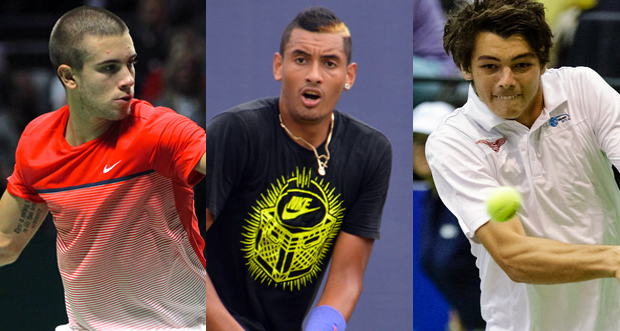
    Borna Coric Nick Kyrgios Taylor Fritz

    The Young Punks
    As the saying goes, history repeats itself. In this case, we see a kind of harmonic in tennis history between these past few generations and the first few generations of the Open Era. The first generation of Rosewall and Laver was extremely strong, followed by one of the very weakest, with only Arthur Ashe winning multiple Slams, then the third—headlined by John Newcombe and Ilie Nastase—was much stronger but still not quite a generation of greats (aside from Newcombe). And so we see a similar pattern with the last few generations: the 1984-88 was (and still is) one of the greatest generations in tennis history; 1989-93 one of the weakest. The verdict is still out on this new young generation of 1994-98, with players ending 2015 at age 17-21, but there are promising signs, as we shall see, and it certainly looks to be stronger than the 89-93 generation.

    I call them the “Young Punks” for two reasons: One, because of the “punkish” attitude of Nick Kyrgios, so far the most successful of the group, and secondly because they carry a kind of swagger that seems to be lacking from the previous generation—which is a good thing.

    Best Players by Birth Year:
    1994: Lucas Pouille (FRA), Kimmer Coppejans (BEL), Jordan Thompson (AUS), Adam Pavlasek (CZE), Luke Saville (AUS), Mathias Bourgue (FRA)
    1995: Nick Kyrgios (AUS), Yoshihito Nishioka (JPN), Kyle Edmund (UK), Matteo Donati (ITA), Mackenzie MacDonald (USA)
    1996: Borna Coric (CRO), Hyeon Chung (KOR), Thanasi Kokkinakis AUS), Jared Donaldson (USA), Quentin Halys (FRA), Elias Ymer (SWE), Noah Rubin (USA), Christian Garin (CHI), Karen Khachanov (RUS)
    1997: Alexander Zverev (GER), Taylor Harry Fritz (USA), Andrey Rublev (RUS), Tommy Paul (USA), Omar Jasika (AUS)
    1998: Frances Tiafoe (USA), Stefan Kozlov (USA), Duckhee Lee (KOR), Mikael Ymer (SWE), Michael Mmoh (USA)

    No Slams yet, with the operative word being “yet.” With this group it is only a matter of time, and we will almost certainly see several multi-Slam winners, if only because the previous generation is so weak, and Novak, Rafa, Andy, and Stan can’t maintain their hold of dominance forever.

    As of this writing, seven players are in the Top 100: Kyrgios, Coric, Zverev, Chung, Fritz, Edmund, and Pouille, with Kokkinakis dropping out due to inactivity. There are another dozen or so in the No. 101-200 range, with several having a chance of entering the Top 100 this year, so by year’s end we could see 10-15% of the Top 100 being players of this generation, finishing the year 18-22 years old.

    While there’s no player that looks like a surefire future great, at least not yet, there are quite a few that are potential future Slam winners, and several that could be multi-Slam winners. Part of this is bolstered by the weakness of the previous generation, but there are also some young players that are the most exciting young talents since Juan Martin del Potro and Marin Cilic.

    1994 is relatively weak with the highest ranked player being Pouille, No. 87 at the ripe age of 22, but then the generation starts becoming stronger in 1995 with Nick Kyrgios, a player whose antics have made him unpopular. But most believe that he’ll eventually be a Slam winner, if he can remain healthy enough. Still, the floor is probably a Berdych-like player and career, but one who peaks in an era with more opportunity than poor Tomas, so with better results. His ceiling might be something like a Juan Martin del Potro, but hopefully with better health. Nishioka and Edmund look like two players who could be future regulars in the Top 40, maybe Top 20 even, but probably not Top 10.

    The generation gets even stronger in 1996, with standouts Coric and Chung, as well as Kokkinakis, Donaldson, Halys, Elias Ymer, Rubin, Khachanov, and Garin showing various degrees of promise. Again, at this age almost every player shows some degree of promise, so it is hard to see now who will continue to rise and who will find a lower level in the rankings and stay there, that is “do a Berankis.” Coric is the player who has risen the quickest, although the feeling on him is mixed. He has stagnated for almost a year now: he broke into the Top 100 in October of 2014, and then climbed further into the Top 50 by May of 2015, but has fluctuated in the 30s and 40s for almost 10 months now. Still, he’s almost certainly going to rise higher, but he may be more of a future Top 10-20 player rather than the future star some pegged him out to be.

    When we get to 1997, we see the two players who look to be the jewels of the generation: Alexander Zverev and Taylor Harry Fritz. Both Zverev and Fritz are getting a good amount of press, with my article about Fritz here. Zverev turns 19 in April and, in my mind—as with Fritz—isn’t far from a big breakout performance. I expect both of these players to win their first titles this year, and make it to the second week of at least one Slam. I think we’re going to see both of these players start head-hunting Top 20 and even some Top 10 players as soon as this year. Andrey Rublev also shows some promise and is eight days older than Fritz, but has yet to make his run at the Top 100. But he did just win his first Challenger title and could rise quickly.

    1998 also has some promising players with Americans Francis Tiafoe and Stefan Kozlov, as well as the Korean Duckhee Lee and the Swede Mikael Ymer, Elias’s younger brother. Of the two Ymer brothers, Mikael may be the more talented. He’s still only 17, however, and still only ranked No. 590, but his is a name to keep in mind.

    2016 will see this generation turning 18-22, so we should start seeing better indicators as to how good they might be, and maybe see a sprinkling of lesser titles. As I’ve written elsewhere, every single all-time great of the Open Era—which I’m defining as players with 6+ Slam titles—has accomplished three things before American drinking age: won an ATP title, reached the second week (QF or better) in at least one Slam, and finished the year in the Top 20. No player of this generation has accomplished all three, and while Kyrgios accomplished reached the second week of a Slam two years ago in 2014 at age 19, he won his first title this year a couple months before turning 21, but has yet to reach the Top 20. That said, I think we can loosen up a bit on those criteria, given the theory that players are taking a bit longer to mature these days. Perhaps two out of three of these criteria is enough to still be a possible future great.

    It should be noted that this generation saw its first title when Nick Kyrgios won Marseille. Consider that 2016 is the equivalent year as 2011 was for the previous generation and 2006 for the 1984-88 generation. In 2011, the previous—and very weak—1989-93 generation won its second title, but wouldn’t start winning multiple titles until 2012. The 84-88 generation starting winning titles in 2004, and won their first Slam and first Masters in 2005 in the name of one Rafael Nadal. It seems likely that the 94-98 generation will be somewhere between the two, although as of this moment they are even behind the weak 89-93 generation. But look for players like Zverev and Fritz to challenge for titles this year.

    Underachievers and Forgotten Players
    It is too soon to tell. If there are any players I’m at all concerned about being underachievers, it is either Lucas Pouille or Christian Garin. At 22, Pouille should be showing a bit more; at this point he’s looking like yet another good-but-not-great Frenchman.

    As for Garin, a couple years ago he was a highly touted junior, defeating Alexander Zverev in the 2013 Junior French Open. While Garin is still only 19, the luster has started to fade a bit as he’s yet to crack the Top 200. Still, we shouldn’t quite give up on him…yet.

    Did You Know?
    I: Alex Zverev’s father was a tennis player, as is his older brother, Mischa.
    II: Andrey Rublev is the name of an illustrious Russian literary figure, and also the title of a film (Andrei Rublev) by the great Russian filmmaker, Andrei Tarkovsky.

    Current Rankings
    27. Nick Kyrgios
    47. Borna Coric
    58. Alexander Zverev
    64. Hyeon Chung
    80. Taylor Fritz
    82. Kyle Edmund
    87. Lucas Pouille
    119. Thanasi Kokkinakis
    122. Kimmer Coppejans
    123. Jordan Thompson

    Other players in the Top 200: Yoshihito Nishioka (No. 124), Adam Pavlasek (No. 134), Karen Khachanov (No. 146), Elias Ymer (No. 152), Jared Donaldson (No. 158), Andrey Rublev (No. 161), Quentin Halys (No. 175), Francis Tiafoe (No. 177), Matteo Donati (No. 181), Luke Saville (No. 186), Matthias Bourgue (No. 187).

    Kyrgios and Coric have been stagnating, although the former has been playing very well of late and should start rising again. Chung has also stagnated, but Zverev and Fritz are both on the rise and should be in the Top 50 shortly.

    Top Ten Players of the Generation (Predicted)
    Right now the most accomplished player of the generation is clearly Nick Kyrgios, the only player with a title and a second week Slam result (he has made a QF twice). But given that their career accomplishments at this point are minimal, and we can see their current rankings above, I’m going to go out on a limb and predict how this list might look 20 years from now. Of course this is impossible to predict, but why not?

    1. Alexander Zverev
    2. Taylor Harry Fritz
    3. Nick Kyrgios
    4. Andrey Rublev
    5. Mikael Ymer
    6. Francis Tiafoe
    7. Borna Coric
    8. Hyeon Chung
    9. Stefan Kozlov
    10. Jared Donaldson

    Honorable Mentions: Elias Ymer, Yoshihito Nishioka, Thanasi Kokkinakis, Kyle Edmund, and just about everyone else.

    This is wild conjecture at this point, but humor me! The top three are safe picks considering their recent performances. After that, I have a feeling about Mikael Ymer and Andrey Rublev, but could be very wrong about one or both. Coric and Tiafoe are paired in my mind, both being somewhat overhyped but both should still be very good players, but again it is just too soon to tell. Chung snuck into the Top 100 by winning a ton of Challengers and Futures, but has yet to do much at more significant tournaments–he’s only made it past the Round of 16 once, at Shenzhen (ATP 250) last year when he lost to Marin Cilic in the QF; the point being, he’s a good “Berankis candidate,” although like all of these players it is too soon to tell. Kozlov is another young American to look out for. After that, Donaldson is a player that I’ve been expecting a breakthrough from for a while now, but haven’t yet seen it.

    Postscript: Gen 14 (1999-03) – Millennials
    Yes, Gen 14 is beginning to show up on the edge of the radar. Right now just a few players are ranked, but as of the end of 2015 we have:

    1999: Corentin Moutet (FRA), Denis Shapovalov (CAN), Alex De Minaur (AUS), Santiago Fa Rodriguez Taverna (ARG)
    2000: Felix Auger Aliassime (CAN), Rayane Roumane (FRA)

    All of the above are ranked between No. 700 to No. 1,000, which basically means they’ve played in Futures but haven’t gone pro yet. And yes, there are players born in 2000 that have ATP rankings. A scary thought. Aliassime has turned some heads and even reached the QF of a Challenger last July when he was 14 years old, before losing to then No. 145 Yoshihito Nishioka—but not before talking the first set from him. He definitely bears watching, but all of this Generation Next are two to three years away from being a serious prospect.

    [divider]

    Cover Photo (Creative Commons License): Marianne Bevis / Carine06 / mirsasha

  • Open Era Generations, Part Thirteen: Gen 11 (1984-88) – Reign of Spain, err, Serbia

    Open Era Generations, Part Thirteen: Gen 11 (1984-88) – Reign of Spain, err, Serbia

    Rafael Nadal Novak Djokovic

    Generation Nada…kovic?
    Just a little over a year ago we could have safely called this Generation Nadal. After Djokovic’s remarkable 2011—and even more remarkable 2015—he is now vying with Rafa for the best player of their generation.

    Expectations around Novak keep changing. When he won the 2008 Australian Open at the tender age of 20, sneaking a Slam title at the height of Fedal dominance, it looked like the sport had a third superstar. But then the next few years were a disappointment, with Novak unable to win another Slam or break out of his No. 3 role through 2010. Ending that year, it looked like Novak would be an “almost-great,” not unlike his closest contemporary, Andy Murray. But then 2011 happened and Novak stole the mantle of the game’s top player from a peaking Nadal. After Novak plateaued as merely the “first among equals” from 2012-14, expectations settled in as an all-time great, but more akin to Edberg/Becker than Sampras/Nadal. But then he had what is now widely considered the best season in Open Era history in 2015, and looks to continue the trend in 2016, having just won the Australian Open and with a 12-0 match record as of this writing. But the year is early.

    Best Players by Birth Year
    1984: Robin Soderling (SWE), Mario Ancic (CRO), Gilles Simon (FRA), Janko Tipsarevic (SER), Juan Monaco (ARG), Andreas Seppi (ITA)
    1985: Stan Wawrinka (SWZ, 2), Jo-Wilfried Tsonga (FRA), Tomas Berdych (CZE), Nicolas Almagro (ESP), John Isner (USA), Marcos Baghdatis (CYP)
    1986: Rafael Nadal (ESP, 14), Gael Monfils (FRA), Richard Gasquet (FRA)
    1987: Novak Djokovic (SER, 11), Andy Murray (UK, 2), Fabio Fognini (ITA)
    1988: Juan Martin del Potro (ARG, 1), Marin Cilic (CRO, 1), Ernest Gulbis (LAT), Roberto Bautista Agut (ESP)

    This is one of the strongest generations in Open Era history. In fact, I think you could make the argument that it is the second strongest after the first, or at least comparable to the great 1969-73 generation. I would also argue that it has the best 1-2 punch of any generation since Laver-Rosewall.

    Much has been written about Nadal and Djokovic. Nadal was, for the better part of a decade, the most fearsome opponent on a specific surface that the game has ever seen. Consider his 70-2 (97%) record at the French Open – he’s lost only two matches in eleven years! Or consider his 346-31 (91.8%) overall record on clay. Compare that to the second best record on a specific surface, Roger Federer’s 142-20 (87.7%) on grass – Rafa’s is over 4% points higher. Rafa dominated clay like no other player has dominated a particular surface, and was pretty good on other surfaces as well.

    Rafa’s 14 Slams are tied with Pete Sampras, and his 27 Masters are an ATP record, although one which Novak will likely break this year. He is also well-known for his utter dominance of Federer, with a 23-11 record in the head-to-head against the player who is still the most popular choice for the GOAT label. His naysayers claim that while he was great on clay, he was merely very good on other surfaces. This isn’t exactly true, considering he won 5 Slams and 8 Masters on other surfaces. The real hole in his resume is probably his lack of a World Tour Finals trophy – he’s been to two finals, but lost both.

    We’ll talk about Novak more in a moment when we look at the generational rankings.

    After Nadal and Djokovic, there’s a strong supporting cast that begins with Murray, then Wawrinka, del Potro, Cilic, Tsonga, Berdych, and Soderling. It drops steeply after that to “third tier” players like Monfils, Gasquet, Almagro, and Isner, but overall it is a very talented bunch. Murray in particular is on the shortlist of players whose overall career accomplishments have been most impacted by his own peers. Still, as much as people like to criticize Andy for being the weakest of the Big Four, he has had quite a career in his own right: two Slam titles, one Olympic gold medal, eleven Masters, and 35 titles overall – and counting. He is unlikely to enter the inner circle of Open Era players who won six or more Slams, but he could end his career as the best of the rest. How fitting would that be?

    This is also a generation of Slam-less players who might have won Slams if they had been born at a different time. Tsonga, Berdych, and Soderling fit this profile in particular.

    Underachievers and Forgotten Players
    I’d like to first mention two players that aren’t so forgotten: Robin Soderling and Juan Martin del Potro. Soderling was the fifth wheel of the Big Four for a couple years, between Nikolay Davydenko and David Ferrer, and best known for upsetting Nadal in the fourth round of the 2009 French Open. Unfortunately his career was derailed by mononucleosis while in his prime, so we’ll never know if he could have won a Slam.

    In 2009, after defeating Roger Federer in the US Open final, del Potro looked like he was ready to vie with Andy Murray for at least the “best of the rest” category. But injuries have derailed his career and he’s never been the same since.

    Soderling and del Potro aren’t truly forgotten, but I would like to mention one player who probably is: Mario Ancic. A 22-year old Ancic finished 2006 ranked No. 9 on account of two Slam quarterfinals and two ATP 250 titles, and looked to at least be a Top 10 fixture for years to come. But he missed the US Open that year due to a back injury and then contracted mononucleosis early in 2007. He struggled onward for a few years but couldn’t recovery, finally calling it quits in 2011. He’s definitely in the “what could have been” category. Maybe not an elite player, but certainly a regular in the Top 10.

    Several others could be considered disappointments: Richard Gasquet, Gael Monfils, Alexander Dolgopolov, and Ernests Gulbis all come to mind. I’d even mention Jo-Wilfried Tsonga, who has the big game to win a Slam but has not managed to do so.

    Did You Know?
    Gael Monfils has played in 18 finals, including 2 Masters, 5 ATP 500s, and 11 ATP 250s. He’s won only 5 of them, all ATP 250s. That’s a 5-13 record in professional finals, and 0-7 in finals higher than an ATP 250. In fact, Monfils wasn’t the only Frenchman of this generation to struggle in finals of big tournaments. While the top four Frenchmen of this generation—Tsonga, Gasquet, Simon, and Monfils—played very well in ATP 250 finals, with a combined 38-21 record, they have not faired well in ATP 500s (2-9), Masters (2-9), World Tour Finals (0-1), and Slams (0-1), for a combined 4-20 record in finals ATP 500 or higher.

    Top Ten Players of the Generation

    1. Novak Djokovic
    2. Rafael Nadal
    3. Andy Murray
    4. Stan Wawrinka
    5. Juan Martin del Potro
    6. Tomas Berdych
    7. Jo-Wilfried Tsonga
    8. Marin Cilic
    9. Robin Soderling
    10. Richard Gasquet

    Honorable Mentions: Gael Monfils, Mario Ancic, Janko Tipsarevic, Gilles Simon, Juan Monaco, Andreas Seppi, Nicolas Almagro, John Isner, Marcos Baghdatis, Kevin Anderson, Fabio Fognini, Ernests Gulbis, Juan Bautista Agut, Alexandr Dolgopolov.

    Yes, I did it: I ranked Novak Djokovic over Rafael Nadal. Why? When I first started working on this series several months ago, I would have given Nadal the edge in terms of current (at the time) career accomplishments. But there are two reasons why I now consider Novak as the best player of his generation:

    1. Most importantly, I think his overall career accomplishments are better, right now. In other words, if both retired today, I’d rank Novak higher (although just by a hair). More on that in a moment.
    2. I’m taking the liberty to speculate a bit as this generation is far from through. Even if I focus only on Rafa’s 14 Slams to Novak’s 11, I feel confident predicting that Novak will surpass Rafa before not too long, probably some time in 2017. So given current performance level and even accounting for inevitable decline on Novak’s part, his career numbers will soon surpass Rafa’s – and perhaps even Roger’s.

    And why do I think Novak holds the edge even now, especially considering that Rafa leads in both Slams (14 to 11), Masters (27 to 26), and overall titles (67 to 61)? Well, to start, Novak has four year-end No. 1’s to Rafa’s two, and, barring something unforeseen, will almost certainly get at least one more. Novak also has five World Tour Finals to Rafa’s zero and has been a far more consistent performer at Slams, reaching the QF or later in the last 27, and only two first-week losses going back to his first SF appearance in the 2007 French Open. Furthermore, Novak also already has 45 more weeks at No. 1 and counting, and is the only member of the “Big Four” who has a winning record against the other three.

    Given their current respective levels of play, Novak will surpass Rafa in Slams, Masters, and overall titles within the next year or two. He is the greatest player of his generation, if only by a slight and arguable margin right now, but will almost certainly have surpassed him in every meaningful category.

    After these two, Andy and Stan are the clear #3 and #4. If Wawrinka is able to win another couple Slams and Andy none, then “Stanimal” might surpass him as the third greatest player of the generation, but right now Andy’s overall career is significantly better. In fact, they’re a good comparative case study as to why Slam count alone is not a good indicator of overall greatness.
    Del Potro very well could have been #3 on this list if it hadn’t been for injury. After him, Tsonga and Berdych are closely linked. Tsonga has had brighter moments of brilliance, but Berdych is aging a bit better and is more consistent – so I’m giving Tomas the edge. Then we have Soderling and Cilic, with Gasquet a good bit behind. Soderling was a more brilliant player than Cilic, but the big Croat has his Slam and is far from done – so he gets the edge. Gasquet is the best of the rest of the pack.

    [divider]

    Cover Photo (Creative Commons License): Marianne Bevis

  • Open Era Generations, Part Twelve: Gen 10 (1979-83) – Generation Federer

    Open Era Generations, Part Twelve: Gen 10 (1979-83) – Generation Federer

    Roger Federer

    Why the name?
    What else could it be called? Roger Federer dominated his peers unlike any player since at least Bjorn Borg. Consider that he is the only player born in the fourteen-year span of 1972-85 who has more than three Slam titles; he is probably the number one reason why this is the case. Federer won 17 of his generation’s 23 Slam titles, or 74%, more than Borg’s 69% (11 of 16). “Weak Era Theory” aside, Roger simply owned his peers. More on that in a moment.

    Best Players by Birth Year
    1979:  Ivan Ljubicic (CRO), James Blake (USA), Juan Ignacio Chela (ARG), Ivo Karlovic (CRO), Nicolas Massu (CHI), Michael Llodra (FRA), Albert Montanes (ESP)
    1980: Marat Safin (RUS, 2), Juan Carlos Ferrero (ESP, 1), Fernando Gonzalez (CHI), Xavier Malisse (BEL)
    1981: Roger Federer (SWZ, 17), Lleyton Hewitt (AUS, 2), Nikolay Davydenko (RUS), Feliciano Lopez (ESP), Mardy Fish (USA), Jarkko Nieminen (FIN), Julien Benneteau (FRA)
    1982: Andy Roddick (USA, 1), David Ferrer (ESP), David Nalbandian (ARG), Tommy Robredo (ESP), Mikhail Youzhny (RUS), Guillermo Coria (ARG)
    1983: Fernando Verdasco (ESP), Phillip Kohlschreiber (GER), Dmitry Tursunov (RUS), Alejandro Falla (COL)

    I’ve been a bit more liberal with the names included, as this is a generation still active, or at least fresh in memory. Birth years 1980-82 is the heart of the generation, with 1979 and ’83 being far weaker.

    Imagine being Lleyton Hewitt or Andy Roddick: 2003 ends and you’re playing well, both with a Slam and year-end No. 1 or 2 under your belt while still in your early 20s. Then this soft-spoken Swiss guy rises up and utterly dominates tennis, while you toil away, year after year, never able to get past him and win another Slam. This scenario is particularly telling for Andy Roddick, who lost four Slam finals to Federer and won only 3 matches out of 24. Despite that fact, Roddick had an excellent career, finishing every year from 2002-10 in the Top 10, with 32 titles to his name including one Slam and five Masters. Andy retired relatively young by today’s standards, just after turning 30 in 2012, but he saw the writing on the wall–falling from No. 8 in 2010 to No. 14 in 2011 and No. 39 in 2012.

    In 2001, at the age of 20, Lleyton Hewitt was the youngest player to reach the No. 1 ranking since the ATP computerized rankings began in 1973. He was No. 1 for 80 weeks — more than Stefan Edberg, Jim Courier, Gustavo Kuerten, Ilie Nastase, Mats Wilander, and Boris Becker. After two year-end No. 1 rankings in 2001 and 2002, Hewitt entered 2003 on top of the world. Yet it soon became clear that a couple of his peers were surpassing him: Andy Roddick and Roger Federer. He remained a top player for a few more years, but by 2006 he had slipped out of the elite, unable to compete with the newer, bigger, more powerful generation that was coming up. As of this writing, Hewitt just played his last Grand Slam, going out in the second round of the Australian Open. Though he hasn’t been in the Top 20 for seven years, he will be missed.

    As for the Swiss Maestro himself, it is difficult to say anything that hasn’t already been said. But to return to the topic of his dominance over his generation, consider his head-to-head against peers (born 1979-83) who were Top 10 players: 195-36, or 84.4% – which is better than his overall winning percentage against all players. Of all players in Federer’s generation, the only two who were able to win more than three matches against him were Lleyton Hewitt (9-18) and David Nalbandian (8-11).

    Federer’s fans occasionally bemoan the fact that he’s no longer the player he was during his absolute peak, from 2004-07. While this is undoubtedly true, we should not lose sight of the player he is now, still ranked No. 3 halfway between his 34th and 35th birthdays. The vast majority of all-time greats were either long retired or fading out at Roger’s age.

    Maybe Roger will buck the trend and remain an elite player into his late 30s, but it seems unlikely. While he is showing no signs of further decline—yet—any setbacks, such as his current knee injury, could damage his momentum. Regardless, we should appreciate the great player while he’s around.

    Underachievers and Forgotten Players
    David Nalbandian and Marat Safin come most readily to mind. These two challenged Federer in terms of talent, but neither had the mentality and focus to be a perennial champion. Nalbandian is on the short list of most talented player never to win a Slam in the Open Era, and Safin is often mentioned as an almost-great who should have been an all-time great.

    Nalbandian was the most competitive peer of Federer’s, winning 8 of 19 matches (42.1%) and their first five matches. After those five, Roger seemed to figure out Nalbandian, with an 11-3 record from the 2003 Tennis Masters Cup onward. The only players with a better percentage against Federer in 10 or more matches are Tim Henman (46.2%), Rafael Nadal (67.6%), Novak Djokovic (51.1%), and Andy Murray (44%), all either significantly older or younger. Regardless of his level of disappointment, Nalbandian had a solid career, the highlight of which was his victory over Roger Federer in the 2005 World Tour Finals, as well as his two Masters in 2007.

    Safin was the No. 2 player in the sport at the age of 21 in 2000, a year in which he spent nine weeks as the No. 1 player in the world, defeated Pete Sampras in straight sets to take the US Open title, and won two Masters. It looked like tennis finally had a new, young elite player to join the aging Agassi and Sampras. Yet he was to finish only two other years in the Top 5, 2002 and 2004, and he won only one more Slam and three more Masters. A fine career, but not an all-time great.

    Another to consider is Guillermo Coria, who was ranked in the Top 8 from 2003-05, then saw his career collapse in 2006 – for a variety of reasons, including service issues, marital problems, and injury.

    Lesser-known Joachim Johansson deserves mention as someone who looked like at least a second-tier player but saw his career destroyed by injury. At the end of 2004, it looked like Sweden would have have an heir to Thomas Enqvist and Thomas Johansson in the “If not quite Borg/Wilander/Edberg, then at least Nystrom/Jarryd” category. Joachim finished the year No. 11, at age 22, including a Slam semifinal appearance and an ATP 500 title, but couldn’t recover from a variety of injuries.

    Did You Know?
    Roger Federer’s 2006 was widely considered the best season of the Open Era since Rod Laver’s great 1969, only recently surpassed by Novak Djokovic’s 2015. He won three Slams, was the finalist in the fourth, won the World Tour Finals, four Masters, 12 titles overall, and a ridiculous 91-5 record. Four of those five losses were to his nemesis, Rafael Nadal, and the other to Andy Murray. But here is what is interesting: in all but one of those matches, Nadal was still 19-years old, as was Andy Murray, who was ranked No. 21 when he beat Federer at the Cincinnati Masters. When Nadal defeated Federer in the French Open final, he had just turned 20; it was his fourth and last win over the No. 1 player that year (Roger would beat him at Wimbledon and the World Tour Masters).

    So think about that for a moment: The best player in the sport, and one of the best all time, lost four times to two teenagers during his best season, and a fifth time to one of them a few days after he turned 20. In his best season. Other than that, Roger was 91-0.

    Top Ten Players of the Generation

    1. Roger Federer
    2. Lleyton Hewitt
    3. Andy Roddick
    4. Marat Safin
    5. Juan Carlos Ferrero
    6. David Ferrer
    7. David Nalbandian
    8. Nikolay Davydenko
    9. Tommy Robredo
    10. Mikhail Youzhny

    Honorable Mentions: Fernando Gonzalez, Guillermo Coria, Fernando Verdasco, Ivan Ljubicic, James Blake, Feliciano Lopez, Mardy Fish, Jurgen Melzer, Ivo Karlovic, Juan Ignacio Chela, Philipp Kohlschreiber.

    Number one is easy, as Federer was (and is) to his generation what Borg was to his. I also feel reasonably confident with my No. 2-4 rankings, although Hewitt, Roddick, and Safin could be arranged in a variety of ways. While Safin was the most talented of the three, and Roddick the most consistent over a long period of time, I give Hewitt the edge because he’s the only one who had a sustained period of time as No. 1, even if it was in the “soft spot” of 2001-02 when men’s tennis was seeing a regime change.

    After that, it gets tricky. If you changed Ferrero’s Slam win to a runner up, he would probably rank behind Ferrer, Davydenko, and Nalbandian, all of whom had better overall careers aside from one match. The “Mosquito” wasn’t the worst player to win a Slam, and was an elite player for several years but like many of his peers, he saw his career drop off in his mid-20s. He slipped out of the Top 10 in 2004 and never returned, with a later career similar to Hewitt’s. But he did win a Slam and attain the No. 1 ranking for a short period of time, things that Ferrer, Davydenko, and Nalbandian never did.

    David Ferrer has had an unusual career path, peaking in his late 20s and early 30s. Other than Federer, he is the most consistent player of his generation and will go down as one of the greatest players never to win a Slam, along with his contemporary Nikolay Davydenko, who filled a similar role before Ferrer’s peak. Ferrer has the reputation of a player who maximized his modest talents – was not a great player, but a consistently very good one. While he has winning records against similarly ranked players like Tomas Berdych (8-5) and Jo-Wilfried Tsonga (3-1), unlike those two there is a sense that it would have been (and is) impossible for him to win a Slam because Ferrer’s “A game” simply cannot touch the “B games” of Djokovic, Nadal, or Federer.

    There’s a steep drop-off after Davydenko, with Robredo and Youzhny earning their way into the Top 10 through longevity. Guillermo Coria, Fernando Gonzalez, Ivan Ljubicic, and James Blake were all better peak players, but none had the overall career accomplishments of Robredo and Youzhny.

    Addendum: Twelve Highest Ranked Players of Gen 10 (as of 2/8/16)
    3. Roger Federer
    6. David Ferrer
    25. Feliciano Lopez
    26. Ivo Karlovic
    32. Philipp Kohlschreiber
    34. Guillermo Garcia Lopez
    39. Tommy Robredo
    40. Gilles Muller
    52. Paolo Lorenzi
    54. Nicolas Mahut
    56. Victor Estrella Burgos
    57. Fernando Verdasco

    As you can see, this generation still has quite a few players around, although only two in the Top 10. Considering that this generation will turn 33 to 37 in 2016, expect almost all to be gone within another year or two, with maybe a few hold-outs playing into their late 30s.

    [divider]

    Cover Photo (Creative Commons License): Marianne Bevis

  • Open Era Generations, Part Eleven: Gen 9 (1974-78) – A Transitional Era

    Open Era Generations, Part Eleven: Gen 9 (1974-78) – A Transitional Era

    Gustavo Kuerten Yevgeny Kafelnikov Carlos Moya

    While one of the weakest generations of the Open Era — by my account, third after Gen 2 (1939-43) and Gen 12 (1989-93) — I personally find this one of the most interesting. I’m not exactly sure why, but I think it has to do with the fact that it is hard to define, with no clear stars. It is the generation that was at its peak in the late 90s and early 00s, between the dominance of Sampras-Agassi and Federer.  The generation has an interesting balance of players – no real standouts or all-time greats, but several excellent players.

    Best Players by Birth Year
    1974: Yevgeny Kafelnikov (RUS, 2), Alex Corretja (ESP), Thomas Enqvist (SWE), Andrei Medvedev (UKR), Tim Henman (UK)
    1975: Marcelo Rios (CHIL), Thomas Johansson (SWE, 1), Jiri Novak (CZE), Albert Costa (ESP, 1)
    1976: Gustavo Kuerten (BRA, 3), Carlos Moya (ESP, 1), Mark Philippoussis (AUS), Rainer Schüttler (GER), Magnus Norman (SWE)
    1977: Nicolas Kiefer (GER), Guillermo Canas (ARG)
    1978: Gaston Gaudio (ARG, 1), Tommy Haas (GER), Radek Stepanek (CZE), Sébastien Grosjean (FRA), Michael Russell (USA)

    [divider]

    Click here to discuss “Open Era Generations, Part Eleven: Gen 9 (1974-78) – A Transitional Era” in the Discussion Forum.

    [divider]

    This generation is responsible for only 9 Slams, the lowest since the 1939-43 generation (4). There are no all-time greats, merely a couple almost-greats, and a handful of very good players.

    The two best players of the generation were Gustavo Kuerten and Yevgeny Kafelnikov, who accounted for five of the nine Slams. Kuerten was a clay-court specialist who won the French Open three times, as well as four clay Masters. But he also won the 2000 Tennis Masters Cup, defeating Pete Sampras and Andre Agassi – the only player to defeat both in the same tournament –  and the hard-court Cincinnati Masters, so could play well off clay.  “Guga” was only a Top 5 player for three years (1999-2001), and only finished in the Top 40 for eight years (1997-2004); his “near-greatness” was largely due to his lack of longevity, which was largely because of injuries starting in 2002. The second half of his career is one of the great What-If stories of the last couple decades.

    Kafelnikov was less brilliant at his best, but had a longer peak than Guga, ranking No. 11 or better from 1994 to 2001. The third most accomplished player of the generation, Carlos Moya, ranked No. 61 or higher for fourteen straight years, from 1995 to 2008, including thirteen years No. 43 or better, and five years No. 7 or better – a consistently very good player.

    Single-Slam winners Thomas Johansson, Albert Costa, and Gaston Gaudio are the definition of one-Slam wonders. Johansson had a long career, including eleven years in the Top 100, but he never finished a year in the Top 10; imagine if someone like Nicolas Almagro won a Slam and you get a sense of Johansson’s feat. Costa was a clay-court specialist, probably similar in talent to someone like Feliciano Lopez, but happened to play between the reins of Kuerten and Rafael Nadal, and thus able to win a French Open (in 2002). Gaudio could be the worst player in the Open Era ever to win a Slam, the 2004 French Open against Guillermo Canas. He finished No. 10 in 2004 and 2005, but never finished another year in the Top 20.

    This is the oldest generation to still have players on tour, but it won’t be much longer. After a resurgence in 2012-13, 37-year-old Tommy Haas has slipped the last couple years and seems like he’s winding down. Haas started on the ATP tour in 1996, losing his first Slam match to Sergi Bruguera at the US Open in the first round. 2015 makes it 20 years on tour. Haas has been around so long that his first year was the last year Boris Becker won a Slam (although he never played Becker).

    Radek Stepanek is also ranked around No. 200, which would be the first year on tour that he hasn’t finished No. 68 or higher – going back to 2002. Michael Russell, also from that 1978 birth year, just retired.

    Underachievers and Forgotten Players
    There’s a reason I didn’t mention Marcelo Rios above, as I was saving him for this category. In 1998 he looked like the heir apparent to Pete Sampras as the premier player in the game, taking the No. 1 ranking in late March and winning three Masters that year, as well as the Grand Slam Cup. Yet Rios’s relatively mediocre second half of the year led to a loss of the No. 1 ranking to Sampras, and while he remained a Top 10 player in 1999, he slipped and stumbled in 2000 and never regained his elite status, largely due to injuries.

    Another player who had a disappointing career is Andrei Medvedev, who was the first of the generation to rank in the year-end Top 10, finishing 1993 ranked No. 6 at age 19. While he would go on to win four Masters, he would never rank in the Top 10 again and made a Slam final only once.

    There are several other players who fit the category of “close, but no cigar” as far as Slams go – Alex Corretja was 0-2 at French Open Slam finals, Thomas Enqvist was meant to revive Swedish tennis but–along with Johansson–instead ended up being a kind of dead-cat bounce after the great 1970s-80s era, and Tim Henman goes down as one of the greatest grass court players never to win Wimbledon. And boy did he try – eight out of nine years from 1996-2004 making the quarterfinals or later, including four semifinals but never a final. Mark Philippoussis also comes to mind in this category.

    Did You Know?
    I first came across Roberto Carretero’s name when looking at Masters winners of the 90s. Carretero has quite a story: he won the Hamburg Masters in 1996 as a virtual unknown, ranked No. 143 and defeating Yevgeny Kafelnikov en route to a final win against rising young Spanish star, Alex Corretja. He never ranked higher than No. 58 and never made it past the second round in a Slam, retiring in 2001. But he does have that Hamburg Masters title.

    Top Ten Players of the Generation

    1. Gustavo Kuerten
    2. Yevgeny Kafelnikov
    3. Carlos Moya
    4. Marcelo Rios
    5. Alex Corretja
    6. Tim Henman
    7. Tommy Haas
    8. Albert Costa
    9. Thomas Enqvist
    10. Andrei Medvedev

    Honorable Mentions: Mark Philippoussis, Thomas Johansson, Sebastian Grosjean, Magnus Norman, Gaston Gaudio, Radek Stepanek.

    This is actually a hard generation to rank. I feel confident about the top four, although think Moya and Rios could be swapped, and I went back and forth on Kuerten and Kafelnikov, but in the end prefer Kuerten’s higher peak to Kafelnikov’s greater longevity. After the “biggish four,” Corretja is probably the best of the rest, with Henman, Haas, Costa, and Enqvist not far behind, but that tenth spot could go to any of Medvedev, Philippoussis, Johansson, or Grosjean.

  • Open Era Generations, Part Ten: Gen 8 (1969-73) – American Supernova

    Open Era Generations, Part Ten: Gen 8 (1969-73) – American Supernova

    Andre Agassi Pete Sampras Jim Courier

    Last of the Great Americans
    The United States has always been central to men’s tennis, from early greats like Richard Sears, William Larned, and Bill Tilden to the “golden age” of the 30s to 50s, with stars like Ellsworth Vines, Don Budge, Bobby Riggs, Jack Kramer, and the great Pancho Gonzales. American men’s tennis dipped in the 60s and then resurged with Stan Smith and Arthur Ashe being the harbingers of the first Open Era superstar, Jimmy Connors. Jimmy passed the baton to John McEnroe, who in turn passed it to Andre Agassi and Pete Sampras, the twin stars of Gen 8.

    This was the last great—and probably greatest—generation of American men’s tennis. This generation included two (Sampras and Agassi) of the four greatest Open Era Americans (along with Connors and McEnroe), as well as a strong supporting duo in Jim Courier and Michael Chang.

    [divider]

    Click here to discuss “Open Era Generations, Part Ten” in the discussion forum.

    [divider]

    Players by Birth Year
    1969: Cedric Pioline (FRA), MaliVai Washington (USA), Alberto Mancini (ARG), David Wheaton (USA)
    1970: Andre Agassi (USA, 8), Jim Courier (USA, 4), Todd Martin (USA), Marc Rosset (SWI), Magnus Larsson (SWE)
    1971: Pete Sampras (USA, 14), Goran Ivanisevic (CRO, 1), Sergi Bruguera (ESP, 2), Richard Krajicek (NED, 1), Wayne Ferreira (SAF)
    1972: Michael Chang (USA, 1), Patrick Rafter (AUS, 2), Jonas Bjorkman (SWE)
    1973: Greg Rusedski (CAN/UK), Alberto Berasategui (ESP), Albert Portas (ESP)

    Discussion
    This was a very talented generation, with 33 Slams distributed among eight players, including two who could be considered all-time greats and three other multi-Slam winners.

    It is easy to forget how good Courier was for a few years, as he was historically well overshadowed by Sampras and Agassi. He was a player who wasn’t as naturally gifted as his contemporaries, but played his heart out to the tune of four Slam titles, all within 1991-93. He finished 1992 as the year-end No. 1, then 1993 as year-end No. 3, and then finished in the Top 10 only once more, in 1995, despite playing through the decade.

    Pete Sampras was to the 90s what Roger Federer was to the 00s: the premier player by a good margin. He was never able to win the French Open — not even coming close, really — but he dominated Wimbledon with seven titles and the US Open with five. While some might look at his Slam performance record and think that it doesn’t compare to those of the recent three greats because of Sampras never winning more than two Slams in a year, and with plenty of first week losses even in his prime, it must be understood that the tennis of the 90s was a more diverse game in terms of the courts, before the surface homogenization that has taken place over the last decade or so.

    Sampras was also considered by many to be the best player of the Open Era until Federer, Nadal, and Djokovic came along. He was such a dangerous player; one of his most notable skills was his incredible second serve, known to deliver many an ace. The lone match between Sampras and Federer is must-watch tennis:

    Andre Agassi was no less memorable than Sampras, although more for his storied career than his play – although he was a great player, just not on the level of Sampras. Andre essentially had two careers: the first being a fiery and troubled youth who finished in the Top 100 at age 16 in 1986, although did not win his first Slam until six years later in 1992. Andre’s career unraveled in 1997 when he played only 13 tournaments and dropped to No. 110. He came back slowly at first in 1998, but then had his best year in 1999, winning two Slams and earning the year-end No. 1 ranking. He was the elder statesman of the game in the early 00s, for a few years after Sampras had retired, becoming the oldest player to be ranked No. 1 in 2003 at the geriatric age of 33, remaining in the Top 10 past the page of 35.

    Underachievers and Forgotten Players
    There is no clear player in this generation that I’d call an underachiever, although many players who have glimmerings of it. Agassi was an underachiever in his youth, but made up for it later on. I cannot remember the source, but I believe it was an interview on NPR in which Andre stated that he hated tennis and resented his family for pushing him into it – at least early on. Michael Chang could also be considered an underachiever in that he won his only Slam at the tender age of 17, but his overall skill set was more comparable to the better Slam-less players and overall he had an excellent career.

    Jim Courier is an interesting case in that he could be considered both an under- and overachiever. He is an underachiever if you look at his career through 1993 when he turned 23, which included four Slams and a year-end No. 1 in ’92, and compare it to 1994 onward – when he never won a Slam or even made it to another final. But he could be considered an overachiever in that for those few years in 1991-93 he maximized his modest talent and was one of the best players in the game.

    Two other players that come to mind, who probably fit the term better: Goran Ivanisevic, who had the skill-set to be a dominant grass and fast-court player but only won a single Wimbledon; and Richard Krajicek, an almost great but flawed player who was the only peer of Sampras to have a winning record against the generation’s greatest player, but only a single Slam winner.

    Did You Know?
    One of my favorite stories from this generation is the tale of Goran Ivanisevic – one of the greatest servers in the history of the game, and one of the ten or so best players of the 90s. Imagine Ivanisevic in 2000: he ended the year 29 years old, had seen his ranking fall each year from No. 4 in 1996 to No. 129 in 2000. The big Croat had lost the three Slam finals he had played in, all at Wimbledon – one to Agassi, two to Sampras. 2001 looked to be no different. He went out in the first round of qualifications at the Australian Open, didn’t play in the French Open, and entered Wimbledon ranked No. 125.  He then proceeded to plow his way through the rounds, defeating everyone from Carlos Moya to an 18-year old Andy Roddick, Greg Rusedski, Marat Safin, Tim Henman, and then finally facing–and defeating–third seed Patrick Rafter in the final in five sets, becoming the first wildcard ever to win Wimbledon. I guess it is never too late; Ivanisevic should remain an inspirational story for Slam-less players in the twilights of their careers.

    Top Ten Players of the Generation

    1. Pete Sampras
    2. Andre Agassi
    3. Jim Courier
    4. Michael Chang
    5. Patrick Rafter
    6. Goran Ivanisevic
    7. Sergi Bruguera
    8. Richard Krajicek
    9. Todd Martin
    10. Wayne Ferreira

    Honorable Mentions: Cedric Pioline, Greg Rusedski, Jonas Bjorkman.

    The top three are very easy to rank. After that you could make an argument for different orders of numbers 4-7, although I like Chang’s longevity better than the other three. Chang was, in a way, the 90s version of David Ferrer, but if Ferrer had managed to sneak a Slam in. Rafter won two Slams, but had a relatively short career. Sergi Bruguera was the definition of a clay-court specialist. He won two French Opens, made the final of another and the semifinal of a fourth, yet never made it past the 4th round at any other Slam.

    Richard Krajicek is an interesting player in that he is one of the few to own a winning record against Pete Sampras, including beating him in the quarterfinal of the 1996 Wimbledon en route to his lone Slam title. It was Sampras’ only loss at Wimbledon between 1993 and 2000. After Krajicek, I ranked Martin and Ferreira in the top 10, but the honorable mentions are all close.

    [divider]

    Cover Photo (Creative Commons License): Chris Josefy / James Marvin Phelps / shinyasuzuki

  • Open Era Generations, Part Nine: Gen 7 (1964-68) – Mats, Stefan, and Boris

    Open Era Generations, Part Nine: Gen 7 (1964-68) – Mats, Stefan, and Boris

    Stefan Edberg Mats Wilander Boris Becker

    Where the last generation had two all-time greats, this generation had three: Mats Wilander, Stefan Edberg, and Boris Becker, each with very different careers – as we will discuss in a moment. This is the generation that rose in the early 80s and peaked from the mid-80s through the early 90s, although there was only a short gap of years between the reigns of McEnroe/Lendl and Sampras in which they were the dominant generation in the sport.

    [divider]

    Click here to discuss “Open Era Generations, Part Nine: Gen 7 (1964-68) – Mats, Stefan, and Boris” in the discussion forum.

    [divider]

    Best Players by Birth Year
    1964: Mats Wilander (SWE, 7), Jimmy Arias (USA), Miroslav Mecir (CZE/SLO), Henrik Sundstrom (SWE), Jakob Hlasek (SUI)
    1965: Pat Cash (AUS, 1), Guy Forget (FRA), Karel Novacek (CZE), Emilio Sanchez (ESP)
    1966: Stefan Edberg (SWE, 6), Jay Berger (USA), Andrei Chesnokov (USSR/RUS)
    1967: Boris Becker (GER, 6), Thomas Muster (GER, 1), Aaron Krickstein (USA)
    1968: Michael Stich (GER, 1), Petr Korda (CZE, 1), Kent Carlsson (SWE)

    As you can see, seven different players won 23 Slams in all – the most in both categories since the 1934-38 generation.

    Mats Wilander followed in Bjorn Borg’s footsteps, with Sweden winning at least one Slam in every year from 1974 to 1985, and all but two years until 1992 – the end of the Swedish reign and co-dominance with the United States. Wilander was a tender 17-years old at the 1982 French Open and clearly benefited from the absence of Borg. His early rise was quick and fierce; while he only finished No. 1 once, his three-Slam 1988, he was ranked No. 7 or higher from 1982-88, and No. 4 or higher in all but 1982. Wilander’s 1988 was a swan song after which he declined quickly, never even making another Slam final or ranking in the Top 10 until he retired after 1996 – one of the worst declines of any great tennis player.

    Edberg and Becker will likely be forever linked. They are players of very similar career accomplishments, as we will discuss more in a moment when we look at the best players of the era.

    Underachievers and Forgotten Players
    Miroslav Mecir is probably one of the most talented players in Open Era history never to win a Slam. His career was short and bright; if it had been longer, he really could have added a Slam trophy. He played only eight years on tour, from 1983-90, made it to two Slam finals–losing to Ivan Lendl in both–won three Grand Prix (Masters) tournaments and the 1988 Olympics. Perhaps the highlight of his career was winning the WCT Finals in 1987 against John McEnroe.

    Aaron Krickstein was a promising young player who never fulfilled his early success. In 1984 he finished No. 12 at the age of 17. But his career stalled out for several years, until he reached his highest ranking of No. 6 in February of 1990. Krickstein would go on to win six titles but never better than a semifinal result at a Slam. If we look at all players in the Open Era, Krickstein’s career could be the most disappointing relative to his ranking as a 16-17 year old, as we will see in a moment…

    Did You Know?
    Aaron Krickstein was the youngest player to win an ATP title at the age of 16 years and 2 months when he won Tel Aviv in 1983, a record that remains to this day. He is also one of only three players in the ATP Era (1973-present) to finish in the top 100 as 16-year olds, along with Andre Agassi and Michael Chang, and one of only four to finish in the Top 20 as 17-year olds along with Agassi, Chang, and Borg.

    Top Ten Players of the Generation

    1. Boris Becker
    2. Stefan Edberg
    3. Mats Wilander
    4. Thomas Muster
    5. Michael Stich
    6. Petr Korda
    7. Pat Cash
    8. Miroslav Mecir
    9. Guy Forget
    10. Aaron Krickstein

    Honorable Mentions: Emilio Sanchez, Andrei Chesnokov, Karol Novacek, Jakob Hlasek, Jimmy Arias

    Ranking the top three is difficult, with valid arguments for any of them to be at the top. Wilander had the best year in 1988, and won one more Slam than the other two, but declined very young. Becker had the longest range of Slam titles but was less consistent year in and year out than Edberg, and never finished the year as the No. 1 player. Their match-up is “Fedalian” in terms of how lopsided it was (Becker led it 25-10), but Edberg held the edge in Slams (3-1) and ATP finals (1-0) and of course had two year-end No. 1 rankings.

    Really it is 1a, 1b, and 1c, or perhaps 1a, 1b and 3, with Wilander a step behind the others. These three players peaked during one of the most competitive eras in men’s tennis, when Connors, McEnroe, and Lendl were still elite players, and Sampras, Agassi, and Courier were rising to the top. When I started writing this series I gave Edberg the edge, but have since given it to Becker because, if you look below the surface, Becker has the edge in a number of ways. While both won six Slams, Boris had two more years in the Top 10 than Stefan, and also won two more ATP finals and five more Grand Prix/Super 9 (Masters equivalent) tournaments, with a superior overall record in title finals: 49-28 compared to Edberg’s 42-38. Becker was also a much better player against Top 10 opponents, with a career 65.1% vs. Edberg’s 45.7%.

    To put the comparison of the three graphically, I used one of my various statistic systems called “Title Shares,” which imagines that the big tournaments–all four Slams, the tour finals, and the Masters–equal 100 total shares for a given year, or 14 for each Slam, 8 for the ATP year-end championships, and 4 for each Masters. This system then adds 1 point per other title (ATP 250 and 500), and in the case of the WCT year-end championships, 5 extra points; consider these all to be “extra credit.” Now this system makes more sense in recent years, as the ATP structure has been more consistent, but it gives you an idea of the different trajectories of the three players and their relative dominance:

    20151229052337

    As you can see, Wilander was more dominant overall through 1988, which turned out to be a final supernova after which his career sputtered and faded. Edberg was a force from 1985 on, with his best phase in the early 90s. Becker was also relatively strong from 1985 on, but where Edberg faded in 1993, Boris had a resurgence from 1994-96 that strengthened his overall legacy.

    After the Big Three, there’s a steep drop-off to Thomas Muster, but he’s a solid No. 4. Muster is best known for being both a great clay-court player but also an incredible competitor in finals. He has an overall 44-10 record in ATP finals, or 81.5% – far ahead of anyone else. Nikolay Davydenko is number two with a 21-7 (75%) record in ATP finals; Borg has the best among all-time greats, with a 64-24 (72.7%) record.

    Michael Stich was a very good player for, unfortunately, a rather short length of time. He is best known for upsetting Boris Becker in the 1991 Wimbledon final. A comparable recent player would be Juan Martin del Potro. Pat Cash is solidly No. 6, and then Korda and Mecir are harder to rank. Korda has the one Slam but Mecir was probably a better player. He was, in some ways, the Robin Soderling of his generation – very good for a too-short period of time, his career ended prematurely by injury. The last two spots go to Forget and Krickstein, with Emilio Sanchez and Andrei Chesnokov just missing the cut.

  • Open Era Generations, Part Seven: Gen 5 (1954-58) – Borg and Some Other Guys

    Open Era Generations, Part Seven: Gen 5 (1954-58) – Borg and Some Other Guys

    Johan Kriek Bjorn Borg Vitas Gerulaitis

    The Greatest Swede
    If you take this generation’s best player out of the mix, it would be one of the weakest. In fact, we could say that more than any other generation with a premier talent in it, this generation is the weakest with only five Slams to players other than Bjorn Borg. But of course the generation does include Borg, who is still considered one of the best players in tennis history, and is a candidate for the best young player in the history of the game, with 11 Slams before his 25th birthday. Borg was also the first and greatest of three great Swedish players, followed by Mats Wilander and Stefan Edberg in the golden era of Swedish tennis that was the late 70s into the early 90s.

    Best Players by Birth Year
    1954: Vitas Gerulaitis (USA, 1), Brian Teacher (USA, 1), Mark Edmondson (AUS, 1), John Lloyd (UK)
    1955: Victor Pecci (PAR), Peter McNamara (AUS)
    1956: Bjorn Borg (SWE, 11), Gene Mayer (USA), John Sadri (USA), Steve Denton (USA)
    1957: Chris Lewis (NZ)
    1958: Johan Kriek (SFA, 2), Jose Luis Clerc (ARG), Kevin Curren (SAF)

    Discussion
    As you can see, there are no true standouts after Borg. In some ways this era echoes Ashe’s, although Borg was a much greater player than Ashe, and there is a bit more talent beyond its premier player; but it is a similar one-man show. The only other multi-Slam winner, Johan Kriek, won this two Slams at the Australian Open, a few years before it became as competitive as the other Slams.

    As for Borg, what to say? He was an amazing talent, the premier player in the game during the late 70s, and was the overall best player during that decade, winning almost twice as many Slams (8) than runners-up John Newcombe and Jimmy Connors (5 each). He reached a high level at a very young age in an era when tennis was still dominated by men in their late 20s. Consider that when Borg finished 1974 as the No. 3 player in the world, at the tender age of 18, the only other members of the Top 10 who were younger than 27 were Jimmy Connors and Guillermo Vilas, both 22. With those two Borg took the tennis world by storm in the mid-70s and changed the game.

    Borg was a superstar in the full sense of the word. With his long-haired good looks and cool demeanor he was a welcome counterpoint to the fiery brashness of the other great star during the mid-70s, Jimmy Connors. Though Borg didn’t finish as the No. 1 player until 1979, it is clear that he had surpassed Connors at least a year prior and was deserving of the No. 1 ranking in 1978. But his reign at the very top was short-lived compared to his talent; an even brasher young American by the name of John McEnroe appeared on the tour in the late 70s giving Borg troubles, in what is undoubtedly the most storied and competitive rivalry in tennis history. By 1981 McEnroe had supplanted Borg as the premier player; it was Borg’s last year to play a Slam, after losing the Wimbledon and US Open finals to McEnroe. A contemporary comparison would have been if Rafael Nadal had retired after Novak Djokovic stole the No. 1 ranking from him in 2011; Nadal was the same age as Borg, 25. Borg didn’t play another Slam although didn’t announce his retirement until a year later, in January of 1983. He retired from the game for a variety of reasons, most especially being tired of various squabbles with the tour organizers, and losing the drive required to compete at the highest level. Regardless, he retired too soon for tennis fans and tennis history.

    As an aside, there is an interesting harmonic between this era and more recent years. Just as Connors dominated the mid-70s with the rising young baseliner Borg in his rearview mirror, so too did Roger Federer dominate the mid-00s with a rising young Rafael Nadal behind him. Borg finally overtook Connors in 1979, just as Nadal overtook Federer in 2008. But just as Borg only held the No. 1 ranking for a couple years before being surpassed by McEnroe, Rafa’s reign was marred by injury and then the rise of Novak Djokovic in 2011. (Even the fourth wheel, Ivan Lendl, later became the coach to the fourth of the Big Four, Andy Murray). Borg’s retirement after 1981 would have been echoed in recent years if Rafa had retired after 2011, but as you know Rafa rose again.

    Underachievers and Forgotten Players
    Vitas Gerulaitis was a notorious partier, called the “ultimate tennis playboy.” He was a very talented player, and for about six years—1977-1982—was a Top 10 player, and probably overall the sixth best player in the sport during that span after Borg, Connors, McEnroe, Lendl, and Vilas. His most comparable recent player is probably David Nalbandian, if the latter had won a Slam. Both players could have been more than they were in terms of their raw ability, but didn’t have the focus and mentality required to be true greats.

    If you look at it in a certain way, Borg could also be considered an underachiever. As said before, he won 11 Slams before his 25th birthday – that’s more than Nadal (10), Federer (8), and Sampras (7). One of the biggest “What If?” questions in tennis history is “What if Borg hadn’t retired at such a young age?” The question is unanswerable, especially considering the fact that when he retired he had just been surpassed by John McEnroe as the best player in the game, and was seemingly losing interest in the relentless grind of the tour and tennis politics. But if Borg had somehow managed to rediscover his passion for the game, it seems a certainty that he would have finished his career with 15+ Slams and be mentioned in the same breath as Laver and Federer. But, in the end, his career is what it was.

    Did You Know?
    Bjorn Borg made several failed comeback attempts in 1991, ’92, and ’93. He did not win a match out of twelve played, and only won a set in each of the three matches played in 1993.

    Top Ten Players of the Generation

    1. Bjorn Borg
    2. Vitas Gerulaitis
    3. Johan Kriek
    4. Jose Luis Clerc
    5. Mark Edmondson
    6. Brian Teacher
    7. Kevin Curren
    8. Gene Mayer
    9. Victor Pecci
    10. Peter McNamara

    Honorable Mentions: John Lloyd, John Sadri, Chris Lewis, Steve Denton.

    Yet another generation with a clear No. 1 (this will change shortly). Kriek is an interesting player to rank. On one hand it is hard to argue with two Slams. On the other, those two Slams were the 1981 and 1982 Australian Opens against Steve Denton, who never won a title. Despite winning half as many Slams, Gerulaitis was a far more prolific and successful player. For instance, Kriek never ranked higher than No. 7, and never finished in the year-end Top 10, while Gerulaitis ranked as high as No. 3, and finished six straight years in the Top 10. Gerulaitis was clearly the better player.

    After that it falls sharply. Teacher and Edmondson both won Slams, but we run into the same problem: taking complete careers into account, Cleric was probably better than Edmondson, and Curren better than Teacher. But Nos. 4-8 are very close and somewhat interchangeable.

    Pecci is best known for being by far the best Paraguayan player ever, but also for defeating Guillermo Vilas and Jimmy Connors en route to losing to Bjorn Borg in the 1979 French Open.