Tag: scoop Malinowski

  • Down the T #6: Facing Hewitt – The Tennis Author

    Down the T #6: Facing Hewitt – The Tennis Author

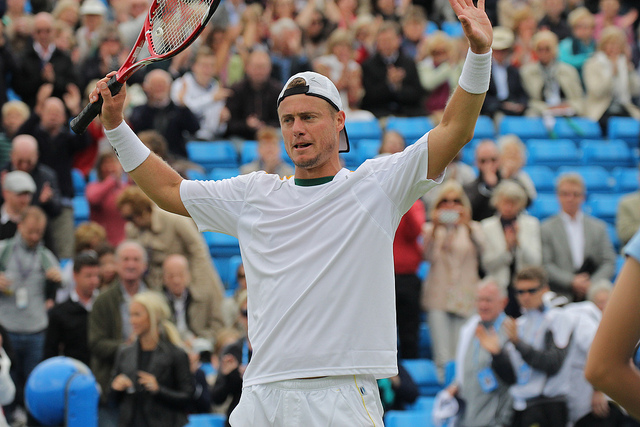
    Lleyton Hewitt 03

    In the latest installment of “Down The T”,  where we talk to people in and around the sport, Tennis Frontier’s Owen Gigg catches up with Mark “Scoop” Malinowski. Scoop began covering tennis in 1992 at the Pathmark Classic in Mahwah, NJ. He has written about tennis for Tennis Frontier, Tennis Magazine, Tennis Magazine Australia, Ace Tennis (U.K.), Tennis Week, Tennisweek.com, CBSsportsline.com, ESPNzone.com, Boxing News (U.K.) and TheBiofile.com.

    Today, we pay attention to Scoop’s new book – “Facing Hewitt: A symposium of a champion”

    [divider]

    Question: What inspired you to do a book about Lleyton Hewitt?

    It started out as a magazine feature idea that was eventually published in the Australian Open program in January. The feature was well received and I decided to develop it further into a book.

    [divider]

    Question: Was it a challenge to get interviews with ATP players and were they willing to discuss their matches and experiences with Hewitt?

    Most players are very accessible and seemed happy to talk about the unique experience of what it’s like to Face Hewitt. The challenging part is the time factor, most players are busy and always off to do something so I wish I could have had a lot more time with many of the players. But the ones I approached were quite generous with their time and memories and shared many interesting anecdotes and stories. Another obstacle is that it’s very difficult to get one on one time with Federer, Nadal, Djokovic but that’s just the way it is.

    [divider]

    Question: Can you share a memorable example of a story that a player told you about Hewitt?

    The one that pops in my head first is from Guillermo Canas. Canas said he was practicing with Marcelo Rios in Stuttgart, when Rios was top five in the world and Hewitt was still very young and ranked around 50. Canas and Rios were practicing next to Hewitt and during a break Rios said to Canas, “See that kid over there? That’s the future number one player in the world.” Canas said he was like, “No way.” But Rios turned out to be right, Rios saw something special in Hewitt and a few years later he did indeed fulfill the prediction of Rios. I thought it was interesting how Rios could see so clearly the special talents in Hewitt and give him such high praise to a fellow competitor.

    [divider]

    Question: What did you learn from the experience of writing Facing Hewitt?

    Well I followed Hewitt’s career closely because he rose to prominence in the later 90s and that’s when I first really got into tennis myself. I vividly remember watching Hewitt a lot on TV and live at the US Open a few times. So I remember Hewitt well from an outsider view. This book is from an insider view, from the players. It was interesting to hear players discuss Hewitt and it was very enjoyable to learn this firsthand information. It was a bit surprising how much respect and admiration the players have for Hewitt and his example. Rivals like Alex Corretja, Jeff Tarango, Gael Monfils, Juan Martin Del Potro, Greg Rusedski, Jan Michael Gambill, Rafael Nadal spoke very highly of Hewitt.”

    [divider]

    Question: When and where did you speak with Nadal about Hewitt?

    At the Sony Open this year, at Nadal’s press conference before he was scheduled to play Hewitt in Miami I asked him just to talk about how it feels to face Hewitt and some of his memorable matches with Hewitt. Nadal played Hewitt several times, they had some great battles in Australia when Rafa was still a young gun. Nadal spoke reverently about Hewitt to the point that I got a sense Hewitt’s example and fighting spirit were a big influence on his career.

    [divider]

    Facing HewittQuestion: Why should a tennis fan read Facing Hewitt?

    Hewitt is one of the great champions of the sport and he should be remembered for more than just being a guy between the Sampras and Federer reigns. Like I said, Hewitt was a tremendous champion, who pulled off so many miraculous wins. He was a different kind of player and it was a different experience to compete against him and also to watch him.

    He was a fascinating champion in many ways, he was a smaller guy who overcame all the giants and dominated the sport for two years. Also, Hewitt changed the sport and took it to another level. As Ivan Ljubicic pointed out, Hewitt was the first baseline counterpuncher guy to conquer the big servers like Sampras and Goran Ivanisevic. Since Hewitt was number one in the early 2000s, tennis has primarily been a baseline game. Historically speaking, Hewitt is a big part of tennis history and this book pays tribute and paints a portrait of Hewitt from the direct perspective of the players.

    [divider]

    Question: Anything else you’d like to add?

    In Newport this summer I personally gave Hewitt a copy of the book after his quarterfinal win against Steve Johnson. I think the book might have pumped up and inspired Hewitt, to read about how favorably and positively players spoke about him, because Hewitt went on to win the singles and doubles titles in Newport, the only time in his career that he swept both singles and doubles at an ATP event.

    [divider]

    Thank you Scoop for your candid interview and we wish you the very best with the new book.

    Readers can buy “Facing Hewitt: Symposium of a champion” on Amazon.
    Click here for the Amazon link.

  • Book Excerpt: “Facing Hewitt”

    Book Excerpt: “Facing Hewitt”


    Lleyton Hewitt

    Here’s an excerpt from my book “Facing Hewitt” which is now available at Amazon.com.

    “It just blew my mind.”

    Taylor Dent: “I saw him in the juniors. We grew up playing in the juniors. My first memory is kind of out of nowhere. He was always a good junior player but out of nowhere he got a wildcard into Adelaide and he ended up winning the thing. And he beat a lot of good players on the way to the title. It just blew my mind.” Describe what it was like to play him? “It was tough for me. It was a disaster of a match up. I played him a lot of times. I only ever got him once. Actually in his hometown of Adelaide. And he was just tough. I liked attacking. And he was very accurate with his shots. He was able to dip it down at my feet. When I came to the net, he was able to lob it over my head. It posed a lot of problems for my style of game.” You must have played extremely well the day you beat him? “You know what? It’s interesting. The courts were quick and I kind of changed the tactics a little bit. I ended up staying back at the baseline and just kind of chipping and waiting for a golden opportunity to come in. And he was a little bit off. He didn’t pass quite as well as normal. And that’s kind of the way how it goes.” Do you have a memory or anecdote that captures Hewitt’s essence, on or off court? “Off court, for me, he was always great. There was the stage when I was – I was getting good enough coming up to where I was being considered for Davis Cup. And so obviously with my background – my dad’s Australian – he gave me a call up to try and lobby for me to come play for the Australian team. And he was very nice on the phone and that’s kind of how he was. A good guy, a straight-forward guy. He doesn’t really beat-around-the-bush too much and I appreciate that.”

    Hewitt leads series 5-1

    2001 – Wimbledon – R64 – Hewitt: 1-6, 7-5, 6-3, 6-7(2), 6-3
    2001 – Indianapolis – R32 – Hewitt: 6-2, 7-6(3)
    2003 – Scottsdale – S – Hewitt: 6-2, 6-4
    2005 – Adelaide – Q – Dent: 7-6(4), 6-3
    2005 – Wimbledon – R16 – Hewitt: 6-4, 6-4, 6-7(7), 6-3
    2005 – US Open – R32 – Hewitt: 6-3, 3-6, 6-7(2), 6-2, 7-5

    [divider]

    “I expected to steamroll the kid.”

    Vince Spadea: “I played against Hewitt in the 1998 quarters at Adelaide, his hometown in the south of Australia, when he was a sixteen year old wildcard. Everyone was wondering how he got a wildcard in the first place, because he was like No. 500 in the world at the time and nobody had ever heard of him. Some of the other Australian players were mystified. He had just played a Satellite, which is an even lower pro tournament than a Challenger, that has since been mostly phased out in favor of Futures, the week before Adelaide, and he had lost to a nobody. Our match was a night match, center court. I see this little guy with long blond hair who looks like a surfer, walk out on the court. I figure: ‘I’m in the semis. This kid is sixteen and he looked weak, inexperienced, unrehearsed, and unpolished.’” “The match begins and he’s holding his own. He keeps on hitting balls in the court. I wasn’t playing strongly enough or consistently enough to overpower him even though I’ve got him outweighed by about forty pounds. I end up losing the first set 7-5. Now I’m thinking: ‘What does this kid think he’s doing?’ He didn’t miss one shot long the entire set. My dad, who was coaching me, said after the match, ‘He missed into the net and he missed wide but he never missed past the baseline.’ Whenever Hewitt won a big point he screeched out, ‘COME ON’ and punched the air with his fist. I thought that was a little annoying and cocky of him but I didn’t let it bother or intimidate me. I won the second set 6-3. I had been working with Jim Pierce (coach and father of Mary Pierce), so I was in great shape. I had been killing myself in training. I expected to steamroll the kid in the third set. But instead, he put his game into another gear and beat me soundly 6-1 to win the match.” “The next day I was sitting eating breakfast with my dad in the player’s cafeteria and Brad Gilbert, coach of Andre Agassi, walked up to us and completely ignored me. He approached my dad and said, ‘Your son had Hewitt last night but he choked. Andre will show you how to handle the kid tonight.’” “Of course, Hewitt straight-setted Agassi 76 76 and then went on to win the tournament. Hewitt has gone on to win almost twenty million in his career, along with a Wimbledon and U.S. Open title. He’s a true warrior on the court. He doesn’t get fazed by disappointment or failure. He doesn’t worry about if he’s hitting the ball great or if he’s winning or losing, he just enjoys the battle. The only other player who battled as successfully as Hewitt was Jimmy Connors. Hewitt will never give up and he doesn’t mind if he has to win hard or easy. He’s one of the greatest competitors in tennis.”

    Hewitt leads series 7-0

    1998 – Adelaide – Q – Hewitt: 7-5, 3-6, 6-1
    1999 – Lyon – S – Hewitt: 6-3, 6-3
    2003 – ATP Masters Series Indian Wells – S – Hewitt: 7-6(5), 6-1
    2006 – Sydney – R32 – Hewitt: 2-6, 7-5, 6-3
    2006 – San Jose – S – Hewitt: 6-3, 6-4
    2006 – Washington – R32 – Hewitt: 6-7(3), 7-6(5), 6-4
    2007 – Las Vegas – RR – Hewitt: 6-3, 6-3

    [divider]

    “He was a lion on the court.”

    Davide Sanguinetti:  “I played him when he was No. 1 in the world. He was the best. I remember once in Cincinnati and I retired. Because my daughter was gonna be born so I had to leave. So I found an excuse and I run away with it. But I don’t think I had a chance with him that day [smiles].” What was it like to play Hewitt at his best (in previous round of Cincinnati match with Sanguinetti, Hewitt beat Robby Ginepri 6-0 6-0)? “I think it was tough to make a point because he was such a fighter on the court, which he still is, but before he could run a little faster than now. And to make a point you had to sweat because of the pain. He was all around. You cannot say he had like unbelievable forehand, backhand, but he was an all around player. That he put all his heart out on the court. He was a lion on the court.”

    Hewitt leads series 2-0

    2001 – ‘S-Hertogenbosch – R32 – Hewitt: 6-2, 6-1
    2002 – Cincinnati Masters – R32 – Hewitt: 5-0 (Ret.)

    [divider]

    “Turning point in tennis history.”

    Ivan Ljubicic: “When I played Hewitt he had just won Wimbledon. He was at the top of his game. I remember that I qualified and I think it was quarterfinals so for me it was a great week anyway. And it was 7-6 6-7 and he ended up winning 6-4. I was 5-1 down and I came back to 5-4 and he won it. But it’s incredible that we played only once and we were around together on the Tour maybe fifteen years. And not ever close – I can’t remember like even being close to playing him. So it’s unbelievable. But obviously he is a great fighter and I think the way he managed his career – we would love that he played more. For so many years after U.S. Open he would take a break and prepare for Australian Open. I feel like, with all the injuries that he had, and he had many, the type of game that he played, he managed his tennis incredibly well. To be able to be still on the Tour at 33 and still fighting and playing at this level.” Did anything surprise you about him? “No, not really. The thing is that he’s an unbelievable fighter. But what I say – it doesn’t mean he’s only saying ‘COME ON’ – he finds the way to win matches. He’s always very, very difficult to play. Obviously, with now, it’s different than it was ten years ago. But to win Wimbledon, to win U.S. Open with the game that he had, back then, it was a turning point in the history of tennis. Because he was the first one really to win Wimbledon from the baseline, like playing this way, not like Agassi, because he was still hitting the balls. He was the first one to really, like, demolish Sampras’ serve in the final of U.S. Open. So he is, let’s say, the first one of this new generation of really, really solid players.” Did you get along well with Hewitt off court? Ever practice together? “We practiced a few times. He’s really shy, actually, you know, incredibly. Off the court he’s kind of calm, doesn’t really talk to anybody, really shy.  We obviously, being of similar age, we got along because we spent so much time together on the Tour. So I like him a lot, actually.”

    Hewitt leads series 1-0

    2001 – Cincinnati Masters – QF – Hewitt: 7-6(3), 6-7(3), 6-4

    [divider]

    Cover Photo (Creative Commons License): Marianne Bevis

  • Biofile: The Grigor Dimitrov Interview

    Biofile: The Grigor Dimitrov Interview


    Grigor Dimitrov

    [Note: I did this Biofile with the newly crowned Queen’s Club champion Grigor Dimitrov back when he was just eighteen, moments after his 2009 US Open first-round qualifying win over Tobias Kamke (6-4, 6-4).]

    Ht: 6’2″  Wt: 170

    DOB: May 16, 1991  In: Haskovo, Bulgaria

    First Tennis Memory: “First tennis memory…okay, I was holding my small racquet and I was on the wall. This is what I just remember. Hitting the ball. And actually that’s all I remember for my first memory [smiles]. I was three.”

    Tennis Inspirations: “I have a lot actually. You know I like Roger Federer, for sure, the best. Marat Safin also when I was a kid. I really loved Pete Sampras, Andre Agassi. All these players were unbelievable for me. And I just try to do something like that.”

    Nicknames: “I have a lot. I don’t know which ones to say. You’re better to ask other people, I have a lot, so. (Just a couple?) The Dynamite Kid [laughs]. (Another?) G-Force [smiles].”

    Hobbies/Interests: “I like to play volleyball, all kinds of sports actually…soccer, American football mostly. (What position?) Quarterback [smiles].”

    Last Book Read: “The Notebook.”

    Favorite TV Show: “That’s a good one. I don’t know to tell you the truth. I like Friends.”

    Favorite Movies: “I like comedy romance, action a lot also. My favorite – The Notebook.”

    Favorite Meal: “Definitely steaks.”

    Favorite Ice Cream Flavor: “Lemon is my favorite.”

    Pre-Match Feeling: “I’m basically almost every time relaxed so I have time to think for a match and whatever I can do I just go outside and play.”

    Childhood Dream: “Always wanted to be a tennis player. This was always my goal. Whatever was happening I just wanted to do it.”

    Greatest Sports Moment So Far: “Winning the European Championships, the under fourteen. (Why?) Because that was a key actually for my career so far. I beat in the final a Czech guy. It’s a memory that always comes to my mind.”

    Most Painful Moment: “Losing against Rafa [laughs]. I lost third set against him a couple of months ago (in Rotterdam). I was very disappointed but hopefully…”

    Which Match(es) Were You At Your Best: “Well, actually Wimbledon probably quarters last year. Against American guy. I was just making every shot, every shot, whatever I wanted I was making. That’s for sure.”

    Favorite Tournaments: “I like really U.S. Open and Wimbledon.”

    Closest Tennis Friends: “Hmm. Good question. My coach for sure. I like Feliciano Lopez is very nice.”

    Funniest Player Encountered: “Oh, Tursunov, definitely [laughs].”

    Toughest Competitor Encountered: “For sure, Rafa.”

    Funny Tennis Memory: “Once when I was serving, I hit my partner. That was funny. Straight in the ass. Long time ago.”

    Favorite Sport To Watch Outside Tennis: “Hmm, basketball.”

    Favorite Athletes To Watch: “Definitely I like to watch a lot of Kobe Bryant, LeBron James, all the NBA players. Tom Brady, New England quarterback. I like to play soccer but not to watch.”

    People Qualities Most Admired: “I like them to be honest and to have a sense of humor, definitely.”

    [Scoop’s book “Facing Hewitt” will be available at Amazon.com later this month.]

  • Facing Federer: Dominik Hrbaty’s Take

    Facing Federer: Dominik Hrbaty’s Take

    Scoop Malinowski, who contributes to the Tennis Frontier, has released his new book “Facing Federer“.

    Here is the third of three excerpts:

    Dominik Hrbaty

    “Roger is different. He’s the new generation. He was comparable to Marcelo Rios, very talented, he has great hands, but the difference was Roger had the big serve, big return. He could make winners out of anything basically. And even out of defense. And Roger is just one of a kind. It’s always a special feeling to play Roger or any No. 1 in the world. Because he’s the best player in the world and you want to be at your best. If you can beat him you become a part of the history of tennis. Because you don’t often meet a No. 1 in the world. And if you beat him, everybody says Wow, congratulations. You make the news. All the friends suddenly text you. It’s just such a good feeling. Also you can do it for yourself because you can prove that your own tennis can play against the top player in the world. And this is the point of tennis. If you can prove, not only to yourself, but also to the other people that you are learned on the level, you’re really playing at the top. And people are looking to you, that you are the one that can play tennis.”

    Question: What was your most memorable match against Federer?

    Dominik Hrbaty: “Probably in Cincinnati when I beat him as the No. 1 in the world. But there was also one in Wimbledon that was our last meeting. Because it was after my surgery, I didn’t play well and this was the only time that he beat me. Because I beat him two times before. We were very good friends with Roger and he was always joking about when he was going to beat me. And in Wimbledon, that match, we sit on the bench together, which is very unusual. On the last changeover I came over and sat with him. And I told him, ‘Roger, finally you beat me. So this is the day.’ And we had a good laugh. It’s not only about competition, sports and tennis is about friendship and also about, you know, making the thing that you will remember for the rest of your life.”

    2000 Paris Masters, Round of 64, Hrbaty: 4-6, 6-2, 6-2
    2004 Cincinnati Masters, Round of 64, Hrbaty: 1-6, 7-6, 6-4
    2008 Wimbledon, Round of 128, Federer: 3-6, 2-6, 2-6

    The first “Facing Federer” excerpt was with Dmitry Tursunov.

    The second “Facing Federer” excerpt was with Gilles Muller.

    You can purchase the whole book at Amazon:

    [divider]

    Discuss with fellow tennis fans on the Tennis Frontier message boards.

    [divider]

    Cover Photo: Carine06 (Creative Commons License)

  • Facing Federer: Gilles Muller’s Take

    Facing Federer: Gilles Muller’s Take

    Scoop Malinowski, who contributes to the Tennis Frontier, has released his new book “Facing Federer“.

    Here is the second of three excerpts:

    Gilles Muller

    Gilles Muller: “Well, it’s always a nice feeling Roger because it’s what you work for, those moments to play on the stadium, big court, against a guy like Roger. It’s always an amazing feeling. It’s actually nice to play him because you go on court and you know you have nothing to lose, you have everything to win. And if you lose 0 and 0 it’s not a bad thing actually. It’s not the end of the world. If you beat him or you get a close match with him, it’s fun. I enjoy those moments. I’ve always been one of those guys who loved to have those big matches and I always played well in them. So I’m always looking forward to have those matches.”

    Question: Is Roger very hard for you to play against?

    Gilles Muller: “Of course. He’s one of the greatest of all time, if not the greatest. And obviously he’s a very good player. To be honest, I prefer to play him than to play Nadal, for example, or Djokovic. Because they make you suffer on the court. They make you physically suffer on the court. And Roger’s more the guy who hits winners. So it’s not as hard physically to play him. That’s what I felt. Of course, in tennis, of what he’s able to do with the ball – it’s just amazing.”

    Question: What is your most memorable match with Roger?

    Gilles Muller: “The one I remember the most is the one at the U.S. Open when I lost in three close sets in quarterfinals. The first time I played him was pretty amazing too. I played him the first time in Indian Wells. That was back in 2005. And he had his long hair [laughs]. That was a pretty nice moment also because it was only my first year at the high level playing the big tournaments. So that was a nice moment. I like to remember the time we played at the U.S. Open because that was a close match, at least close to winning one set. So far, I’ve never won a set against him. So I was very close there.”

    Question: How are your relations with Roger off court?

    Gilles Muller: “Well, he’s very laid back. I mean, he’s always friendly to everybody, so that makes him special. Because you have a lot of those guys you barely see and they barely talk to you. And that’s probably also because we speak the same language. He speaks French-German like me too, so it’s easy to communicate with him. He’s a pretty nice person. He’s laid back. You don’t feel like he’s mad at stuff all the time. He seems like…I’ve never seen him in a bad mood. That makes him a pretty good person I think.”

    Question: Can you share a lasting memory on or off court, maybe a conversation or an anecdote?

    Gilles Muller: “I spoke to him the day before we played in the quarterfinals at the U.S. Open. And I was just surprised. Because, for me, it was the first time I was at that stage in the tournament. All the press work with all the interviews and everything. And because I’m coming from a country where they’re not traveling to the tournaments so I have to make calls all the time and speak and give interviews in three or four different languages. So that’s always tough for me. At that point, that was the first time that happened to me, so it was very tough for me. On the other hand, I just saw him and he was doing the same thing. And I guess he was doing that everyday. I was just asking how he does it. It was pretty nice to speak with him. I mean, he could have not answered to me, because we played each other the next day. I think there’s a couple of guys who would not like to do that – speak to the guy or be nice to the guy you play the next day. But he was just very relaxed and he told me, ‘Yeah, you get used to that. And it’s tough, but…’ But it was nice. It was a nice memory.”

    Question: Your first memory of Roger Federer?

    Gilles Muller: “I think…I can’t remember against who he was playing but I’m pretty sure it was at the Basel tournament and I watched it on TV. And everybody was talking about this Federer guy being the next No. 1 and being a very good junior. And I just remember that the racquet flew everywhere on the court [laughs]. He threw his racquet like almost every point he lost. And then people said that’s one of his problems, he used to be crazy on the court, and very emotional. It’s amazing how he developed in that manner. He’s so calm on the court now, you barely see him say a word on the court now. That was pretty funny. I remember watching that match. I can’t remember who he played but the guy hit a winner against him and he just threw the racquet from the baseline to his bag. I thought that was pretty funny because when you see him now he’s a totally different person.”

    2005 Indian Wells Masters Round of 32 Federer 3-6, 2-6
    2005 Bangkok Quarterfinal Federer 4-6, 3-6
    2008 U.S. Open Quarterfinal Federer 6-7, 4-6, 6-7

    The previous “Facing Federer” excerpt was with Dmitry Tursunov.

    You can purchase the whole book at Amazon:

    [divider]

    Discuss with fellow tennis fans on the Tennis Frontier message boards.

    [divider]

    Cover Photo: The Cosmopolitan of Las Vegas (Creative Commons License)

  • Facing Federer: Dimitry Tursonov’s take

    Facing Federer: Dimitry Tursonov’s take

    Scoop Malinowski, who contributes to the Tennis Frontier, has released his new book “Facing Federer“.

    Here is the first of three exclusive excerpts:

    Dmitry Tursunov:

    “It depends. If everyone talks about Roger as being the greatest, then you come out on the court against him feeling a little threatened. So you start making a little bit of mistakes that you normally don’t do. So I think a lot of it sort of happens in your head. You think to yourself a little bit, you force yourself to play too good for your own level. And if you get used to playing him, then you start playing a little bit within yourself and usually that’s the best chance for you to do your best. It doesn’t matter who you’re playing, if you’re trying to force yourself to play outside of your comfort zone, you’re always going to make mistakes, whether it’s against Roger, my grandmother, it doesn’t matter, so.”

    “Obviously, he’s a great player. There’s no point in denying that. He’s able to play consistently, play well consistently, he’s a very good tactician, so if something doesn’t work for him, he’s able to switch the game patterns. He’s able to come into net, he’s able to slice, he can hit topspin. He can be aggressive, he can be defensive. So that allows him to be very flexible with his gameplans.”

    Question: What was your most memorable match with him?

    Dmitry Tursunov: “I think, again, usually when you ask players like that it makes it sound like you played against such a great player. We’re all professionals. The guy can do a lot of things better than me but it’s not like playing him is such an awe-inspiring moment, like you meet Jesus for the first time in your life. And I think that’s what a lot of people tend to make it to be. His fans and the press make him sound a lot more threatening than he is. And he’s a very good player, there’s no doubt about that. But again, he’s lost plenty of matches. And it’s not that you don’t have a chance going out against him. He’s a very good tactician. Physically he’s talented. But he’s not the most talented person in the world. He has great timing. He’s able to slice and he’s able to use his slice in an offensive way which not a lot of people can do.”

    “But again, the most memorable moment…I’ve played three matches against him. I’ve lost all three of them. In one of them, I did take a set off of him. In my last match against him, it was in the Olympics. I kind of defeated myself there in that final set. I was so nervous playing him that I made a lot of mistakes and all he had to do was show up on the court. If that makes him the greatest player of all time – by forcing players to crap their pants when they come out to play against him, then I guess that’s the definition of a great player. And I’m not a great player. But I think I probably have the same effect maybe at a lower level. If I come out playing in Challengers, maybe I’d put a lot of pressure on the person. He’s thinking, ‘Oh f***, it’s Tursunov, he’s won two rounds at an ATP tournament last week. Now I have to do something extra to beat him.’ And that’s not the case. And a lot of times I beat players like that.”

    “Again, I’m not trying to downsize Roger and he doesn’t need downsizing. I don’t think it’s necessary to bring him up to like a deity level of a player. He’s not. He’s defeatable. And Rafa’s proved it. Rafa doesn’t get affected by that. Mentally, he’s very disciplined. He’s able to just play his game pattern regardless of who he’s playing. He could be playing you, me, Roger, he doesn’t care. If Jesus comes down and starts floating on the court, he still plays the way he’s playing. And that’s why he’s able to defeat Roger, in large part. There’s a lot of other things. It’s not like Rafa doesn’t have any weapons. My point is, a lot of defeats against Roger happen psychologically. Players force themselves to step out of their comfort zone and they start making mistakes. It’s like going out on a date with a really hot girl. You’re probably going to try to make stupid jokes and then you’re going to feel like an idiot after that. That’s kind of how it feels. Just to sum it up [smiles].”

    Question: Your lasting memory of Roger on court or off court? An anecdote?

    Dmitry Tursunov: “Well, he can’t. He’s got an image to uphold. So he can’t do anything less than, you know, like his hair is glowing.”

    Question: But you stole his bag once and hid it on him?

    Dmitry Tursunov: “I did, in Toronto. I think that’s probably why I got the set off of him [smiles]. I mean, he’s a pretty mellow guy off the court. I’m pretty sure that he knows that he’s really good in tennis and he’s got a lot of records. And I think of Roger showed up at the Corona Bar (adjacent to our interview at a practice court at SONY Open in Miami) we’d have like 15 heart attacks in the Corona Bar. And people would just start praying and, but, I think, again, it’s a part of the image. And a lot of it is press and how you present yourself. I really can’t say any anecdotes because he’s not going to put himself in a position where he can be embarrassed in some way. He’s not gonna fart in front of people [smiles]. And then, after a certain amount of time, you start feeling like Roger never farts. So that’s probably the anecdote in itself. That he’s never farted in his lifetime. He never has to take a shower after his match. He doesn’t smell. He smells like vanilla [laughter].”

    Tursunov’s record against Roger:

    2006 Miami Masters Round of 16 Federer 3-6, 3-6
    2006 Toronto Masters Round of 16 Federer 3-6, 7-5, 6-0
    2008 Beijing Olympics Round of 64 Federer 4-6, 2-6

    Tomorrow: Read Gilles Muller’s take on “Facing Federer”

    You can purchase the whole book at Amazon:

    [divider]

    Discuss with fellow tennis fans on the Tennis Frontier message boards.

    [divider]