Tag: Roger Federer

  • Mercedes Cup, Stuttgart Open

    Mercedes Cup, Stuttgart Open

    stuttgart open
    Credit: Mercedes Cup

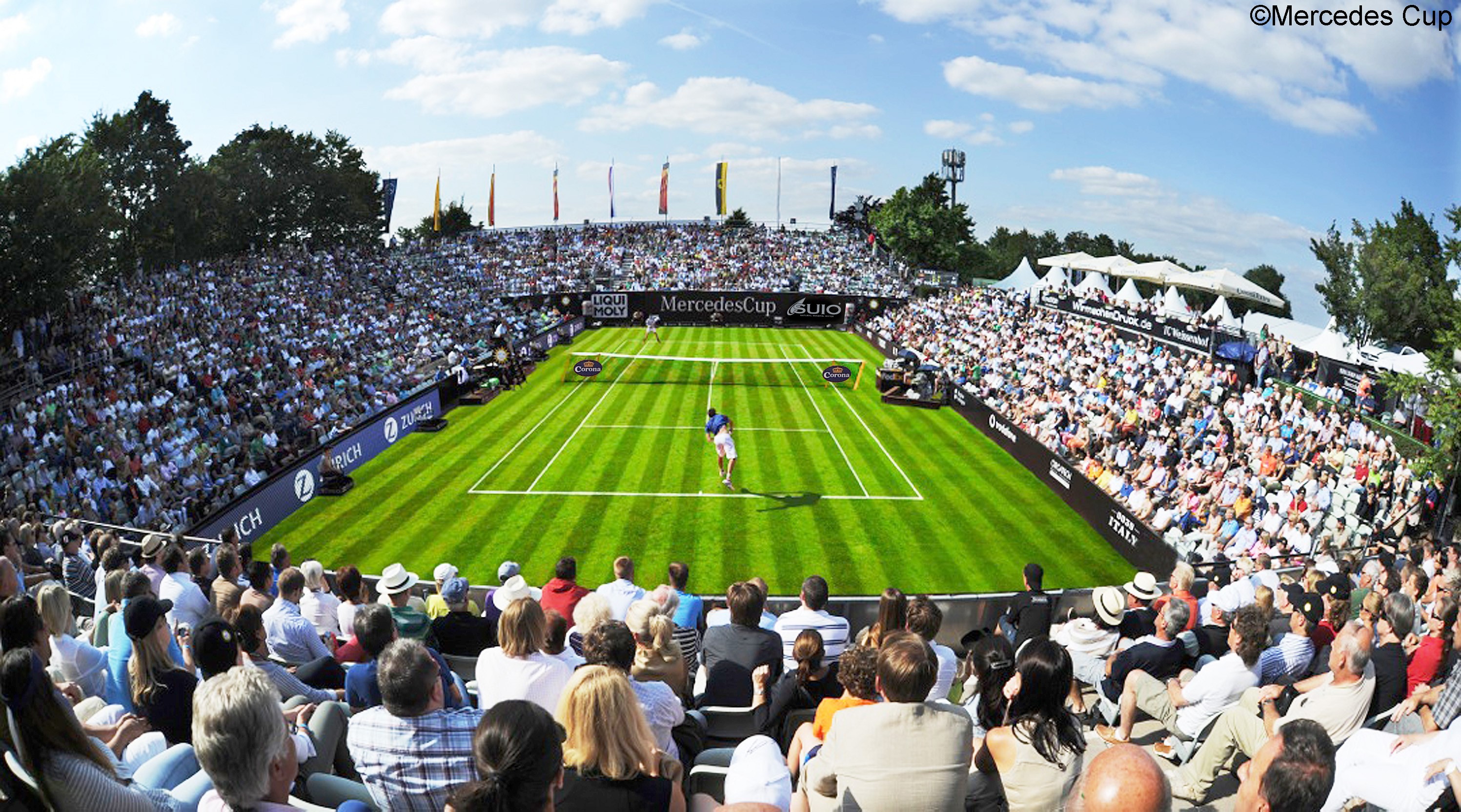
    Known locally as the “Cradle of the automobile”, Stuttgart is home to Daimler, Porsche, primary sponsor Mercedes-Benz and of course, the Stuttgart Open – an ATP 250 event to herald the beginning of the grass court season.

    The tournament made the switch from clay to grass from 2015, primarily as a move to extend the grass court season. The first edition of the tournament in Stuttgart was held in 1898, with Mercedes-Benz assuming the role of title sponsor in 1979.

    An added incentive for ATP World Tour players to win the tournament? The champion takes home a new Mercedes-Benz.

    The city is the capital of the German state of Baden-Württemberg and ranks as the country’s sixth largest.

    [IMG]

    The winner of the Stuttgart Open won’t be getting a bus home. Mercedes Benz will be giving the winner a new car. Pictured is Lucas Pouille, the 2017 winner with a nice little sporting tourer – a Mercedes-Benz E 400.

    Who’s playing?

    Roger Federer is the name in highlights.  The Swiss makes his return to the pro tour after skipping the clay season for the second year running.
    Federer will be joined by 2017 winner Lucas Pouille, Nick Kyrgios, and Milos Raonic as the big contenders. Exciting youngster Denis Shapovalov and veterans Philip Kohlschreiber, Tomas Berdych and Mischa Zverev add to a strong field.

    roger_federer lucas_pouille nick_kyrgios milos_raonic philip_kohlschreiber denis_shapovalov

    Fact Flash

    Grass court king Roger Federer hasn’t enjoyed too much success in Stuttgart since it’s return to the grass court format. He lost in the 2016 semi-final against Dominic Thiem and was a first-round casualty last year against veteran Tommy Haas.

    Click to Discuss the tournament in the Tennis Frontier Forum.


  • What If: Andy Roddick’s Career Without Roger Federer

    What If: Andy Roddick’s Career Without Roger Federer

    495px-Andy_Roddick_wsh07

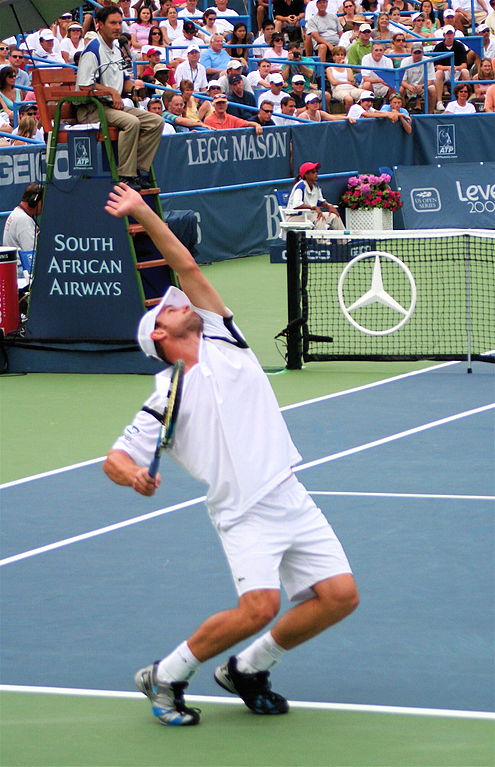
    Andy Roddick, newly elected to the Tennis Hall of Fame, had an excellent career. He didn’t make the cut to make it into my Top 20 Players of the Open Era, but he’s just outside it. He’s among the better players to win only a single Slam, and better than some who won two or three. I’ve ranked him as the third best player of his generation (those players born from 1979-83), somewhere in the #21-30 range of the Open Era.

    Let’s have a bit of fun. Here’s the scenario: What if Roger Federer had chosen a different career, say became a watch-maker? Let’s imagine that everything else stayed the same on the ATP tour. Almost certainly the player most effect would be Andy Roddick, he of the 3-21 record vs. Federer, including 0-8 at Grand Slams, and 0-4 in Slam finals.

    Here’s the caveat: All “what if” scenarios are highly speculative, if only because they tend to overly simplify matters by adjusting one factor without knowing how the other factors would combine without that factor present, but again, we’re just having a bit of fun.

    To approach this, we can’t imagine who would have replaced Roger in the previous rounds; the only thing we can do is replace Roger with the player he beat to get to Andy. So in the following, we are going to imagine that Andy faced the opponent that Roger beat, and project an outcome based upon the head-to-head record, both as a whole and on a specific surface type, and then make a judgment. When in doubt, I’ll veer on the side of caution and give Andy’s opponent the win, to keep me honest!

    I’m also only going to look at tournaments in which Andy lost to Roger in a semifinal or final. I’m also going to only look at big tournaments—Slams, World Tour Finals, and Masters—at least for now, and then offer a hypothetical career for Andy Roddick, if Roger had followed a different career path.

    First of all, here is Andy’s actual career in my new visual tool, “player skyscrapers,” which I explain here.

    AR

    For the sake of comparison, here are some of the better players of his generation, so we get a sense of how he stacks up:

    AR peers

    As you can see, Andy’s career is pretty close to Hewitt’s, and better than any other player of his generation – aside from Federer, of course. Here are a few players to compare Andy to outside of his generation:

    AR comparables

    That gives us a group of players who Andy is quite similar to. In fact, his career looks almost like the exact inverse of Muster’s.

    Now let’s get into the tournaments. As mentioned before, Andy was 3-21 vs. Roger. Of those 21 losses, 6 were in Slam semifinals or finals, 1 at the semifinal of a Tennis Masters Cup (the predecessor to the World Tour Finals), and 2 at Masters tournaments – so 9 big tournaments in all that Andy had a good chance of winning without Roger present, in which he lost to Roger in the SF or F. Let’s take a look at those nine tournaments in chronological order:

    2003 Wimbledon SF
    Roger’s QF opponent: Sjeng Schalken (Roddick 5-1)
    Roger’s Final opponent: Mark Philippoussis (Roddick 1-0)
    While nothing is certain, this looks like a Slam that Andy had a good chance of winning – a dominant H2H over Schalken, and a win in his one match vs. Philippoussis. We’ll give this one to Andy, which would have given him two Slams on the year. +1 Slam title

    2003 Tennis Masters Cup SF
    Runner-up in Roger’s group: David Nalbandian (Roddick 4-2)
    Roger’s Final opponent: Andre Agassi (Agassi 1-5)
    I don’t think we can give this one to Andy. Not only would Nalbandian not have been a sure thing, but Andre Agassi held a commanding H2H lead, so we won’t change Andy’s result. No title

    2004 Wimbledon F
    Roger’s SF opponent: Sebastian Grosjean (Roddick 8-1)
    This one is pretty easy – Andy would have won this, probably quite handily. +1 Slam title

    2004 Canada Masters F
    Roger’s SF opponent: Thomas Johansson (Roddick 5-0)
    Another easy call – Andy gets an added Masters title. +1 Masters title

    2005 Wimbledon F
    Roger’s SF opponent: Lleyton Hewitt (tied 7-7)
    It is fitting that Hewitt and Roddick are tied at 7-7 in the head-to-head, as they are the two most accomplished players of their generation, after Federer (with apologies to Safin). I think this comes down to surface: Hewitt is 1-0 on clay and 6-4 on hard, so I’d give him those surfaces, but Andy won all three grass tournaments they played, including the 2009 Wimbledon QF. So I’m giving this one to Andy. +1 Slam title

    2005 Cincinnati Masters F
    Roger’s SF opponent: Robby Ginepri (Roddick 10-1)
    Easy call – another title for Roddick. +1 Masters

    2006 US Open F
    Roger’s SF opponent: Nikolay Davydenko (Roddick 5-1)
    We could probably do a similar study for Davydenko, another player greatly impacted by Roger’s presence, with a 2-19 record against the Swiss Maestro. But this is a pretty easy call, so we’ll give this to Andy. +1 Slam title

    2009 Australian Open SF
    Roger’s QF opponent: Juan Martin del Potro (Del Potro 1-4)
    We’ll give this one to Del Potro, who got slaughtered by Roger in the QF. Even if Andy had made it past Delpo, he probably would have lost to Rafa in the final. No title

    2009 Wimbledon
    Roger’s SF opponent: Tommy Haas (Haas 6-7)
    Andy’s last, and greatest, challenge to Roger. This is a tough call to make as the two never played on grass. While I’d like to think that Andy would have won, I’ll give this one to Haas just to be conservative. No title

    OK, so all things tolled, Andy gets four additional Slams and two additional Masters to give him five Slams and seven Masters titles – quite a career. And this isn’t counting the QF losses to Roger, which he may have been able to get more titles out of.

    So how does this new, improved Andy Roddick career look, compared to his actual? To get a sense of that, I included the above changes, but also looked at other losses to Federer at Slams and other tournaments, and adjusted accordingly – this ended adding a couple minor titles (2002 Sydney, 2004 Bangkok) and improved Slam results in one case (2007 US Open final) – but I won’t go into details, so as not to lengthen this too much. I also estimated how Andy’s rankings might have changed, as a result. Here we go:

    Two Andys

    So there’s not only the addition of the four more Slams and two more Masters, as well as two more ATP 250s, but also another year-end #1 in 2004 and an improvement to #2 in 2005 and 2006. Now let’s compare “Hypothetical Andy” to a new group of players:

    Hypo comps
    All of a sudden, “Hypothetical Andy” is amidst a different caliber of players – between multi-Slam winners like Courier, Wawrinka, and Kuerten, yet not quite in the ranks of the near-greats like Vilas, and Murray (I included Wilander, as the least of the true greats….his career doesn’t look much better than Vilas or Murray, but that’s a different story).

    Andy, in his actual career, has nothing to be ashamed about. Yes, he was 1-4 in Slam finals, but he still had a strong career – one of the thirty best of the Open Era. But oh, what could have been…

    Cover photo by Boss Tweed from Wikimedia Commons, courtesy of Creatives Commons License.

  • The Open Era Top Twenty at the End of 2016

    The Open Era Top Twenty at the End of 2016

    4446582661_b188f82f3c_b

    By Jonathan Northrop

    With another year in the books, and encouraged by an email from a reader of Tennis Frontier, I thought I’d offer a highly subjective but statistically informed list of the greatest players of the Open Era. Another factor in deciding to do this is, of course, Andy Murray’s epic and—for most—unexpected rise to #1. I was curious where he might rank, or if he would make it into the top twenty at all.

    A few preliminary thoughts and clarifications. First of all, the Open Era spans from the 1968 French Open to the present. Some of the players on this list—most notably Rod Laver and Ken Rosewall, but also John Newcombe and Arthur Ashe—had careers spanning that turning point of modern tennis, even winning Slams before and after. Actually, Laver and Rosewall are the only two players to win Professional, Amateur, and Open Era Slams. In compiling such a list I am left with a judgement call: Do I include these players and, if so, do I include only their Open Era record or their entire career? I have chosen the latter; to include them, but to use their entire career. I feel that we cannot penalize Laver and Rosewall for playing the bulk of their careers—and their best years, for the most part—before the Open Era. Both were great enough in the Open Era that they should be included simply by virtue of their Open Era accomplishments, but I just can’t stomach the idea of ranking them lower on this list, as would be required if we only considered their Open Era careers. I have excluded such greats as Roy Emerson and Pancho Gonzales, both of whom played during the Open Era but whose best years were before.

    The other thing I want to talk about is methodology. I rank players by a statistical formula which accumulates points for every Slam result, every title, and year-end rankings. But I don’t stop there; if I did, I’d have Jimmy Connors and Ivan Lendl ranked ahead of Pete Sampras, and that just doesn’t feel right. I also look at a variant that more strongly weighs certain factors (e.g. giving far more weight to Slams and #1 rankings, for example). And then I make a subjective adjustment based upon what I know about the context in which that player played. Any serious historian of tennis knows that the two Grand Slams won by Johan Kriek are far less impressive than any of those won by Novak Djokovic, or that Jan Kodes three Slams are less impressive than Stan Wawrinka’s. But it is difficult (even impossible) to objectively account for that, so I’ve just used my best judgement.

    A major aspect of methodology is how to weigh peak vs. longevity. Most analysts tend to emphasize the former, which I generally agree with, but it isn’t an either/or matter. The key is finding the right balance, which unfortunately only really can be done subjectively. For example, I’ve created several variations of my formula and they all rank Connors and Lendl ahead of Borg, which I find problematic.  Even TennisBase.com, which uses a far more sophisticated formula than I do, ranks those two ahead of not only Borg, but Sampras as well. While I don’t want to overly focus on Slam titles, I cannot so easily ignore the +6 lead Sampras has over those two. Tennis Base also ranks Andy Murray ahead of Mats Wilander and John Newcombe, because they emphasize depth of records and longevity. Again, I don’t think we can rank Andy ahead of those two seven-Slam winners, at least not yet. But given the rest of their careers, it is reasonable to think that if Andy can win even just a couple more Slams, his overall record would push him ahead of those two. But we’ll cross that bridge when we come to it.

    Finally, I’m ranking them in clusters or tiers, because there are gaps in terms of which players are closer in their overall greatness. This will be discussed below.

    All that said, the curtain is pulled back and here is the list…

    1. Rod Laver
    2. Roger Federer
    3. Ken Rosewall

    These are the big three. For awhile it looked like Rafa was going to be joining them, but it seems that ship has sailed unless, of course, he (re)discovers the Fountain of Youth in 2017. For Rafa to get in, he probably needs at least a couple more Slams. Novak is also a contender for this tier, but the jury is still out. But as of this writing, these three stand above the rest of the pack by a solid margin. If we were doing an all-time list I’d probably put Bill Tilden as the fourth, with Pancho Gonzales also a candidate, but possibly in the next group down.

    Why Laver first? No player has had as dominant a decade as Laver, from 1960-1969. During those ten years he was about as dominant as Federer was for his best four, 2004-07. Add to that not one but two calendar year Grand Slams and 200 titles! That’s almost 70 more than the next guy down, Rosewall, and more than double Federer. If we want to find one chink in Laver’s armor, it is that he stopped winning Slams in 1969. But this is largely due to his scheduling and some of the politics of the early 70s; he only played in eight Slams from 1070-77, although remained a top 10 player through 1975.

    It is tempting to put Rosewall above Roger due to the massive accumulation of statistics. In fact, if we look at longevity, no one comes even close to what Rosewall accomplished. Rosewall was a freak, winning Slams across over 22 years—double the range of Laver—winning his first Slam in 1951 at age 18 and his last in 1972 at age 37. That would be like Rafael Nadal winning his first Slam in 2005 at age 19 (which he did), but winning his last in 2024 at age 38! Rosewall was the Jimmy Connors of his era; he was very, very good for a very long time, but there was (almost) always someone better than him. First it was Pancho Gonzales, then Lew Hoad, then Laver, then Connors. Still, no one has the breadth of his career, except for perhaps Martina Navratilova and Serena Williams, and no one has the Slam count: 23 including Pro, Amateur, and Open (Laver’s total is 19).

    4. Novak Djokovic
    5. Pete Sampras
    6. Rafael Nadal

    Perhaps the most controversial thing here is that I rank Novak higher than both Pete and Rafa, but understand that it is very, very close, and I think there are arguments to be made for any arrangement of the three. Pete still has a slight edge with his 14 Slams to Novak’s 12 and 6 year-end #1s to Novak’s four, but Novak is building a stronger overall resume, with more titles, almost triple the Masters, and better overall Slam results. Part of this is due to the era; Pete played during a time in which courts were more diverse, and had serious trouble on clay. That said, we cannot penalize Novak for playing in the time he has; one of the core qualities of greatness is adapting to the context you play in, and Novak has done that in an almost unparalleled fashion. I think it is also worth mentioning that Novak–unlike Rafa, Pete, and even moreso, Roger–doesn’t have many “gimme” Slam titles. In fact, he only has one: Jo-Wilfried Tsonga. Sampras had quite a few, Rafa several, and Roger even more.

    Of course the book isn’t closed on Novak or Rafa. Perhaps Rafa has one more surge in him, another Slam (or even two), and several more Masters. I think just one more Slam that would put him ahead of Sampras, who gets the edge over Rafa because of his greater consistency and year-end #1s; but right now, I give the edge to Pete. If Novak wins just two more Slams, I think my ranking will be more fully justified. If he wins 3+ more and maybe another year-end #1, he enters the top echelon of greats.

    7. Bjorn Borg
    8. Ivan Lendl
    9. John McEnroe
    10. Jimmy Connors
    11. Andre Agassi

    Here also you can play with the rankings a bit, although I’d always leave Agassi last among these five. He just didn’t have as strong a peak as any of them. Borg is one of the great “What if” stories: what if he hadn’t retired at age 25? How many Slams would he have finished with? It is easy to imagine several more and him being in the first tier; on the other hand, he retired when it was clear he was no longer the best player in the sport. I do think he would have won two or three more, but not four or more. But we’ll never know.

    Still, I have to rank Borg ahead of the rest. Some also might take issue with my ranking Lendl ahead of McEnroe, but despite the latter having greater virtuoso brilliance and a higher level of dominance, I must respect the workman-like consistency of Lendl, which saw him playing in 19 Slam finals during one of the most competitive eras in tennis history. In fact, Lendl is the only player to have played against three groups of greats playing at or near their peaks; Connors, Borg and McEnroe in the late 70s to early 80s; Wilander, Edberg, and Becker in the 80s; and Sampras and Agassi in the early 90s. That’s a tough context to play in.

    12. Boris Becker
    13. Stefan Edberg
    14. John Newcombe
    15. Mats Wilander

    This is another group that could be ranked differently, but I do think Becker and Edberg are closely paired, with Newcombe and Wilander a bit behind. I give a slight edge to Boris, but have gone back and forth. Edberg has the edge in the rankings, with two year-end #1s and 72 weeks at #1 to Boris’ mere 12 weeks, but Boris’ non-Slam title count is significantly better, and of course he had a huge edge in the head-to-head.

    Newcombe is hard to rank because he played within a very different context and won several of his seven Slams in the weak era of the Australian Open when mainly only Australians played, but he also is one of the few players to win all four Slams and was a consistent great for a decade; he is perhaps the most understated, least known great player of the Open Era, at least today. Plus, there’s the handle-bar mustache.

    john_newcombe_c1974Photo by Unknown, from Wikimedia Commons courtesy of Creative Commons License.

    As for Wilander, he had that terrific 1988, in which he was the only player between Jimmy Connors in 1974 and Roger Federer in 2004 to win three Slams in a year, and was really good for the half decade before that, but he just collapsed at the age of 24 and his overall record is weakened for it.

    16. Andy Murray
    17. Guillermo Vilas
    18. Arthur Ashe
    19. Ilie Nastase
    20. Jim Courier

    This ordering might generate controversy, but I now think that Andy Murray is the “best of the near-greats.” I also rank Nastase ahead of Courier, despite the 2-to-4 Slam deficit. But Nastase is another player—like Newcombe—that is too easily forgotten. He only won two Slams, but he won 58 ATP events and several more in the early Open Era during a time when Slams weren’t quite as prestigious as they are today. Ashe is also difficult to rank, because he only has those three Slams across a long career. But he won a ton of titles before the ATP era, and of course also had a harder context to play in than any player on this list, due to the color of his skin.

    Back to Andy for a moment. As of this writing he really has an unusual record. His stats, if you count everything and look at Slam finals rather than wins, is very much closer to that of the next tier up. He played in one more Slam final (11) than Becker and Newcombe (10 each), and as many Slam finals as Stefan Edberg, Mats Wilander and John McEnroe, but has gone 3-8 instead of 6-5, 7-4 and 7-4, respectively. The reason? Well, consider who Andy lost eight times to: three times to Roger Federer and five times to Novak Djokovic. He beat Novak twice and beat Milos Raonic at Wimbledon this year. In other words, of his 11 chances only once did he not face one of the five or so best players of the Open Era. Consider that 10 of Roger’s 17 Slam titles were played against players that are not on this list; he beat Agassi in one Slam final, Rafa in two, Novak in one and Andy in three, and the rest were against lesser players. This isn’t to downplay Roger’s greatness, as his match-ups were more consistent with historical norms, but to point out just how hard Andy’s lot has been.

    Rafa and Novak have also had some tough Slam finals, but even Rafa had more (relatively) easy match-ups: Mariano Puerta, Robin Soderling, Tomas Berdych, and David Ferrer. Novak’s only had Tsonga, which accounts for his lower win percentage in Slam finals: 12-9 (57%) vs Rafa’s 14-6 (70%) and Roger’s 17-10 (63%).

    My point is not that Andy is as good as the other members of the Big Four—he isn’t—but that he is better than his three Slams account for, even much better, and that if he can win another Slam or two, he’ll move up to the next group and possibly even surpass them.

    Honorable Mentions: Stan Smith, Thomas Muster, Michael Chang, Gustavo Kuerten, Yevgeny Kafelnikov, Lleyton Hewitt, Andy Roddick, Stan Wawrinka.

    There’s a significant (and convenient) gap between the top twenty and this next group, who would be the next tier down. None of these players really even come close to the top 20. That said, if Stan Wawrinka wins another Slam it will be hard not to seriously consider him. He has such an anomalous record, similar to Jan Kodes in that aside from the three Slam titles there isn’t a huge amount of career accomplishments; Stan’s record aside from those three Slams is more like Tomas Berdych’s than Andy Murray’s and unlike Kodes, all three of his titles are against great opponents (twice Novak, once Rafa); Kodes beat Nastase in one, but Zeljko Franulovic and Alex Metreveli in the other two, players comparable to contemporaries like Nicolas Almagro or Gilles Simon.

    Final Word
    I’ll take another look at this list a year from now as a few things could alter the rankings. If Stan wins another Slam, he could put pressure on Courier and Nastase. If Andy wins another Slam or two, he could be passing Wilander and Newcombe and be looking at surpassing Becker and Edberg before he’s through (although probably not Agassi). If Rafa wins another Slam, he passes Pete; if Novak wins another Slam or two, his ranking is stabilized and he could be looking at making the Open Era Big Three a Big Four. Finally, if Roger wins another Slam…well, I’m not sure I’m quite ready to rank him above Laver, but it would be tempting. If he is able to win #18 (possible, if unlikely), and re-take #1 if only for a week (very unlikely) and reach 100+ titles, then I think I’d have to slide him past Laver. But that’s a lot to ask for a 35 year old.

    Over Photo by mirsasha, courtesy of Creative Commons License.
  • Indian Wells-Miami Double. The Fifth Grand Slam?

    Indian Wells-Miami Double. The Fifth Grand Slam?

    Indian Wells Masters

    In recent years the Indian Wells tournament in California, the first Masters event of the tennis season, has been regarded in some circles as the fifth Grand Slam.

    The tournament boasts state of the art facilities, a giant stadium and has recently been voted by male players as their favourite Masters event out of the nine they play, no small part of this being down to billionaire investor Larry Ellison’s investment. Further still, the tournament is dual gender and boasts a draw of 96 in each field, second along with Miami which follows after to the 128 player fields at the Slams and extending the tournament to eleven days. All this has contributed towards Indian Wells being the premier event just below the Slams.

    It was not so very long ago however that Indian Wells’ aforementioned cousin, Miami, was considered the fifth Grand Slam. Andy Murray hailed it as such after winning the event in 2009 against Djokovic. The reason for this turnaround is down to several factors. Firstly, Indian Wells has better facilities as a result of more investment. One just has to look at the different stadiums and show courts to see that Indian Wells trumps Miami; the latter looking dated and cramped. Secondly, pros prioritise the event for the most part, either after a deep run at the event pulling out of Miami, which follows immediately after, or skipping altogether due to factors such as age and avoiding fatigue, like Federer last year aged 33. Finally, and this is more gut feeling, Miami is awkwardly placed on the calendar, barely finishing before many minds are focused on the fast approaching clay court season, sticking out like a sore thumb, another week and a half slog on slow hard courts in an event that mirrors its more prestigious Indian Wells cousin.

    I am not trying to dump on Miami. I love the event, which has boasted some of the matches I am more emotionally tied to. Federer’s win in a best of five hard court against Nadal win in 2005, Djokovic’s final set triumph against Nadal in 2011, having bested him previously the fortnight before in Indian Wells, Roddick’s third and final win against Federer in 2012, the year of his retirement. The fact remains that they are not held in equal regard by many players.

    I myself however do hold them in equal measure, and I think winning both events back to back is the fifth hardest achievement in tennis after the Slams. Slow hard court events in hot conditions, played one after another. A top player who receives a bye in the first rounds who goes on to win both will still have to play twelve matches in three weeks against the best players in the world. Such is the toughness of this only seven players in the men’s game have achieved it, including retired all time greats Sampras and Agassi, and active ones Federer and Djokovic, both of whom have achieved the feat twice.

    For me then neither of the two events in isolation, with a 96 player draw and best of three set matches can be viewed as a fifth Slam. Winning both in the same year however for me ranks as a de facto fifth Slam; such are the requirements of physical and mental application and skill to achieve this rare feat.

    All of this is of course ultimately academic. One can argue endlessly if neither, one, or both qualify as a fifth Major or not. The most important thing about the tournaments of Indian Wells and Miami is that they gather most of the best players in the world in the same places, alleviating the dullness of mid March to early April for the dedicated tennis fan.

    [divider]

    Cover Photo (Creative Commons License): askbal

  • Open Era Generations, Part Twelve: Gen 10 (1979-83) – Generation Federer

    Open Era Generations, Part Twelve: Gen 10 (1979-83) – Generation Federer

    Roger Federer

    Why the name?
    What else could it be called? Roger Federer dominated his peers unlike any player since at least Bjorn Borg. Consider that he is the only player born in the fourteen-year span of 1972-85 who has more than three Slam titles; he is probably the number one reason why this is the case. Federer won 17 of his generation’s 23 Slam titles, or 74%, more than Borg’s 69% (11 of 16). “Weak Era Theory” aside, Roger simply owned his peers. More on that in a moment.

    Best Players by Birth Year
    1979:  Ivan Ljubicic (CRO), James Blake (USA), Juan Ignacio Chela (ARG), Ivo Karlovic (CRO), Nicolas Massu (CHI), Michael Llodra (FRA), Albert Montanes (ESP)
    1980: Marat Safin (RUS, 2), Juan Carlos Ferrero (ESP, 1), Fernando Gonzalez (CHI), Xavier Malisse (BEL)
    1981: Roger Federer (SWZ, 17), Lleyton Hewitt (AUS, 2), Nikolay Davydenko (RUS), Feliciano Lopez (ESP), Mardy Fish (USA), Jarkko Nieminen (FIN), Julien Benneteau (FRA)
    1982: Andy Roddick (USA, 1), David Ferrer (ESP), David Nalbandian (ARG), Tommy Robredo (ESP), Mikhail Youzhny (RUS), Guillermo Coria (ARG)
    1983: Fernando Verdasco (ESP), Phillip Kohlschreiber (GER), Dmitry Tursunov (RUS), Alejandro Falla (COL)

    I’ve been a bit more liberal with the names included, as this is a generation still active, or at least fresh in memory. Birth years 1980-82 is the heart of the generation, with 1979 and ’83 being far weaker.

    Imagine being Lleyton Hewitt or Andy Roddick: 2003 ends and you’re playing well, both with a Slam and year-end No. 1 or 2 under your belt while still in your early 20s. Then this soft-spoken Swiss guy rises up and utterly dominates tennis, while you toil away, year after year, never able to get past him and win another Slam. This scenario is particularly telling for Andy Roddick, who lost four Slam finals to Federer and won only 3 matches out of 24. Despite that fact, Roddick had an excellent career, finishing every year from 2002-10 in the Top 10, with 32 titles to his name including one Slam and five Masters. Andy retired relatively young by today’s standards, just after turning 30 in 2012, but he saw the writing on the wall–falling from No. 8 in 2010 to No. 14 in 2011 and No. 39 in 2012.

    In 2001, at the age of 20, Lleyton Hewitt was the youngest player to reach the No. 1 ranking since the ATP computerized rankings began in 1973. He was No. 1 for 80 weeks — more than Stefan Edberg, Jim Courier, Gustavo Kuerten, Ilie Nastase, Mats Wilander, and Boris Becker. After two year-end No. 1 rankings in 2001 and 2002, Hewitt entered 2003 on top of the world. Yet it soon became clear that a couple of his peers were surpassing him: Andy Roddick and Roger Federer. He remained a top player for a few more years, but by 2006 he had slipped out of the elite, unable to compete with the newer, bigger, more powerful generation that was coming up. As of this writing, Hewitt just played his last Grand Slam, going out in the second round of the Australian Open. Though he hasn’t been in the Top 20 for seven years, he will be missed.

    As for the Swiss Maestro himself, it is difficult to say anything that hasn’t already been said. But to return to the topic of his dominance over his generation, consider his head-to-head against peers (born 1979-83) who were Top 10 players: 195-36, or 84.4% – which is better than his overall winning percentage against all players. Of all players in Federer’s generation, the only two who were able to win more than three matches against him were Lleyton Hewitt (9-18) and David Nalbandian (8-11).

    Federer’s fans occasionally bemoan the fact that he’s no longer the player he was during his absolute peak, from 2004-07. While this is undoubtedly true, we should not lose sight of the player he is now, still ranked No. 3 halfway between his 34th and 35th birthdays. The vast majority of all-time greats were either long retired or fading out at Roger’s age.

    Maybe Roger will buck the trend and remain an elite player into his late 30s, but it seems unlikely. While he is showing no signs of further decline—yet—any setbacks, such as his current knee injury, could damage his momentum. Regardless, we should appreciate the great player while he’s around.

    Underachievers and Forgotten Players
    David Nalbandian and Marat Safin come most readily to mind. These two challenged Federer in terms of talent, but neither had the mentality and focus to be a perennial champion. Nalbandian is on the short list of most talented player never to win a Slam in the Open Era, and Safin is often mentioned as an almost-great who should have been an all-time great.

    Nalbandian was the most competitive peer of Federer’s, winning 8 of 19 matches (42.1%) and their first five matches. After those five, Roger seemed to figure out Nalbandian, with an 11-3 record from the 2003 Tennis Masters Cup onward. The only players with a better percentage against Federer in 10 or more matches are Tim Henman (46.2%), Rafael Nadal (67.6%), Novak Djokovic (51.1%), and Andy Murray (44%), all either significantly older or younger. Regardless of his level of disappointment, Nalbandian had a solid career, the highlight of which was his victory over Roger Federer in the 2005 World Tour Finals, as well as his two Masters in 2007.

    Safin was the No. 2 player in the sport at the age of 21 in 2000, a year in which he spent nine weeks as the No. 1 player in the world, defeated Pete Sampras in straight sets to take the US Open title, and won two Masters. It looked like tennis finally had a new, young elite player to join the aging Agassi and Sampras. Yet he was to finish only two other years in the Top 5, 2002 and 2004, and he won only one more Slam and three more Masters. A fine career, but not an all-time great.

    Another to consider is Guillermo Coria, who was ranked in the Top 8 from 2003-05, then saw his career collapse in 2006 – for a variety of reasons, including service issues, marital problems, and injury.

    Lesser-known Joachim Johansson deserves mention as someone who looked like at least a second-tier player but saw his career destroyed by injury. At the end of 2004, it looked like Sweden would have have an heir to Thomas Enqvist and Thomas Johansson in the “If not quite Borg/Wilander/Edberg, then at least Nystrom/Jarryd” category. Joachim finished the year No. 11, at age 22, including a Slam semifinal appearance and an ATP 500 title, but couldn’t recover from a variety of injuries.

    Did You Know?
    Roger Federer’s 2006 was widely considered the best season of the Open Era since Rod Laver’s great 1969, only recently surpassed by Novak Djokovic’s 2015. He won three Slams, was the finalist in the fourth, won the World Tour Finals, four Masters, 12 titles overall, and a ridiculous 91-5 record. Four of those five losses were to his nemesis, Rafael Nadal, and the other to Andy Murray. But here is what is interesting: in all but one of those matches, Nadal was still 19-years old, as was Andy Murray, who was ranked No. 21 when he beat Federer at the Cincinnati Masters. When Nadal defeated Federer in the French Open final, he had just turned 20; it was his fourth and last win over the No. 1 player that year (Roger would beat him at Wimbledon and the World Tour Masters).

    So think about that for a moment: The best player in the sport, and one of the best all time, lost four times to two teenagers during his best season, and a fifth time to one of them a few days after he turned 20. In his best season. Other than that, Roger was 91-0.

    Top Ten Players of the Generation

    1. Roger Federer
    2. Lleyton Hewitt
    3. Andy Roddick
    4. Marat Safin
    5. Juan Carlos Ferrero
    6. David Ferrer
    7. David Nalbandian
    8. Nikolay Davydenko
    9. Tommy Robredo
    10. Mikhail Youzhny

    Honorable Mentions: Fernando Gonzalez, Guillermo Coria, Fernando Verdasco, Ivan Ljubicic, James Blake, Feliciano Lopez, Mardy Fish, Jurgen Melzer, Ivo Karlovic, Juan Ignacio Chela, Philipp Kohlschreiber.

    Number one is easy, as Federer was (and is) to his generation what Borg was to his. I also feel reasonably confident with my No. 2-4 rankings, although Hewitt, Roddick, and Safin could be arranged in a variety of ways. While Safin was the most talented of the three, and Roddick the most consistent over a long period of time, I give Hewitt the edge because he’s the only one who had a sustained period of time as No. 1, even if it was in the “soft spot” of 2001-02 when men’s tennis was seeing a regime change.

    After that, it gets tricky. If you changed Ferrero’s Slam win to a runner up, he would probably rank behind Ferrer, Davydenko, and Nalbandian, all of whom had better overall careers aside from one match. The “Mosquito” wasn’t the worst player to win a Slam, and was an elite player for several years but like many of his peers, he saw his career drop off in his mid-20s. He slipped out of the Top 10 in 2004 and never returned, with a later career similar to Hewitt’s. But he did win a Slam and attain the No. 1 ranking for a short period of time, things that Ferrer, Davydenko, and Nalbandian never did.

    David Ferrer has had an unusual career path, peaking in his late 20s and early 30s. Other than Federer, he is the most consistent player of his generation and will go down as one of the greatest players never to win a Slam, along with his contemporary Nikolay Davydenko, who filled a similar role before Ferrer’s peak. Ferrer has the reputation of a player who maximized his modest talents – was not a great player, but a consistently very good one. While he has winning records against similarly ranked players like Tomas Berdych (8-5) and Jo-Wilfried Tsonga (3-1), unlike those two there is a sense that it would have been (and is) impossible for him to win a Slam because Ferrer’s “A game” simply cannot touch the “B games” of Djokovic, Nadal, or Federer.

    There’s a steep drop-off after Davydenko, with Robredo and Youzhny earning their way into the Top 10 through longevity. Guillermo Coria, Fernando Gonzalez, Ivan Ljubicic, and James Blake were all better peak players, but none had the overall career accomplishments of Robredo and Youzhny.

    Addendum: Twelve Highest Ranked Players of Gen 10 (as of 2/8/16)
    3. Roger Federer
    6. David Ferrer
    25. Feliciano Lopez
    26. Ivo Karlovic
    32. Philipp Kohlschreiber
    34. Guillermo Garcia Lopez
    39. Tommy Robredo
    40. Gilles Muller
    52. Paolo Lorenzi
    54. Nicolas Mahut
    56. Victor Estrella Burgos
    57. Fernando Verdasco

    As you can see, this generation still has quite a few players around, although only two in the Top 10. Considering that this generation will turn 33 to 37 in 2016, expect almost all to be gone within another year or two, with maybe a few hold-outs playing into their late 30s.

    [divider]

    Cover Photo (Creative Commons License): Marianne Bevis

  • 2015 ATP World Tour Finals: Title Match Preview

    2015 ATP World Tour Finals: Title Match Preview

    16055198803_c453b99b81_z

    As predicted in the tournament preview here this time last week, Novak Djokovic and Roger Federer shall contest today’s final of the season ending finale. It is fitting that the two best players of the year, who have contested six finals this season, should lock horns in the final tour match of the year.

    Unlike last year, with the spectre of the Davis Cup Final lurking in the background, Federer can go into this match knowing that he can go flat out with no playing obligations until January of next year. Neither has he exerted himself physically nor emotionally in his semi-final against Wawrinka as he did last year, the result of which was a precautionary pull out of the final due to a tender back and representing his country in the Davis Cup final the following weekend. Federer has many incentives to win. Posting two wins in a week against Novak would be quite a punctuation mark with which to close the season out with. He would also have some momentum going into next season, being undefeated in five matches against his top eight peers. Furthermore, were he to haul the trophy tonight, he would climb back to number two in the world, crucial with regards to being seeded high at the Australian Open in January and avoiding meeting Djokovic before the final, and the potential of threatening rivals all being clumped together on the opposite side of the draw.

    Djokovic meanwhile has masses to play for in tonight’s match. He can add a career best eleventh title in a season to cap off his best season in which the smallest title he won was a lucrative 500 point event in Beijing. He can also match Sampras’ and Lendl’s haul of five year end championships, putting him within striking distance of record holder Federer’s six. Finally, today is an opportunity to once again tie Federer in their head to head tally, and with the opportunity to face his Swiss nemesis on favourable slow hard courts and clay in the first third of next season, surely there has never been a better opportunity to put himself in a position to inch ahead of Roger for the first time in their nine year rivalry?

    In terms of their form there is little to choose between the pair. Both suffered blips in form in the group stages, Federer losing a set in a scrappy affair against Nishikori, whilst Novak lost his sole match of the tournament against Roger earlier in the week. Both have looked imperious though in all other matches besides, saving some of their best for yesterday’s semi-final clashes. Novak beat Nadal for the fourth time this season in an increasingly one-sided rivalry, Whilst Roger vanquished Wawrinka after initially losing an early break, extending his lead over his countryman to 18-3.

    I expect a thrilling match this evening. Both are excellent indoor players, each has won a title in these conditions in recent weeks. I will give the edge to Djokovic in this encounter. I think that he is a quick learner, he will thus have analysed how Federer hurt him in Tuesday’s clash, and will make a concerted effort to hurt him on the return, hit with depth to pin Federer back, and hit his signature backhand down the line at every available opportunity. The longer he stretches out the match, turns it into a war of attrition, the more errors he will draw from the Swiss. If Federer comes out of the blocks quickly though, serves at a high percentage, dictates from on top of the baseline, and is able to be at his slicing and dicing best, attacking the net intelligently and with purpose, he could frustrate the Serbs rhythm sufficiently to snatch the victory.

    Novak to win in three sets.

    Author’s Blog: danopines22

    [divider]

    Cover Photo (Creative Commons License): Marianne Bevis

  • 2015 World Tour Finals: Semifinals Preview

    2015 World Tour Finals: Semifinals Preview

    11206695823_bd037c35af_z

    First Semi-final: Djokovic vs. Nadal

    Nadal has been the standout player of not only his group, but perhaps the tournament. He dealt with Wawrinka and Murray pretty tamely, dispatching both in straight sets, whilst surviving a tenacious challenge from compatriot Ferrer to come back and win the final two sets on Friday. This is a timely bit of form for Nadal, beating three quality opponents on his least favourite surface in his poorest season in a decade.

    Djokovic has equally surprised. He destroyed Nishikori in straight sets, but wasn’t at his sharpest against an inspired Federer on Tuesday, falling in straight sets. This was not a great surprise, Federer perhaps being the greatest indoor player in history, as well as Novak’s only regular challenger this season. Nevertheless, the manner in which he fell away in the second set against the Swiss is cause for minor concern. He restored order to his world mind on Thursday, taking down Berdych, who offered some resistance, in two sets.

    I think Ferrer is akin to Djokovic, but without the weapons. He was able to push Rafa with defence and speed. Novak possesses these attributes, but in greater abundance. Furthermore, he has a strong serve, the best backhand in the game, and the ability to dictate and finish points quickly. I think therefore, despite his loss to Federer, form and the recent history of their rivalry shall see the Serb prevail. He has Nadal’s number now, likes the rhythm of their rallies and enjoys the edge in physicality. Nadal has been showing glimpses of brilliance this week, but it would take his sustaining of that level in combination with Djokovic turning up sluggish and error prone to cause the upset.

    Second Semi-Final: Federer vs. Wawrinka

    It had to happen again, didn’t it? Last year the Swiss pair met in the semi-finals and delivered a pulsating contest that was far and away the match of the tournament. It was also a heated contest. Tensions were high throughout, Wawrinka exchanging words with Mrs. Federer. Roger saved five match points before staggering over the line. The match, which was a highly physical and emotional affair, left Federer in such poor shape he was unable to contest the final.

    Federer has enjoyed a great tournament so far. He made short work of Berdych in his first round match, before dispatching Novak in straight sets in his second with an awesome display offence and variety. He had his struggles in his last match against Nishikori, producing multiple errors and breaks, and also looked tired out in stretches of the match before attacking decisively to win whilst Kei served to stay in the match. I suppose having already won the group, the last match was as good a one as any to have a sluggish performance and set off the alarm bells for coach Edberg for what needs to be worked on for the weekend.

    Wawrinka has had to work harder than his countryman to reach this stage. Wawrinka was a shadow of himself in his opening match against Nadal, falling meekly in a match I thought would be an epic contest. This was seemingly a blip though, as he turned things around from thereon in to beat Ferrer and Murray in straight sets.

    I think Roger has the edge in this encounter. If physicality is not an issue, I believe variety and a generally good run of recent indoor form will see him through Wawrinka. Federer leads their head-to-head 17-3, and has only ever lost to Stan on clay surfaces. Wawrinka likes the high ball, and Federer has of late used his slice and court craft to offer opponents low bouncing, off pace balls. This could be decisive against Stan, a player who benefits much with time to set up his strokes. Further, Stan is a good rather than great mover, and I think Federer will do everything he can to get his man chasing awkward shots. I expect a tight affair and a shot making exhibition. I think if the Federer which beat Djokovic and Berdych turns up, as opposed to the one who edged Nishikori, we will see him contest tomorrow’s final.

    Author’s Blog: World Tour Finals: Semifinal Preview

    [divider]

    Cover Photos (Creative Commons License): By Marianne Bevis.
    Followed by the name, such as Marianne Bevis

  • 2015 ATP World Tour Finals Preview

    2015 ATP World Tour Finals Preview

    15612895007_1565dcee0d_z

    ‘The end is here’ ‘The Final showdown’ ‘The Stage Is Set’ ‘Insert overdramatic cliché’. Yes, ATP overkill at its finest. But cynicism aside, I am of course looking forward to the season ending shindig in London. It is a pleasure to see the best players in the world battle it out for a colossal sum of money and ranking points. Not bad for a week’s work, that’s for sure.

    There is little change in the line-up since last year’s event, with Nadal and Ferrer replacing Milos Raonic and Marin Cilic in the eight man field, although Ferrer was an alternate last year. The event is a great yardstick of both season long consistency, but even more so of longevity. This shall be Berdych’s sixth straight year of qualification, Ferrer’s fifth, Djokovic’s ninth and one Mr Roger Federer’s fifteenth. The other four meanwhile have all made multiple appearances, again a testament to the depth and quality atop the men’s game.

    On the subject of depth and quality, Novak Djokovic stands a head higher than even his closest competitors at the event, and as I breakdown the draws and offer my thoughts, it becomes clear: All roads pass through Novak in the quest to haul in the trophy a week from Sunday.

    Group A

    This group, consisting of Djokovic, Federer, Berdych and Nishikori, is for me the more likely of the two to see the big names advancing.

    Novak leads Berdych a lopsided 20-2 in their head to head, never having lost to the Czech on a hard court. Berdych has enjoyed some form this autumn, but even his biggest shots seem to make little indentations in the Serb’s defences. Nishikori has enjoyed a bit more success against Djokovic, winning two of their six matches, including at the US Open last year. In addition, Nishikori pushed Novak at the World Tour Finals last year in one of the few matches that weren’t duds. With Kei’s lack of matches lately though, and Djokovic’s imperious form, I suspect Djokovic to come through these two hassle free.

    Federer, although not as dominant over the afore mentioned pair as Djokovic, still enjoys healthy head to heads against both. Against Berdych the Swiss leads 14-6. Berdych does not seem to have as big a block against Roger compared to the more defensive members of the ‘big four’, his big game when clicking can overcome him, including twice in Slams. Federer has not lost to Tomas though since an injury plagued 2013, winning the last three matches. I think Berdych could trouble the Swiss, especially when one looks at his recent loss to the big hitting Isner in Paris, but the court in London has in recent years yielded a slower bounce, which should aid Federer in nullifying Berdych’s power.

    What of the marquee matchup between the two most successful players of the season? It seems strange for Novak and Roger to meet in the round robin stage of the tournament, but that is the nature of rolling rankings and contributes towards the excitement of this unique event. There is little to choose between the pair going into the tournament, Federer triumphing in Basel, Djokovic a week later in Paris. Both are in fine fettle, and play some of their best indoors. Based on his sheer dominance in the last few months, Novak for me edges their encounter.

    Group Winner: Djokovic

    Group Runner Up: Federer

    Group B

    The other group, consisting of Murray, Wawrinka, Nadal and Ferrer, offers more in the way of unpredictability and intrigue than the first.

    Murray is in a rich vein of form, reaching the Paris Masters final before falling tamely to Djokovic. He will benefit from home crowd support, and is a fine indoor player. Although trailing Nadal 6-15 in their head to head, this is not the same Nadal of late, Murray beating him on the home clay of Madrid in their last meeting this year. Murray has had a better season, and I think in terms of speed, fitness and form the Scot starts out as favourite against Rafa. In his last meeting with Ferrer, recently in Paris, he overcame him in two straight forward sets, and leads their series 11-5, as well as having won their last three indoor meetings. Ferrer has enjoyed a successful autumn, but Murray would start as a clear favourite. Murray’s match with Wawrinka should prove to be the hardest. While he leads the Swiss 8-4, Stan won their last two encounters in 2013, and they have not met since in a period where he became a two time slam winner. I would not be surprised to see Wawrinka power through the Scot, as he did last time they met.

    Stan Wawrinka comes to London having enjoyed the best year of his career. Nadal was long a nemesis for him, leading their head to head 13-3. Stan has put things to rights in recent years however, winning three of their last four meetings,  including on Nadal’s beloved clay earlier this year, and then in two pulsating sets in Paris in similar conditions to London last week. If Wawrinka hits his offensive stride, I see him edging the Spaniard. Against Ferrer meanwhile, Stan, whilst trailing 6-7, he has won their last three meetings. Ferrer can certainly hang in there with the more powerful Swiss, still prone to bouts of inconsistency, but Stan remains the favourite.

    Nadal has done well in making the finals in London, having a rather modest year by his lofty standards, winning just three minor titles. He has qualified the hard way, but qualified all the same. He has shown some good form in the indoor season, stretching Federer, perhaps the greatest indoor player in history, to three sets in the Basel Final, before falling in a tight quarterfinal last week in Paris. I have already above given two opponents an edge over Nadal in his group, and I struggle to see him making the semi-finals this year. All the same, it would be a great end to the year for Nadal to score a win against his friend and rival, the dogged David Ferrer. Rafa enjoys a 23-6 lead in their matches, and won their sole meeting this year in Monte Carlo. Ferrer is nevertheless an effective indoor player, coming into London with two trophies at indoor events. Furthermore, four of his six wins against his compatriot were on hard courts, two of them indoors. This match represents both men’s best chances of a win in London, and the accompanying $167,000 and 200 ranking points. Expect an entertaining slugfest in their final encounter of the year.

    Group Winner: Murray

    Group Runner Up: Wawrinka

    Semi-Finals

    Federer Defeats Murray

    Djokovic Defeats Wawrinka

    Final

    Djokovic Defeats Federer

    [divider]

    Link to author Daniel Edwards’ blog

    Cover Photo (Creative Commons License): Marianne Bevis

  • Hot on the Frontier: When will Djokovic lose the #1 ranking (and can he surpass Federer’s 302 weeks at #1)?

    Hot on the Frontier: When will Djokovic lose the #1 ranking (and can he surpass Federer’s 302 weeks at #1)?

    16025286603_4bcbf1bc8b_z

    This Week’s “Hot on the Frontier” topic is “When will Novak lose the #1 ranking (and can he surpass Roger’s 302 weeks at #1)?” This topic was started by Tennis Frontier member El Dude. It certainly got a lot of fans thinking about how long Novak Djokovic would hang on to the No. 1 ranking and if were possible for him to break Roger Federer’s record. Come on in and take a look to see what the Frontier crowd had to say about Djokovic’s stay at No. 1! And thanks to El Dude for starting a great topic!

    avatar_6

    El Dude
    Tennis Frontier Member since: April 2013

    Some questions for El Dude:

    1. Who is your all-time favorite tennis player?
    Answer: Roger Federer. Has there ever been a player who played with such grace, elegance and beauty?

    2. What is your biggest tennis pet-peeve?
    Answer: I dislike the homogenization of courts, namely the slowing down of courts. I’d like to see a greater diversity of court types, which would in turn broaden the spectrum of players. I’m kind of tired of the dominance of “war of attrition tennis.”

    3. If you could go watch any Grand Slam tournament, which one would you like to go to?
    Answer: Wimbledon, of course! The US Open is closer and would be easier, but Wimbledon is–and likely always will be–the premier tennis tournament.

    4. If you could slip back in time and see one match in tennis’ history, which match would it be?
    Answer: Two things come to mind. First of all, one of the great Borg-McEnroe matches – maybe 1981 Wimbledon. Secondly, I would have loved to see a classic matchup of Rod Laver and Ken Rosewall, or maybe Pancho Gonzales and Rosewall.

    5. Which two players would you like to see playing doubles together?
    Answer: Rafa and Roger! Can you imagine that?!

    6. Describe your affection for tennis in one word.
    Answer: Impossible to do that. But a few words come to mind: elegance, brilliance, skill.

    7. Your opponent bounces the ball 20+ times before serving. You would:
    Answer: I would yell, “Vamos, Rafa!”

    A message for everyone on Tennis Frontier (if you have one):
    This is a great little community that is open to a diverse number of viewpoints. It has its share of generally minor squabbles, but there’s an underlying sense of camaraderie and community that makes it worth coming back to, again and again. Its like a parlor in which friends come and go and return again, and the conversation keeps going. Thank you all for making Tennis Frontier such a great place to hang out and talk tennis!

    Thanks to everyone who always contributes to Tennis Frontier! Keep the topics coming and hopefully you’ll put the hottest topic on the Frontier out!

    [divider]

    Cover Photo (Creative Commons License): Marianne Bevis.

  • Hot on the Frontier: Is This the Beginning of The Decline?

    Hot on the Frontier: Is This the Beginning of The Decline?

    imageedit_1_9869538754

    Our hottest new topic in our discussion forumThis Is the Beginning of The Decline

    Roger Federer, the Shanghai Masters defending champion, suffered a shocking second-round upset at the hands of Spain’s Albert Ramos-Vinolas. One of our members, Luxilon Borg, started this week’s hot topic about the status of Roger Federer, and the question as to whether or not he is nearing the end of his career. It started an interesting debate on one of the greatest players of all-time. Come check it out!

    [divider]

    avatar_187


    Luxilon Borg
    Tennis Frontier Member since: July 2013

    Some questions for Luxilon Borg!

    1. Who is your all-time favorite tennis player?
      Bjorn Borg, followed by Jimmy Connors.
    2. If you could have one professional tennis player’s ability or stroke, what would it be?
      The ability of Roger Federer to stay amazingly calm. Stress is a killer.
    3. What is your favorite food to eat while watching a tennis match?
      Tacos or Burritos.
    4. Which tennis player do you think you could really get along with if you could hang out with him/her?
      Novak Djokovic. Great sense of humor.
    5. What is your biggest tennis pet-peeve?
      Too much toweling off.
    6. If you could attend any Grand Slam tournament, which one would you like to go to?
      Roland Garros for sure. Clay is real tennis.
    7. If you could slip back in time and see one match, which would it be?
      Easy. Battle of the  18-16 Tie Break, Borg vs McEnroe, Wimbledon Final, 1980.
    8. Which two players would you like to see playing doubles together?
      Fedal.
    9. Describe your affection for tennis in one word.
      Life.
    10. Your opponent bounces the ball 20+ times before serving. You would:
      1. Wait patiently (To a point)
      2. Curse under your breath
      3. Complain to the umpire
      4. Tell the player to shove the ball up where the sun doesn’t shine.

    A message for everyone on Tennis Frontier (if you have one):

    This is amazing forum filled with very passionate followers. Tennis is like no other sport. It requires skill sets, both mental and physical, far beyond any other. The level of intelligence and character required eliminates a good part of the population from being involved. We should be proud that we are absorbed and consumed by a sport that has such high standards and is 100% merit based.

    [divider]

    Check back for next week’s Hot Topic on the Frontier!

    [divider]

    Cover Photo (Creative Commons License: Marianne Bevis.