Tag: novak djokovic

  • Djokovic Claims Thirteenth Major Title At Wimbledon

    Djokovic Claims Thirteenth Major Title At Wimbledon

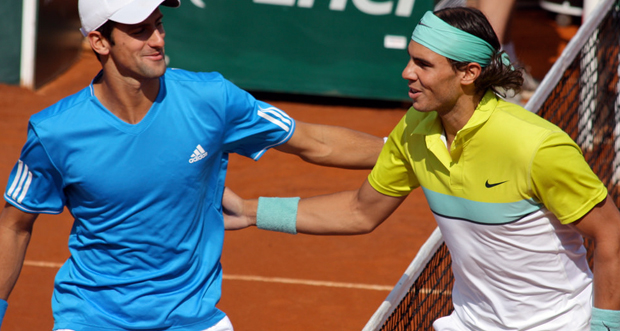
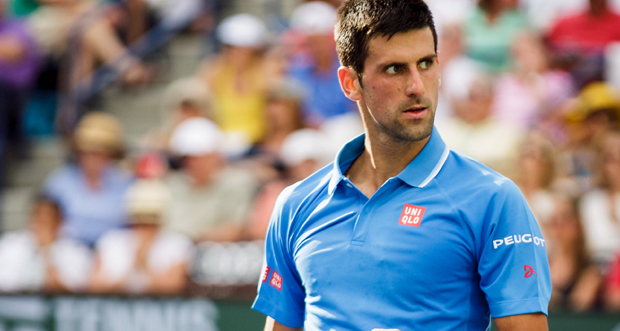
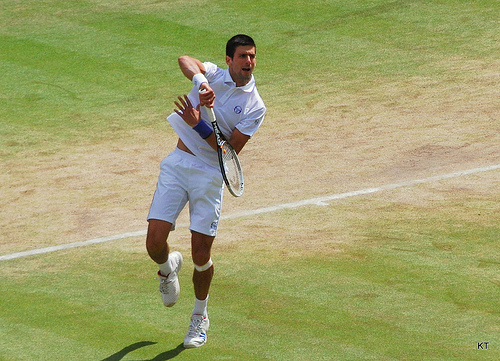
    Novak Djokovic put a torrid couple of years behind him to secure his fourth Wimbledon title with a 6-2 6-2 7-6(3) over South African Kevin Anderson. It was his first major since the 2016 French Open. It marked the end of a road back to form having struggled with elbow issues, confidence problems and multiple changes to his coaching entourage.

    With his young son Stefan watching from the stands, Djokovic put on businesslike performance, dominating all aspects of the encounter. It was a contrast to the battle royale he faced with Rafael Nadal in the Semi-finals on Friday.

    http://gty.im/1001610898

    Anderson threatened to extend the match in the third set with five game points but Djokovic’s will prevailed under pressure and Anderson pushed a forehand return into the net to bring an end to proceedings.

    Photo by Carine06

  • The Open Era Top Twenty at the End of 2016

    The Open Era Top Twenty at the End of 2016

    4446582661_b188f82f3c_b

    By Jonathan Northrop

    With another year in the books, and encouraged by an email from a reader of Tennis Frontier, I thought I’d offer a highly subjective but statistically informed list of the greatest players of the Open Era. Another factor in deciding to do this is, of course, Andy Murray’s epic and—for most—unexpected rise to #1. I was curious where he might rank, or if he would make it into the top twenty at all.

    A few preliminary thoughts and clarifications. First of all, the Open Era spans from the 1968 French Open to the present. Some of the players on this list—most notably Rod Laver and Ken Rosewall, but also John Newcombe and Arthur Ashe—had careers spanning that turning point of modern tennis, even winning Slams before and after. Actually, Laver and Rosewall are the only two players to win Professional, Amateur, and Open Era Slams. In compiling such a list I am left with a judgement call: Do I include these players and, if so, do I include only their Open Era record or their entire career? I have chosen the latter; to include them, but to use their entire career. I feel that we cannot penalize Laver and Rosewall for playing the bulk of their careers—and their best years, for the most part—before the Open Era. Both were great enough in the Open Era that they should be included simply by virtue of their Open Era accomplishments, but I just can’t stomach the idea of ranking them lower on this list, as would be required if we only considered their Open Era careers. I have excluded such greats as Roy Emerson and Pancho Gonzales, both of whom played during the Open Era but whose best years were before.

    The other thing I want to talk about is methodology. I rank players by a statistical formula which accumulates points for every Slam result, every title, and year-end rankings. But I don’t stop there; if I did, I’d have Jimmy Connors and Ivan Lendl ranked ahead of Pete Sampras, and that just doesn’t feel right. I also look at a variant that more strongly weighs certain factors (e.g. giving far more weight to Slams and #1 rankings, for example). And then I make a subjective adjustment based upon what I know about the context in which that player played. Any serious historian of tennis knows that the two Grand Slams won by Johan Kriek are far less impressive than any of those won by Novak Djokovic, or that Jan Kodes three Slams are less impressive than Stan Wawrinka’s. But it is difficult (even impossible) to objectively account for that, so I’ve just used my best judgement.

    A major aspect of methodology is how to weigh peak vs. longevity. Most analysts tend to emphasize the former, which I generally agree with, but it isn’t an either/or matter. The key is finding the right balance, which unfortunately only really can be done subjectively. For example, I’ve created several variations of my formula and they all rank Connors and Lendl ahead of Borg, which I find problematic.  Even TennisBase.com, which uses a far more sophisticated formula than I do, ranks those two ahead of not only Borg, but Sampras as well. While I don’t want to overly focus on Slam titles, I cannot so easily ignore the +6 lead Sampras has over those two. Tennis Base also ranks Andy Murray ahead of Mats Wilander and John Newcombe, because they emphasize depth of records and longevity. Again, I don’t think we can rank Andy ahead of those two seven-Slam winners, at least not yet. But given the rest of their careers, it is reasonable to think that if Andy can win even just a couple more Slams, his overall record would push him ahead of those two. But we’ll cross that bridge when we come to it.

    Finally, I’m ranking them in clusters or tiers, because there are gaps in terms of which players are closer in their overall greatness. This will be discussed below.

    All that said, the curtain is pulled back and here is the list…

    1. Rod Laver
    2. Roger Federer
    3. Ken Rosewall

    These are the big three. For awhile it looked like Rafa was going to be joining them, but it seems that ship has sailed unless, of course, he (re)discovers the Fountain of Youth in 2017. For Rafa to get in, he probably needs at least a couple more Slams. Novak is also a contender for this tier, but the jury is still out. But as of this writing, these three stand above the rest of the pack by a solid margin. If we were doing an all-time list I’d probably put Bill Tilden as the fourth, with Pancho Gonzales also a candidate, but possibly in the next group down.

    Why Laver first? No player has had as dominant a decade as Laver, from 1960-1969. During those ten years he was about as dominant as Federer was for his best four, 2004-07. Add to that not one but two calendar year Grand Slams and 200 titles! That’s almost 70 more than the next guy down, Rosewall, and more than double Federer. If we want to find one chink in Laver’s armor, it is that he stopped winning Slams in 1969. But this is largely due to his scheduling and some of the politics of the early 70s; he only played in eight Slams from 1070-77, although remained a top 10 player through 1975.

    It is tempting to put Rosewall above Roger due to the massive accumulation of statistics. In fact, if we look at longevity, no one comes even close to what Rosewall accomplished. Rosewall was a freak, winning Slams across over 22 years—double the range of Laver—winning his first Slam in 1951 at age 18 and his last in 1972 at age 37. That would be like Rafael Nadal winning his first Slam in 2005 at age 19 (which he did), but winning his last in 2024 at age 38! Rosewall was the Jimmy Connors of his era; he was very, very good for a very long time, but there was (almost) always someone better than him. First it was Pancho Gonzales, then Lew Hoad, then Laver, then Connors. Still, no one has the breadth of his career, except for perhaps Martina Navratilova and Serena Williams, and no one has the Slam count: 23 including Pro, Amateur, and Open (Laver’s total is 19).

    4. Novak Djokovic
    5. Pete Sampras
    6. Rafael Nadal

    Perhaps the most controversial thing here is that I rank Novak higher than both Pete and Rafa, but understand that it is very, very close, and I think there are arguments to be made for any arrangement of the three. Pete still has a slight edge with his 14 Slams to Novak’s 12 and 6 year-end #1s to Novak’s four, but Novak is building a stronger overall resume, with more titles, almost triple the Masters, and better overall Slam results. Part of this is due to the era; Pete played during a time in which courts were more diverse, and had serious trouble on clay. That said, we cannot penalize Novak for playing in the time he has; one of the core qualities of greatness is adapting to the context you play in, and Novak has done that in an almost unparalleled fashion. I think it is also worth mentioning that Novak–unlike Rafa, Pete, and even moreso, Roger–doesn’t have many “gimme” Slam titles. In fact, he only has one: Jo-Wilfried Tsonga. Sampras had quite a few, Rafa several, and Roger even more.

    Of course the book isn’t closed on Novak or Rafa. Perhaps Rafa has one more surge in him, another Slam (or even two), and several more Masters. I think just one more Slam that would put him ahead of Sampras, who gets the edge over Rafa because of his greater consistency and year-end #1s; but right now, I give the edge to Pete. If Novak wins just two more Slams, I think my ranking will be more fully justified. If he wins 3+ more and maybe another year-end #1, he enters the top echelon of greats.

    7. Bjorn Borg
    8. Ivan Lendl
    9. John McEnroe
    10. Jimmy Connors
    11. Andre Agassi

    Here also you can play with the rankings a bit, although I’d always leave Agassi last among these five. He just didn’t have as strong a peak as any of them. Borg is one of the great “What if” stories: what if he hadn’t retired at age 25? How many Slams would he have finished with? It is easy to imagine several more and him being in the first tier; on the other hand, he retired when it was clear he was no longer the best player in the sport. I do think he would have won two or three more, but not four or more. But we’ll never know.

    Still, I have to rank Borg ahead of the rest. Some also might take issue with my ranking Lendl ahead of McEnroe, but despite the latter having greater virtuoso brilliance and a higher level of dominance, I must respect the workman-like consistency of Lendl, which saw him playing in 19 Slam finals during one of the most competitive eras in tennis history. In fact, Lendl is the only player to have played against three groups of greats playing at or near their peaks; Connors, Borg and McEnroe in the late 70s to early 80s; Wilander, Edberg, and Becker in the 80s; and Sampras and Agassi in the early 90s. That’s a tough context to play in.

    12. Boris Becker
    13. Stefan Edberg
    14. John Newcombe
    15. Mats Wilander

    This is another group that could be ranked differently, but I do think Becker and Edberg are closely paired, with Newcombe and Wilander a bit behind. I give a slight edge to Boris, but have gone back and forth. Edberg has the edge in the rankings, with two year-end #1s and 72 weeks at #1 to Boris’ mere 12 weeks, but Boris’ non-Slam title count is significantly better, and of course he had a huge edge in the head-to-head.

    Newcombe is hard to rank because he played within a very different context and won several of his seven Slams in the weak era of the Australian Open when mainly only Australians played, but he also is one of the few players to win all four Slams and was a consistent great for a decade; he is perhaps the most understated, least known great player of the Open Era, at least today. Plus, there’s the handle-bar mustache.

    john_newcombe_c1974Photo by Unknown, from Wikimedia Commons courtesy of Creative Commons License.

    As for Wilander, he had that terrific 1988, in which he was the only player between Jimmy Connors in 1974 and Roger Federer in 2004 to win three Slams in a year, and was really good for the half decade before that, but he just collapsed at the age of 24 and his overall record is weakened for it.

    16. Andy Murray
    17. Guillermo Vilas
    18. Arthur Ashe
    19. Ilie Nastase
    20. Jim Courier

    This ordering might generate controversy, but I now think that Andy Murray is the “best of the near-greats.” I also rank Nastase ahead of Courier, despite the 2-to-4 Slam deficit. But Nastase is another player—like Newcombe—that is too easily forgotten. He only won two Slams, but he won 58 ATP events and several more in the early Open Era during a time when Slams weren’t quite as prestigious as they are today. Ashe is also difficult to rank, because he only has those three Slams across a long career. But he won a ton of titles before the ATP era, and of course also had a harder context to play in than any player on this list, due to the color of his skin.

    Back to Andy for a moment. As of this writing he really has an unusual record. His stats, if you count everything and look at Slam finals rather than wins, is very much closer to that of the next tier up. He played in one more Slam final (11) than Becker and Newcombe (10 each), and as many Slam finals as Stefan Edberg, Mats Wilander and John McEnroe, but has gone 3-8 instead of 6-5, 7-4 and 7-4, respectively. The reason? Well, consider who Andy lost eight times to: three times to Roger Federer and five times to Novak Djokovic. He beat Novak twice and beat Milos Raonic at Wimbledon this year. In other words, of his 11 chances only once did he not face one of the five or so best players of the Open Era. Consider that 10 of Roger’s 17 Slam titles were played against players that are not on this list; he beat Agassi in one Slam final, Rafa in two, Novak in one and Andy in three, and the rest were against lesser players. This isn’t to downplay Roger’s greatness, as his match-ups were more consistent with historical norms, but to point out just how hard Andy’s lot has been.

    Rafa and Novak have also had some tough Slam finals, but even Rafa had more (relatively) easy match-ups: Mariano Puerta, Robin Soderling, Tomas Berdych, and David Ferrer. Novak’s only had Tsonga, which accounts for his lower win percentage in Slam finals: 12-9 (57%) vs Rafa’s 14-6 (70%) and Roger’s 17-10 (63%).

    My point is not that Andy is as good as the other members of the Big Four—he isn’t—but that he is better than his three Slams account for, even much better, and that if he can win another Slam or two, he’ll move up to the next group and possibly even surpass them.

    Honorable Mentions: Stan Smith, Thomas Muster, Michael Chang, Gustavo Kuerten, Yevgeny Kafelnikov, Lleyton Hewitt, Andy Roddick, Stan Wawrinka.

    There’s a significant (and convenient) gap between the top twenty and this next group, who would be the next tier down. None of these players really even come close to the top 20. That said, if Stan Wawrinka wins another Slam it will be hard not to seriously consider him. He has such an anomalous record, similar to Jan Kodes in that aside from the three Slam titles there isn’t a huge amount of career accomplishments; Stan’s record aside from those three Slams is more like Tomas Berdych’s than Andy Murray’s and unlike Kodes, all three of his titles are against great opponents (twice Novak, once Rafa); Kodes beat Nastase in one, but Zeljko Franulovic and Alex Metreveli in the other two, players comparable to contemporaries like Nicolas Almagro or Gilles Simon.

    Final Word
    I’ll take another look at this list a year from now as a few things could alter the rankings. If Stan wins another Slam, he could put pressure on Courier and Nastase. If Andy wins another Slam or two, he could be passing Wilander and Newcombe and be looking at surpassing Becker and Edberg before he’s through (although probably not Agassi). If Rafa wins another Slam, he passes Pete; if Novak wins another Slam or two, his ranking is stabilized and he could be looking at making the Open Era Big Three a Big Four. Finally, if Roger wins another Slam…well, I’m not sure I’m quite ready to rank him above Laver, but it would be tempting. If he is able to win #18 (possible, if unlikely), and re-take #1 if only for a week (very unlikely) and reach 100+ titles, then I think I’d have to slide him past Laver. But that’s a lot to ask for a 35 year old.

    Over Photo by mirsasha, courtesy of Creative Commons License.
  • My Journal Essay: Andy Murray

    My Journal Essay: Andy Murray

    Andy Murray

    By Martin Young

    While the dust settles on the remarkable milestone of Novak Djokovic winning the French Open and thus becoming one of only 5 men in the modern era to win all 4 major titles, and being the first man since Rod Laver to hold all 4 at the same time it would be easy to overlook the relative achievements of his opponent at Roland Garros and his own story and legacy, not least because it is actually likely to be one the key factors in Djokovic’s own story and legacy…

    Let me explain!

    Ever since Murray had a breakthrough summer in 2008, the most pertinent question from analysts and tennis fans is to ask whether or not there was such a thing as the ‘big 4’ or a ‘big 3 + 1’ in men’s tennis.

    Whilst to those outside the inner sanctum of the game, this might seem like a pointless discussion for board posters to debate, to those who live and breathe the sport it is absolutely at the heart of how Murray and his legacy will be remembered long after he retires and crucially how we will order Djokovic, Nadal and Federer and everyone else worthy of inclusion.

    For Murray, at face value 2 slam titles an Olympic Gold and a Davis Cup win, suggests a player who on his day was able to produce the goods but in the main was never really a force to be reckoned with. Since the mid to late 70’s and early 80’s right through today, the players we remember with such fond nostalgia are all players with multiple slam titles across various surfaces and define themselves and their era not just with the titles they won, but who they beat to win those titles. The list is a who’s who of men’s tennis and seamlessly demonstrates the evolution of the game across the sporting generations and evokes memories of rivalries and their names are synonymous with greatness. From Connors, Borg, Vilas, McEnroe, Wilander, Lendl, Edberg, Becker, Courier, Sampras, Agassi, Federer, Nadal through to Djokovic, 40 years of Tennis evolutionary history is appropriately defined just by this roll call of names.

    So why is Murray important to this discussion? His record of wins certainly does not merit inclusion in the above roll call but when you look beyond just the win column you realise that here lies a unique player who deserves a wide lensed appraisal of his career, not only as stated for helping to decide where Djokovic sits but also to ensure that Murrays own place in history is understood and appreciated appropriately.

    So how to go about this? Stats? References? Technical appraisal? Even gut? Perhaps a mixture of all, or perhaps none – I mean as I write this it is clear to me that I have formed my own opinion already but am I doing this for you the reader to agree and to convince you of some unknown truth or am I using this piece to help me justify what I already believe???? It is important at this point to make you aware that I am a big Andy Murray fan and have been since he won the US Open Junior title in 2004. As a Scotsman who was more of a watcher than player, I’d actually heard of the Murray brothers even before this win – there really was not much a precedent of any kind of success in Scottish tennis so naturally among those that were involved we invested early and at every stage through the Junior ranks he continued to deliver and “we” (“we” being the collectively small band of tartan tennis fans – and when I say “fans”, I mean the true fans like you !!!) continued to invest. This very day I sit dejected after watching Murray being well and truly defeated by Djokovic but instead of lamenting his play in sets 2 & 3, or bemoaning his bad luck to be playing in this era I feel compelled to get under the bonnet (or hood if you are not Anglicised) of what I have thought for a long time and that is, the feeling that the world of tennis continues to ‘under-appreciate’  Murray the tennis player, Murray the man and thus the legacy he will leave on the sport in a global sense.

    The complexities of sport often boil down to the binary and in 1 vs 1 tennis this truly is the case – there are probably fewer sports where this is more pronounced – even in the top individual athlete sports, there are few that really follow the seeding/ranking like men’s tennis where the best are the best and they have to prove it by beating the best with so little room to hide. So when you boil down the numbers: 2 GS, 1 Olympic Gold, 1 Davis Cup and a career high ranking of 2, it makes the case for Murray being considered for the era defining list much much harder.

    So beyond the emotional investment that I made early in this Scottish sportsman, there has to be something else that leads me to believe that he has a place amongst the pantheon of evolutionary defining tennis greats? Or am I gripped with blinkered fandom? Am I seduced by nationalistic pride? Is it that I feel some kind of need to protect the now not so young man from the cruelty of tennis fans who I believe under-appreciate his tennis but also don’t appreciate the virtues of the man himself?

    Well clearly it is all these things, but to understand it and admit it is not to say my argument is wrong. Before delving deeper into the tennis, I feel the need to exhort the virtues of the man and to counter his critics. Humility, awareness, preparation and his insatiable work ethic are all on display and known by most. His humour is perhaps less obvious to the casual observer as he is quite introverted when in public, due in part to his nature and also in part to being very unfairly portrayed as anti-English by UK tabloid media when still a teenager – but still to those in the inner sanctum of the game his humour and likability is no secret. The biggest virtue that perhaps gets missed or misunderstood with Murray is his honesty. This honesty can easily be seen through his work ethic, his preparation and that insatiable need to get better and better but it is honesty on the court that actually makes him very appealing to me and very unappealing to many people. He shouts at those in his box, he berates them when things are not going well (even when things in the grand scheme of things are actually going pretty well!). But herein lies the absolutely stripped bare honesty of the man. He is not berating those in his box, he is 100% berating himself – they are merely the face of his own self-loathing and his fear that he is not able or worthy to execute the detailed plans they have collectively agreed on and put in place. There are many who are put off by his ‘antics’ on account of taste and decency; there are many who are put off as it is seen as disrespectful to those on the team. I am not saying anyone is wrong if they feel like this but they perhaps don’t appreciate that this is pure honesty and it is all directed at his own need to try and be the best he can be. The manifestation of this virtue is actually something that many in Scotland and the UK actually understand and ultimately appreciate – it’s the raw and obvious human imperfections that draw us in.

    It is actually something that is acutely juxtaposed with Novak Djokovic and is very interesting as he also pursues his legacy. Has a top tennis player ever tried as hard to be liked on the court as much as Novak Djokovic? He works the crowd so beautifully (apart from the now very occasional outburst) when playing and being interviewed (very often in local tongue), he is polite, humble and in the case of the rare defeat is always very gracious in praising the good play of his opponent – You could construe me mentioning this as being the juxtaposition of Murrays honesty and think in some way I am calling what Djokovic does as fraudulent. This is absolutely not the case instead it is actually a reflection of how 2 men playing the same sport born a week apart are at very different points in their career and pursuit of legacy. Murray probably feels like he has under-achieved, not necessarily because he has, but because he pursues perfection and does so not to enjoy winning but because of the hatred of losing. Novak on the other hand has moved on from this and instead of being driven by a fear of losing he fights a different battle. That is because no matter how hard he has worked, what talent he has displayed and what wonderful achievements he has to date, there probably hasn’t been a commensurate amount of love and recognition thrown his way from the casual fan right through to the diehard tennis fan. That he isn’t Federer or Nadal is not his fault, but you can sense it is actually what drives him. Murray will get the love when playing in the UK and that is obviously a boost, but love is not what he seeks – he seeks his own perfection and unless that comes in the next few years it will not be the pursuit of love but the honest management of his own self-loathing that will drive him on.

    So that’s Murray the man, and although it is cathartic to write this and to perhaps offer a view of him that makes people think differently it really doesn’t do anything in isolation to make a case for his place in the pantheon of greats… So what about Murray the player? Technical advances in equipment and surfaces make comparisons across the eras difficult (and potentially foolhardy – I have no doubt that the vast majority of people taking the time to read this actually have better appreciation of technique than I have)!   Nonetheless I will forego the fear of ridicule and give it a go!

    He possess incredible reflexes and anticipation on the return of serve, so often getting the ball in and deep off first serve.  His ability to immediately take the upper hand on second serve makes him a physical and mental nightmare for a lot of players. His defensive positioning and anticipation are perhaps only ever bettered by Djokovic himself. His 2 handed crosscourt backhand has depth, bite and metronomic reliance – these skills allied to a very good in-match tennis brain makes him make a top player in this era and I believe would match up very well with any player in that list above. Like any top player of any era he has no major weaknesses in his game though his DTL forehand and recently his DTL backhand (a previous strength) can go missing at big moments – and he also has a huge differential between his A game serving and his B/C game serving (perhaps more so than most at the top level) – but again these are not particularly new or insightful observations and again don’t help me make or break the central case, merely they help in painting the landscape.

    So what really underpins the central argument has to come down to the numbers, but instead of boiling them down to the bones, perhaps I can sway the argument with a gentle reduction to bring out the hints of flavour.

    There are perhaps more elegant ways to portray the numbers, but to you the sports fan I think I can just as easily and effectively list the salient achievements and key points to articulate his legacy beyond what we know from above:

    • 10 Slam finals reached – In all finals he has either faced Roger Federer (0-3) or Novak Djokovic (2-5) unarguably 2 of the greatest players to have ever played the game. This has him equal 12th in the open era with Boris Becker
    • Equal 10th all-time on the number of semi-finals at 19 (with McEnroe, Edberg, Emerson and Crawford) – Equal 8th in the Open era
    • Finalist at all 4 slams – Only 10th man to do so
    • 10th on the Open era list of Masters series titles with 12 when reaching a Masters series final (18 times), he has only been beaten 6 times (5 by Djokovic and once by Nadal – exactly the same winning record against each opponent in reverse – beaten Djokovic 5 times and Nadal once)
    • The ‘weight of a nation’ factor though difficult to judge, clearly had some kind of effect on him – his conversion rate of Masters finals (though clearly not as important as slams) of 12-6 vs his slam success rate of 2-8 suggests that he has not fulfilled his potential at the crucial points in those biggest of big matches and that some demons exist.
    • All of this at a time when his main competitors are not just fighting for their legacy to be considered alongside the very best, they have fought and continue to fight to be considered the very best of the best. Perhaps the challenge of this era has spurred Murray onto a performance level that he otherwise would never have reached or perhaps being part of this era has deprived him from the wins that he otherwise would have got? Who knows?

    Perhaps this is the appropriate moment to summarise the argument and come full circle back to the question that I think is rightly posed by many about Murray and his position in the ‘Big 4’. It is perhaps that inability to have done it enough times at the biggest of big moments that will ultimately define Murrays place in tennis history. Just 2 or 3 more conversions and there wouldn’t really be the need to debate – instead there is a pantheon of open era greats with 14 tennis gods inside and Murray, as has so often been the case in all of these hypothetical discussions, is leading the charge of those on the porch banging the door to get in. In other words there is not an open era ‘big 15’, there is instead the big 14 + 1, but 1 who perhaps still has some time left to get a few more slams and force through the door to take his place with everyone else or else could always remain that unique outlying enigma as the best of the rest…

    So where does that leave Novak? Ok this piece is clearly about Murray, but when Novak’s career does come to an end it is likely that the majority of his achievements will have come at a time when Murray will be his primary challenger. And should he get close to, equal or surpass Roger Federer’s titles it might just be that Murray’s inability to have won more against Djokovic, might ironically actually be the most compelling argument against his own place at the very top of that list. That is to say the success of Andy Murray is arguably the most important factor in where Djokovic sits in terms of overall greatness.

  • Preview: Indian Wells Men’s Final

    Preview: Indian Wells Men’s Final

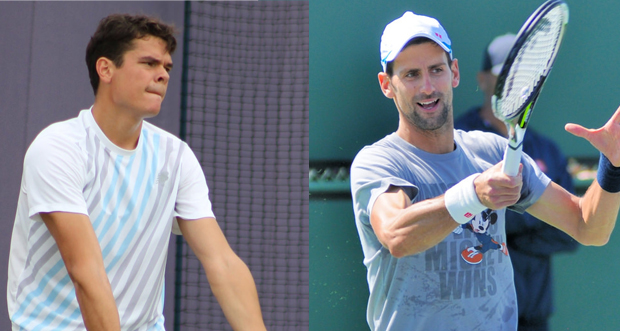
    Milos Raonic Novak Djokovic

    There can be little doubt that Novak Djokovic goes into today’s title match against Milos Raonic as the clear favourite.

    The World Number One is a two time defending champion at the event, and remains unbeaten on slow, grittier hard court surfaces the event takes place on of late. Raonic is a great hard court player, the booming server enjoying a title run in slow conditions in Brisbane this year, before stretching Andy Murray to five sets in the Australian semifinals a few weeks later. Both men enjoy their best results on hard courts, but their head-to-head stats make for grim reading for Milos.

    The Canadian has gone down in all his five meetings against Novak, taking just one of the fourteen sets they’ve contested. More crucial still, his last two losses, late 2014 in the Paris Masters, and last year in the Australian Open quarters, Raonic was beaten in straight sets on hard courts of comparable speed to those in Indian Wells.

    It is a bad matchup for the Canadian. Although he has improved other facets of his game in recent years, his entire game is predicated on his gargantuan serve. When this has been on song, Raonic has been able to dictate and attack against Federer, Nadal, and Murray, enjoying wins against each of these hall of famers. Djokovic, though, widely regarded as the best returner in the game, is able to nullify this shot, and thus dictate the rallies himself. This is the worst possible thing that can happen to Raonic. Although fitter, and possessing a better ground game than when he relied purely on his serve, at six foot five inches he is not going to be able to chase down shot after shot against Novak. The Serb is inevitably going to try to put his man on the defensive wherever possible.

    All is not lost for Milos. He is arguably playing the tennis of his life, backing up his big serve with choice attacks at the net, and ripping the backhand where once this was a passive rallying shot. He is a markedly improved player in the year and two months since their last meeting. Furthermore, his opponent has not looked entirely convincing this week, losing a set in a sluggish opening match, before almost losing a set to Nadal in yesterday’s semifinal.

    I back Djokovic to win today. He is good at bringing his best to bear in finals, even after less than convincing results en route to them. The slower variant of hard courts is where he is at his best, and his style is the closest thing to a roadblock the Canadian will face on the tour. I do not write Raonic off, though. He has looked mostly sharp this week, is in a rich vein of form of late, and if he serves and attacks well, stretching the Serb to tiebreaks, it is anyone’s match.

    Djokovic to win in three sets.

    [divider]

    Cover Photo (Creative Commons License): sirobi / Christian Mesiano

  • Indian Wells-Miami Double. The Fifth Grand Slam?

    Indian Wells-Miami Double. The Fifth Grand Slam?

    Indian Wells Masters

    In recent years the Indian Wells tournament in California, the first Masters event of the tennis season, has been regarded in some circles as the fifth Grand Slam.

    The tournament boasts state of the art facilities, a giant stadium and has recently been voted by male players as their favourite Masters event out of the nine they play, no small part of this being down to billionaire investor Larry Ellison’s investment. Further still, the tournament is dual gender and boasts a draw of 96 in each field, second along with Miami which follows after to the 128 player fields at the Slams and extending the tournament to eleven days. All this has contributed towards Indian Wells being the premier event just below the Slams.

    It was not so very long ago however that Indian Wells’ aforementioned cousin, Miami, was considered the fifth Grand Slam. Andy Murray hailed it as such after winning the event in 2009 against Djokovic. The reason for this turnaround is down to several factors. Firstly, Indian Wells has better facilities as a result of more investment. One just has to look at the different stadiums and show courts to see that Indian Wells trumps Miami; the latter looking dated and cramped. Secondly, pros prioritise the event for the most part, either after a deep run at the event pulling out of Miami, which follows immediately after, or skipping altogether due to factors such as age and avoiding fatigue, like Federer last year aged 33. Finally, and this is more gut feeling, Miami is awkwardly placed on the calendar, barely finishing before many minds are focused on the fast approaching clay court season, sticking out like a sore thumb, another week and a half slog on slow hard courts in an event that mirrors its more prestigious Indian Wells cousin.

    I am not trying to dump on Miami. I love the event, which has boasted some of the matches I am more emotionally tied to. Federer’s win in a best of five hard court against Nadal win in 2005, Djokovic’s final set triumph against Nadal in 2011, having bested him previously the fortnight before in Indian Wells, Roddick’s third and final win against Federer in 2012, the year of his retirement. The fact remains that they are not held in equal regard by many players.

    I myself however do hold them in equal measure, and I think winning both events back to back is the fifth hardest achievement in tennis after the Slams. Slow hard court events in hot conditions, played one after another. A top player who receives a bye in the first rounds who goes on to win both will still have to play twelve matches in three weeks against the best players in the world. Such is the toughness of this only seven players in the men’s game have achieved it, including retired all time greats Sampras and Agassi, and active ones Federer and Djokovic, both of whom have achieved the feat twice.

    For me then neither of the two events in isolation, with a 96 player draw and best of three set matches can be viewed as a fifth Slam. Winning both in the same year however for me ranks as a de facto fifth Slam; such are the requirements of physical and mental application and skill to achieve this rare feat.

    All of this is of course ultimately academic. One can argue endlessly if neither, one, or both qualify as a fifth Major or not. The most important thing about the tournaments of Indian Wells and Miami is that they gather most of the best players in the world in the same places, alleviating the dullness of mid March to early April for the dedicated tennis fan.

    [divider]

    Cover Photo (Creative Commons License): askbal

  • Open Era Generations, Part Thirteen: Gen 11 (1984-88) – Reign of Spain, err, Serbia

    Open Era Generations, Part Thirteen: Gen 11 (1984-88) – Reign of Spain, err, Serbia

    Rafael Nadal Novak Djokovic

    Generation Nada…kovic?
    Just a little over a year ago we could have safely called this Generation Nadal. After Djokovic’s remarkable 2011—and even more remarkable 2015—he is now vying with Rafa for the best player of their generation.

    Expectations around Novak keep changing. When he won the 2008 Australian Open at the tender age of 20, sneaking a Slam title at the height of Fedal dominance, it looked like the sport had a third superstar. But then the next few years were a disappointment, with Novak unable to win another Slam or break out of his No. 3 role through 2010. Ending that year, it looked like Novak would be an “almost-great,” not unlike his closest contemporary, Andy Murray. But then 2011 happened and Novak stole the mantle of the game’s top player from a peaking Nadal. After Novak plateaued as merely the “first among equals” from 2012-14, expectations settled in as an all-time great, but more akin to Edberg/Becker than Sampras/Nadal. But then he had what is now widely considered the best season in Open Era history in 2015, and looks to continue the trend in 2016, having just won the Australian Open and with a 12-0 match record as of this writing. But the year is early.

    Best Players by Birth Year
    1984: Robin Soderling (SWE), Mario Ancic (CRO), Gilles Simon (FRA), Janko Tipsarevic (SER), Juan Monaco (ARG), Andreas Seppi (ITA)
    1985: Stan Wawrinka (SWZ, 2), Jo-Wilfried Tsonga (FRA), Tomas Berdych (CZE), Nicolas Almagro (ESP), John Isner (USA), Marcos Baghdatis (CYP)
    1986: Rafael Nadal (ESP, 14), Gael Monfils (FRA), Richard Gasquet (FRA)
    1987: Novak Djokovic (SER, 11), Andy Murray (UK, 2), Fabio Fognini (ITA)
    1988: Juan Martin del Potro (ARG, 1), Marin Cilic (CRO, 1), Ernest Gulbis (LAT), Roberto Bautista Agut (ESP)

    This is one of the strongest generations in Open Era history. In fact, I think you could make the argument that it is the second strongest after the first, or at least comparable to the great 1969-73 generation. I would also argue that it has the best 1-2 punch of any generation since Laver-Rosewall.

    Much has been written about Nadal and Djokovic. Nadal was, for the better part of a decade, the most fearsome opponent on a specific surface that the game has ever seen. Consider his 70-2 (97%) record at the French Open – he’s lost only two matches in eleven years! Or consider his 346-31 (91.8%) overall record on clay. Compare that to the second best record on a specific surface, Roger Federer’s 142-20 (87.7%) on grass – Rafa’s is over 4% points higher. Rafa dominated clay like no other player has dominated a particular surface, and was pretty good on other surfaces as well.

    Rafa’s 14 Slams are tied with Pete Sampras, and his 27 Masters are an ATP record, although one which Novak will likely break this year. He is also well-known for his utter dominance of Federer, with a 23-11 record in the head-to-head against the player who is still the most popular choice for the GOAT label. His naysayers claim that while he was great on clay, he was merely very good on other surfaces. This isn’t exactly true, considering he won 5 Slams and 8 Masters on other surfaces. The real hole in his resume is probably his lack of a World Tour Finals trophy – he’s been to two finals, but lost both.

    We’ll talk about Novak more in a moment when we look at the generational rankings.

    After Nadal and Djokovic, there’s a strong supporting cast that begins with Murray, then Wawrinka, del Potro, Cilic, Tsonga, Berdych, and Soderling. It drops steeply after that to “third tier” players like Monfils, Gasquet, Almagro, and Isner, but overall it is a very talented bunch. Murray in particular is on the shortlist of players whose overall career accomplishments have been most impacted by his own peers. Still, as much as people like to criticize Andy for being the weakest of the Big Four, he has had quite a career in his own right: two Slam titles, one Olympic gold medal, eleven Masters, and 35 titles overall – and counting. He is unlikely to enter the inner circle of Open Era players who won six or more Slams, but he could end his career as the best of the rest. How fitting would that be?

    This is also a generation of Slam-less players who might have won Slams if they had been born at a different time. Tsonga, Berdych, and Soderling fit this profile in particular.

    Underachievers and Forgotten Players
    I’d like to first mention two players that aren’t so forgotten: Robin Soderling and Juan Martin del Potro. Soderling was the fifth wheel of the Big Four for a couple years, between Nikolay Davydenko and David Ferrer, and best known for upsetting Nadal in the fourth round of the 2009 French Open. Unfortunately his career was derailed by mononucleosis while in his prime, so we’ll never know if he could have won a Slam.

    In 2009, after defeating Roger Federer in the US Open final, del Potro looked like he was ready to vie with Andy Murray for at least the “best of the rest” category. But injuries have derailed his career and he’s never been the same since.

    Soderling and del Potro aren’t truly forgotten, but I would like to mention one player who probably is: Mario Ancic. A 22-year old Ancic finished 2006 ranked No. 9 on account of two Slam quarterfinals and two ATP 250 titles, and looked to at least be a Top 10 fixture for years to come. But he missed the US Open that year due to a back injury and then contracted mononucleosis early in 2007. He struggled onward for a few years but couldn’t recovery, finally calling it quits in 2011. He’s definitely in the “what could have been” category. Maybe not an elite player, but certainly a regular in the Top 10.

    Several others could be considered disappointments: Richard Gasquet, Gael Monfils, Alexander Dolgopolov, and Ernests Gulbis all come to mind. I’d even mention Jo-Wilfried Tsonga, who has the big game to win a Slam but has not managed to do so.

    Did You Know?
    Gael Monfils has played in 18 finals, including 2 Masters, 5 ATP 500s, and 11 ATP 250s. He’s won only 5 of them, all ATP 250s. That’s a 5-13 record in professional finals, and 0-7 in finals higher than an ATP 250. In fact, Monfils wasn’t the only Frenchman of this generation to struggle in finals of big tournaments. While the top four Frenchmen of this generation—Tsonga, Gasquet, Simon, and Monfils—played very well in ATP 250 finals, with a combined 38-21 record, they have not faired well in ATP 500s (2-9), Masters (2-9), World Tour Finals (0-1), and Slams (0-1), for a combined 4-20 record in finals ATP 500 or higher.

    Top Ten Players of the Generation

    1. Novak Djokovic
    2. Rafael Nadal
    3. Andy Murray
    4. Stan Wawrinka
    5. Juan Martin del Potro
    6. Tomas Berdych
    7. Jo-Wilfried Tsonga
    8. Marin Cilic
    9. Robin Soderling
    10. Richard Gasquet

    Honorable Mentions: Gael Monfils, Mario Ancic, Janko Tipsarevic, Gilles Simon, Juan Monaco, Andreas Seppi, Nicolas Almagro, John Isner, Marcos Baghdatis, Kevin Anderson, Fabio Fognini, Ernests Gulbis, Juan Bautista Agut, Alexandr Dolgopolov.

    Yes, I did it: I ranked Novak Djokovic over Rafael Nadal. Why? When I first started working on this series several months ago, I would have given Nadal the edge in terms of current (at the time) career accomplishments. But there are two reasons why I now consider Novak as the best player of his generation:

    1. Most importantly, I think his overall career accomplishments are better, right now. In other words, if both retired today, I’d rank Novak higher (although just by a hair). More on that in a moment.
    2. I’m taking the liberty to speculate a bit as this generation is far from through. Even if I focus only on Rafa’s 14 Slams to Novak’s 11, I feel confident predicting that Novak will surpass Rafa before not too long, probably some time in 2017. So given current performance level and even accounting for inevitable decline on Novak’s part, his career numbers will soon surpass Rafa’s – and perhaps even Roger’s.

    And why do I think Novak holds the edge even now, especially considering that Rafa leads in both Slams (14 to 11), Masters (27 to 26), and overall titles (67 to 61)? Well, to start, Novak has four year-end No. 1’s to Rafa’s two, and, barring something unforeseen, will almost certainly get at least one more. Novak also has five World Tour Finals to Rafa’s zero and has been a far more consistent performer at Slams, reaching the QF or later in the last 27, and only two first-week losses going back to his first SF appearance in the 2007 French Open. Furthermore, Novak also already has 45 more weeks at No. 1 and counting, and is the only member of the “Big Four” who has a winning record against the other three.

    Given their current respective levels of play, Novak will surpass Rafa in Slams, Masters, and overall titles within the next year or two. He is the greatest player of his generation, if only by a slight and arguable margin right now, but will almost certainly have surpassed him in every meaningful category.

    After these two, Andy and Stan are the clear #3 and #4. If Wawrinka is able to win another couple Slams and Andy none, then “Stanimal” might surpass him as the third greatest player of the generation, but right now Andy’s overall career is significantly better. In fact, they’re a good comparative case study as to why Slam count alone is not a good indicator of overall greatness.

    Del Potro very well could have been #3 on this list if it hadn’t been for injury. After him, Tsonga and Berdych are closely linked. Tsonga has had brighter moments of brilliance, but Berdych is aging a bit better and is more consistent – so I’m giving Tomas the edge. Then we have Soderling and Cilic, with Gasquet a good bit behind. Soderling was a more brilliant player than Cilic, but the big Croat has his Slam and is far from done – so he gets the edge. Gasquet is the best of the rest of the pack.

    [divider]

    Cover Photo (Creative Commons License): Marianne Bevis

  • Australian Open Final Preview: The Tilted Mirror

    Australian Open Final Preview: The Tilted Mirror

    Novak Djokovic Andy Murray

    When Novak Djokovic and Andy Murray contest a tennis match, it brings to mind to me Djokovic staring at a tilted mirror. Both players are in essence counterpunchers. Both rely on superior movement, low error rates, and superior defensive skills to confound most opponent’s efforts. Novak looks across the net and will see much of himself reflected back in Andy. It is a tilted reflection, though, as Murray will often seem further back than Djokovic in their baseline exchanges, Novak’s own strokes sending the ball farther than those that are being sent back. That is the essence of the matchup: The offensive counterpuncher in Djokovic doing pretty much everything the defensive counterpuncher Murray can do, only better.

    [divider]

    Click here to discuss the Djokovic/Murray Australian Open final in the Discussion Forum.

    [divider]

    Djokovic is perhaps playing the best tennis the men’s tour has witnessed in many years. He looks untouchable. Although he lacks the flare of Federer in his prime, the explosiveness of Nadal in his heyday, he looks somehow more complete than either in their own periods of domination, less liable to upsets or struggles on a specific surface. Nadal could always be counted upon to trouble Federer, whilst a Davydenko or Blake could make Rafa look amateur on a hard court at times. Nobody comes to mind that can be a regular thorn in Novak’s side, rather the current status quo of a Wawrinka pummelling him on rare occasions, or Federer seizing the initiative on fast courts in the Middle East or North East America.

    Seizing the initiative sums up rather nicely what Djokovic is doing. Though a counterpuncher, he is continuing to show his natural ability as an offensive baseliner. He is serving big, stepping into the court, and unloading on balls with natural and seemingly increasing power. He is not content to ride out storms against Federer or Nadal; he is actively seeking to deny their like of getting any momentum at all by attacking with controlled aggression.

    Needless to say this presents Murray with an instant uphill climb. He will be able to stay with Djokovic physically better than arguably anyone else on tour. Little separates the two in terms of speed and conditioning, but Murray I believe will suffer on two counts of positioning. Firstly, Murray does not hog the baseline, rather stands well behind it. This allows Novak to dictate from the off, sending his man into the far reaches of the court and opening up space for easy winners, regardless of Murray’s speed. The other is the position of Murray’s shots. Unlike the Lendl days, Murray is content again to revert back to rallying mode. The shots are often pushed into play, particularly with his weaker forehand, sitting up in the centre of the court where the Serb can merrily swat them away for winners or forcing Murray into the defensive.

    Murray’s last win at a Major against Novak was in 2013; he is 0-3 against him in them since, and has won just one of their last eleven matches overall. Furthermore, he is 9-21 in their entire head-to-head series — not a terrible number, but hardly encouraging, especially as Djokovic has grabbed their rivalry by the scruff of the neck since Murray’s 2013 Wimbledon triumph. Murray’s biggest wins against Novak have also occurred on the slicker surfaces of London’s grass or the fast hard courts of Canada, Cincinnati, and New York. He is no slouch on the slower hard courts, reaching four finals in Melbourne, as well as winning two Miami Masters titles. His relative lack of power and defensive style, though, leave him with his work cut out on slower surfaces.

    All is not lost for Murray. I think his first serve at its best is better than the Serb’s, albeit less reliable. I think Murray also has softer hands, and choice attacks at the net could prove bountiful for him. The Australian crowd are definitely the most sporting of the four Majors, and definitely have taken to Djokovic more than their three counterparts. From experience, though, they have always backed Murray more when the two have met here, perhaps out of the Aussie appreciation for the underdog, as well as for a fellow member of the Anglosphere. Crowd support for Murray could spur him on if he were to take an early lead, as well as rile Djokovic, often acutely sensitive to the biases of those in the audience. Murray fans could also take heart from the Djokovic vs. Simon match. The Frenchman, my favourite defensive counterpuncher on tour, has sometimes been labelled derogatorily as a ‘poor man’s Murray’. Both play similar styles, though Murray has more weapons and variety. If Simon can stretch Djokovic to five sets and make him produce 100 errors, it’s more than conceivable Murray could better that.

    All things being equal, such is Novak’s form, dominance of the tour and of Melbourne; it is hard to see him not triumphing tomorrow. I believe Murray will contest and win a couple more Major finals before his career is over, but I feel the only haul he will add to in this year’s Australian Open is his runner-up plates.

    Novak to win in four sets.

    [divider]

    Cover Photo (Creative Commons License): Marianne Bevis

  • Starts As He Means To Go On: Two Mini-Milestones For Novak In Qatar With Potentially Large Consequences

    Starts As He Means To Go On: Two Mini-Milestones For Novak In Qatar With Potentially Large Consequences

    Novak Djokovic

    On the face of it, Novak Djokovic’s 6-1, 6-2 defeat of Rafael Nadal in the relatively minor ATP 250 event of Qatar does not seem either significant or surprising. Novak is world No. 1, the preeminent hard-court player on the men’s tour, and he has owned Nadal in the last year and a half. I believe, though, that two milestones achieved in this encounter by the Serb are of particular note.

    Firstly, in their forty-seven match, nine-year rivalry, Novak Djokovic took the lead in their head-to-head for the first time, edging it 24-23. Throughout the pair’s storied rivalry whenever Novak looked to be in the ascendancy Nadal has managed to find some fresh inspiration and push back in front. I get the sense that Djokovic is now going to pull away from Rafa, extending his newly acquired lead. He has won against him in their last five meetings without dropping a set. Such was Djokovic’s dominance against a by his own admission of late injury free Nadal in Qatar, I can only see future matches between the pair, especially on hard courts, being equally one-sided in favour of Djokovic.

    [divider]

    Click here to discuss Djokovic’s win in Doha in the discussion forum.

    [divider]

    A second milestone Djokovic achieved by winning the title match was winning his sixtieth title, tying fellow counterpunching great Andre Agassi at ninth in the all-time list. I think the two players make for an interesting and fitting comparison. Agassi was also a hard-court specialist, both are considered the greatest returners of their respective eras, and both are famed for their prowess on the backhand wing.

    Djokovic has more of an upside, I believe, than the retired American great, though, after his own sixtieth trophy. Agassi’s sixtieth was at age thirty five, during his last career surge that would include finalist appearances in Canada and New York, but not contesting another final thereafter. Djokovic, at title number sixty, in his prime at twenty eight, and atop the world rankings by some margin, looks only to add to his title haul. Agassi was aged thirty two when he won his eighth and final Grand Slam in 2003; Djokovic is already on ten and looks set to win several more for at least for a few years yet. Agassi, meanwhile, won his last Masters title, an impressive seventeenth, at the advanced age in tennis of thirty four, whilst Djokovic is on twenty six, just one behind record holder Nadal, and on current form seems likely to win thirty of these lucrative titles sooner than later.

    To be on sixty titles whilst enjoying the form of his life, Djokovic has put himself within striking distance of retired greats Vilas (62), Borg and Sampras (64), as well as rival Nadal, currently with sixty seven. If Djokovic dominates like he did last year, and Nadal’s struggles continue, I would not be at all surprised to see him surpass all these legends past and present come the season’s end.

    [divider]

    Cover Photo (Creative Commons License): mirsasha

  • 2015 ATP World Tour Finals: Title Match Preview

    2015 ATP World Tour Finals: Title Match Preview

    16055198803_c453b99b81_z

    As predicted in the tournament preview here this time last week, Novak Djokovic and Roger Federer shall contest today’s final of the season ending finale. It is fitting that the two best players of the year, who have contested six finals this season, should lock horns in the final tour match of the year.

    Unlike last year, with the spectre of the Davis Cup Final lurking in the background, Federer can go into this match knowing that he can go flat out with no playing obligations until January of next year. Neither has he exerted himself physically nor emotionally in his semi-final against Wawrinka as he did last year, the result of which was a precautionary pull out of the final due to a tender back and representing his country in the Davis Cup final the following weekend. Federer has many incentives to win. Posting two wins in a week against Novak would be quite a punctuation mark with which to close the season out with. He would also have some momentum going into next season, being undefeated in five matches against his top eight peers. Furthermore, were he to haul the trophy tonight, he would climb back to number two in the world, crucial with regards to being seeded high at the Australian Open in January and avoiding meeting Djokovic before the final, and the potential of threatening rivals all being clumped together on the opposite side of the draw.

    Djokovic meanwhile has masses to play for in tonight’s match. He can add a career best eleventh title in a season to cap off his best season in which the smallest title he won was a lucrative 500 point event in Beijing. He can also match Sampras’ and Lendl’s haul of five year end championships, putting him within striking distance of record holder Federer’s six. Finally, today is an opportunity to once again tie Federer in their head to head tally, and with the opportunity to face his Swiss nemesis on favourable slow hard courts and clay in the first third of next season, surely there has never been a better opportunity to put himself in a position to inch ahead of Roger for the first time in their nine year rivalry?

    In terms of their form there is little to choose between the pair. Both suffered blips in form in the group stages, Federer losing a set in a scrappy affair against Nishikori, whilst Novak lost his sole match of the tournament against Roger earlier in the week. Both have looked imperious though in all other matches besides, saving some of their best for yesterday’s semi-final clashes. Novak beat Nadal for the fourth time this season in an increasingly one-sided rivalry, Whilst Roger vanquished Wawrinka after initially losing an early break, extending his lead over his countryman to 18-3.

    I expect a thrilling match this evening. Both are excellent indoor players, each has won a title in these conditions in recent weeks. I will give the edge to Djokovic in this encounter. I think that he is a quick learner, he will thus have analysed how Federer hurt him in Tuesday’s clash, and will make a concerted effort to hurt him on the return, hit with depth to pin Federer back, and hit his signature backhand down the line at every available opportunity. The longer he stretches out the match, turns it into a war of attrition, the more errors he will draw from the Swiss. If Federer comes out of the blocks quickly though, serves at a high percentage, dictates from on top of the baseline, and is able to be at his slicing and dicing best, attacking the net intelligently and with purpose, he could frustrate the Serbs rhythm sufficiently to snatch the victory.

    Novak to win in three sets.

    Author’s Blog: danopines22

    [divider]

    Cover Photo (Creative Commons License): Marianne Bevis

  • 2015 World Tour Finals: Semifinals Preview

    2015 World Tour Finals: Semifinals Preview

    11206695823_bd037c35af_z

    First Semi-final: Djokovic vs. Nadal

    Nadal has been the standout player of not only his group, but perhaps the tournament. He dealt with Wawrinka and Murray pretty tamely, dispatching both in straight sets, whilst surviving a tenacious challenge from compatriot Ferrer to come back and win the final two sets on Friday. This is a timely bit of form for Nadal, beating three quality opponents on his least favourite surface in his poorest season in a decade.

    Djokovic has equally surprised. He destroyed Nishikori in straight sets, but wasn’t at his sharpest against an inspired Federer on Tuesday, falling in straight sets. This was not a great surprise, Federer perhaps being the greatest indoor player in history, as well as Novak’s only regular challenger this season. Nevertheless, the manner in which he fell away in the second set against the Swiss is cause for minor concern. He restored order to his world mind on Thursday, taking down Berdych, who offered some resistance, in two sets.

    I think Ferrer is akin to Djokovic, but without the weapons. He was able to push Rafa with defence and speed. Novak possesses these attributes, but in greater abundance. Furthermore, he has a strong serve, the best backhand in the game, and the ability to dictate and finish points quickly. I think therefore, despite his loss to Federer, form and the recent history of their rivalry shall see the Serb prevail. He has Nadal’s number now, likes the rhythm of their rallies and enjoys the edge in physicality. Nadal has been showing glimpses of brilliance this week, but it would take his sustaining of that level in combination with Djokovic turning up sluggish and error prone to cause the upset.

    Second Semi-Final: Federer vs. Wawrinka

    It had to happen again, didn’t it? Last year the Swiss pair met in the semi-finals and delivered a pulsating contest that was far and away the match of the tournament. It was also a heated contest. Tensions were high throughout, Wawrinka exchanging words with Mrs. Federer. Roger saved five match points before staggering over the line. The match, which was a highly physical and emotional affair, left Federer in such poor shape he was unable to contest the final.

    Federer has enjoyed a great tournament so far. He made short work of Berdych in his first round match, before dispatching Novak in straight sets in his second with an awesome display offence and variety. He had his struggles in his last match against Nishikori, producing multiple errors and breaks, and also looked tired out in stretches of the match before attacking decisively to win whilst Kei served to stay in the match. I suppose having already won the group, the last match was as good a one as any to have a sluggish performance and set off the alarm bells for coach Edberg for what needs to be worked on for the weekend.

    Wawrinka has had to work harder than his countryman to reach this stage. Wawrinka was a shadow of himself in his opening match against Nadal, falling meekly in a match I thought would be an epic contest. This was seemingly a blip though, as he turned things around from thereon in to beat Ferrer and Murray in straight sets.

    I think Roger has the edge in this encounter. If physicality is not an issue, I believe variety and a generally good run of recent indoor form will see him through Wawrinka. Federer leads their head-to-head 17-3, and has only ever lost to Stan on clay surfaces. Wawrinka likes the high ball, and Federer has of late used his slice and court craft to offer opponents low bouncing, off pace balls. This could be decisive against Stan, a player who benefits much with time to set up his strokes. Further, Stan is a good rather than great mover, and I think Federer will do everything he can to get his man chasing awkward shots. I expect a tight affair and a shot making exhibition. I think if the Federer which beat Djokovic and Berdych turns up, as opposed to the one who edged Nishikori, we will see him contest tomorrow’s final.

    Author’s Blog: World Tour Finals: Semifinal Preview

    [divider]

    Cover Photos (Creative Commons License): By Marianne Bevis.
    Followed by the name, such as Marianne Bevis