Tag: monte carlo

  • Nadal reflects on win over Nishikori to set more records in Monte Carlo

    Nadal reflects on win over Nishikori to set more records in Monte Carlo

    Nadal wins in Monte Carlo

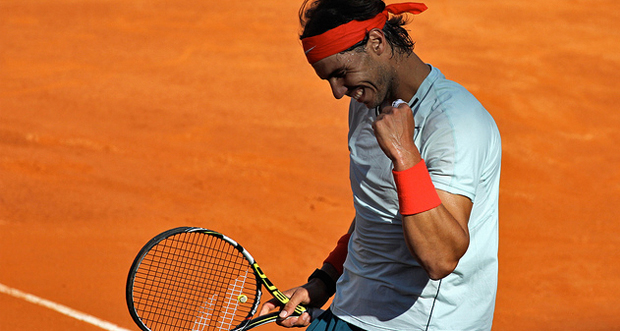
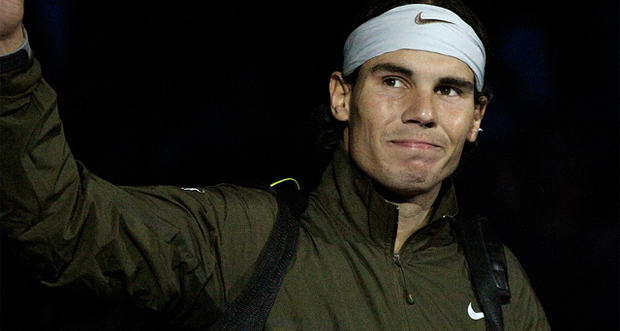
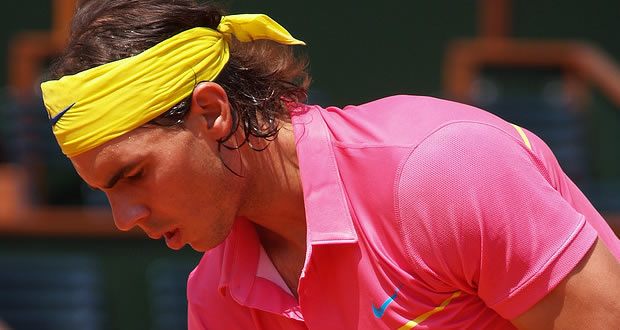
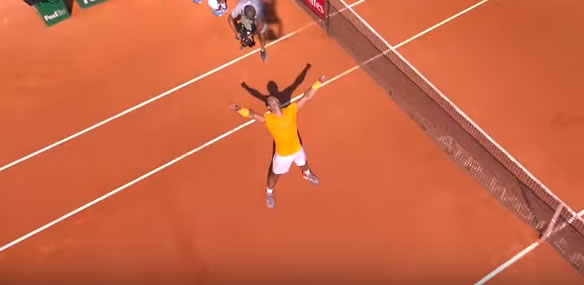
    Monte Carlo: Rafael Nadal powered to a straight sets 6-3, 6-2 victory over Kei Nishikori in 93 minutes to lift a record eleventh Monte Carlo crown.

    The Spaniard bettered his own records in the following categories:

    • Most consecutive sets won on clay (36)
    • Most titles on clay in the Open Era (54)
    • Most Masters Final Appearances (47) – tied with Roger Federer
    • Most Masters Final Titles (31) – overtaking Novak Djokovic

    http://gty.im/950029690

    He reflected on his record-breaking day during an interview with Sky Sports:

    Nadal:It’s so special no? and yeah it doesn’t matter if it’s the 11th. Every year is different feelings, and yeah especially coming back from injury it is so special for me. The history of this tournament with me is something difficult to describe now since the first time that I came here in 2003 it was so special.

    So very happy with everything and the great news that I have had the chance to finish a week and playing so well during the whole week.

    It was a very special day for you today. The first three games were pretty tight and you were down a break in that first. How did you completely take control of the match?

    Nadal:From there yeah I had an opportunity to be 2-0 in the first – but I miss a forehand on the line and yeah I think I have it but you know that game – always I make few mistakes tactically now and then he had the break.

    But mainly I think I changed it a little bit. Now I try to start to move him more than and what I was doing was opening the court and then I see more space. I open up the court with the backhand and then the match completely changes now it opened full possibilities for me and then yeah…

    It was important to close that first set I had the tough game in at 5-3 and then in the second I started with advantage so that was big for confidence.

    You are now on your 54th clay court title. How does this set things up for you for the rest of the clay court season and how excited are you for things up ahead?

    Nadal:Well today is the moment to enjoy Monte Carlo, no? and then tomorrow we’re going to start thinking about Barcelona. I have a very difficult draw so I’ll just enjoy this day and of course it is a great feeling to start the clay court season in this way – winning five straight matches here and two last week in the Davis Cup so yeah, great feelings but it’s day by day and today the only thing that matters is to have this trophy with me again

    Match Highlights:

    Highlights: Nadal Clinches 11th Monte-Carlo Crown

    Watch as Rafael Nadal defeats Kei Nishikori to win his 11th Rolex Monte-Carlo Masters title and a record 31st overall ATP World Tour Masters 1000 crown. Photo: Realis/Rolex Monte-Carlo Masters. Watch live tennis at tennistv.com. Watch matches live at http://tnn.is/streamlive.

    [divider]

    Discuss Nadal’s triumph in the Tennis Frontier Discussion Forum

  • Another record breaking opportunity for Nadal in Monte Carlo.

    Another record breaking opportunity for Nadal in Monte Carlo.

    Kei Nishikori has his work cut out on Sunday when he faces off against Rafael Nadal on the red clay of Monte Carlo. A foregone conclusion? Not quite, but a huge ask of the Japanese ball striker.

    Nishikori might take some heart from the fact that he beat Nadal in their last encounter (a third-place playoff match in the 2016 Olympics) but that was on hard court and Nadal was playing through injury. Another positive he might take comes from a performance on clay back in 2014 where he won a set in Madrid before retiring injured in the deciding stanza.

    Aside from that, the omens aren’t good. Nadal has been imperious all week. In particular, the 6-0, 6-2 thrashing of Dominic Thiem sent a huge statement to the locker room.

    He’s been playing amazing, dominating all the matches” was Nishikori’s blunt assessment of Nadal’s progress. The Spaniard has only lost here once in the last twelve years.

    Another finals victory would extend a record Nadal already owns. Last year in Monte Carlo, he became the first male player in Open era tennis to win the same tournament ten times. The smart money says he makes it eleven.

    Who was Nadal texting after the match?

    Some of you might have caught Nadal texting on his mobile phone straight after the Dimitrov match. The recipient?

    I was texting Carlos to tell him that we need to book a court quick, I just wanted to hit some forehands winners that I think I need for tomorrow” Nadal explained.

    Nadal texting Moya

    The Historical Head to Head

    Rafael Nadal Kei Nishikori

    Nadal leads 9-2

    2016 Olympic Tennis 0 Hard Kei Nishikori Rafael Nadal 6-2 6-7(1) 6-3
    2016 Barcelona F Clay Rafael Nadal Kei Nishikori 6-4 7-5
    2016 Indian Wells Masters QF Hard Rafael Nadal Kei Nishikori 6-4 6-3
    2015 Canadian Masters QF Hard Kei Nishikori Rafael Nadal 6-2 6-4
    2014 Madrid Masters F Clay Rafael Nadal Kei Nishikori 2-6 6-4 3-0 Ret’d
    2014 Australian Open R16 Hard Rafael Nadal Kei Nishikori 7-6(3) 7-5 7-6(3)
    2013 FO – RG R16 Clay Rafael Nadal Kei Nishikori 6-4 6-1 6-3
    2012 Miami Masters R16 Hard Rafael Nadal Kei Nishikori 6-4 6-4
    2011 Miami Masters R64 Hard Rafael Nadal Kei Nishikori 6-4 6-4
    2010 Wimbledon R128 Grass Rafael Nadal Kei Nishikori 6-2 6-4 6-4
    2008 Queen’s R16 Grass Rafael Nadal Kei Nishikori 6-4 3-6 6-3

    [divider]

    Discuss the tournament and more in the Tennis Frontier Forum

  • Monte Carlo Masters 2018

    Monte Carlo Masters 2018

    monte carlo tennis photo Photo by Fabio Pani

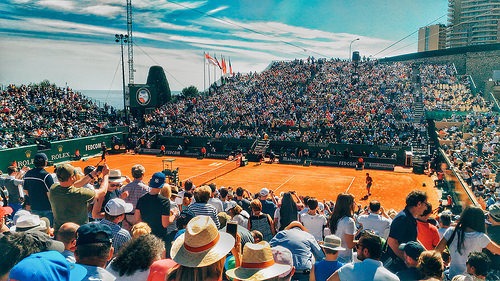
    If awards were given out for the most picturesque venue among ATP tournaments, then the Monte-Carlo Country Club would have few contenders with its stunning views over the Mediterranean.

    Monte Carlo hasn’t been a mandatory masters event since 2009 but still retains it’s allure in attracting top players with good prize money, a fantastic location and rich storied history. Rafael Nadal has won here a record ten times and returns as the defending champion and overwhelming favourite.

    Novak Djokovic, one of only two active players other than Nadal to have won here (Wawrinka being the other) has reunited with longtime coach Marian Vajda and will hope it sparks an upturn in form.

    Dominic Thiem already has seven clay court titles to his name but is yet to win a Masters crown. He’s well placed to start making an impression on the European clay swing but the question mark for him at Monte Carlo is that hasn’t played since injuring an ankle at Indian Wells.

    Grigor Dimitrov, Sascha Zverev, and David Goffin are other contenders who will be looking for a good start to the European clay season. Lucas Pouille will be the primary French flag bearer.

    Strange But True…

    The Monte Carlo Country Club is not actually in Monte Carlo or even Monaco. It’s situated in Roquebrune-Cap-Martin, a French commune bordering the city-state.

    One to Watch…

    All eyes will be on Djokovic. The former #1 is in the most turbulent phase of his illustrious career with injuries and coaching changes. Will the real Novak Djokovic stand up?

    Singles Field: 56
    Prize Money: €4,872,105

    [divider]

    Discuss this tournament and more in the Tennis Frontier Forum

  • The Eighth Wonder of the Learned Alchemists

    The Eighth Wonder of the Learned Alchemists

    Wawrinka

    Monte Carlo Masters 2014: A round-about wrap-up & some psychology.

    Near the middle of the day, near the middle of last week, I opened my internet browser to the news that Gabriel Garcia Márquez had died at the age of 87.

    Aww, no,” I exclaimed to no one in particular.

    A colleague—a fellow psychologist who happened to be within earshot—responded to my expression of disappointment with concern. “What’s wrong?”

    “Gabriel Garcia Márquez is dead.”

    Aww, no,” her expression was resonant with compassion. Therapists learn, almost without intention, to pack our monosyllabic murmurings with rich, affirming emotion. I felt immediately understood, and my colleague and I shared a moment of heavy silence as I pondered the impermanence of all things, including authors (and also my lunch, which I’d forgotten on my kitchen counter before work that morning). But, as the sad seconds ticked by and my colleague continued to honor my feelings with quiet empathy, I decided I ought to say something to lighten the mood. After all, it’s not like the Nobel-Prize-winning author was a friend of mine. 

    “Truth be told,” said I, “until this moment I wasn’t aware he was still alive.” 

    “Well,” said my colleague, “truth be told, until this moment, I’d never been aware of him at all. Who is he?”

    It’d been one of those days at work. In fact, it’d been one of those weeks— one of those months. We were both tired and worn-down. The sudden, mutual realization that my colleague and I were sharing grief over the death of a man neither of us had known was alive…well, it was just too much. We burst into fits of irrational laughter. Then—once I regained control of my capacity to inhale—I told her I thought she’d enjoy Márquez’s novel, One Hundred Years of Solitude, she replied that maybe she’d give it a try, and we got back to work, both of us feeling much lighter at heart than before we were saddened by the death of one the literary world’s greats.

    Rafael Nadal’s straight-sets defeat at the hands of David Ferrer in the Monte Carlo quarterfinals took place in the middle of the California night, and I slept straight through it. When I woke up to news of the loss, I was both surprised and not. My reaction was more Hrmm than Aww. Whether it’s mental (as Nadal says it is), or physical (as he might prefer not to discuss with the media), or both (as the two are often intertwined), whatever is going on for Rafa is familiar. We’ve been here before. Nobody rises from the ashes quite like Rafael Nadal, but once he’s risen—once his muscular wings are fully spread, with Nike microfiber plumage shining in the sunlight as he perches at the summit of a mountain made entirely of ranking points and the broken racquets of his shattered opponents—he gets a tad bit uncomfortable. From where I sit, on the summit of my sofa pillows, it seems that something (a significant something) inside Nadal’s psyche prefers to fight the powers that be rather than be one— or at least, prefers not to be World No. 1.

    Unfortunately for (what I am assuming is) Nadal’s conflicted relationship with his own greatness, Novak Djokovic, the current World No. 2, has a wrist injury that looks to keep him sidelined for no small amount of time. The Serb’s injury is a real shame, considering the stunning performance Djokovic delivered in the Miami final. He looked, then, as if nothing would suit him better than an extended, dusty turf war for the No. 1 ranking.

    For now, unless Djokovic’s wrist manages a miraculous Easter recovery, Rafael Nadal is stranded at the top. Unless the King of Clay is suffering physically, or unless he has an abiding desire to abandon tennis for the gambling table, I expect Rafa to be able to convince himself—if not the tennis world at large—that he’s not the favorite to win every title contested on the dirt, thereby freeing himself to do just that. He might even get things sorted this week in the relative shade of Barcelona’s 500-level tournament. Or, the process might take months and he won’t run the metaphorical clay tables again until 2015. Either way, I’ll leave him to it for the moment and turn my attention to the No. 3 and 4 players in the world, who also happen to be the Swiss No. 1 and No. 2.

    [3] Stanislas Wawrinka def. [4] Roger Federer 4-6, 7-6(5), 6-2

    During the 2014 Monte Carlo final—which began very early in the California morning, and spanned three sets containing many brilliant points and scintillating shots but never quite constellated into a beautiful match—and as I watched Roger Federer fend off a break point in the third set with a threaded backhand down-the-line followed by a fearsome overhead smash, I was suddenly moved to pull my copy of One Hundred Years of Solitude down from its resting place on the bookshelf in my living room. It’s probably been fifteen years since I last read the novel, but a passage in the opening paragraph brought much of the story flooding back: “The world was so recent that many things lacked names, and in order to indicate them it was necessary to point.” It’s a passage that lets the reader know the story will begin at the very beginning—in an Eden of wonder—and move in circles from there. What is old is also new. It’s also a sentence that made me think of enraptured tennis fans at a Federer match.

    What Roger Federer does, he’s been doing for well over a decade, but when he does it well, it still feels impossible to replicate. It’s still so new—so recent—that it’s necessary to point. And to gasp. And maybe even to exclaim in an elongated monosyllable resonant with deep emotion. Toward the end of the first set of Federer’s semifinal win over Novak Djokovic, while Federer was struggling to hold his nerves together and Djokovic’s arm was beginning to fall apart, the commentators opened the familiar chapter of the unresolvable GOAT debate. Can Roger Federer truly be called the greatest of all time, or even of his time, since he doesn’t hold a winning record over Nadal or Murray? 

    A half-hour later the Swiss could boast an 18-16 record over the Serb, but he’s still 10-11 against Murray, and 10-23 against Nadal. There was a silence in the booth as those numbers sank in, and then somebody—it might have been Nick Lester—said, somewhat sheepishly, “Aww, I still think he’s the best.” And everyone else agreed with him. Because he’s Federer; and because they know how it feels to watch and to be reduced to wordless gestures, when what you’re paid to do is talk. Márquez’s fascinating gypsies from Solitude might put the Swiss right up there with the invention of magnets, which, they tell us, were originally known as “the eighth wonder of the learned alchemists.” He is a little bit magic.

    Still, as supernatural as Federer’s tennis can be, and as healed as his back appears to be, he’s still struggling with the reality of closing out big points, and big matches. If you spend any time at tournaments with avid Federer fans—something I’ve done on multiple occasions already this year—they will be able to tell you the very instant the typically aggressive Swiss player goes passive. But they will not be able to tell you why. Instead, they will probably ask you, or, if they’ve got a powerful set of lungs, him: “Why didn’t he follow that ball in?”, “Why did he chip that return?”, “Why does he approach to Nadal’s forehand? He’s going to get killed doing that!”, “Why?!?” I don’t know. Maybe he truly believes it’s a good idea to approach Rafa’s forehand, or to remain passively in the backcourt. Or maybe he’s busy thinking about how quickly his daughters are growing up; or whether his capped shirt-sleeves mightn’t be a bit preppy, even for him; or the fact that he’s about to be father three times over; or about the tragic impermanence of the lunch-hour. It could be a thousand things. All we can do is guess. So here’s mine: 

    At the trophy ceremony after the final, Federer told the crowd that he hoped to be back in Monte Carlo for “many, many years.” Thirty-two is by no means old, but there’s no denying that Federer is nearer the end of his career than the beginning, probably much nearer. One day, hopefully many, many, many years from now, when Federer is well past 87, someone will read the news and say, “Aww, Roger Federer died today.” And someone else will respond, “Aww … Who is he?”

    Recognition—the experience human beings crave most— is an impermanent experience. It shifts and alters, as we do, even if you are the most wonderful attraction of the tennis world has ever seen. And when we struggle against accepting inevitable endings and limitations, we start to get confused about what we can control in life and what we can’t. We panic. We try to stem impossible tides instead of focusing on making good decisions about where to place an approach shot, or when not to get too cute with the drop shots. We try to tell ourselves we have all the time in the world, while we secretly freak out that our time might have already come and gone. From my vantage point—again the sofa cushions—Federer looks to me like a man trying to win titles without falling into a mind-twisting pothole of panic. He does just fine, as long as he doesn’t catch a glimpse of the abyss. But, I think it’s possible that if Federer can let go of the need for “one more great run” he’ll have one. Or several. At the very least he’ll stop fading away in deciding sets. Federer might not have “many, many years” left on tour, but he’s got time. And he still inspires plenty of wordless, gestural wonders.

    If trying to prevent the inevitable is a task doomed to failure, then attempting to recover from it is another story altogether—which is why Stanislas Wawrinka’s week at Monte Carlo had the psychologist in me thrilled to her fingertips. There’s little that is more fundamental to life (and therefore tennis) than loss. We all lose in the end. For those of us interested in infant attachment theory (or biblical studies, for that matter) we lose in the beginning, too. But when were able to survive these losses—whether it’s a five-hour, five-set loss to the World No. 1 on center court at a slam; or a seven-hour Davis Cup defeat; or 13 losses to the Eighth Wonder of the World; or a brief loss of dignity along the way to your first slam victory—that’s when change becomes possible, if only we’re helped to keep at it. (Please, somebody tell Jo-Wilfried Tsonga to consider a cozy stay at Magnus Norman’s academy in Sweden.)

    For the most part, substantive change happens gradually, intermittently, with great effort, and only eventually, with easy grace—which pretty much sums up the trajectory of the Monte Carlo final for Stanislas Wawrinka. He started off tense, making easy errors, and losing the first set to the combined force of Federer and his nerves. But, gradually, intermittently, and with a few effortful bellows, Wawrinka began to recover. Watching him clear a channel for his talent to flow was an almost palpable experience. Essentially, this is the kind of stuff I spend my days helping people do. I help people learn how to learn. Yet, whenever I watch somebody integrate intention with action, or insight with experience, becoming more himself along the way, it’s like I’m seeing it happen for the first time. I’m enthralled. 

    By the time the newly made Swiss No. 1 arrived at the third set he was standing well within the baseline, powering through the court with one audacious forehand after another. His serving was equally imperious (if my count is accurate, he dropped only four points on serve in the third set), and his backhand potent. In breaking Federer in the first and third games of the final set, Wawrinka played very much as he had when he nearly bagelled David Ferrer in the semifinals, or when he did bagel Marin Cilic in the second round — which is to say, wonderfully well. 

    Fittingly, Wawrinka closed the match, earning his first-ever Masters title, on a forehand winner. It was this shot that Stan used most aggressively all week. Also fittingly, Roger Federer gave his younger countryman a warm hug and congratulations at the net. A moment of recognition from one learned alchemist to another.

    Cover Photo (Creative Commons License): Marianne Bevis
  • Wawrinka Reigns in Monte Carlo

    Wawrinka Reigns in Monte Carlo

    AO ATP Winner - Stan 2

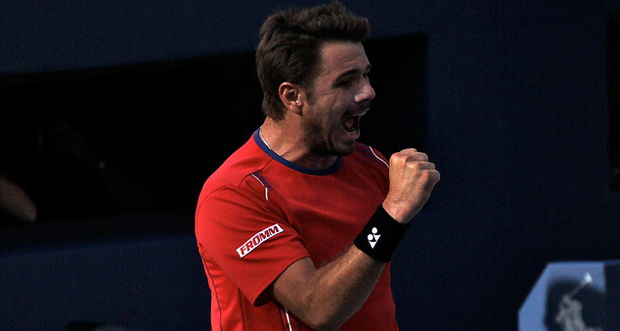
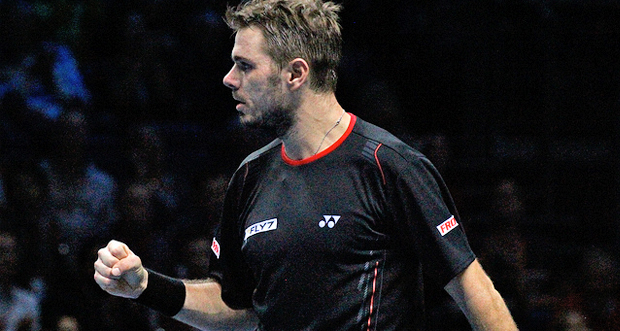
    Backing up his first Major title in Australia in January, Stanislas Wawrinka, of Switzerland, beat his countryman Roger Federer to win his first Masters 1000 title in Monaco today, 4-6, 7-6(5), 6-2.

    As the two men are friends, Davis Cup teammates, and co-winners of the 2008 Olympic gold medal in doubles, the match started a little tentatively, and rather lacking in kill shots. Federer took the first set on the strength of one early break. In the second, Wawrinka drew the first break, but Federer broke back immediately, and so it was decided in a tiebreak, which Stan took hold of with the first mini-break and never relinquished control from there. He carried that aggressive attitude into the third set, going up two breaks immediately, for a 4-0 lead before Federer held serve. Wawrinka served it out at 5-2.

    With the win, Wawrinka retains the No. 3 slot in the world rankings, as well as his claim to the Swiss No. 1 spot.

  • Nadal Ousted in Monte Carlo

    Nadal Ousted in Monte Carlo

    AO ATP Winner - Nadal 1

    David Ferrer did what is one of the tougher tasks in tennis today by handing Rafael Nadal a loss in Monte Carlo. Only yesterday, Nadal marked his 50th win in the principality, as well as his 300th win overall on clay. Nadal lost to Guillermo Coria in 2003 when he was 16 years old, then went on to win the title here a record eight times consecutively, before having his streak snapped last year in the final by Novak Djokovic.

    Today the world No. 1 was uncharacteristically error-prone (27 in the first set, 44 total unforced errors), while his fellow Spaniard was focused and committed to attacking the Nadal backhand. The first set was long and hard-fought, with breaks of serve traded, but Nadal lost the tiebreak at 1, after an 85 minute first set. Ferrer was up by two service breaks in the second set before Rafa got one back, but couldn’t fight off Ferrer on his next attempt to serve out the match, which he did to win 7-6 (1), 6-4.  Ferrer next faces Stan Wawrinka and will be looking to win his second Masters 1000 title.

  • Novak Djokovic – The Crown Prince of Monte Carlo

    Novak Djokovic – The Crown Prince of Monte Carlo

    Watched by the royalty of Monaco, Novak Djokovic ended Rafael Nadal’s amazing 8 year winning streak at Monte Carlo with a dominant display.

    Nadal suffered his first loss since a 2003 defeat at the hands of Gaston Gaudio. 10 years and 46 matches later, he fell to World #1 Djokovic in straight sets 6-2 7-6 in just under two hours.

    “It’s such a great pleasure to win here, it’s very special,” said Djokovic, a native of Serbia but primarily based in the principality.

    Djokovic, 25, wasted no time in setting out his intentions – racing out to take the first set 6-2 in 46 minutes.

    The second set was a more competitive affair, with Nadal breaking the Djokovic serve and giving himself a chance to level up the match at 5-4. However, Djokovic broke straight back, forcing a tie-break, which he won at a canter – 7-1.

    Nadal moves onto Barcelona next, with the next opportunity of a clash between the two titans coming at Madrid.

    Click here to discuss this and more with fellow tennis fans our discussion boards.

  • SF Results, Monte Carlo.  Djokovic progresses… Nadal looms.

    SF Results, Monte Carlo. Djokovic progresses… Nadal looms.

    Novak Djokovic booked his place in the Monte Carlo Masters final comfortabley overcoming an overmatched Fabio Fognini in straight sets 6-2 6-1 .
    Fognini was subject to medical treatment as the Serb raced through a first set dominating every aspect of the match.

    This was followed by a straightforward second set where the Serbian Slayer proved far too hot to handle and Fognini capitualated, drawing a close to the match in less than an hour.

    Standing in Djokovic’s way of a first Monte Carlo title, is eight time champion Rafael Nadal.  Nadal took his 46th consecutive win at Monte Carlo defeating the mercurial frenchman Jo-Wilfred Tsonga in straight sets.

    Tsonga had opportunities but could not capitalise and made too many unforced errors at crucial moments in the match. Nadal took a first set littered with errors from the frenchman.  The second set appeared to be a foregone conclusion as the Mallorcan stretched out to a 5-1 lead.

    Not one to go quietly, Tsonga broke Nadal twice as he fought back valiantly to take the set to a tiebreak.  Errors crept back in Tsonga’s game at critical moments and Nadal took over the tiebreak at 3-3 to clinch the match and another final slot.

    It is ten years since Nadal lost a match at Monte Carlo (Gaston Gaudio, way back in 2003) but Djokovic will provide by far his sternest test since coming back from a seven month layoff.

  • QF Results – Monte Carlo, 19/04/2013

    QF Results – Monte Carlo, 19/04/2013

    As follows are the Friday results for the Men’s Singles at Monte Carlo…

    1-Novak Djokovic (Serbia) beat Jarkko Nieminen (Finland) 6-4 6-3

    Fabio Fognini (Italy) beat 7-Richard Gasquet (France) 7-6(0) 6-2

    3-Rafa Nadal (Spain) beat Grigor Dimitrov (Bulgaria) 6-2 2-6 6-4

    6-Jo-Wilfried Tsonga (France) beat 13-Stanislas Wawrinka (Switzerland) 2-6 6-3 6-4

  • Wawrinka wallops Murray at Monte Carlo

    Wawrinka wallops Murray at Monte Carlo

    Stanislas Wawrinka inflicated a straight sets 6-1, 6-2 in the third round of the BNP Paribas Masters, Monte Carlo.

    Going into the match with an 8-4 Head to Head advantage, Murray had a poor service day and was severely punished by the Swiss Number 2.

    Murray’s game was uncharacteristically littered with unforced errors.  In all, twenty four and he highlighted this during the post match press conference as the main reason for the manner in which he capitulated.

    Wawrinka, who showcased his talent during a tough loss to World #1 Novak Djokovic in Australia, again showed that when at his best, he is more than capable.  After a tough opening service game, where was forced to save a break point, he went on to dominate the match convincingly, breaking Murray on  three consecutive occasions during a one sided opening stanza.

    Murray was better in the second set, but not good enough to check a range of winners from all around the court as Wawrinka refused to take the foot of the gas.  A miserable performance was brought to an end by the scot netting for Wawrinka to take the match 6-1, 6-2.

    Stan now takes on JW Tsonga in Round 4, while Murray flies to Madrid to prepare for the next masters event in the European clay swing.