Tag: lleyton hewitt

  • Looking for the Next Great Player – Part Two: Candidates of Greatness

    Looking for the Next Great Player – Part Two: Candidates of Greatness

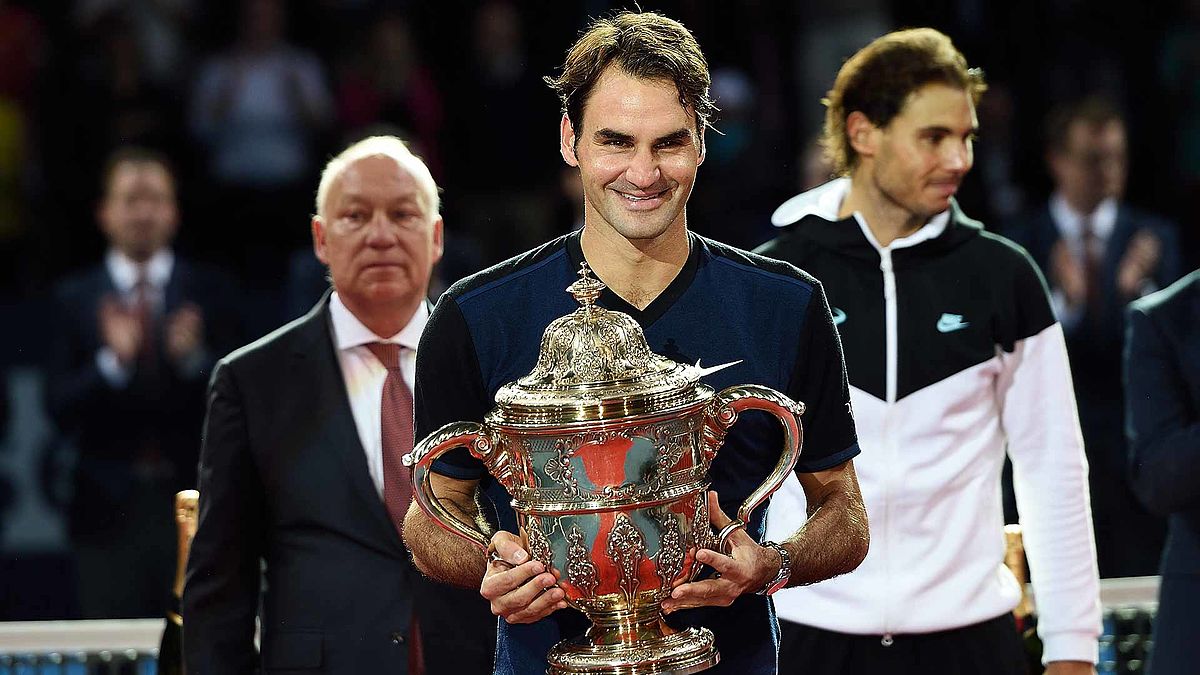
    Fedex basel.jpeg

    Revisiting the Benchmarks: the Pace of Greatness
    To recap the last installment, we have clear benchmarks that all true greats (6+ Slam winners) hold in common:

    Before their 19th birthday: Ranked in the top 100
    Before their 20th birthday: Ranked in the top 50
    Before their 21st birthday: Ranked in the top 10; won a title; made it to a Slam QF
    Before their 22nd birthday: Ranked in the top 5
    Before their 25th birthday: Ranked number 1, won a Slam

    We also found that there are about 70 players in the ATP ranking era (1973-present) who met that first benchmark—a top 100 ranking at age 18. Of those 70, 17 are active today, a list we’ll get to in a moment.

    “Failed Greats”
    Now just because a player meets all of those criteria does not mean they will become a great player. There are players who met all of those criteria and only won a Slam or two. There are also players who met all of the criteria except for one or both of the “fruition” benchmarks met by age 25, the Slam and number one ranking. These two groups combined are players that we could call “failed greats”–they passed all, or almost all, of the benchmarks, but failed to become true greats.

    Here are two lists of players, the first being those who accomplished all benchmarks, the second all but the age 25 criteria, the Slam and number one ranking:

    All benchmarks: Jim Courier, Michael Chang, Marat Safin, Lleyton Hewitt, Andy Roddick
    All except age 25: Goran Ivanisevic, Andrei Medvedev, Juan Martin del Potro

    So these are eight players in the Open Era who were on the “pace of greatness,” including five who actually met all of the benchmarks, but eventually fell short of true greatness. It is a surprisingly small number, and tells us that most players who reach the various benchmarks along the way will become great players. If we go back to those players for whom we have all the data, from Borg to Djokovic, we have 11 all-time greats (6+ Slam winners). That means that 11 of 16 players (69%) who met all of the benchmarks became greats, and 11 of 19 (58%) who met all except the age 25 benchmarks.

    The main thing these eight players have in common with the true greats is that they all developed very quickly. Consider the fact that one of the criteria is to reach the top 5 before turning 22 years old. That in itself is a difficult benchmark that erases many other players from contention.

    Let’s take a look at each of these players, to get a sense of what “went wrong” in their careers. First we have four players born in the first half of the 1970s:

    Jim Courier (b. 1970) was one of the top players on tour for a few years, the first of his generation to become #1, four months before Agassi and more than a year before Sampras. But Courier declined quickly, dropping from a top 3 player in 1993 to #13 in ’94, #8 in 95, and out of the top 20 for the remainder of his career. His mid-20s decline is similar to later number one players like Juan Carlos Ferrero and Lleyton Hewitt. There was always the sense with Courier that he was playing over his head and ability, and was less talented than his peers Sampras and Agassi. Courier’s decline coincided with Sampras’s rise to dominance; un-surprisingly, Courier won only 4 of his 20 matches with Sampras. Still, Courier ended his career with 4 Slams, 23 titles overall, a year-end #1 ranking in 1992 and, along with Guillermo Vilas, is one of the two players who I consider the “Gatekeepers” of true greatness.

    Goran Ivanisevic (b. 1971) was one of the better players of the 90s who was unable to get past the dominance of Sampras and Agassi, losing two Wimbledon finals to Sampras and one to Agassi. Yet despite fading in the latter part of the decade, he entered the 2001 Wimbledon ranked #125 and miraculously won it, which was the inspiration behind the film Wimbledon. Known for his tremendous serve, Ivanisevic wasn’t very multi-dimensional, although not nearly as one-dimensional as, say, Ivo Karlovic, and was probably a bit better than Milos Raonic is now.

    Michael Chang (b. 1972) was the youngest player of the Open Era to win a Grand Slam: the 1989 French Open at the age of 17 years and 4 months, one of only three players—along with Mats Wilander and Boris Becker—to win a Slam before his 18th birthday (Martina Hingis is the youngest woman, winning her first at 16 and 4 months). Yet Chang had a lower ceiling than other early bloomers. While he had a long and prolific career, including 34 titles and 7 Masters, he never ranked higher than #2 or won another Slam. In a way he was the David Ferrer of his generation (although more successful in big tournaments): never in contention for the best on tour, but always right there behind the top players.

    Andrei Medvedev (b. 1974) was an early bloomer who looked destined for greatness after ranking #6 in 1993 at the age of 19, and then winning two Masters the following year. Yet Medvedev floundered and was never able to take that next step up. His best years were 1993-95 when he was 19-21 years old.

    And then we come to the trio of Marat Safin, Lleyton Hewitt, and Andy Roddick—the best peers of Roger Federer.

    https://www.youtube.com/watch?v=J7KgXQYF7Ss

    Marat Safin (b. 1980) won his first Slam in 2000 at the age of 20 but only won one other and goes down as one of the biggest underachievers in tennis history. He was a very talented player who was capable of an extremely high level and very well could have formed a duo of greats with Federer, but he didn’t have the requisite focus and had the well-earned reputation of being something of a playboy.

    Lleyton Hewitt (b. 1981) was the youngest player in the ATP era to reach the number one ranking, which he did in 2001 at the age of 20 years old and 9 months. Hewitt was a very strong player for the first half of the 00s, and was the year-end #1 player in 2001 and 2002, but was more the first among near-equals than truly dominant over the field, and was eclipsed first by Roddick and then Federer in 2003 and never could climb back to the top. He fell out of the top 10 in 2006 and was never to return, playing a long second-half of his career as a non-elite player.

    Andy Roddick (b. 1982) is perhaps the player whose career was most damaged by Roger Federer’s greatness. Roddick won the US Open and the year-end #1 ranking in 2003 at 21 years old, and seemed destined for greatness. But Federer became simply better at almost every facet of the game, and Roddick’s relatively one-dimensional game became exploited by others. He was an excellent player and remained a consistent top 10 player throughout the 00s, but never won another Slam, going 1-4 in Slam finals.

    Finally we come to Juan Martin del Potro (b. 1988), who through 2009 had met all of the benchmarks of greatness: he was 21, had won a Slam, and was ranked in the top 5. And then injury struck and he hasn’t been the same since. While still a dangerous player when healthy, we’ll never know what a fully healthy del Potro would have looked like. My guess is that he would have vied with Andy Murray for the title of third greatest player of his generation, perhaps even surpassed him. But “Delpo” turns 28 later this year and is unlikely to ever reach his full potential.

    https://www.youtube.com/watch?v=4fwVz7dTI9E

    In all eight of these we see players who developed early and to a high level, but for various reasons were unable to take that next step, whether due to talent, mentality, or injury. Again, we can return to our “characteristics of greatness,” which all greats have had, and the failed greats have lacked one or more of.

    It is also interesting to note that these are all players born 1970 or later; 18 years old in 1973 is the starting point of these criteria because that is the beginning of the computerized rankings. This means that, for whatever reason, for the first 15 years there were no failed greats. Every player that met all of the criteria up to age 25 became greats, including Bjorn Borg, John McEnroe, Ivan Lendl, Mats Wilander, Stefan Edberg, and Boris Becker—a 100% “conversion rate.” Since 1970  we’ve had the eight failed greats along with Agassi, Sampras, Federer, Nadal, and Djokovic—so 5 of 13, or a 38% rate. Why exactly this is, I don’t know, although it could simply be that, as we saw in Part One, there were many more 18-year olds in the top 100 in the late 80s and early 90s than any other period of the Open Era.

    I would also add one more possibility. Note that the first four players—Courier, Ivanisevic, Chang, and Medvedev—were all peers of Sampras, while the next three—Safin, Hewitt, and Roddick—were peers of Federer. It could be that part of the reason these players “failed” in becoming true greats was because they were eclipsed by an even greater player in Sampras and and Federer (del Potro was close to Nadal and Djokovic, although his failure to achieve greatness has been blocked by injuries. We simply cannot know what a healthy del Potro would have looked like).

    Current Players: Off the Pace of Greatness
    So of active players, who was initially on the pace but has since fallen off? We’ll start with the oldest and work our way forward.

    Mikhail Youzhny (b. 1982) met the first criteria, and also won his first title at age 20, but slowed in his development. He has had a solid career, been a top 10 player and won 10 titles, but is far from great; I ranked him as the tenth greatest player of his generation (b. 1979-83), behind Tommy Robredo and ahead of Fernando Gonzalez and Guillermo Coria, although the latter two were better players and possibly deserved to rank higher than Youzhny, although Mikhail’s longevity was better.

    Tomas Berdych (b. 1985) met the first several benchmarks, ranking in the top 100 at age 18, the top 50 at age 19, winning his first title at 19 and even reaching the top 20 as a 20-year old. But he didn’t reach the top 10 or a Slam QF until a year later, at 21, and only made the top 5 at age 27.  Berdych won the Paris Masters in 2005 at 20 years old, but has not won a Masters since. He is what could be called an “aborted great:” he had the early signs, but never blossomed beyond the level of a very good player, which he remains today.

    Richard Gasquet (b. 1986) reached the top 100 at 17 years old, the top 50 and his first title at 18, and the top 20 as a 19 year old. But like Berdych, he didn’t reach a Slam QF or the top 10 until he was 21 and approaching 30-years old in June has never ranked in the top 5 or even won a title above an ATP 250. He is often cited as one of the more disappointing players of his generation, although I think in hind-sight it now looks like he simply had a lower ceiling of talent than his teenager career promised.

    Gael Monfils (b. 1986) showed immense promise at a young age, winning three Junior Slams in 2004. Monfils ranked in the top 50 at age 18 but took another four years to reach the top 10. He remains an enigmatic player on tour, extremely talented but the classic “head-case.”

    Andy Murray (b. 1987) was on the pace until his 21st birthday. He met all of the ranking benchmarks, won his first title, but failed to win a Slam QF until just after his 21st birthday. He also didn’t win his first Slam until 25 and has yet to rank number one. As we all know, Andy is known for his temper and penchant for falling apart in tight matches, as illustrated in his 2-7 record in Slam finals. While he could still win another Slam or two, especially as Federer and Nadal fade away, he turns 29 in a couple months and seems on the wrong side of his peak.

    Juan Martin del Potro (b. 1988) is in the “failed great” category and accomplished all of the benchmarks except the number one ranking, so he was even closer than Murray. He is 27, so it hard to imagine him winning 5+ more Slams to become a true great.

    Ernests Gulbis (b. 1988) is another of the same type as Gasquet and Monfils: very talented, but considered an underachiever. Gulbis reached the first two ranking benchmarks and also won his first title at age 19, but stalled out in his early 20s, not reaching the top 10 until 25, and then only briefly.

    Donald Young (b. 1989), as I have said elsewhere, represents both the failure of his generation and American men’s tennis. He made the top 100 at 18 but has floundered since, still as yet not winning a title, reaching a Slam QF, or ranking higher than #38. According to my research, he has the dubious honor of being one of the half a dozen or so worst players in the ATP era to reach the top 100 as an 18-year old.

    Kei Nishikori (b. 1989) won his first title at age 18, but slowed until his early 20s. He has met all of the criteria of 2-4 Slam winners, although at age 26 has yet to win a Slam. Kei has 11 titles so far, including 6 ATP 500s, and is the only player on tour with more than two ATP 500 titles and no Masters or Slams. While he’s a good candidate to eventually win a Masters, if he fails to do so he could end up being one of the greatest players ever not to win a Masters tournament or higher.

    Bernard Tomic (b. 1992) reached the top 50 and a Slam QF at age 18, and won his first title at age 20, but then floundered around #50 for a couple years and is now well off the pace of greatness. He is still just 23-years old, although looks more like a top 20 type than a future Slam winner.

    Nick Kyrgios (b. 1995) technically already missed one of the benchmarks, as he did not reaching the top 100 until he was 19 years and three months. But I do not think that three months should disqualify him. He did reach the top 50 before turning 20, win his first title and reach his first QF before 21, and he has a shot at reaching the top 20 by age 21, but probably not the top 10 (he turns 21 on April 27). So it could be that Kyrgios turns 21 with three of the first five benchmarks (not including a Slam title), which is pretty good. We’ll need to see a quick rise over 2016 and into the top 10 and, to get back on the pace, he would need to rank in the top 5 by his birthday in 2017. A tall order, but we’ve seen some positive signs of late, a high level of play that, if he can access on a regular basis, could make him a truly great player.

    https://www.youtube.com/watch?v=y96KGPHIdoI

    Active Players: On the Pace (So Far)
    There are currently only four players who have both reached the first benchmark, the top 100 at age 18, and not yet failed one: Hyeon Chung, Borna Coric, Alexander Zverev, and Taylor Harry Fritz.

    Hyeon Chung (b. 5/19/1996) reached the top 100 at 18 but has not yet broken into the 50, which is the benchmark that he must meet before his 20th birthday, on May 19 of this year. That said, he did reach as high as #51, so maybe we can give him some slack. He’s currently ranked #71 so has been stagnating for awhile now; hopefully we see a step forward this year.

    Borna Coric (b. 11/14/1996) is 19 years old, turning 20 in November. He is the only player who has reached two benchmarks and is still on the pace: he was in the top 100 at age 18 and top 50 at age 19. Actually, Coric has accomplished one remarkable feat: he has out-paced Novak Djokovic in rankings on their17-19th birthdays; compare:

    Djokovic: 515, 128, 63
    Coric: 396, 89, 45

    Just looking at those numbers point to potential great things for Coric. But beyond that, there are worrying signs. First of all, at 19 years and 4 months, Coric has yet to win a title; at the same age, Djokovic was about to win his second (both ATP 250s) and was about half a year away from his first Masters title and a little over a year from his first Slam.

    Where Djokovic went from #63 on his 19th birthday to #6 on his 20th birthday, Coric has been stagnating for about a year now. That said, he doesn’t need to keep pace with Djokovic to be a future great. In order to remain on the pace, he needs to reach the top 10, win a title, and reach a Slam QF all before November of 2017. So he’s got plenty of time to develop his game further. That said, it seems more likely that he becomes closer to Richard Gasquet than Djokovic.

    Alexander Zverev (b. 4/20/1997) turns 19 on April 20, and has already reached his first benchmark. In fact, he will turn 19 ranked #50, which is the next benchmark that he needs to reach—but not until April of 2017, so he’s a year ahead of schedule. After that, Zverev would need to reach the next round of benchmarks—top 10, a title, and Slam QF—all before April of 2018, which is two years away. He seems to have a good chance of all of that. So it is quite early for Zverev, which is a good sign. His recent three-set loss to Rafael Nadal at Indian Wells shows us both his potential and that he still needs a lot of work. But signs are encouraging.

    Taylor Fritz (b. 10/28/97) is in a similar situation as Zverev. He’ll be 19 later this year, about a year younger than Coric. Fritz is in the top 100 and doesn’t need to reach his next benchmark, the top 50, for a year and a half; he’s currently ranked #68, so is close already. His game is still raw, but he shows a lot of promise and the fact that he’s risen so quickly is a very good sign.

    Active Players: On the Cusp
    Those are only players who have reached at least one or more benchmark, but there are several others that are “due” for that first benchmark and look to have a solid chance to reach it.

    Andrey Rublev (b. 10/20/97) is about a week older than Fritz and currently ranked #154. He needs to squeeze into the top 100 by his birthday to be on pace, which seems very possible. He seems like a player that is ripe to start a quickened pace of development, so bears watching this year.

    Frances Tiafoe (b. 1/20/98) just turned 18 a few months ago, so has a lot of time to reach the top 100. He shows a lot of promise, including a three-set loss to David Goffin that showed some of his potential. He is currently the youngest player ranked in the top 200, at #182.

    Tommy Paul (5/17/97) and Omar Jasika (5/18/97) turn 19 in May, and are distant possibilities, but need to move very quickly, ranked #192 and #313 respectively.

    Duckhee Lee (5/29/98) is quite young and looks to have a good shot. At #206, he is the highest ranked 17-year old on tour, and the only one to be ranked in the top 400.

    Stefan Kozlov (2/1/98), ranked #224, and Michael Mmoh (1/10/98) ranked #322, are two young foreign-born Americans that bear watching.  Kovlov made a big jump recently, losing in a Challenger final. He is a good candidate to at least come close to the top 100 by year’s end.

    Beyond them you have 17-year olds Stefanos Tsitsipas (8/12/98) and Mikael Ymer (9/9/98) and even younger players for him it is just too soon to tell—like Denis Shapovolov (4/15/99) Felix Auger Aliassime (8/8/2000) and Rayane Roumane (9/11/2000), the only ranked players that were born in 2000. Again, it is way too soon for these kids, but theirs are names to remember.

    Missing the Cut
    There are also quite a few young players who show promise, but did not make that first benchmark. I will mention their names, though, given the possibility that this newer generation simply might be peaking later. Still, I think all of them are far less worthy candidates for the next great player, but could be names we see in the top 50 within the next new several years.

    Jared Donaldson, Elias Ymer, Karen Khachanov, Yoshihito Nishioka, Kyle Edmund, Quentin Halys, Thanasi Kokkinakis, Noah Rubin.

    Kokkinakis met the first benchmark and ranked as high as #69 last June, but has struggled since and is ranked #143 just after turning 20.

    “Stanislas Potential”
    There is one final player that I’d like to mention, who is far off the pace of greatness but has drawn attention of late: Dominic Thiem (b. 9/3/93). While I think it very unlikely that he becomes a 6+ Slam winner as he is so far off the pace, Thiem—at 22—has reached the various benchmarks of the near-greats, the 2-4 Slam winners. He reached the top 100 and then top 50 as a 20-year old, then won his first title and the top 20 as a 21-year old, and is currently on the verge of the top 10 and has a good chance to reach it, and play in his first Slam QF, before his 23rd birthday in September.

    https://www.youtube.com/watch?v=3BsIdpfyyrA

    And then there’s our old friend, Grigor Dimitrov (b. 5/14/91), who at almost 25 is no longer a prospect. We might have to accept Grigor for who he is and will never be. That said, while Grigor did not fulfill any of the criteria for greatness, he has fulfilled almost all of the criteria for near-greatness: reaching the top 100 at 19, the top 50 at 21, the top 20 at 22, and the top 10 at 23. He also made his first Slam QF at 22, although did not win his first title until 22: all multi-Slam winners won their first title at age 21 or younger. So while Grigor will not be a 6+ Slam winner, he is a darkhorse candidate, albeit a fading one, to expand the horizons of near-greats.

    Ranking the Candidates
    So when all is said and done, where does that leave us? As of right now, I would categorize the candidates the following groups:

    Best Candidates for Greatness: Alexander Zverev, Taylor Fritz
    Borderline/Outside Chance: Nick Kyrgios, Borna Coric, Hyeon Chung
    The Stanislas Darkhorse: Dominic Thiem
    Too Soon to Tell, but Promising: Andrey Rublev, Francis Tiafoe, Stefan Kozlov
    On the Edge of the Radar: Duckhee Lee, Mikael Ymer, etc
    Very Unlikely: Everyone else

    Finally, there are the kids—players of the next generation, 1999-2003, for whom it is just far too soon, but we are at least starting to see some names pop up in Futures tournaments.

    Which of these players will become true greats? Your guess is as good as mine, but chances are at least one of them will. If in 5 or 10 years we look back and the next 6+ Slam winner wasn’t mentioned in this article, I’ll have to eat my words, but I think there’s a very good chance that won’t be the case.

    Cover photo from Wikimedia Commons, By Tomas-ko0 – Own work, CC BY-SA 4.0, https://commons.wikimedia.org/w/index.php?curid=45898208
  • Open Era Generations, Part Twelve: Gen 10 (1979-83) – Generation Federer

    Open Era Generations, Part Twelve: Gen 10 (1979-83) – Generation Federer

    Roger Federer

    Why the name?
    What else could it be called? Roger Federer dominated his peers unlike any player since at least Bjorn Borg. Consider that he is the only player born in the fourteen-year span of 1972-85 who has more than three Slam titles; he is probably the number one reason why this is the case. Federer won 17 of his generation’s 23 Slam titles, or 74%, more than Borg’s 69% (11 of 16). “Weak Era Theory” aside, Roger simply owned his peers. More on that in a moment.

    Best Players by Birth Year
    1979:  Ivan Ljubicic (CRO), James Blake (USA), Juan Ignacio Chela (ARG), Ivo Karlovic (CRO), Nicolas Massu (CHI), Michael Llodra (FRA), Albert Montanes (ESP)
    1980: Marat Safin (RUS, 2), Juan Carlos Ferrero (ESP, 1), Fernando Gonzalez (CHI), Xavier Malisse (BEL)
    1981: Roger Federer (SWZ, 17), Lleyton Hewitt (AUS, 2), Nikolay Davydenko (RUS), Feliciano Lopez (ESP), Mardy Fish (USA), Jarkko Nieminen (FIN), Julien Benneteau (FRA)
    1982: Andy Roddick (USA, 1), David Ferrer (ESP), David Nalbandian (ARG), Tommy Robredo (ESP), Mikhail Youzhny (RUS), Guillermo Coria (ARG)
    1983: Fernando Verdasco (ESP), Phillip Kohlschreiber (GER), Dmitry Tursunov (RUS), Alejandro Falla (COL)

    I’ve been a bit more liberal with the names included, as this is a generation still active, or at least fresh in memory. Birth years 1980-82 is the heart of the generation, with 1979 and ’83 being far weaker.

    Imagine being Lleyton Hewitt or Andy Roddick: 2003 ends and you’re playing well, both with a Slam and year-end No. 1 or 2 under your belt while still in your early 20s. Then this soft-spoken Swiss guy rises up and utterly dominates tennis, while you toil away, year after year, never able to get past him and win another Slam. This scenario is particularly telling for Andy Roddick, who lost four Slam finals to Federer and won only 3 matches out of 24. Despite that fact, Roddick had an excellent career, finishing every year from 2002-10 in the Top 10, with 32 titles to his name including one Slam and five Masters. Andy retired relatively young by today’s standards, just after turning 30 in 2012, but he saw the writing on the wall–falling from No. 8 in 2010 to No. 14 in 2011 and No. 39 in 2012.

    In 2001, at the age of 20, Lleyton Hewitt was the youngest player to reach the No. 1 ranking since the ATP computerized rankings began in 1973. He was No. 1 for 80 weeks — more than Stefan Edberg, Jim Courier, Gustavo Kuerten, Ilie Nastase, Mats Wilander, and Boris Becker. After two year-end No. 1 rankings in 2001 and 2002, Hewitt entered 2003 on top of the world. Yet it soon became clear that a couple of his peers were surpassing him: Andy Roddick and Roger Federer. He remained a top player for a few more years, but by 2006 he had slipped out of the elite, unable to compete with the newer, bigger, more powerful generation that was coming up. As of this writing, Hewitt just played his last Grand Slam, going out in the second round of the Australian Open. Though he hasn’t been in the Top 20 for seven years, he will be missed.

    As for the Swiss Maestro himself, it is difficult to say anything that hasn’t already been said. But to return to the topic of his dominance over his generation, consider his head-to-head against peers (born 1979-83) who were Top 10 players: 195-36, or 84.4% – which is better than his overall winning percentage against all players. Of all players in Federer’s generation, the only two who were able to win more than three matches against him were Lleyton Hewitt (9-18) and David Nalbandian (8-11).

    Federer’s fans occasionally bemoan the fact that he’s no longer the player he was during his absolute peak, from 2004-07. While this is undoubtedly true, we should not lose sight of the player he is now, still ranked No. 3 halfway between his 34th and 35th birthdays. The vast majority of all-time greats were either long retired or fading out at Roger’s age.

    Maybe Roger will buck the trend and remain an elite player into his late 30s, but it seems unlikely. While he is showing no signs of further decline—yet—any setbacks, such as his current knee injury, could damage his momentum. Regardless, we should appreciate the great player while he’s around.

    Underachievers and Forgotten Players
    David Nalbandian and Marat Safin come most readily to mind. These two challenged Federer in terms of talent, but neither had the mentality and focus to be a perennial champion. Nalbandian is on the short list of most talented player never to win a Slam in the Open Era, and Safin is often mentioned as an almost-great who should have been an all-time great.

    Nalbandian was the most competitive peer of Federer’s, winning 8 of 19 matches (42.1%) and their first five matches. After those five, Roger seemed to figure out Nalbandian, with an 11-3 record from the 2003 Tennis Masters Cup onward. The only players with a better percentage against Federer in 10 or more matches are Tim Henman (46.2%), Rafael Nadal (67.6%), Novak Djokovic (51.1%), and Andy Murray (44%), all either significantly older or younger. Regardless of his level of disappointment, Nalbandian had a solid career, the highlight of which was his victory over Roger Federer in the 2005 World Tour Finals, as well as his two Masters in 2007.

    Safin was the No. 2 player in the sport at the age of 21 in 2000, a year in which he spent nine weeks as the No. 1 player in the world, defeated Pete Sampras in straight sets to take the US Open title, and won two Masters. It looked like tennis finally had a new, young elite player to join the aging Agassi and Sampras. Yet he was to finish only two other years in the Top 5, 2002 and 2004, and he won only one more Slam and three more Masters. A fine career, but not an all-time great.

    Another to consider is Guillermo Coria, who was ranked in the Top 8 from 2003-05, then saw his career collapse in 2006 – for a variety of reasons, including service issues, marital problems, and injury.

    Lesser-known Joachim Johansson deserves mention as someone who looked like at least a second-tier player but saw his career destroyed by injury. At the end of 2004, it looked like Sweden would have have an heir to Thomas Enqvist and Thomas Johansson in the “If not quite Borg/Wilander/Edberg, then at least Nystrom/Jarryd” category. Joachim finished the year No. 11, at age 22, including a Slam semifinal appearance and an ATP 500 title, but couldn’t recover from a variety of injuries.

    Did You Know?
    Roger Federer’s 2006 was widely considered the best season of the Open Era since Rod Laver’s great 1969, only recently surpassed by Novak Djokovic’s 2015. He won three Slams, was the finalist in the fourth, won the World Tour Finals, four Masters, 12 titles overall, and a ridiculous 91-5 record. Four of those five losses were to his nemesis, Rafael Nadal, and the other to Andy Murray. But here is what is interesting: in all but one of those matches, Nadal was still 19-years old, as was Andy Murray, who was ranked No. 21 when he beat Federer at the Cincinnati Masters. When Nadal defeated Federer in the French Open final, he had just turned 20; it was his fourth and last win over the No. 1 player that year (Roger would beat him at Wimbledon and the World Tour Masters).

    So think about that for a moment: The best player in the sport, and one of the best all time, lost four times to two teenagers during his best season, and a fifth time to one of them a few days after he turned 20. In his best season. Other than that, Roger was 91-0.

    Top Ten Players of the Generation

    1. Roger Federer
    2. Lleyton Hewitt
    3. Andy Roddick
    4. Marat Safin
    5. Juan Carlos Ferrero
    6. David Ferrer
    7. David Nalbandian
    8. Nikolay Davydenko
    9. Tommy Robredo
    10. Mikhail Youzhny

    Honorable Mentions: Fernando Gonzalez, Guillermo Coria, Fernando Verdasco, Ivan Ljubicic, James Blake, Feliciano Lopez, Mardy Fish, Jurgen Melzer, Ivo Karlovic, Juan Ignacio Chela, Philipp Kohlschreiber.

    Number one is easy, as Federer was (and is) to his generation what Borg was to his. I also feel reasonably confident with my No. 2-4 rankings, although Hewitt, Roddick, and Safin could be arranged in a variety of ways. While Safin was the most talented of the three, and Roddick the most consistent over a long period of time, I give Hewitt the edge because he’s the only one who had a sustained period of time as No. 1, even if it was in the “soft spot” of 2001-02 when men’s tennis was seeing a regime change.

    After that, it gets tricky. If you changed Ferrero’s Slam win to a runner up, he would probably rank behind Ferrer, Davydenko, and Nalbandian, all of whom had better overall careers aside from one match. The “Mosquito” wasn’t the worst player to win a Slam, and was an elite player for several years but like many of his peers, he saw his career drop off in his mid-20s. He slipped out of the Top 10 in 2004 and never returned, with a later career similar to Hewitt’s. But he did win a Slam and attain the No. 1 ranking for a short period of time, things that Ferrer, Davydenko, and Nalbandian never did.

    David Ferrer has had an unusual career path, peaking in his late 20s and early 30s. Other than Federer, he is the most consistent player of his generation and will go down as one of the greatest players never to win a Slam, along with his contemporary Nikolay Davydenko, who filled a similar role before Ferrer’s peak. Ferrer has the reputation of a player who maximized his modest talents – was not a great player, but a consistently very good one. While he has winning records against similarly ranked players like Tomas Berdych (8-5) and Jo-Wilfried Tsonga (3-1), unlike those two there is a sense that it would have been (and is) impossible for him to win a Slam because Ferrer’s “A game” simply cannot touch the “B games” of Djokovic, Nadal, or Federer.

    There’s a steep drop-off after Davydenko, with Robredo and Youzhny earning their way into the Top 10 through longevity. Guillermo Coria, Fernando Gonzalez, Ivan Ljubicic, and James Blake were all better peak players, but none had the overall career accomplishments of Robredo and Youzhny.

    Addendum: Twelve Highest Ranked Players of Gen 10 (as of 2/8/16)
    3. Roger Federer
    6. David Ferrer
    25. Feliciano Lopez
    26. Ivo Karlovic
    32. Philipp Kohlschreiber
    34. Guillermo Garcia Lopez
    39. Tommy Robredo
    40. Gilles Muller
    52. Paolo Lorenzi
    54. Nicolas Mahut
    56. Victor Estrella Burgos
    57. Fernando Verdasco

    As you can see, this generation still has quite a few players around, although only two in the Top 10. Considering that this generation will turn 33 to 37 in 2016, expect almost all to be gone within another year or two, with maybe a few hold-outs playing into their late 30s.

    [divider]

    Cover Photo (Creative Commons License): Marianne Bevis

  • 2015 Davis Cup Quarterfinals Review

    2015 Davis Cup Quarterfinals Review

    Davis Cup

    The 2015 Davis Cup quarterfinals were held across the world during July 17-19. As usual, they provided drama, comebacks, upsets, and promise. There was a country crumbling without its injured top players, and a heroic performance by a two-time Major champion playing his last season. There were two brothers carrying the hopes of a country on their shoulders, and a country getting closer to the title it has never won but so desperately wants. It was a great week for the sport of tennis, no matter who was playing.

    Middelkerke, Belgium: Injury-riddled No. 8 Canada loses to Belgium. Canada was the higher seed, but with No. 8 Milos Raonic and No. 30 Vasek Pospisil out with injuries, the Canadians were the clear underdogs. Belgium, led by No. 14 David Goffin, had absolutely no trouble. They dropped only two sets on the way to a 5-0 sweep, allowing Belgium to advance to its first semifinal since 1999.

    Buenos Aires, Argentina: No. 5 Argentina knocks out Djokovic-less No. 4 Serbia. Without Serbia’s World No. 1 Novak Djokovic in the lineup, Serbia and Argentina looked to be pretty evenly matched. It looked like things would be going down to the fifth match on Sunday, but then Delbonis happened. Argentina won the first match of the day but Viktor Troicki looked to have Serbia right back in it when he won the first two sets against the Argentine. Then a Wimbledon flashback occurred: Just as he had done in the fourth round against Pospisil, Troicki couldn’t finish the job, and Delbonis scored a huge comeback win and a massive blow to Serbia’s hopes of getting through without their No. 1 player. Argentina took a surprisingly easy three-set win in the doubles on Saturday, and advanced to their first semifinal since 2013.

    Darwin, Australia: Australia’s youth drop the ball, but the veterans save the day. Australia seemed to have a bright future in Davis Cup at the beginning of the year, but those hopes have taken a bit of a hit lately. Australian No. 1 Bernard Tomic got kicked off the team and then managed to get himself arrested in Miami, Florida, a few days before competition began. Nick Kyrgios carries drama wherever he goes. Aussie Captain Wally Masur, eye firmly on the future, went with his young stars in the first two matches: No. 41 Nick Kyrgios, and No. 69 Thanasi Kokkinakis. They managed to win one set between them. Australia was suddenly staring at a 0-2 hole. Sam Groth and Lleyton Hewitt teamed up to win the doubles point, and now Masur had a decision to make: youth or experience. He went with experience. He ditched Australia’s future for the time being and sent out Groth for the first match. It was very close and a few points would have changed the outcome but Groth gutted out a hard-fought four-set victory to tie everything up at 2-2. Then Lleyton Hewitt took the court. His ranking has dropped to No. 279, and it looked like Australia might be heading home early. But never count out Hewitt. In what could have been his 77th and final Davis Cup match, Hewitt took a first set tiebreak and never looked back, winning in straight sets and sending Australia to their first semifinal since 2006.

    London, England: Standing on the shoulders of Murrays. The No. 1 team in the world, France, with its loaded lineup and Davis Cup experience, had to be thinking this year was going to be the year they finally lifted (or sat on it, actually, since it’s so huge) the Davis Cup for the 10th time, and for the first time since 2001. After splitting the first two matches, Great Britain’s captain Leon Smith decided to go with Andy and Jaime Murray. It was a big gamble but the Brits absolutely needed this doubles match to have a chance. The Murray brothers came through. Jaime, with his world doubles ranking of No. 20 and a recent runner-up finish in the men’s doubles at Wimbledon, led the way and played some inspired tennis to grab the win after dropping the first set. Suddenly, Great Britain had a 2-1 lead and only needing a win by Andy Murray over Gilles Simon on Sunday to beat France for the first time since 1978. Simon had been playing very well lately, with a quarterfinal finish at Wimbledon. For the first two sets, Simon played brilliantly and Murray was tentative, no doubt feeling all the pressure from his home country on his shoulders. With Simon up a set and leading 4-1 in the second set tiebreak, things looked a bit bleak for Great Britain. Then Murray gritted his teeth and somehow, someway took the second set tiebreak. With that behind him, he started playing much better and Simon was the one who became tentative. Murray quickly wrapped up the match in four sets. The enormous pressure finally got to Murray and he broke down on court-side after the match. One thing is for certain: if Great Britain actually wins the Davis Cup this year, they had better send Mama Judy Murray a trophy of her own.

    The semifinals of the 2015 Davis Cup will be on September 18-19, with Great Britain hosting Australia, and Belgium hosting Argentina.

    [divider]

    Cover Photo (Creative Commons License): elPadawan

  • National Tennis Careers – Part Four: Australia

    National Tennis Careers – Part Four: Australia

    Rod Laver Patrick Rafter John Newcombe Lleyton Hewitt

    A Long Time Ago, Down Under…

    Of the five nations discussed, Australia peaked the earliest. Truly, Australia dominated men’s tennis in the late 1950s to the early 1970s led by two of the very greatest players of all time: Rod Laver and Ken Rosewall. Australia remained strong at the beginning of the Open Era, with Laver’s Calendar Slam in 1969, and the baton partially passed to John Newcombe, who was one of the few amateur stars that was able to maintain a similar level during the Open Era.

    Other top Australians before the Open Era include Frank Sedgman, Lew Hoad, Fred Stolle, Ashley Cooper, and Roy Emerson. Emerson held the Grand Slam record of 12 until Pete Sampras broke it, although it’s often considered overrated due to the fact that he dominated the Amateur Slams when the best players were playing pro – namely his countrymen Laver and Rosewall. Hoad is another “what if” story; Jack Kramer compared him to Ellsworth Vines as players with immense talent but lacking drive. Pancho Gonzales claimed that Hoad was the only player who could beat Gonzales when he was playing his best; others, including Ken Rosewall, voiced similar sentiment. Regardless, Hoad’s career was plagued by injury and even if he was arguably the most talented player of all time, his record places him as a lesser great: with five total majors to his name.

    [divider]

    Click here to discuss “National Tennis Careers – Part Four: Australia” in the discussion forum.

    [divider]

    Let’s take a look at the Open Era record:

    Australia Career

    As you can see, Australia dominated for the first few years of the Open Era then gradually petered out in the mid to late 70s and never recovered. There were a few bright spots – Pat Cash in the mid-80s with Australia’s lone Slam between 1976 and 1997, and then a short era of strength during the late 90s and early 2000s, when number ones Patrick Rafter and Lleyton Hewitt won two Slams each. Yet after Hewitt’s early peak and quick decline, Australian men’s tennis has been at a low during the last half decade or so. But there may be hope, but more on that in a moment…

    Ten Greatest Australian Players of the Open Era
    1. Rod Laver
    2. Ken Rosewall
    3. John Newcombe
    4. Lleyton Hewitt
    5. Patrick Rafter
    6. Tony Roche
    7. Pat Cash
    8. Mark Philippoussis
    9. Mark Edmondson
    10. John Alexander

    Honorable Mentions: Malcolm Anderson, Dick Crealy, Phil Dent, Kim Warwick, Mark Woodforde, John Marks, Roy Emerson.

    It is a bit tricky ranking the Australians of the Open Era as the top three all saw large portions of their careers before the Open Era, with Laver and Rosewall both seeing the bulk of their accomplishments happening before. But even if we rank them only by what they accomplished after the Open Era began, the top three remain the same.

    A brief word on Rosewall and Laver. The two are forever linked, not unlike Borg and McEnroe or Sampras and Agassi or Federer and Nadal. If we look at all-time greatness as merely a combination of longevity and accumulated career statistics, then Ken Rosewall would probably be considered the greatest player of all time due to his all-time best 23 Slam titles, including 8 Grand Slams and 15 Pro Slams. Perhaps even more remarkable is the fact that in all major tournaments, Rosewall played in 55 semifinals; consider that Bill Tilden (37), Roger Federer (36), Pancho Gonzales (34), Rod Laver (32), and Jimmy Connors (31) all made it to 31-37 Slam semifinals — all more than four year’s worth less than Rosewall.  Certainly, many of those were Pro Slams, which were shorter than today’s Grand Slams, but the fact that he is so far above everyone else is remarkable. But Laver had the greater peak – the two Grand Slams and the overall dominance during the 1960s and over Rosewall. Also, Laver’s 200 titles is by far the most in tennis history. Regardless, both men are on the very short list of GOAT candidates.

    John Newcombe is a bit underappreciated historically. I think this is partially because he played alongside the greater Laver and Rosewall, although was quite a bit younger than both, but also that he was surpassed later in his career by Connors and Borg. But Newcombe was, along with Arthur Ashe, the “bridge player” of the Amateur and Open Eras and was a top player for almost twenty years, including a shared No. 1 ranking in both 1970 and ’71. His overall record is comparable to players like Boris Becker and Stefan Edberg.

    There’s a big drop-off from Newcombe to the rest, with Lleyton Hewitt and Pat Rafter easy No. 4 and No. 5 picks. In a way the two have opposite careers: Rafter’s much shorter, only about a decade, and with a later peak, his last five years being his best; Hewitt’s has been quite long, with his best years early on. Having witnessed the diminished version of Hewitt over the last eight or nine years it is easy to forget that for a short period of time he was a truly great player. He is known for being the youngest world No. 1, at 20 years old, and if you looked at his career through 2002 when he was finishing his second year-end No. 1 ranking, at just 21 years of age, with two Slams and two World Tour Finals under his belt, you’d think he would be one of the all-time greats. But he never won another Slam and was eclipsed not only by Roger Federer, but Andy Roddick and a number of other players. Where Rafter retired as the No. 7 ranked player in the world, it has been a decade now since Hewitt has finished in the Top 20.

    Tony Roche’s peak was before the Open Era started, although he remained a good player deep into the 70s. Some might argue with the ranking of Philippoussis over Edmondson given that the latter won a Slam while the former did not, but Philippoussis was a superior player with an overall better career, and could be considered an underachiever. The last spot goes to John Alexander just edging out Phil Dent.

    The Future
    Let’s take a look at the Australian men in the Top 100, through Wimbledon:

    25. Bernard Tomic (22)
    41. Nick Kyrgios (20)
    68. Sam Groth (27)
    69. Thanasi Kokkinakis (19)
    84. James Duckworth (23)
    97. John Millman (26)

    Kyrgios dropped 12 spots when he couldn’t repeat last year’s quarterfinal appearance, although he still made it to the fourth round this year and has shown improvement overall this year, with a good chance of approaching the Top 20 by year’s end. Kokkinakis also shows some promise, being one of four teenagers currently in the Top 100. Bernard Tomic is also having his best year yet, although he has less upside. He is best known for reaching the Wimbledon quarterfinal in 2011, losing to Novak Djokovic. Tomic has still not reached the second week of a Slam since then, and is known to be somewhat of a playboy, but now ranked No. 25 he seems at least primed to be a Top 20 player. Groth is already 27 but looks to be a late-bloomer; his powerful serve might see him around for awhile. Duckworth is another interesting name, someone who was more highly regarded a few years ago but has progressed slowly. The top ranked 18-year old is Omar Jasika, ranked around No. 300, who won the Junior US Open and has won two ITF tournaments this year so far, so he bears keeping an eye on.

    There is hope for Australian men’s tennis, with Kyrgios and Kokkinakis possibly the best young prospects since Lleyton Hewitt came up 15 years ago, and Tomic, Groth, and Duckworth a solid supporting cast. Some have criticized Kyrgios for his diva antics, but as Jan Kodes just reminded us, Kyrgios is only just 20 years old, and many greats were also temperamental at that age. Kodes believes that Kyrgios has what it takes to win a Slam and is about “three years away.” We shall see.

    [divider]

    Cover Photo (Creative Commons License): Duncan

  • Down the T #6: Facing Hewitt – The Tennis Author

    Down the T #6: Facing Hewitt – The Tennis Author

    Lleyton Hewitt 03

    In the latest installment of “Down The T”,  where we talk to people in and around the sport, Tennis Frontier’s Owen Gigg catches up with Mark “Scoop” Malinowski. Scoop began covering tennis in 1992 at the Pathmark Classic in Mahwah, NJ. He has written about tennis for Tennis Frontier, Tennis Magazine, Tennis Magazine Australia, Ace Tennis (U.K.), Tennis Week, Tennisweek.com, CBSsportsline.com, ESPNzone.com, Boxing News (U.K.) and TheBiofile.com.

    Today, we pay attention to Scoop’s new book – “Facing Hewitt: A symposium of a champion”

    [divider]

    Question: What inspired you to do a book about Lleyton Hewitt?

    It started out as a magazine feature idea that was eventually published in the Australian Open program in January. The feature was well received and I decided to develop it further into a book.

    [divider]

    Question: Was it a challenge to get interviews with ATP players and were they willing to discuss their matches and experiences with Hewitt?

    Most players are very accessible and seemed happy to talk about the unique experience of what it’s like to Face Hewitt. The challenging part is the time factor, most players are busy and always off to do something so I wish I could have had a lot more time with many of the players. But the ones I approached were quite generous with their time and memories and shared many interesting anecdotes and stories. Another obstacle is that it’s very difficult to get one on one time with Federer, Nadal, Djokovic but that’s just the way it is.

    [divider]

    Question: Can you share a memorable example of a story that a player told you about Hewitt?

    The one that pops in my head first is from Guillermo Canas. Canas said he was practicing with Marcelo Rios in Stuttgart, when Rios was top five in the world and Hewitt was still very young and ranked around 50. Canas and Rios were practicing next to Hewitt and during a break Rios said to Canas, “See that kid over there? That’s the future number one player in the world.” Canas said he was like, “No way.” But Rios turned out to be right, Rios saw something special in Hewitt and a few years later he did indeed fulfill the prediction of Rios. I thought it was interesting how Rios could see so clearly the special talents in Hewitt and give him such high praise to a fellow competitor.

    [divider]

    Question: What did you learn from the experience of writing Facing Hewitt?

    Well I followed Hewitt’s career closely because he rose to prominence in the later 90s and that’s when I first really got into tennis myself. I vividly remember watching Hewitt a lot on TV and live at the US Open a few times. So I remember Hewitt well from an outsider view. This book is from an insider view, from the players. It was interesting to hear players discuss Hewitt and it was very enjoyable to learn this firsthand information. It was a bit surprising how much respect and admiration the players have for Hewitt and his example. Rivals like Alex Corretja, Jeff Tarango, Gael Monfils, Juan Martin Del Potro, Greg Rusedski, Jan Michael Gambill, Rafael Nadal spoke very highly of Hewitt.”

    [divider]

    Question: When and where did you speak with Nadal about Hewitt?

    At the Sony Open this year, at Nadal’s press conference before he was scheduled to play Hewitt in Miami I asked him just to talk about how it feels to face Hewitt and some of his memorable matches with Hewitt. Nadal played Hewitt several times, they had some great battles in Australia when Rafa was still a young gun. Nadal spoke reverently about Hewitt to the point that I got a sense Hewitt’s example and fighting spirit were a big influence on his career.

    [divider]

    Facing HewittQuestion: Why should a tennis fan read Facing Hewitt?

    Hewitt is one of the great champions of the sport and he should be remembered for more than just being a guy between the Sampras and Federer reigns. Like I said, Hewitt was a tremendous champion, who pulled off so many miraculous wins. He was a different kind of player and it was a different experience to compete against him and also to watch him.

    He was a fascinating champion in many ways, he was a smaller guy who overcame all the giants and dominated the sport for two years. Also, Hewitt changed the sport and took it to another level. As Ivan Ljubicic pointed out, Hewitt was the first baseline counterpuncher guy to conquer the big servers like Sampras and Goran Ivanisevic. Since Hewitt was number one in the early 2000s, tennis has primarily been a baseline game. Historically speaking, Hewitt is a big part of tennis history and this book pays tribute and paints a portrait of Hewitt from the direct perspective of the players.

    [divider]

    Question: Anything else you’d like to add?

    In Newport this summer I personally gave Hewitt a copy of the book after his quarterfinal win against Steve Johnson. I think the book might have pumped up and inspired Hewitt, to read about how favorably and positively players spoke about him, because Hewitt went on to win the singles and doubles titles in Newport, the only time in his career that he swept both singles and doubles at an ATP event.

    [divider]

    Thank you Scoop for your candid interview and we wish you the very best with the new book.

    Readers can buy “Facing Hewitt: Symposium of a champion” on Amazon.

    Click here for the Amazon link.

  • Hewitt Annexes Newport HOF Titles

    Hewitt Annexes Newport HOF Titles

    Lleyton Hewitt

    Lleyton Hewitt completed a rare double at the Newport Hall of Fame Tennis Championships by winning both singles and doubles events.

    He won the singles event defeating huge serving Croatian Ivo Karlovic in a deciding third set tiebreak to take the match 6-3, 6-7(4), 7-6(3), then followed up by partnering with fellow Australian Chris Guccione to win the doubles title 7-5, 6-4 over Jonathan Erlich and Rajeev Ram.

    The victory over Karlovic was Hewitt’s 30th career singles title, and propels the 33-year-old up to No. 41 in the ATP world rankings.

    [divider]

    Cover Photo: Simon Williams (Creative Commons license)

  • Book Excerpt: “Facing Hewitt”

    Book Excerpt: “Facing Hewitt”


    Lleyton Hewitt

    Here’s an excerpt from my book “Facing Hewitt” which is now available at Amazon.com.

    “It just blew my mind.”

    Taylor Dent: “I saw him in the juniors. We grew up playing in the juniors. My first memory is kind of out of nowhere. He was always a good junior player but out of nowhere he got a wildcard into Adelaide and he ended up winning the thing. And he beat a lot of good players on the way to the title. It just blew my mind.” Describe what it was like to play him? “It was tough for me. It was a disaster of a match up. I played him a lot of times. I only ever got him once. Actually in his hometown of Adelaide. And he was just tough. I liked attacking. And he was very accurate with his shots. He was able to dip it down at my feet. When I came to the net, he was able to lob it over my head. It posed a lot of problems for my style of game.” You must have played extremely well the day you beat him? “You know what? It’s interesting. The courts were quick and I kind of changed the tactics a little bit. I ended up staying back at the baseline and just kind of chipping and waiting for a golden opportunity to come in. And he was a little bit off. He didn’t pass quite as well as normal. And that’s kind of the way how it goes.” Do you have a memory or anecdote that captures Hewitt’s essence, on or off court? “Off court, for me, he was always great. There was the stage when I was – I was getting good enough coming up to where I was being considered for Davis Cup. And so obviously with my background – my dad’s Australian – he gave me a call up to try and lobby for me to come play for the Australian team. And he was very nice on the phone and that’s kind of how he was. A good guy, a straight-forward guy. He doesn’t really beat-around-the-bush too much and I appreciate that.”

    Hewitt leads series 5-1

    2001 – Wimbledon – R64 – Hewitt: 1-6, 7-5, 6-3, 6-7(2), 6-3
    2001 – Indianapolis – R32 – Hewitt: 6-2, 7-6(3)
    2003 – Scottsdale – S – Hewitt: 6-2, 6-4
    2005 – Adelaide – Q – Dent: 7-6(4), 6-3
    2005 – Wimbledon – R16 – Hewitt: 6-4, 6-4, 6-7(7), 6-3
    2005 – US Open – R32 – Hewitt: 6-3, 3-6, 6-7(2), 6-2, 7-5

    [divider]

    “I expected to steamroll the kid.”

    Vince Spadea: “I played against Hewitt in the 1998 quarters at Adelaide, his hometown in the south of Australia, when he was a sixteen year old wildcard. Everyone was wondering how he got a wildcard in the first place, because he was like No. 500 in the world at the time and nobody had ever heard of him. Some of the other Australian players were mystified. He had just played a Satellite, which is an even lower pro tournament than a Challenger, that has since been mostly phased out in favor of Futures, the week before Adelaide, and he had lost to a nobody. Our match was a night match, center court. I see this little guy with long blond hair who looks like a surfer, walk out on the court. I figure: ‘I’m in the semis. This kid is sixteen and he looked weak, inexperienced, unrehearsed, and unpolished.’” “The match begins and he’s holding his own. He keeps on hitting balls in the court. I wasn’t playing strongly enough or consistently enough to overpower him even though I’ve got him outweighed by about forty pounds. I end up losing the first set 7-5. Now I’m thinking: ‘What does this kid think he’s doing?’ He didn’t miss one shot long the entire set. My dad, who was coaching me, said after the match, ‘He missed into the net and he missed wide but he never missed past the baseline.’ Whenever Hewitt won a big point he screeched out, ‘COME ON’ and punched the air with his fist. I thought that was a little annoying and cocky of him but I didn’t let it bother or intimidate me. I won the second set 6-3. I had been working with Jim Pierce (coach and father of Mary Pierce), so I was in great shape. I had been killing myself in training. I expected to steamroll the kid in the third set. But instead, he put his game into another gear and beat me soundly 6-1 to win the match.” “The next day I was sitting eating breakfast with my dad in the player’s cafeteria and Brad Gilbert, coach of Andre Agassi, walked up to us and completely ignored me. He approached my dad and said, ‘Your son had Hewitt last night but he choked. Andre will show you how to handle the kid tonight.’” “Of course, Hewitt straight-setted Agassi 76 76 and then went on to win the tournament. Hewitt has gone on to win almost twenty million in his career, along with a Wimbledon and U.S. Open title. He’s a true warrior on the court. He doesn’t get fazed by disappointment or failure. He doesn’t worry about if he’s hitting the ball great or if he’s winning or losing, he just enjoys the battle. The only other player who battled as successfully as Hewitt was Jimmy Connors. Hewitt will never give up and he doesn’t mind if he has to win hard or easy. He’s one of the greatest competitors in tennis.”

    Hewitt leads series 7-0

    1998 – Adelaide – Q – Hewitt: 7-5, 3-6, 6-1
    1999 – Lyon – S – Hewitt: 6-3, 6-3
    2003 – ATP Masters Series Indian Wells – S – Hewitt: 7-6(5), 6-1
    2006 – Sydney – R32 – Hewitt: 2-6, 7-5, 6-3
    2006 – San Jose – S – Hewitt: 6-3, 6-4
    2006 – Washington – R32 – Hewitt: 6-7(3), 7-6(5), 6-4
    2007 – Las Vegas – RR – Hewitt: 6-3, 6-3

    [divider]

    “He was a lion on the court.”

    Davide Sanguinetti:  “I played him when he was No. 1 in the world. He was the best. I remember once in Cincinnati and I retired. Because my daughter was gonna be born so I had to leave. So I found an excuse and I run away with it. But I don’t think I had a chance with him that day [smiles].” What was it like to play Hewitt at his best (in previous round of Cincinnati match with Sanguinetti, Hewitt beat Robby Ginepri 6-0 6-0)? “I think it was tough to make a point because he was such a fighter on the court, which he still is, but before he could run a little faster than now. And to make a point you had to sweat because of the pain. He was all around. You cannot say he had like unbelievable forehand, backhand, but he was an all around player. That he put all his heart out on the court. He was a lion on the court.”

    Hewitt leads series 2-0

    2001 – ‘S-Hertogenbosch – R32 – Hewitt: 6-2, 6-1
    2002 – Cincinnati Masters – R32 – Hewitt: 5-0 (Ret.)

    [divider]

    “Turning point in tennis history.”

    Ivan Ljubicic: “When I played Hewitt he had just won Wimbledon. He was at the top of his game. I remember that I qualified and I think it was quarterfinals so for me it was a great week anyway. And it was 7-6 6-7 and he ended up winning 6-4. I was 5-1 down and I came back to 5-4 and he won it. But it’s incredible that we played only once and we were around together on the Tour maybe fifteen years. And not ever close – I can’t remember like even being close to playing him. So it’s unbelievable. But obviously he is a great fighter and I think the way he managed his career – we would love that he played more. For so many years after U.S. Open he would take a break and prepare for Australian Open. I feel like, with all the injuries that he had, and he had many, the type of game that he played, he managed his tennis incredibly well. To be able to be still on the Tour at 33 and still fighting and playing at this level.” Did anything surprise you about him? “No, not really. The thing is that he’s an unbelievable fighter. But what I say – it doesn’t mean he’s only saying ‘COME ON’ – he finds the way to win matches. He’s always very, very difficult to play. Obviously, with now, it’s different than it was ten years ago. But to win Wimbledon, to win U.S. Open with the game that he had, back then, it was a turning point in the history of tennis. Because he was the first one really to win Wimbledon from the baseline, like playing this way, not like Agassi, because he was still hitting the balls. He was the first one to really, like, demolish Sampras’ serve in the final of U.S. Open. So he is, let’s say, the first one of this new generation of really, really solid players.” Did you get along well with Hewitt off court? Ever practice together? “We practiced a few times. He’s really shy, actually, you know, incredibly. Off the court he’s kind of calm, doesn’t really talk to anybody, really shy.  We obviously, being of similar age, we got along because we spent so much time together on the Tour. So I like him a lot, actually.”

    Hewitt leads series 1-0

    2001 – Cincinnati Masters – QF – Hewitt: 7-6(3), 6-7(3), 6-4

    [divider]

    Cover Photo (Creative Commons License): Marianne Bevis

  • Hewitt Defeats Federer to Win Brisbane Title

    Hewitt Defeats Federer to Win Brisbane Title

    Brisbane - Hewitt

    32-year-old Australian Lleyton Hewitt ended a fine week at the Brisbane International by defeating old adversary Roger Federer in the final.

    Hewitt prevailed 6-4, 4-6, 6-3 in 2 hours and 7 minutes.

    An error-strewn opening set from Federer (22 unforced errors) helped Hewitt race out to an early lead.

    Federer battled back in the second and crucially broke for a 5-4 lead before sealing the second set with a powerful forehand.

    The Swiss maestro had chances in the deciding set but couldn’t capitalize on 7 break point opportunities, and Hewitt held on after breaking to 3-1 to secure the championship.

    “I didn’t play great today which is a bit unfortunate, but also Lleyton was the best player I played this week,” stated Federer in the post-match assessment.

    The victory secured Hewitt’s 29th ATP Tour title and first since 2010. He also moves back into the Top 50.

    “A lot depends on draws and how I play,” Hewitt replied when queried about his chances at the forthcoming Australian Open in Melbourne.

    [divider]

    Cover Photo (Creative Commons License): Marianne Bevis

  • The Drums of War

    The Drums of War

    Davis Cup, World Group Semifinals, and World Group Playoffs

    Which maniac’s idea was it to schedule the Davis Cup semifinals for the week after the US Open? Even in the best years the turnaround is cruelly brief. It is a situation roughly analogous to the situation in Europe after the Great War, when a continent that had narrowly survived the most devastating conflict in world history began tentatively to haul itself from the abyss, only to be dragged back down by an influenza pandemic a year later. I don’t think that’s overstating the case. It’s probably even worse for the players.

    [divider]

    Discuss this article with fellow tennis fans on the tennis forums.

    [divider]

    If anything the situation is more serious with tennis than it was for war-ravished Europe, since ridiculous Monday finals in New York ensure even less opportunity for recovery. (Rafael Nadal was still doing the media rounds in Manhattan while his compatriots assembled in Madrid, rehearsing their favourite motet To Have Any Chance We’ll Have To Play Our Best. Given they were facing Ukraine, it somehow came off as even more ironic than usual.) It’s as though the signing of the Treaty of Versailles had to be pushed back six months, to ensure a spot on CBS’s Spring schedule. Although I cannot say for certain that the current situation will lead irretrievably to another world war, I can vaguely imply it. Rest assured I’ll wax pretty smug if it comes to pass.

    Indeed, there are further intimations that global conflict is not far off. I’ve mentioned it before, but it is surely no coincidence that Australia defeated the United States in the Davis Cup finals of both 1914 and 1939. It is thus with a certain anxiety that one notes Australia’s return to the World Group for the first time in seven years, having ravaged a depleted Poland over the weekend. All eyes will be fixed on the draw for next year’s tournament, to see where Australia and the USA fall. It’s probably a long shot that they’ll meet in the final, though it isn’t an impossibility given the rate and apparent certainty with which Nick Kyrgios, according to his self-devised slogan, is rising. There’s also Bernard Tomic.

    Tomic was Australia’s hero of this weekend, inasmuch as heroism was required. He won both of his singles matches, just as he had against Uzbekistan in the previous round, although this achievement will inevitably be downplayed. The cherished narrative of Tomic as feckless wastrel has by now become so established in its course that there’s no number of Davis Cup victories that will divert it. Think of last year’s World Group qualifying tie against Germany, when Tomic won Australia’s only singles rubber, in contrast with Lleyton Hewitt, who won none. The official line ran that Hewitt was a venerable warrior still giving his all for his country. Meanwhile every Australian tennis luminary with a platform took the opportunity to decry Tomic’s lack of resolve, from Pat Rafter and Tony Roche court side, to John Fitzgerald back in the studio. If anything, Tomic is held in such low regard, even here in Australia, that his exceptional record when representing his nation actually blights the Davis Cup. You can imagine what will happen when he defeats Ryan Harrison in the fifth rubber of next year’s final, annulling the ANZUS treaty at a stroke. Thanks a bunch, Bernie.

    Anyway, Australia wasn’t the only nation to progress to the 2014 World Group. Spain managed it, to no one’s surprise, defeating Ukraine 5-0 in the Caja Magica. Sadly the clay was an uninspired red, but really they could have contested the tie on pink ice cream it wouldn’t have affected the result. The Dutch squad inflicted commensurate misery on Austria, who ran out of players and were forced to wheel out Archduke Franz Ferdinand for the last match, bestowing new meaning on the term “dead rubber”. Apparently Viktor Troicki had rubbed him out back in Monte Carlo, the villain.

    Germany had almost as easy a time seeing off Brazil. There’s a complicated joke lurking somewhere in there. Given what’s coming, I won’t be surprised if they draw the Czech Republic in the first round next year. Great Britain is also through, mainly because of Andy Murray. If history is any guide, then a strong British team will be essential in the years ahead. Japan came from behind to beat Colombia at home, while Israel lost from in front against Belgium away. Amir Weintraub has made his name with desperately fought Davis Cup wins and losses. There’s something about the format that agrees with him. It could be the team environment, though it’s probably more the rare freedom that comes from having other people worry about sundry irritants like food and accommodation, not to mention access to a coach. He battled to an inspiring victory over Ruben Bemelmans on the first day, finishing 10-8 in the fifth. It was a 10-8 in the fifth kind of day. Sadly he lost the deciding rubber to Steve Darcis in a quick and decisive manner. Darcis, it must be said, was superb this weekend.

    Meanwhile, the semifinals proved all over again that although the final score may be the statistic that matters most, beyond the result it can obscure as much as it reveals. Both victorious nations eventually arrived at 3:2 score lines, but they only got there via wildly divergent paths. The Czech Republic, cruising on a futuristic hydrofoil of uncertain origin, had pulled so far ahead of Argentina’s squad that there was no chance they’d be overtaken. Jaroslav Navratil’s mullet streamed out magnificently in his wake, flanked on either side by his chief enforcers: the stern-faced replicant Tomas Berdych, and the wizened homunculus Radek Stepanek. The remainder of the team were confined below-decks, working the bilges, before they were released on the third day and summarily tossed overboard as consolations for the rapacious Argentines trailing astern. This was sold to Jiri Vesely as “experience”. Dead third days are the worst part of Davis Cup. For all that I’m not an advocate of wholesale change to the competition, I pray that any change that does come addresses that problem.

    Serbia entered the home straight trailing Canada, although there was no immediate reason to panic given Novak Djokovic was to kick proceedings off. He wasn’t facing Nadal – he hadn’t faced Nadal in days – and thus could be relied upon to win. He did. It thus all came down to Janko Tipsarevic and Vasek Pospisil. Either man represented a slender thread from which to suspend a nation’s hopes. But for all that Tipsarevic has waned sharply of late, while Pospisil is rising with even greater urgency than Nick Kyrgios, you’d suspect the Serb would see it through, given the not inconsequential advantages of superior experience, a clay surface, and the home crowd. So it proved. Pospisil fought his heart out, although unlike his ankle at least his heart remained more or less intact. He fell heavily on the last point, stabbing at a desperate volley. Tipsarevic ran the ball down, put it away, and joined his opponent on his knees. It was a useful study in contrasts. Pospisil’s teammates rushed over to see if he was okay; Tipsarevic’s teammates rushed over and jumped on him. And why not? They’re through to face the defending champions in what will undoubtedly be the last peacetime Davis Cup final of the modern era.

  • Imagine That

    Imagine That

    US Open, Second Round Recap

    The second round of this year’s US Open is now complete, which, until tonight, was about all that usefully could be said about it. There was plenty being said, of course, but little of it was specifically about tennis. It’s always revealing when the controversy centres around those parts of the tournament that don’t involve players hitting balls at each other. Often it reveals that there’s not enough transpiring on court. What is it they say about devilry and idle hands?

    For some among the idle-handed this has provided further opportunity to wax righteous on Andy Murray’s behalf. It has been another wearying reminder that burning indignation is a bad state for weak writers to find themselves in, made worse by the fact that for too many of them it is also their default state. In any case, justifiable concern at Murray’s very late first round finish has given way to disgruntlement at his second round relegation to Louis Armstrong Stadium. Rightly or wrongly, placement on the second court was held to be a slight on the defending champion’s status. Murray himself has previously made his distaste for the venue plain. That’s fair enough – he doesn’t have to like it.

    More problematic, apparently, was that by playing third today his match wouldn’t see completion before deadlines expired for the attendant British press corps. The USTA was taken to task for this oversight, most notably by Neil Harman of The Times. Some responded that it isn’t the job of the US Open to worry on behalf of the English press. It was pointed out in turn that with newspaper revenues collapsing it was incumbent upon premium events such as this to ensure that newsprint journalists are given every advantage. While I certainly agree that the death of print journalism is deplorable, I’m not convinced it is the task of tennis tournaments to nurse it along more than they already do. Print outlets are already given preference over online interests, including priority seating for late round matches with limited capacity. Print journalists are often the keenest advocates for the suppression of interview transcripts.

    Amidst all this, it’s worth remembering than Murray did actually win today in four sets over a surprisingly gallant Leonardo Mayer. Ivan Lendl is doubtless earning his salary by ensuring his man isn’t distracted by all this subsidiary nonsense, although I don’t doubt he’ll have some stern words about today’s third set letdown.

    Of course, the United States has its own issues on the home front. The enemy is within the gates. Many of them were in the Louis Armstrong Stadium crowd last night, watching John Isner play Gael Monfils. Television viewers were presented with the unusual spectacle of an American crowd showing vociferous support for a guy who wasn’t born in the same country as them, as opposed to the guy who was. Much has been made of this; rather too much, in fact. It was no coincidence that Monfils, who is immensely popular everywhere – except, often, with his own fans –gained favour when he picked up his game while trailing by two sets to love. This change in sympathy was briefly noted on Eurosport, afterwards regretted by Isner himself, and dissected exhaustively on ESPN. Really, the crowd just wanted a few more sets, and appreciated the things Monfils was doing with his body and the tennis ball. He still couldn’t serve, and Isner often did little else, but it nonetheless transformed into a very entertaining match. The crowd got its wish, which I suspect always included eventual victory for Isner. The American was afterwards equally lavish in praising his opponent.

    In other results, both Roger Federer and Rafael Nadal were  imperious and utterly untroubled against Carlos Berlocq and Rogerio Dutra Silva, respectively. There’s a real chance they will actually meet in the quarterfinals, although it’s possible they’re just lulling us into complacency. Stan Wawrinka started slowly against Ivo Karlovic, but was quite excellent once he regained the break in the first set. Novak Djokovic also took an age to get going, and almost dropped the first set to Benjamin BeckerMarcos Baghdatis, on the other hand, began superbly and stayed that way until the end against Kevin Anderson. For all we know Baghdatis’s brilliance didn’t abate once he left the court. His momentum was such that he’s probably doing a first-rate job with his dinner even as I write, delivering bon mots that have the table on a roar.

    Dan Evans’s excellent New York adventure continues. He beat Bernard Tomic quite comfortably to reach the third round, although his understandable elation at this accomplishment was tempered by the sobering discovery that the result came too late for British print deadlines. For his part, Tomic was typically frank in assessing his own shortcomings: “I think I get lazy on the court, my tennis sort of comes a bit slow. I don’t really know how to put guys away.” I imagine a proper coach could help with that. No one is sure where Tomic’s game is, but his capacity to make the right noises after losses has nearly matched Ryan Harrison’s.

    The delightfully articulate Dmitry Tursunov remains a fine advertisement for the sport, and for my powers of prescience: I suggested he’d be the one to emerge from David Ferrer’s quarter, and he has now reached the third round. Even if he somehow loses to the eighth seeded Richard Gasquet, I still get to be half-right. Meanwhile, Tommy Haas moved another round closer to a return to the Top 10, defeating Yen-Hsun Lu in straight sets. As far as I can tell he’ll need to reach the quarterfinals at least, which means he’ll have to beat Mikhail Youzhny in the next round, unquestionably the pick of the round.

    Lleyton Hewitt tonight recovered from two sets to one down to defeat Juan Martin del Potro in five sets on Arthur Ashe Stadium, entirely justifying the primetime scheduling. Del Potro has notoriously never recovered from a two set deficit, and for a time appeared fortunate that he didn’t have to put that record to the test. The Australian led by a set, and served for the second at 5-4, but didn’t acquit himself well on either of the set points he gained. The Argentine broke back, broke again to take the set, then again to open the third. He took the third, and then emphatically failed to gallop away with the fourth. Instead Hewitt pressed, and broke again. Again he failed to serve out the set. Del Potro, capricious in his way, defied every assumption that he’d again make Hewitt pay once more. The tiebreaker was all Hewitt, except for the errors, which were all del Potro’s. From there Hewitt went on with it, and broke three times in the final set, which ended with a double fault.

    It was a strange match, the type of upset that resists easy categorisation. The quality varied immensely, especially from del Potro, whose left wrist inhibited his backhand, and who sometimes grew oddly fearful when he wasn’t behind. Still, the overall inconsistency of momentum guaranteed consistency of drama, further heightened by the occasion and the venue, and only slightly marred by the heroic sequence of toilet breaks enjoyed by both men. Hewitt is fond of saying that it is for occasions such as these that he still plays, even if he is earning fewer opportunities to say it as the years advance. It is his first victory over a Top 10 opponent in over three years. Whether he’ll go on with it is a nice question, although even wearied he must fancy his chances against Evgeny Donskoy in the next round. After that he might face Haas. In the fourth round of a Major. In 2013. Imagine that.