Tag: juan martin del potro

  • Tracking All Those Streaks

    Tracking All Those Streaks

    Shanghai Masters, Final

    (1) Djokovic d. (6) del Potro, 6-1, 3-6, 7-6(3)

    Novak Djokovic this evening won his second straight Shanghai title, and fifteenth Masters title overall. It was also his twentieth consecutive victory in China. He was of course thrilled, though it’s tough to ascertain which particular achievement meant the most to him. Perhaps, in the moment, it was just winning this one fine match. Either way, it’s hard to quell one’s sense of scepticism when he insists that losing the No. 1 ranking has not steeled his resolve. It’s also hard not to feel sympathetic towards Juan Martin del Potro, who fell agonisingly short of claiming his first Masters title, and didn’t seem consoled by the knowledge that he’s never looked closer. His runner-up streak at this level now stands at three.

    Djokovic this week also extended his winning streak against Frenchman to twenty-eight, despite Gael Monfils’s best efforts to abbreviate it. There was also a two-game period in the first set of the first semifinal when Jo-Wilfried Tsonga looked threatening, and really showed us what he can do. He was out-rallying Djokovic from the backhand, pushing him around with his forehand, and moving beautifully. Then came a much longer stretch of games in which Tsonga demonstrated that he can’t do it often or for long enough. Thus was dispelled any  lingering mystery of why he isn’t ranked No. 1 or 2 in the world, and has yet to claim a Major.

    Djokovic, on the other hand, is ranked No. 1 or 2 in the world, and was hardly fazed by his opponent’s brief resurgence. He hasn’t lost to Tsonga in three and a half years, and learned long ago that these little spots of brilliance soon tarnish. The second set was closer – breaks were traded, lovingly – but even as a tiebreak hove gradually into view it never much felt like Tsonga would win it. As it happened, the tiebreak never arrived. Djokovic broke late, and that was that: his nineteenth straight victory in China, and eighth in a row against Tsonga. More streaks.

    I’ve no doubt various others were augmented, as well. We are living through an era in which records both grand and minor tumble every other week. It turns out there’s such a thing as milestone fatigue. It can be taxing to get too excited for the more trivial of these. Those achieved in a particular country or against citizens of a different country are about my limit. It’s conceivable that I might one day regale grandchildren with tales of where I was when, say, Jerzy Janowicz captured the calendar Grand Slam (I predict I’ll be at home debating whether I should buy some bread or just keep spooning marmalade from the jar). I haven’t yet decided whose grandchildren they will be; boring random kids will be my right as a lonely old loon in a shopping mall. Whoever they are, I doubt they’ll stand still while I explain that Djokovic went unbeaten throughout his career while facing left-handed Canadians in Paraguay.

    It’s also conceivable they won’t really care that for just the second time in 2012, Rafael Nadal failed to reach the final of an event in which he was entered. (The first time was, of course, at Wimbledon, when he fell in straight sets to Steve Darcis. Mentioning that one will surely result in stunned disbelief from all future generations, notwithstanding the carefully preserved documentary evidence.) Nadal, by his own admission, played fine, but was unlucky to run afoul of Juan Martin del Potro in truly fearsome touch. The first set in particular was astonishing from the Argentine. The second was merely very, very good. Nadal’s peculiar post-US Open record continues. Since 2005 he has claimed only one title in this part of the season, which was in Tokyo three years ago. You can bet the grandkids will hear about that.

    Del Potro no doubt extracted a healthy portion of hope from his semifinal performance, not to mention his excellent run to the Tokyo title last week. He was thus well-placed to relearn the lesson that when faced with Djokovic (in China) hope sometimes provides no more nourishment than a mouthful of ashes. Del Potro admittedly didn’t reproduce his level from the day before – faced with a superior returner he was compelled to go after more first serves, and thus missed a lot – but he was still decent. He has won plenty of matches playing worse. The difference was that the bludgeoning groundstrokes that pushed Nadal around left Djokovic unmoved, and were faultlessly redirected up the line. Twice Djokovic gained a point for the first set bagel, but didn’t take either, though he served it out in the next game.

    The change came in the second game of the next set. Djokovic has shown a tendency in those parts of the season staged outside China for his focus to waver. It would be tempting to say something similar happened here, but the issue really seemed more physical than mental. Perhaps it was spiritual. Whatever it was, suddenly Djokovic forgot how to use his feet when hitting forehands, at a very fundamental level. He was lurching all over the place, spraying balls everywhere, as though someone had spiked his magic tennis player water. “Bambi on ice” was Marcus Buckland’s apt description. This enabled del Potro to break. Improved serving helped him eventually hold for the set.

    Last year’s Shanghai final was superb for two sets, then rather faded away in the third as Andy Murray’s legs and will gave way. Today’s final, by contrast, only really got going in the third. As these things go, this is probably the more memorable configuration. Djokovic had by now untangled his feet, while del Potro continued to blast away with that forehand. Finally, the best two players of this year’s Asian swing were playing well at the same time. Break points came and went for both, and in nearly every case were saved with heroic, fearless play. Djokovic gained a couple of match points at 4-5, with del Potro serving, but wasted one with a tight return, and as punishment was obliged to hand back the other as well. The tiebreak never felt inevitable, but it arrived anyway, and once it did it felt fitting. Sadly for Argentine hopes, once it started it was almost entirely Djokovic. There seemed to be hundreds of Argentines present in the Qizhong Forest Sports City Arena, most of whom had ignored the signs at the entrance warning them to abandon all hope. It didn’t help that the signs were written in Serbian. They looked terribly disappointed, but tearfully and rightfully proud of their man, who’d made a mighty effort.

    Djokovic sealed it with a last backhand winner up the line, his 47th winner of the match, whereupon he and his opponent availed themselves of their usual hug at the net. Del Potro wandered to his chair and buried his face in his towel. Djokovic launched himself into more extravagant celebrations. Until 2012 the Shanghai Masters had never produced a great final. Now it’s threatening to become a habit. Its streak of great finals is now two, and counting. I hope you’re all keeping track. This stuff is important.
  • Novak Djokovic Wins the Shanghai Masters

    Novak Djokovic Wins the Shanghai Masters

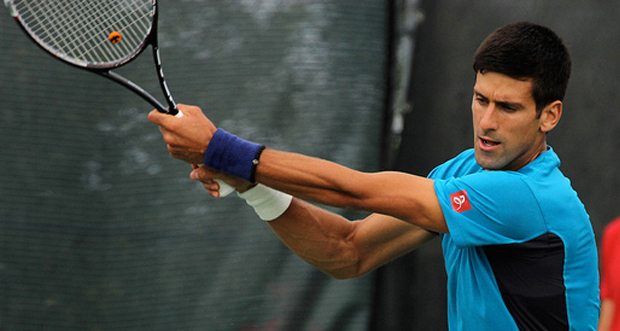
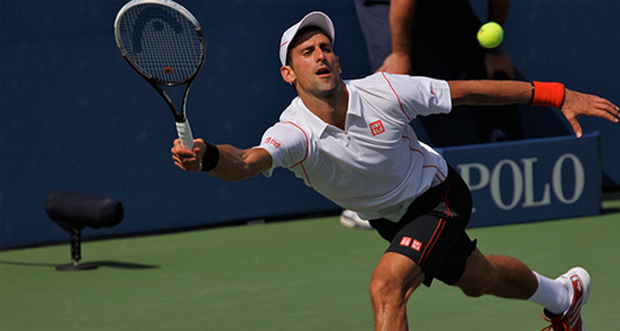
    Novak Djokovic has won the Shanghai Rolex Masters by defeating Juan Martin Del Potro 6-1, 3-6, 7-6 (3) in a close final played out over 2 hours and 32 minutes.

    Djokovic was in full command throughout the opening stanza, breaking the Argentine twice en route to grabbing the first set 6-1.

    Del Potro, the conqueror of World No. 1 Rafael Nadal in the semifinals, began to find his rhythm in the second set and dictated early proceedings behind his monstrous forehand. He broke Djokovic and held on to level the match.

    In a hard fought final set decider that went all the way to a tiebreak, Djokovic finally pulled clear to seize opportunities in the breaker to win 7-3 and wrap up the match.

    Djokovic has now won 20 consecutive matches in China, having won the 2012-2013 Beijing titles, and the 2012-2013 Shanghai trophies. He extended his personal head-to-head record with Del Potro to 10-3.

    Doubles

    Ivan Dodig and Marcelo Melo won the mens doubles defeating David Marrero and Fernando Verdasco 7-6, 6-7, (10-2).  It rounded off an impressive week for the pair who also defeated the top ranked Bryan brothers in the semifinals.

    [divider]

    Discuss the Shanghai Open in the Tennis Frontier Forums.

    [divider]

    Cover Photo: Marianne Bevis, Creative Commons License

  • Djokovic Wins Beijing, but Nadal Regains No. 1 Ranking

    Djokovic Wins Beijing, but Nadal Regains No. 1 Ranking

    Novak Djokovic lost his spot atop the ATP World Rankings, but played a nearly flawless match to beat Rafael Nadal for the title in China, his fourth, 6-3, 6-4.   He broke the Spaniard at the start of both sets, and never dropped his own serve.

    Nadal, however, will retake the No. 1 slot when the rankings come out on Monday.  This is his third climb to the top, since he lost it to Djokovic in July of 2011, and caps off an amazing return-from-injury season, when he came back at No. 5, his lowest ranking since 2005.

    Most weeks at No. 1:

    Roger Federer – 302

    Pete Sampras – 286

    Ivan Lendl – 270

    Jimmy Connors – 268

    John McEnroe – 170

    Bjorn Borg – 109

    Rafael Nadal – 102 (103, as of tomorrow)

    Andre Agassi – 101

    Novak Djokovic – 101

    Lleyton Hewitt – 80

    [divider]

    Juan Martin Del Potro beat Milos Raonic to take the Rakuten Open in Tokyo, his third title of the year, and 16th career trophy. The win raises his ranking to #5.

    Credits: Cover Photo: Marianne Bevis (Creative Commons License)

  • Imagine That

    Imagine That

    US Open, Second Round Recap

    The second round of this year’s US Open is now complete, which, until tonight, was about all that usefully could be said about it. There was plenty being said, of course, but little of it was specifically about tennis. It’s always revealing when the controversy centres around those parts of the tournament that don’t involve players hitting balls at each other. Often it reveals that there’s not enough transpiring on court. What is it they say about devilry and idle hands?

    For some among the idle-handed this has provided further opportunity to wax righteous on Andy Murray’s behalf. It has been another wearying reminder that burning indignation is a bad state for weak writers to find themselves in, made worse by the fact that for too many of them it is also their default state. In any case, justifiable concern at Murray’s very late first round finish has given way to disgruntlement at his second round relegation to Louis Armstrong Stadium. Rightly or wrongly, placement on the second court was held to be a slight on the defending champion’s status. Murray himself has previously made his distaste for the venue plain. That’s fair enough – he doesn’t have to like it.

    More problematic, apparently, was that by playing third today his match wouldn’t see completion before deadlines expired for the attendant British press corps. The USTA was taken to task for this oversight, most notably by Neil Harman of The Times. Some responded that it isn’t the job of the US Open to worry on behalf of the English press. It was pointed out in turn that with newspaper revenues collapsing it was incumbent upon premium events such as this to ensure that newsprint journalists are given every advantage. While I certainly agree that the death of print journalism is deplorable, I’m not convinced it is the task of tennis tournaments to nurse it along more than they already do. Print outlets are already given preference over online interests, including priority seating for late round matches with limited capacity. Print journalists are often the keenest advocates for the suppression of interview transcripts.

    Amidst all this, it’s worth remembering than Murray did actually win today in four sets over a surprisingly gallant Leonardo Mayer. Ivan Lendl is doubtless earning his salary by ensuring his man isn’t distracted by all this subsidiary nonsense, although I don’t doubt he’ll have some stern words about today’s third set letdown.

    Of course, the United States has its own issues on the home front. The enemy is within the gates. Many of them were in the Louis Armstrong Stadium crowd last night, watching John Isner play Gael Monfils. Television viewers were presented with the unusual spectacle of an American crowd showing vociferous support for a guy who wasn’t born in the same country as them, as opposed to the guy who was. Much has been made of this; rather too much, in fact. It was no coincidence that Monfils, who is immensely popular everywhere – except, often, with his own fans –gained favour when he picked up his game while trailing by two sets to love. This change in sympathy was briefly noted on Eurosport, afterwards regretted by Isner himself, and dissected exhaustively on ESPN. Really, the crowd just wanted a few more sets, and appreciated the things Monfils was doing with his body and the tennis ball. He still couldn’t serve, and Isner often did little else, but it nonetheless transformed into a very entertaining match. The crowd got its wish, which I suspect always included eventual victory for Isner. The American was afterwards equally lavish in praising his opponent.

    In other results, both Roger Federer and Rafael Nadal were  imperious and utterly untroubled against Carlos Berlocq and Rogerio Dutra Silva, respectively. There’s a real chance they will actually meet in the quarterfinals, although it’s possible they’re just lulling us into complacency. Stan Wawrinka started slowly against Ivo Karlovic, but was quite excellent once he regained the break in the first set. Novak Djokovic also took an age to get going, and almost dropped the first set to Benjamin BeckerMarcos Baghdatis, on the other hand, began superbly and stayed that way until the end against Kevin Anderson. For all we know Baghdatis’s brilliance didn’t abate once he left the court. His momentum was such that he’s probably doing a first-rate job with his dinner even as I write, delivering bon mots that have the table on a roar.

    Dan Evans’s excellent New York adventure continues. He beat Bernard Tomic quite comfortably to reach the third round, although his understandable elation at this accomplishment was tempered by the sobering discovery that the result came too late for British print deadlines. For his part, Tomic was typically frank in assessing his own shortcomings: “I think I get lazy on the court, my tennis sort of comes a bit slow. I don’t really know how to put guys away.” I imagine a proper coach could help with that. No one is sure where Tomic’s game is, but his capacity to make the right noises after losses has nearly matched Ryan Harrison’s.

    The delightfully articulate Dmitry Tursunov remains a fine advertisement for the sport, and for my powers of prescience: I suggested he’d be the one to emerge from David Ferrer’s quarter, and he has now reached the third round. Even if he somehow loses to the eighth seeded Richard Gasquet, I still get to be half-right. Meanwhile, Tommy Haas moved another round closer to a return to the Top 10, defeating Yen-Hsun Lu in straight sets. As far as I can tell he’ll need to reach the quarterfinals at least, which means he’ll have to beat Mikhail Youzhny in the next round, unquestionably the pick of the round.

    Lleyton Hewitt tonight recovered from two sets to one down to defeat Juan Martin del Potro in five sets on Arthur Ashe Stadium, entirely justifying the primetime scheduling. Del Potro has notoriously never recovered from a two set deficit, and for a time appeared fortunate that he didn’t have to put that record to the test. The Australian led by a set, and served for the second at 5-4, but didn’t acquit himself well on either of the set points he gained. The Argentine broke back, broke again to take the set, then again to open the third. He took the third, and then emphatically failed to gallop away with the fourth. Instead Hewitt pressed, and broke again. Again he failed to serve out the set. Del Potro, capricious in his way, defied every assumption that he’d again make Hewitt pay once more. The tiebreaker was all Hewitt, except for the errors, which were all del Potro’s. From there Hewitt went on with it, and broke three times in the final set, which ended with a double fault.

    It was a strange match, the type of upset that resists easy categorisation. The quality varied immensely, especially from del Potro, whose left wrist inhibited his backhand, and who sometimes grew oddly fearful when he wasn’t behind. Still, the overall inconsistency of momentum guaranteed consistency of drama, further heightened by the occasion and the venue, and only slightly marred by the heroic sequence of toilet breaks enjoyed by both men. Hewitt is fond of saying that it is for occasions such as these that he still plays, even if he is earning fewer opportunities to say it as the years advance. It is his first victory over a Top 10 opponent in over three years. Whether he’ll go on with it is a nice question, although even wearied he must fancy his chances against Evgeny Donskoy in the next round. After that he might face Haas. In the fourth round of a Major. In 2013. Imagine that.

  • US Open Day 3 Schedule of Play / Scores: Wednesday, August 28

    US Open Day 3 Schedule of Play / Scores: Wednesday, August 28

    [Scores added as known.]

    Arthur Ashe Stadium – 11:00 A.M.

    Women’s Singles – Round 2
    Na Li (CHN) (5) d. Sofia Arvidsson (SWE) — 6-2, 6-2

    Not Before: 1:00 P.M.

    Men’s Singles – Round 1
    Juan Martin Del Potro (ARG) (6) d. Guillermo Garcia-Lopez (ESP) — 6-3, 6-7(5), 6-4, 7-6(7)

    Women’s Singles – Round 2
    Serena Williams (USA) (1) vs. Galina Voskoboeva (KAZ) — Canceled

    Not Before 7:00 P.M.

    Men’s Singles – Round 1
    Andy Murray (GBR) (3) d. Michael Llodra (FRA) — 6-2, 6-4, 6-3

    Women’s Singles – Round 2
    Sloane Stephens (USA) (15) d. Urszula Radwanska (POL) — 6-1, 6-1

    [divider]

    Click here to discuss the Men’s matches in our discussion forum.

    Click here to discuss the Women’s matches in our discussion forum.

    [divider]

    Louis Armstrong Stadium – 11:00 A.M.

    Women’s Singles – Round 2
    Agnieszka Radwanska (POL) (3) d. Maria-Teresa Torro-Flor (ESP) — 6-0, 7-5

    Not Before: 1:00 P.M.

    Women’s Singles – Round 2
    Jie Zheng (CHN) d. Venus Williams (USA) — 6-3, 2-6, 7-6(5)

    Men’s Singles – Round 1
    Ivo Karlovic (CRO) d. James Blake (USA) — 6-7(2), 3-6, 6-4, 7-6(2), 7-6(2)

    [divider]

    Grandstand — 11:00 A.M.

    Men’s Singles – Round 1
    Kevin Anderson (RSA) (17) d. Daniel Brands (GER) — 7-5, 4-6, 6-2, 6-3

    Men’s Singles – Round 1
    Lleyton Hewitt (AUS) d. Brian Baker (USA) — 6-3, 4-6, 6-3, 6-4

    Women’s Singles – Round 2
    Jamie Hampton (USA) (23) d. Kristina Mladenovic (FRA) — 7-5, 6-4

    Women’s Singles – Round 2
    Angelique Kerber (GER) (8) vs. Eugenie Bouchard (CAN) — Canceled

    [divider]

    Court 17 — 11:00 A.M.

    Women’s Singles – Round 2
    Carla Suarez Navarro (ESP) (18) d. Coco Vandeweghe (USA) — 6-3, 6-4

    Men’s Singles – Round 1
    Tim Smyczek (USA) d. James Duckworth (AUS) — 3-6, 6-2, 6-4, 6-1

    Men’s Singles – Round 1
    Rajeev Ram (USA) d. Fabio Fognini (ITA) (16) — 6-1, 6-2, 6-2

    Women’s Doubles – Round 1
    Sara Errani (ITA) (1) / Roberta Vinci (ITA) (1) vs. Daniela Hantuchova (SVK) / Martina Hingis (SUI) — Canceled

    [divider]

    Court 13 — 11:00 A.M.

    Men’s Singles – Round 1
    Somdev Devvarman (IND) d. Lukas Lacko (SVK) — 4-6, 6-1, 6-2, 4-6, 6-4

    Men’s Singles – Round 1
    Alex Bogomolov Jr. (RUS) d. Benoit Paire (FRA) (24) — 7-5, 2-6, 6-4, 5-7, 7-6(5)

    Women’s Singles – Round 2
    Ekaterina Makarova (RUS) (24) vs. Bethanie Mattek-Sands (USA) — Canceled

    Women’s Singles – Round 2
    Jelena Jankovic (SRB) (9) vs. Alisa Kleybanova (RUS) — Canceled

    [divider]

    Court 11 — 11:00 A.M.

    Men’s Singles – Round 1
    Marcos Baghdatis (CYP) d. Go Soeda (JPN) — 6-4, 6-3, 6-1

    Women’s Singles – Round 2
    Laura Robson (GBR) (30) d. Caroline Garcia (FRA) — 6-4, 7-6(5)

    Men’s Singles – Round 1
    Stanislas Wawrinka (SUI) (9) d. Radek Stepanek (CZE) — 7-6(2), 6-3, 6-2

    Women’s Singles – Round 2
    Sabine Lisicki (GER) (16) vs. Paula Ormaechea (ARG) — Canceled

    Women’s Singles – Round 2
    Sorana Cirstea (ROU) (19) vs. Kurumi Nara (JPN) — Canceled

    [divider]

    Court 4 — 11:00 A.M.

    Men’s Singles – Round 1
    Mikhail Youzhny (RUS) (21) d. Nicolas Mahut (FRA) — 6-4, 6-4, 7-6(4)

    Men’s Singles – Round 1
    Peter Gojowczyk (GER) d. Igor Sijsling (NED) — 7-6(7), 2-6, 6-4, 6-1

    Women’s Singles – Round 2
    Kaia Kanepi (EST) (25) vs. Anna Schmiedlova (SVK) — Canceled

    Women’s Singles – Round 2
    Yaroslava Shvedova (KAZ) vs. Patricia Mayr-Achleitner (AUT) — Canceled

    [divider]

    Court 6 — 11:00 A.M.

    Men’s Singles – Round 1
    Alexandr Dolgopolov (UKR) d. David Goffin (BEL) — 6-2, 6-4, 6-4

    Men’s Singles – Round 1
    Leonardo Mayer (ARG) d. Victor Hanescu (ROU) — 7-6(4), 6-4, 3-6, 7-6(4)

    Men’s Doubles – Round 1
    Rohan Bopanna (IND) (6) / Edouard Roger-Vasselin (FRA) (6) vs. Bradley Klahn (USA) / Sam Querrey (USA) — Canceled

    Women’s Doubles – Round 1
    Vania King (USA) / Magdalena Rybarikova (SVK) vs. Karolina Pliskova (CZE) / Donna Vekic (CRO) — Canceled

    [divider]

    Court 7 — 11:00 A.M.

    Women’s Singles – Round 2
    Anastasia Pavlyuchenkova (RUS) (32) d. Ashleigh Barty (AUS) — 6-4, 6-0

    Men’s Singles – Round 1
    Andreas Seppi (ITA) (20) d. Xavier Malisse (BEL) — 6-3, 3-6, 7-5, 7-5

    Mixed Doubles – Round 1
    Anna-Lena Groenefeld (GER) (1) / Alexander Peya (AUT) (1) vs. Ashleigh Barty (AUS) / John Peers (AUS) — Canceled

    [divider]

    Court 8 — 11:00 A.M.

    Women’s Doubles – Round 1
    Liezel Huber (USA) (9) / Nuria Llagostera Vives (ESP) (9) d. Nina Bratchikova (RUS) / Bojana Jovanovski (SRB) — 6-1, 6-1

    Women’s Doubles – Round 1
    Kiki Bertens (NED) / Johanna Larsson (SWE) d. Shelby Rogers (USA) / Maria Sanchez (USA) — 7-5, 6-4

    Men’s Singles – Round 1
    Marcel Granollers (ESP) d. Jurgen Zopp (EST) — 6-1, 3-6, 1-6, 6-3, 6-4

    Women’s Doubles – Round 1
    Melanie Oudin (USA) / Alison Riske (USA) vs. Lauren Davis (USA) / Grace Min (USA) — Canceled

    [divider]

    Court 9 — 11:00 A.M.

    Men’s Doubles – Round 1
    Albert Montanes (ESP) / Tommy Robredo (ESP) d. Frantisek Cermak (CZE) (15) / Filip Polasek (SVK) (15) — 6-4, 6-0

    Women’s Doubles – Round 1
    Katalin Marosi (HUN) / Megan Moulton-Levy (USA) d. Irina-Camelia Begu (ROU) / Klara Zakopalova (CZE) — 6-3, 7-6(4)

    Women’s Doubles – Round 1
    Su-Wei Hsieh (TPE) (4) / Shuai Peng (CHN) (4) vs. Eleni Daniilidou (GRE) / Alexandra Panova (RUS) — Canceled

    Men’s Doubles – Round 1
    Ryan Harrison (USA) / Robert Lindstedt (SWE) vs. Steve Johnson (USA) / Michael Russell (USA) — Canceled

    [divider]

    Court 10 — 11:00 A.M.

    Men’s Doubles – Round 1
    Colin Fleming (GBR) (12) / Jonathan Marray (GBR) (12) d. Carlos Berlocq (ARG) / Eduardo Schwank (ARG) — 4-6, 6-3, 6-4

    Men’s Singles – Round 1
    Evgeny Donskoy (RUS) d. Jurgen Melzer (AUT) (29) — 7-5, 6-3, 7-6(3)

    Mixed Doubles – Round 1
    Victoria Duval (USA) / Donald Young (USA) vs. Raquel Kops-Jones (USA) / Treat Huey (PHI) — Canceled

    Women’s Doubles – Round 1
    Sharon Fichman (CAN) / Aleksandra Wozniak (CAN) vs. Allie Kiick (USA) / Sachia Vickery (USA) — Canceled

    Women’s Doubles – Round 1
    Alexandra Cadantu (ROU) / Simona Halep (ROU) vs. Jill Craybas (USA) / Coco Vandeweghe (USA) — Canceled

    Women’s Doubles – Round 1
    Petra Martic (CRO) / Andrea Petkovic (GER) vs. Polona Hercog (SLO) / Lisa Raymond (USA) — Canceled

    [divider]

    Court 14 — 11:00 A.M.

    Mixed Doubles – Round 1
    Kveta Peschke (CZE) (4) / Marcin Matkowski (POL) (4) d. Anastasia Rodionova (AUS) / Mariusz Fyrstenberg (POL) — 6-2, 2-6, 10-8

    Women’s Doubles – Round 1
    Nadia Petrova (RUS) (3) / Katarina Srebotnik (SLO) (3) d. Elina Svitolina (UKR) / Renata Voracova (CZE) — 6-2, 6-4

    Men’s Doubles – Round 1
    Roberto Bautista Agut (ESP) / Daniel Gimeno-Traver (ESP) vs. Florin Mergea (ROU) / Lukas Rosol (CZE) — Canceled

    Women’s Doubles – Round 1
    Julia Goerges (GER) (12) / Barbora Zahlavova Strycova (CZE) (12) vs. Olga Govortsova (BLR) / Mandy Minella (LUX) — Canceled

    Women’s Doubles – Round 1
    Ekaterina Makarova (RUS) (2) / Elena Vesnina (RUS) (2) vs. Shuko Aoyama (JPN) / Chanelle Scheepers (RSA) — Canceled

    [divider]

    Court 15 — 11:00 A.M.

    Mixed Doubles – Round 1
    Kimiko Date-Krumm (JPN) / David Marrero (ESP) d. Saisai Zheng (CHN) / Lukas Dlouhy (CZE) — 2-6, 6-0, 10-4

    Men’s Doubles – Round 1
    Nikolay Davydenko (RUS) / Mikhail Elgin (RUS) d. Marinko Matosevic (AUS) / Grega Zemlja (SLO) — 1-6, 6-3, 6-2

    Men’s Doubles – Round 1
    Santiago Gonzalez (MEX) (11) / Scott Lipsky (USA) (11) vs. Jonathan Erlich (ISR) / Andy Ram (ISR) — Canceled

    Women’s Doubles – Round 1
    Anastasia Pavlyuchenkova (RUS) (11) / Lucie Safarova (CZE) (11) vs. Dominika Cibulkova (SVK) / Monica Niculescu (ROU) — Canceled

    Men’s Doubles – Round 1
    Austin Krajicek (USA) / Denis Kudla (USA) vs. Martin Klizan (SVK) / Michal Mertinak (SVK) — Canceled

    [divider]

    Court 16 — 11:00 A.M.

    Men’s Doubles – Round 1
    Pablo Cuevas (URU) / Horacio Zeballos (ARG) d. Max Mirnyi (BLR) (13) / Horia Tecau (ROU) (13) — 6-2, 7-5

    Women’s Doubles – Round 1
    Mona Barthel (GER) / Liga Dekmeijere (LAT) d. Alexandra Dulgheru (ROU) / Eva Hrdinova (CZE) — 6-3, 6-4

    Men’s Doubles – Round 1
    Jaroslav Levinsky (CZE) / Jiri Vesely (CZE) vs. Lucas Arnold Ker (ARG) / Juan Monaco (ARG) — Canceled

    Women’s Doubles – Round 1
    Vera Dushevina (RUS) / Heather Watson (GBR) vs. Sandra Klemenschits (AUT) / Andreja Klepac (SLO) — Canceled

    Men’s Doubles – Round 1
    Pablo Andujar (ESP) / Guillermo Garcia-Lopez (ESP) vs. Christopher Kas (GER) / Oliver Marach (AUT) — Canceled
    Credits: Cover Photo: jpellgen (Creative Commons License)

  • Cincinnati Western & Southern ATP/WTA Semifinals: Saturday, August 17

    Cincinnati Western & Southern ATP/WTA Semifinals: Saturday, August 17

    [Scores added as known.]

    Center Court – Start 1:00 P.M.

    John Isner (USA) d (7) Juan Martin Del Potro (ARG) — 6-7(5), 7-6(9), 6-3

    Not Before 2:30 P.M.
    (4) Rafael Nadal (ESP) d (6) Tomas Berdych (CZE) — 7-5, 7-6(4)

    Not Before 7:00 P.M.
    (1) Serena Williams (USA) d (5) Na Li (CHN) — 7-5, 7-5
    (2) Victoria Azarenka (BLR) d (14) Jelena Jankovic (SRB) — 4-6, 6-2, 6-3

    [divider]

    Grandstand – Start 3:00 P.M.

    (2) Marcel Granollers (ESP) / Marc Lopez (ESP) d (8) Rohan Bopanna (IND) / Edouard Roger-Vasselin (FRA) — 7-5, 6-2

    Not Before 4:30 P.M.
    (1) Bob Bryan (USA) / Mike Bryan (USA) d Santiago Gonzalez (MEX) / Scott Lipsky (USA) — 4-6, 7-6(6), 10-6

    [divider]

    Click here to discuss the Nadal/Berdych semifinal in our discussion forum.

    Click here to discuss the Del Potro/Isner semifinal in our discussion forum.

    Click here to discuss the Serena Williams/Li Na semifinal in our discussion forum.

    Click here to discuss the Azarenka/Jankovic semifinal in our discussion forum.

  • Del Potro: “I Dream More About Football than About Tennis” (From: La Nacion)

    Del Potro: “I Dream More About Football than About Tennis” (From: La Nacion)

    Juan Martin Del Potro in a feature interview from La Nacion Revista.

    [divider]

    He still believes that his destiny was to be a soccer player, not a tennis player.  Although he travels the world, he always comes back to Tandil, to his parents’ home, where his childhood bedroom is exactly the same.  At 24, the Argentinian tennis #1 is still just a big boy.

    [divider]

    Translated from: “Sueño más con el fútbol que con el tenis” (La Nacion, August 11, 2013)

    [divider]

    Click here to discuss Juan Martin del Potro with fellow tennis fans in our discussion forum.

    [divider]

    Juan Martin Del Potro doesn’t lean over to shake your hand, he bends in half.  He’s 24 now, but it’s been that way for some time.  As a kid, when he played football in Tandil, parents of kids from the other team would demand his birth certificate, as of that of another teammate, because they hit the ball so hard, scored goals, and showed up so many other players.

    The Tennis Club Argentina is behind the Planetarium, just past that giant scoop of metallic ice cream.  The winter sun hits the white chairs in the ‘incubator’ of a main hall to blinding effect.  Coming off a court in the far distance, a man appears surrounded by a bunch of boys.  They head toward the ‘incubator.’

    “Hello.  Can you wait while I take a shower?” Juan Martin Del Potro asks from somewhere near the top of his 6’6″ height.

    The “boys” are adults and children, [it turns out.]  Some stood no taller than his elbow.  None higher than his shoulder.

    Certainly, Juan was good at football.  Playing for Independiente de Tandil, at 9, at 11, sometimes at 8 or 5, but always in front, on the attack. [Translator note:  I don’t understand enough about football to know what that means, so it’s a literal translation.]  He played a two-man offense with a  much smaller, but talented and fast teammate.  Like Guillermo-Palermo at their best, he remembered.  Once, arriving at the club early to practice and needing to do something to kill time, he picked up a racquet.  Tennis was, at that time, just a way to pass the time when he couldn’t do what he wanted to do, which was play football.

    When he was 12, there was a South American tennis tournament and a football national to be played at the same time.

    “But in Córdoba.  The tennis one was in Brazil, and I’d never flown in an airplane.  I went on the plane, and went for tennis,” he said.

    * What do you remember about that first trip?

    “I got the last seat.  There were 3 or 4 of us traveling together.  It was my first plane ride.  I really didn’t know what to expect.  For me, to be flying and to be able to see everything from above was the most impressive thing.  The noise of the engines, to look out onto the wing, that was spectacular.”

    He won the tournament.  And he was awarded the prize for best player in South America.  His coaches went crazy and spoke to his parents, because they all believed he had a better chance going with football than shooting for a tennis career.  It was coming time to decide because Juan was going into high school playing both.

    Then it became clear.

    At 16, he shot up in size: his muscles and his arms grew at such a rate it made him awkward.  He says that in football it was a disaster; in tennis [less so.]  He wondered what was happening.  His adolescent body was betraying him.

    In 2008, Del Potro was 19 and he won 4 tournaments in a row.  He played for Argentina in the Davis Cup final [against Spain] – (he had won the 5th tie in the semifinal against Russia, after Nalbandian, surprisingly, lost the 4th.)

    He was a kid reaching for the stars.  Also, a teenager with a fresh mouth:  “We’re going to take Nadal’s underpants out of his ass,” which he later apologized for.  The final came like good movie-popcorn: covered in caramel, but also with unpopped kernels, the kind that break your teeth:  Nalbandian – Del Potro.  Eyes were cut at Juan Martin because he chose to play hurt in Shanghai, a week before the final against Spain.

    And we lost.  In Mar del Plata.  Del Potro lost a tie, and then insisted that he couldn’t play another because of injury.

    A year later, he won the final of the US Open by defeating Roger Federer and found himself in the top 4 of the world rankings.

    * The injury to the wrist; that says it all.  Did it take away your drive to play tennis?

    “The truth is, yes.  I was injured, sad, went through several months without a diagnosis, going from doctor to doctor.  In the end, a lot of things were said that weren’t true. (Ed.: That he had tested positive for doping.)  Everything they said was too much.  After 3 months, I went – I don’t know.

    “I had just won the US Open, just gotten to #4 in the world, everything was in place to push to be #1 and suddenly, a situation I couldn’t have imagined.  But, OK, I hit a big bump in the road, and it has not only helped my tennis, but my life.  I’ve realized who is important to me and who isn’t.  My heart friends, my family, my team – the ones who care about Juan as a person.  In what we do, it’s hard to have your feet on the ground and realize that at the same time.  It’s like you’re on automatic pilot and everything goes by really fast.  Franco [Davin, his coach], Martiniano [Orazi, his physio], and my doctor went almost a year without working.  But they stayed with me…I value that hugely.  Now, we’re more united on a human level than a professional one.

    He was supported by family, friends, trainers, and the doctor who finally operated on him.  He didn’t [go into therapy].  He was sure that guidance came from above and that he would play tennis again.

    “There were days I woke up and thought: ‘What if I never pick up a racquet again?’  In those moments I appreciated my Mamá, who insisted that I finish high school, so that I still had other options.

    “Other options” would have been architecture.  “Mamá” is Patricia, literature professor, and “Papá” is Daniel, a veterinarian.  But not the [precious city-variety]:  Juan was born in Tandil, and the animals don’t get around much on sidewalks.  Following his dad in his work, which he did, meant going into the countryside.

    * When you say you’re guided from above, do you mean your sister?” (Ed. She died in an accident.)

    “Yes, her, and God.  My sister is very important to me.  I give her a gift in every match, the signal.  My family and me, we don’t like to talk about this, but it’s very special.  I know that she looks after me and guides me, and this gives me strength.”

    Aside from his astonishing height, there are other things that are difficult to comprehend.  How can he be 24-years-old and a Springsteen fanatic?  Franco Davin, his coach, is standing 6 feet away, against a fence.  He’s talking to another man the way that men talk imperfections in a car.  One always has a hand on the roof, the other is watching the whole thing with complete concentration.

    Davin made him a Springsteen fan, showing him a DVD of a live concert one night during a tournament.  Dinner, DVD: match won.  Next day, same: match won.  And again.  Juan bought the DVD, and then another.  And then he went to Wembley to see him live.

    “I stood in line and everything.  Fantastic.  I groove on his music.”

    Some of his expressions seem outdated – “I groove on his music” — and others seem out of his reach. He often says he’d like to do the things that a 24-year-old does.  The fact that he has no girlfriend hangs in the air.  He’s not in a hurry to talk about it.  As when asked if libido gets in the way of the most important thing: friends.

    He brings friends up every three questions.  For example, Ramiro…is waiting for the interview to be over so they can drink mate together.  Like Juan he’s waiting to do things that aren’t allowed because he’s a professional athlete.

    “I eat a lot of chocolate.  And cake, and ice cream.  Not so much dark chocolate, but white, and ‘chocolate en rama,’” [an Argentinian specialty] he says, and seems to be eating it in his imagination.  “My favorite dessert is chocolate mousse.  My mother’s is delicious.  My grandmother’s, too.  I can eat it now, but not very often.”

    * How do you explain to others what it means to be Argentinian? How can you explain Del Potro – Davis Cup?

    I understand the people here.  I know it’s hard to make everyone happy with what I decide.  I’ve been playing Davis Cup since I was 17, and I love it.  But, hey, this year was a really complicated decision.  I felt that this was an opportunity to try other things, look towards other goals, knowing that some would not agree with my decision, while others would.  There are a lot of people who would like to see someone try to be the #1, which Argentina has never had, and others who would like to see us win Davis Cup.  It was a difficult choice to make, but it was very considered and I’m confident in it.  It might turn out well, it might not.  As to the public, I can only be grateful.  In the streets, in the club, in Tandil, they’re all fantastic to me.

    * But in the end, isn’t Del Potro and the Davis Cup “a thing?”

    “Anyone can say anything when they aren’t talking to you face-to-face, just via social media.  I’m not against it, but here everyone wants an opinion about everything.  That’s how we are.  I love being Argentinian, I love our way of life, we are very passionate.  When I go to a tournament abroad, I don’t want to say that others exactly envy us, but they do say they wish they had our ‘style.’  Recently, at Wimbledon, I was treated like a local, which seemed crazy, against the world #1. (Ed. speaking of the semifinal, which he lost against Djokovic.)  They give me a hard time, they wonder if it bothers me, this ‘Del Po, Del Pooo’ on the courts.  I love it.  I don’t find it ill-intended, on the contrary, I feel there are increasingly more fans who back me, who cheer me on in really nice ways.  But I know that I will come back (to play Davis Cup.)”

    The sports pages say that he is 7th in the ATP rankings.   In the chat forums, there is no doubt he is one of the ten best in the world.  At the top, Djokovic, Murray, Ferrer, Nadal, Federer, Berdych; on the lower part, Tsonga, Gasquet, Wawrinka.  All Europeans.  Del Potro is Argentine and he lives here, at the end of the world.

    “They travel from one tournament to another in an hour, and I have to fly 14 or 20 hours.”

    * So why don’t you live abroad?

    “Thing is, I like living here.  I get a lot of energy from being with friends and family.  And, these are choices.  That said, when I go to the US, I spend a little more time and avoid other trips.  But still, they [Europeans] have a big advantage in terms of rest and preparation.”

    * You were a great fan of Dragon Ball Z…

    “Absolutely! It was my favorite cartoon. Along with El Charo, it was the one I watched the most.  We’d go straight from school to watch Dragon Ball.  I even kept an album of the characters.”

    * If you were Goku, who is Freezer or Cell?

    “There was one called Kiri? (Ed. Kirilm)…what was it?” He asks Ramiro, who doesn’t know.  “But he was Goku’s best friend.  I don’t remember the enemy.  But tennis players, in terms of actual enemies, we don’t have them.”

    * Well, there are irritations. I can think of one…

    “The one you’re thinking of isn’t.  I don’t know who it is, but he isn’t …” – smiles – “… but if you’re saying that Goku is going to fight against his arch enemy and have a great battle, would it be Nadal?” (Silent pause.)  “Or Djokovic?  Or Murray?”

    He gave Djokovic a Boca jersey, and one to Federer, and it seems to him that Tsonga is also “Boca,” though only because Tsonga said, “Boca is very well known.”  When they have tough matches, or when they are losing, or both, Del Potro is thinking of Boca.  Of playing for Boca.  And he thinks it helps them.  And he dreams of Boca.

    “I dream much more about football than of tennis.  I dream about the players, of making goals, of La Bombonera.  [Boca Juniors’ stadium.]  Whatever.  I can spend all night talking about anything. The other night we did, talking about Disney.  All night talking about it, with friends coming and going.  The next day I dreamt that I was Pluto, totally in costume.  Totally, the whole thing.”  (Laughs.)

    He doesn’t think about retiring.  If one day he won’t play tennis anymore, and gets over his football ambitions, he wants to play the game of life, not Del Potro vs The Field, armed as a tennis warrior – he’ll go back to live in Tandil.

    But that will be a very long time from now.

    For now, when he’s in Buenos Aires, he lives alone in his apartment.  When he goes to Tandil, though, it’s different.

    “My mother is there, and she’ll say, ‘Juan, come eat!’ and I no longer have my moments alone.  I go back to feeling like a kid, when I lived with them.”

    * Do you sleep in your old room?

    “Yes.”

    * Is it still the same?

    “Completely.  My little Boca bear that I’ve had since I was 4 years old is right next to my bed.”

  • Milos Raonic Admits He Touched the Net During Del Potro Match

    Milos Raonic Admits He Touched the Net During Del Potro Match

    After dropping the first set, it looked like Juan Martin Del Potro was cruising to the end of a hard-earned second set in order to force a third, against the Canadian Milos Raonic at the Rogers Cup, on Thursday night in Montreal. But while serving up a break at 4-3, Raonic rushed to the net to put away the ball with a forehand when his foot hit the net before the point was officially over.

    The chair umpire said he didn’t see it, so the point was awarded to the Canadian. A visibly upset Del Potro got into an argument with the umpire, who admitted he made a mistake after watching the replay on the stadium’s big screen.

    Del Potro never won another point. His serve was broken, then Raonic served it out, winning the match 7-5, 6-4.

    After the match, the Canadian was asked by the press whether or not he should have called himself on it, and said, “It’s a big point. If you can put somebody in that situation being down break point, same thing happens do you call it on yourself?”

    When a reporter told him the point was Del Potro’s, Raonic replied, “Hypothetically yes, technically no.”

    [divider]

    Click here to discuss the Milos Raonic/Del Potro incident with fellow tennis fans in our discussion forum.

  • Juan Martin Del Potro Beats John Isner to Win the Citi Open in Washington, DC

    Juan Martin Del Potro Beats John Isner to Win the Citi Open in Washington, DC

    Juan Martin Del Potro, the World No. 7 from Argentina, beat John Isner 3-6, 6-1, 6-2 in the final of the Citi Open in Washington, DC. It was Del Potro’s third straight title here, having also won the last two times he played, in 2008 and 2009.

    After a slow start, the Argentine quickly lost the first set in just under 20 minutes. Once the second set began, however, Del Potro was able to turn things around, handily winning that set 6-1. The third was a little more competitive, but Del Potro’s power and accuracy were too much for Isner.

    [divider]

    Click here to discuss the Juan Martin Del Potro/John Isner final with fellow tennis fans in our discussion forum.

    [divider]

  • Visual Depiction of Big Four (+2) Dominance

    Visual Depiction of Big Four (+2) Dominance

    [divider]

    Click here to discuss this with fellow tennis fans in our discussion forum.

    [divider]

    Note: I received a couple requests to post this to the blog – which I’ve neglected thus far – so I thought I’d take the opportunity to get the gears turning and post some entries. Expect more of the same – statistical analysis and historical surveys. 

    I thought it would be interesting to create a chart that depicts the levels of dominance of the “Big Four” over the last decade. With apologies to Tomas Berdych and Jo-Wilfried Tsonga, I’ve included David Ferrer and Juan Martin Del Potro to flesh it out a bit with a couple from the next tier of players.

    The graph might be a bit confusing at first but I think the key is to focus on each player’s line to see how it changes, then go to the next player, etc, and then put it all together.

    What do the numbers mean? They are the average of how many matches a player won per Slam played in a particular year. This does NOT include Slams a player didn’t enter, nor does it include qualification victories or take note of walkovers. The key is simple: 2R = 1, 3R = 2, 4R = 3, QF = 4, SF = 5, F = 6, W = 7. So, for example, Andy Murray was in the Final at the Australian Open (6), missed the French Open, and won Wimbledon (7). I am not penalizing him for missing Roland Garros as that would inaccurately reflect his actual performance, so the total of 13 is divided by 2, for an average of 6.5.
    It should go without saying that not all Slam rounds are equal, which this method implies. But this system is not an attempt to measure overall greatness via Slam results – I’ve done that in past forum posts and may resuscitate my methodology here in the future – but to look at the players relative to each other.

    So here’s the chart (click on it to make it large enough to decipher):

    20130709051732

    A few things pop out to me:

    • Notice that Andy Murray (green) is the only player to equal or improve his results from each year – his line just keeps getting better and better.
    • We can see that Roger Federer’s phase of dominance is quite clear: 2004-2009, with Rafael Nadal equaling him in 2008.
    • The downward trend for Roger and Rafa is alarming. Obviously it is skewed by their early exits in Wimbledon, but I don’t think we can discount that as an anomaly. This strongly indicates that both players are in decline – yes, Rafa as well as Roger.
    • Contrary to a view I hear occasionally, Novak in 2012-13 is not the same player he was before 2011; he isn’t quite as good as in 2011, but he’s definitely a notch above 2010 and before – at least according to his Slam results, which I think is the single most important indicator of a player’s level.
    • It is interesting to note Ferrer’s dip in 2009-2010, and then his resurgence in 2011 until the present – his best tennis so far. A rare career trajectory.
    • As for Del Potro, we can see that in 2009 he surpassed Andy and Novak and then dealt with injuries. Hopefully he can get back there, although it may be too much to expect a truly elite season (which we could define as >5, or averaging more than a SF in each Slam).

    What does this chart tell us in general? It supports what we all likely already know, that the “Fedal Era” is over and has been over for a couple years now – at least in terms of their shared dominance. It also suggests that Andy Murray – at least in 2013 thus far – is right there with Novak Djokovic. If we consider the “Fedal Era” to be 2005-2010, given the age of “Djokurray” (both 26), it seems unlikely it will last as long, but we can say it is 2011-13 so far, with possibly another year or two ahead.