Tag: jesse pentecost

  • Tracking All Those Streaks

    Tracking All Those Streaks

    Shanghai Masters, Final

    (1) Djokovic d. (6) del Potro, 6-1, 3-6, 7-6(3)

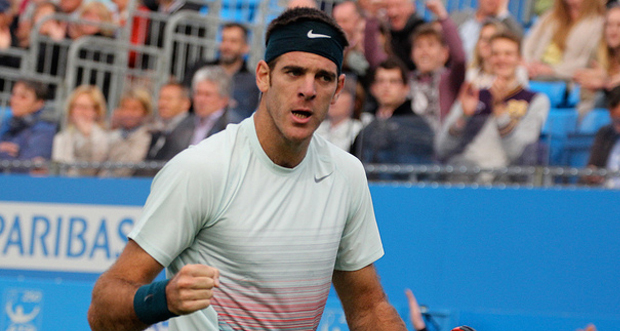
    Novak Djokovic this evening won his second straight Shanghai title, and fifteenth Masters title overall. It was also his twentieth consecutive victory in China. He was of course thrilled, though it’s tough to ascertain which particular achievement meant the most to him. Perhaps, in the moment, it was just winning this one fine match. Either way, it’s hard to quell one’s sense of scepticism when he insists that losing the No. 1 ranking has not steeled his resolve. It’s also hard not to feel sympathetic towards Juan Martin del Potro, who fell agonisingly short of claiming his first Masters title, and didn’t seem consoled by the knowledge that he’s never looked closer. His runner-up streak at this level now stands at three.

    Djokovic this week also extended his winning streak against Frenchman to twenty-eight, despite Gael Monfils’s best efforts to abbreviate it. There was also a two-game period in the first set of the first semifinal when Jo-Wilfried Tsonga looked threatening, and really showed us what he can do. He was out-rallying Djokovic from the backhand, pushing him around with his forehand, and moving beautifully. Then came a much longer stretch of games in which Tsonga demonstrated that he can’t do it often or for long enough. Thus was dispelled any  lingering mystery of why he isn’t ranked No. 1 or 2 in the world, and has yet to claim a Major.

    Djokovic, on the other hand, is ranked No. 1 or 2 in the world, and was hardly fazed by his opponent’s brief resurgence. He hasn’t lost to Tsonga in three and a half years, and learned long ago that these little spots of brilliance soon tarnish. The second set was closer – breaks were traded, lovingly – but even as a tiebreak hove gradually into view it never much felt like Tsonga would win it. As it happened, the tiebreak never arrived. Djokovic broke late, and that was that: his nineteenth straight victory in China, and eighth in a row against Tsonga. More streaks.

    I’ve no doubt various others were augmented, as well. We are living through an era in which records both grand and minor tumble every other week. It turns out there’s such a thing as milestone fatigue. It can be taxing to get too excited for the more trivial of these. Those achieved in a particular country or against citizens of a different country are about my limit. It’s conceivable that I might one day regale grandchildren with tales of where I was when, say, Jerzy Janowicz captured the calendar Grand Slam (I predict I’ll be at home debating whether I should buy some bread or just keep spooning marmalade from the jar). I haven’t yet decided whose grandchildren they will be; boring random kids will be my right as a lonely old loon in a shopping mall. Whoever they are, I doubt they’ll stand still while I explain that Djokovic went unbeaten throughout his career while facing left-handed Canadians in Paraguay.

    It’s also conceivable they won’t really care that for just the second time in 2012, Rafael Nadal failed to reach the final of an event in which he was entered. (The first time was, of course, at Wimbledon, when he fell in straight sets to Steve Darcis. Mentioning that one will surely result in stunned disbelief from all future generations, notwithstanding the carefully preserved documentary evidence.) Nadal, by his own admission, played fine, but was unlucky to run afoul of Juan Martin del Potro in truly fearsome touch. The first set in particular was astonishing from the Argentine. The second was merely very, very good. Nadal’s peculiar post-US Open record continues. Since 2005 he has claimed only one title in this part of the season, which was in Tokyo three years ago. You can bet the grandkids will hear about that.

    Del Potro no doubt extracted a healthy portion of hope from his semifinal performance, not to mention his excellent run to the Tokyo title last week. He was thus well-placed to relearn the lesson that when faced with Djokovic (in China) hope sometimes provides no more nourishment than a mouthful of ashes. Del Potro admittedly didn’t reproduce his level from the day before – faced with a superior returner he was compelled to go after more first serves, and thus missed a lot – but he was still decent. He has won plenty of matches playing worse. The difference was that the bludgeoning groundstrokes that pushed Nadal around left Djokovic unmoved, and were faultlessly redirected up the line. Twice Djokovic gained a point for the first set bagel, but didn’t take either, though he served it out in the next game.

    The change came in the second game of the next set. Djokovic has shown a tendency in those parts of the season staged outside China for his focus to waver. It would be tempting to say something similar happened here, but the issue really seemed more physical than mental. Perhaps it was spiritual. Whatever it was, suddenly Djokovic forgot how to use his feet when hitting forehands, at a very fundamental level. He was lurching all over the place, spraying balls everywhere, as though someone had spiked his magic tennis player water. “Bambi on ice” was Marcus Buckland’s apt description. This enabled del Potro to break. Improved serving helped him eventually hold for the set.

    Last year’s Shanghai final was superb for two sets, then rather faded away in the third as Andy Murray’s legs and will gave way. Today’s final, by contrast, only really got going in the third. As these things go, this is probably the more memorable configuration. Djokovic had by now untangled his feet, while del Potro continued to blast away with that forehand. Finally, the best two players of this year’s Asian swing were playing well at the same time. Break points came and went for both, and in nearly every case were saved with heroic, fearless play. Djokovic gained a couple of match points at 4-5, with del Potro serving, but wasted one with a tight return, and as punishment was obliged to hand back the other as well. The tiebreak never felt inevitable, but it arrived anyway, and once it did it felt fitting. Sadly for Argentine hopes, once it started it was almost entirely Djokovic. There seemed to be hundreds of Argentines present in the Qizhong Forest Sports City Arena, most of whom had ignored the signs at the entrance warning them to abandon all hope. It didn’t help that the signs were written in Serbian. They looked terribly disappointed, but tearfully and rightfully proud of their man, who’d made a mighty effort.

    Djokovic sealed it with a last backhand winner up the line, his 47th winner of the match, whereupon he and his opponent availed themselves of their usual hug at the net. Del Potro wandered to his chair and buried his face in his towel. Djokovic launched himself into more extravagant celebrations. Until 2012 the Shanghai Masters had never produced a great final. Now it’s threatening to become a habit. Its streak of great finals is now two, and counting. I hope you’re all keeping track. This stuff is important.
  • Those Lethal Cocktails

    Those Lethal Cocktails

    US Open, Fourth Round Recap

    A brief survey of the men’s quarterfinalists for this year’s US Open is revealing. For starters all eight men are Europeans, of whom three, naturally, are Spanish. Unsurprisingly, one of them is Swiss. Three of these men are over thirty, while the youngest is twenty-six. Unbelievably, none of these elderly Continental gents is Roger Federer.

    [divider]

    Discuss this article and more in the Tennis Frontier Forum

    [divider]

    (21) Youzhny d. Hewitt, 6-3, 3-6, 6-7(3), 6-4, 7-5

    The match of the day, and probably of the round, was the terrific dust-up between Lleyton Hewitt and Mikhail Youzhny, which stretched to five sinuous sets, the last of which was eventually won by the Russian. Hewitt led by two sets to one, and by 4-1 in the fourth. Hewitt’s mental fortitude was duly praised, or, as it happened, overpraised. Contrary to popular opinion, he was never an accomplished frontrunner, and even during his eighty weeks atop the rankings would often permit leads disastrously to slip. There have been a few players more habituated to producing monuments, but Hewitt is nearly unmatched in his capacity to make routines matches unnecessarily monumental.

    From that perilous position, Youzhny clawed back, and won the next six games, in the process taking the fourth set and moving ahead by a break early in the fifth. From there it was Hewitt’s turn, winning five of the next six, moving to 5-2. Winning a sixth game would have snared him the match, but it wasn’t to be. Youzhny surged again, broke, held, broke, and served out the match, which is an exceedingly rapid way of describing a process that was fraught, frequently brilliant, and occasionally approached genius. A quarterfinal would have been a fitting result for Hewitt, who’d performed so mightily to defeat Juan Martin del Potro a few rounds ago. Alas.

    It is equally as fitting a result for Youzhny, if not to say a surprising one. I confess, watching on as he struggled to overcome Matthew Ebden in five sets in Melbourne in January, I’d believed that Youzhny’s best days were fast receding behind him. Ebden was actually pushing him around. One should have more faith, though that’s an easy thing to misplace when an aggressive player loses confidence. Tentative where once he’d been reckless, he now appeared indecisive and error-prone, and it was easy to assume, too, he’d never regain his speed and certainty. I am pleased to be wrong, but surely not as pleased as he was today, saluting the crowd. It would’ve been nice to hear what he had to say, but instead Eurosport cut away to Barbara Schett, who was bringing her weaponised vivacity to bear on Victoria Azarenka. “You haven’t just been busy on the court, but off the court as well! I hear you’ve been involved in a photo-shoot for a campaign to help ex-smokers! Can you tell us a little bit about that?!” “Well, I’ve never smoked myself so I can’t really relate. But I do find them very inspirational.”

    (1) Djokovic d. Granollers, 6-3, 6-0, 6-0

    Sadly this lethal cocktail of bonhomie couldn’t go on indefinitely. There was live tennis to be had, though live is perhaps a misleading term, if not an ironic one, in the case of the sadly lifeless Marcel Granollers. One presumes he hadn’t held out much hope against Novak Djokovic, though he probably hoped for more than he got, or at any rate hoped that his inevitable beating might be less savage. He won only three games, all of which came in the first set, although this should not lead one to believe he was any closer to winning that set than the others. He failed to win a single point on Djokovic’s first six service games. Then he failed to win a game on his own serve for the rest of the match. Chris Bowers on Eurosport suggested that had it been a boxing match the referee would have stopped the bout. But it was a tennis match, and so Djokovic was permitted to continue pummelling Granollers for our entertainment, until the Spaniard lay unmoving on the side of the court and even his groans had ceased.

    Afterwards, Djokovic granted Brad Gilbert the brief contractually-obligated interview, thus augmenting his total time on court by about a third. The world No. 1 was typically classy, smoothly stepping around his opponent’s body, though if asked he’d no doubt subscribe to Andre Agassi’s view that one should not deny any opponent so rich a learning-experience. When quizzed about his magisterial serving stats, Djokovic took due care to praise John Isner, to scattered applause from the sparse American crowd. Realistically the assembled onlookers might have filled a less extravagant facility, but even sizeable crowds can be lost within Arthur Ashe Stadium. Presumably many of those absent had stepped out to relieve themselves or seek sustenance after the previous match, and couldn’t make it back in time. Tournament officials had by now scraped Granollers’s remains off the court, and Djokovic respectfully followed the procession up the tunnel. “He’s good, isn’t he?” asked one Eurosport commentator. “Djokovic or Brad Gilbert? Djokovic, yes,” responded the other.

    We were returned to Schett. “He was just better in every compartment!” she declared breathlessly. Apparently denied a studio of their own, she and Wilander were once more anchoring the Eurosport coverage from the grounds. Djokovic soon joined them, looking as relaxed as a man who’d just won a tennis match as easily as he had should. He summoned a sensible response when queried about Federer’s loss, and the persistent demands for the great man to retire, although he might have pointed out that the persistent demands largely consist of the media asking questions like that. He didn’t think Federer should retire. He did point out that time catches up to us all, and that younger players are always appearing, making the tour, stronger, and faster than ever. Presumably by younger players he was speaking of his own “generation”, and not the next one.

    (19) Robredo d. (7) Federer, 7-6(3), 6-3, 6-4

    He was mostly right, although it should equally be pointed out that Federer did not lose to a younger player yesterday, but to Tommy Robredo, a veteran to whom he’d never lost. In some ways this was the most telling aspect of yesterday’s upset, not least because it continues a trend that has underscored Federer’s long decline. Defining when such things begin is mostly idle folly, and would serve no special purpose even if consensus were possible. But one cannot help but think back to late 2009, when there was still a large pool of very good players who had either never beaten Federer, or at any rate hadn’t beaten him for a very long time. Prominent among this group were Nikolay Davydenko, Robin Soderling, Andy Roddick, Lleyton Hewitt, Mikhail Youzhny, David Ferrer, and Robredo. Ferrer and Youzhny are still winless, but the rest of them have since defeated Federer at least once, in every case inspiring onlookers to recycle Vitas Gerulaitis‘s venerable quip about no one beating him seventeen times in a row. The significance is that these players are all around Federer’s age. Failure to sustain his domination of them cannot be ascribed to advanced years, to being overrun by the race.

    On the other hand, Federer going undefeated against these guys for so long is probably more amazing than any eventual loss proved to be, a fact we tend to overlook. Winning streaks work the strange trick of making it seem as though constant victory is the natural way of things, or normalising what is in fact exceptional. It is a paradox of sport that although the longest streaks are the most difficult to compile, they work to make any eventual loss seem aberrant. Even sprinting along a tightrope can look easy after a while, such that one forgets it is only growing harder. Sooner or later there will be a misstep.

    These are broadly satisfactory musings, perhaps, but they don’t tell us much about any specific encounter. They don’t quite explain how Federer actually managed to lose to Robredo yesterday. The answer, I suspect, is that everyone has bad days, and sometimes they occur on a big stadium against a guy you’ve never lost to. Federer had a very bad day, bad in almost every direction at once. His movement was sluggish, his decisions were poor, his returning patchy, his serve lacked bite, and his outfit didn’t match. It was altogether a worse performance than the one that saw him lose to an inspired Sergiy Stakhovsky in Wimbledon. He was unfortunate that he had this bad day against a player as solid as Robredo, though the truth is that because the bad days are now coming more often, they’re more likely to come when it matters. Part of it is age, but I maintain that he’s mostly just short on form.

    Robredo was admittedly outstanding, but Federer was still correct in declaring that he had largely beaten himself. Robredo pulled off any number of improbable passing shots, but they wouldn’t have been possible at all if Federer hadn’t so consistently failed to put balls away into the open court, or essay approaches with greater venom. Time and again Robredo simply stood his ground. By the third set even he stopped looking surprised when Federer hit the ball straight back to him. Often these came on crucial points, such as the many break points on Robredo’s serve. Federer grabbed at handfuls of these after the first set, but could hang on to none of them, and that’s really the whole deal with break points. Similarly Robredo was dictating most of the rallies. It tells you everything about Federer’s lethargy that the Spaniard was permitted to maintain pressure from ten feet behind the baseline while maintaining high clearance over the net and rarely going for the lines. On a reasonably quick hardcourt – Federer afterward said Armstrong if anything plays faster than Ashe – this should never happen.

    But it did happen, and it does seem to be happening with gathering regularity. As with Youzhny earlier in the year, Federer looked like a temperamentally aggressive player very low on confidence, plagued with uncertainty. Even comparing them feels odd. I hold Youzhny in the highest esteem, but Federer’s career has instilled in us a belief that even when his form was off, he remained in a separate class. His bad patches were not like others, and even when he played badly he still won. Now when he plays badly, he looks like anyone else playing badly, which is to say he looks lost.