Tag: james blake

  • American Hope – Is Men’s Tennis in the US on the Rise?

    American Hope – Is Men’s Tennis in the US on the Rise?

    taylor_fritz_def_benjamin_becker_qf_memphis_12feb2016_13

    A few years ago I wrote a couple blog articles on the sad state of American tennis, one a bit more straightforward—Houston, We Have a Problem—and one a bit more mythological: American Men’s Tennis and the Cycle of Ages. At the time of those writings, August of 2013, there wasn’t a lot to be excited about.  Andy Roddick had retired and the last truly great American men’s player, Andre Agassi, had retired in 2006. The top American players at the time of the former article were (with their ages at the time in parentheses):

    14. John Isner (28)
    29. Sam Querrey (25)
    87. Jack Sock (20)
    92. Michael Russell (35)
    97. Ryan Harrison (21)
    100. James Blake (33)

    Sock and Harrison looked vaguely promising, but Harrison (now 24) continued to stagnate and is ranked #90, and Sock (now 23) slowed his development and seems to have peaked as a top 20-30 type.

    Here’s an update, the 2016 year-end top 100 Americans:
    19. John Isner (31)
    23. Jack Sock (24)
    31. Sam Querrey (29)
    33. Steve Johnson (26)
    76. Taylor Fritz (19)
    88. Donald Young (27)
    90. Ryan Harrison (24)

    As you can see, it doesn’t look much better than three years ago. Isner remains the top American and he’s just barely hanging on to a top 20 ranking. There’s a bit more meet in the middle, with four Americans in or close to the top 30, where three years ago there were only two. And there’s Fritz, who is the brightest young American player in years. On the surface it looks like Sock was only a year older but ranked similarly to Fritz, but in actuality he was almost two years older, so Fritz’s ranking is far more impressive.

    But the top 100 only tells part of the story. Let’s compare the top ranked Americans age 21 and under in 2016 with those in the year-end in 2013:

    2013
    100. Ryan Harrison (21)
    102. Jack Sock (21)
    114. Denis Kudla (21)
    306. Bjorn Fratangelo (20)
    437. Christian Harrison (19)
    476. Mitchell Krueger (19)
    573. Marcus Giron (20)
    594. Evan King (20)

    2016
    76. Taylor Fritz (19)
    105. Jared Donaldson (20)
    108. Frances Tiafoe (18)
    116. Stefan Kozlov (18)
    141. Ernesto Escebedo (20)
    198. Michael Mmoh (18)
    200. Noah Rubin (20)
    204. Reilly Opelka (19)

    I picked eight players for each to give a sense of the depth of 2016’s field. As you can see, there is much more to be excited about now than there was three years ago. Looking solely on my “Pace of Greatness” theory, Fritz and Tiafoe have already accomplished the first benchmark: ranking in the top 100 as 18-year olds. Kozlov is very close, and Mmoh has an outside chance. But the main point is that even if none of these eight players become true greats, there is a lot more talent there than in 2013.

    https://www.youtube.com/watch?v=iciaF8VryAU
    Let’s go back a bit further. Starting in the late 90s and into the early 00s, there was a talented group of young Americans: James Blake, Andy Roddick, Taylor Dent, Mardy Fish, and Robby Ginepri. Ginepri and Dent had decent but unspectacular careers: Ginepri won an ATP 500 and reached the 2005 US Open semifinal, ranking as high as #15, and Dent won four titles and ranked as high as #21. Fish was better, finishing 2011 #8 in the world and reaching several Slam quarterfinals and Masters finals, but never winning more than an ATP 250 level tournament (he won six); his career was marred and shortened by a heart condition. Roddick was a Slam winner and #1, and perhaps the player who suffered most from Roger Federer’s dominance. James Blake had some good years, peaking in his late 20s, and was probably slightly better than Fish, and thus the distance second behind Roddick among this group.

    After the group who came of age in the early 2000s, you get to players like John Isner, Sam Querrey, Brian Baker, and Donald Young. Isner is the best of the bunch, a third tier player who has spent many years in the top 20 but only just barely sniffed the top 10. Querrey is something of a disappointment, looking promising in his early 20s but stagnating; Baker never amounted to much, and the fact that I used Young as the emblematic player of the generation of players born from 1989-93 should speak volumes. I think we can safely say that the current crop of young Americans is the best such group that we’ve seen in at least fifteen years.

    Going back before Roddick’s era, the mid-to-late 90s also didn’t see much in the way of American talent, with players like Vince Spadea, Jan-Michael Gambill and Justin Gimelstob being the top ranked young Americans.  Gambill and Spadea were solid players who spent some time in the top 20, but never in the top 10 or with major titles.

    We have to go all the way back to the early 90s to find a generation of truly great young Americans. Check out the American men age 21 and under in the top 100 in 1990:

    1990
    4. Andre Agassi (20)
    5. Pete Sampras (19)
    15. Michael Chang (18)
    25. Jim Courier (20)
    27. David Wheaton (21)
    93. MaliVai Washington (21)

    Sampras and Agassi are, along with Jimmy Connors and John McEnroe, two of four truly great American men’s players of the Open Era. Jim Courier won four Slams and remains the youngest player (at age 22 years and 11 months) to have appeared in the finals of all four Slams, and was #1 for 58 weeks; Michael Chang was also a Slam winner and perennial top 10 player, with 34 titles and 7 Masters to his name. Even David Wheaton won the prestigious Grand Slam Cup title and ranked as high as #12, and Washington is known for his run at the 1996 Wimbledon (he lost to Richard Krajicek in the final). Overall we probably haven’t seen a crop of this kind of talent coming up at the same time from any country.

    In Conclusion
    Let me be clear: I am not predicting that the current crop of young Americans is on par with that group from 1990, but what I am saying is that we have to go back to 1990 to find a more promising group of Americans in terms of youth and rankings. If you go back to that 2016 21-and-under rankings list, there probably isn’t an Andre Agassi or Pete Sampras in that group, but there could be an Andy Roddick, a Michael Chang, even a Jim Courier, or at least several players akin to Todd Martin or Mardy Fish. In other words, American men’s tennis is on the rise and looks more promising now than it has in at least 15 years, and possibly more like 25 years.

    There is hope!

    Cover photo from Wikimedia Commons courtesy of the Creative Commons License.


  • James Blake Announces Retirement at US Open

    James Blake Announces Retirement at US Open

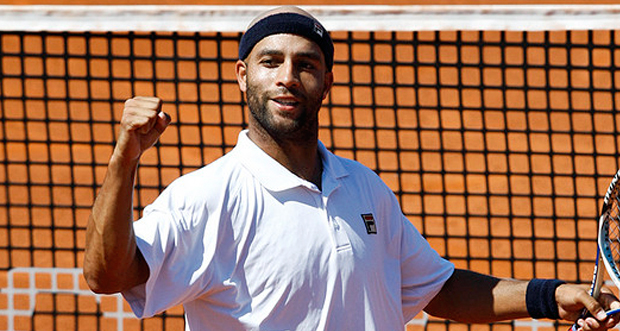
    Former World No. 4 James Blake announced his retirement today, at a press conference on the first day of the US Open.

    “No real surprise here. This is my last tournament. I always wanted to end my career at the U.S. Open,” the 33-year-old American told reporters, adding, “Despite the tears, I’m actually really happy about this.”

    When asked what he would like to do next, Blake mentioned either serving as captain of the US Davis Cup team, or going into broadcasting.

    [divider]

    Click here to discuss James Blake’s retirement in our discussion forum.

    [divider]

     Credits: Cover Photo: José Goulão (Creative Commons License)

  • Inside Out: The Era of Forehand and Movement

    Inside Out: The Era of Forehand and Movement

    As Rafael Nadal and Roger Federer prepared for their thirtieth meeting, a familiar sense of nostalgia grew inside tennis fans. Still very much among the top three best players in the game – rankings notwithstanding – Federer and Nadal were once the undisputed rulers of the tennis world. They’ve given us classics, drama, and dominance, and their rivalry transcended the sport. Despite the lack of animosity, it has been so universally appealing in large part due to the contrast in styles. Beyond how they look, dress, and act, it was the way they play that was so different, and therefore, so captivating.

    And yet, despite the multiple nuances in their games, the different attributes, and the very few weaknesses, both Federer and Nadal made a living off one particular weapon – the forehand. Their games couldn’t be more different: Federer was always more complete, more aggressive-minded, had a better serve, took more offensive court positioning, and attacked the net; Nadal was a one-of-a-kind physical specimen, a defensive wall, stood farther behind the baseline, and took control of points through engaging in longer rallies where he would gradually wear out his opponent. None of that changes the fact that, regardless of the adjustments they’ve made throughout the years – Nadal has become more aggressive and well-rounded; Federer had to readjust some aspects of his game to better operate with age – when push came to shove, they cemented their spots in tennis history due to their respective forehands.

    Like the rest of their games, their forehands bore very few similarities: Different grips, different spins, and a different follow-through. And yet, whether Federer was running around his backhand to hit an inside out winner, or Nadal was pummeling his opponent’s weaker wing relentlessly, the result was often the same. In what will inevitably go down as the “Fedal era,” one of the most memorable phases in tennis history will be defined by one shot.

    Increased racquet technology, homogenization of the surfaces, and the rise of a new breed of phenomenal athletes have altered the game considerably, with serve and volley taking a backseat to a noticeable shift towards baseline tennis. The change has been characterized by a strong emphasis on the forehand. In fact, it is hardly a coincidence that the last couple of world number one’s before the Federer era were Juan Carlos Ferrero and Andy Roddick, two men who, in their heyday, possessed two of the most lethal forehands on tour. And yet, fearsome as those shots were, they paled by comparison to the brilliance that the Swiss Maestro’s racquet would later produce.

    Simply put, Roger Federer’s forehand revolutionized the sport. Widely tipped to be the greatest ground stroke in tennis history, Federer re-set the standards of what constitutes a world-class forehand. It wasn’t merely his ability to fire winners off that side that set him apart – after all, James Blake, Fernando Gonzalez, and Andy Roddick hardly struggled to rip out inside-out bullets – but rather, Federer’s combination of power, spin, versatility, taking the ball early, and the ability to hit it on the run that made him a nightmare to deal with.

    None of this would be possible had it not been for Federer’s most characteristic trait: his otherworldly movement. Federer’s ability to glide effortlessly on a tennis court was poetry in motion. He always put himself in perfect position to take the ball precisely when he meant to, and the results were devastating. The mixture of movement, precision, and taking the ball on the rise rendered his forehand near unplayable. Lleyton Hewitt had laid the foundations a couple of years earlier by running circles around his opponents, but he lacked the necessary weapons and offensive tools. Federer, on the other hand, didn’t.

    In fairness, cat-like quickness wasn’t exclusive to Federer, as the man who previously dominated the world of tennis, Pete Sampras, remains one of the best athletes the sport has ever seen. Meanwhile, the likes of Davydenko, Blake, the above mentioned Hewitt, and others were all great movers in their own right. However, Federer’s footwork was so utterly unique in its fluidity, quickness, smoothness, and efficiency.

    Then came Rafael Nadal, arguably the greatest pure athlete in tennis history. He redefined the word “speed,” covered every inch of the court like nobody before him, displayed unprecedented levels of explosiveness, and showed a level of physicality that no one else could match. When he first burst onto the scene, Nadal’s game was, to put it bluntly, fairly limited. His serve was harmless, his backhand was solid but, ultimately, did little offensive damage — beyond the trademark open-stance passing shots — and his return of serve was meant to neutralize points above anything else (which applies even today).

    If there is a prime example of how great movement and an elite forehand dominate today’s men’s game, it’s Nadal. Better than anyone in history, he was able to mask his weaknesses with a dominant forehand and unparalleled movement. Even more so than Federer, Nadal based much of his game around running around his backhand wing. However, the Spaniard lacked his rival’s serve and variety, making his forehand an even more integral part of his game.

    His entire early success is attributed almost entirely to his forehand and movement. Even as his game developed into something far more polished, Nadal’s bread-and-butter remained intact. Unlike anyone else, Federer included, Nadal is able to find his forehand wing time and time again. The amount of effort required to run around his backhand at every possible opportunity meant the Mallorcan had to work particularly hard in each rally, but Nadal was all too willing to make the effort. Like Federer, his forehand is actually deadlier from his backhand wing, where he can put it pretty much anywhere on the court. Once Nadal is able to find a forehand early in the rally, unless your name was Novak Djokovic, Nikolay Davydenko, and a select others, you weren’t wrestling the point away from him.

    No Title

    No Description

    The man who ultimately broke the Fedal monopoly was, unsurprisingly, Novak Djokovic. Long tipped to be the future of tennis, the Serb may have differed from his great rivals in that he possessed one of the best backhands the games has ever seen — a shot many deem to be his strongest. However, it wasn’t until Djokovic recaptured the magic on his forehand side that he became the world’s finest player. Following a very strong 2008, Djokovic’s results became increasingly inconsistent. The reasons were numerous, from struggles with fitness, focus, and serve, but above all else, it was his forehand that grew more erratic, and the results underwhelmed accordingly.

    Djokovic moves as well as anyone on a tennis court, but the quality of his backhand provides him with far more options, therefore, he doesn’t need to run around that shot as frequently as Federer and Nadal. And yet, you often see him doing just that these days, to great effect. Good as his backhand is, the basic mechanics of the forehand mean he has more options off that wing. Additionally, Djokovic’s backhand being his better shot often clouds the fact that his forehand is easily one of the best on tour, and when playing well, it is the side that does the bigger damage. Yes, it remains the shot that is more likely to break down and fail him when things go south, as opposed to his always rock solid backhand, but offensively, it is slowly becoming his most potent shot.

    A quick look at today’s top 10 players shows just how essential it is to possess a great forehand. Beyond the aforementioned players, almost all of the world’s elite players share a world-class forehand: Ferrer, Berdych, Tsonga, Del Potro, etc. Naturally, there are exceptions, but even those, quite ironically, reinforce the rule. Richard Gasquet, for instance, was initially thought to be destined for greatness, only to fail to live up to the hype, in large part due to his unreliable forehand. Even previous one-of-a-kind shot-makers like Nalbandian and Davydenko occasionally suffered due to an inconsistent forehand.

    The most notable aberration, of course, is current world number 2, Andy Murray. Far from being a bad shot, Murray’s forehand remains nevertheless below the level of Federer, Nadal, or Djokovic. However, the Brit is able to make amends through fantastic movement, tennis IQ, tactical awareness, counter-punching, and a backhand that is easily among the very best in the men’s game. Nevertheless, it is hard not to attribute some of his shortcomings to his main rivals’ ability to expose his forehand. Djokovic has repeatedly dominated Murray in forehand-to-forehand cross-court exchanges and drew short replies, Nadal’s flattened-out cross-court backhands and inside out forehand have historically troubled Murray on faster surfaces — surprisingly enough — while Federer’s offensive onslaught has robbed Murray of three additional grand slam titles to his resume.

    A quick glance at the current crop of up-and-coming players shows no real candidate that fits the description of a modern day champion — a great mover with a world-class forehand. For now, at least, the status quo at the top of the men’s game seems safe.

    Click here to discuss this and more with fellow tennis fans on our discussion boards.