Tag: history of tennis

  • Open Era Generations, Part Fourteen: Gen 12 (1989-93) – The Lost Generation, aka the Donald Young Guns

    Open Era Generations, Part Fourteen: Gen 12 (1989-93) – The Lost Generation, aka the Donald Young Guns

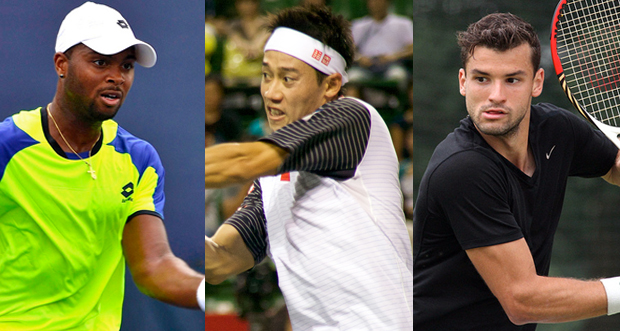
    Donald Young Kei Nishikori Grigor Dimitrov

    Why the Name?
    Donald Young is not among the best players of this generation, but to me he exemplifies it, one of the very first of what is looking to be the weakest generation that the Open Era has seen thus far.

    Aside from the clever-ish title, why Donald Young? Well, his trajectory displays the disappointment and weakness of this generation. A two-time Junior Grand Slam winner, Young finished 2007 ranked No. 100 at the age of 18, looking poised to eventually inherit the mantle of the premier American player from Andy Roddick. But he floated for several years, not reaching the Top 100 again until 2011 when he was 22 years old, no longer a tennis prodigy. And even that wasn’t the first year of a breakout; he dropped again in the rankings, failing to even qualify for the 2013 Australian Open and Wimbledon. He’s played a bit better of late, finishing 2015 at No. 57, largely due to a fourth round appearance in the US Open – his best result since 2011. But Young, no longer young at 26, is a far cry from what he was expected to be some eight years ago and is a cautionary tale of how not all highly-regarded prospects turn out. He isn’t alone among his generation, as we shall see.

    I also call this the “Lost Generation” because it has a chance of being the only five-year generation—in the year spans that I’m using—that will not win a Grand Slam, in all of tennis history. Even if a player of this generation does eventually win one, it will almost certainly be a lower amount than any of the Open Era, with Ashe’s generation being the current lowest total at five.

    Best Players by Birth Year
    1989: Kei Nishikori (JPN), Benoit Paire (FRA), Martin Klizan (SLO), Joao Sousa (POR), Donald Young (USA), Steve Johnson (USA), Aljaz Bedene (UK)
    1990: Milos Raonic (CAN), David Goffin (GER), Vasek Pospisil (CAN), Jerzy Janowicz (POL), Guido Pella (ARG), Andrey Kuznetsov (RUS), Dusan Lajovic (SERB), Evgeny Donskoy (RUS)
    1991: Grigor Dimitrov (BUL), Denis Kudla (USA), Pablo Carreno Busta (ESP)
    1992: Bernard Tomic (AUS), Jack Sock (USA), Diego Schwartzman (ARG), Ryan Harrison (USA), Damir Dzumhur (SERB)
    1993: Dominic Thiem (AUT), Jiri Vesely (CZE)

    Note that my bar for this generation is a lot lower in the list above, both because it is a weaker generation but also because it is contemporary right now, so it’s difficult to say who will end up being the best players by year.

    Consider that we have still not yet seen either a Slam or a Masters title from this generation, and only a handful of ATP 500’s: six from Nishikori, and one each from Klizan, Raonic, Dimitrov, and Thiem.

    Given that this group of players turned 22-26 last year, this is the generation that should be peaking right now. Consider the years that great players turned 22: 2003 for Roger Federer, 2008 for Rafael Nadal, 1993 for Pete Sampras, etc. There really has been no great player in the Open Era who was not an elite by the year they turned 22, and even lesser greats are usually pretty good by this age.

    Here’s a telling statistic: if we go back every five years (2010, 2005, etc), the generation with the No. 1 player was the same age as this one, age 22-26…until 2015, when the No. 1 player was 28-years old and only one player from the 89-93 generation finished in the Top 10, a downturn from 2014 when three players finished No. 11 or better. As great as Novak is, his reign should be challenged by the younger generation and there’s simply no player that is good enough to do so. And even if Novak weren’t around, there are still plenty of players who are.

    Also, consider that 2015 is equivalent age-wise to the previous generation in 2010, or 2005 for Federer’s generation. Compare the number of players in the Top 20 in 2015, compared to the previous two generations in the equivalent year:

    1989-93 Gen in 2015: Nishikori No. 7, No. 14, No. 16, No. 18-20
    1984-88 Gen in 2010: Nadal No. 1, No. 3-6, No. 12-15, No. 18-20
    1979-83 Gen in 2005: Federer No. 1, No. 3-6, No. 8-9, No. 11, No. 13, No. 15-16, No. 18, No. 20

    Part of the problem is that this generation has followed after two strong ones which include three players amassing 42 Slams and counting. This is not unlike the situation that Arthur Ashe’s generation faced after following the great 1934-38 generation that included Rod Laver, Ken Rosewall, Roy Emerson, and Lew Hoad, not to mention four-Slam winners like Ashley Cooper and Manuel Santana. This is further compounded by the fact that Novak Djokovic is maintaining a peak level into his late 20s, Roger Federer is still formidable in his mid-30s, and Andy Murray still remains better than any player younger than him (except for Novak, of course).

    Yet we’re approaching a point where this generation may have a window of opportunity. While Djokovic and Murray remain strong, it is inevitable that both start to slip a bit at some point in the next couple years. Roger isn’t getting any younger, and even if Rafa bounces back during the upcoming clay season, it is unlikely we’ll see another 2013. The next generation, players born 1994-98, looks much stronger, but they are probably still at least a year or two away from entering their peak years, and several years from dominance.

    So consider this possibility: 2016 could be the last year in which Djokovic’s generation completely dominates. In 2017, Novak and Andy will turn 30, Rafa 31, and Roger 36, not to mention players like Stan Wawrinka, Tomas Berdych, and Jo-Wilfried Tsonga turning 32. Gen 12 will be turning 24-28, still prime years, while Gen 13 will be turning 19-23 – starting to come into their own, but probably not quite peak level. For a couple years, say 2017-18, all titles might be up for grabs and we could see a similar environment as we saw in the late 90s and early 00s. I would guess that we see at least one or two Slams and Masters fall to players like Nishikori, Raonic, Dimitrov, and Thiem, or even a Goffin, Sock, Tomic, Klizan, Paire, or Vesely, if the stars align correctly.

    There are also glimmerings of hope. Consider that so far this year we’ve completed four ATP 500s and thirteen ATP 250s. Here is how those tournaments breakdown by generation in 2016, through the end of February:

    79-83 Gen: 1 ATP 250
    84-88 Gen: 2 ATP 500s, 8 ATP 250s
    89-93 Gen: 2 ATP 500s, 4 ATP 250s
    94-98 Gen: 1 ATP 250

    Not even counting the Australian Open, the 84-88 still holds the crown, but so far this year the 89-93 generation is second, with the other generations quite a bit behind. Compare to last year at this point, when the 89-93 generation had not yet won an ATP 500 and had only won a couple ATP 250s.

    It is also worth noting that the “elder statesmen” 79-83 generation has started much slower, although this is partially due to Federer’s injury and a slower start by Ferrer; that generation is pretty much dependent upon those two (although Estrella Burgos has the only title this year from that generation, repeating his Quito title). But given that generation’s age, turning 33-37 this year, it is only a matter of time before they dwindle away completely. The previous generation, born 1974-78 (e.g. Gustavo Kuerten, Yevgeny Kafelnikov, etc) was at the same point age-wise in 2011 as Federer’s is in 2016, and won only four more titles from 2011 on: an ATP 500 (Radek Stepanek at Washington in 2011) and three ATP 250s (all by Tommy Haas, in 2012 and 2013). Even the great 1969-73 generation which included Pete Sampras and Andre Agassi and was at the equivalent point in 2006, only won two more ATP 250s, both by Fabrice Santoro (Newport 2007 and 2008).

    The point being, the 1979-83—which won 16 titles last year, including a Masters and six ATP 500s—is phasing out and, if nothing else, the 89-93 generation should be able to pick up some of the slack. It is probably already happening.

    Underachievers and Forgotten Players
    Well, all of them, which is why I still have not discussed particular players in any depth – I was saving them all for this section. OK, that’s a bit harsh, but not entirely untrue.

    The player that stands out the most to me is Grigor Dimitrov, because he was the player of this generation with probably the highest upside and most expectations. He’s still only 24, so has half a decade of potentially peak years left, but his chances of being a great player have declined to the point of being nonexistent. Consider, for instance, that his 2015 is the equivalent age-wise with Federer’s 2005 or Djokovic’s 2011. I recently made the observation that “Baby Federer” looks a bit like Roger Federer on the practice court: he is smooth and elegant, but lacks the “teeth” needed to compete on the big stage.

    Grigor is also in danger of being surpassed by younger, hungrier players like Dominic Thiem, Nick Kyrgios, Borna Coric, Alexander Zverev, and Taylor Fritz. He’s got time, but the field isn’t going to get less crowded. While the chances that Dimitrov will become a great player are slim at best, I still hold out hope that we’ll see a Masters title or two, maybe even a Slam. He’s got a complete game and is a good candidate to win some bigger titles once the current elites slip if he develops the necessary mindset.

    Kei Nishikori also seems like an underachiever in that he is capable of truly brilliant tennis but doesn’t seem to have the fortitude to take home a big title. Still, with six ATP 500 titles – by far the most among active players without a Masters – he is the most accomplished player of this generation (so far), and it seems only a matter of time before he wins a Masters.

    Among forgotten players, there are two that come to mind: Ryan Harrison and Cedrik-Marcel Stebe. A few years ago Harrison was one of two players of this generation in the Top 100, along with Bernard Tomic. But he never rose higher than No. 43 and that was almost four years ago. Stebe won several Challengers and Futures in 2009-11 and finished 2011 No. 81 at the age of 21, but then his career was derailed by injury. One more to mention is Ricardas Berankis, who won the 2007 Junior US Open and was the highest ranked player under 21 in 2010, at No. 87. Berankis pretty much stalled out at that level, his ranking never going higher than No. 67. He’s a good reminder that a Top 100 ranking at a relatively young age isn’t an automatic ticket to the Top 20.

    Did You Know?
    Despite the unprecedented weakness of this generation, there is one strange anomaly by which it outperformed the previous, far greater generation. The first title won by a player of this generation was in 2008 by an 18-year old Kei Nishikori, at Delray Beach. The equivalent year for the previous generation was 2003; it wasn’t until 2004 that the 84-88 generation won titles, when Rafael Nadal, Robin Soderling, and Tomas Berdych all won ATP 250s. But the title did prove to be a bit of an anomaly, as no player of this generation would win another until 2011, when Milos Raonic won San Jose.

    Ten Highest Ranked Players (as of week of 2/29)
    6. Kei Nishikori
    13. Dominic Thiem
    14. Milos Raonic
    17. David Goffin
    20. Bernard Tomic
    22. Benoit Paire
    23. Jack Sock
    26. Grigor Dimitrov
    28. Martin Klizan
    35. Steven Johnson

    The good news is that almost one-third of the Top 30 are players of this generation. The bad news is that they’re mainly clustered in the lower half. Expect this to change over the next year or two; right now, only six 89-93 players are in the Top 20—my prediction is that, by year’s end, 8-10 will be in the Top 20, and 2-3 will be in the Top 10.

    Top Ten Players of the Generation (So far)
    1. Kei Nishikori
    2. Milos Raonic
    3. Grigor Dimitrov
    4. Dominic Thiem
    5. Martin Klizan
    6. Bernard Tomic
    7. David Goffin
    8. Jack Sock
    9. Jiri Vesely
    10. Benoit Paire

    Honorable Mentions: Federico Delbonis, Vasek Pospisil, Pablo Carreno Busta, Jerzy Janowicz.

    This list is mainly based upon accomplishment so far and is always changing, but right now Nishikori has the best career by a good margin. No player has won even a Masters tournament, but Nishikori has made it to a Slam final, has won 11 tournaments in all, including six ATP 500s. No other player has won more than a single ATP 500.

    Milos Raonic remains a dark horse at any fast court, although the limitations of his game makes it seem unlikely that he has what it takes to get past the elites at a big tournament. But if he sticks around his time may come. At least he’ll probably have a career somewhere between Tomas Berdych and John Isner.

    A few years from now this list could look quite different. When I wrote down notes for every generation of this series last fall, I used the word “dark horse” for Dominic Thiem. Now it seems inappropriate as his star is rising fast, with two titles under his belt so far this year. He is on the verge of surpassing Dimitrov, and only needs better success at Slams to be considered the more accomplished player. In fact, Thiem could be first or second on this list by year’s end.

    The rest on the list could be interchangeable. Vesely and Sock are still rising, although the best case scenario looks more like Top 10 players than Top 5, and maybe more likely Top 20 types – as with Goffin and Tomic.

    Grigor Dimitrov remains the dark horse of the generation. He could go the way of an Ernests Gulbis, or he could be a late-bloomer and win a Slam or three in his late 20s. While I have given up my earlier hope that he would be a great, I still find him a fascinating player to watch and think he has the talent to bring home a big trophy someday.

    There is some talent in this generation, but it really is similar to the 1939-43 and 1974-78 generations, both in terms of the reduced talent from prior generations, but also the fact that it is coming at the back-end of a golden age of tennis greats. It is a hard context to play in.

    [divider]

    Cover Photo (Creative Commons License): stevenpisano / angelicalbite / Marianne Bevis
  • Open Era Generations, Part Eight: Gen 6 (1959-63) – “You Cannot Be Serious!”

    Open Era Generations, Part Eight: Gen 6 (1959-63) – “You Cannot Be Serious!”

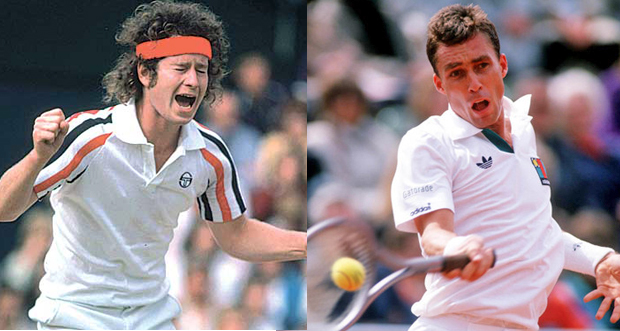
    John McEnroe Ivan Lendl

    Into the 80s

    While the tennis of the 1970s was already quite different than the decade before it, both because of the Open Era but also a shift in the way the game was played, the 1980s saw even further change: namely through the transition to metal racquets as well as the rise of the Australian Open. By 1987 the competition at the AO was, if not quite on par with the other three Slams, very close. A few years later it would be equal.

    While the last three generations each had a singular dominant player, the 1959-63 generation is the first since the 1934-38 generation that saw two players vying for the top spot. In some ways John McEnroe, nicknamed “Superbrat” by the British press, seems more part of Borg’s generation, yet he is much closer in age to Ivan “the Terrible” Lendl. Their respective peaks are a bit different, only overlapping for a year or two; McEnroe was at his best from the late 70s until 1985, Lendl not peaking until well into the 80s and remaining an elite player into the 90s. They are, clearly, the twin crown princes of the generation and the two best players born between Bjorn Borg (1956) and Pete Sampras (1971).

    Best Players by Birth Year
    1959: John McEnroe (USA, 7), Eliot Teltscher (USA)
    1960: Ivan Lendl (CZE, 8), Yannick Noah (FRA, 1), Andres Gomez (ECU, 1), Tim Mayotte (USA)
    1961: Brad Gilbert (USA), Anders Jarryd (SWE)
    1962: Juan Aguilera (ESP)
    1963: Henri Leconte (FRA), Joakim Nystrom (SWE), Mikael Pernfors (SWE)

    Discussion
    Ivan Lendl is the only player of the Open Era with 6+ Slams who has a losing record in finals (8-11), but that speaks more to the strength of the era he played in than any lack of effort on his part. First of all, we should consider that he has played in more Slam finals than anyone in the Open Era other than Sampras, Federer, and Nadal (although Novak will almost certainly surpass him in 2016 – he’s just one behind). Consider also that Lendl’s career overlapped with the peaks of Connors, Borg, McEnroe, Wilander, Edberg, Becker, Courier, Agassi, and Sampras; there is really no other great player of the Open Era who faced such a multi-generational array of all-time greats, with the exception of Jimmy Connors and possibly Andre Agassi. The main tarnish on Lendl’s record, and his unfulfilled White Whale, was his inability to win the grandaddy of all tournaments: Wimbledon.

    Johnny Mac is the most memorable player of the generation, and one of the most infamous players in tennis history, both because of his legendary temper tantrums, one of which made the title of the article famous, but also because of his intuitively brilliant play. He also has the honor of being the only player that could consistently beat Bjorn Borg. While their perhaps unparalleled rivalry yielded a 7-7 record (plus 4-4 in invitational matches), McEnroe held the edge over Borg the last couple years and had a 3-1 record in Grand Slams. The two provide us with an example of an interesting dynamic in discussing tennis greats: While Borg is generally ranked higher on all-time lists, by the time he retired McEnroe was a better player and McEnroe’s overall career accomplishments—aside from Slam titles—are better. This points to the ongoing developmental nature of the game. Regardless, the two are much closer than their Slam title totals (11 and 7) would imply.

    Underachievers and Forgotten Players
    This generation was so dominated by Lendl and McEnroe that it is hard to accuse any player of being an underachiever. I suppose Yannick Noah, who is probably more well-known than his career would entail, could have accomplished more. Noah is well-known not only for being the only French Slam winner of the Open Era, but the second black player to win a Slam, and also for his leadership in the Davis Cup.

    Did You Know?
    Yannick Noah has so many different angles on fame. Aside from his tennis accomplishments, he is also the father of NBA player Joakim Noah, and had a relatively successful music career.

    Top Ten Players of the Generation

    1. Ivan Lendl
    2. John McEnroe
    3. Yannick Noah
    4. Andres Gomez
    5. Henri Leconte
    6. Brad Gilbert
    7. Tim Mayotte
    8. Anders Jarryd
    9. Eliot Teltscher
    10. Joakim Nystrom

    Honorable Mention: Juan Aguilera

    Some might take issue with my ranking Lendl over McEnroe, but Lendl’s record is just better. While McEnroe had a higher peak and was probably a more brilliant tennis player, with a level of dominance and a brilliance of play unmatched by the Czech, Lendl’s peak wasn’t that much lower and he sustained an elite level far longer than McEnroe.

    Noah and Gomez—the only others to win Slams—are pretty easy to rank at No. 3 and No. 4, and then the rest taper off. Gomez is an interesting player in that he won his only Slam in 1990 at the age of 30, against a young Andre Agassi. Gomez—born the same year as Lendl and a year after McEnroe—won his lone Slam just after Lendl’s last and six years after McEnroe’s last, in 1984. He’s a good reminder for players like Jo-Wilfried Tsonga and Tomas Berdych that there’s always hope.

  • Open Era Generations, Part Four: Gen 2 (1939-43) – Arthur Ashe and…Who?

    Open Era Generations, Part Four: Gen 2 (1939-43) – Arthur Ashe and…Who?

    File:Arthur Ashe.jpg

    After the Glory, the Fall

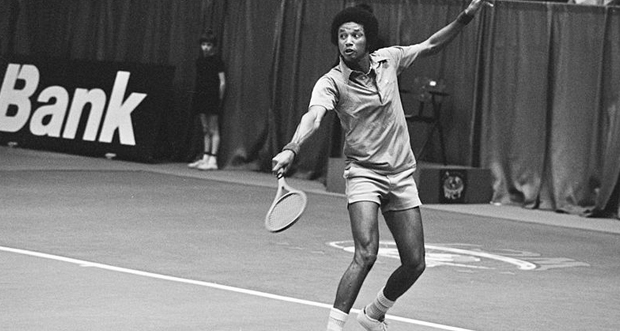
    After the greatest tennis generation came arguably the worst, with only one true standout player in Arthur Ashe who, while being an excellent player, is more historically important as a pioneering black tennis player, still remaining the only black man to win the Australian Open, Wimbledon, or the US Open. After Ashe the pickings become slim, indeed, as we can see here:

    Best Players by Birth Year
    1939: Wilhelm Bungert (GER), Christian Kuhnke (GER), Nikola Pilic (CRO)
    1940: Butch Buchholz (USA), Martin Mulligan (AUS), Bob Hewitt (AUS), Ken Fletcher (AUS), Mike Sangster (UK)
    1941: Chuck McKinley (USA, 1 Major), Cliff Drysdale (USA), Marty Riessen (USA), Pierre Barthes (FR), Roger Taylor (UK), Ronald Barnes (BRA)
    1942: Frank Froehling (USA), Dennis Ralston (USA)
    1943: Arthur Ashe (USA, 3 Majors), William Bowrey (AUS, 1 Major), Clark Graebner (USA), Owen Davidson (AUS)

    That’s 5 total Majors, or 6.6% of the previous generation’s total (!). Of the eleven Open Era generations with Slam counts, it is the lowest total – just a bit more than half that of the second lowest (1974-78, with nine Slams). Every other generation other than those two has 14 or more.

    [divider]

    Click here to discuss “Open Era Generations, Part Four: Gen 2 (1939-43) – Arthur Ashe and…Who?” in the discussion forum.

    [divider]

    Discussion
    At the risk of belaboring the point, Gen 2 is almost certainly the weakest generation of the Open Era, at least until we get to Gen 12 (1989-93). In truth, this is one generation that is less of a generation and more of a transitional phase from the great 1934-38 generation, which in a way was the last of the pre-Open Era, to the 1944-48 generation which was, in a similar sense, the true first generation of the Open Era. If we were able to nudge Arthur Ashe’s 1943 birth year into that latter generation, we’d have a four year transitional period of 1939-42, which saw no great or even near-greats, and only one Slam winner in Chuck McKinley.

    This is also the only generation – aside from the current youngest two – that never saw a year-end No. 1 player (although Harry Hopman ranked Ashe as the No. 1 player in 1968, but this didn’t include professionals). Laver is generally considered No. 1 overall in 1968-69, and then it skipped a generation to Newcombe, Smith, and Nastase from 1970-73, before Connors took over in 1974.

    As with other poor generations, this one’s lack of combination is not only because of weak talent, it is also because of nearby great talent – namely, the previous generation. Consider that Gen 2 started entering its prime in the early 1960s when Rod Laver was at the peak of his powers, Ken Rosewall was still an elite player, and Roy Emerson was dominating the amateur tour. This didn’t change, with Gen 1 not really showing signs of decline until around 1970, when Gen 2 was turning 27-31. The point being, by the time Gen 1 was declining, Gen 2 was also showing signs of age. We are possibly going to see a similar phenomena with the current Gen 11 (1984-88) and Gen 12 (1989-93).

    As far as Ashe goes, his career spans over two decades from his first appearance at the US Open in 1959 to his retirement in 1979. He drew greater public attention in the late 60s, especially after winning the 1968 US Open, upsetting Tom Okker. He won the Australian Open a couple years later, and then had his perhaps most memorable victory in 1975 at the tender age of 32 when he surprised the tennis world at Wimbledon by beating Bjorn Borg, Tony Roche, and then the world No. 1 Jimmy Connors in the final.

    It is difficult to find comparable players to Ashe in terms of achievements. He belongs among the “lesser greats” like Jim Courier, Guillermo Vilas, and Andy Murray – although unlike the latter two he reached No. 1 in the world, but unlike Courier he did so only in brief moments without Courier’s dominance of a couple years. Regardless, Ashe was an excellent player whose legacy is perhaps most important as both a pioneering black player but also the work he did off-court as an activism for social issues, AIDS, and apartheid.

    Underachievers and Forgotten Players
    We’ll just say the entire generation, except for Ashe. While it is difficult to pinpoint an underachiever, we can call the generation—again, aside from Ashe—as a forgotten one.

    That said, if I were to pick out one player as an underachiever it would be Chuck McKinley, who was one of the best amateurs of the early 1960s, including a 48-2 record from 1960-63. He made the 1961 Wimbledon final as a college sophomore in the strong tennis program at Trinity University. He was soundly defeated in straight sets by a 22-year-old Australian by the name of Rod Laver. A couple years later in 1963 he won Wimbledon, defeating Fred Stolle in the final.

    That was pretty much it for McKinley. After graduating from Trinity in 1963, he opted to become a stockbroker, playing tennis only sparingly. All told, he played only 67 matches on the circuit, with a 52-15 record including one Wimbledon title (1963), several US Open semifinal appearances (1962-64), and two US Men’s Clay Court Championships (1962-1963), as well as three doubles titles at the US Open (1961, 1963, 1964). He died young at age 45 in 1986 from a brain tumor.

    Did You Know?: Arthur Ashe retired from tennis in 1979 after having a heart attack. After undergoing a quadruple bypass surgery that year, he had a second bypass in 1983. Then, in 1988, he had emergency brain surgery after experiencing paralysis in his right arm. A biopsy revealed that he had contracted AIDS from a blood transfusion given to him in the second bypass in 1983. Ashe would die of AIDS five years later in 1993.

    Top Players of the Generation
    1. Arthur Ashe
    2. Chuck McKinley
    3. William Bowrey
    4. Martin Mulligan

    Honorable Mentions: Butch Buchholz, Wilhelm Bungert, Cliff Drysdale, Frank Froehling, Clark Graebner, Bob Hewitt, Nikola Pilic, Dennis Ralston, Marty Riessen, Roger Taylor.

    Aside from Ashe, this is an almost impossible generation to rank. It is the last generation for which there aren’t good records and really once you get to No. 4 or No. 5, they blur together in historical hindsight. Consider that only Ashe, McKinley, and Bowrey won Slams, and only Ashe and McKinley were ranked No. 1 – and the latter only as an amateur. None of the other players won Slams or were ever ranked higher than No. 4. Martin Mulligan had the highest titles with 16, so slips away from the crowd a bit. At least I tried to narrow down the honorable mentions to all players that are possible considerations for being among the ten best of the generation, but how they exactly rank would just be too difficult to determine.

    [divider]

    Cover Photo (Creative Commons License): Nationaal Archief Fotocollectie Anefo

  • Open Era Generations, Part Three: Gen 1 (1934-38) – Dominance from Down Under

    Open Era Generations, Part Three: Gen 1 (1934-38) – Dominance from Down Under

    11861575603_154b1987a0_o

    The Great Australians

    The generation of players born between 1934 and 1938 was, in a way, more accurately the last generation before the Open Era as it peaked in the 1960s. Yet it was also the generation that was “in power” when the Open Era began, so I am considering it the first of the Open Era.

    When the Open Era began in 1968, the youngest players of this generation were turning 30 years old. The generation still dominated for the first few years, winning six of the first seven Slams (two to Rosewall, four to Laver) through 1969, but then the decline really started with the new decade in 1970. While Laver remained a strong player for several more years (top 10 through 1975),  he never won another Slam. Rosewall won three more, one in each year during 1970-72, and was in or near the top 10 through 1977, which he finished at #12 at the ripe age of 43, but clearly the baton had been passed in the 70s.

    This first generation was dominated by the Australians, with 66 of the 76 Slams won by the men from Down Under. In tennis history the late 50s and 60s is possibly the greatest period of dominance by a country, perhaps only revivaled by the last and greatest period of American dominance in the 1990s.

    Best Players by Birth Year (with Slam total):
    1934: Ken Rosewall 23 (AUS), Lew Hoad 5 (AUS)
    1935: Mal Anderson 2 (AUS)
    1936: Roy Emerson 12 (AUS), Ashley Cooper 4 (AUS), Alex Olmedo 3 (USA)
    1937: Andres Gimeno 1 (ESP)
    1938: Rod Laver 19 (AUS), Manuel Santana 4 (ESP), Fred Stolle 2 (AUS), Rafael Osuna 1 (MEX)

    Total Slams: 76 (best of the 13 Gens and all-time), including 50 Grand Slams and 26 Pro Slams.

    File:Hoad Rosewall Wimbledon.jpg

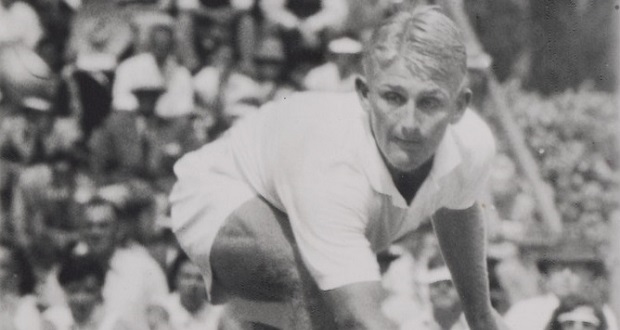
    Lew Hoad and Ken Rosewall playing doubles at the Wimbledon Championships in 1954 or 1955. (courtesy Wikimedia Commons: State Library of Victoria).

    Discussion
    It would be hard to argue that this is not the “GGOAT” – greatest generation of all time, in 139 years of tennis history from 1877 to 2015. Rosewall and Laver alone would make it a contender with any generation, but adding in Hoad, Emerson, not to mention Santana, Cooper, Stolle and Olmedo, and it is head and shoulders above every other generation in terms of Slam count. Of course part of this is due to the “doubling up” of Amateur and Pro Slams during the 50s and 60s, but regardless, 76 majors is a lot –  more than double that of any generation of the Open Era.

    Rosewall and Laver are on the very short list of greatest players. Laver had a higher peak, being the dominant player of the 1960s, bookended by Calendar Slams in 1962 (as an Amateur) and 1969 (the first full year of the Open Era), but Rosewall had greater longevity, with an incredible span of 20 years between his first Slam title in 1953 and his last in 1972 – four years longer than the second longest record of Bill Tilden’s sixteen years (1920-35), twice that of contemporary Rod Laver’s ten years (1960-69) and far more than the longest of the Open Era, Pete Sampras’ thirteen years (1990-2002). To put it another way, Rosewall’s first Slam title came seven years before Laver’s first, and his last came three years after Laver’s last. During those 20 years he won 23 majors in all, eclipsing Laver’s 19. Yet at their best, Laver was more dominant, not only over Rosewall but the rest of the sport. Laver won a record 200 titles, well surpassing Rosewall’s 133.

    Roy Emerson is both over and under-rated, depending upon who you ask. All 12 of his Slam titles came before the Open Era, and most when the best players in the sport—including his contemporaries Rosewall and Laver—were on the pro tour. Yet Emerson held his own against the young Laver, and still dominated the amateur tour for a few years. Yet in terms of career greatness he is perhaps more comparable to players with half his Slam count.

    Underachievers and Forgotten Players
    Many who saw Lew Hoad play, or played against him, claim that he is the most talented player in tennis history. For instance, Pancho Gonzales claimed that Hoad’s “game was the best game ever. Better than mine. He was capable of making more shots than anybody. His two volleys were great. His overhead was enormous. He had the most natural tennis mind with the most natural tennis physique.” Gonzales also said that Hoad “was the only guy who, if I was playing my best tennis, could still beat me.”[1]

    Hoad was plagued by injury and, according to Jack Kramer, laziness and lack of interest [1]. Kramer also claimed that despite the mystique around Hoad, saying “when you sum Hoad up, you have to say that he was overrated. He might have been the best, but day-to-day, week-to-week, he was the most inconsistent of all the top players” [1]. In other words, if we read between the lines a bit, it would seem that while Hoad was one of the most talented players of his generation, with his best level being as good or better than anyone, he did not have the consistency and focus to make him a truly great player, which is why he is less remembered than players with higher Slam counts.

    While a career that included five Slams can hardly be considered disappointing, we can easily see a player in Hoad that was as talented as his more successful contemporaries in Gonzales, Rosewall and Laver, yet without the career achievements.

    Did You Know?:  Rod Laver and Ken Rosewall played each other 144 times in all, including 46 times in 1963. Laver won the head-to-head 80-64. Rosewall led 34-12 their first year of playing each other in 1963, with Laver dominating most years after. However, Rosewall won their last two matches in 1976. For some of the only available footage of this great rivalry, check out this video here.

    File:Rod Laver 1976.jpg

    Rod Laver at the 1976 ABN World Tennis Tournament in Rotterdam (courtesy Wikimedia Commons: Rob Bogaerts, Nationaal Archief Fotocollectie Anefo)

    Top Ten Players of Generation One

    1. Rod Laver (AUS)
    2. Ken Rosewall (AUS)
    3. Lew Hoad (AUS)
    4. Roy Emerson (AUS)
    5. Manuel Santana (ESP)
    6. Ashley Cooper (AUS)
    7. Alex Olmedo (USA)
    8. Fred Stolle (AUS)
    9. Mal Anderson (AUS)
    10. Andres Gimeno (MEX)

    Honorable Mention: Rafael Osuna (Mex).

    Due to limited records it is difficult to give accurate rankings before the Open Era. But it is relatively easy to see the above players in groups. The first group is comprised of Laver and Rosewall; the two are very close, with Rosewall having superior longevity but Laver having a higher peak. Actually, Rosewall—along with Pancho Gonzales–is perhaps the least mentioned inner circle great, but by any reasonable way of accounting he is certainingly one of the five or so greatest players of all time – this despite the Tennis Channel’s egregious ranking of him as only the 13th greatest male tennis player of all time in their “100 Greatest of All Time” in 2012, behind the likes of Roy Emerson and Andre Agassi, among others [2].

    The next group is another pair, Hoad and Emerson. Many would rank Emerson over Hoad, but Hoad was a much better player. Then we have another pair, “Manolo” Santana and Ashley Cooper, both with four amateur Slams, both very strong players but not the very best of the generation, the Andy Murrays and Guillermo Vilases of their time.

    The final group includes Olmedo, Stolle, Anderson and Gimeno. Olmedo has the edge in Slam totals with three, Stolle and Anderson with two each, and Gimeno with only one – that one being the 1972 French Open which he won at 34 years of age. Actually, Gimeno is the only player other than Rosewall who who won a Slam after the age of 32 during the Open Era. Anderson had a long and storied career. He won only two Slams – the 1957 US Open and the 1959 Wembley Pro, but made a Slam final as late as 1972 at age 36, losing to the 37-year old Ken Rosewall in the Australian Open.

    Regardless of the exact ranking, it is a very strong group – dominating tennis from the late 50s into the 70s, perhaps partially due to the weakness of the following generation, which we will look at in the next installment.

    Works Cited:
    [1] Quote from https://en.wikipedia.org/wiki/Lew_Hoad
    [2] http://admin.tennischannel.com/goat/71.aspx

    [divider]

    Cover Photo (Creative Commons License): State Library Victoria Collections

    Hoad/Rosewall and Rod Laver photos: Wikimedia Commons

  • Tennis Generations, Part Two: Before the Open Era

    Tennis Generations, Part Two: Before the Open Era

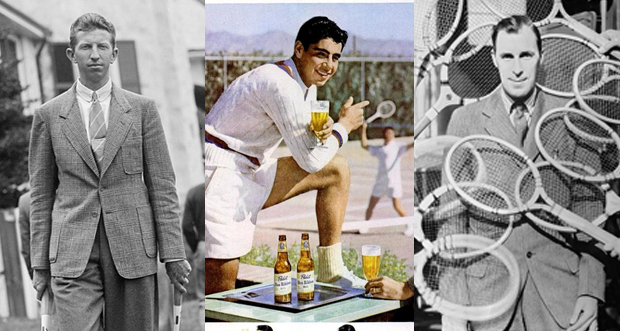
    Don Budge Pancho Gonzales Bill Tilden

    If we were to look at each tennis generation as a player with a count of Major titles—either pro, amateur, or Open Era Grand Slams—by far the greatest would be the generation born from 1934 to 1938, mainly on account of two players: Ken Rosewall and Rod Laver. This generation was, in many ways, the generation that brought tennis from the amateur/pro split into the modern Open Era in 1968.

    But tennis didn’t begin with this generation. Before focusing further on the First Generation of the Open Era, let’s take a brief look at what came before…

    Generations before the Open Era
    The oldest player in terms of birth year to win a Slam was John Hartley, born in 1849 – he won the third Wimbledon in 1879; the first Wimbledon in 1877 belongs to Spencer Gore, born a year later in 1850. This makes the first tennis generation of the entirety of its history being those players born in 1849-53, with possibly older players playing but none winning a major. Given that there were at least seventeen generations before Rosewall’s and Laver’s, this makes the current youngest generation–those players born 1994-98 like Nick Kyrgios, Borna Coric, and Alexander Zverev–the 30th five-year generation in tennis history. We are just starting to see players of the 31st generation, born in 1999-2003, appear deep in the rankings. As of this writing, the highest ranked player of Gen. 31 is No. 757, Felix Auger Aliassime, born in August of 2000.

    The main point here is that while modern tennis can be seen to have begun with the Open Era in 1968, it was actually past the mid-point of tennis history as a whole. Or to put that chronologically, we’re in the 48th year of the Open Era, which began in the 92nd year of Wimbledon, thus the Open Era began almost exactly two-thirds of the way into tennis history as a whole.

    I will not attempt to detail every generation, but thought it worthwhile to list some of the better players as they arrange within pre-Open Era generations, with their Slam title count—including Amateur and Pro—in parentheses:

    1849-53: John Hartley (2), Spencer Gore (1)
    1854-58: Frank Hadow (1)
    1859-63: William Renshaw (7), Richard Sears (7), Andre Vacherot (4), Henry Slocum (2), Ernest Renshaw (1)
    1864-68: Arthur Gore (3)
    1869-73: William Larned (7), Reginald Doherty (4), Paul Aymé (4), Robert Wrenn (4), Wilfred Baddeley (3), Oliver Campbell (3)
    1874-78: Lawrence Doherty (6), Norman Brookes (3), Malcolm Whitman (3)
    1879-83: Anthony Wilding (9), Max Decugis (8), Maurice Germot (3)
    1884-88: Rodney Heath (2)
    1889-93: Bill Tilden (15), Maurice McLoughlin (2), R Norris Williams (2), Robert Lindley Murray (2), Pat O’Hara Wood (2)
    1894-98: Jean Borotra (4), William Johnston (3), Gerald Patterson (3), James Anderson (3)
    1899-1903: Henri Cochet (11)
    1904-08: Frank Crawford (6), Rene Lacoste (7)
    1909-13: Fred Perry (10), Ellsworth Vines (8), Hans Nusslein (6), Adrian Quist (3), Gottfried von Cramm (2)
    1914-18: Don Budge (10), Bobby Riggs (6), Frank Parker (4), John Bromwich (2), Don McNeill (2)
    1919-23: Jack Kramer (5), Pancho Segura (4), Jaroslav Drobný (3), Vic Seixas (2), Ted Schroeder (2)
    1924-28: Pancho Gonzales (17), Frank Sedgman (7), Budge Patty (2), Dick Savitt (2)
    1929-33: Tony Trabert (7), Neale Fraser (3), Mervyn Rose (2), Nicola Pietrangeli (2)

    I tried to account for every Slam winner, although if I missed someone I apologize to their grand- or great-grandchildren.

    Top 10 Greatest Players Before the Open Era
    1. Pancho Gonzales
    2. Bill Tilden
    3. Don Budge
    4. Fred Perry
    5. William Renshaw
    6. William Larned
    7. Ellsworth Vines
    8. Anthony Wilding
    9. Henri Cochet
    10. Jack Kramer

    Honorable Mentions: Laurence Doherty, Bobby Riggs, Frank Sedgman, Reggie Doherty, Pancho Segura, Jack Crawford, Tony Trabert, Rene Lacoste, Hans Nusslein, Jean Borotra, Bill Johnston, Gottfried Von Cramm, Jaroslav Drobný, Vic Seixas, and many others.

    This is a hard list to compile, because it spans about a hundred years. But it is relatively easy to rank Gonzales and Tilden as No. 1 and No. 2, respectively, both being among the very best players in tennis history – on the short list of GOAT candidates. Tilden had a remarkable career that spanned three decades. He didn’t win his first Major until he was 27 years old, and won his last in his early 40s, making the 1945 US Pro semifinal at the age of 52. Pancho Gonzales remains one of the most underappreciated greats in the history of the game, perhaps largely because historical memory tends to be shallow and only notices “two Grand Slams” in his tally. But Gonzales also won 12 Pro Slams and 3 of the 4 Tournament of Champions, which are consider Majors by some – so he has a total of 17 Major titles, tied with Roger Federer and behind only Ken Rosewall and Rod Laver. He was, by a significant margin, the greatest player of the 1950s before Rosewall took over in the later part of the decade.

    Don Budge is perhaps best known as the only player other than Rod Laver to win the Calendar Slam. While he won all of his 10 Majors during a relatively short six-year span, he was as dominant in the late 30s as any player has ever been over a few-years span. Perry and Renshaw round out the Top 5, and then it becomes tricky to rank players, as the context of the game was so different and we can’t look at tennis records of, say, the 30s and 40s with the same criteria as we can the Open Era. But regardless, the above 10 are probably the 10 greatest players before the Open Era, with a handful of honorable mentions fleshing out the list.

    Up next, we’ll look at the great generation of players, born between 1934 and 1938, who dominated tennis from the late 50s into the early 70s, and the dawn of the Open Era.

    [divider]

    Cover Photo (Creative Commons License): boston_public_library / killingtime2 / boston_public_library

  • Open Era Generations, Part One: Introduction

    Open Era Generations, Part One: Introduction

    Open Era Generations 01 - Tennis Hall of Fame


    Preamble

    While I’ve followed tennis in a very casual way going back to vague memories of Bjorn Borg and John McEnroe, it is only in the last half decade or so that I’ve become a serious fan. I mark the beginning of my interest in tennis back to a vague memory of liking Bjorn Borg and disliking this new young upstart named John McEnroe who seemed to have his number. While I was only around seven years old at the time and cannot pinpoint the exact date, I imagine that this was due to either of McEnroe’s defeats of Borg at Wimbledon or the US Open in 1981. My favorite players in the 1980s and 90s were Ivan Lendl, Stefan Edberg, and Pete Sampras; I remember enjoying Edberg’s defeat of Jim Courier in the 1991 US Open, memorable because my friend and classmate (this was senior year in high school) had played with Courier and was cheering for the American.

    My tennis fandom remained casual until just a few short years ago. There isn’t an exact moment when I went from “casual” to “serious” fan, as it was a gradual transition over a year or two, but it happened sometime in the 2008 to 2011 range. While I had been a (casual) fan of Roger Federer, my all-time favorite player, since early on, it is interesting (for me, at least) to consider that during my tenure as a diehard tennis fan—someone who follows all of the big tournaments and some of the smaller ones—I have only really truly loved the game while my favorite player has been past his highest peak. In fact, it could be the legendary 2008 Wimbledon final that drew me into a greater interest in the sport, the match that saw the baton of greatest player passed from Roger to Rafa. So I cannot be accused of being a fair weather fan!

    Anyhow, the reason I offer an overview of my tennis biography is to lay the groundwork for what is to follow – to provide context and perhaps a sense of why I am writing what I’m writing, and why I write this blog at all, for that matter. It is simply this: I write these articles to share my own learning experience. I am very curious and autodidactic by nature and because I’ve only followed tennis closely for about half a decade, I am constantly researching this or that tidbit from the past. In a way I’m both trying to fill in my own limited (but growing) knowledge of the sport’s history, but also enjoy taking variant angles using statistical analysis to better understand the game. This blog is my sharing my journey with you, the reader.

    And now for the caveat: I am not a tennis player, not an expert on the game itself or its history. I am, first and foremost, a fan of the game. None of these statistics are meant to be definitive in any way; a common misunderstanding about statistical analysis in sports—particularly in baseball, if only because no other sport is as statistically analyzed (and fetishized) as baseball—is that statistical models and advanced metrics are somehow meant to replace firsthand knowledge of the game and/or be definitive. Now some “statnerds” might take this a bit too far, but for the most part it is generally understood that statistics are secondary and complementary to real knowledge of the game.

    That said, statistics have their uses and are neglected in the tennis world. There are a few pockets on the internet where tennis is analyzed statistically, but it is rare.

    [divider]

    Generation Theory
    So what’s this all about, you might be asking? Well, I’m going to be starting a series on tennis generations, using what I call “Generation Theory,” which is a tool or lens that is quite useful for understanding tennis history. The theory is based upon the idea that a generation is roughly five years in length, that once you have two players that are more than a few years apart they are of a different generation.

    This begs a couple questions: One, where to draw the line between generations? This is pretty arbitrary. At first I was going to use half-decades, neatly dividing each decade into two generations. But I soon found that it wasn’t the optimal way of grouping players. I then decided to use Roger Federer as a baseline. Federer was born in August of 1981, so I asked what would happen if we used him as the middle of a five-year generation? That made Generation Federer those players born between January 1, 1979, and December 31, 1983. This also lined up well with Rafael Nadal, born in May of 1986 — the midpoint of the next generation, 1984-88. It was almost too perfect, but what better two players to center Generation Theory on? I then went forward and back and found that players grouped well within those parameters, with few exceptions.

    Again, generational divisions are arbitrary. In this model Juan Martin del Potro and Kei Nishikori are of two different generations, which may seem strange considering that they were born in consecutive years; in this system, del Potro is of the same generation as Robin Soderling, who was born in 1984. We could look at “Generation del Potro” as being those players born within a couple of years of him, thus 1986-90. So in that sense we could use a five-year tennis generation: in a player-centered way, that is spreading out a five-year umbrella centered on an individual player’s birth-year, or in a static way, which is based upon Federer (and, conveniently enough, both Nadal and Pete Sampras) and spreading the generations out from there, each generation beginning with the year that ends with either a 4 or a 9 (e.g., 1974-78 and 1979-83). This series is based on the static approach, although at different times and in other articles I might use the player-centered approach.

    This series will be focused on the Open Era, beginning with the 1968 French Open, which has technically seen 16 different generations play in it. The oldest player that I could find who played in an Open Era Grand Slam was Pancho Segura, who was 49 years old when he played in the 1970 US Open. Segura, if you’re not familiar with him, is a lesser great of the 40s and 50s – who we could call “The Other Pancho” after the greater Pancho Gonzales. Segura had one of the longest careers in tennis history, being a top college player in the mid-1940s before going professional in 1947, and then playing his last professional singles match at the 1970 US Open, at 49 years old, although he played doubles until 1975 when he was 54 years old. A different era, no doubt!

    [divider]

    Thirteen Generations of the Open Era
    For the sake of this study, I am going to focus on those generations that made a significant impact in the Open Era. My criteria for the first generation will be a Slam title within the Open Era, which would be the great 1934-38 generation that included Ken Rosewall and Rod Laver, two of the very greatest players in tennis history. So 1934-38—bookended by Rosewall’s birth in 1934 and Laver’s in 1938—is the First Generation of the Open Era, with the youngest generation of players on tour born in 1994-98 the Thirteenth Generation (although as of this writing there are actually a few ranked players from the 1999-03 generation, including Canadian Felix Auger Aliassime ranked No. 751 as of August 24, 2015; Aliassime was born in August of…wait for it…2000).

    [divider]

    This Series
    After this introductory piece, each article will be dedicated to a different generation, with the first briefly discussing older generations and then focusing on the First Generation of the Open Era, those players born between 1934 and 1938. I will probably do a summarizing piece, so this means that this will be in fifteen parts and likely spread out over two or three months. It will be my intention to publish one or two articles a week, so stay tuned and I hope you enjoy joining me on my journey through the thirteen generations of Open Era tennis!

    Author Note (9/2/2015): I timed this series poorly, starting right before the US Open, so with my apologies I’ve decided to push it back until after the US Open is finished. Look for the next part in this series a day or two after the US Open finals. Best regards ~JN.

    [divider]

    Cover Photo (Creative Commons License): wallyg