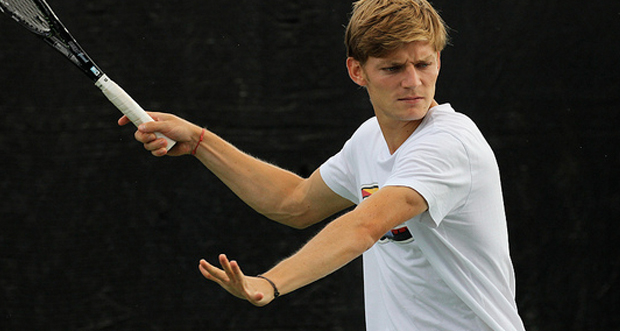
Tag: dominic thiem

  • From Small to Big (Titles): When Young Players Breakthrough

    From Small to Big (Titles): When Young Players Breakthrough

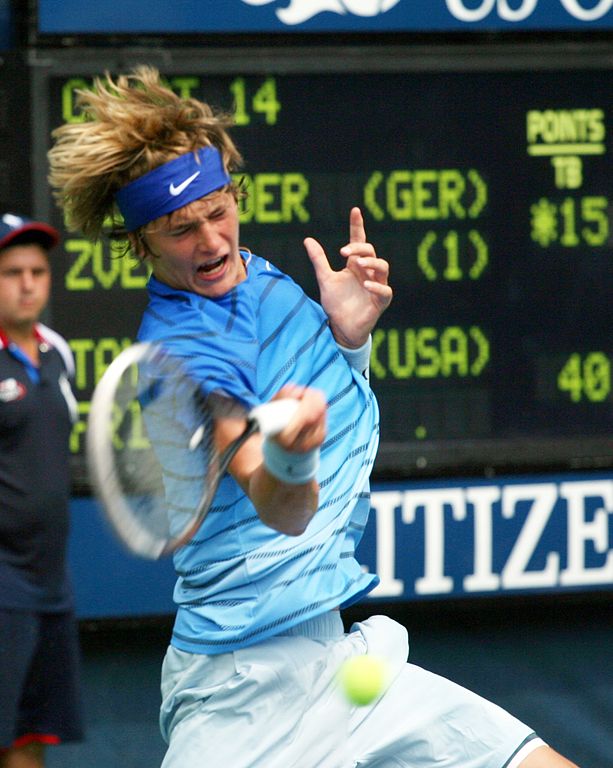
    613px-Alexander_Zverev_(GER)_(9657622842)

    One of the holy grails of tennis speculation is being able to differentiate between those young players who will become stars and those who will not. Right now we’re amidst somewhat of a tide of upcoming  young players: from highly touted Alexander Zverev and Nick Kyrgios, to the large number of young players in or approaching the top 100. Yet how can we possibly tell who will become an elite player and who will plateau somewhere on the way to the top?

    The Pace of Greatness
    There is no easy answer. I have put forth a system of benchmarks that every all-time great (6+ Slam winner) of the Open Era has reached; there is a similar set of benchmarks for multi-Slam winners (2-4 Slams), although these were just greatly expanded by Stan Wawrinka, who reminded us that tennis is always changing and boundaries are meant to be surpassed.

    The first of the benchmarks is entering the top 100 before one’s 19th birthday. Of the young players currently on tour, only a few have accomplished this so far: Alexander Zverev, Frances Tiafoe, Taylor Fritz, Hyeon Chung, and Borna Coric. Missing the mark already are Dominic Thiem, Nick Kyrgios, Karen Khachanov, Daniil Medvedev, Andrey Rublev, Michael Mmoh, Stefan Kozlov, and many others. Now this is a benchmark that all 6+ Slam winners of the Open Era—or at least going back to accurate ATP rankings, so from Bjorn Borg on—have reached. But that doesn’t mean that all future 6+ winners must. And it is also a rather rarified company to begin with; to begin with, we shouldn’t expect more than several players from any generation—and perhaps not even that—to win 6+ Slams.

    Given that the age in which players are peaking may be rising, or at least expanding, and given Stan’s reminder, these benchmarks should probably be considered “probable guidelines” than strict rules. Surely there must be something else we can look for, to try to ascertain who will rise to the top of the sport? I don’t have a clear method, but I did stumble across something that will at least give us something to look for.

    Two Breakthroughs
    When I was working on my “career skyscrapers” tool, I noticed that it did a nice job of illustrating how players develop in their early years. The skyscrapers only include titles and quarterfinal or better Slam appearances so are, intentionally, a snapshot of when a player was at or near elite level. But when we talk about breakthroughs, there are many small stages in that process, but two that I find to be of utmost importance: One, winning a title. This is the rite of passage that every good tennis player must go through. The second is winning a big tournament; by “big” I don’t only mean Slams, but Masters (or their equivalent) or a World Tour Finals. This is the point that a player generally reaches elite status and has shown they can play with the big boys.

    What I noticed was that in almost every case, the true greats went from winning their first title in one year, to their first big tournament within the same year or next. The only exception in the Open Era is Andre Agassi, who won seven minor tournaments over three years (1987-89) before winning his first big tournaments in 1990. But everyone else—from Jimmy Connors to Novak Djokovic—went from winning their first tournament (whether big or small) to a big tournament within a calendar year.

    This gives us another benchmark to look for. Again, it doesn’t mean that it has to happen for a player to become a true great, that it probably will, and the probability is quite high: 12 of 13 6+ Slam winners of the Open Era fit this criteria (interestingly, neither Ken Rosewall or Rod Laver did this; it took them a couple years – but they began their careers in a very different context than the Open Era).

    I think the real important insight gleaned from this is that the pattern seems quite different for lesser Slam winners. Of the seven players winning 3-4 Slams in the Open Era, only three–Guillermo Vilas, Jan Kodes, and Gustavo Kuerten–went from a small to big title in sequential calendar years; Arthur Ashe, Jim Courier, Stan Wawrinka, and Andy Murray all took longer.

    Of the eight two-Slam winners, only three did it: Ilie Nastase, Sergi Bruguera and Marat Safin who, at the time, was considered a probable future great but ended up having a disappointing career. Bruguera was a clay court specialist who played during a time when courts were quite different from each other and specialists–who were otherwise relatively mediocre on other surfaces–could compete for the biggest prizes on their best courts. Nastase was a borderline great player, whose level isn’t adequately expressed by his mere two Slams.

    Of the twenty-four single Slam winners of the Open Era, only six did it: Andres Gimeno, who played much of his career in the very different context before the Open Era, so as with Rosewall and Laver, isn’t that relevant; Mark Edmondson, who is the definition of “one-Slam wonder;” Andres Gomez; Michael Stich; Michael Chang; and Juan Martin del Potro. Stich and Del Potro, like Safin, were considered viable candidates for future greatness, but didn’t reach that mark.

    To sum up, consider who went from their first title to a big title (Masters or greater) within the span of a calendar year, among players who played the bulk of their careers, or won most or all of their Slams, in the Open Era:

    • 12 of 13 (92%)  6+ Slam winners
    • 6 of 15 (40%) of 2-4 Slam winners
    • 6 of 23 (26%) of 1 Slam winners

    As I said above, these numbers start changing if we look before the Open Era, but that was a very different context of play.

    For Whom Is The Clock Ticking?
    There is no clear year that the proverbial “NextGen” starts, although we can say it definitely includes all of those players who will be eligile for the Milan NextGen Finals later this year, so those who don’t turn 22 until December (so generally born in 1996 and later); but for this, we will also look at slightly older players, who are still considered young on today’s tour.

    So who “has to” win a big title in 2017, to reach this benchmark?

    Dominic Thiem won his first title in 2015, but although he improved his performance in 2016, did not win a big title – so he missed this benchmark last year. As I have mentioned elsewhere, his career pattern so far fits that of a second tier player more than a true elite.

    Then we have a group of players: Lucas Pouille, Nick Kyrgios, Karen Khachanov, and Alexander Zverev. These are the four young players who all won their first titles in 2016, and thus have started their “clock” and must win a big title in 2017 to reach this benchmark.

    We should see several other young players win their first ATP titles in 2017, thus “starting the clock” for 2018.

    In Conclusion
    I will say it again: records—and benchmarks—are continually broken. Just as Stan Wawrinka set new benchmarks for multi-Slam winners, winning his first at age 28, so too might we eventually see a future 6+ winner take a delayed career path. Ivan Lendl was an elite player in his early 20s, winning tons of tournaments and even reaching #1 before winning a Slam, but did not win his first Slam until he was 24. Andy Murray was 25 and is arguably the greatest Open Era player with less than six Slams, and he only has three (so far).

    The shape of what is possible is always changing, yet we also have almost five decades of Open Era history to draw upon for trends and trajectories. This study shows that the vast majority (92%) of all-time greats won their first big title (Masters equivalent or greater) within a calendar year of winning their first ATP pro title. It also shows that of 2-4 Slam winners, only 40% accomplished this, and of single Slam winners only about a quarter. This implies that a major defining feature of the truly great is the pace at which they reach their peak. I’ve noted this before, but this study furthers the point: one of the differentiations between the true elites and the second tier, is the rate at which they rise to the top. A group of talented players might show up in the top 100 at similar ages, yet the future elites tend to continue rising quickly, while the future second (top 10ish) and third tier (top 30ish) players tend to stall at various levels, taking longer to climb the ladder to their peak.

    Now poor Alexander Zverev didn’t win his first title until late last year, in September, and Khachanov not until October– so for them the one calendar year gap is especially small – only about an actual year – whereas for Nick Kyrgios, who won his first last April, he has (or has had) a year and a half. So continue watching, and we shall see.

    https://www.youtube.com/watch?v=ihcuD-DnAq0

    Cover photo by robbiesaurus, courtesy of Creative Commons License

  • Why We’ll See A New Slam Winner in 2017

    Why We’ll See A New Slam Winner in 2017

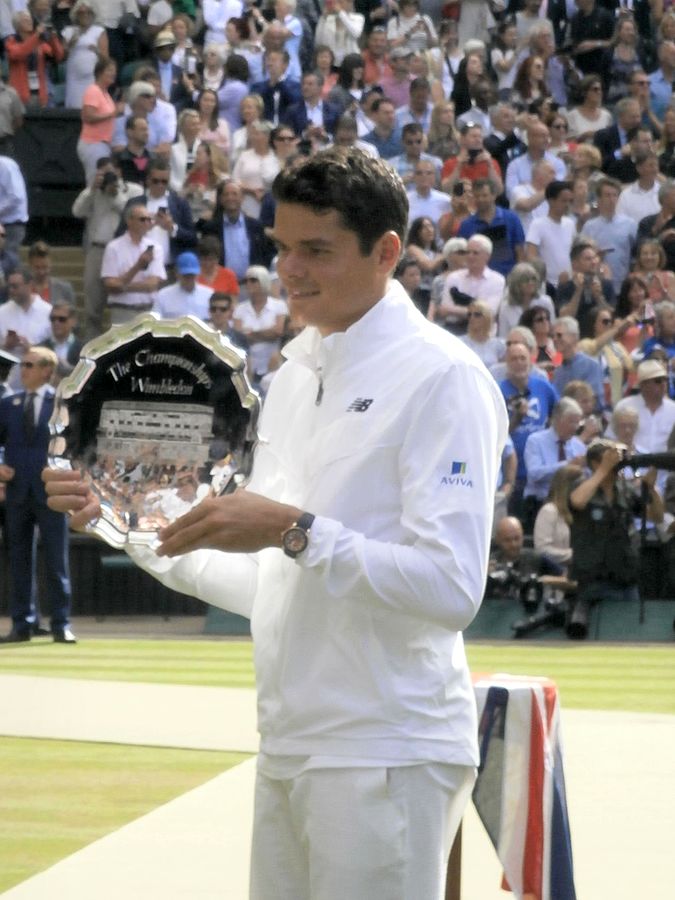
    miloswimbledon2016

    Fact: In the history of Open Era tennis, going back to 1968 through 2016—a span of 49 years and 195 Grand Slam tournaments—there has never been more than two years in a row without a new Slam winner. Of those 49 years, only 15 have been years in which at least one of the Slams wasn’t won by a new winner. To put that another way, in about 70% of the Open Era years, at least one Slam was won by a new Slam champion. The years without a new winner are: 1969, 1973, 1978, 1986, 1993-94, 1999, 2006-07, 2010-11, 2013, and 2015-16.

    You’ll notice that a high percentage of those years are recent; six out of the fourteen are all within the last eleven years. You’ll also note that three out of the four two-year gaps are also within the last eleven years. Clearly this points to the homogeneity of Slam winners in recent years. We can also look at the fact that starting with Rafael Nadal’s first Slam, the 2005 French Open, just seven players have won 47 Slams: Nadal (14), Roger Federer (13 of his 17), Novak Djokovic (12), Juan Martin del Potro (1), Andy Murray (3), Stan Wawrinka (3), and Marin Cilic (1).

    Which brings me to the topic: Going purely on this pattern, there will be a new Slam winner in 2017. Who will it be? Who knows? But if I were to make wagers, here are the players who are most likely, in rough order:

    1. Milos Raonic: The blazing server is coming off his best year in which he finished #3—only the second player after David Ferrer in 2013 to finish in the top three in the last ten years, other than the Big Four. He also reached his first Slam final, losing to Andy Murray at Wimbledon. Raonic doesn’t have the well-balanced game to dominate for an extended period of time, but he does have enough weapons to challenge for a Slam title, being particularly dangerous at Wimbledon.

    2. Dominic Thiem: With Rafa questionable and Novak shaky, Andy having not yet truly dominated clay and Stan Wawrinka always erratic, Roland Garros is up for grabs this year. Now it probably won’t be Thiem, but it is his best surface and if anyone other than the usual suspects wins the French Open, it will probably be Thiem, who has a good chance of being the best clay court player over the next half decade or so.

    3. Nick Kyrgios: If the temperamental Australian starts showing an ounce of composure and maturity, the rest of the tour needs to look out: he can be a very dangerous player, capable of beating anyone on the right day. But he may be two or three years from that level of maturity, if he ever finds it, but with another year of steady rising—and his first three titles—Kyrgios is a player to watch (and watch out for, if you’re a player) in 2017.

    4. Kei Nishikori: I haven’t done the research, but I suspect that Kei may be the best player in Open Era history never to win at least a Master tournament. With just a cursory search, other candidates include Raonic, Richard Gasquet, Fernando Gonzalez, Mikhail Youzhny, Todd Martin, Marc Rosset, Aaron Krickstein, Brad Gilbert, Gene Mayer, Eddie Dibbs, and Alex Metreveli. He’s won 11 tournaments so far, including 6 ATP 500s; he’s reached a Slam final and three Masters finals. It seems inevitable that he’ll win a Masters, although a Slam seems less likely as he hasn’t shown the fortitude that it takes to win seven best-of-five matches in a row. Still, he came very close in 2014 and could conceivably threaten again. If Kei were to reach a final against an exhausted Nadal or Federer, he could pull it off.

    5. Alexander Zverev: It isn’t a matter of if, but when. If there is one player on tour that we can be most certain will eventually win at least one Slam, it is Zverev. But 2017 is probably unlikely; he turns 20 years old in April and has yet to even make it to the fourth round of a Slam. If I were to guess, his first Slam will be in 2018 or 2019. Still, he is talented enough that he should be factored into consideration, especially for later in the year.

    Less Likely Candidates: I’d love to see Jo-Wilfried Tsonga or Tomas Berdych finally win one, but these guys turn 32 in 2017 and both look to be showing signs of decline. I’d give Tsonga a slightly better chance. I almost can’t bear to type his name, but Gael Monfils is exactly the type of brilliant player who could be a one-Slam wonder. Yeah, right. Monfils might be a more likely candidate if it weren’t for his abyssmal record in ATP title finals: 6-19! Another of his ilk is Grigor Dimitrov, who has the talent but not the mentality; still, you just never know.  Lucas Pouille is an unlikely candidate, but at 22 years old and ranked #15 in the world, with two QF Slam appearances in 2016, he’s on the map. I’d like to say that David Goffin has a chance, but he just doesn’t have the upside. Similarly with Jack Sock, who seems to be a similar low-ceiling player as Goffin. One final mention: Karen Khachanov. At 20 years old to start the year and #53 in the world, he’s unlikely in 2017, but he made a big jump up the rankings and is exactly the type of “out-of-nowhere” player that could surprise. But along with every other 21-and-under player not named Zverev and Kyrgios, we have to wait and see before considering him a legit Slam threat.

    So there you have it. Statistically speaking, there should be a new Slam winner in 2017. Now this is far from a certainty, and given the composition of the tour in 2016, it is quite conceivable that we will see our first three-year gap of no new Slam winners. But I think those five are the top candidates, with a few others being distantly possible.

    If it isn’t 2017, it certainly will be 2018. But I’m guessing we’ll see a new champ in 2017. I certainly hope so!

    Addendum: New Slam Winners of the Open Era
    I thought some might like to see the whole list, so here goes:

    2016:
    2015:
    2014: Stan Wawrinka, Marin Cilic
    2013:
    2012: Andy Murray
    2011:
    2010:
    2009: Juan Martin del Potro
    2008: Novak Djokovic
    2007:
    2006:
    2005: Rafael Nadal
    2004: Gaston Gaudio
    2003: Juan Carlos Ferrero, Andy Roddick, Roger Federer
    2002: Thomas Johansson, Albert Costa
    2001: Goran Ivanisevic, Lleyton Hewitt
    2000: Marat Safin
    1999:
    1998: Petr Korda, Carlos Moya
    1997: Gustavo Kuerten, Patrick Rafter
    1996: Yevgeny Kafelnikov, Richard Krajicek
    1995: Thomas Muster
    1994:
    1993:
    1992: Andre Agassi
    1991: Jim Courier, Michael Stich
    1990: Andres Gomez, Pete Sampras
    1989: Michael Chang
    1988:
    1987: Pat Cash
    1986:
    1985: Stefan Edberg, Boris Becker
    1984: Ivan Lendl
    1983: Yannick Noah
    1982: Mats Wilander
    1981: Johan Kriek
    1980: Brian Teacher
    1979: John McEnroe
    1978:
    1977: Roscoe Tanner, Vitas Gerulaitis
    1976: Mark Edmondson, Adriano Panatta
    1975: Manuel Orantes
    1974: Jimmy Connors, Bjorn Borg
    1973:
    1972: Andres Gimeno, Ilie Nastase
    1971: Stan Smith
    1970: Jan Kodes
    1969:
    1968: Arthur Ashe

    Cover image by DanielJCooper from Wikimedia Commons, courtesy of Creative Commons License


  • NextGen 2016 In Review and 2017 Outlook — Part One: The Weak Classes of 1993 to 1996

    NextGen 2016 In Review and 2017 Outlook — Part One: The Weak Classes of 1993 to 1996

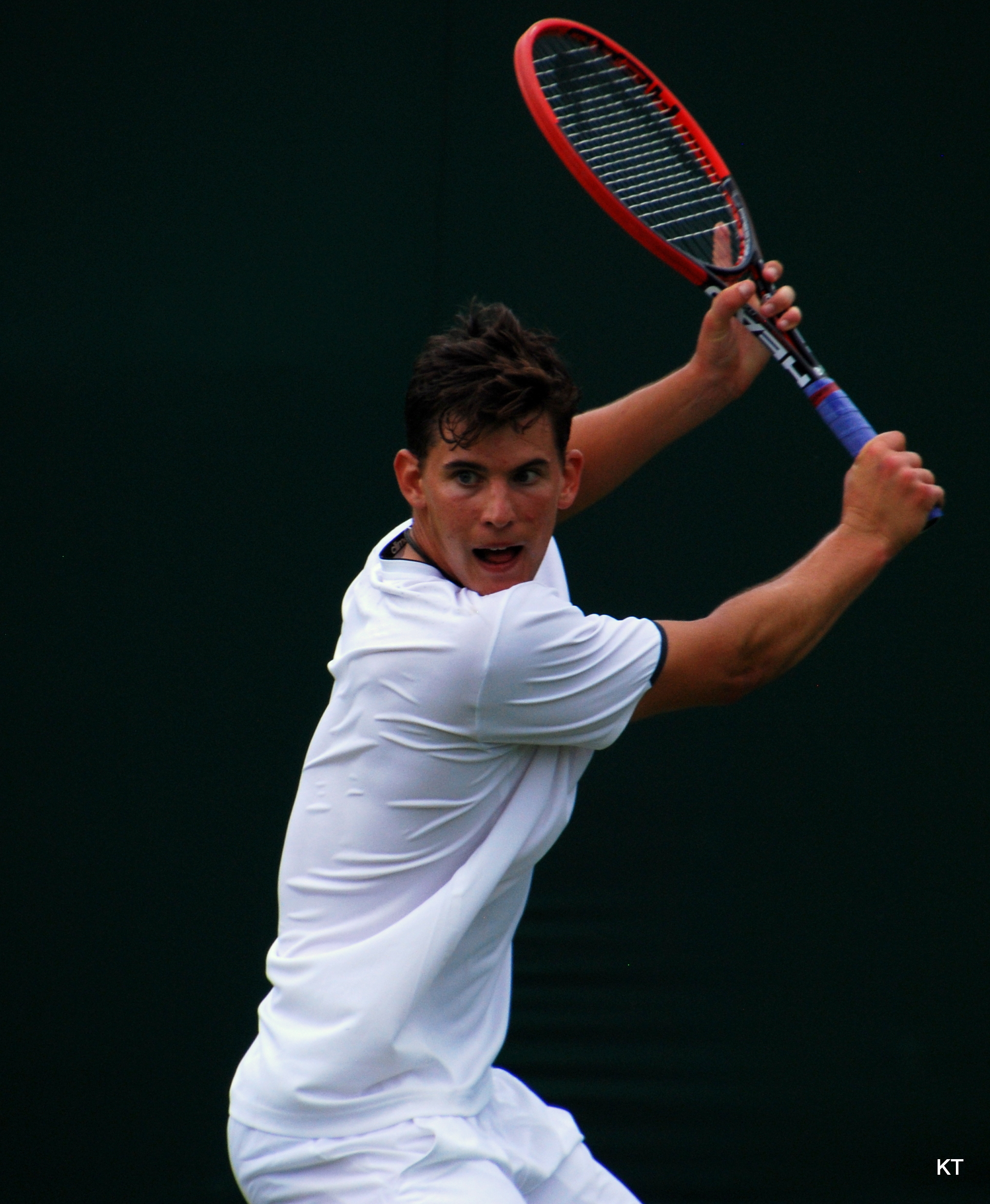
    https://upload.wikimedia.org/wikipedia/commons/7/71/Dominic_Thiem_%2814523555506%29.jpg

    Introduction

    It wasn’t so long ago that the up-and-coming “Young Guns” on the ATP tour were players like Grigor Dimitrov and Bernard Tomic, born in 1991 and 1992, respectively; now, after half a decade of anemic results and no elite prospects, there have been some promising young players showing up on tour over the last year or two. I discussed this new generation back in April in a two-part series, Looking for the Next Great Player, but with seven months of tennis and the year ending, I thought it was time to take stock and see how the “Younger Guns” did in 2016.

    Consider that the youngest players to win Grand Slam titles were born in 1988: Juan Martin del Potro and Marin Cilic. We are amidst the worst dry spell in tennis history, with no Slam title-holders that are age 27 or younger. Kei Nishikori and Milos Raonic have birthdays in December, turning 27 and 26, respectively; no-longer-a-baby Dimitrov is 25, and Tomic is 24. These are no longer young players, but all in the peak range of tennis players. Historically speaking, these are the players that should be dominating now; in fact, Nishikori is the same age that Roger Federer was in late 2008, when he was starting to show signs of slippage. Perhaps even worse than the lack of a Slam title, is the lack of even a Masters title: Marin Cilic, at age 28, remains the youngest Masters titleist and Slam winner.

    The point being, barring an unprecedented development, it is now absolutely clear that we won’t be seeing any elite players from this group. At best we might see a stray Slam or two won when no one else is looking, and at the very least it is hard to imagine that one of Raonic or Nishikori won’t win at least a Masters. Or we can look to Stanislas Wawrinka, the only multi-Slam winner in Open Era history who won his first Slam at the geriatric age of 28. There is always hope, and certainly it isn’t too late for a Raonic or Nishikori to win a Slam or two, but the chances of any become an actual great are virtually none.

    Regardless of whether or not any of this group wins a Slam or not, or even “does a Stanimal,” we have to chalk the players born from 1989 into the early 90s as a lost generation and our hope for the future lies in the next group, those born in the mid to late 90s. In what follows, I’m going to look at players born in each year from 1993 to 2000, both reviewing their year in 2016 but also looking at 2017 with an eye for what to expect (or hope for).

    For each year, or “class,” I will include the top five ranked players, using the year-end 2016 rankings. The rankings are as of November 28, which include all ATP Tour and Challenger tournaments of 2016, but don’t include Futures tournaments to be played in December, so there may be some very minor adjustments for players ranked outside of the top 150-200, but the general rankings should remain similar. These top five aren’t necessarily the best five players of their class, but they give us a starting point.

    CLASS OF ’93
    8. Dominic Thiem
    55. Jiri Vesely
    114. Bjorn Fratangelo
    127. Taro Daniel
    145. Roberto Carballes Baena

    In my generation series, 1993 is grouped with the very weak 1989-93 “Lost Generation,” yet I am including it in this discussion because of the emergence of one player: Dominic Thiem. The second best player of this class, Jiri Vesely, is quite a bit behind Thiem, with a career high ranking of #35—and that back in 2015; Vesely’s claim to fame this year was upsetting #1 Novak Djokovic in the second round of the Monte Carlo Masters.

    But back to Thiem, he went from #139 in 2013 to #39 in 2014, then to #20 in 2015. His steady rise continued in 2016, as he finished the year #8 in the world after making his first World Tour Finals as an alternate for Rafael Nadal; Thiem repaid Rafa by winning a Round Robin match to sneak ahead of him in the year-end rankings. He was strongest earlier in the season, as he showed himself to be a real threat on the clay courts, including a Semifinal appearance at Roland Garros – his only second week Slam result thus far.  He also won his first ATP 500 at Acapulco in February and three ATP 250s. But he fizzled out after mid-year. After winning his fourth title in Stuttgart, he held an 42-11 record for the year, or 79%. From that point on he went 16-13, or 55%. To put that another way, for two-thirds of the year he played like a top five player, then after Stuttgart he looked more like a #20-40 player.

    2017 Outlook: After strong gains the last few years, from #139 in 2013 to #8 in 2016, the question is how much higher Thiem can go. He seemed to hit a ceiling this year, his results cooling off in the second half, although whether this was due to exhaustion and a heavy first half schedule, or perhaps his strength on clay vs. the other courts, or maybe he simply reached his ceiling. Thiem just turned 23, which is an age when players should be in their prime, so on one hand we shouldn’t expect much more from him. On the other hand, players may be developing at a slower pace these days, so Thiem could develop a bit further. At this point I think we should enjoy him for what he revealed in 2016: a solid second tier player who is very dangerous on clay. Look to Thiem to stabilize his current level in the lower half of the top 10, and maybe compete for a Master’s title (likely clay) as well as continue to win several low level titles. He’s exactly the type of player who could win a Slam if the context is right, but is unlikely to get past a true elite player like Novak Djokovic or Andy Murray in their primes. In other words, if there’s a Slam title in his future, it probably isn’t in 2017.

    As for the others, Vesely could still have a mini-breakthrough and stabilize in the 20-40 range; he may even dive into the top 20 at some point, but I wouldn’t expect much more. It seems that Fratangelo and Daniel have been hovering around #100 for ages, so I wouldn’t expect much.

    CLASS OF ’94
    15. Lucas Pouille
    75. Adam Pavlasek
    79. Jordan Thompson
    82. Thiago Monteiro
    179. Kimmer Coppejans

    As you can see, this is another weak class, with only one player in the top 50: Lucas Pouille, whose 2016 echoed Thiem’s 2015. Thiago Monteiro may deserve watching, however. The Brazillian showed some early promise in 2011-12 as a 17-18 year old, winning a couple Futures, and then a strong showing on the Challenger circuit in 2013. But then he struggled with injury for a couple years. In 2016 he began the year ranked #463 and moved all the way into the top 100, including his first Challenger title against veteran Carlos Berlocq. He also gained some attention after beating #9 Jo-Wilfried Tsonga in the first round of Rio, before losing to eventual champion Pablo Cuevas in the 2R.

    Pouille is the obvious standout, with a consistent trajectory over the last few years: finishing #204 in 2013, #133 in 2014, #78 in 2015, and #15 in 2016. Some have claimed that he is a limited player and won’t get any better, yet his results speak otherwise: a quick rise in the rankings and two Slam QF appearances, including a five-set upset of Rafael Nadal in the fourth round of the US Open.

    https://www.youtube.com/watch?v=HQHgRFqI-aQ

    Pavlasek and Thompson both made strong gains, rising from #160 and #154, respectively. Coppejans seems to be stagnating.

    2017 Outlook: Look for Pouille to stabilize in the top 20 and creep up to the cusp of the top 10, maybe even sneaking in. He needs to start winning tournaments; his ranking is largely based upon those two QF results and modest consistency in Masters tournaments, and a lone ATP 250 title. He’s a good candidate to win an ATP 500 and/or several ATP 250s, although would be a surprise to win a Masters or Slam, at least in 2017. But he looks to join Thiem as another second tier player of the next era, and should be near or even in the top 10 for years to come.

    Pavlasek and Thompson could breach the top 50, but I wouldn’t expect much more than that. They are likely going to be future top 20-50 players. Monteiro bears watching, but we should also be moderate in our expectations.

    CLASS OF ’95
    13. Nick Kyrgios
    45. Kyle Edmund
    100. Yoshihito Nishioka
    172. Stefano Napolitano
    177. Maximillian Marterer

    Another weak class overall, but we shouldn’t underrate Kyrgios. It seems many are writing him off as a bust already, even though he is still only 21. Consider also that he went from #30 to #13 in 2016, also winning his first three titles (two ATP 250s and one ATP 500) and 72% of his matches, versus 56% the year before. Yet despite clear and significant forward progress, there’s a veneer of disappointment around Kyrgios. I think it is for two reasons: One, after reaching quarterfinals in both the 2014 Wimbledon and 2015 Australian Open, Kyrgios has not made it past the 4R in the last seven Slams. Two, he is clearly a player of prodigious talent, yet he is also a head-case. Yet we must remember that Kyrgios is still quite young—he doesn’t turn 22 until next April—and he is a very dangerous player. He’s probably the most talented player born in the “lost years” between 1989 and 1996 and the only thing keeping him from being an elite player is himself.

    Edmund has given Great Britain a second player to root for, at least in the top 50. He’s young enough to be somewhat excited about, but probably not good enough to be anything more than a top 20 player. Still, he went from #102 at the end of 2015 to #45 now, so should continue to rise.

    2017 Outlook: If there is a player who has never ranked in the top 10 that I think has a chance to be a new Slam or Masters titleist in 2017, it is Kyrgios. Now it is hard to imagine him winning a Slam…yet. But I could definitely see him winning a Masters, and perhaps as soon as this coming year. Look for him to break into the top 10 and be a spoiler that no one wants to face. He has the game to challenge for a ranking in the top 5, but it remains to be seen whether he can harness it enough to get there. His upside remains that of a multi-Slam winner, although probably more in the 2-4 range than 5+, and only if all goes right. But what is exciting about Kyrgios is it is so unclear how he’ll turn out. Ten years from now he could be looking back at a Slamless career of continual frustration but occasional moments of brilliance, or we could be looking at a handful of Slam titles and even a #1 ranking. Regardless, he looks to be the next top player that people will love to hate.

    On the other hand, as Jeff Sackmann of the Heavy Topspin blog points out, very few players with sub-par return of serve’s like Kyrgios end up winning multiple Slams. He compares him to Mark Philippoussis, who was another relatively one-dimensional but dangerous player who came up empty in Slam titles.

    Edmund also bears watching. The optimistic view is that he’ll “do a Pouille” (just as Pouille “did a Thiem”) and vault into the top 20. That said, my sense is that his upside is a bit lower than Thiem and Pouille and I could also see him stagnating in the #20-40 range ala someone like Borna Coric, Bernard Tomic, or Jack Sock. He seems a similar caliber player, but given his relatively youth, still deserves the benefit of the doubt. He almost certainly won’t be an elite, but he could be a second tier type if all goes well, or perhaps more likely in the third tier Nicolas Almagro/Gilles Simon range.

    CLASS OF ’96
    48. Borna Coric
    53. Karen Khachanov
    99. Daniil Medvedev
    104. Hyeon Chung
    105. Jared Donaldson

    Yet one more relatively weak year, which makes eight in a row (starting with 1989) that are historically weak. It goes beyond the bounds of this study, but begs the question: What happened? One thought that comes to mind is that these years—born 1989-96—are players who started playing tennis in the early 00s, when Pete Sampras was fading and retired, and Agassi not far behind. American tennis fell flat, and we can see few Americans in these group. In fact, if you look at the best Americans born from 1989 to 1996, you find a lackluster list that includes Donald Young, Ryan Harrison, Jack Sock, Denis Kudla, and Jared Donaldson.

    Anyhow, Coric has been around for so long—breaking into the top 100 two years ago—that it is easy to forget that he just turned 20. Yet he completely stagnated this year, even dropping a few rankings. Chung has fallen far—and the third in the group that finished last year in the top 100, Thanasi Kokkinakis—has completely vanished (he’s been injured all year, playing only one professional match). Donaldson—after a brief moment where it seemed he might be progressing—has also stagnated (a word which seems quite descriptive of this group, for the most part).

    That said, there is some good news: Karen Khachanov has emerged, rising quickly up the rankings, and Daniil Medvedev has made solid progress. Right now Khachanov seems like the best of the bunch.

    2017 Outlook: Expect continued progress from Khachanov. He doesn’t look like a future star, but he could be a legit top 20 player, maybe even top 10; he could be on the Thiem-Pouille track. I’m not sure what to expect from Coric at this point, whose 2016 was quite disappointing. After 2015 it became clear that he was unlikely to be a star, but at least he looked like a top 20 player. Now he may not even be that, but it still seems likely that he has another surge in him…he is just 20 years old, after all. But he reminds me of a similarly weaponless player, Bernard Tomic.

    I don’t expect much from Donaldson and Chung, who could be lower-half top 100 players. Medvedev bears watching, but it is too soon to tell. I would also keep an eye out for Kokkinakis. Not a top tier talent, but he should be back in the top 100 if healthy.

    Summary
    As you can see, the prospects are pretty grim among the players born from 1993 to 1996, a continuation of the “lost generation” of 1989 to 1992. There are a bunch of players who look like perennial second tier players and darkhorse Slam candidates, but none that look like sure-fire elites: Dominic Thiem, Lucas Pouille, Kyle Edmund, Nick Kyrgios, and possibly Karen Khachanov, Borna Coric, and one or two others.

    In Part Two we will look at the players born from 1997 to 2000.

    Cover Photo by Carine06 from Wikimedia Commons, Courtesy of Creative Commons License


  • Looking for the Next Great Player – Part Two: Candidates of Greatness

    Looking for the Next Great Player – Part Two: Candidates of Greatness

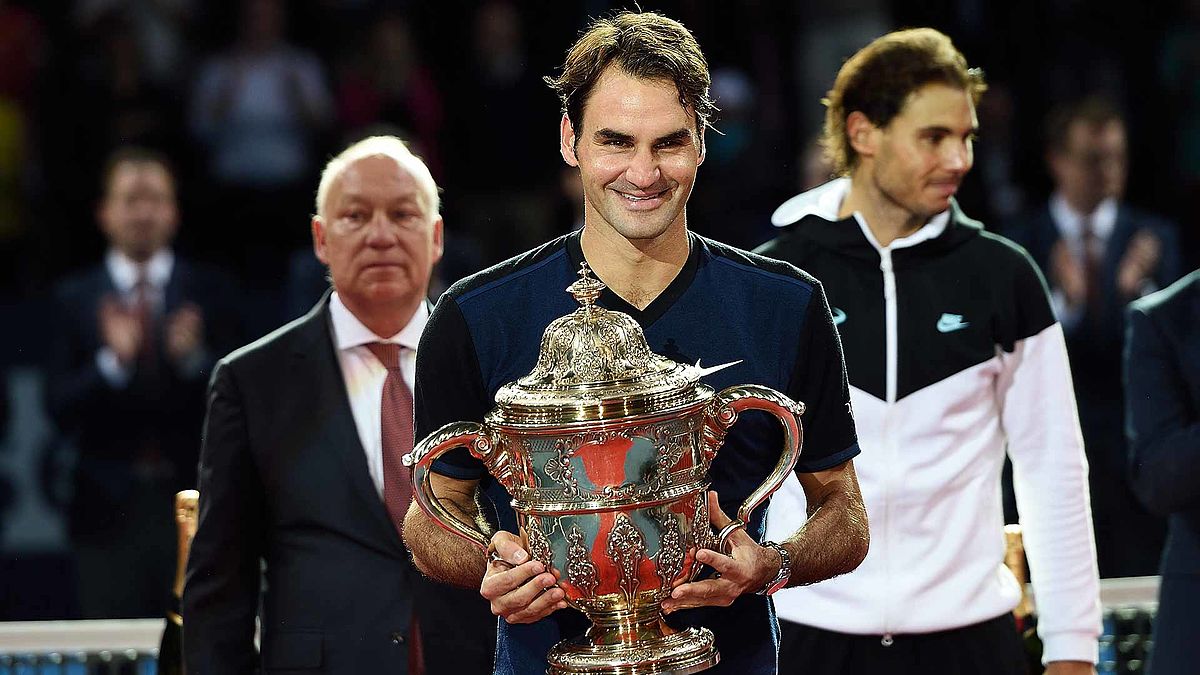
    Fedex basel.jpeg

    Revisiting the Benchmarks: the Pace of Greatness
    To recap the last installment, we have clear benchmarks that all true greats (6+ Slam winners) hold in common:

    Before their 19th birthday: Ranked in the top 100
    Before their 20th birthday: Ranked in the top 50
    Before their 21st birthday: Ranked in the top 10; won a title; made it to a Slam QF
    Before their 22nd birthday: Ranked in the top 5
    Before their 25th birthday: Ranked number 1, won a Slam

    We also found that there are about 70 players in the ATP ranking era (1973-present) who met that first benchmark—a top 100 ranking at age 18. Of those 70, 17 are active today, a list we’ll get to in a moment.

    “Failed Greats”
    Now just because a player meets all of those criteria does not mean they will become a great player. There are players who met all of those criteria and only won a Slam or two. There are also players who met all of the criteria except for one or both of the “fruition” benchmarks met by age 25, the Slam and number one ranking. These two groups combined are players that we could call “failed greats”–they passed all, or almost all, of the benchmarks, but failed to become true greats.

    Here are two lists of players, the first being those who accomplished all benchmarks, the second all but the age 25 criteria, the Slam and number one ranking:

    All benchmarks: Jim Courier, Michael Chang, Marat Safin, Lleyton Hewitt, Andy Roddick
    All except age 25: Goran Ivanisevic, Andrei Medvedev, Juan Martin del Potro

    So these are eight players in the Open Era who were on the “pace of greatness,” including five who actually met all of the benchmarks, but eventually fell short of true greatness. It is a surprisingly small number, and tells us that most players who reach the various benchmarks along the way will become great players. If we go back to those players for whom we have all the data, from Borg to Djokovic, we have 11 all-time greats (6+ Slam winners). That means that 11 of 16 players (69%) who met all of the benchmarks became greats, and 11 of 19 (58%) who met all except the age 25 benchmarks.

    The main thing these eight players have in common with the true greats is that they all developed very quickly. Consider the fact that one of the criteria is to reach the top 5 before turning 22 years old. That in itself is a difficult benchmark that erases many other players from contention.

    Let’s take a look at each of these players, to get a sense of what “went wrong” in their careers. First we have four players born in the first half of the 1970s:

    Jim Courier (b. 1970) was one of the top players on tour for a few years, the first of his generation to become #1, four months before Agassi and more than a year before Sampras. But Courier declined quickly, dropping from a top 3 player in 1993 to #13 in ’94, #8 in 95, and out of the top 20 for the remainder of his career. His mid-20s decline is similar to later number one players like Juan Carlos Ferrero and Lleyton Hewitt. There was always the sense with Courier that he was playing over his head and ability, and was less talented than his peers Sampras and Agassi. Courier’s decline coincided with Sampras’s rise to dominance; un-surprisingly, Courier won only 4 of his 20 matches with Sampras. Still, Courier ended his career with 4 Slams, 23 titles overall, a year-end #1 ranking in 1992 and, along with Guillermo Vilas, is one of the two players who I consider the “Gatekeepers” of true greatness.

    Goran Ivanisevic (b. 1971) was one of the better players of the 90s who was unable to get past the dominance of Sampras and Agassi, losing two Wimbledon finals to Sampras and one to Agassi. Yet despite fading in the latter part of the decade, he entered the 2001 Wimbledon ranked #125 and miraculously won it, which was the inspiration behind the film Wimbledon. Known for his tremendous serve, Ivanisevic wasn’t very multi-dimensional, although not nearly as one-dimensional as, say, Ivo Karlovic, and was probably a bit better than Milos Raonic is now.

    Michael Chang (b. 1972) was the youngest player of the Open Era to win a Grand Slam: the 1989 French Open at the age of 17 years and 4 months, one of only three players—along with Mats Wilander and Boris Becker—to win a Slam before his 18th birthday (Martina Hingis is the youngest woman, winning her first at 16 and 4 months). Yet Chang had a lower ceiling than other early bloomers. While he had a long and prolific career, including 34 titles and 7 Masters, he never ranked higher than #2 or won another Slam. In a way he was the David Ferrer of his generation (although more successful in big tournaments): never in contention for the best on tour, but always right there behind the top players.

    Andrei Medvedev (b. 1974) was an early bloomer who looked destined for greatness after ranking #6 in 1993 at the age of 19, and then winning two Masters the following year. Yet Medvedev floundered and was never able to take that next step up. His best years were 1993-95 when he was 19-21 years old.

    And then we come to the trio of Marat Safin, Lleyton Hewitt, and Andy Roddick—the best peers of Roger Federer.

    https://www.youtube.com/watch?v=J7KgXQYF7Ss

    Marat Safin (b. 1980) won his first Slam in 2000 at the age of 20 but only won one other and goes down as one of the biggest underachievers in tennis history. He was a very talented player who was capable of an extremely high level and very well could have formed a duo of greats with Federer, but he didn’t have the requisite focus and had the well-earned reputation of being something of a playboy.

    Lleyton Hewitt (b. 1981) was the youngest player in the ATP era to reach the number one ranking, which he did in 2001 at the age of 20 years old and 9 months. Hewitt was a very strong player for the first half of the 00s, and was the year-end #1 player in 2001 and 2002, but was more the first among near-equals than truly dominant over the field, and was eclipsed first by Roddick and then Federer in 2003 and never could climb back to the top. He fell out of the top 10 in 2006 and was never to return, playing a long second-half of his career as a non-elite player.

    Andy Roddick (b. 1982) is perhaps the player whose career was most damaged by Roger Federer’s greatness. Roddick won the US Open and the year-end #1 ranking in 2003 at 21 years old, and seemed destined for greatness. But Federer became simply better at almost every facet of the game, and Roddick’s relatively one-dimensional game became exploited by others. He was an excellent player and remained a consistent top 10 player throughout the 00s, but never won another Slam, going 1-4 in Slam finals.

    Finally we come to Juan Martin del Potro (b. 1988), who through 2009 had met all of the benchmarks of greatness: he was 21, had won a Slam, and was ranked in the top 5. And then injury struck and he hasn’t been the same since. While still a dangerous player when healthy, we’ll never know what a fully healthy del Potro would have looked like. My guess is that he would have vied with Andy Murray for the title of third greatest player of his generation, perhaps even surpassed him. But “Delpo” turns 28 later this year and is unlikely to ever reach his full potential.

    https://www.youtube.com/watch?v=4fwVz7dTI9E

    In all eight of these we see players who developed early and to a high level, but for various reasons were unable to take that next step, whether due to talent, mentality, or injury. Again, we can return to our “characteristics of greatness,” which all greats have had, and the failed greats have lacked one or more of.

    It is also interesting to note that these are all players born 1970 or later; 18 years old in 1973 is the starting point of these criteria because that is the beginning of the computerized rankings. This means that, for whatever reason, for the first 15 years there were no failed greats. Every player that met all of the criteria up to age 25 became greats, including Bjorn Borg, John McEnroe, Ivan Lendl, Mats Wilander, Stefan Edberg, and Boris Becker—a 100% “conversion rate.” Since 1970  we’ve had the eight failed greats along with Agassi, Sampras, Federer, Nadal, and Djokovic—so 5 of 13, or a 38% rate. Why exactly this is, I don’t know, although it could simply be that, as we saw in Part One, there were many more 18-year olds in the top 100 in the late 80s and early 90s than any other period of the Open Era.

    I would also add one more possibility. Note that the first four players—Courier, Ivanisevic, Chang, and Medvedev—were all peers of Sampras, while the next three—Safin, Hewitt, and Roddick—were peers of Federer. It could be that part of the reason these players “failed” in becoming true greats was because they were eclipsed by an even greater player in Sampras and and Federer (del Potro was close to Nadal and Djokovic, although his failure to achieve greatness has been blocked by injuries. We simply cannot know what a healthy del Potro would have looked like).

    Current Players: Off the Pace of Greatness
    So of active players, who was initially on the pace but has since fallen off? We’ll start with the oldest and work our way forward.

    Mikhail Youzhny (b. 1982) met the first criteria, and also won his first title at age 20, but slowed in his development. He has had a solid career, been a top 10 player and won 10 titles, but is far from great; I ranked him as the tenth greatest player of his generation (b. 1979-83), behind Tommy Robredo and ahead of Fernando Gonzalez and Guillermo Coria, although the latter two were better players and possibly deserved to rank higher than Youzhny, although Mikhail’s longevity was better.

    Tomas Berdych (b. 1985) met the first several benchmarks, ranking in the top 100 at age 18, the top 50 at age 19, winning his first title at 19 and even reaching the top 20 as a 20-year old. But he didn’t reach the top 10 or a Slam QF until a year later, at 21, and only made the top 5 at age 27.  Berdych won the Paris Masters in 2005 at 20 years old, but has not won a Masters since. He is what could be called an “aborted great:” he had the early signs, but never blossomed beyond the level of a very good player, which he remains today.

    Richard Gasquet (b. 1986) reached the top 100 at 17 years old, the top 50 and his first title at 18, and the top 20 as a 19 year old. But like Berdych, he didn’t reach a Slam QF or the top 10 until he was 21 and approaching 30-years old in June has never ranked in the top 5 or even won a title above an ATP 250. He is often cited as one of the more disappointing players of his generation, although I think in hind-sight it now looks like he simply had a lower ceiling of talent than his teenager career promised.

    Gael Monfils (b. 1986) showed immense promise at a young age, winning three Junior Slams in 2004. Monfils ranked in the top 50 at age 18 but took another four years to reach the top 10. He remains an enigmatic player on tour, extremely talented but the classic “head-case.”

    Andy Murray (b. 1987) was on the pace until his 21st birthday. He met all of the ranking benchmarks, won his first title, but failed to win a Slam QF until just after his 21st birthday. He also didn’t win his first Slam until 25 and has yet to rank number one. As we all know, Andy is known for his temper and penchant for falling apart in tight matches, as illustrated in his 2-7 record in Slam finals. While he could still win another Slam or two, especially as Federer and Nadal fade away, he turns 29 in a couple months and seems on the wrong side of his peak.

    Juan Martin del Potro (b. 1988) is in the “failed great” category and accomplished all of the benchmarks except the number one ranking, so he was even closer than Murray. He is 27, so it hard to imagine him winning 5+ more Slams to become a true great.

    Ernests Gulbis (b. 1988) is another of the same type as Gasquet and Monfils: very talented, but considered an underachiever. Gulbis reached the first two ranking benchmarks and also won his first title at age 19, but stalled out in his early 20s, not reaching the top 10 until 25, and then only briefly.

    Donald Young (b. 1989), as I have said elsewhere, represents both the failure of his generation and American men’s tennis. He made the top 100 at 18 but has floundered since, still as yet not winning a title, reaching a Slam QF, or ranking higher than #38. According to my research, he has the dubious honor of being one of the half a dozen or so worst players in the ATP era to reach the top 100 as an 18-year old.

    Kei Nishikori (b. 1989) won his first title at age 18, but slowed until his early 20s. He has met all of the criteria of 2-4 Slam winners, although at age 26 has yet to win a Slam. Kei has 11 titles so far, including 6 ATP 500s, and is the only player on tour with more than two ATP 500 titles and no Masters or Slams. While he’s a good candidate to eventually win a Masters, if he fails to do so he could end up being one of the greatest players ever not to win a Masters tournament or higher.

    Bernard Tomic (b. 1992) reached the top 50 and a Slam QF at age 18, and won his first title at age 20, but then floundered around #50 for a couple years and is now well off the pace of greatness. He is still just 23-years old, although looks more like a top 20 type than a future Slam winner.

    Nick Kyrgios (b. 1995) technically already missed one of the benchmarks, as he did not reaching the top 100 until he was 19 years and three months. But I do not think that three months should disqualify him. He did reach the top 50 before turning 20, win his first title and reach his first QF before 21, and he has a shot at reaching the top 20 by age 21, but probably not the top 10 (he turns 21 on April 27). So it could be that Kyrgios turns 21 with three of the first five benchmarks (not including a Slam title), which is pretty good. We’ll need to see a quick rise over 2016 and into the top 10 and, to get back on the pace, he would need to rank in the top 5 by his birthday in 2017. A tall order, but we’ve seen some positive signs of late, a high level of play that, if he can access on a regular basis, could make him a truly great player.

    https://www.youtube.com/watch?v=y96KGPHIdoI

    Active Players: On the Pace (So Far)
    There are currently only four players who have both reached the first benchmark, the top 100 at age 18, and not yet failed one: Hyeon Chung, Borna Coric, Alexander Zverev, and Taylor Harry Fritz.

    Hyeon Chung (b. 5/19/1996) reached the top 100 at 18 but has not yet broken into the 50, which is the benchmark that he must meet before his 20th birthday, on May 19 of this year. That said, he did reach as high as #51, so maybe we can give him some slack. He’s currently ranked #71 so has been stagnating for awhile now; hopefully we see a step forward this year.

    Borna Coric (b. 11/14/1996) is 19 years old, turning 20 in November. He is the only player who has reached two benchmarks and is still on the pace: he was in the top 100 at age 18 and top 50 at age 19. Actually, Coric has accomplished one remarkable feat: he has out-paced Novak Djokovic in rankings on their17-19th birthdays; compare:

    Djokovic: 515, 128, 63
    Coric: 396, 89, 45

    Just looking at those numbers point to potential great things for Coric. But beyond that, there are worrying signs. First of all, at 19 years and 4 months, Coric has yet to win a title; at the same age, Djokovic was about to win his second (both ATP 250s) and was about half a year away from his first Masters title and a little over a year from his first Slam.

    Where Djokovic went from #63 on his 19th birthday to #6 on his 20th birthday, Coric has been stagnating for about a year now. That said, he doesn’t need to keep pace with Djokovic to be a future great. In order to remain on the pace, he needs to reach the top 10, win a title, and reach a Slam QF all before November of 2017. So he’s got plenty of time to develop his game further. That said, it seems more likely that he becomes closer to Richard Gasquet than Djokovic.

    Alexander Zverev (b. 4/20/1997) turns 19 on April 20, and has already reached his first benchmark. In fact, he will turn 19 ranked #50, which is the next benchmark that he needs to reach—but not until April of 2017, so he’s a year ahead of schedule. After that, Zverev would need to reach the next round of benchmarks—top 10, a title, and Slam QF—all before April of 2018, which is two years away. He seems to have a good chance of all of that. So it is quite early for Zverev, which is a good sign. His recent three-set loss to Rafael Nadal at Indian Wells shows us both his potential and that he still needs a lot of work. But signs are encouraging.

    Taylor Fritz (b. 10/28/97) is in a similar situation as Zverev. He’ll be 19 later this year, about a year younger than Coric. Fritz is in the top 100 and doesn’t need to reach his next benchmark, the top 50, for a year and a half; he’s currently ranked #68, so is close already. His game is still raw, but he shows a lot of promise and the fact that he’s risen so quickly is a very good sign.

    Active Players: On the Cusp
    Those are only players who have reached at least one or more benchmark, but there are several others that are “due” for that first benchmark and look to have a solid chance to reach it.

    Andrey Rublev (b. 10/20/97) is about a week older than Fritz and currently ranked #154. He needs to squeeze into the top 100 by his birthday to be on pace, which seems very possible. He seems like a player that is ripe to start a quickened pace of development, so bears watching this year.

    Frances Tiafoe (b. 1/20/98) just turned 18 a few months ago, so has a lot of time to reach the top 100. He shows a lot of promise, including a three-set loss to David Goffin that showed some of his potential. He is currently the youngest player ranked in the top 200, at #182.

    Tommy Paul (5/17/97) and Omar Jasika (5/18/97) turn 19 in May, and are distant possibilities, but need to move very quickly, ranked #192 and #313 respectively.

    Duckhee Lee (5/29/98) is quite young and looks to have a good shot. At #206, he is the highest ranked 17-year old on tour, and the only one to be ranked in the top 400.

    Stefan Kozlov (2/1/98), ranked #224, and Michael Mmoh (1/10/98) ranked #322, are two young foreign-born Americans that bear watching.  Kovlov made a big jump recently, losing in a Challenger final. He is a good candidate to at least come close to the top 100 by year’s end.

    Beyond them you have 17-year olds Stefanos Tsitsipas (8/12/98) and Mikael Ymer (9/9/98) and even younger players for him it is just too soon to tell—like Denis Shapovolov (4/15/99) Felix Auger Aliassime (8/8/2000) and Rayane Roumane (9/11/2000), the only ranked players that were born in 2000. Again, it is way too soon for these kids, but theirs are names to remember.

    Missing the Cut
    There are also quite a few young players who show promise, but did not make that first benchmark. I will mention their names, though, given the possibility that this newer generation simply might be peaking later. Still, I think all of them are far less worthy candidates for the next great player, but could be names we see in the top 50 within the next new several years.

    Jared Donaldson, Elias Ymer, Karen Khachanov, Yoshihito Nishioka, Kyle Edmund, Quentin Halys, Thanasi Kokkinakis, Noah Rubin.

    Kokkinakis met the first benchmark and ranked as high as #69 last June, but has struggled since and is ranked #143 just after turning 20.

    “Stanislas Potential”
    There is one final player that I’d like to mention, who is far off the pace of greatness but has drawn attention of late: Dominic Thiem (b. 9/3/93). While I think it very unlikely that he becomes a 6+ Slam winner as he is so far off the pace, Thiem—at 22—has reached the various benchmarks of the near-greats, the 2-4 Slam winners. He reached the top 100 and then top 50 as a 20-year old, then won his first title and the top 20 as a 21-year old, and is currently on the verge of the top 10 and has a good chance to reach it, and play in his first Slam QF, before his 23rd birthday in September.

    https://www.youtube.com/watch?v=3BsIdpfyyrA

    And then there’s our old friend, Grigor Dimitrov (b. 5/14/91), who at almost 25 is no longer a prospect. We might have to accept Grigor for who he is and will never be. That said, while Grigor did not fulfill any of the criteria for greatness, he has fulfilled almost all of the criteria for near-greatness: reaching the top 100 at 19, the top 50 at 21, the top 20 at 22, and the top 10 at 23. He also made his first Slam QF at 22, although did not win his first title until 22: all multi-Slam winners won their first title at age 21 or younger. So while Grigor will not be a 6+ Slam winner, he is a darkhorse candidate, albeit a fading one, to expand the horizons of near-greats.

    Ranking the Candidates
    So when all is said and done, where does that leave us? As of right now, I would categorize the candidates the following groups:

    Best Candidates for Greatness: Alexander Zverev, Taylor Fritz
    Borderline/Outside Chance: Nick Kyrgios, Borna Coric, Hyeon Chung
    The Stanislas Darkhorse: Dominic Thiem
    Too Soon to Tell, but Promising: Andrey Rublev, Francis Tiafoe, Stefan Kozlov
    On the Edge of the Radar: Duckhee Lee, Mikael Ymer, etc
    Very Unlikely: Everyone else

    Finally, there are the kids—players of the next generation, 1999-2003, for whom it is just far too soon, but we are at least starting to see some names pop up in Futures tournaments.

    Which of these players will become true greats? Your guess is as good as mine, but chances are at least one of them will. If in 5 or 10 years we look back and the next 6+ Slam winner wasn’t mentioned in this article, I’ll have to eat my words, but I think there’s a very good chance that won’t be the case.

    Cover photo from Wikimedia Commons, By Tomas-ko0 – Own work, CC BY-SA 4.0, https://commons.wikimedia.org/w/index.php?curid=45898208

  • Open Era Generations, Part Fourteen: Gen 12 (1989-93) – The Lost Generation, aka the Donald Young Guns

    Open Era Generations, Part Fourteen: Gen 12 (1989-93) – The Lost Generation, aka the Donald Young Guns

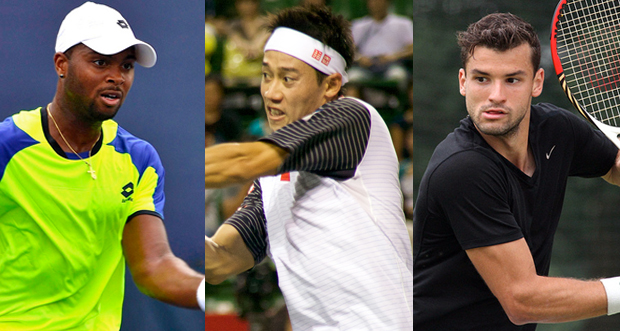
    Donald Young Kei Nishikori Grigor Dimitrov

    Why the Name?
    Donald Young is not among the best players of this generation, but to me he exemplifies it, one of the very first of what is looking to be the weakest generation that the Open Era has seen thus far.

    Aside from the clever-ish title, why Donald Young? Well, his trajectory displays the disappointment and weakness of this generation. A two-time Junior Grand Slam winner, Young finished 2007 ranked No. 100 at the age of 18, looking poised to eventually inherit the mantle of the premier American player from Andy Roddick. But he floated for several years, not reaching the Top 100 again until 2011 when he was 22 years old, no longer a tennis prodigy. And even that wasn’t the first year of a breakout; he dropped again in the rankings, failing to even qualify for the 2013 Australian Open and Wimbledon. He’s played a bit better of late, finishing 2015 at No. 57, largely due to a fourth round appearance in the US Open – his best result since 2011. But Young, no longer young at 26, is a far cry from what he was expected to be some eight years ago and is a cautionary tale of how not all highly-regarded prospects turn out. He isn’t alone among his generation, as we shall see.

    I also call this the “Lost Generation” because it has a chance of being the only five-year generation—in the year spans that I’m using—that will not win a Grand Slam, in all of tennis history. Even if a player of this generation does eventually win one, it will almost certainly be a lower amount than any of the Open Era, with Ashe’s generation being the current lowest total at five.

    Best Players by Birth Year
    1989: Kei Nishikori (JPN), Benoit Paire (FRA), Martin Klizan (SLO), Joao Sousa (POR), Donald Young (USA), Steve Johnson (USA), Aljaz Bedene (UK)
    1990: Milos Raonic (CAN), David Goffin (GER), Vasek Pospisil (CAN), Jerzy Janowicz (POL), Guido Pella (ARG), Andrey Kuznetsov (RUS), Dusan Lajovic (SERB), Evgeny Donskoy (RUS)
    1991: Grigor Dimitrov (BUL), Denis Kudla (USA), Pablo Carreno Busta (ESP)
    1992: Bernard Tomic (AUS), Jack Sock (USA), Diego Schwartzman (ARG), Ryan Harrison (USA), Damir Dzumhur (SERB)
    1993: Dominic Thiem (AUT), Jiri Vesely (CZE)

    Note that my bar for this generation is a lot lower in the list above, both because it is a weaker generation but also because it is contemporary right now, so it’s difficult to say who will end up being the best players by year.

    Consider that we have still not yet seen either a Slam or a Masters title from this generation, and only a handful of ATP 500’s: six from Nishikori, and one each from Klizan, Raonic, Dimitrov, and Thiem.

    Given that this group of players turned 22-26 last year, this is the generation that should be peaking right now. Consider the years that great players turned 22: 2003 for Roger Federer, 2008 for Rafael Nadal, 1993 for Pete Sampras, etc. There really has been no great player in the Open Era who was not an elite by the year they turned 22, and even lesser greats are usually pretty good by this age.

    Here’s a telling statistic: if we go back every five years (2010, 2005, etc), the generation with the No. 1 player was the same age as this one, age 22-26…until 2015, when the No. 1 player was 28-years old and only one player from the 89-93 generation finished in the Top 10, a downturn from 2014 when three players finished No. 11 or better. As great as Novak is, his reign should be challenged by the younger generation and there’s simply no player that is good enough to do so. And even if Novak weren’t around, there are still plenty of players who are.

    Also, consider that 2015 is equivalent age-wise to the previous generation in 2010, or 2005 for Federer’s generation. Compare the number of players in the Top 20 in 2015, compared to the previous two generations in the equivalent year:

    1989-93 Gen in 2015: Nishikori No. 7, No. 14, No. 16, No. 18-20
    1984-88 Gen in 2010: Nadal No. 1, No. 3-6, No. 12-15, No. 18-20
    1979-83 Gen in 2005: Federer No. 1, No. 3-6, No. 8-9, No. 11, No. 13, No. 15-16, No. 18, No. 20

    Part of the problem is that this generation has followed after two strong ones which include three players amassing 42 Slams and counting. This is not unlike the situation that Arthur Ashe’s generation faced after following the great 1934-38 generation that included Rod Laver, Ken Rosewall, Roy Emerson, and Lew Hoad, not to mention four-Slam winners like Ashley Cooper and Manuel Santana. This is further compounded by the fact that Novak Djokovic is maintaining a peak level into his late 20s, Roger Federer is still formidable in his mid-30s, and Andy Murray still remains better than any player younger than him (except for Novak, of course).

    Yet we’re approaching a point where this generation may have a window of opportunity. While Djokovic and Murray remain strong, it is inevitable that both start to slip a bit at some point in the next couple years. Roger isn’t getting any younger, and even if Rafa bounces back during the upcoming clay season, it is unlikely we’ll see another 2013. The next generation, players born 1994-98, looks much stronger, but they are probably still at least a year or two away from entering their peak years, and several years from dominance.

    So consider this possibility: 2016 could be the last year in which Djokovic’s generation completely dominates. In 2017, Novak and Andy will turn 30, Rafa 31, and Roger 36, not to mention players like Stan Wawrinka, Tomas Berdych, and Jo-Wilfried Tsonga turning 32. Gen 12 will be turning 24-28, still prime years, while Gen 13 will be turning 19-23 – starting to come into their own, but probably not quite peak level. For a couple years, say 2017-18, all titles might be up for grabs and we could see a similar environment as we saw in the late 90s and early 00s. I would guess that we see at least one or two Slams and Masters fall to players like Nishikori, Raonic, Dimitrov, and Thiem, or even a Goffin, Sock, Tomic, Klizan, Paire, or Vesely, if the stars align correctly.

    There are also glimmerings of hope. Consider that so far this year we’ve completed four ATP 500s and thirteen ATP 250s. Here is how those tournaments breakdown by generation in 2016, through the end of February:

    79-83 Gen: 1 ATP 250
    84-88 Gen: 2 ATP 500s, 8 ATP 250s
    89-93 Gen: 2 ATP 500s, 4 ATP 250s
    94-98 Gen: 1 ATP 250

    Not even counting the Australian Open, the 84-88 still holds the crown, but so far this year the 89-93 generation is second, with the other generations quite a bit behind. Compare to last year at this point, when the 89-93 generation had not yet won an ATP 500 and had only won a couple ATP 250s.

    It is also worth noting that the “elder statesmen” 79-83 generation has started much slower, although this is partially due to Federer’s injury and a slower start by Ferrer; that generation is pretty much dependent upon those two (although Estrella Burgos has the only title this year from that generation, repeating his Quito title). But given that generation’s age, turning 33-37 this year, it is only a matter of time before they dwindle away completely. The previous generation, born 1974-78 (e.g. Gustavo Kuerten, Yevgeny Kafelnikov, etc) was at the same point age-wise in 2011 as Federer’s is in 2016, and won only four more titles from 2011 on: an ATP 500 (Radek Stepanek at Washington in 2011) and three ATP 250s (all by Tommy Haas, in 2012 and 2013). Even the great 1969-73 generation which included Pete Sampras and Andre Agassi and was at the equivalent point in 2006, only won two more ATP 250s, both by Fabrice Santoro (Newport 2007 and 2008).

    The point being, the 1979-83—which won 16 titles last year, including a Masters and six ATP 500s—is phasing out and, if nothing else, the 89-93 generation should be able to pick up some of the slack. It is probably already happening.

    Underachievers and Forgotten Players
    Well, all of them, which is why I still have not discussed particular players in any depth – I was saving them all for this section. OK, that’s a bit harsh, but not entirely untrue.

    The player that stands out the most to me is Grigor Dimitrov, because he was the player of this generation with probably the highest upside and most expectations. He’s still only 24, so has half a decade of potentially peak years left, but his chances of being a great player have declined to the point of being nonexistent. Consider, for instance, that his 2015 is the equivalent age-wise with Federer’s 2005 or Djokovic’s 2011. I recently made the observation that “Baby Federer” looks a bit like Roger Federer on the practice court: he is smooth and elegant, but lacks the “teeth” needed to compete on the big stage.

    Grigor is also in danger of being surpassed by younger, hungrier players like Dominic Thiem, Nick Kyrgios, Borna Coric, Alexander Zverev, and Taylor Fritz. He’s got time, but the field isn’t going to get less crowded. While the chances that Dimitrov will become a great player are slim at best, I still hold out hope that we’ll see a Masters title or two, maybe even a Slam. He’s got a complete game and is a good candidate to win some bigger titles once the current elites slip if he develops the necessary mindset.

    Kei Nishikori also seems like an underachiever in that he is capable of truly brilliant tennis but doesn’t seem to have the fortitude to take home a big title. Still, with six ATP 500 titles – by far the most among active players without a Masters – he is the most accomplished player of this generation (so far), and it seems only a matter of time before he wins a Masters.

    Among forgotten players, there are two that come to mind: Ryan Harrison and Cedrik-Marcel Stebe. A few years ago Harrison was one of two players of this generation in the Top 100, along with Bernard Tomic. But he never rose higher than No. 43 and that was almost four years ago. Stebe won several Challengers and Futures in 2009-11 and finished 2011 No. 81 at the age of 21, but then his career was derailed by injury. One more to mention is Ricardas Berankis, who won the 2007 Junior US Open and was the highest ranked player under 21 in 2010, at No. 87. Berankis pretty much stalled out at that level, his ranking never going higher than No. 67. He’s a good reminder that a Top 100 ranking at a relatively young age isn’t an automatic ticket to the Top 20.

    Did You Know?
    Despite the unprecedented weakness of this generation, there is one strange anomaly by which it outperformed the previous, far greater generation. The first title won by a player of this generation was in 2008 by an 18-year old Kei Nishikori, at Delray Beach. The equivalent year for the previous generation was 2003; it wasn’t until 2004 that the 84-88 generation won titles, when Rafael Nadal, Robin Soderling, and Tomas Berdych all won ATP 250s. But the title did prove to be a bit of an anomaly, as no player of this generation would win another until 2011, when Milos Raonic won San Jose.

    Ten Highest Ranked Players (as of week of 2/29)
    6. Kei Nishikori
    13. Dominic Thiem
    14. Milos Raonic
    17. David Goffin
    20. Bernard Tomic
    22. Benoit Paire
    23. Jack Sock
    26. Grigor Dimitrov
    28. Martin Klizan
    35. Steven Johnson

    The good news is that almost one-third of the Top 30 are players of this generation. The bad news is that they’re mainly clustered in the lower half. Expect this to change over the next year or two; right now, only six 89-93 players are in the Top 20—my prediction is that, by year’s end, 8-10 will be in the Top 20, and 2-3 will be in the Top 10.

    Top Ten Players of the Generation (So far)
    1. Kei Nishikori
    2. Milos Raonic
    3. Grigor Dimitrov
    4. Dominic Thiem
    5. Martin Klizan
    6. Bernard Tomic
    7. David Goffin
    8. Jack Sock
    9. Jiri Vesely
    10. Benoit Paire

    Honorable Mentions: Federico Delbonis, Vasek Pospisil, Pablo Carreno Busta, Jerzy Janowicz.

    This list is mainly based upon accomplishment so far and is always changing, but right now Nishikori has the best career by a good margin. No player has won even a Masters tournament, but Nishikori has made it to a Slam final, has won 11 tournaments in all, including six ATP 500s. No other player has won more than a single ATP 500.

    Milos Raonic remains a dark horse at any fast court, although the limitations of his game makes it seem unlikely that he has what it takes to get past the elites at a big tournament. But if he sticks around his time may come. At least he’ll probably have a career somewhere between Tomas Berdych and John Isner.

    A few years from now this list could look quite different. When I wrote down notes for every generation of this series last fall, I used the word “dark horse” for Dominic Thiem. Now it seems inappropriate as his star is rising fast, with two titles under his belt so far this year. He is on the verge of surpassing Dimitrov, and only needs better success at Slams to be considered the more accomplished player. In fact, Thiem could be first or second on this list by year’s end.

    The rest on the list could be interchangeable. Vesely and Sock are still rising, although the best case scenario looks more like Top 10 players than Top 5, and maybe more likely Top 20 types – as with Goffin and Tomic.

    Grigor Dimitrov remains the dark horse of the generation. He could go the way of an Ernests Gulbis, or he could be a late-bloomer and win a Slam or three in his late 20s. While I have given up my earlier hope that he would be a great, I still find him a fascinating player to watch and think he has the talent to bring home a big trophy someday.

    There is some talent in this generation, but it really is similar to the 1939-43 and 1974-78 generations, both in terms of the reduced talent from prior generations, but also the fact that it is coming at the back-end of a golden age of tennis greats. It is a hard context to play in.

    [divider]

    Cover Photo (Creative Commons License): stevenpisano / angelicalbite / Marianne Bevis

  • Passing of the Torch? Brief Musings on Thiem’s Win Against Nadal

    Passing of the Torch? Brief Musings on Thiem’s Win Against Nadal

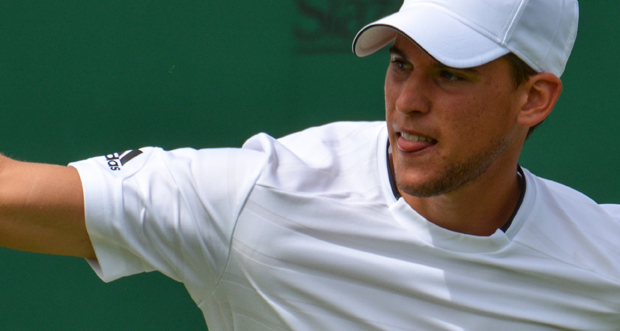
    Dominic Thiem

    I have been touting the prospects of Dominic Thiem for some time. Standing at 6’1″, well built, and possessing heavy and penetrating groundstrokes and a serve to match, I believe he is the best prospect of the current crop of players in their late teens to early twenties.

    He first caught my attention in 2014 when he recorded an impressive win over Wawrinka, then a recent Grand Slam and Masters Champion, in Madrid. He went on to continue his fine clay pedigree, falling to Goffin in his first final at just age twenty, before backing it up last year with three titles on the red stuff.

    [divider]

    Click here to discuss Thiem’s win over Nadal in the Discussion Forum.

    [divider]

    His win in the semifinals in Argentina against Nadal, indisputably the greatest clay court player in history, was no flash in the pan. Yes, the Spaniard is perhaps past his best, lacking a step and some of the zip of old on his forehand, but he is competitive. Fifth ranked in the world, a recent finalist in Qatar, and semifinalist in the World Tour Finals, it took Thiem a deciding set tiebreak after facing down a match point against him to win through to the final.

    Thiem represents a style of play that is one of two that can and increasingly do from the baseline. Wawrinka, Almagro, Soderling have on days of inspiration literally been able to bully Nadal on a clay court. Consistently heavy shots with big serves to set them up have left Nadal listless. The other, applied by Djokovic with regularity since 2011, and more recently by Ferrer and Murray, is to hang back with Nadal and rely on speed and defence, Rafa’s own hallmarks, and attack a short ball or draw the error. Thiem is needless to say a practitioner of the former style and crept over the line with it against Nadal.

    In the Austrian’s fearless display he maintained the offence throughout. He hit over ten aces, and enough serves that were not outright winners that produced a short return he could in turn pummel away for a winner or force the error. Nadal in turn played some great defence, but unlike in years prior he was unable to do so consistently and lacked a killer instinct. When Thiem went down whilst serving to stay in the match at 5-6 in the third my thought was ‘curtains’. Too many times in the past have I seen a younger and inspired player push Nadal to the brink only to let inexperience tell and fall at the final hurdle. Thiem kept admirably cool headed, not least in saving a match point that game with aggressive consistency. In the tiebreak that ensued it was Nadal who looked the younger and inexperienced one, double faulting and playing tentatively, whilst Thiem recorded aces and blistering groundstrokes to build up what proved to be an insurmountable lead.

    Does this represent a passing of the torch? Not just yet. The Austrian needs to record these kinds of wins regularly and at larger, more prestigious events. The forehand broke down at times, his signature backhand, rightly lauded, was shanked at times and looked vulnerable when he was rushed, as is inevitable with a long take-back. I believe that these creases will be ironed out with experience, and that we shall see Thiem become one of the preeminent clay court players on the tour come his mid to late twenties, challenging for and winning the biggest events on the surface, as well as on the increasingly slower hard courts that make up large sections of the calendar. With such huge hitting I wouldn’t bet against him.

    [divider]

    Cover Photo (Creative Commons License): Carine06

  • 15 Up-and-Coming Players to Watch in 2015 / Jonathan Northrop

    15 Up-and-Coming Players to Watch in 2015 / Jonathan Northrop

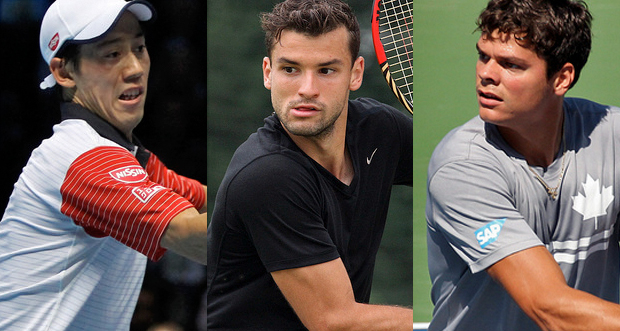
    Kei Nishikori Grigor Dimitrov Milos Raonic

    As the first tournaments of 2015 wrap up, it is almost shocking to think that the Australian Open is just around the corner on January 19. As always, we’ll all be watching the top players with the usual questions: How healthy will Rafael Nadal be and will it be enough to supplant Novak Djokovic at the top of the rankings? Can Novak maintain his focus? Will Father Time catch up with Roger Federer, who turns 34 later this year? Can Andy Murray find his 2012-13 form again? Will Juan Martin del Potro be healthy enough to rise again? And so on.

    But what about the rest of the pack? We focus so much on the “Big Four” and a few dark-horse candidates, while there are a lot of interesting stories and players beyond the big name elite. Let’s take a look at these other players, in particular those who bear watching in 2015 for whatever reason – but mainly as players poised to rise in the rankings. Some may be knocking at the door of the elite, while others may simply be establishing themselves as players to know, while others yet might be potential future stars.

    There are, of course, many other players worth watching – but I wanted to highlight these fifteen as particularly interesting, for a variety of reasons. Let’s take a look.

    [divider]

    Click here to discuss “15 Up-and-Coming Players to Watch in 2015” in the discussion forum.

    [divider]

    THE ALMOST BIG THREE
    Grigor Dimitrov

    Let’s start with Grigor Dimitrov, who may have been so overrated in the past in terms of expectations that he’s now being underrated (although his recent Brisbane demolishing at the hands of Federer is not exactly encouraging). Let us not forget that Grigor has improved in each year he’s been on tour; consider his year-end rankings since 2008: 493, 288, 106, 76, 48, 23, 11. Notice the trend? If Grigor keeps it up in 2015 he will possibly make it as high as the edge of the Top 5. But of course at some point he’s going to even out, and it is hard to imagine him supplanting Novak, Rafa, or even Roger. But it seems that he can beat anyone else, or at least remain competitive among the rest of the near-elites of the game. The problem with Grigor seems to be that, while he’s very good at almost every facet of the game, he doesn’t have any truly killer weapons – and seemingly lacks a killer instinct altogether.

    Prediction: The book is still open for Grigor. He needs something else — a killer shot and perhaps more of a killer instinct — to fully actualize his potential, otherwise he’ll remain more of a pretty player to watch, but not a true elite. In 2015 I think we’ll see continued incremental gains as Grigor creeps into the Top 10. He’ll continue to go deeper in Slams, being relevant at Masters tournaments, with a chance of winning one late in the year (Paris?), eventually earning his way to the World Tour Finals next November.

    Kei Nishikori
    On one hand, we may have seen the best of Kei in 2014. On the other, he seems to keep getting better and better, and of the rest of the field seems like he has what it takes to upset one of the Big Three. Kei is now a legit candidate to win a Masters and a dark horse at the Slams. Whether he has the stamina to make it through remains to be seen; despite his strong year, it should be remembered that he still only made it to the second week once.

    Prediction: Kei settles in within the second half of the Top 10. For some reason Nikolay Davydenko comes to mind – a player that never really challenged at Slams, but won a couple Masters and was always around. Perhaps Kei will have a similar peak.

    Milos Raonic
    At first I excluded Mighty Milos from this list but then I decided that it would be unfair. The big Yugo-Canadian is, quite frankly, a bit underrated at this point. Like Dimitrov it is hard to imagine him beating any of the Top 3 when it really counts, but he did just that versus Roger Federer at the Paris Masters. Milos continues to make small gains, as evidenced by his year-end rankings: 373, 156, 31, 13, 11, 8. If the pattern holds he’ll finish 2015 in the No. 5-6 range. At the least, though, I think Milos is a fixture to hand out in the latter half of the Top 10 for years to come, playing a similar role in the next half decade as Tsonga and Berdych have for the last half decade.

    Prediction: Something good for Milos in 2015. Will it be a Masters? A Slam even? Hard to imagine, but he’s knocking at the door. I think he wins several titles in 2015, maybe even a Masters. He feels close.

    DON’T FORGET ABOUT THE OTHER TWO
    Jiri Vesely & Dominic Thiem

    For some reason I pair these two players. Well, the reasons are pretty clear: they’re of a similar age, on the younger side of “Generation Raoshitrov”; Vesely’s advancement was steady but perhaps a bit disappointing, going from No. 85 to No. 66, while Thiem jumped 100 ranks from No. 139 to No. 39.

    Prediction: I expect continued steady progress from both. Both, I think, will fully establish themselves in the Top 40, and Thiem might even challenge for the Top 20. I think we’re still a couple years away from their peaks, but both should eventually be fixtures in the Top 20 and may even challenge for the Top 10 as players like Ferrer, Berdych, Wawrinka, and Tsonga age themselves out of it. But that’s probably a couple years away.

    THE BOYS ARE GROWING UP
    Nick Kyrgios

    The first of two up-and-comers to beat Rafael Nadal in 2014. Nick Kyrgios is a big kid (6’4”) with a big game and a big serve (14.8 ace %, good for No. 6 among the Top 50); I can’t help but think of Juan Martin del Potro when I see him out there. Ironically enough, the last time a teenager upset the world No. 1 at a Grand Slam was Rafa over Roger Federer at the 2005 French Open. Anyhow, great things are ahead for the Australian – he finished the year at No. 52 up from No. 182 in 2013, so he made quite a jump. He turns 20 years old in April, so still has some room to grow.

    Prediction: Nick makes steady progress but doesn’t quite jump into the elite. That said, he fights for, and at least comes close to, a year-end Top 20 ranking. While he may play the spoiler in 2015 again, he probably won’t be in the mix for big titles until 2016.

    Borna Coric
    No young player has me quite as excited as Borna Coric. I just see him having the highest upside of any player currently on the radar (that is, in the Top 300 or so). We all know him for taking out Rafael Nadal at Basel, but let’s not forget that he also beat Ernests Gulbis in that tournament and lost to red-hot David Goffin in three sets. Coric is for real and his advancement should be steady from here on, although at this point we should remain patient – he did just turn 18 a couple months ago, after all.

    That said, it is important to note that most truly elite players were ranked somewhere in the second half of the Top 100 or so at Coric’s age, and most jumped into the Top 20 the year after. Compare the year-end rankings for recent all-time greats at age 18 and 19:

    Djokovic: 78, 16
    Nadal: 51, 2
    Federer: 64, 29
    Sampras: 81, 5
    Agassi: 3, 7

    (Prior greats – starting with Agassi, but including Becker, Edberg, Wilander, etc., tended to have their break-out a year earlier, with age 17 being the first in the Top 100 and age 18 the big jump; one could speculate that perhaps we’re going ahead another year, with Nick Kyrgios’ trajectory being closer to the norm for elite players – first year in the Top 100 at age 19, big jump at age 20).

    Now compare the next tier down:
    Del Potro: 92, 44
    Murray: 65, 17
    Roddick: 156, 14
    Hewitt: 25, 7
    Kuerten: NA, 188
    Kafelnikov: 275, 102
    Courier: 43, 24

    As you can see, the next tier tends to rise a bit later, or at least more slowly.

    The point here is that if Coric is going to be great—as in an all-time great—then he needs to rise fast. Given the fact that players seem to be taking longer to develop these days with later peaks, I think we can go a bit easier on him and not expect a Rafa-like or Pete-like rise, but for me the benchmark would be a Top 40 or 50 ranking by year’s end. If he makes it into the upper half of the Top 100, then I think it is a sign that he has a chance to be special, even a truly great player. If he sticks around No. 100 or slips out of the Top 100, then we might need to temper our expectations a bit.

    Prediction: Borna will continue to rise, with some bumps in the road, but his overall trajectory will be clear. He finishes somewhere in the No. 40-50 range, although I would be surprised if he wins anything more than maybe an ATP 250.

    Alexander Zverev
    The second youngest player on this list, 17-year-old Zverev finished the year ranked No. 136. That might not sound all that impressive, but consider that of the active players who have ranked in the Top 10, only Tomas Berdych (No. 103), Lleyton Hewitt (No. 100), and Rafael Nadal (No. 49) ranked higher at the end of the year they turned 17. Novak was No. 186, Roger No. 301, and many players weren’t even on tour yet. While we should be moderate in our expectations at this point, it is hard not to get excited about this kid. If Nick Kyrgios and Borna Coric are the top two candidates to be the next elite players, then Zverev is No. 3 and not far behind.

    Prediction: Baby steps. Zverev doesn’t turn 18 until April, so has a lot of room to grow – both as a human body and as a player. I think he has a good shot at the Top 100 this year, but I wouldn’t expect much more than a year-end No. 80-100 ranking.

    OTHERS TO KEEP AN EYE ON
    Ernests Gulbis:
    Long viewed as an underachiever, Ernests (named after Hemingway) had his best year, challenging at one point for the Top 10. But questions remain: After an erratic career, can he maintain his current level? Can he take it a step higher? Or is he in the vein of up-and-down perennial underachievers like Alexandr Dolgopolov and Richard Gasquet? Who knows with Ernests. I suspect he’ll have more upsets like the fourth round French Open victory over Roger Federer, but not be consistent enough to break into the elite. That said, I think he’ll flirt with the Top 10 and maybe dip into it briefly, but then fall back and finish somewhere in the latter half of the Top 20. I’d prefer not to be so specific in my predictions, but for some reason No. 15-18 sounds about right.

    Jack Sock: While it is hard to become too excited about a 22-year old ranked No. 42 and with no titles to his name, consider that Sock is now the fourth highest ranked American and only one of five in the Top 100. Not only that, he’s the youngest American ranked in the Top 200, just a month younger than No. 121 Denis Kudla, and a few months younger than No. 190 Ryan Harrison. But here is where there is some hope: Sock’s rise has been strong and steady – consider his year-end rankings from 2010 to the present: 878, 381, 150, 102, 42. We probably can’t expect Sock to be the next Andy Roddick, but he could be the next John Isner or Mardy Fish.

    Stefan Kozlov: Stefan who? Well, a year or two from now he could be front and center in our minds. Who is Stefan Kozlov, you ask? He’s the youngest player to finish in the Top 500 this year at No. 468. No. 468?! Who cares? Well, I care – because Stefan Kozlov was born in 1998. Yes, 1998. Kozlov is 16-years old, turns 17 in February. He hasn’t done much yet, but he did play in the qualification rounds of the US Open, defeating his first round opponent, Mitchell Frank, before losing in three sets to “old man” Borna Coric. Kozlov is a long way away, but I wanted to introduce him as he’s a player worth keeping an eye on. Oh yeah, and best of all, while he’s Macedonia-born, he’s technically American (I know, it feels like cheating – but tell that to the Canadians re: Milos).

    Yoshihito Nishioka: In the shadow of similarly named (at least to a Westerner) top-ranked and fellow Japanese player, Kei Nishikori, Nishioka is 19 years old and ranked No. 156, and could be a real sleeper to break into the Top 100 next year and a player to watch.

    Thanasi Kokkinakis: Another member of the “Class of ’96,” which is turning out to have some talent. Kokkinakis is the third highest ranking teenager at No. 150, behind only Coric and Zverev. Another Australian to watch.

    Jared Donaldson: Ranked all the way down at No. 261, 18-year-old Jared Donaldson is worth mentioning not as much because he’s the sixth highest ranking teenager, but mainly because he’s the highest ranking American teenager; actually, he’s the highest ranking American age 21 or younger, which makes him arguably America’s Great Hope to return to relevance. But let’s check in next year to see where he is.

    Hyeon Chung: Korean-born, the fourth member of the Class of ’96 on this list (along with Coric, Kokkinakis, and Donaldson). I don’t know what his upside is but at No. 173 he’s the highest ranked Korean by a good margin, and well-situated on the career trajectory towards a strong career.

    ADDENDUM: Another 15 to the Mix
    I’d like to add a few more names to keep an eye on. Again, remember that the above list is not meant to be comprehensive, but a the same time I’d be remiss not to give at least an honorable mention to a few others.

    Roberto Bautista Agut: A surprising rise from No. 58 to No. 15 in 2014, can he maintain a top 20 ranking for a few years?
    David Goffin: After a disappointing 2013, Goffin had a tremendous rise in 2014, going from No. 110 to No. 22.
    Jerzy Janowicz: Let’s not forget about Jerzy, but’s he fast becoming a cautionary tale, a least for those of us that got excited a year or two ago. He’s still young enough to turn it around.
    Pablo Carreno Busta: It seemed that he was a cult favorite to be excited about a year ago, but after only a moderate rise in 2014–to a solid No. 49–I think expectations have cooled. Still, he’s a name to get used to as he could be a regular in the top 40 for years to come.
    Dusan Lajovic: Best known for making it the 4R at Roland Garros where he lost to Rafa, but not before beating Delbonis and Sock to get there. I think he’s a sleeper to be a solid player.
    Bernard Tomic: Oh Bernie, it is hard to root for you. You’re like a playboy superstar that isn’t a star. Time to grow up if you want a decent career.
    Victor Estrella Burgos: In contrast to Tomic, how can we not cheer for this guy? Starting on the ATP tour at age 33-34, and he made it as high as No. 65! Who knows what’s ahead but I’m cheering him on.
    Lucas Pouille: Another sleeper – seems talented.
    Luke Saville: Ditto. These guys aren’t future elites, but they are probably future top 50 players.
    Diego Schwartzman: At 5’7″ you’ve got our attention. Seems like another sleeper.
    Elias Ymer, Christian Garin, Roman Safiullin, Andrey Rublev, Gianluigi Quinzi: More young ‘uns to keep an eye on, all born in 1996-97.

    OK, that’s it. The problem with trying to be semi-comprehensive with this second list is that there is no way to draw the line. No Vasek Pospisil? Federico Delbonis? Well, I had to draw the line somewhere and it is “15 + another 15.”

  • Goffin Wins First Title in Kitzbuhel

    Goffin Wins First Title in Kitzbuhel

    David Goffin

    David Goffin of Belgium defeated Dominic Thiem of Austria on Saturday at the Bet-at-Home Cup, 4-6, 6-1, 6-3. It was the first ATP final for either man, and therefore the 23-year-old Goffin’s first title. Thiem is a young player on the rise, just 20 years old, but even the support of the local crowd couldn’t get him through to his first trophy.

    [divider]

    Cover Photo (Creative Commons License): Marianne Bevis

  • On the Cherry Path — [An Up-and-Coming Player and His Unorthodox Coach]

    On the Cherry Path — [An Up-and-Coming Player and His Unorthodox Coach]

    Bild-im-Text_Fleisch27_Resnik_02

    Sepp Resnik turned 60 recently. Now the man with the most colorful reputation in Austria’s sport scene wants to prove that “world class” works differently than everybody thinks it does. He has tennis prodigy Dominic Thiem, recently turned 20, shower in a waterfall, carry tree trunks through the woods, and do sit-ups at midnight until he screams.

    By Stefan Wagner

    Photographs by Max Kropitz

    Originally published in the Austrian magazine Fleisch.

    [divider]

    Dominic Thiem really got to know his fitness coach Sepp Resnik on a March afternoon, by the banks of the Wiener Neustadt canal, an unadorned waterway in the dull outer districts of the town.

    Thiem (barely 20, running and hence out of breath): “Look, Sepp, over there, on the other side, there’s some sun on the meadow. That’d be a good place to work out.”

    Resnik (also running, but not quite as out of breath): “Good idea, let’s do that.”

    Thiem:  “But…”

    Resnik:  “But what?”

    Thiem:  “But… bridge?”

    Resnik:  “Who needs a bridge? That creek isn’t wider than five meters, and it ain’t deeper than two. You won’t drown.”

    Resnik stops, steam clouds forming before his mouth, strips down to his underpants, enters the water as if it’s a hot spring, and motions for Thiem to do the same.

    “What are you waiting for?”

    Doing the same takes a little time, first of all because Thiem felt like hesitating for a moment and second of all because he had a lot of clothes on, including a parka and a woolen hat. Then Thiem enters the water, toes first, with friendly encouragement by Resnik (“What’s taking you so long?”), and swims through the fresh spring water, fidgeting, gasping for air, only to commence doing all sorts of exercise, the kind of which usually gets you in shape for a military pentathlon, on the other side of the canal for an hour. The March sun is only slowly drying the clothes on Thiem. Afterwards, both swim back, get into their clothes, and Resnik says cheerfully, “Look, now we’re even showered.”

    Ferrari Mouse

    One could easily attribute the collaboration of Dominic Thiem and Sepp Resnik to a commentator’s joke. Resnik is a former gymnast, soccer player, judoka, track and field athlete, and military pentathlete (in 1984, he was the first Austrian at Hawaii’s Ironman Triathlon). Afterwards he made a name for himself in various ultra-triathlons, for example 1988 in Grenoble (13km swimming, 540km cycling, 126,6 km running); he got attention in 1994 when he circled the world with his bike. With two decades of management experience in the Vienna Go-Go Bar “Beverly Hills”, a marriage to a women who called herself Ferrari Mouse (and who married a woman after their divorce), projects like a world record in endurance downhill skiing, and participating in a nationally televised matchmaking show, he crossed over from the sports section to general news and the gossip pages.

    The increasing restraint among sports journalists in appreciation of Resnik’s achievements is based in certain doubts about the reliability of his statements. When a sports magazine published a major piece on Resnik’s ultra-triathlon, a letter to the editor urged for more critical research and enumerated how Resnik’s account of his crossing of the Gibraltar Strait meant he would’ve equaled the 100 meter freestyle world record over the whole distance. (“All accounts were correct. You have to take the current into consideration,” Resnik says even today, two decades later.)  The 300 daily kilometers in his 80-days-around-the-world bike tour also raise some skepticism about the credibility of the pipe-smoking Resnik: 300 km is double the distance of an average Tour de France stage, and Resnik was facing non-closed, public roads in countries like Pakistan or Iraq. (“300? It was 350!” says Resnik).

    On the other hand, Thiem is one of the world’s best tennis players in his age group, and along with David Alaba one of the only young Austrians on the radar in tennis, which is viewed as a global sport in ski-centric Austria. When Thiem was 17, he caught Ivan Lendl’s eye. Right on the court, Lendl called Adidas and recommended they get the boy a multi-year contract.

    Bild-im-Text_Fleisch27_Resnik_01

    Flashes of talent weren’t scarce for the young Lower Austrian in the following years, but overall, he seemed a little too delicate for pro tennis. His health was frail, he was often tired, and, on the court, wasn’t convincing as a competitor. He always looked as if he’d want to apologize for his thundering winners. When Dominic Thiem would get over himself and pump his fist after a hard-fought point, as is expected by a tennis player in Austria ever since Thomas Muster, he’d hold his thumb in a way that would have got it broken should he actually have used the fist to punch.

    Our locker is the trunk

    Günter Bresnik, 52, has been Thiem’s coach for eight years and when he’s asked about the most important feature of a successful tennis professional, he says, “Stress tolerance.”  Bresnik has been looking for years for the right fitness trainer for his protégé. There were even talks with Roger Federer’s staff member Pierre Paganini, or Bernd Pasold from the Red Bull training center, but somehow nothing worked out.

    Then, in the fall of 2012, Bresnik met Resnik. They knew each other from years before, got to talking, and Bresnik invited Resnik to visit them in the Südstadt training center, between a soccer stadium and the parking lot of a shopping mall. Resnik came, watched the boy for ten minutes, and said, “Günter, I saw everything. The boy can do anything from the hip upwards and nothing from the hip downwards.”

    About Christmastime of that year, they started working together on a trial basis, in idling mode by Resnik’s standards, which means 15 km runs in the park of the military academy in Wiener Neustadt.

    “We went running at midnight, so we’d be undisturbed. The first time, Dominic asked where the lockers are, and I told him: our locker is the trunk. Then he said that it’s dark. And I told him: what else do you expect at midnight? When I say right, you go right, when I say left, you go left. I’ve run 60.000 km in this park, I know my way around.”

    In the first workout together, Resnik counted 16 walk-breaks in 15 kilometers. “The boy’s pulse hit the roof.“  Two weeks later, it was two walk-breaks.

    Stalingrad et cetera

    Sepp Resnik is one of those people you can’t be formal with. And he’s a rather entertaining narrator, with strengths in the more associative form. When the conversation turns to the topic of sleep, because you ask whether Dominic Thiem would get enough to be on the court the next day after 15km at midnight, he’ll say, “For years, I trained by myself every night. Every evening I biked from Vienna to the Wechsel. [Note: 1.700 m mountain pass about 100km south of Vienna.]  And at 7.30 am in the morning I was here to wish the company a good morning.”

    But when did you sleep?

    “I didn’t.”

    But man can’t live without sleep… ?

    “I didn’t sleep for decades. And do I look bad?  There you have it.  I’m not wasting my time with sleeping anymore.“

    Sepp, with all due respect, but I can’t believe that. Completely without sleep, that’s not possible.

    “Says who?”

    Silence.

    “Now pay attention to what I’m saying. Thirty years ago my coach, Hans Schackl [note: the way Resnik refers to him as “der Schackl Hans” is equally casual and untranslatable] told me: Stop sleeping. From now on, we’re training every evening from seven in the evening to five in the morning, every day, and Saturday, Sunday are the races. I told him, I don’t get it, so he just handed me war literature. Stalingrad, mountaineering, wars, Solzhenitsyn, Gulag Archipelago. I read that, and then I knew, my whole life truly is a vacation.

    But the body’s requirements…

    “I don’t care about requirements. Whatever. You’d be amazed at what you’re capable of when the going gets tough. In the Battle of Stalingrad, people recognized the senselessness of their actions and said, I’m going home now. Then they went home on foot. Those are landmarks for me. You get that?“

    Hm.

    “You know, I’m from an industry where the establishment of boundaries doesn’t exist.“

    Sentences like this one showcase Sepp Resnik’s prominent chin. In the chin discipline, he’s world champion, leagues ahead of Michael Schumacher and Jay Leno.

    Headerbild_Fleisch27_Resnik


    For aerobic capacity

    Immediately after the tournament in Kitzbuhel at the end of July – Thiem beat Juergen Melzer and reached his first quarterfinal at the ATP level – the schedule called for a week of fitness training.  In pro sports, such timeouts from the everyday training and competition cycle are called a “fitness block“, where the core elements of Athleticism 101 are refreshed: strength, speed, coordination, endurance. Fitness blocks are usually held in gyms with mirrored walls, heart-rate monitor straps, lactate tests at the earlobes, ergometers, various colorful training utensils, hip-hop from the sound system, and a laptop to analyze all data on the spot.

    Resnik doesn’t like gyms. He also doesn’t like it when things get too technical: “What sports scientists say is the base, not the purpose.” He doesn’t care much for training schedules. He measures Dominic Thiem’s pulse by putting the finger at his carotid artery. “Right at the start I told Dominic, ‘We’re never going to a fitness center. We’re not lifting weights, we’re lifting tree trunks. Our fitness center is nature, where the best water and the best oxygen are. We’re getting our strength from where most of it is found.’” For the fitness block, Resnik organized a hunter’s cabin near Gutenstein in the southern parts of Lower Austria. “A friend of mine owns half the valley,” says Resnik, “so we got plenty of space.” And then they went back into the woods.

    “One, two hours uphill on a forest trail at first, just walking, not running. Then there’s a tree trunk, 25 kilograms. ‘Dominic’, I say to him, ‘take it on your shoulders’. Then we keep on walking, and I explain to him what this is good for:  shoulder girdle, upper body, aerobic capacity. Every five minutes, we switch, and I take the trunk. And so we keep on walking for another two hours.”

    There isn’t a drill that Resnik doesn’t do along with Thiem.

    “There’s a purpose behind that. Not for me, but for him. Because when he says that he’s hurting, then he looks at me. And he sees a sixty year old doing all the same things he does and whistling all the while.

    “One of the following days, I woke up Dominic before midnight, brought him to the parlor, and told him, ‘We’ll do sit-ups now. Forty-five minutes. And just so things don’t get too easy, we’re each gonna be holding a chair in front of our chest. In the dark, because I didn’t turn on the lights, so he’ll concentrate on the drill. At some point, he started screaming, because it hurt that much, and he said, ‘I can’t do it anymore, I can’t do it anymore!’ I reply, ‘I never want to hear that again, not ever, because what a sixty year old can do, a twenty year old has to be able to do three times.’”

    That morning, they showered under a waterfall.

    Doubt soothes me

    Sepp Resnik’s stories rise above the usual form of conversation in colorful arabesques. For instance, when it comes to the general topic of the extraordinary, it sounds like this:

    “Extraordinary goals require extraordinary measures. I always knew that. If you walk the path that everybody walks, you’ll only reach the goal that everybody reaches. So it’s a great honor to me when someone says, Resnik is a lunatic, a nutjob. Because that means I do something that the other one can’t comprehend. For me, doubt is confirmation. Doubt soothes me.”

    “I used to care about what other people think of me. By now, I don’t give a crap. I’m untouchable, because I don’t care about everyone else. If I want to yell something on court during a tennis match, then I’ll yell. Let people think whatever they want. At the final in Este [a Futures in Italy, which Thiem won in late August], when Dominic went up 1-0 in the first set, I yelled at him, ‘Attack! Attack him now! Break!’ And he went on to break.“

    “Money? It’s not an issue. I have what I need. I have my [Mercedes] 500 Coupé and my Jaguar, in dark blue with beige leather, just like I always wanted. I’m no fool, that’s for sure. I told them, I’d do the first year with Dominic for free. I’ll even pay for my gas, when I have to drive somewhere, and my food. That way, I’m free in what I do and how I do it. I can tell him: If you’re late once, by one minute, I’m gone. Forever. We’ll talk about money when Dominic gets to some cash. And the boy will get there, you bet he will. Did you ever listen when he’s playing? He’s the only one, the only one of them all, who’ll have you hear a bang when he strikes the ball.”

    “When I got back from a tournament with Dominic, the police called and told me that there’d been a burglary at my house. The whole place was messed up. So I get there, take a look around, and the policeman asks me if I need a psychologist, because they have professional assistance for victims of break-ins. So I tell him, ‘Listen. Next time, you’ll need a psychologist. Because I’ll have this whole place fixed, and then I’ll put in some booby traps. Just like I was taught at the army. And next time when someone comes and tries to mess with the door, there’ll be a cadaver lying around by the time you get here.’“

    Solzhenitsyn has to wait

    Last Christmas, Thiem was ranked outside of the Top 300. Eight months later – including two months in spring he lost due to intestinal surgery – he’d cut his ranking number in half. No younger player is ranked ahead of him right now. After making the quarterfinals in Kitzbuhel, he won the Futures tournament in Este and reached his first Challenger level final in Como. He barely missed the cut for the US Open in New York, and will have his Grand Slam debut with the pros in January at the Australian Open in Melbourne.

    When you talk about Resnik with Dominic Thiem , his father Wolfgang, or with Günther Bresnik, they all admit to having reservations initially, but they all praise his creativity, his dedication and enthusiasm. “He’s crazy, in a good way,“ says Bresnik, “and so he’s a rather good fit for our team.”

    Resnik’s approach to tennis is not clogged up with detailed knowledge, but that maybe is the refreshing thing about it. “Tennis is a ghetto,” he says. “As a tennis idiot, Dominic will never be a successful tennis player. In professional sports, everyone talks the same language. And there are cherries that you can pick and transfer from one sport into another. If you master that, to recognize the cherries and transfer them, then jumps in performance are rather easily possible. You just have to accept the experience people in other disciplines have achieved.” Resnik gave Thiem a book about Zen Buddhism, one of those cherries, “so he knows what he can do with his breathing,“ and another book about anatomy, “so he knows what goes where in his body.“

    And the cherry Solzhenitsyn?

    “Solzhenitsyn has to wait for now. But we’ll get there.“

    That out there is not a game , it’s a war

    You can tell rather easily by looking at him that Dominic Thiem doesn’t particularly enjoy grinding sit-ups in a clearing in the woods. And he doesn’t enjoy getting bugs from the tree trunks into his hair when he’s weightlifting. Still, he has come to appreciate the sometimes unorthodox methods of his fitness coach. And besides, Thiem likes Resnik. “He’s just a wicked guy,” he says.

    For his 60th birthday, Thiem even made him a special present. It was the day of his Futures final in Este, Italy. At some point halfway through the first set a spectacular rally brought both players to the net. After a body fake, Thiem wanted to put the ball past his duped opponent in slow motion, but the ball caught the tape, wandered a bit on the edge, before dropping back on Thiem’s side of the court. Thiem looked up to Resnik sitting in the stands, yelled, “Happy Birthday, Sepp!”, and thrashed his racquet. Thiem had never destroyed a racquet in a tournament before.

    “That’s my gift to you,” he yelled and grinned.

    If Resnik had a talent for emotion, his eyes probably would’ve watered. “Yes, that was a beautiful moment,” he says, “Because for my taste, Dominic was too well-behaved on court. I told him, listen, when you get out there, you’re going to be an animal. That out there is not a game , it’s a war. And now… such aggression… a great gift.”

    Ever since, he carries around that racquet like a trophy. “Should I get it? It’s out in the car!”

    Recently, Sepp Resnik got his very first mobile phone. “So I’m available to Dominic at all times.”

    So it goes, day and night.

    At the end of last year, Sepp Resnik quit working at the Beverly Hills, the Go-Go bar in Vienna, where he’d spent almost every night for the last twenty years. On November 30th, he’ll have his last day as a soldier. Then, he’ll be a retiree.

    He’s looking forward to that, the freedom: “From December 1st on, I’m on permanent vacation.”

    And then, almost as if it’s a slip, he adds, “I don’t even know if I’m still up-to-date. In my work with Dominic, I go back 40, 50 years and check whether the standards are still the same. Whether my standards are still up-to-date. This is now an examination on the highest level, how much 40 years of experience are still worth.”

    Can you say that the Dominic project reassures your own youth?

    “No. You can’t. The Dominic project reassures my life. That all parameters of my life are working.”

    Uh, imagine. Failure!

    “There is no failure” — there goes old Sepp Resnik again — “failure would only be proof that I made a mistake and have to change something.”

    And now to the topic of a grand finale:

    “On May 1st, I’ll leave from Rathausplatz, in front of 40.000 people. [Note: Masses actually do congregate on this central spot in Vienna on May 1st. This, however, has nothing to do with Resnik, but with the traditional Labour Day rally.] At the end of my career, one more time: In 80 days around the world. By bike. Get your stuff together, I told my helpers from back then, who’re all now 70, 80 years old, we’ll do it one last time. And if someone has doubts: just come along. Everybody is invited. On May 1st, we’ll ride out of Rathausplatz, turn right, and 80 days later we’ll be coming back, from the left.”

    Which course?

     “Same as always. Our regular course.”

    Right, that would be…

    “Vienna, Hungary, Romania, Bulgaria, from Istanbul through Turkey, through Iran …“

    It’s not very pleasant there at the moment, supposedly.

    “I’ve ridden through war before, that doesn’t matter. Then on through Pakistan, Balochistan, India. We’ll pack up everything at the embassy in New Delhi, then we’re gonna fly to Australia, Cairns, 4.700 kilometers down along the coast to Sydney, then Hawaii, 600 kilometers around the main island for nostalgic reasons, on the plane to Los Angeles, then across Albuquerque, Pasadena, Washington DC, by plane to Lisbon, then down south via Cadiz, Marbella, up towards Barcelona, Genoa, to the left up into Switzerland, Locarno, Feldkirch, and back home to Vienna.”

    “Yes, so it goes,” he says, “day and night.”

    [divider]

    Translation by Tennis Frontier moderator johnsteinbeck.

    Our thanks to Stefan Wagner, Max Kropitz, and Fleichmagazin for allowing us to reproduce their article here.

    [divider]