Tag: davis cup

  • Davis Cup Results

    Davis Cup Results

    James Ward

    Great Britain moved into the quarterfinals of the Davis Cup for the first time in over 27 years following Andy Murray’s defeat of Sam Querrey to clinch the tie over their American hosts. Murray had already defeated Donald Young in an earlier singles rubber.

    The crucial breakthrough for the British team came when unheralded James Ward shocked Querrey to put the UK in the driving seat going into the final day.

    Full Results:

    Czech Republic 3; Netherlands 2
    Japan 4; Canada 1
    Germany 4; Spain 1
    France 5; Australia 0
    USA 1; Great Britain 3
    Argentina 1; Italy 3
    Kazakhstan 3; Belgium 2
    Serbia 2; Switzerland 3

    [divider]

    Cover Photo: Carine06, Creative Commons License (James Ward, GB)

  • Federer Commits to Davis Cup Action

    Federer Commits to Davis Cup Action

    Roger Federer

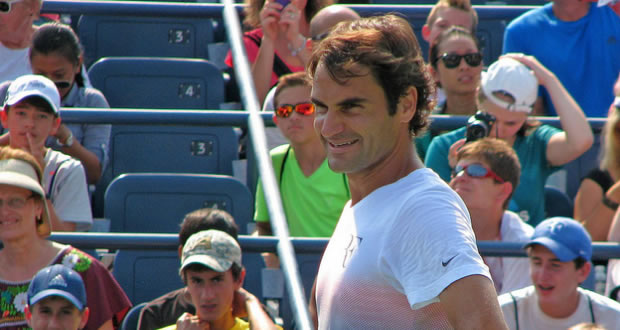
    Roger Federer will join the Australian Open champion and new Swiss No.1 Stanislas Wawrinka in their Davis Cup first-round tie against Serbia.

    “I can confirm that Roger is in Serbia and will play in the Davis Cup,” stated Sandra Perez of the Swiss Tennis Federation.

    It is the first time since 2012 that Federer has made the commitment to play Davis Cup and the last time he played a first round tie was back in 2005.

    The Swiss will begin the tie as favorites with Serbia missing Novak Djokovic and Janko Tipsarevic. The makeshift Serbian team will provisionally feature Dusan Lajovic (ranked No. 102) and Filip Krajinovic (No. 280) in singles, with Nenad Zimonjic and Ilija Bozoljac pairing up for the doubles.

    The tie will be played on an indoor hard court in Novi Sad.

    [divider]

    Cover Photo: Kenneth Hong, (Creative Commons License)

  • An Effect So Poetic

    An Effect So Poetic

    8705873194_103e921be4_z e

    Davis Cup, Final

    Until last year the tiny proportion of the Czech Republic concentrated in its Davis Cup team had not won the Davis Cup since 1980. They’ve now won it for the second year in a row, by fielding the same two-man squad of Tomas Berdych and Radek Stepanek. Last year they accounted for Spain, the most successful Davis Cup nation of recent years. This year they defeated Serbia, who won the title in 2010, spearheaded by the formidable Novak Djokovic. Yet while the two finals were broadly alike in outline – even the configuration of results was vaguely similar – they could hardly have diverged more in detail. Last year’s final was historically significant, and thrilling from first to last. This year’s was frankly a bore from beginning to end, thus neatly summarising a long season in which a tournament’s last match was seldom its best.

    Last year’s final usefully proved that even Spain is heavily diminished without its best player, while Serbia has now proved you cannot rely only on your best player, especially if he doesn’t play doubles. In neither final did the Czech Republic boast the best player – in both finals Tomas Berdych was soundly beaten by the opposition number one in the reverse singles – but Davis Cup ties typically aren’t decided by who has the best player, but by who has the least worst. Live fifth rubbers are always contested between the number two players, which is why they so often feature as the hero in close ties. Djokovic was impeccable in the 2010 final, walloping any Frenchman placed before him, but it was Victor Troicki’s dismissal of Michael Llodra in the fifth rubber that is destined to be remembered. Or recall Mikhail Youzhny’s defeat of Paul-Henri Mathieu in the 2002 final. More pertinently, remember Radek Stepanek’s dashing defeat of Nicolas Almagro last year. Janko Tipsarevic’s withdrawal several days before this year’s final was thus catastrophic for the Serbian team – Bogdan Obradovic likened his absence to playing tennis on one leg – and removed any tangible doubt about the eventual result. Knowing how things turn out subtracts significantly from the fascination of watching them unfold. There was some chatter as to whether Lukas Rosol should have played instead of Stepanek on the opening day in order to preserve the older man for the hardships to come. The upshot was that really it didn’t matter.

    Anyone who doubts the inherent value of chaos was hopefully reassured by this year’s final. This is what sport looks like in a deterministic world. The weekend unfurled with devastating predictability, like those irritating fight scenes in Guy Ritchie’s Sherlock Holmes films, in which Iron Man and Moriarty hardly bother getting down to fisticuffs because they’ve already mapped out how it’s going to go down. Every match went according to prediction, and none of them went beyond three sets. It was rare for the winning player or team even to cede break points, let alone a break. The closest we came to an upset was Berdych attaining 4-4 in the first set against Djokovic via a series of desperate holds. “Anyone with a hat should be donning it for Berdych!” insisted the Eurosport commentator who wasn’t Frew McMillan. Perhaps he meant “doff”, but his yawns affected his diction.

    What interest there was was confined to the doubles, as is frequently the case. In last year’s final the Czech team encountered a Spanish duo that had just won the World Tour Finals, yet cleaned them up in four sets. This year Berdych and Stepanek’s opposition proved less fearsome in Nenad Zimonjic and Ilija Bozoljac. After the heady thrill of Boise, where Bozoljac performed magnificently to see off the Bryan brothers, and the semifinal in which he and Zimonjic fought gallantly in a marathon loss, the final was a disappointment. One could term it a reality check, but that’s an unkind thing to say about a player like Bozoljac who subsists primarily on the Challenger and Futures tours, where every week is a reality check. He did his best, and it isn’t as though Zimonjic set the stadium alight.

    The pressing issue was whether Djokovic would have done any better. It’s not much of an issue, but given that it is almost the sole point of contention in a searingly uneventful weekend of tennis, it is the issue that is being discussed at length. I’m not convinced it matters. Djokovic doesn’t have much of a doubles record, although he is at present the finest singles player on the planet, especially on an indoor hard court, and that’s historically a recipe for doubles success. Whether it would have been enough to snatch victory is another matter. Word was that after London he was all but spent; winning everything all the time is undoubtedly fabulous, but it does ensure you’re playing all the time. A long doubles match might have hobbled Djokovic for the reverse singles, although admittedly it would have hobbled Berdych as well. The real issue is that Stepanek and Berdych are an excellent doubles combination, and were they to pair up regularly one imagines they would enjoy tremendous success throughout the season. Alas the rigours of the singles tour preclude that possibility. Stepanek of course is a doubles specialist (it ranks highly on his list of endorsed skills on LinkedIn), and has won multiple Majors.

    It turns out he is also a specialist at closing out Davis Cup finals – he now is the third player in history to win two live fifth rubbers at this stage of the competition – whether it is against Nicolas Almagro or Dusan Lajovic. Unlike Almagro, who was left alone and forlorn for far too long by his compatriots after last year’s defeat, no one anywhere holds Lajovic’s loss against him, and his team was lavish with its consolation. It had been a very big ask. No doubt a Davis Cup final is a tremendous opportunity for a young player to make his name, but there are limits. Sink or swim is beside the point when you’re thrown in with crocodiles. Stepanek was as relentless as the tide, attacking without pause, and gave the youngster nothing.

    Afterwards he was overrun by his teammates, while the Czech contingent in the stands went justifiably berserk. Defending a Davis Cup title is considerably rarer than winning one. Stepanek soon extricated himself from the pile of bodies and set to vaulting the net, to the delight of the Czech fans, and no doubt the bemusement of the Serbs. Later he proffered the tactful opinion that not playing Djokovic in the doubles had been akin to “leaving your Ferrari in the garage”, ensuring that for some bemusement was transformed into outrage.

    Berdych later failed to mollify his hosts by asking why Djokovic wasn’t at the post-final dinner, enquiring whether the world number two was still in the “garage”? It gave most of us something to be mildly amused by, and a certain species of plodding moraliser something to get really worked up at, which they duly did. Thus did a forgettable final weekend conclude with a modicum of interest. If only there’d been some tennis to match it. As I said last week, you cannot have everything. If you’re the Czech Republic, however, you can have the Davis Cup — again.

  • Czech Republic Repeats in Davis Cup

    Czech Republic Repeats in Davis Cup

    8705871692_1c393ac441_z e

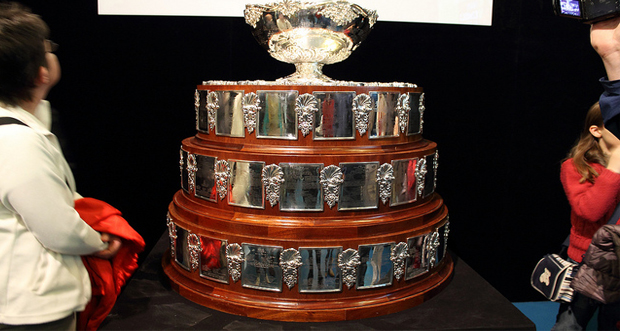
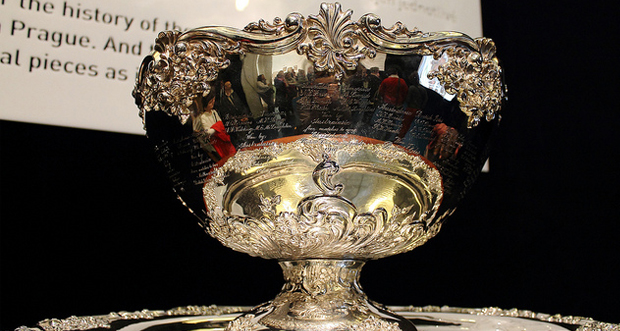
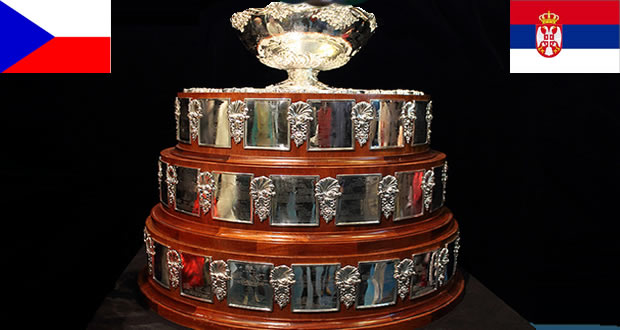
    For the second straight year, the Czechs have won the Davis Cup trophy, this year defeating the host team Serbia, 3-2.

    The Serbian team was hamstrung by the losses of Janko Tipsarevic (injury) and Victor Troicki (serving a ban for missing a drug test), forcing them to play the unknown No. 117-ranked Dusan Lajovic in two of the singles matches.  Having the world No. 2 Novak Djokovic on their side was not enough for Serbia to repeat their 2010 victory.

    For the Czech Republic, it was again their stalwarts, Tomas Berdych and Radek Stepanek, who were the two-man show all weekend, as they had been in defeating Spain this time last year.  When the teams split the singles rubbers on Friday, the Czech’s decided to press Berdych-Stepanek, a proven combination (14-1 total Davis Cup record as a doubles team) into service again on Saturday, when it seemed that the doubles might decide the eventual winner, given the weakness and inexperience of Lajovic.  Somewhat controversially, Djokovic was not substituted in to play with Nenad Zimonjic (at 37, the oldest man ever to play in a Davis Cup final), who teamed with Ilija Bozoljac, in what was indeed a losing effort against the crafty Czech pair.  Today, Djokovic defeated Berdych to assure a live rubber for the 5th match.  And just as he did last year, Stepanek clinched for his team.

    [divider]

    Scores:

    Novak Djokovic d. Radek Stepanek: 7-5, 6-1, 6-4

    Tomas Berdych d. Dusan Lajovic: 6-3, 6-4, 6-3

    Berdych/Stepanek d. Bozoljac/Zimonjic: 6-2, 6-4, 7-6 (4)

    Djokovic d. Berdych: 6-4, 7-6 (5), 6-2

    Stepanek d. Lajovic: 6-3, 6-1, 6-1

    Photo credit:  elPadawan (Creative Commons License)

  • Davis Cup 2014: The World Group Draw

    Davis Cup 2014: The World Group Draw

    The 2014 Davis Cup draw for the World Group

    Home countries are listed first with seeding in brackets.

    Germany v Spain (3)

    Czech Republic (1) v Netherlands

    Japan v Canada (7)

    France (5) v Australia

    United States (6) v Great Britain

    Argentina (4) v Italy

    Kazakhstan (8) v Belgium

    Serbia (2) v Switzerland

    [divider]

    Discuss the draw with fellow tennis fans on the Tennis Frontier message boards.

    [divider]

    Cover Photo: Kevin Stephen (Creative Commons License)

  • Davis Cup Round-Up: Serbia and Czech Republic Make Finals

    Davis Cup Round-Up: Serbia and Czech Republic Make Finals

    Serbia and defending champions the Czech Republic booked their berths in the Davis Cup finals after defeating Canada and Argentina, respectively, in the tournament semifinals.

    Serbia progressed in front of a passionate partisan crowd with Janko Tipsarevic defeating Vasek Pospisil 7-6, 6-2, 7-6 in the deciding rubber to secure a come-from-behind victory.

    The Serbs had been down 2:1 coming into the final day after losing the doubles rubber and Tipsarevic losing a marathon five-set clash to Milos Raonic.

    [divider]

    Discuss Davis Cup with fellow tennis fans in the forums.

    [divider]

    Novak Djokovic pulled Serbia level with a 7-6, 6-2, 6-2 straight sets victory over Raonic, to set up a nail-biting decider between Tipsarevic and Pospisil in a winner-takes-all rubber. Tipsarevic prevailed, defeating Pospisil 7-6, 6-2, 7-6 to clinch a place in the finals for Serbia.

    The Czech Republic also prevailed 3:2, but it was a less bumpy ride as they built up an unassailable 3:0 lead that assured them of a finals place before the final day. The Czech victory was built on the exploits of Radek Stepanek and Tomas Berdych. The pair won both their singles matches and teamed up in the doubles to clinch victory.  The Czechs lost both dead rubbers as they fielded second string players.

    They now travel to Belgrade for the final, hosted from 15-17 November 2013. It is the third time in four years that they have faced Serbia in Davis Cup competition.

    [divider]

    Other results:

    World Group Playoffs:

    Spain 5:0 Ukraine
    Netherlands 5:0 Austria
    Croatia 1:4 Great Britain
    Switzerland 4:1 Ecuador
    Germany 4:1 Brazil
    Poland 1:4 Australia
    Belgium 3:2 Israel
    Japan 3:2 Colombia

    [divider]

    Cover Photo: elPadawan (Creative Commons License)

  • The Drums of War

    The Drums of War

    Davis Cup, World Group Semifinals, and World Group Playoffs

    Which maniac’s idea was it to schedule the Davis Cup semifinals for the week after the US Open? Even in the best years the turnaround is cruelly brief. It is a situation roughly analogous to the situation in Europe after the Great War, when a continent that had narrowly survived the most devastating conflict in world history began tentatively to haul itself from the abyss, only to be dragged back down by an influenza pandemic a year later. I don’t think that’s overstating the case. It’s probably even worse for the players.

    [divider]

    Discuss this article with fellow tennis fans on the tennis forums.

    [divider]

    If anything the situation is more serious with tennis than it was for war-ravished Europe, since ridiculous Monday finals in New York ensure even less opportunity for recovery. (Rafael Nadal was still doing the media rounds in Manhattan while his compatriots assembled in Madrid, rehearsing their favourite motet To Have Any Chance We’ll Have To Play Our Best. Given they were facing Ukraine, it somehow came off as even more ironic than usual.) It’s as though the signing of the Treaty of Versailles had to be pushed back six months, to ensure a spot on CBS’s Spring schedule. Although I cannot say for certain that the current situation will lead irretrievably to another world war, I can vaguely imply it. Rest assured I’ll wax pretty smug if it comes to pass.

    Indeed, there are further intimations that global conflict is not far off. I’ve mentioned it before, but it is surely no coincidence that Australia defeated the United States in the Davis Cup finals of both 1914 and 1939. It is thus with a certain anxiety that one notes Australia’s return to the World Group for the first time in seven years, having ravaged a depleted Poland over the weekend. All eyes will be fixed on the draw for next year’s tournament, to see where Australia and the USA fall. It’s probably a long shot that they’ll meet in the final, though it isn’t an impossibility given the rate and apparent certainty with which Nick Kyrgios, according to his self-devised slogan, is rising. There’s also Bernard Tomic.

    Tomic was Australia’s hero of this weekend, inasmuch as heroism was required. He won both of his singles matches, just as he had against Uzbekistan in the previous round, although this achievement will inevitably be downplayed. The cherished narrative of Tomic as feckless wastrel has by now become so established in its course that there’s no number of Davis Cup victories that will divert it. Think of last year’s World Group qualifying tie against Germany, when Tomic won Australia’s only singles rubber, in contrast with Lleyton Hewitt, who won none. The official line ran that Hewitt was a venerable warrior still giving his all for his country. Meanwhile every Australian tennis luminary with a platform took the opportunity to decry Tomic’s lack of resolve, from Pat Rafter and Tony Roche court side, to John Fitzgerald back in the studio. If anything, Tomic is held in such low regard, even here in Australia, that his exceptional record when representing his nation actually blights the Davis Cup. You can imagine what will happen when he defeats Ryan Harrison in the fifth rubber of next year’s final, annulling the ANZUS treaty at a stroke. Thanks a bunch, Bernie.

    Anyway, Australia wasn’t the only nation to progress to the 2014 World Group. Spain managed it, to no one’s surprise, defeating Ukraine 5-0 in the Caja Magica. Sadly the clay was an uninspired red, but really they could have contested the tie on pink ice cream it wouldn’t have affected the result. The Dutch squad inflicted commensurate misery on Austria, who ran out of players and were forced to wheel out Archduke Franz Ferdinand for the last match, bestowing new meaning on the term “dead rubber”. Apparently Viktor Troicki had rubbed him out back in Monte Carlo, the villain.

    Germany had almost as easy a time seeing off Brazil. There’s a complicated joke lurking somewhere in there. Given what’s coming, I won’t be surprised if they draw the Czech Republic in the first round next year. Great Britain is also through, mainly because of Andy Murray. If history is any guide, then a strong British team will be essential in the years ahead. Japan came from behind to beat Colombia at home, while Israel lost from in front against Belgium away. Amir Weintraub has made his name with desperately fought Davis Cup wins and losses. There’s something about the format that agrees with him. It could be the team environment, though it’s probably more the rare freedom that comes from having other people worry about sundry irritants like food and accommodation, not to mention access to a coach. He battled to an inspiring victory over Ruben Bemelmans on the first day, finishing 10-8 in the fifth. It was a 10-8 in the fifth kind of day. Sadly he lost the deciding rubber to Steve Darcis in a quick and decisive manner. Darcis, it must be said, was superb this weekend.

    Meanwhile, the semifinals proved all over again that although the final score may be the statistic that matters most, beyond the result it can obscure as much as it reveals. Both victorious nations eventually arrived at 3:2 score lines, but they only got there via wildly divergent paths. The Czech Republic, cruising on a futuristic hydrofoil of uncertain origin, had pulled so far ahead of Argentina’s squad that there was no chance they’d be overtaken. Jaroslav Navratil’s mullet streamed out magnificently in his wake, flanked on either side by his chief enforcers: the stern-faced replicant Tomas Berdych, and the wizened homunculus Radek Stepanek. The remainder of the team were confined below-decks, working the bilges, before they were released on the third day and summarily tossed overboard as consolations for the rapacious Argentines trailing astern. This was sold to Jiri Vesely as “experience”. Dead third days are the worst part of Davis Cup. For all that I’m not an advocate of wholesale change to the competition, I pray that any change that does come addresses that problem.

    Serbia entered the home straight trailing Canada, although there was no immediate reason to panic given Novak Djokovic was to kick proceedings off. He wasn’t facing Nadal – he hadn’t faced Nadal in days – and thus could be relied upon to win. He did. It thus all came down to Janko Tipsarevic and Vasek Pospisil. Either man represented a slender thread from which to suspend a nation’s hopes. But for all that Tipsarevic has waned sharply of late, while Pospisil is rising with even greater urgency than Nick Kyrgios, you’d suspect the Serb would see it through, given the not inconsequential advantages of superior experience, a clay surface, and the home crowd. So it proved. Pospisil fought his heart out, although unlike his ankle at least his heart remained more or less intact. He fell heavily on the last point, stabbing at a desperate volley. Tipsarevic ran the ball down, put it away, and joined his opponent on his knees. It was a useful study in contrasts. Pospisil’s teammates rushed over to see if he was okay; Tipsarevic’s teammates rushed over and jumped on him. And why not? They’re through to face the defending champions in what will undoubtedly be the last peacetime Davis Cup final of the modern era.
  • Djokovic clinches Davis Cup Semi Final Berth for Serbia

    Djokovic clinches Davis Cup Semi Final Berth for Serbia

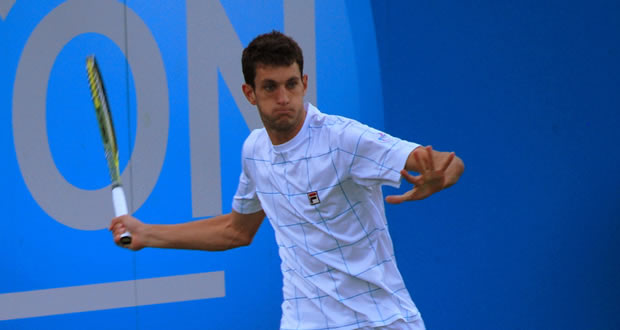
    Novak Djokovic booked Serbia’s place in the last four of the Davis Cup with a 7-5 6-7 6-1 6-0 over the United States’ Sam Querry.
    Serbia now lead the series 3-1. In 2010 Serbia also put an end to the US Davis Cup ambitions.

    “I am happy I managed to play the whole match,” Djokovic said. “I played really well in the third and fourth set”

    Djokovic was also battling through a nagging ankle injury and his entry to Monte Carlo may now be in doubt.

    Djokovic, who had to battle through an ankle injury he suffered in the opening set, earned a 7-5, 6-7 (4/7), 6-1, 6-0 win to give the Serbians an insurmountable 3-1 lead in the best-of-five tie against the Americans.

    During the match Djokovic outgunned Querry, hitting 12 aces and 41 winners.

    Serbia will face the winners between Italy and Canada in the semif-finals.