Tag: coaching

  • Navratilova to Coach Agnieszka Radwanska

    Navratilova to Coach Agnieszka Radwanska

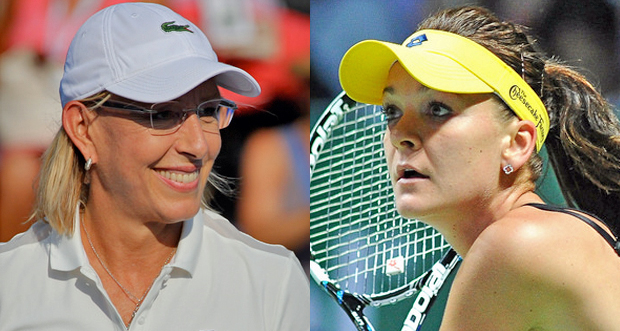
    Agnieszka Radwanska Martina Navratilova

    World No. 6 Agnieszka Radwanska has hired 18-time Major champion Martina Navratilova to be part of her coaching team.

    Radwanska made the official announcement on Twitter: “So happy to announce @Martina as the newest member of my coaching team!”

    Navratilova then Tweeted this follow-up: “Am very excited to be working with @ARadwanska and her team:), should be a fun ride!!!”

    This will be Navratilova’s first endeavor as a coach, but she’s enthusiastic about it: “I did not sleep very well last night, thinking about getting back into match mode and the competitions. I am really excited about this opportunity to join Agnieszka’s team and work with Tomasz and it is going to be a fun challenge. I was delighted when Agnieszka asked me if I would collaborate with Tomasz and I can’t wait to get started.”

    [divider]

    Click here to discuss “Navratilova to Coach Agnieszka Radwanska” in the discussion forum.

    [divider]

    Radwanska echoed her sentiments: “I am absolutely delighted that Martina has agreed to help me and my team next season. She is my idol in tennis and I am honored we will be working together. Her achievements speak for themselves and I hope that I can learn from all her experience. My goal is to win a Grand Slam, so to have someone with Martina’s accomplishments in my corner is going to be hugely advantageous and give me a big boost. We are originally from a similar part of the world so we share an understanding about tennis and life, which I’m sure will translate into a successful relationship.”

    Cover Photo (Creative Commons License): Marianne Bevis / VOXSPORTSdotNET

  • Johan Kriek on Progress and Regress in Tennis

    Johan Kriek on Progress and Regress in Tennis

    Junior tennis mentoring is very challenging even in the best of times. The kids’ brains are not yet fully developed, and we, as coaches, are trying to instill beliefs and knowledge that require high-level thinking. But it has to be done from an early age. I am going to touch on a subject that I think is important for coaches, kids, and parents to understand. Every kid is different, and some mature early and some not. Everyone is different!

    I just came back from a tournament and watched girls in my academy play in the 10′s, 12′s, 16′s, and 18′s. The older kids are definitely more polished in their thinking and execution of shots, but one fundamental fact remains across the board: the inability to read what is happening on the court, and the lack of know-how to take advantage of opportunities.

    I force my 12-year-old players to practice serve and volley in doubles. At least on first serves to learn the attacking game. I also make them do it on second serves in practice to learn to overcome fear of the return, etc. They are getting really good at it. At first it was pretty pathetic, but as they have become used to running forward and volleying off the deck, half volleys, high floaters, etc., they are not only learning to move forward into the court better, but they also play with better instincts already. It is all a process and it takes a couple of years from age 12 to get the hang of it.

    But here is what I saw happen this past weekend at a tournament. Three of my academy kids in the 12′s doubles served and volleyed ONLY once and when each of them lost that point they completely went back to the old ways – the entire tournament! All three missed the volley and shut down 100% the rest of the weekend. Went back to playing crosscourt singles in the hopes of the other player missing. One dimensional playing that got them some wins but IMHO not really furthering their tennis knowledge.

    That is NOT what we practiced! The concept of “process driven” vs. “result driven” is understood very well under a roof with a notebook in front of them but come a third-set tiebreak, and all I see is crosscourt singles play in doubles which is fruitless. One of the hardest things to instill in kids ages 12-14 is to become brave. It takes a certain determined player to risk more which is hard since they are not used to it because in the 10′s and a lot of the 12′s these runner/looper/defenders with nothing but groundstrokes and a loopy serve have been getting the best of them.

    But in the long run nearly all of the looper kids disappear from the semis and finals at ages 14 (second year) and the 16′s. I am not saying that a loop is a bad shot. It is by all means a great type of shot to reset a point if you were pulled way wide and back at the fence and to throw a kid off their power game but all I saw was hours of mind-numbing looping with parents cheering for mistakes after 25-30 ball rallies. As if that is just great play. It is really crap and we wonder what is happening to tennis.

    In order to get good at this game, one must be able to accept that to learn new techniques, new grips, new tactics, and to employ those tactics under severe stress is very difficult, and the chances you will lose that third-set tiebreak because you were not yet totally solid with the techniques or nervous to execute, etc. is very likely. You will lose quite a lot but if you stick to it, then in a couple of years you will be way ahead of kids that just sat back on the baseline and trench walked for years.

    To teach a kid not to fear failure but to accept it as part of learning the game the right way is very trying to say the least. We as a society value winning so much that parents, coaches, and players lose sight of the fact that tennis is not a short-term sport in terms of learning. It takes a long time, no matter how talented you are. I see kids coming off the court all jubilant that they have won. No clue that their tennis is actually barely O.K. in winning right now but their skill levels outside of “looping” are so poor in many that I can guarantee you, these kids will be out of tennis by age 16, frustrated and unable to compete with the all-court smart player.

    I am not saying that every kid needs to be an all-court player. All I am saying is that one needs to have skills in all facets of the game, no matter what tactic you employ but to only play from the baseline with almost zero skills in moving forward, proficient at the volley and overhead, not to mention “reading skills” on what type of shot is expected to come back, etc. For example, Nadal plays mostly from the baseline. His strength is his forehand and his mind. His backhand is excellent, too, but he uses it more as a “complimentary” shot. Besides that his serve is good but not super great like an Isner but he knows that he is great at the net even if he gets to the net six times in a match. All I see is baseline bashing and looping in junior tennis right now. Very little else.

    So in short, one may have to swallow many losses in order to get better. There is no progress without a certain amount of risk – period! I view top tennis juniors quite similar to the way the Navy SEALs approach their training. Many, many enlist and then the weeding out begins. Pretty soon out of thousands enlisted there are only 200 left, and at the end of training there are but a handful of truly super specimens left. Tennis is no different in its outcomes. There will be very few that make it at a high level. But it takes a lot more than just hitting a ball into that box than meets the eye. Accept that in order to learn, a player may very well be losing a lot, maybe for a few years even or more. But if you stick with a great coach, a great work ethic, and you believe you’re making progress, it will most likely come true.

    I was watching CBS’s 60 Minutes last night and saw the guy who founded the organization Robin Hood. What an amazing guy, and an incredible organization. He had a marvelous quote when the interviewer asked him about his initial failures even though all his intentions were there to do good: “Out of terrible failure a flame is ignited that forges the necessary steel to make the best sword.”

    He couldn’t be more right!

  • Johan Kriek on Confidence

    Johan Kriek on Confidence

    What is it and how does one become confident and keep it when competing in tennis?

    As a former Top 10 player now coaching kids in my academy in Charlotte, NC, from ages 6-24, I deal with this “factor” every day.

    We are all born with character traits. These are inherited from our parents and forebears. Some people just have “it”, whatever “it” is. I can quickly spot a kid who has confidence and a kid who does not. Kids who are always scared to try things will almost never excel as much or go as far as a kid who is open to learn and try things, even if they fail! Many times these kids will fail, but they learn quickly not to do the same mistakes and will excel again. So yes, in my opinion, certain character traits lend themselves to a better athlete, in any sport.

    The type of kids who sleep, eat, and drink his sport from a young age are the ones who excel the most and will risk more. They typically are very self-motivated, love the grind in practice, the long distance runs, the boring yet necessary practices at times to perfect a new grip, or learning a new stroke. It is a joy and a privilege to work with such kids.

    I teach my kids from my gut instincts, which has served me extremely well over my 24-year pro-career. I read up on the latest techniques, I watch tennis on TV constantly, or go to the major events often to stay current and see what the best in the world do. I talk to fellow coaches, I listen to what the top pros say and do during their practices on back courts at Wimbledon, the US Open, and many other venues I go to. This way, I am confident as a coach that I know what I am talking about when I coach the kids.

    To be a “complete tennis warrior” one has to check off a lot of boxes. These boxes are extremely important to check constantly. Here are some examples of boxes.

    Each stroke in tennis is a box. Each stroke has even subcategory boxes. Let me explain it this way with the serve as an example. I think most people would agree that the serve is the most important stroke in tennis. Arguably, those with the best serves in the game make it pretty easy for them to do well.

    I teach my boys and girls everything there is to know about the serve: toss positions, grips, racket-head speed, how and when to kick serve, slice serves out wide on the deuce court, flatter hard serves at the body, etc.; anticipation of the most likely return expected and how to act on it, etc.; how to “challenge” the returner with a type of serve; how to switch things up not just in speed, but in spin and positioning of the stance. So, just in this one box there are many things to technically get proficient at, but also, how to read what the returner does with whatever serve you throw at them. A second serve kick used as a first serve is a very good alternative to serving lots of second serves that can result in your opponent running around their backhand ripping forehand returns for winners or near winners all over the court!

    The same box is true for the forehand. Most top pros have big forehands now because the wrist is just stronger and better positioned to rip forehands. Most top pros “protect” the backhand side by standing left of center on the baseline for right-handers and right of center on the baseline for left-handers. They leave the forehand area as their favorite area to hit from and hope players will go there. Watch the court positions of Nadal, Federer, Murray, and Djokovic next time they serve. Even on the forehand side there are many sub-boxes one must check off if you have mastered that side. For instance, hitting big top-spins on the rise, hitting slices when the ball is extremely low, and running for drop shots to name but a few. I can go on and on about each stroke for many pages but for the sake of discussing the confidence issue here, I will leave it at what I just said.

    Only when a kid has mastered 100% of the strokes will he/she have a real possibility of achieving 100% confidence in his/her stroke production. If, for instance, a kid has not mastered how to move backwards after attacking the short ball, and gets lobbed over the backhand side and cannot hit a backhand angle overhead, or cannot control the ball off that side, then he or she may never have 100% confidence in approaching the net. So in my academy we practice shots you may sometimes never even use in a match, but what if you need the one-time backhand overhead to win on match point and you miss it because you never practiced it? That would stand out in your head as a big ol’ red flag constantly and will shy away from the net because now you are forgetting all the other good strokes you have between volleys and regular overheads, but instead you will focus on hoping they will not lob over the backhand side. That mindset is not instilling confidence.

    So yes, character trait is a good indication of confidence in many instances, but strokes are taught and that takes a long time to master. Once mastered, the mental aspect of this sport becomes more and more important, the older the kid becomes and the higher the ranking becomes. It makes absolutely no sense if a kid is taught all the shots and then is never taught how to use them, in what combinations, and how to freak the opponent out by “sneak attacks”, mixing up shots that are risky but can mean the difference between winning or losing against an equally good opponent.

    I find this aspect the most neglected area of junior tennis in America! Do not expect kids to acquire the mental edge they need by osmosis — by standing on a tennis court and hitting balls for eight hours a day. Mental IQ is taught. It is a must! One of the hardest things to teach great kids is for them to be able to “self-medicate” on the court. I see countless matches where a kid starts stomping, crying, cheating, and whatever else on the court, and it is all because they feel helpless. They look at mom and dad and the coach sitting there watching and pretty soon it all goes downhill.

    I teach my kids not to look for help. They still make mistakes quite often but over time when their maturity at age 15-18 sets in, they start to look like pros on the courts. No more looking around for help. They throw a towel over their head at changeovers and they think about what is happening and what to do to get out of trouble. They know what I expect them to do with their body language when they are serving for the match at 6-5 in the third set. They know what to do when they see a kid starting to chirp at him or herself after being quiet for over two hours. They know what I expect them to do when they play a cheater. They know what I want them to do when things are going badly for them. They are taught to THINK! I have been there many, many times on the biggest stages of tennis against the biggest and best of that era. I wish now I had somebody of my knowledge and experience to tell me what to expect from age 12 onward. I can only imagine which big matches and events I could have added to my career resume.

    Once an equilibrium is achieved with a kid in the technical, physical, tactical, and mental departments of their tennis development, the potential is limitless for this kid. Only then will I feel that true “confidence” is now achievable!

    It takes knowledge, a very willing participant, time and patience to create that confident kid. A confident kid is a kid with lots of knowledge. Experience just adds to their knowledge base.

  • Rafa and Toni Nadal: What Makes It Work?

    Rafa and Toni Nadal: What Makes It Work?

    Rafael+Nadal+US+Open+Day+15+go6yAA32giVl e_edited-2

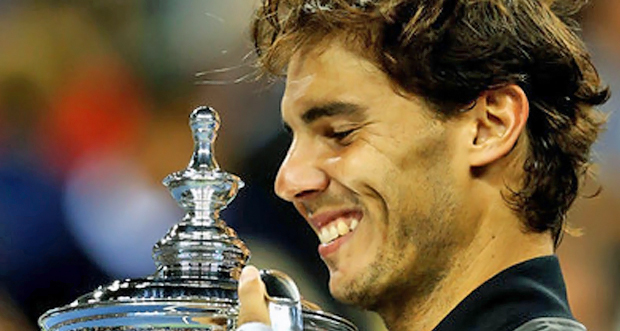
    As part of a series of posts looking at the impact of coaching, who better to start with than the current No. 1 player and his coach, Rafael and Toni Nadal. As a long term coaching partnership it seems a good place to start asking the question: What does a coach add? Would Rafa have had as much success without Toni?

    While most reports set Toni up as the hard task master and Rafa as the poor hard working nephew I can’t help but feel it is a little more equal than it first seems, pretty much because Rafa is hardly the laid back, relaxed guy, either. He strikes me as every bit as intense and calculating as his uncle. He just presents it differently, probably because, being a player not a coach, his job isn’t about talking, it’s about doing.

    I believe the process of coaching is about empowering a player. Teaching them about their game and also about themselves. I can’t help but watch players and see how their private, off-court persona influences their public, on-court style. Rafa is famously shy, quiet, and nervous off-court. Supposedly the polar opposite of his on-court powerful, loud, and confident play. A proper Jekyll and Hyde, you would think. When I look deeper I see an extremely intelligent, sensitive, and passionate person who treats the tennis court differently to real life.

    On the tennis court his endless passion makes every point life or death. He only knows how to give everything. He cannot give less because he doesn’t know how. His sensitivity helps him see into the soul of your game. He wants to know what you like and what you don’t like. Off-court he would give you what you like, always showing respect. On-court, he uses it against you giving you exactly what you don’t want. Even worse. He gives you exactly what you do want as bait, to get you right where he wants you. This is where his intelligence shows. He doesn’t try to beat you; he lets you beat yourself. He has learned to enjoy the mental challenge where most enjoy simply the physical. They outrun or out-hit their opponents; he simply out thinks them.

    This works on court because intense, unforgiving competition is expected, a sign of respect and what each player has submitted to so Rafa doesn’t have to fear hurting his fellow competitors. In the tennis arena his intensity is admired.

    In the real world outside the confines of the court the rules change. If he were to act the same way he would hurt many and most often it would be those he loved. This is because real life is not about competing at all times. Most often it’s about fitting in and complementing others. His sensitivity and intelligence make him acutely aware of the effects his intense passion has on others so it is tempered and redirected. He spends much of his energy keeping his composure, reigning in the raging bull that is so admired on court.

    While this will seem like over analysis it is crucial to understand the resulting game forged by Rafa and Toni. My interpretation is that it perfectly fits his personality which is why it is unique to him being built around his strengths and weaknesses like a suit of armour. I can’t help but notice how this is the same for all players in any sport who are at their best when they are themselves. When they know how to translate who they really are onto the court. Playing without fear and without question. Their thought process is at one with their game. They don’t second guess themselves.

    Toni’s job has been to help Rafa get to this point but the coach can only work through the player. They cannot and should not do the work for them. So it is as important for Rafa to implement his uncle’s advice as it is for Toni to give it. At the same time it is as important for Toni to understand his pupil and deliver the right advice at the right time, as it is for the player to understand what the coach means and how to apply the advice.

    Looking from this angle you can start to see why Rafa and Toni are such a perfect match. Rafa loves to work and Toni loves to talk. At least that is what we hear about. More than that, though, they love tennis. They understand that they need every edge they can get to win so they openly accept advice from others like Carlos Moya. Yet I see intense debate and consideration between them.

    When Rafa was young I expect Toni lectured, while Rafa listened and applied. As Rafa matures I expect he is much more involved and starting to make many more of his own decisions. I feel that, particularly with Rafa’s injuries compared to Roger and Novak’s relative health, Rafa is starting to see that his style is causing as many problems as it solving. No player can afford the amount of injury time outs that he has sustained.

    I have to wonder if this is putting a lot of pressure on Nadal to be more and more involved in the development of his game. As a coach Uncle Toni can carry on being a coach when Rafa retires but as a player Rafa only gets one shot. Few get a second chance.

  • The Wave of New Coaches on the ATP Tour: A Breath of Fresh Air for 2014

    The Wave of New Coaches on the ATP Tour: A Breath of Fresh Air for 2014

    Edberg and Federer

    It is with lots of interest in all media especially social media that we read of the new additions on the men’s side. What is striking is the fact that all of the coaches that are hired were superstars from the 80′s and 90′s. It started with Murray hiring Ivan Lendl and we can clearly see the improvement since Lendl joined the Murray camp. Now Roger Federer has hired Stefan Edberg, former number 1 serve and volley expert from Sweden, and Boris Becker is hired by Novak Djokovic, another specialist at the serve and volley game. Connors was hired some years back by Roddick and lately Connors briefly worked with Sharapova.

    As a former Top 10 player, I have firsthand knowledge of all of these guys since I played them many, many times. In fact, I predicted that Boris Becker will win Wimbledon in 1985 after he beat me in the finals of Queens in London. He did. I beat Stefan Edberg at Wimbledon when he was making his debut from the juniors, although that win was in five sets and one of my best ever comebacks from two sets down. I lost to Lendl in the 1986 semis at the French Open so I have intimate knowledge of their games and being around them for decades, one gets to know their thinking…

    You may ask yourself, why are these top guys hiring guys who played totally different styles than them? Here are my answers:

    1. Besides a new fresh pair of eyes, it is exciting to have a new guy at your side, which brings the desire up to perform and that is hugely important. Desire is a must!

    2. The men’s tour has become so brutally physical that players are thinking about how to shorten points. These coaches played 90% of their points “short”. Meaning serve and volley, chip and charge, etc. That was their state of mind. Roger and Novak are looking for some of that. (More on this aspect later in this blog.)

    3. Publicity for the “team” brings a whole new flavor to their camp. It is all good! Their sponsors like it, the fans like it, and with the explosion of “immediate news” on social media, it is all good!

    I will break down the different “celebrity” coaches here from Connors to the sudden hiring of Edberg and Becker.

    Connors is an absolute icon in our sport. A tough guy, with a very hard edge, who won more ATP tournaments than any man on this planet! It was the perfect “American story” for Andy Roddick to have hired Jimmy when Andy was on the verge of being more dominant. The heartbreaking final against Roger at Wimbledon was perhaps the moment that extinguished that “flame”. None of us will know when it happens but I suspect that match really affected Andy. That type of relationship has very little to do with a new “technical improvement” rather the player is looking for that extra mental boost that may help them reach a little higher. No guarantees that would happen.

    Ivan Lendl joining Andy Murray was the perfect fit in my opinion. Andy Murray was “bridesmaid” to Roger and Rafa for a number of years, and it was beginning to look like he would not be able to get “over the hump” mentally at Majors in particular.

    Ivan was in that same position for years. He was in the finals of eight Majors before he won his first! Remember Brad Gilbert, who coached Andre Agassi with great success and was hired by Murray via the LTA in England to help Murray? It did not work! Why? Murray did not have the same respect for Gilbert as he has for Lendl. It was so obvious that it was embarrassing at times at tournaments and the relationship ended shortly after that. Lendl helped Murray understand what it will take mentally to get his first Major win and he did! Now Murray has a US Open, an Olympic gold medal, and a Wimbledon title under his belt. Murray also just came off back surgery so he has issues physically. He may have to start thinking about shortening points…

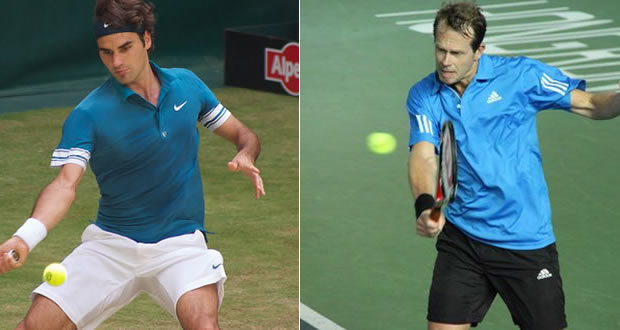
    Federer hiring Stefan Edberg is another smart move after a long stint with another serve and volley expert, Paul Annacone. But since Roger slid in the rankings to No. 7, it was the right time for a change of scenery. It happens all the time. Edberg is the consummate gentleman of our sport. An eight time Grand Slam champion, he knows how to move forward to the net and is a very cool cucumber. A perfect mental fit to help Roger understand how to shorten points and what it takes to perhaps serve and volley a little more. It is all about finding that “little edge”. None of these coaches are hired for a new forehand or backhand, but certainly could be of great assistance in the volley area, movement, and reading skills at the net, and how to be a little smarter about attacking at the right time and the surprise effect of coming to the net. This is a great fit for Roger. I think Roger bends his elbow too much on his backhand volley and gives it too much “chop” at contact. It would be interesting to see if Edberg helps him shorten his backhand volley preparation to be more solid. There, I criticized Roger!… 🙂

    Djokovic hiring Becker was another surprise! I was with Becker and Edberg at Richard Branson’s fundraiser on Necker Island a few weeks ago, and had a conversation with both of them. None of them let on what they were up to for 2014.

    Novak is an incredibly gifted athlete that has all the stuff physically and mentally. His volleys are not his stronger shots but again, I think him hiring Becker points to a “fresh” start with new excitement in trying to be more aggressive with a new team member. It is all about finding that extra mental edge at this high level. Novak is looking to be No. 1 again after Rafa snatched it back at the end of the season.

    David Ferrer just fired his longtime mentor/coach. Perhaps the best player out there today who may never win a Major unless he adds a little more risk in coming to the net. Ferrer has all the stuff mentally. His serve has improved but I think he can still improve on his serve a little and coming forward will be necessary. Like they say, no risk, no reward. I am a huge fan of Ferrer. I certainly hope he can add a Major to his mantle. But it will require him to risk a lot more and to throw the “kitchen sink” at those moments in big matches where he used to play “not to lose” and then did lose. Perhaps play closer in to the baseline and risk blistering shots down the line from closer in and follow it in… Again, no guarantees but that is the only way to get the rewards.

    Rafa needs no “celebrity” coach. He is a simple thinker, is perhaps the best “self-motivator” out there. Uncle Toni is there and I do not see any changes in the family set-up. They “tinker” with his game all the time, and I suspect that if the Nadal camp see improvements from Roger and Novak in shortening points, they will follow suit.

    I, for one, will be watching closely in 2014. Adding these coaches will be interesting to see if any changes “sank in” and will bear fruit! Go at it, guys!

  • Learning Goals: Practice or Pressure

    Learning Goals: Practice or Pressure

    How do you approach practice?
    How do you approach practice?

    My question in this article is, how do you practice and what goals do you set?

    Most people I meet focus on technique, some on strategy, but all isolate a specific part of their game and work on it.

    Is that the best way to improve? I feel it depends on what you want to achieve. If you just want good strokes and to look good on court, then great; but if you want to win matches, then I question this approach. I think you need to practice matches. Even learn to improve strokes and plays within matches.


    The Reason: Pressure

    I put it to you that any player in the Top 100 of the men’s or women’s tour is capable technically of beating any other player on their day. By that I mean that if you just got them to hit shots to a target and measured how well they did they would all be amazing. Many would beat the top players in certain stats: serve speed, amount of spin, or physical endurance.

    The reason the top players are ranked where they are is generally down to how they handle the pressure of matches. The choices they make on the big points, how they hold a lead, or chase a leader. They aren’t the best at everything. The leading men are tall but not John Isner huge. Their serves are good to O.K., but they don’t lose their serve often. They don’t have the biggest shots on each wing.

    O.K., Nadal has an amazing forehand but my point is that they have so much more. If Nadal were just a forehand, he wouldn’t have dominated Fed like he did. The top players have complete games and they don’t fold under pressure. They all face break, set, and championship points at times during tournaments. The top players deliver under that pressure. The others don’t. In the end that’s always the difference.

    I could debate this forever, as I’m sure you could, too. The point was to question what your goals are in practice. Mine are now to learn what to do under pressure. Trust my game at all other times and learn to enjoy it. Build a belief in myself under pressure so that I’m free at other times to play what comes. At the same time I must compete enough that I have experience. Each opponent and match becomes a coach and a lesson on how to play against a certain opponent.


    Learning From The Best

    This is what my sports science studies taught me and also what the best in each sport has taught me. The best generally value matches simply because shots are just tools to them. Opponents and matches are the problem at hand. Figuring out how to solve the problems of the match is the focus of a champion. So they don’t see good technique as an end point but a start. They focus on putting that technique into practice.

    When you do this you quickly discover that matches feature all types of shots. Not the static stuff you find in practice but perfection, junk, and randomness, too. Your technique has to be able to bend but not break in all these situations. Matchplay forces you to learn how to apply good technique on the fly to a ball and situation you have never met before and still give the opponent a ball they can’t attack.

    Now that’s what I call practice. Putting it on the line and learning not to worry about it. What do you think? How do you approach practice? What is going through your mind and what goals do you have? Post your comments below.

  • Federer and Edberg Hook Up (Now Official)

    Federer and Edberg Hook Up (Now Official)

    Stefan Edberg has officially joined the Roger Federer coaching team for the 2014 season. The Swedish legend will travel with the Federer camp for around 10 weeks during the forthcoming year.

    Federer has described Edberg’s role in the context of providing inspiration and bringing a fresh pair of eyes to the camp rather than providing specific coaching.

    “I am sure he can bring a different angle to my game which is interesting,” stated Federer.

    Edberg, 47, is a former world No. 1 who won six singles and three doubles Majors, and has been described as a “childhood idol” by Federer during his formative years.

    The appointment comes on the heels of Novak Djokovic hiring Boris Becker as head coach. A third legend of the period, Ivan Lendl, has already had considerable success coaching within the Andy Murray camp.

    Edberg will join Federer initially in Australia. The appointment coincides with the Swiss maestro’s decision to try a racquet with a bigger frame at his first Brisbane International.

  • Annacone: Federer Split Was a Mutual Decision

    Annacone: Federer Split Was a Mutual Decision

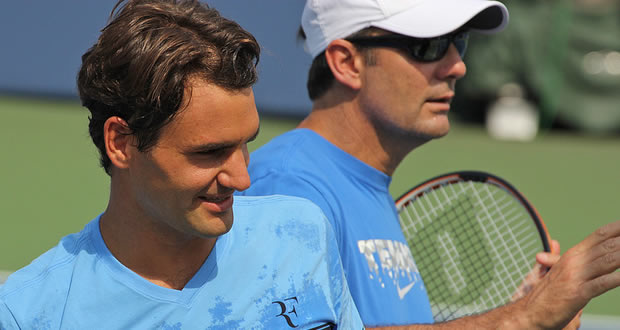
    Roger Federer and Paul Annacone

    Roger Federer’s coaching split with Paul Annacone has been described as a mutual parting of ways by Annacone in an interview with the newspaper USA Today.

    “After a number of very good, heartfelt, and really thoughtful conversations about what’s best in timing for Roger and also for me,” they concluded it was best to move on, said Annacone. “I think we both feel good about it. I know I do.”

    Annacone still believes 32-year-old Federer has another Major title in him. “I can’t imagine anything other than success coming his way. For me, it’s not a matter of if. It’s a matter of when.”

    [divider]

    Cover Photo: Marianne Bevis, Creative Commons License

  • Sharapova and Connors Part Ways

    Sharapova and Connors Part Ways

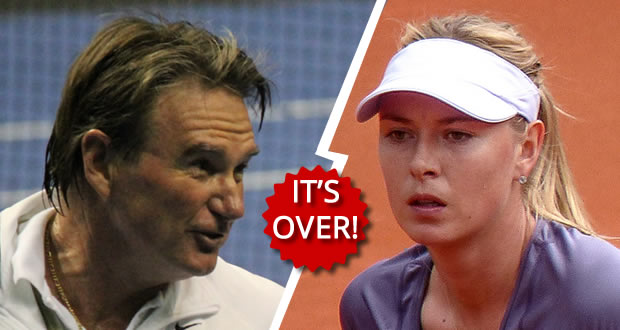
    Maria Sharapova’s short-lived coaching flirtation with Jimmy Connors has come to an abrupt end.

    After only a single match and a small number of practice sessions, Sharapova made the call to advise Connors his services were no longer required.

    The only match for which they were together saw the Russian world number 3 beaten by Sloane Stephens in the second round of the Cincinnati Masters.

    Connors, a former world number one and 8-time major winner, had previously coached Andy Roddick in a part-time role.

    [divider]

    Discuss the Sharapova / Connors split on our tennis forum.

  • Chris Lewis on How to Develop New American Tennis Stars

    Chris Lewis on How to Develop New American Tennis Stars

    I was recently asked a question by Valery Yalouskikh of tennisconsult.com: If you were putting in place a national development program, and you had twenty-million-plus dollars available to you, how would you spend it?

    Considering that no American reached the third round of the men’s singles at Wimbledon for the first time in 101 years, this is a question that needs answering, and fast.

    Many believe that the appalling 15+ year decline in US tennis since the days of Sampras, Agassi, Courier, and Chang is occurring because the sport no longer attracts the nation’s most talented athletes. Others believe that continued American dominance is unrealistic due to tennis’s globalization in the past few decades. Some point to a lack of both modern coaching methods and competent coaches, or a lack of clay courts, or an obsolete “American” style of playing, or that the USTA isn’t doing enough to help players – the list is as varied as it is long. Every passionate tennis fan has strong opinions regarding the current swamp that US tennis is mired in, including me.

    [divider]

    Discuss Chris’s thoughts on the development of American players in the tennis discussion forum.

    [divider]

    I’d like to address this issue at its most fundamental level; namely, the framework upon which national development systems are built. Let’s examine the typical national model. The hallmarks of all such bureaucracies include: a top-down approach, centralization, and conformity. A person (or committee) at the top determines how things are going to be done, and then everybody in the organization must conform to his decisions. Inevitably, the director of the national coaching program determines that young tennis players nation-wide must develop a certain style of playing, a blueprint is drawn up, and, in fear of losing their jobs, all of the coaches within the organization “agree” that players should play the way the director wants.

    Aside from the fact that recruitment of the most talented young players in the country invariably involves severing an existing and successful coach/player relationship, this regimented approach neglects to consider that every player is an individual with particular physical and mental attributes and a unique personality. When you attempt to coach identical strokes to all the top tennis talent in a country, you deprive those players of the opportunity to learn to counteract a variety of styles. In the main, players are practicing with and competing against mirror-images of themselves — never learning to deal with the unfamiliar. By adopting uniformity, you preclude the possibility of an exceptionally talented youngster developing his or her own style, based on his or her own unique physical attributes and tendencies, and in harmony with his or her own unique personality.

    Would John McEnroe have been a champion if, as a 12 year old, a Borg-like game had been imposed on him? Would it have suited his temperament to be molded into a patient, heavy-hitting baseliner? When you nationalize a particular playing style, you exclude the possibilities of innovation and creativity. By necessity, uniformity only looks backwards. It usually takes the current top player in the world as the model, and then an attempt is made to produce clones of that player, thereby excluding the possibility of the future development of playing styles as unique and radical as Connors’s, Borg’s, McEnroe’s, Lendl’s, Becker’s, and Agassi’s were in the days when national programs didn’t exist.

    Would Pete Sampras have been allowed to switch to a one-handed backhand so late in his junior career? Development of unique individual tendencies cannot be planned or tracked, and is not related to previous statistical success. Because of the personal element, a national body is ill-equipped to produce champions, who, invariably, do not conform to the average of the points on a graph. Sampras’s late alteration was a bad idea in general, but a fantastic idea for him. A private coach adept in nurturing the personal traits of each player could help make such a decision, a national body could not.

    A national body is not only in direct opposition to private coaching in philosophy and results, it is in direct competition to it in the real world, meaning the two options cannot co-exist peacefully. By establishing a national, centralized program, you quickly alienate the private coaching community when their best players are enticed away. This leads to an unhealthy ‘”us” versus “them” mentality, with the national organization being increasingly criticized as the nationalization of player development further expands. A further decline in playing standards accompanies this expansion as private coaches lose more of their players, and become increasingly hostile towards the organization that is meant to act in their interests, not contrary to them.

    Such a bureaucracy, once established, will always expand, and always use their power to regulate, not persuade. Typically, they follow a pattern like this: Someone within the organization decides that one reason why the country isn’t producing players is because the national program is inheriting players who have already been “ruined” by incompetent coaches. Their answer, then, is to grab the players when they are even younger (more expansion). Or, a clipboard-holder in the organization then decides that every 10-and-under player in the country should conform to his desire to see them playing with shorter racquets and pressureless balls (more regulation). The consequences of this dictatorial approach are devastating to player development. Through further expansion, you deny coaches, whose players have been enticed away, any chance of actualizing their players’ potential. Consider the consequences when all the private coaches and their varied approaches to player production are deprived of the opportunity to develop their players, instead forced to watch them sacrificed to a homogenous program that demands uniformity at the expense of creativity and variety.

    Would American tennis have been better off if Nick Bollettieri, Wayne Bryan, Robert Lansdorp, Gloria Connors, and every other coach who contributed to the development of a top player had lost their best students to a national program? Think of all the hours each of those coaches spent planning and managing the details of what’s involved in producing a champion. This planning process happens largely off the court, in deciding the best course of action for each student as an individual. Does the same amount of thought go into each of a national coaching program’s coach/player relationships, where, in many cases, the relationship with a coach is an involuntary one? Through further regulation, by mandating that every 10-and-under player be banned from competing with racquets and balls that a great majority of coaches think are in the best interests of a young player’s development, you preclude those coaches from acting on their own conclusions, which draw upon decades of practical observation and experience. At the stroke of a bureaucrat’s pen, all that expertise is rendered useless. Would Martina Hingis have won the French Open Juniors (18 & Under) as a twelve-year-old if she’d been forced to play with a toy racquet and balls until she was 11? I doubt it. What do you think?

    At this stage, things usually degenerate to such an extent that it becomes obvious national programs are synonymous with failure. When it comes to producing champion individuals, centralization, standardization, uniformity, rigidity, and regulation do not work. What, then, is the antidote?

    There are three essential components that need to be in place when it comes to producing champions. The first is that the player needs to have a certain amount of physical talent and mental toughness to one day be internationally competitive. The second is that there must be in place an environment that is conducive to ensuring that talented, tough players are given the best opportunity to allow their talent to reach its ceiling of potential. The third component is player choice; i.e., whether the player chooses to actualize his or her potential by doing justice to both his talent and the environment that gives him the opportunity to maximize it.

    When it comes to development programs, what we are really talking about is creating an environment within which gifted players have the best opportunity to flourish. When identifying these environments, the evidence consistently points to a committed, passionate coach teaching, guiding, and mentoring a gifted player to a successful pro-career. How, then, do we best ensure that such relationships are given the best opportunity to thrive in the future? First, it’s imperative to understand that tennis is a highly individualistic sport. Aside from a shared ability to win, the only thing that many of the great champions have had in common was that they have had virtually nothing in common. Nothing better illustrates this fact than the contrasting styles and personalities of some of the game’s great rivalries, like McEnroe and Borg, Evert and Navratilova, Sampras and Agassi, and Federer and Nadal. Incidentally, it’s a useful exercise to look at who the primary coaching influences were in the development of these players: John McEnroe – Tony Palafox and Harry Hopman; Chris Evert – her father; Martina Navratilova – Billie Jean King and I also understand that Tony Roche had an influence; Pete Sampras – Peter Fischer; Andre Agassi – his father and Nick Bollettieri; Roger Federer – Peter Carter; Rafael Nadal – Toni Nadal.

    Second, like players, coaches also have their own unique methods and personalities. The best ones are independent thinkers who wouldn’t survive for a second in a regimented environment, where they would be expected to ignore their own knowledge and conform to the dictates of a “one size fits all” approach. Can you imagine Wayne Bryan, Nick Bollettieri, or Toni Nadal working within the confines of a stifling bureaucracy? With such a diverse range of players and coaches out there, it’s essential that players and their parents are free to determine for themselves who is the best coach. Any wider program or system must take this into account.

    So then, back to the original question: What would I do if if I had upwards of twenty million dollars to spend in order to maximize the chances of creating future champions? I would use the money to create the most competitive tennis environment for both players and coaches in the world. I would make use of the exceptional junior talent that I see everywhere, as well as the enormous coaching talent that exists throughout the country. I would create a level-as-possible playing field for both players and coaches by offering them significant incentives, available to all in order to develop players and produce results.

    Instead of severing successful and existing coach-player relationships by seducing the top junior players away from the committed and passionate coaches who develop them, I would support those players and coaches.

    Here’s how I would do it: I would first design a US tournament infrastructure that offered year-round competitive opportunities to as many young players as possible. This infrastructure would place an equal emphasis on entry-level professional tournaments as it would on junior tournaments. To optimize the chances of young American players transitioning from top juniors to successful pros, I would make lower-level professional tournaments and the invaluable ATP ranking points they offer as accessible as possible. This would mean putting in place a year-round circuit of events on different surfaces, and in as many locations as practical.

    After establishing a comprehensive tournament infrastructure, I would design an objective and transparent player incentive scheme that directly links results and rankings to player funding. The criteria for funding would be publicized prior to the beginning of each year so that players could plan their schedules accordingly. To reward results at the junior level, I would select a number of the highest status junior events, and link performance in those tournaments to financial reimbursement for expenses incurred. For example, the winner of a high-status junior event might receive 100 percent reimbursement for all legitimate expenses (coaching, accommodation, travel, restringing, etc.) related to the event. The finalist might receive 75 percent reimbursement, the semifinalists 50 percent, and the quarterfinalists 25 percent. The total amount of reimbursement per player, per tournament, would be firmly set at a reasonable level. To further assist juniors receiving financial support based on junior tournament results, I would assist the top ten juniors in each age group, based on their national year-end junior rankings. For instance, the number one ranked junior in each age group might receive an amount equal to 80 percent of tennis-related expenses for the year, with a cap of, say, $20,000 for each number one ranked player. Percentages of expenses and capped amounts per player would be adjusted on a sliding scale downwards based on each player’s ranking.

    In addition to having a financial incentive scheme for junior players, I would have an ATP and WTA ranking-related incentive scheme for players aged 19 (or younger) up to 22 attempting to break into the pros. The criteria I would use for these transitioning players would, as I stated earlier, also be objective and transparent.

    Here’s how an objective incentive scheme for the transitional players would be established: I would document what each of the top 100 ATP and WTA players from the last 10 years was ranked at year’s end from the ages of 19 through 22. The results from this analysis would enable me to identify extremely reliable statistical criteria that could then be used to determine the players most likely to achieve a successful pro career. It would also be useful in determining the amount of financial assistance offered to each player who met the criteria.

    To concretize the above, let’s say that after conducting such an analysis, I find that 95 percent of 19-year-old male players who eventually reached the world’s top 100 were ranked inside the world’s top 800 when they were 19, and 95 percent of 19-year-old female players who eventually reached the top 100 were ranked inside the top 650. Let’s say I also find that 95 percent of 22-year-old male players who eventually reached the world’s top 100 were ranked inside the world’s top 275 when they were 22, and 95 percent of 22-year-old female players who eventually reached the top 100 were ranked inside the top 225 when they were 22.

    Using this data, linking a financial incentive scheme to a developing player’s ranking progress based on his or her age would be simple. I would opt for a three-tiered scheme that offered more assistance to higher ranked players than to mid- and lower-ranked players of the same age. In other words, a 19-year-old male player ranked 750 at the end of the year might receive an incentive payment of, say, 75 percent of annual tennis-related expenses up to a maximum of $10,000; however, a 19-year-old male player ranked 300 might be eligible for a payment of 75 percent of annual tennis-related expenses up to a maximum of $25,000. Ineligibility for the program would kick in when players either turned 23, or made it into the world’s top 100.

    In addition to being objective and transparent, this system would be fluid and dynamic. Even if players qualified for financial assistance one year, then the scheme would demand from them continued progress in order to qualify the following year. Conversely, players whose rankings and results precluded them from receiving assistance one year would have as much of a chance to qualify in subsequent years as the players who qualified the previous year. Under the criteria outlined above, the scheme would offer equal opportunities to all. There would be no subjectivity, no bias, no favoritism. It would be driven exclusively by performance, results, and age. By implementing such a scheme, I would be giving players, parents, and coaches not only a powerful incentive to succeed, but also a fair way to benefit from significant financial assistance while still retaining a full range of coaching and tournament options.

    Finally, it needs to be said that this is a highly complex subject. I do not attempt to address many of the issues that such a complex subject raises. What I have done is outlined, in principle, a national framework that maximizes the chances of producing champions. A framework that offers players (and their parents) the widest possible choice of coaches by offering earned financial support in a highly competitive environment supported by a national body that doesn’t play favorites.

    I expect there will be many who agree and many who disagree. Let’s hear from you, as this is a discussion that needs to be had.