Tag: atp

  • TENNIS QUIZ: Wimbledon Champions

    TENNIS QUIZ: Wimbledon Champions

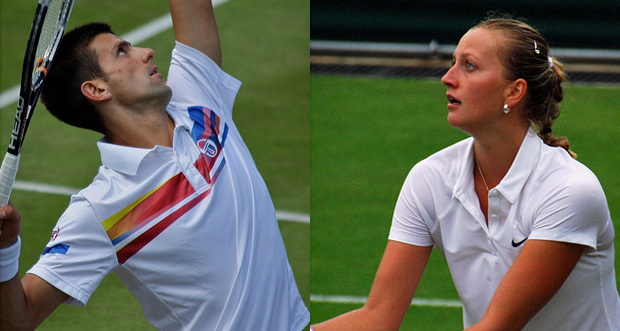
    Novak Djokovic Petra Kvitova

    Test your knowledge of Wimbledon! See if you can name every champion since the Open Era began in 1968! You have to have all 48 champions in order! (For those of you who need to cheat a little bit, if you click on the year you can answer, the quiz will accept it. ;) )

    Wimbledon Men’s Champions

    Wimbledon Women’s Champions

    [divider]

    Cover Photo (Creative Commons License): Marianne Bevis / Carine06

  • Wimbledon Preview

    Wimbledon Preview

    Wimbledon

    Wimbledon, the granddaddy of Grand Slams, is set to commence on Monday, June 29. The grass has been cut, the strawberries have been picked, the whites have been pressed, the champagne is bubbling: Wimbledon is ready to begin! The grass court season has had several upgrades this year but it is finally time to get down to the one everyone is after. As usual, there is plenty of drama and intrigue this year. Here’s a look at some of the players who could be lifting the cherished trophies.

    When predicting the men’s champion at Wimbledon, there is no other place to start than the Big Four: Roger Federer, Rafael Nadal, Novak Djokovic, and Andy Murray. Between them, they have won the last twelve titles. Wimbledon is the only tournament where the other players have failed to break through the toughest quartet ever to rule tennis. In the last ten years, only two players (Andy Roddick and Tomas Berdych) have even managed to make it to the final, only to lose to one of the Big Four.

    [divider]

    Click here to discuss the men’s chances at Wimbledon in the Discussion Forum.

    Click here to discuss the women’s chances at Wimbledon in the Discussion Forum.

    [divider]

    Novak Djokovic (Serbia): Djokovic is coming off a very disappointing Roland Garros final. He was expected to finally win his first title there, but he was blown off the court by Stan Wawrinka. It will be interesting to see how he bounces back after losing in Paris, which may have been the best chance he will ever have of winning a calendar Grand Slam. He has advanced to at least the quarterfinals of the last 24 Majors, so it will be a complete shocker if he doesn’t get that far again. He is the defending champion and will be going for his third Wimbledon title, and ninth Grand Slam overall. Djokovic is projected to face Nishikori in the quarterfinal, and then his nemesis Wawrinka in the semifinal.

    Roger Federer (Switzerland): Federer has his pre-Wimbledon routine perfected. He just won his eighth Halle title and will now be going for his eighth Wimbledon. A title here would break his tie with Pete Sampras, making Federer the undisputed grass court king of all time. He has not won a Major since the 2012 Wimbledon, and he has advanced to a Major final only once in the last 11. He came so close last year in a five-set loss to Djokovic in the final. Does he have it in him to fight through seven best-of-five set matches during the next two weeks? Federer is expected to face Berdych in the quarterfinal, and then Murray in the semifinal.

    Andy Murray (Great Britain): Since his Wimbledon triumph two years ago, Murray has struggled. He finally underwent back surgery in the fall of 2013, and has since been slowly climbing back to his former level. After finishing as runner-up at the Australian Open in January, he won two clay court tournaments (including the Madrid Masters), advanced to the semifinals of the French Open, and just won a fourth time at Queen’s Club in London. A lot of experts are picking the newlywed Murray to lift his second Wimbledon trophy. There’s only one problem: Novak Djokovic, who has won their last eight encounters. But the feeling is that if Murray is to win again, Wimbledon will be the place. The Scot will have to get through Nadal or David Ferrer in the quarterfinal, and then Federer before getting to the final.

    Stan Wawrinka (Switzerland): Wawrinka is flying high after his incredible performance at Roland Garros. However, grass is not a surface he craves and his quarterfinal showing from last year was his best result. But if Stan the Man gets into a groove, no one can stop him. An early round loss or a deep run — it’s anyone’s guess. One thing we can be sure of: Wawrinka won’t be wearing his boxer shorts this time. Wawrinka is slated to play Milos Raonic in the quarterfinal, and then a possible rematch with Djokovic in the semifinal.

    Rafael Nadal (Spain): Yes, he’s fallen to No. 10 in the rankings and hasn’t advanced past the fourth round since 2011. But you can never overlook a 14-time Grand Slam champion, even if he has been struggling this year. A third Wimbledon title for the Spaniard would be quite a story. If he can make it to the quarterfinal, he could be dangerous. He will play David Ferrer in the fourth round, and if he gets through that, Murray should be waiting for him in the quarterfinal.

    The best of the rest: Kei Nishikori, Tomas Berdych, Milos Raonic, David Ferrer, Marin Cilic, and Grigor Dimitrov. Of these, only Cilic has been able to break through the Big Four to win a Major. Nishikori has had injury issues and is still looking for the next big win. Berdych can beat all under him, yet none above him. Raonic got bumped up a spot over Ferrer in the seedings but he has been troubled as well. After missing the French Open with a foot injury, he is still struggling to find his form. Ferrer is not at his best on this surface, so getting to the quarterfinals would be pretty surprising. Cilic has struggled to regain his form and has made the quarterfinals here only once (last year) so not much is expected. Dimitrov has had a season to forget. He has struggled up to this point, with no titles and a 19-12 win-loss record. Now would be a good time to get back into the later stages of a tournament.

    As for the women, the list of candidates is shorter. There are young and exciting players coming up but they are still struggling to make that breakthrough.

    Serena Williams (United States): It’s all about Serena Williams now. She has won the last three Majors, and will be going for her sixth Wimbledon and 21st Major to complete her “Serena Slam”. I’m sure she would like a win here to erase those bizarre images of her stumbling around court last year.

    Petra Kvitova (Czech Republic): Kvitova is the defending champion and No. 2 seed this time. Last year, she kind of went under radar until she finally blew Eugenie Bouchard off the court in the final for her second Wimbledon title. Kvitova is a very hard-to-predict player, but if she gets into the groove on grass, her favorite surface, two weeks from now, she could be lifting her third Wimbledon dish.

    Simona Halep (Romania): There was a lot of buzz around Halep before the clay season started, but that has fizzled out with her poor results. No one is talking about Halep winning the title here so it would be a huge surprise. She could be facing Kvitova in the semifinal, but she could be gone before then.

    Maria Sharapova (Russia): It’s been 11 years since we saw Sharapova come out of nowhere to shock Serena in the Wimbledon final to win her first Major. Since then she has added four more Majors and loads of other tournaments but she has one problem: she can’t beat Serena. They are slated to face off in the semifinal, but it’s very difficult to imagine an upset. But one thing Sharapova does not lack is determination, so you can bet she is going to give it everything she has. If she makes it that far, that is.

    The best of the rest: Some of the women who could pop up in the semifinal or final would include Caroline Wozniacki, Lucie Safarova, and Ana Ivanovic. Wozniacki is still searching for her first Grand Slam title since making the U.S. Open final way back in 2009. She has played decently this year but has struggled at times. If Serena or Kvitova are upset, she could surprise us, but grass is not Wozniacki’s best surface. Safarova had a fantastic French Open, finishing as runner up in the singles and winning the doubles title with Bethanie Mattek-Sands. It will be interesting to see if she can follow it up. Ivanovic is in year seven of looking for a second Grand Slam. She made it to the semifinals of Roland Garros, so we’ll see if she can build on that.

    Get ready for some great tennis, sleepless nights, and matches that will last a lifetime!

    Projected Quarterfinals:

    Men:
    Djokovic – Nishikori
    Wawrinka – Raonic
    Murray – Ferrer
    Federer – Berdych

    Women:
    Williams – Ivanovic
    Sharapova – Safarova
    Halep – Wozniacki
    Kvitova – Makarova

    [divider]

    Cover Photo (Creative Commons License): yvettemn

  • National Tennis Careers – Part Two: Sweden

    National Tennis Careers – Part Two: Sweden

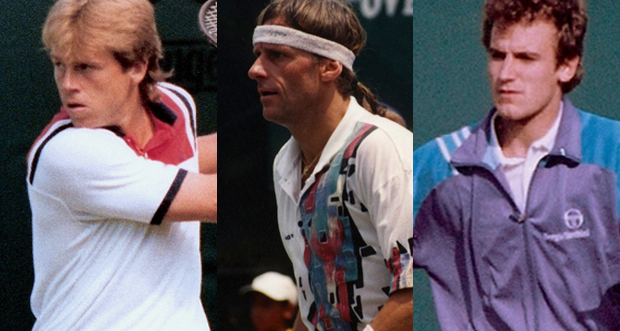
    Stefan Edberg Bjorn Borg Mats Wilander

    ONCE UPON A VIKING…

    Of the five great tennis nations covered in this series, three are no longer what they were: the United States, Australia, and Sweden. Whereas American dominance spread out over the majority of the Open Era in two great, interconnected eras, Swedish dominance was comparatively short – but equally dominant, at least for a time. It started with the rise of Bjorn Borg, who won his first major in 1974 and became the game’s top player by 1978, and ended with Stefan Edberg’s last Slam title in 1992. Outside of that range, only one Slam title belongs to a Swede: quintessential one-Slam wonder Thomas Johansson’s Australian Open in 2002.

    Let’s take a look at the Swedish career:

    Sweden Career

    As you can see, I split the chart differently than with the United States. The top chart includes the careers of Borg and Wilander, and ends with the last Slam won by Edberg. The bottom half sees the swift decline of Swedish tennis, with that lone major title in 2002.

    Swedish tennis was almost entirely ruled by three players: Bjorn Borg, Mats Wilander, and Stefan Edberg who, together, account for 24 of the 25 Slams. But they weren’t the only talented players during the 1980s in particular. Henrik Sundstrom, Anders Jarryd, Joakim Nystrom, and Mikael Pernfors all finished in the Top 10 at least once. Once we get to the 1990s we have players like Thomas Johansson, Magnus Gustafsson, Magnus Larsson, Jonas Bjorkman, Magnus Norman, and Thomas Enqvist.

    In the early 2000s, several promising young Swedes emerged: Andreas Vinciguerra, Joachim Johansson, and Robin Soderling. Vinciguerra is a name that you might not know, but he came of age around the turn of the millennium with other promising players born in the early 80s. If you look at the 1999 rankings, there were five teenagers who finished the year in the Top 100: Marat Safin (No. 24), Lleyton Hewitt (No. 25), Juan Carlos Ferrero (No. 42), Roger Federer (No. 64), and Vinciguerra (No. 98). Whereas the other four went on to win Slams and be No. 1s, Vinciguerra—still on pace to be a great player in 2001, rising as high as No. 33 at the age of 20—saw his career derailed by a back injury.

    [divider]

    Click here to discuss “National Tennis Careers – Part Two: Sweden” in the discussion forum.

    [divider]

    Similarly, Joachim Johansson rose as high as No. 9 and finished 2004 at No. 11 at the age of 22, but struggled with a shoulder injury and eventually retired in 2008. We are all more familiar with Soderling, who is one of only two men to defeat Rafael Nadal at Roland Garros, and unlike Novak Djokovic this year, Rafa was in his prime in 2009. From 2009 into 2011, Soderling was lingering on the edge of the Big Four, but was hit by mononucleosis and hasn’t played since late 2011, although has not officially retired. So in the post-Edberg/Wilander world of Swedish tennis, Thomas Johansson’s Australian Open title in 2002 was a lone bright spot, with lesser glimmers of unfulfilled promise by several Swedes in the last fifteen years.

    Ten Greatest Swedish Players of the Open Era
    1. Bjorn Borg
    2. Stefan Edberg
    3. Mats Wilander
    4. Thomas Enqvist
    5. Thomas Johansson
    6. Robin Soderling
    7. Jonas Bjorkman
    8. Magnus Norman
    9. Anders Jarryd
    10. (tie) Joakim Nystrom and Magnus Gustafsson

    Honorable mentions: Magnus Larsson, Jonas Svensson, Henrik Sundstrom, Mikael Pernfors, Kent Carlsson, and Joachim Johansson.

    The top three are not really debatable, although some would quibble with ranking Edberg over Wilander. Wilander had a higher peak, namely the 1988 season, and of course has one more Slam than Edberg. But both made 11 Slam finals, Edberg just lost one more, and this is more than balanced out by Edberg’s five more Semifinals and much greater consistency in the rankings. Wilander had one year-end No. 1 ranking, Edberg two; Wilander had seven to Edberg’s ten Top 10 rankings and eight to Edberg’s thirteen Top 20 rankings.

    There’s a big drop after the Tre Stora, and here is where the debate can come in. The system I used likes Enqvist quite a bit better than the rest, but some would prefer Thomas Johansson’s Slam title or Robin Soderling’s higher peak. Certainly if Soderling hadn’t gotten mono he’d probably be fourth on this list. Some might also prefer Jonas Bjorkman at fourth, who like Anders Jarryd was a No. 1 ranked doubles player, but it is hard to argue with Enqvist’s 19 titles versus Bjorkman’s six. Jarryd, Norman, Nystrom, and Gustafsson are almost too close to rank.

    The Future?
    Consider that since 2008, Robin Soderling has been the only Swede ranked in the year-end Top 100. Yes, that’s right. Since 2012 there have been no Swedes in the Top 100.

    But there’s hope, and his name is Elias Ymer. He’s 19 years old and as of this writing, currently ranked No. 130. Interestingly enough, Ymer isn’t your typical blond-locked Scandinavian; he’s of Ethiopian descent. Along with 23-year-old Christian Lindell (No. 188), he’s the only Swede ranked in the Top 400. Elias’ 16-year-old brother, Mikael, is also worth storing in your memory banks, but he’s a long ways off.

    Elias Ymer qualified for his first Slam main draw at Roland Garros this year, losing to Lukas Rosol in straights in the first round. Yet here is something promising: at the ATP 500 Barcelona, he beat Thiemo de Bakker and Nick Kyrgios before losing to David Ferrer in the round of 16. Kyrgios, No. 41 at the time, remains the highest ranked player he has defeated.

    So Ymer bears watching, although we should temper our expectations – there is no new Swedish golden age of Borg, Wilander, and Edberg on the horizon, but at least there’s someone. According to Magnus Norman, Swedish tennis has reached rock bottom and can only go up. Truly, there’s nowhere else it can go.

    [divider]

    Cover Photo (Creative Commons License): Carine06 / MadMarlin / Carine06

  • French Open Final: Djokovic The Favorite But Don’t Rule Out Wawrinka

    French Open Final: Djokovic The Favorite But Don’t Rule Out Wawrinka

    Novak Djokovic Stan Wawrinka Roland Garros Final

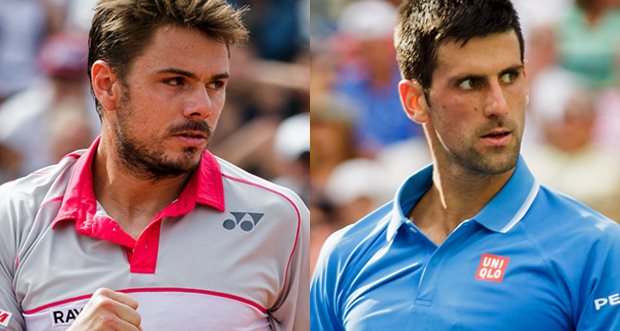
    The men’s French Open singles final will have the first-seed Novak Djokovic facing the eighth-seed Stan Wawrinka. Djokovic is playing his third final at Roland Garros, and is aiming for his first title there, completing the Career Grand Slam. And he’s already defeated the nine-time French Open champion Rafael Nadal, the man who ended his title dreams the last three years. So, this is maybe his best chance to finally win the French Open; surely the World No. 1, who is undefeated on clay this year, must be the favorite.

    After a dominant three-set win over Nadal in the quarterfinal, Djokovic had a tricky semifinal match against Andy Murray. After two sets it seemed like it was going to be an easy win for the Serb but Murray fought hard and leveled the match at 2-2 before playing a weak fifth set that Djokovic won 6-1. Murray’s great defense was causing trouble for Djokovic as it was hard to hit through or try to approach the net.

    [divider]

    Click here to discuss the Djokovic/Wawrinka Roland Garros Final in the discussion forum.

    [divider]

    The final opponent, Stan Wawrinka, is a completely different player to Murray. Wawrinka doesn’t have the defense of Murray but he hits heavy groundstrokes and will test Novak’s defense. And despite that he’s usually lost, Stan has played some of his best matches against Novak. Since 2013, they’ve met four times at slams, on the hard courts of the Australian Open and the US Open. All those meetings were five-setters with Stan winning the 2014 Australian Open quarterfinal, his first win against Novak since 2006.

    I think the situation here is ideal for Wawrinka. The surface plays into Stan’s hands. A slow hard court like at the Australian Open is Novak’s best surface and Stan has troubled him there. Clay, on the other hand, is the most comfortable surface for Stan. And despite Novak having eight Grand Slam titles compared to Stan’s one, it’s Novak with the big pressure here. Stan is playing “only” for his second Grand Slam title; no matter what happens, he will still be a Grand Slam champion. Novak, on the other hand, is playing for the Career Grand Slam that he’s missed out completing the last three years. This may be mentally one of the toughest matches in Novak’s career. Compared to his two previous finals at Roland Garros, Novak is now the clear favorite, yet still he is facing a tricky opponent.

    The expectations for Wawrinka were high last year after winning the Australian Open. But he wasn’t able to play his best tennis, except only occasionally. Now he seems to be in a good form: he made the semifinals in Rome by beating Nadal in the quarters, and he’s been solid at Roland Garros, beating Roger Federer, for example. The semifinal against Jo-Wilfried Tsonga showed some of his inconsistency when he lost the second set from 4-3 up a break. But he also performed well under pressure, for instance saving all of Tsonga’s break points in the third set before taking it in the tiebreak. I believe Stan is capable of playing a good match in the final, forcing Novak to play his best tennis to win it. We’ll see how Novak can deal with Stan’s game. Of the big names he’s faced at Roland Garros so far, Nadal and Murray are completely different players to Wawrinka. Earlier this year on clay, Djokovic dropped a set to another big-hitter Tomas Berdych. Wawrinka’s power game requires Djokovic’s defense to be as great as it’s been this year.

    I am expecting Djokovic to win the final — he is simply the best player in the world now, also on clay courts, and very consistent. But if Wawrinka plays his best tennis, he’s dangerous. He feels comfortable on clay and can also hit through in slower conditions. We haven’t seen this match-up on clay in a long time so it will be interesting to see it tomorrow. If Stan plays his best tennis, Novak needs to bring his best to win.

    [divider]

    Cover Photo (Creative Commons License): mirsasha

  • 2015 Australian Open Men’s Draw

    2015 Australian Open Men’s Draw

    Australian Open

    The men’s draw for the 2015 Australian Open was released today. In the top half are the No. 1 seed, Novak Djokovic (SRB), and the No. 4 seed, Stan Wawrinka (SUI). In the bottom half are the No. 2 seed, Roger Federer (SUI), and the No. 3 seed, Rafael Nadal (ESP).

    [divider]

    Click here to discuss the 2015 Australian Open Men’s Draw in the discussion forum.

    [divider]

    First Quarter

    Novak Djokovic (SRB) (1)
    Aljaz Bedene (SLO)

    Andrey Kuznetsov (RUS)
    Albert Ramos-Vinolas (ESP)

    Go Soeda (JPN)
    Elias Ymer (SWE)

    James Ward (GBR)
    Fernando Verdasco (ESP) (31)

    John Isner (USA) (19)
    Jimmy Wang (TPE)

    Laurent Lokoli (FRA)
    Andreas Haider-Maurer (AUT)

    Pablo Carreno Busta (ESP)
    Gilles Muller (LUX)

    Dominic Thiem (AUT)
    Roberto Bautista Agut (ESP) (13)

    Feliciano Lopez (ESP) (12)
    Denis Kudla (USA)

    Blaz Rola (SLO)
    Adrian Mannarino (FRA)

    Hiroki Moriya (JPN)
    Jerzy Janowicz (POL)

    Lucas Pouille (FRA)
    Gael Monfils (FRA) (17)

    Julien Benneteau (FRA) (25)
    Benjamin Becker (GER)

    Lleyton Hewitt (AUS)
    Ze Zhang (CHN)

    Donald Young (USA)
    Tim Puetz (GER)

    Illya Marchenko (UKR)
    Milos Raonic (CAN) (8)

    [divider]

    Second Quarter

    Stan Wawrinka (SUI) (4)
    Marsel Ilhan (TUR)

    Marius Copil (ROU)
    Pablo Andujar (ESP)

    Jarkko Nieminen (FIN)
    Andrey Golubev (KAZ)

    Matthias Bachinger (GER)
    Pablo Cuevas (URU) (27)

    Alexandr Dolgopolov (UKR) (21)
    Paolo Lorenzi (ITA)

    Sam Querrey (USA)
    Vasek Pospisil (CAN)

    Guillermo Garcia-Lopez (ESP)
    Peter Gojowczyk (GER)

    Alejandro Gonzalez (COL)
    Fabio Fognini (ITA) (16)

    David Ferrer (ESP) (9)
    Thomaz Bellucci (BRA)

    Sergiy Stakhovsky (UKR)
    Dusan Lajovic (SRB)

    Marcel Granollers (ESP)
    Stephane Robert (FRA)

    Robin Haase (NED)
    Gilles Simon (FRA) (18)

    Santiago Giraldo (COL) (30)
    Jan Hernych (CZE)

    Kyle Edmund (GBR)
    Steve Johnson (USA)

    Ivan Dodig (CRO)
    Joao Souza (BRA)

    Nicolas Almagro (ESP)
    Kei Nishikori (JPN) (5)

    [divider]

    Third Quarter

    Tomas Berdych (CZE) (7)
    Alejandro Falla (COL)

    Jurgen Melzer (AUT)
    Victor Estrella Burgos (DOM)

    Jiri Vesely (CZE)
    Viktor Troicki (SRB)

    John Millman (AUS)
    Leonardo Mayer (ARG) (26)

    Philipp Kohlschreiber (GER) (22)
    Paul-Henri Mathieu (FRA)

    Tobias Kamke (GER)
    Bernard Tomic (AUS)

    Sam Groth (AUS)
    Filip Krajinovic (SRB)

    Thanasi Kokkinakis (AUS)
    Ernests Gulbis (LAT) (11)

    Kevin Anderson (RSA) (14)
    Diego Schwartzman (ARG)

    Ricardas Berankis (LTU)
    Igor Sijsling (NED)

    Blaz Kavcic (SLO)
    James Duckworth (AUS)

    Carlos Berlocq (ARG)
    Richard Gasquet (FRA) (24)

    Lukas Rosol (CZE) (28)
    Kenny De Schepper (FRA)

    Jan-Lennard Struff (GER)
    Dudi Sela (ISR)

    Luke Saville (AUS)
    Tim Smyczek (USA)

    Mikhail Youzhny (RUS)
    Rafael Nadal (ESP) (3)

    [divider]

    Fourth Quarter

    Andy Murray (GBR) (6)
    Yuki Bhambri (IND)

    Alexander Kudryavtsev (RUS)
    Marinko Matosevic (AUS)

    Jordan Thompson (AUS)
    Joao Sousa (POR)

    Tatsuma Ito (JPN)
    Martin Klizan (SVK) (32)

    David Goffin (BEL) (20)
    Michael Russell (USA)

    Marcos Baghdatis (CYP)
    Teymuraz Gabashvili (RUS)

    Maximo Gonzalez (ARG)
    Lukas Lacko (SVK)

    Dustin Brown (GER)
    Grigor Dimitrov (BUL) (10)

    Tommy Robredo (ESP) (15)
    Edouard Roger-Vasselin (FRA)

    Malek Jaziri (TUN)
    Mikhail Kukushkin (KAZ)

    Federico Delbonis (ARG)
    Nick Kyrgios (AUS)

    Ruben Bemelmans (BEL)
    Ivo Karlovic (CRO) (23)

    Jeremy Chardy (FRA) (29)
    Borna Coric (CRO)

    Andreas Seppi (ITA)
    Denis Istomin (UZB)

    Juan Monaco (ARG)
    Simone Bolelli (ITA)

    Yen-Hsun Lu (TPE)
    Roger Federer (SUI) (2)

    [divider]

    Cover Photo (Creative Commons License): skamaica

  • Down the T #7: An Interview with Troy Deighton, Lines Umpire / Margaret McAleer

    Down the T #7: An Interview with Troy Deighton, Lines Umpire / Margaret McAleer

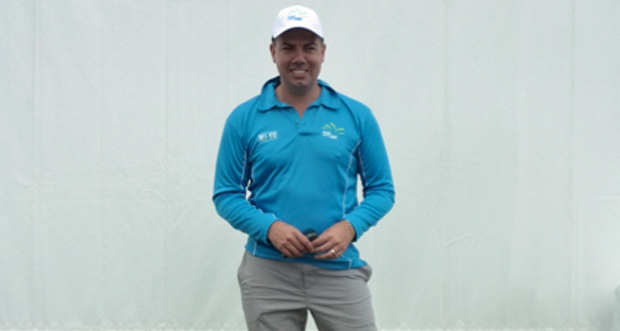
    Troy Deighton

    “Team work is the key to becoming a successful lines umpire. Not only do they call all shots related to their assigned line, they also work together with the Chair Umpire so that the match is played in a professional manner.”

    I would like to introduce Mr Troy Deighton, a lines umpire, to the readers of Tennis Frontier. I interviewed him at Apia International, Sydney, on the 12th of January.

    Mr Deighton has been umpiring tennis professionally since 1999-2000 — approaching fifteen years. In that time he has worked his way up through junior tennis, amateur tournaments at NSW level in Sydney, Australia, right up to Grand Slams. He has officiated at one dozen Australian Open finals, the last two U.S. Open finals in New York, as well as many Davis Cup and Fed Cup ties. I had the pleasure of posing many questions to him regarding the role of a lines umpire. He gave his opinion on Hawkeye, and the foot fault rule, giving informed and insightful answers, as the readers of Tennis Frontier will no doubt find out, when they read the full interview.

    [divider]

    Question: Can you explain the training for becoming a lines umpire?

    Deighton: The training is not overly extensive. It’s a matter of knowing if a ball is in or out. Obviously that depends on how good your eyesight is, to be honest. You need to understand the basic rules of tennis, go through an introductory course about the basics, in terms of the rules. When you are first starting out, it’s more about learning the technique of calling lines, whether you are on the side lines, or the cross lines on the court. There are differences in the way you call lines, knowing whether the ball is in or out to start with, and what constitutes the ball being in or out, is what you need to know when you are starting out.

    [divider]

    Question: How does a lines umpire work his/her way up to be able to work at Master Series and Grand Slam tournaments?

    Deighton: You start out with your national association. Here in Australia it’s Tennis Officials Australia, which is separate to Tennis Australia. Tennis Australia obviously pour a lot of money into developing officials, but there is also Tennis Officials Australia which is basically for nurturing new recruits and developing umpires at the early stage, and you work your way through the tournaments. Once you have done your introductory course, you become a lines umpire at a local level doing junior tournaments, amateur adult tournaments, you work your way through Australian money tournaments, Pro tours, Pro circuits, Challengers. After maybe twelve months or two years you might get a gig like this at the Apia International, in Sydney. After a couple more years you might get into your first Grand Slam, being the Australian Open. Then it is just a matter of developing your skills, your techniques, developing your grades. When your grades are good enough you may get selected for other professional events like Fed Cup and Davis Cup and other Grand Slams.

    [divider]

    Question: Do lines umpires at Master Series and Grand Slam tournaments get paid well? Do they have to cover their own traveling and accommodation costs?

    Deighton: The conditions which lines umpires work vary from tournament to tournament. At a local level, when you are starting out, you might make enough money to cover your petrol to and from that tournament for the day. So there is not a lot of money when you are first starting out. It’s more about being a hobby; if you are interested in tennis it’s a good way to get involved. Not everyone can hit a tennis ball, but they love tennis and find this sort of work as a way to get involved, being in the game that they love. It’s not all about the money, even at the top end of the sport, when you have been on the circuit traveling the world for many years; many umpires find it very hard to break even. So they are basically paying their way around the world. Yes, you could probably make money out of it, if you are very good and stick at it for a while, but most people see it as a second job or a hobby. You can get some cool tennis clothes out of it and shoes at tournaments. There is a little bit of money which I guess is nice as well.

    [divider]

    Question: Is there any age when a lines umpire has to retire?

    Deighton: Not in Australia. I can’t speak for other tournaments around the world. We have lines umpires from mid-teens to their eighties here in Sydney. The gentleman who is in his eighties is calling the ball as well as anyone else at the tournament. It goes on your ability. We have off-court assessors who watch our technique and monitor our accuracy, as well as the chair umpires who evaluate you from the chair as well. So long as you are performing and up to scratch in Australia at least there is no reason why you can’t continue working to a ripe old age.

    [divider]

    Question: I have noticed lines umpires spend a lot of time bending over. Do you personally suffer from a bad back? Do you have some sort of fitness program in place?

    Deighton: I don’t have a fitness program to be a lines umpire, especially on days like yesterday when you are sitting around all day and you tend to eat a lot because there is not much to do at tournaments, while you are waiting for the rain to stop and getting on court. I sort of hit the fitness regime after the summer of tennis when I have a few kilos to shed. You do bend over a lot and it can get quite uncomfortable. If you are on the cross lines, base lines, service lines you tend to be sitting down a lot as well. I think it just goes with the territory and I don’t have a program that I follow.

    [divider]

    Question: Can you tell us who assigns the lines umpires’ positions on the tennis court? Have you a favourite position?

    Deighton: The lines umpires’ positions again comes down to their grading. There are three different grades you have as a lines umpire. You get graded on the long line, which are the side lines of the court. The far line being the furthest from the chair, the near line being the closest to the chair. So you have an overall long line grading, a service line grading, and a baseline grading. Depending on how your grades are and what your rating is on those lines, you are more likely, if you have a high grading on serve or base, you are more likely to get assigned those lines. When you are starting out, usually you start on the near line which is nearest the chair umpire. Obviously it is easier for the chair umpire to call that line and overrule if you make a mistake, then move to the far line and then the cross lines on the court. My favourite line, I like doing serve. You get more involved in a match having to do the ball changes; you are the point of contact for the chair umpire if they need something, so there is more responsibility, in terms of your role in the match. You call the serve and you get to enjoy the rest of the rally. It’s a good line to be on.

    [divider]

    Question: I believe one of the requirements of a lines umpire is to have excellent eye sight. Are lines umpires allowed to wear glasses or contact lenses on court?

    Deighton: The requirement for lines umpires in Australia is to have 20/20 vision and every couple of years we are required to undergo eye test and to provide a certificate to say that we have either 20/20 vision or corrected vision. Yes, you are allowed to wear glasses on court, or prescription sunglasses or contact lenses.

    [divider]

    Question: One of your duties is to go with a player who takes a bathroom break or changes of attire break, to ensure the player does not use the break for any other purpose. In your experience have there been any unusual incidents that you can recall?

    Deighton: No. I haven’t encountered any unusual incidents or behaviour during a toilet break or alike. It’s unusual when you see a player dart off the court during the television coverage with a lines umpire in tow. You think, Why is that person running after the player? It is just to make sure that the bathroom break is used for what it is, therefore to go to the toilet and nothing else — the players not receiving coaching or doing anything else which is out of sorts. Usually at Major tournaments like Grand Slams you will have a Tour Supervisor or a Grand Slam Supervisor there as well. Your job as a lines umpire is there to report any suspicious activity or irregular behaviour back to the chair umpire. It is up to them to determine when any further action is to be taken.

    [divider]

    Question: What is your opinion on Hawkeye?

    Deighton: I love Hawkeye. I think there was a lot of angst and I guess worry from lines umpires, and possibility chair umpires as well, when it was first introduced. I remember my first encounter with Hawkeye; it was the first year it was introduced in Melbourne, at the Australian Open. I was standing on the far line and it was either the first or second match on Rod Laver Arena. Andy Roddick challenged one of my calls on the far line, and then came back and stood shoulder to shoulder to me, as we watched the big screen to see whether I was right or not. It turned out that my call was correct, and he sort of gave me a pat on the back and said, “Oh, well done.” Hawkeye takes a bit of the pressure out of the matches, and I think players used to dwell on calls that they were unsure about for a few further points on. Now they have the ability to challenge, see what the result was, and then they can move on. So it takes a bit of the heat out and relieves a bit of the tension on court.

    [divider]

    Question: Have you ever been overruled by Hawkeye?

    Deighton: Yes, I have. It’s not good to be wrong, I guess, but it happens to everyone. We accept that and just as the players do, you accept that and move on. You’re only as good as your next call.

    [divider]

    Question: There has been a lot of discussion of late to use Hawkeye on clay courts, your opinion?

    Deighton: I am probably not the best to talk about clay courts because we don’t have many clay courts in Australia, and I haven’t really officiated on anything, or any professional event on clay. In terms of Hawkeye on hard courts or Rebound Ace, I think it is great. From my experience on clay and watching clay court tennis the ball mark is there for all to see. So I think it’s just doubling up. I don’t see the need.

    [divider]

    Question: Do you think with the technology we have, you are going to be obsolete soon, or do you think there will always be room for a lines umpire, even with technology?

    Deighton: I tend to think that the lines umpires are a part of professional tennis. I think the players respect them, I think the crowd respect the job they do. I think if we were to go to a system where the players were calling their own lines, relying on Hawkeye more — more than we are now — the game, in general, would just slow down completely. We would be forever going to the video. Replacing lines umpires would be to the detriment of the sport.

    [divider]

    Question: The Foot Fault Rule clearly states, “A player who is serving must stand behind the baseline, between the centre mark and the sideline. A foot fault takes place when your foot touches the ground on — or forward of — the service line before you strike the ball.”

    There has been a lot of controversy in our game with the foot fault rule. The most famous incident to date would be Serena Williams at the 2009 U.S Open, with her outburst towards the lines umpire over being foot faulted. In your opinion is it just a lack of focus and concentration, and, say, lazy footwork that causes a player to foot fault at times?

    Deighton: I think foot faulting comes down to technique and if a player is foot faulted, constantly or regularly, or even occasionally, possibly, when it is occasionally it may be a lack of concentration. It is obviously their technique that needs to be reviewed. As a lines umpire on the baseline, you can be foot faulted across the centre service line. The important thing is to call a foot fault when you see it, when you’re certain it is a foot fault — if they’re touching the line, or they have crossed the line, and at no other times. If there is any doubt in your mind that the foot fault is touching the line, you don’t call it. That saves the controversy. The rule is there. It’s there to be enforced and unfortunately for Serena that was the call that was made against her.

    [divider]

    Question: What is personally the best match you’re been a part of as a lines umpire?

    Deighton: I have been blessed. I have been doing this for fifteen years or so. I have had enormous opportunities. I have been to South Africa for an ATP event, all expenses paid, and I was very lucky to have that opportunity. I have been to Samoa for a Davis Cup tie — again, everything was covered. That event was just a great event to be a part of. Most recently I have been to three U.S. Opens and done the last two women’s finals, on the baseline on Arthur Ashe stadium. I love Melbourne Park. I don’t think there is anything better than walking through the gates of Melbourne Park on the first day at the Australian Open. Seeing tens of thousands of people pouring through the gates. It’s just a buzz. Compare that to walking onto Arthur Ashe Stadium in New York. I remember the first time I went out on Arthur Ashe for a night match three years ago, I was too scared to look up into the crowd, because my heart was racing. I was sitting on the service line and I didn’t want to look up. It took me about three games before I actually had the courage to, like, look at the chair umpire and acknowledge them, let alone look up into the stands, and they just seem to go up into the sky forever. It is an amazing spectacle, and looking down onto the court from the top, it’s just amazing. I also think American tennis fans are just unlike any others in the world. They tend to constantly talk, there is a constant buzz in the stadium, where we in Australia seem to be more mindful of the tennis etiquette. Where it is dead silent while the rallies are going on and then the stadium erupts. I love the buzz of going to the Australian Open and Melbourne Park every year. I love Rod Laver Arena under a closed roof, but there is just something special about New York and Flushing Meadows and being on Arthur Ashe.

    [divider]

    Question: In your opinion, in general, do players treat lines umpires well on court?

    Deighton: I think gone are the days where a player will launch a tirade at the lines umpire. I think we have seen it in occasional incidents where a player has erupted. I think they are very few and far between these days. I think Hawkeye has a lot to do with that. I think Hawkeye takes a lot of heat out of the moment and instead of erupting over a questionable call, at a crucial point in the match, the players are able to challenge, should they have any left, to resolve that situation there and then, and get on with the match. I also think that Hawkeye has a lot to do with the fact we don’t see as many lines umpires being verbally abused by players anymore. I also think the Code of Conduct is also being enforced a bit more, so players aren’t allowed to get away with as much as they used to. I think that the ITF, WTA, and ATP have a lot to be thanked for.

    [divider]

    Question: Final question, what is the best part of being a lines umpire in your opinion?

    Deighton: I will be completely honest with you and say it has nothing to do with tennis. It has nothing to do with what happens on court. What has sustained me for the past fifteen years umpiring, you know, after having done many Grand Slams and many Davis Cup and Fed Cup ties, ATP and WTA events and the like, are the friends that I have made, and the friends from around the world. You might see once every year, but you know when they walk through the door at the tournament, at the start of January and you haven’t seen them for twelve months, it just feels like you haven’t been apart. I think it is the friends. There is a real camaraderie between officials, particularly here in Australia. I think our typical Aussie laid-back attitude, the visiting officials from overseas, really love that and that is why they keep coming back. I think the Australian Open is known globally as The Happy Slam or The Friendly Slam, and it really is. Not just for the players who love coming here; the officials as well. I have had some amazing times on court, so many wonderful experiences and opportunities, but it is the friendships I have made from all around the world I really cherish.

    [divider]

    I would like to thank Troy Deighton for graciously giving his time in between his on-court duties at Apia International, Sydney for this interview.

    To Nicola Abercrombie: my thanks to you, for all your help in my initial request for interviewing a lines umpire and organizing my media pass. I would also like to thank Mr Glenn Toland, President of ANSW and Assistant Chief of Officials, Apia International, Sydney for choosing such an informative and affable lines umpire in Troy Deighton for me to interview.

    Margaret McAleer
  • Brisbane International – Monday, January 5 – Order of Play & Scores

    Brisbane International – Monday, January 5 – Order of Play & Scores

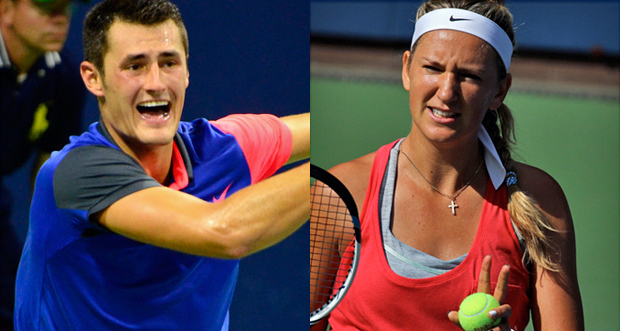
    Victoria Azarenka Bernard Tomic

    The night session on Pat Rafter Arena features two matches. Up first, Victoria Azarenka (BLR) takes on Karolina Pliskova, followed by local boy Bernard Tomic, who will play the American Sam Querrey. The full schedule is below.

    [Scores added as known. All times are local.]

    [divider]

    Monday, January 05, 2015

    Pat Rafter Arena — Start 11:00 am

    (4) Dominika Cibulkova (SVK) v Madison Keys (USA)

    (6) Gilles Simon (FRA) v (WC) James Duckworth (AUS)

    (8) Julien Benneteau (FRA) v (WC) Thanasi Kokkinakis (AUS)

    Not Before 7:00 pm

    Victoria Azarenka (BLR) v Karolina Pliskova (CZE)

    Bernard Tomic (AUS) v Sam Querrey (USA)

    [divider]

    Click here to discuss the ATP matches in the discussion forum.

    Click here to discuss the WTA matches in the discussion forum.

    [divider]

    Show Court 1 — Start 11:00 am

    (WC) Jarmila Gajdosova (AUS) v Shuai Zhang (CHN)

    (Q) Yaroslava Shvedova (KAZ) v Sabine Lisicki (GER)

    (3) Angelique Kerber (GER) v Caroline Garcia (FRA)

    Chris Guccione (AUS) / Lleyton Hewitt (AUS) v (WC) James Duckworth (AUS) / Marinko Matosevic (AUS)

    [divider]

    Show Court 2 — Start 11:00 am

    (Q) Daria Gavrilova (RUS) v Alison Riske (USA)

    (8) Garbine Muguruza (ESP) v Bethanie Mattek-Sands (USA)

    Jeremy Chardy (FRA) v Andrey Golubev (KAZ)

    (2) Rohan Bopanna (IND) / Daniel Nestor (CAN) v Alexandr Dolgopolov (UKR) / Kei Nishikori (JPN)

    (4) Eric Butorac (USA) / Sam Groth (AUS) v Jurgen Melzer (AUT) / Gilles Simon (FRA)

    [divider]

    Court 6 — Start 11:00 am

    Rhyne Williams (USA) v Matt Reid (AUS)

    Not Before 1:00 pm

    (2) Viktor Troicki (SRB) v (6) Denis Kudla (USA)

    Mirjana Lucic-Baroni (CRO) v Christina McHale (USA)

    (Q) Lesia Tsurenko (UKR) v (Q) Madison Brengle (USA)

    [divider]

    Court 14 — Start 11:00 am

    Frank Dancevic (CAN) v Lukasz Kubot (POL)

    (3) Marsel Ilhan (TUR) v Marius Copil (ROU)

    Jelena Jankovic (SRB) / Arantxa Parra Santonja (ESP) v Raluca Olaru (ROU) / Shuai Zhang (CHN)

    (2) Raquel Kops-Jones (USA) / Abigail Spears (USA) v Alla Kudryavtseva (RUS) / Alexandra Panova (RUS)

    Cover Photo (Creative Commons License): Steven Pisano / Marianne Bevis

  • Has Rafa Improved Since He Was 19? / Jonathan Northrop

    Has Rafa Improved Since He Was 19? / Jonathan Northrop

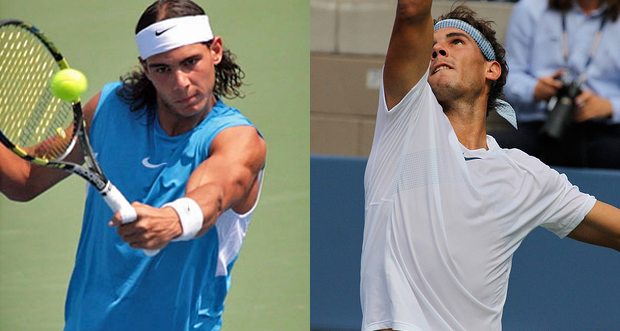
    Rafael Nadal

    The Spanish Meteor
    I realize the question must seem silly and/or rhetorical, but bear with me. As I was reading through some conversations about Rafael Nadal on the Tennis Frontier discussion forums and looking at his career statistics page on Wikipedia, as I often do when discussion of a specific player comes up, I noticed something about Rafa. It is well-known that he had a meteoric rise to the top at a very young age, without the usual long developmental phase that most players go through. He went from around No. 50 in the rankings for a couple years to No. 2 the year he turned 19 years old. Think about that for a moment – that would be like 19-year-old Nick Kyrgios being the No. 2 player in the world right now, or Borna Coric next year — or Grigor Dimitrov four years ago!

    [divider]

    Click here to discuss “Has Rafa Improved Since He Was 19?” in the discussion forum.

    [divider]

    But that wasn’t anything new. The thought, or question, that came to me is whether or not, or to what degree, Rafa has improved since that amazing 2005 season? I had noticed his pattern before, but I hadn’t given much thought to it, so I decided to investigate a bit and see what the data tells us.

    Developmental Patterns
    To start, let’s compare his developmental pattern to those of the other three of the four very greatest players of the last 25 years (I’m deliberately ignoring Andre Agassi because his developmental rise–while early–was extremely unusual and fraught with “off court” issues, and I’m not looking before this era because the further back you go, the less similar the game is).

    Player: Year-end Rank From Age 18-22
    Nadal: 51, 2, 2, 2, 1
    Federer: 64, 29, 13, 6, 2
    Djokovic: 78, 16, 3, 3, 3
    Sampras: 81, 5, 6, 3, 1

    Notice how all four were ranked roughly similarly at age 18, all between No. 51 and No. 81. But starting with age 19 we can pair Rafa and Pete on one hand, and Roger and Novak on the other. The former pair went straight from the latter half of the Top 100 to the Top 5. To put that in a current context, that would be as if Borna Coric–who will finish this year ranked No. 91–rises into the Top 5, or at least Top 10 next year. We can only hope, but it seems extremely unlikely.

    Roger and Novak, on the other hand, had a kind of “beachhead” year – Roger rising to No. 29 at age 19, Novak to No. 16. Actually, Roger had a second beachhead year, finishing his age 20 season at No. 13, and a “semi-beachhead” year at age 21, finishing No. 6. Roger’s rise to greatness was notoriously gradual, at least compared to other all-time greats. He didn’t win a Slam until just before his 22nd birthday; consider that Rafa won his fourth Slam just after turning 22.

    These rankings are, of course, merely a reflection of performance, so if we look at titles Rafa was extremely successful in 2005, winning 11 titles – the most of his career. And this wasn’t a lightweight title season: not only did he win his first of nine French Opens, but he also won four Masters tournaments.

    But those were surely all clay court tournaments, right? Actually, no. Of the four Masters titles, two were on hard courts: the Rogers Cup, in which he beat a 35-year-old Andre Agassi, 16 years older than Nadal; and the Madrid Masters, the indoor hard-court version that was replaced by the Shanghai Masters in 2009. So even in 2005, Rafa was able to perform at an elite level outside of the clay courts. This was further solidified in 2006 at the Slams. After he won his second French Open that year, he was going into Wimbledon with only two second-week Slam appearances, his two Roland Garros titles. But then he made it to the Wimbledon final and the US Open quarterfinal, cementing his all-surface elite status.

    Let us turn our gaze to winning percentage. Take a look at the four players, from age 18 to 27 (I stop at 27 because all four have played through that age, and beyond isn’t really relevant):

    Here we see four subtly, but still distinctly different developmental patterns. All jumped in performance level from age 18-19. But as you can see, Rafa was pretty steady from that point onward (and off the chart is 2014, in which he had an 81% – his worst since 2004, but still roughly within range of the rest of this chart). He fluctuated, of course, but whereas the others all had some variation of rise, peak, and plateau, Rafa’s pattern has been more up and down within an early peak-plateau range. Also, notice how the 2005-14 range has no winning percentages in the 84-87 range; it is either a “down” year of 81-83 or an “up” year of 88-91.

    Roger’s is a classic curve: a steady rise, high peak, and then descent to an up-and-down late-career plateau that continues to this day. Sampras was kind of a hybrid of Nadal and Federer: a quick rise, long peak-plateau, then decline. Novak has an interesting early plateau in his early 20s, and then a rise at age 24, his legendary 2011 season.

    Putting It All Together
    So what does this data tell us? First, what it can’t tell us are all the changes to Rafa’s game, whether we’re talking micro-adjustments or larger ones. We know, for instance, that his serve improved in 2010, probably his best overall year, but then has slipped again over the last few years. But the numbers don’t tell us about his real game, the sweat and focus and will that happens on court. But what it does tell us is that regardless of how his game has changed, his overall performance level has been very similar since breaking through as an elite player in 2005 at the tender age of 19.

    That said, there is another–perhaps more nuanced–narrative that should be brought forth, which is that while he was great from 2005-07, he was still “unfinished” and, in particular, learning to establish himself off clay. His 2005 winning percentage is inflated by the fact that he played 52 matches on clay, or 58.4% of his total matches, compared to 26 in 2006 (36.6%) and 32 in 2007 (37.6%). So while his overall winning percentage dipped, a lot of that was because of fewer clay courts (although interestingly enough, his record on hards was actually better in 2005 than 2006-07).

    To continue the narrative, Rafa was still developing in 2005-07 and then came more fully into his own in 2008 at the age of 21-22, when we saw a more “complete” Rafa. This was Rafa in his prime, finally and fully. 2009 saw two bumps in the road, one being injury and the other being Robin Soderling. Yet he regained his balance in 2010, having his best year of all. And then in 2011 Novak Djokovic had a season for the ages, and while Rafa was probably just as good as he had been the previous year, he couldn’t get around Novak. In 2010 Rafa was 2-0 against the Serb, but in 2011 he was 0-5. Now here’s where it gets very interesting: If we take those matches out of his record for both years, we get the exact same record. Take a look:

    2010 – with Novak: 71-10 (88%), without Novak: 69-10 (87%)
    2011 – with Novak: 69-15 (82%), without Novak: 69-10 (87%)

    In other words, Rafa was virtually the same in 2011 as he had been in 2010; it is just that Novak had his number. Rafa turned the tables in 2012 and they’ve been relatively even since, with Rafa having a slight edge at 7-6 since 2012. Aside from his rivalry with Novak, after his injury in 2012 Rafa rose again in 2013 and then struggled in 2014.

    In summarizing Rafa’s trajectory, we see a quick rise to elite status in 2005 and then a kind of plateau as he worked on aspects of his game, rising to the very top in 2008. From that point on, he was on a higher level of play, but suffered various setbacks that reduced his overall performance level and thus lend credence to the argument that he reached his peak level in 2005 and hasn’t improved since. But I think the answer to the original question is that yes, he has improved since he was 19 in 2005, although perhaps not as much as players like Roger Federer and Novak Djokovic, both of whom have followed more traditional “curved” career patterns.

    In a way, Rafael Nadal was like some kind of Mediterranean demigod, born (nearly) fully formed, (nearly) perfect. Yet like the demigods of myth, he has suffered hardship and challenges, and the end results fluctuated with life’s trials and tribulations.

    Addendum: Rafa’s Alleged “Decline”
    Rafa’s demise has been long-prophesied but never fulfilled. He has always managed to comeback, to rise again as if from the ashes and reclaim his status as one of the very best in the game, certainly the best at times. Yet we cannot ignore the fact that time catches up to us all. Rafa turns 29 years old next year and at some point, the gentle fluctuation of his career pattern won’t rise back up from a fall in performance. I am not saying that this will happen in 2015 – in truth, I don’t think it will – but we should be prepared for it.

    While we don’t know when it will happen, there might be signs beforehand. If you take one more look at the graph above you can notice that in Rafa’s career, there have been four dips, four “downward fluctuations” – in 2006-07, 2009, 2011, and one in 2014 off the chart. But as I pointed out above, the 2006-07 dip was mainly a matter of adjusting to a less clay-heavy schedule, so in truth the only downward turns were in 2009, 2011, and 2014 – his three injury-plagued years. And therein lies the key, and this is no surprise: Can Rafa remain healthy? If he can, I see no reason why he can’t remain on top for several more years. But if not, well, for those of us over three decades of age, we all know how it gets harder and harder to recover. We can hope, though, as fans of Rafa, fans of tennis (if not fans of Roger!) that we’ll see at least one more rise to the top from the great Spanish Meteor.

    Cover Photo (Creative Commons License): James Marvin Phelps / Marianne Bevis

  • Second Tier Players

    Second Tier Players

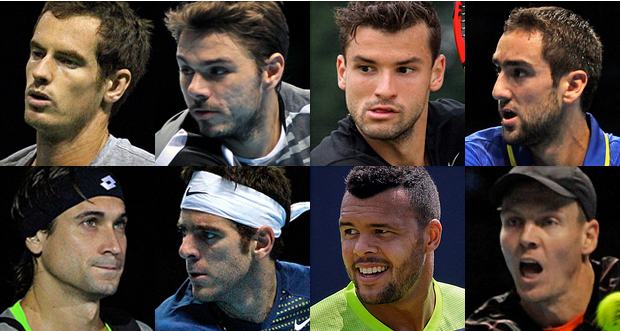
    Andy Murray Stan Wawrinka Grigor Dimitrov Marin Cilic David Ferrer Juan Martin Del Potro Jo-Wilfried Tsonga Tomas Berdych

    Most tennis fans, whether casual or serious, tend to follow the elites – the best players in the game who are perennial contenders for Grand Slams, ranked in the Top 5, and assemble resumes for the history books. Think Roger Federer, Rafael Nadal, Novak Djokovic, and, at times, Andy Murray. Serious fans of the game might extend their radar to the Top 100 and even a bit beyond, especially for long-time veterans and up-and-coming players. Your average serious fan – which I’d define as someone who follows the tour on at least a weekly basis and generally knows what tournaments are occurring, at least the bigger ones – probably could scan the Top 100 and recognize the names of most of them (perhaps another criteria for “serious fan”).

    Federer, Nadal, and Djokovic are household names – they have all been to the top of their sport and are all-time greats. Andy Murray is borderline, but after that it gets dicey. A casual fan of tennis knows the names Juan Martin Del Potro, David Ferrer, Tomas Berdych, Jo-Wilfried Tsonga, and, after 2014, Stan Wawrinka and Marin Cilic, and depending upon where one lies on the casual-to-serious scale, it starts tapering off after the Top 10. But those names – bonafide Top 10 players, but generally not Slam winners – aren’t all that well known among the general public.

    The purpose of this thread is to look at those “second tier” players – players who are not all-time greats, not multi-Slam winners, not No. 1’s, but still very good players. In fact, let’s define a few criteria for what I’m calling a “second tier” player:

    • No more than a single, “stray” Slam
    • No more than five “big” titles (Slams, Masters, World Tour Finals)
    • Never ranked No. 1

    What differentiates a second tier player versus a “third tier” and the rest of the pack? Some general guidelines might be:

    • Must have ranked in the Top 10 at least for a week, and/or
    • Must have won a big tournament
    • Must have at least five career titles
    • Multiple years finishing in the Top 20

    Who fits the bill among active players? Let’s take a look at the players, with a brief overview of their careers.

    [divider]

    Click here to discuss “Second Tier Players” in the discussion forum.

    [divider]

    David Ferrer

    David Ferrer is an interesting case, because on one hand he’s a bit of a tragic figure – he’s made it to the final of nine big tournaments (one Slam, one WTF, and seven Masters) and won only a single one, perhaps the weakest of the lot—the Paris Masters in 2012, and only then arguably because he didn’t have to face any of the erstwhile Big Four (his opponent in the final was Jerzy Janowicz).

    On the other hand, he’s a testament to hard work and thus is perhaps the definition of over-achiever. In other words, Ferrer has made the most of what he has and has come away with an impressive resume. He’s won 21 titles and finished in the Top 10 eight years in a row, the Top 20 ten years in a row, ranking as high as No. 3. He’s had his best two years in 2012-13, at the age of 30-31. In a way he’s as good as you can be without being great. There’s no shame in that.

    [divider]

    Juan Martin del Potro

    Of all the players on this list, del Potro might be the biggest “could have been.” A promising young player he finished 2008, the year he turned 20, at No. 9. Then, in 2009—at a time when the tour was dominated by two players, Federer and Nadal, with everyone else lining up to try to get a piece of the pie—he took the tennis world by storm by defeating Federer in the US Open final. He was not yet 21, and it looked like tennis had a new superstar, or at least someone to complete with Djokovic and Murray for “best of the rest.” After finishing the year No. 5 at the tender age of 21, the sky seemed the limit.

    Then, in an exhibition match in January of 2010, disaster struck: del Potro’s wrist began to hurt, and it kept on hurting. He entered the Australian Open with an ailing wrist, eventually losing in the fourth round to Marin Cilic. He then proceeded to miss nine months and only came back for a couple small tournaments late in the year, his ranking dropping to No. 258. He seemed healthy (or healthy-ish) in 2011, but wasn’t the same player. He did win a couple ATP 250 tournaments but could not make it into the second week at any Slam, although still finished the year No. 11. 2012 and 2013 saw further improvement, years in which he finished No. 7 and No. 5, respectively, but he could not quite match his 2009 glory. In early 2014 disaster struck again, and del Potro was out for most of the year, finishing at No. 138. We can only hope that “Delpo” will come back strong in 2015; he is only 26 years old and still in his prime, but he is clearly a brittle player.

    [divider]

    Tomas Berdych

    Berdych is another player with elements of disappointment to his career (see a pattern here?). The Czech rose quickly in 2005, winning his first, and so far only, big tournament – the revolving door that is the Paris Masters. Not to take that away from him, but it is worth noting that neither of the top two players in the game – Roger Federer and Rafael Nadal – played in the 2005 Paris Masters. Anyhow, Berdych finished that year at No. 24 and seemed poised to challenge for a place among the elite. Yet he stagnated, finishing the next four years in the No. 13-20 range, making the quarterfinal of only one Slam.

    Yet something seemed to click for Tomas in 2010 and, since then, he’s been one of the more consistent players on tour – finishing either No. 6 or No. 7 in each of the past five years, a span of time in which he’s made it to the second week (quarterfinal or later) in half of all Slams, once making the final – losing to Rafael Nadal in the 2010 Wimbledon, although not before defeating Roger Federer and Novak Djokovic.

    Berdych remains an excellent player and a fixture, for the time being, in the Top 10. But he does turn 30 years old in 2015, so the window is closing for him.

    [divider]

    Jo-Wilfried Tsonga

    It is easy to pair Berdych and Tsonga, for not only were they born in the same year (1985), but they’ve haunted similar territory in the lower half of the Top 10 for the last half decade or so, and their career accomplishments are quite similar, although with Tsonga’s win at the Canada Masters this year he’s pulled ahead a bit.

    Tsonga was a successful junior player, winning the 2003 Junior US Open over Marcos Baghdatis. He suffered through a series of injuries before rising quickly on the tour in 2007 and 2008, finishing that year at No. 6. For the last seven years he’s finished No. 13 or higher, five of those years in the Top 10. Tsonga has been deemed an underachiever; he’s got a big game, but doesn’t seem to have the big match mentality. Like Berdych he turns 30 next year, so the hourglass is about to turn.

    [divider]

    Stan Wawrinka

    The “Stanimal” was born the same year as Berdych and Tsonga and, if you look at his career through 2012, could be viewed as an underachiever and disappointment – yet as of this writing, he’s the only one of the Class of ’85 who has come away with a big prize. He rose to No. 54 in 2005, No. 30 in 2006, and then crept up to No. 13 in 2008, but floundered for a few years – looking more like a third tier and perennial Top 20 player, but only just grazing the Top 10 for a few months in 2008. But something seemed to click in 2013 – his results were more consistent as he regularly went deeper into tournaments, including his first Slam semifinal at the US Open and making it to the final of four tournaments, although winning only one, an ATP 250 (the Portugal Open). Stan finished the year at No. 8 after a not-embarrassing performance at the ATP World Tour Finals where he defeated David Ferrer and Tomas Berdych to make it to the semifinals where he lost to eventual champion Novak Djokovic.

    At the beginning of 2014 it seemed that Wawrinka was coming off a career year. He began the year well by winning the Aircel Chennai Open. But it was the Australian Open that proved the shocker: After defeating Novak Djokovic in the quarterfinals, and Tomas Berdych in the semifinals, Stan faced off against No. 1 Rafael Nadal. No one really gave him a chance, but he ended up defeating Rafa in four sets (it is easy to call this a cheap win for Wawrinka as Rafa was injured in the second set, but let us not forget that Stan won the first set and Rafa was well enough to win the third; certainly Rafa’s injury was a major factor, but the focus should be on Stan’s accomplishment). It was easy to consider that a fluke win, but Stan ended up also winning his first Masters, defeating Roger Federer in the Monte Carlo final and improving upon his 2013, finishing No. 4.

    What’s next for Stan? It is hard to imagine a quick drop-off, but it is also hard to imagine him repeating his 2013 performance – especially his Slam. But he’s likely going to remain a Top 10 player for at lest another year or two.

    [divider]

    Marin Cilic

    Talk about a surprising player. After a surge into the Top 10 in early 2010, after making it to the semifinals of the Australian Open at the age of 21, Cilic was erratic for the last few years, settling in as a third tier player. Then he was suspended for nine months (which was reduced), which seemed to serve as a wake-up call, or perhaps merely inspiration, as he rose quickly through the rankings in 2014, winning three minor tournaments before his surprising win at the US Open.

    Cilic is not the worst player ever to win a Slam, but there are better players in terms of overall career level, and thus is a good example of both how a single Slam does not equate with greatness, but also how tenacity can pay off. But he is a Slam winner and finished his second year in the Top 10, so is now a bonafide second tier player. It will be interesting to see whether he can maintain it.

    [divider]

    Just Missing the Cut: Richard Gasquet, Nicolas Almagro, Gilles Simon, Tommy Robredo, John Isner, Feliciano Lopez, Gael Monfils.

    You might quibble with my choices, but in my mind none of them are true second tier players. Some have vied for a spot in the second tier; for instance, Tommy Robredo finished 2006-07 in the Top 10, but for most of his career he’s been more of a third tier No. 20-30-type player. The same could be said for the others. Gasquet is an interesting one because in some sense he’s been the “gatekeeper” between the second and third tier for the last few years, or at least for 2012-13 when he finished No. 10 and No. 9. Gasquet would consistently beat everyone below him and lose to everyone above; previously other players like Janko Tipsarevic, perhaps Almagro, and before both, Fernando Verdasco, filled this role.

    Among this group, or at least those mentioned, the one who stands out as the “could have been more” (and perhaps still can be) is Gael Monfils. He is a player whose reputation and ability far exceeds his usual ranking, mainly due to seemingly being injury prone and perhaps a non-championship mentality. Monfils is a second tier talent with a third tier career–in a sense, the inverse of David Ferrer—and thus is the type of player who could surprise us and win a big tournament. The 2015 Paris Masters?

    [divider]

    On the Cusp: Milos Raonic, Kei Nishikori, Grigor Dimitrov, Ernests Gulbis.

    Kei in particular might deserve to be a second tier player by virtue of his No. 5 finish this year. He’s won six titles but consider that he has not yet won a big tournament (he made the final of both a Slam and Masters this year), nor has he finished in the Top 10 more than once. But if he finished in the Top 10 a second year in a row and/or wins a big tournament, he’s in.

    Similarly with Raonic and Dimitrov. It only seems a matter of time. With Dimitrov there may even be a chance that he becomes a lesser first tier player along the likes of Andy Murray, but the clock is ticking.

    [divider]

    Addendum: The Question of Andy Murray

    It is hard to feel bad for someone with two Grand Slam trophies, 31 titles overall, not to mention an impending marriage to the beautiful Kim Sears. Andy will forever be beloved in the United Kingdom for being the first British player to win a Grand Slam title in the Open Era, and the first since Fred Perry in 1936 to take Wimbledon. But Andy comes off, at least in the press, as disgruntled, surly, and forever unhappy with his standing. Just as Novak Djokovic was the third wheel on the Fedal bicycle for four years in a row, Andy has been the “best of the rest/worst of the best” for just about his entire career. Unlike Novak, Andy didn’t break through the players ahead of him and rise to No. 1. He did win two Grand Slams within one calendar year, being a true member of the Big Four for at least that year, but he couldn’t maintain it.

    That said, Andy Murray is no second tier player. He is a truly great player, the third greatest of a generation that has produced what should turn out, when all is said and done, two of the ten or so greatest players of all time in Nadal and Djokovic. If Andy were born ten years earlier and peaked in the weak era of the late 90s to early 00s, he would undoubtedly have many more Slams than two. But every player has a “what if” story, and in the end, Andy’s career is what it is – and not only is it not over yet, it has been a stellar one so far. My opinion is that Andy is the greatest player of the Open Era with less than four Slams – greater than Kuerten, Hewitt, Safin, even Ashe. (What I mean by “greatness,” in this context, is a combination of peak level and career accomplishment).

    In some ways Andy is the Guillermo Vilas of the current era. Vilas was born in the same year as Jimmy Connors and peaked alongside Connors, Bjorn Borg, John McEnroe, and, to a lesser degree, Ivan Lendl. That’s what I’d call a “raw deal.” Yet Vilas still managed to win four Slams and 62 titles and was ranked in the Top 6 for nine years in a row, but—like Andy so far—he never did rank higher than No. 2, despite arguably being the best player in 1977.

    Career-wise, despite currently stalling out in his Slam count, Andy is closing in on four-Slam winners Vilas and Jim Courier, who are the gatekeepers to the true elites of the Open Era. I’d say he probably needs at least one more Slam to join them, but still has the possibility of surpassing him. Wouldn’t it be appropriate if Andy finished his career with four or five Slams, and became the historical “best of the rest, worst of the best?”

    [Note: At some point I’d like to write a “Part Two – Second Tier Players of the Past,” but there are a few articles on the burner, so stay tuned.]

  • The Bryan Brothers Reign Again in London

    The Bryan Brothers Reign Again in London

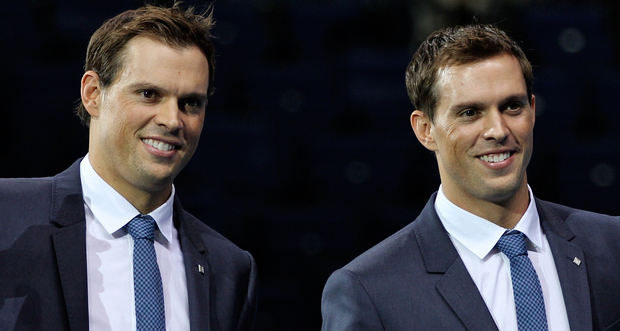
    Bryan Brothers Mike Bryan Bob Bryan

    Bob and Mike Bryan beat Ivan Dodig and Marcelo Melo in the final of the Barclays ATP World Tour finals, 6-7(5), 6-2, 10-7.

    In the first set, both teams were able to hold serve easily, barely losing a point on serve. In the tiebreak, Dodig/Melo managed to pull out a mini-break lead, and clenched the set when Mike Bryan returned a serve wide.

    At 1-2 in the second set, Melo quickly got down 15-40. They managed to save the first break point, but lost the game on a double fault.

    Serving to stay in the set, Melo again went down double break point, and this time Bob Bryan grabbed the set with a backhand volley.

    The super-tiebreak opened with a flurry of mini-breaks. Eventually the Bryans pulled out a 9-7 lead, and on championship point, Melo sent a lob long.

    This was the Bryan brothers’ fourth time winning the prestigious year-end championship. They had previously won in 2003, 2004, and 2009.

    [divider]

    Cover Photo (Creative Commons License): Marianne Bevis