Tag: atp

  • 2015 World Tour Finals: Semifinals Preview

    2015 World Tour Finals: Semifinals Preview

    11206695823_bd037c35af_z

    First Semi-final: Djokovic vs. Nadal

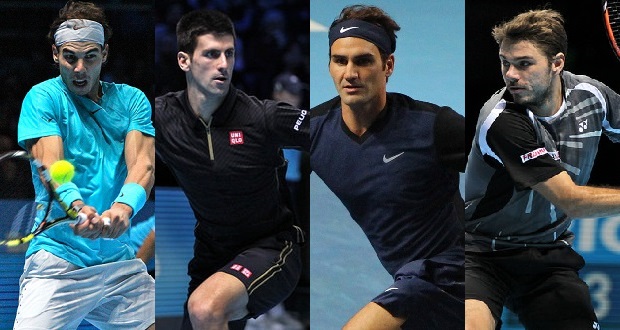
    Nadal has been the standout player of not only his group, but perhaps the tournament. He dealt with Wawrinka and Murray pretty tamely, dispatching both in straight sets, whilst surviving a tenacious challenge from compatriot Ferrer to come back and win the final two sets on Friday. This is a timely bit of form for Nadal, beating three quality opponents on his least favourite surface in his poorest season in a decade.

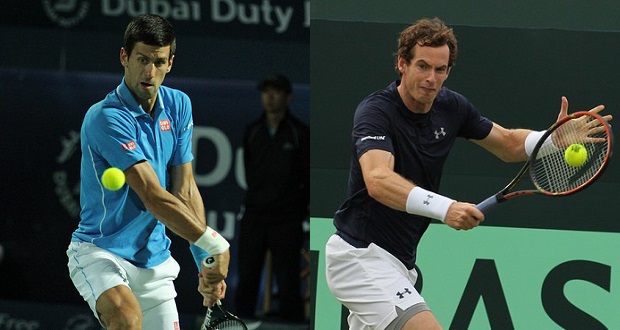
    Djokovic has equally surprised. He destroyed Nishikori in straight sets, but wasn’t at his sharpest against an inspired Federer on Tuesday, falling in straight sets. This was not a great surprise, Federer perhaps being the greatest indoor player in history, as well as Novak’s only regular challenger this season. Nevertheless, the manner in which he fell away in the second set against the Swiss is cause for minor concern. He restored order to his world mind on Thursday, taking down Berdych, who offered some resistance, in two sets.

    I think Ferrer is akin to Djokovic, but without the weapons. He was able to push Rafa with defence and speed. Novak possesses these attributes, but in greater abundance. Furthermore, he has a strong serve, the best backhand in the game, and the ability to dictate and finish points quickly. I think therefore, despite his loss to Federer, form and the recent history of their rivalry shall see the Serb prevail. He has Nadal’s number now, likes the rhythm of their rallies and enjoys the edge in physicality. Nadal has been showing glimpses of brilliance this week, but it would take his sustaining of that level in combination with Djokovic turning up sluggish and error prone to cause the upset.

    Second Semi-Final: Federer vs. Wawrinka

    It had to happen again, didn’t it? Last year the Swiss pair met in the semi-finals and delivered a pulsating contest that was far and away the match of the tournament. It was also a heated contest. Tensions were high throughout, Wawrinka exchanging words with Mrs. Federer. Roger saved five match points before staggering over the line. The match, which was a highly physical and emotional affair, left Federer in such poor shape he was unable to contest the final.

    Federer has enjoyed a great tournament so far. He made short work of Berdych in his first round match, before dispatching Novak in straight sets in his second with an awesome display offence and variety. He had his struggles in his last match against Nishikori, producing multiple errors and breaks, and also looked tired out in stretches of the match before attacking decisively to win whilst Kei served to stay in the match. I suppose having already won the group, the last match was as good a one as any to have a sluggish performance and set off the alarm bells for coach Edberg for what needs to be worked on for the weekend.

    Wawrinka has had to work harder than his countryman to reach this stage. Wawrinka was a shadow of himself in his opening match against Nadal, falling meekly in a match I thought would be an epic contest. This was seemingly a blip though, as he turned things around from thereon in to beat Ferrer and Murray in straight sets.

    I think Roger has the edge in this encounter. If physicality is not an issue, I believe variety and a generally good run of recent indoor form will see him through Wawrinka. Federer leads their head-to-head 17-3, and has only ever lost to Stan on clay surfaces. Wawrinka likes the high ball, and Federer has of late used his slice and court craft to offer opponents low bouncing, off pace balls. This could be decisive against Stan, a player who benefits much with time to set up his strokes. Further, Stan is a good rather than great mover, and I think Federer will do everything he can to get his man chasing awkward shots. I expect a tight affair and a shot making exhibition. I think if the Federer which beat Djokovic and Berdych turns up, as opposed to the one who edged Nishikori, we will see him contest tomorrow’s final.

    Author’s Blog: World Tour Finals: Semifinal Preview

    [divider]

    Cover Photos (Creative Commons License): By Marianne Bevis.
    Followed by the name, such as Marianne Bevis
  • 2015 ATP World Tour Finals Preview

    2015 ATP World Tour Finals Preview

    15612895007_1565dcee0d_z

    ‘The end is here’ ‘The Final showdown’ ‘The Stage Is Set’ ‘Insert overdramatic cliché’. Yes, ATP overkill at its finest. But cynicism aside, I am of course looking forward to the season ending shindig in London. It is a pleasure to see the best players in the world battle it out for a colossal sum of money and ranking points. Not bad for a week’s work, that’s for sure.

    There is little change in the line-up since last year’s event, with Nadal and Ferrer replacing Milos Raonic and Marin Cilic in the eight man field, although Ferrer was an alternate last year. The event is a great yardstick of both season long consistency, but even more so of longevity. This shall be Berdych’s sixth straight year of qualification, Ferrer’s fifth, Djokovic’s ninth and one Mr Roger Federer’s fifteenth. The other four meanwhile have all made multiple appearances, again a testament to the depth and quality atop the men’s game.

    On the subject of depth and quality, Novak Djokovic stands a head higher than even his closest competitors at the event, and as I breakdown the draws and offer my thoughts, it becomes clear: All roads pass through Novak in the quest to haul in the trophy a week from Sunday.

    Group A

    This group, consisting of Djokovic, Federer, Berdych and Nishikori, is for me the more likely of the two to see the big names advancing.

    Novak leads Berdych a lopsided 20-2 in their head to head, never having lost to the Czech on a hard court. Berdych has enjoyed some form this autumn, but even his biggest shots seem to make little indentations in the Serb’s defences. Nishikori has enjoyed a bit more success against Djokovic, winning two of their six matches, including at the US Open last year. In addition, Nishikori pushed Novak at the World Tour Finals last year in one of the few matches that weren’t duds. With Kei’s lack of matches lately though, and Djokovic’s imperious form, I suspect Djokovic to come through these two hassle free.

    Federer, although not as dominant over the afore mentioned pair as Djokovic, still enjoys healthy head to heads against both. Against Berdych the Swiss leads 14-6. Berdych does not seem to have as big a block against Roger compared to the more defensive members of the ‘big four’, his big game when clicking can overcome him, including twice in Slams. Federer has not lost to Tomas though since an injury plagued 2013, winning the last three matches. I think Berdych could trouble the Swiss, especially when one looks at his recent loss to the big hitting Isner in Paris, but the court in London has in recent years yielded a slower bounce, which should aid Federer in nullifying Berdych’s power.

    What of the marquee matchup between the two most successful players of the season? It seems strange for Novak and Roger to meet in the round robin stage of the tournament, but that is the nature of rolling rankings and contributes towards the excitement of this unique event. There is little to choose between the pair going into the tournament, Federer triumphing in Basel, Djokovic a week later in Paris. Both are in fine fettle, and play some of their best indoors. Based on his sheer dominance in the last few months, Novak for me edges their encounter.

    Group Winner: Djokovic

    Group Runner Up: Federer

    Group B

    The other group, consisting of Murray, Wawrinka, Nadal and Ferrer, offers more in the way of unpredictability and intrigue than the first.

    Murray is in a rich vein of form, reaching the Paris Masters final before falling tamely to Djokovic. He will benefit from home crowd support, and is a fine indoor player. Although trailing Nadal 6-15 in their head to head, this is not the same Nadal of late, Murray beating him on the home clay of Madrid in their last meeting this year. Murray has had a better season, and I think in terms of speed, fitness and form the Scot starts out as favourite against Rafa. In his last meeting with Ferrer, recently in Paris, he overcame him in two straight forward sets, and leads their series 11-5, as well as having won their last three indoor meetings. Ferrer has enjoyed a successful autumn, but Murray would start as a clear favourite. Murray’s match with Wawrinka should prove to be the hardest. While he leads the Swiss 8-4, Stan won their last two encounters in 2013, and they have not met since in a period where he became a two time slam winner. I would not be surprised to see Wawrinka power through the Scot, as he did last time they met.

    Stan Wawrinka comes to London having enjoyed the best year of his career. Nadal was long a nemesis for him, leading their head to head 13-3. Stan has put things to rights in recent years however, winning three of their last four meetings,  including on Nadal’s beloved clay earlier this year, and then in two pulsating sets in Paris in similar conditions to London last week. If Wawrinka hits his offensive stride, I see him edging the Spaniard. Against Ferrer meanwhile, Stan, whilst trailing 6-7, he has won their last three meetings. Ferrer can certainly hang in there with the more powerful Swiss, still prone to bouts of inconsistency, but Stan remains the favourite.

    Nadal has done well in making the finals in London, having a rather modest year by his lofty standards, winning just three minor titles. He has qualified the hard way, but qualified all the same. He has shown some good form in the indoor season, stretching Federer, perhaps the greatest indoor player in history, to three sets in the Basel Final, before falling in a tight quarterfinal last week in Paris. I have already above given two opponents an edge over Nadal in his group, and I struggle to see him making the semi-finals this year. All the same, it would be a great end to the year for Nadal to score a win against his friend and rival, the dogged David Ferrer. Rafa enjoys a 23-6 lead in their matches, and won their sole meeting this year in Monte Carlo. Ferrer is nevertheless an effective indoor player, coming into London with two trophies at indoor events. Furthermore, four of his six wins against his compatriot were on hard courts, two of them indoors. This match represents both men’s best chances of a win in London, and the accompanying $167,000 and 200 ranking points. Expect an entertaining slugfest in their final encounter of the year.

    Group Winner: Murray

    Group Runner Up: Wawrinka

    Semi-Finals

    Federer Defeats Murray

    Djokovic Defeats Wawrinka

    Final

    Djokovic Defeats Federer

    [divider]

    Link to author Daniel Edwards’ blog

    Cover Photo (Creative Commons License): Marianne Bevis

  • 2015 Paris Masters Final Preview

    2015 Paris Masters Final Preview

    16488000050_dd1b349571_z

    Novak Djokovic increasingly looks as if he has this rivalry with Andy Murray by the scruff of the neck. The Serb leads their head to head series 20-9, and has won nine of their last ten matches since Murray triumphed over him at Wimbledon in 2013. It was looking increasingly like one way traffic until the Scot stopped the rot with a win last August in the title match of the Rogers Cup. Make no mistake though; Djokovic seemingly has Andy’s number nowadays.

    I think when these two contest best of three matches; they are as a rule higher quality affairs compared to their best of five encounters. Both men play pretty similar games, predicated on defence, drawing the error and creating openings for more aggressive plays. I have noticed that in some of their Slam encounters, in Australia or at Flushing Meadows in particular, the buffer created by a finish line that is farther away can lull both into a defensive complacency, leading neither in the early stages to take charge and resulting instead in rallying affairs. In contrast, the three set matches seem to inject in both men a sense of urgency, and thus willingness to be the aggressor and forced the issue. Two of the best matches the pair have contested were contested in the three set format, their 2012 encounters at The Olympics and Shanghai were high octane matches where both players came out guns blazing, eager to put away each other.

    It remains to be seen whether today’s clash in the final of the Paris Masters shall deliver the same quality. In their last meeting, the semi-finals of Shanghai, Murray surrendered rather tamely to Djokovic in two lopsided sets. In addition, Novak likes these courts, medium paced for an indoor event; he is the two time defending champion. I will always give Novak an edge on a medium to slow hard court against Murray, especially in controlled indoor conditions. One wonders as well what motivation Murray will have to go all out, what with the World Tour Finals looming, not to mention the Davis Cup final, an event he is prioritising.

    I believe two key shots of Murray’s will lead to a Djokovic victory this afternoon. The Scot’s forehand is liable to landing in the middle of the court, and I think Novak will waste little time in taking charge of the rally when this inevitably happens. In addition, whilst Murray possesses a good first serve, it is not a high percentage shot, thus he will have to hit a fair number of second serves. This shot is arguably the Scots weakest, often only hit at around 80 miles per hour. Against the greatest returner in the world, and perhaps in the history of the sport, he is more often than not punished when attempting the second delivery. All is not lost for the second seed though. He won his semi-final against Ferrer in routine fashion, earlier in the day than when Novak beat Wawrinka in three sets. He should be fresh for this encounter. Nevertheless, I expect Novak to continue in his rich vein of form and make it three Paris titles in a row.

    Djokovic to win in straight sets.

    [divider]

    Cover Photo (Creative Commons License):  Marianne Bevis


  • Hot on the Frontier: Is This the Beginning of the Incline?

    Hot on the Frontier: Is This the Beginning of the Incline?

    imageedit_1_7870310887

    Our hottest new topic in our discussion forum this week: Is This the Beginning of The Incline?

    Nobody can dispute the fact that Rafael has had, by his own lofty standards, a rough year. He lost his French Open crown, lost several times to lower ranked players, saw his 10-year streak of at least one Grand Slam title end, and saw his ranking slip down to No. 8. Many were predicting that Nadal was finished, that he would soon retire, or at least get a new coach. So far none of that has happened. And during the Asian Tour, we saw Nadal get to the finals in Beijing and the semifinals in Shanghai. From these results, many fans think he is on the rise and will take his place back in the Top Three of Four soon. Our member GameSetAndMath started this week’s Hot Topic that got everyone debating over Nadal’s future. Congratulations to GameSetAndMath for starting this week’s Hot Topic on the Frontier, “Is This the Beginning of the Incline?” Come check it out!

    avatar_170


    GameSetAndMath
    Tennis Frontier Member since: July 2013


    Some questions for GameSetAndMath!
    1. Who is your all-time favorite tennis player?
        Answer: Roger Federer
    2. If you could attend any Grand Slam tournament, which one would you like to go to?
        Answer: Wimbledon
    3. If you could slip back in time and see one match, which would it be?
         Answer: Bjorn Borg vs. John McEnroe 1980 Wimbledon final
    4. Which two players would you like to see playing doubles together?
         Answer: Fedal
    Check back for next week’s Hot Topic on the Frontier!
    [divider]
    Cover Photo (Creative Commons License): Marianne Bevis
  • Hot on the Frontier: Is This the Beginning of The Decline?

    Hot on the Frontier: Is This the Beginning of The Decline?

    imageedit_1_9869538754

    Our hottest new topic in our discussion forumThis Is the Beginning of The Decline

    Roger Federer, the Shanghai Masters defending champion, suffered a shocking second-round upset at the hands of Spain’s Albert Ramos-Vinolas. One of our members, Luxilon Borg, started this week’s hot topic about the status of Roger Federer, and the question as to whether or not he is nearing the end of his career. It started an interesting debate on one of the greatest players of all-time. Come check it out!

    [divider]

    avatar_187


    Luxilon Borg
    Tennis Frontier Member since: July 2013

    Some questions for Luxilon Borg!

    1. Who is your all-time favorite tennis player?
      Bjorn Borg, followed by Jimmy Connors.
    2. If you could have one professional tennis player’s ability or stroke, what would it be?
      The ability of Roger Federer to stay amazingly calm. Stress is a killer.
    3. What is your favorite food to eat while watching a tennis match?
      Tacos or Burritos.
    4. Which tennis player do you think you could really get along with if you could hang out with him/her?
      Novak Djokovic. Great sense of humor.
    5. What is your biggest tennis pet-peeve?
      Too much toweling off.
    6. If you could attend any Grand Slam tournament, which one would you like to go to?
      Roland Garros for sure. Clay is real tennis.
    7. If you could slip back in time and see one match, which would it be?
      Easy. Battle of the  18-16 Tie Break, Borg vs McEnroe, Wimbledon Final, 1980.
    8. Which two players would you like to see playing doubles together?
      Fedal.
    9. Describe your affection for tennis in one word.
      Life.
    10. Your opponent bounces the ball 20+ times before serving. You would:
      1. Wait patiently (To a point)
      2. Curse under your breath
      3. Complain to the umpire
      4. Tell the player to shove the ball up where the sun doesn’t shine.

    A message for everyone on Tennis Frontier (if you have one):

    This is amazing forum filled with very passionate followers. Tennis is like no other sport. It requires skill sets, both mental and physical, far beyond any other. The level of intelligence and character required eliminates a good part of the population from being involved. We should be proud that we are absorbed and consumed by a sport that has such high standards and is 100% merit based.

    [divider]

    Check back for next week’s Hot Topic on the Frontier!

    [divider]

    Cover Photo (Creative Commons License: Marianne Bevis.

  • TENNIS QUIZ: Western & Southern Cincinnati Champions

    TENNIS QUIZ: Western & Southern Cincinnati Champions

    Roger Federer Serena Williams Western & Southern Open Cincinnati Masters

    Test your knowledge of the Western & Southern Open! See if you can name every Open Era champion!

    Western & Southern Men’s Champions

    Western & Southern Women’s Champions

    [divider]

    Cover Photo (Creative Commons License): Henrik Gustavsson/ SweTennis / kulitat

  • TENNIS QUIZ: Rogers Cup Champions

    TENNIS QUIZ: Rogers Cup Champions

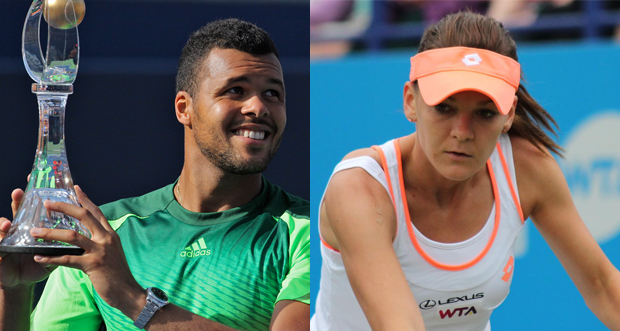
    Jo-Wilfried Tsonga Agnieszka Radwanska Rogers Cup

    Test your knowledge of the Rogers Cup! See if you can name every champion since 1969!

    Rogers Cup Men’s Champions

    Rogers Cup Women’s Champions

    [divider]

    Cover Photo (Creative Commons License): Marianne Bevis / Dave Rubenstein

  • National Tennis Careers – Part Six: Summing Up

    National Tennis Careers – Part Six: Summing Up

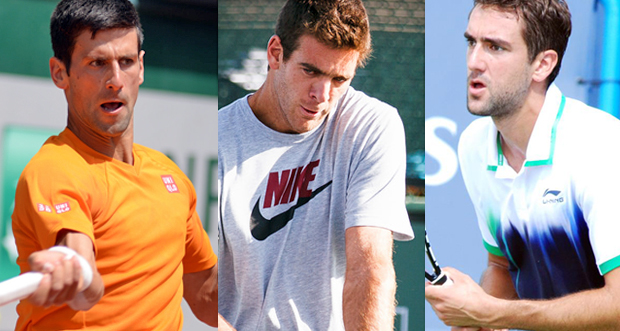
    Novak Djokovic Juan Martin del Potro Marin Cilic

    After surveying Open Era tennis through the five nations with the highest Slam totals, we’re left with a few questions and unexplored areas which I’ll try to tackle in this concluding segment.

    [divider]

    Click here to discuss National Tennis Careers – Part Six: Summing Up in the discussion forum.

    [divider]

    Who’s left?
    The “big five” tennis nations include many, even most, of the all-time greats of the Open Era. Let’s take a look at the other nations and their players by Slam count:

    Czechoslovakia/Czech Republic (12): Ivan Lendl (8), Jan Kodes (3), Petr Korda (1).
    Serbia (9): Novak Djokovic (9)
    Germany/West Germany (7): Boris Becker (6), Michael Stich (1)
    Argentina (6): Guillermo Vilas (4), Gaston Gaudio (1), Juan Martin del Potro (1)
    Russia (4): Yevgeny Kafelnikov (2), Marat Safin (2)
    Brazil (3): Gustavo Kuerten (3)
    Croatia (2): Goran Ivanisevic (1), Marin Cilic (1)
    Romania (2): Ilie Nastase (2)
    South Africa (2): Johan Kriek (2)
    United Kingdom (2): Andy Murray (2)
    Austria (1): Thomas Muster (1)
    Ecuador (1): Andres Gomez (1)
    France (1): Yannick Noah (1)
    Italy (1): Adriano Panatta (1)
    Netherlands (1): Richard Krajicek (1)

    Before Djokovic is through, Serbia’s Slam count should surpass that of the Czechs as a whole.

    Slavic Surge?
    I almost titled this last part “Slavic Surge!” because it would seem that the tennis from Slavic countries has been on the rise. But it wasn’t quite as extreme as I thought. There are some strong Slavic players currently in their peaks, namely Djokovic, Berdych, Cilic, and Karlovic. There are some younger players with some upside, including Damir Dzumhur (23, No. 100), Grigor Dimitrov (24, No. 16), and Jiri Vesely (22, No. 45). But there is only one player that looks like a potential future star, and that is the 18-year-old Croatian Borna Coric, who is currently ranked No. 37. So while Slavic tennis is strong, it is hardly dominant (Novak aside).

    Possible Future Slam Winning Countries
    So who might the next Slam winners be? Specifically, which countries have the most possible future Slam winners? Well, that is for a future study that I’m working on. But I will say that as we’ve seen in the previous segments, there isn’t much on the horizon for Spain or Switzerland, and only really the Ymer brothers in Sweden; in the US there are a few prospects, and Australia at least has “K&K”: Kyrgios and Kokkinakis.

    All in all there doesn’t seem to be a central location for tennis right now or the foreseeable future. We can sum up the Open Era by looking at early dominance by Australians, namely Ken Rosewall, Rod Laver, and John Newcombe, then the rise of Americans in Jimmy Connors and John McEnroe, and Sweden in Bjorn Borg, Mats Wilander, and Stefan Edberg. Along with German Boris Becker and Czech Ivan Lendl, Americans and Swedes dominated tennis from the mid-70s into the early 90s, with Sweden dropping off as Edberg retired, but the United States remained dominant into the 21st century, led by Pete Sampras and Andre Agassi. But then the US dropped off precipitously, and Switzerland and Spain took up the rulership of men’s tennis, with Serbia playing its part.

    What the future will bring, well, it is a truly global world out there. There’s no sign of any of the five great tennis nations regaining their dominance. There are some glimmerings of improvement in Australia, and a bit in the US, but nothing substantial or worthy of the term “future dominance.” We’re going to see a shared effort, it would seem.

    [divider]

    Cover Photo (Creative Commons License): kulitat / mirsasha / Kiu Kaffi

  • National Tennis Careers – Part Four: Australia

    National Tennis Careers – Part Four: Australia

    Rod Laver Patrick Rafter John Newcombe Lleyton Hewitt

    A Long Time Ago, Down Under…

    Of the five nations discussed, Australia peaked the earliest. Truly, Australia dominated men’s tennis in the late 1950s to the early 1970s led by two of the very greatest players of all time: Rod Laver and Ken Rosewall. Australia remained strong at the beginning of the Open Era, with Laver’s Calendar Slam in 1969, and the baton partially passed to John Newcombe, who was one of the few amateur stars that was able to maintain a similar level during the Open Era.

    Other top Australians before the Open Era include Frank Sedgman, Lew Hoad, Fred Stolle, Ashley Cooper, and Roy Emerson. Emerson held the Grand Slam record of 12 until Pete Sampras broke it, although it’s often considered overrated due to the fact that he dominated the Amateur Slams when the best players were playing pro – namely his countrymen Laver and Rosewall. Hoad is another “what if” story; Jack Kramer compared him to Ellsworth Vines as players with immense talent but lacking drive. Pancho Gonzales claimed that Hoad was the only player who could beat Gonzales when he was playing his best; others, including Ken Rosewall, voiced similar sentiment. Regardless, Hoad’s career was plagued by injury and even if he was arguably the most talented player of all time, his record places him as a lesser great: with five total majors to his name.

    [divider]

    Click here to discuss “National Tennis Careers – Part Four: Australia” in the discussion forum.

    [divider]

    Let’s take a look at the Open Era record:

    Australia Career

    As you can see, Australia dominated for the first few years of the Open Era then gradually petered out in the mid to late 70s and never recovered. There were a few bright spots – Pat Cash in the mid-80s with Australia’s lone Slam between 1976 and 1997, and then a short era of strength during the late 90s and early 2000s, when number ones Patrick Rafter and Lleyton Hewitt won two Slams each. Yet after Hewitt’s early peak and quick decline, Australian men’s tennis has been at a low during the last half decade or so. But there may be hope, but more on that in a moment…

    Ten Greatest Australian Players of the Open Era
    1. Rod Laver
    2. Ken Rosewall
    3. John Newcombe
    4. Lleyton Hewitt
    5. Patrick Rafter
    6. Tony Roche
    7. Pat Cash
    8. Mark Philippoussis
    9. Mark Edmondson
    10. John Alexander

    Honorable Mentions: Malcolm Anderson, Dick Crealy, Phil Dent, Kim Warwick, Mark Woodforde, John Marks, Roy Emerson.

    It is a bit tricky ranking the Australians of the Open Era as the top three all saw large portions of their careers before the Open Era, with Laver and Rosewall both seeing the bulk of their accomplishments happening before. But even if we rank them only by what they accomplished after the Open Era began, the top three remain the same.

    A brief word on Rosewall and Laver. The two are forever linked, not unlike Borg and McEnroe or Sampras and Agassi or Federer and Nadal. If we look at all-time greatness as merely a combination of longevity and accumulated career statistics, then Ken Rosewall would probably be considered the greatest player of all time due to his all-time best 23 Slam titles, including 8 Grand Slams and 15 Pro Slams. Perhaps even more remarkable is the fact that in all major tournaments, Rosewall played in 55 semifinals; consider that Bill Tilden (37), Roger Federer (36), Pancho Gonzales (34), Rod Laver (32), and Jimmy Connors (31) all made it to 31-37 Slam semifinals — all more than four year’s worth less than Rosewall.  Certainly, many of those were Pro Slams, which were shorter than today’s Grand Slams, but the fact that he is so far above everyone else is remarkable. But Laver had the greater peak – the two Grand Slams and the overall dominance during the 1960s and over Rosewall. Also, Laver’s 200 titles is by far the most in tennis history. Regardless, both men are on the very short list of GOAT candidates.

    John Newcombe is a bit underappreciated historically. I think this is partially because he played alongside the greater Laver and Rosewall, although was quite a bit younger than both, but also that he was surpassed later in his career by Connors and Borg. But Newcombe was, along with Arthur Ashe, the “bridge player” of the Amateur and Open Eras and was a top player for almost twenty years, including a shared No. 1 ranking in both 1970 and ’71. His overall record is comparable to players like Boris Becker and Stefan Edberg.

    There’s a big drop-off from Newcombe to the rest, with Lleyton Hewitt and Pat Rafter easy No. 4 and No. 5 picks. In a way the two have opposite careers: Rafter’s much shorter, only about a decade, and with a later peak, his last five years being his best; Hewitt’s has been quite long, with his best years early on. Having witnessed the diminished version of Hewitt over the last eight or nine years it is easy to forget that for a short period of time he was a truly great player. He is known for being the youngest world No. 1, at 20 years old, and if you looked at his career through 2002 when he was finishing his second year-end No. 1 ranking, at just 21 years of age, with two Slams and two World Tour Finals under his belt, you’d think he would be one of the all-time greats. But he never won another Slam and was eclipsed not only by Roger Federer, but Andy Roddick and a number of other players. Where Rafter retired as the No. 7 ranked player in the world, it has been a decade now since Hewitt has finished in the Top 20.

    Tony Roche’s peak was before the Open Era started, although he remained a good player deep into the 70s. Some might argue with the ranking of Philippoussis over Edmondson given that the latter won a Slam while the former did not, but Philippoussis was a superior player with an overall better career, and could be considered an underachiever. The last spot goes to John Alexander just edging out Phil Dent.

    The Future
    Let’s take a look at the Australian men in the Top 100, through Wimbledon:

    25. Bernard Tomic (22)
    41. Nick Kyrgios (20)
    68. Sam Groth (27)
    69. Thanasi Kokkinakis (19)
    84. James Duckworth (23)
    97. John Millman (26)

    Kyrgios dropped 12 spots when he couldn’t repeat last year’s quarterfinal appearance, although he still made it to the fourth round this year and has shown improvement overall this year, with a good chance of approaching the Top 20 by year’s end. Kokkinakis also shows some promise, being one of four teenagers currently in the Top 100. Bernard Tomic is also having his best year yet, although he has less upside. He is best known for reaching the Wimbledon quarterfinal in 2011, losing to Novak Djokovic. Tomic has still not reached the second week of a Slam since then, and is known to be somewhat of a playboy, but now ranked No. 25 he seems at least primed to be a Top 20 player. Groth is already 27 but looks to be a late-bloomer; his powerful serve might see him around for awhile. Duckworth is another interesting name, someone who was more highly regarded a few years ago but has progressed slowly. The top ranked 18-year old is Omar Jasika, ranked around No. 300, who won the Junior US Open and has won two ITF tournaments this year so far, so he bears keeping an eye on.

    There is hope for Australian men’s tennis, with Kyrgios and Kokkinakis possibly the best young prospects since Lleyton Hewitt came up 15 years ago, and Tomic, Groth, and Duckworth a solid supporting cast. Some have criticized Kyrgios for his diva antics, but as Jan Kodes just reminded us, Kyrgios is only just 20 years old, and many greats were also temperamental at that age. Kodes believes that Kyrgios has what it takes to win a Slam and is about “three years away.” We shall see.

    [divider]

    Cover Photo (Creative Commons License): Duncan

  • Wimbledon Final: A Rematch of 2014

    Wimbledon Final: A Rematch of 2014

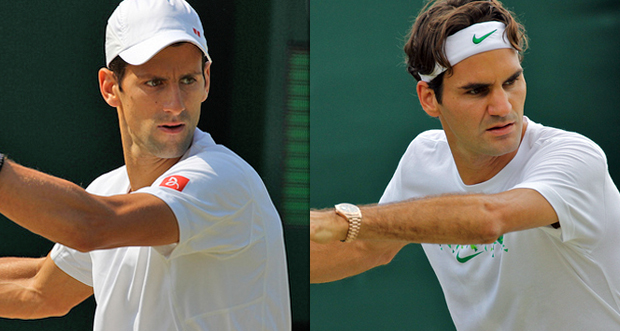
    Novak Djokovic Roger Federer

    The 2015 men’s singles Wimbledon final will be contested between Novak Djokovic and Roger Federer, like last year. The World No. 1 and defending champion, Djokovic, has won his matches comfortably in three sets with the exception of the five-setter in the Round of 16 against Kevin Anderson. The World No. 2, Federer, has been impressive so far; he has dropped only one set, against Sam Groth, in the Round of 32, and the only time his serve was broken was in the quarterfinal against Gilles Simon.

    Federer comes to the final after an impressive semifinal win against Andy Murray. Federer was rock-solid in his service games. He served 20 aces and won 84% of points on his first serve and in the second set he won all of those.

    [divider]

    Click here to discuss “Wimbledon Final: A Rematch of 2014” in the discussion forum.

    [divider]

    Djokovic had big trouble against Kevin Anderson in the Round of 16. Anderson had played a good grass season, making the final at the Queen’s Club, so his good performance wasn’t quite so surprising. Anderson, with his big serve and net play, took the first two sets and was able to trouble Djokovic till the end of the match.

    Great serving (in a different way to Anderson) and net play are also Federer’s strengths, so I think he has the tools to beat Djokovic. And Anderson showed Djokovic is vulnerable. So did Stan Wawrinka in the French Open final, although on clay. Both matches showed offensive game puts Djokovic in trouble. Of course, Djokovic returns well and has a great defense but so does Murray, too, whom Federer just impressively beat. If Federer serves like today, he will be very hard to break and Djokovic can’t afford bad service games.

    The head-to-head is 20-19 to Federer. He used to be a difficult match-up for Djokovic; for example, he was the first to defeat Djokovic in 2011, in the French Open semifinal. Later Djokovic got good wins over Federer, such as the World Tour Finals final in 2012 and the Wimbledon final last year. Since 2014 the head-to-head is 5-4 to Djokovic, including Federer’s withdrawal from the World Tour Finals final. But on faster surfaces (Dubai, Wimbledon, Shanghai), Federer has fared well against Djokovic; matches 3-1 and sets 8-4 to Federer. So this is surely a great chance for Federer.

    Djokovic came to Wimbledon as the runner-up of the French Open. He had finally beaten Rafael Nadal at Roland Garros but got outplayed in the final against Stan Wawrinka. Being denied the French Open title once again may have hurt him but I don’t think it’s hurting his self-confidence here. He didn’t throw a win away; he simply got outplayed. He got outplayed by Anderson for two sets, yet he didn’t fold but won in five. That sort of consistency can pay dividends in best-of-five. Still, those Wawrinka and Anderson matches have showed he can get outplayed, and Federer surely can do that for an entire match. Also, Djokovic’s Grand Slam final record isn’t particularly great for a player of his caliber: 8-8. Playing all but two of those finals against a non-Big Four opponent partly explains that, but also shows some vulnerability; after all he isn’t so dominant.

    Federer is playing for a record eighth Wimbledon title, currently sharing the record of seven with Pete Sampras and William Renshaw. While he looked ageless in the semifinal against Murray, he’ll be 34 in a month and he’s the oldest Wimbledon finalist in 41 years. He won’t have many more chances to break the threeway tie, plus get to 18 total Grand Slam titles, furthering himself one more from Nadal, who has 14. But I don’t think pressure from that will be a factor on Sunday; Federer knows how to win, especially at Wimbledon.

    I think this is on Federer’s racquet. If he plays his best tennis, he will outplay Djokovic. He must serve well against Djokovic’s great return, be aggressive, and avoid getting into long baseline rallies where Djokovic is too solid. Djokovic must defend well against Federer’s offensive game but he must not be too passive, otherwise he’s giving the keys to victory to Federer and can only hope Federer starts missing his shots.

    Of course, Djokovic beat Federer last year in the Wimbledon final and Federer is probably the one facing the effects of aging faster now. But still, I think Federer is better prepared for the final this year. He had been coached by Stefan Edberg only since the start of the last season and I think his game reached its peak later that year when he won the Shanghai Masters, defeating Djokovic in two sets in the semifinal. Federer can still be the best player on fast surfaces; on Sunday he must be that to win the Wimbledon final.

    [divider]

    Cover Photo (Creative Commons License): Marianne Bevis