Tag: atp

  • Wawrinka feasts on Ferrer to take Portugal title.

    Wawrinka feasts on Ferrer to take Portugal title.

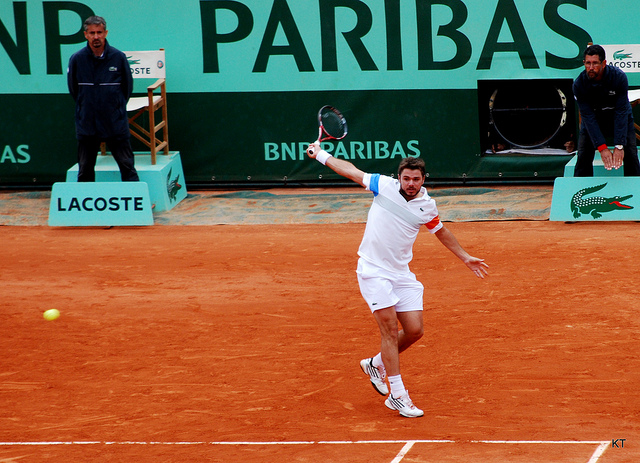
    Stanislas Wawrinka continued a fine run of recent form by defeating top seeded David Ferrer in straight sets at the ATP Portugal Open.

    Wawrinka prevailed 6-1, 6-4 in just 64 minutes. “Stan played a great match, he deserved to win,” said Ferrer, whose own game was littered with 31 unforced errors.

    It took Ferrer 25 minutes to get on the scoreboard as he was pinned down by Wawrinka’s aggressive approach during an opening set.
    The second set was a more competitive affair but Wawrinka secured the crucial break to move 5-4 ahead and then served out the match to seize the title.

    It was the first ATP tour title for the 28-year-old Swiss since winning Chennai in 2011.

    Click here to discuss this and more with fellow tennis fans our discussion boards.

  • Tommy Haas takes Munich title

    Tommy Haas takes Munich title

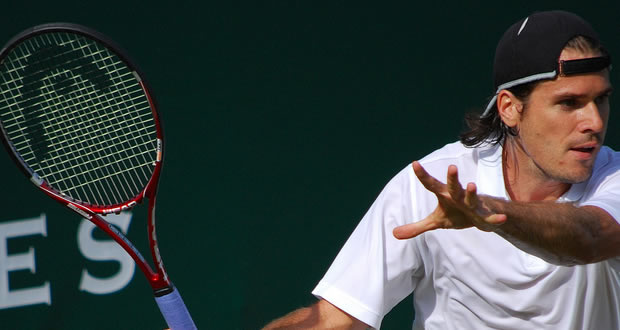
    Tommy Haas won his 14th ATP title on Sunday by defeating two-time former champion Philipp Kohlschreiber at the BMW Open in Munich.

    Haas won the match in straight sets 6-3 7-6 taking 83 minutes.

    “It’s a little dream,” said Haas, a German now residing in California.

    Tommy will rise to 13th in the ATP World Rankings, and the 35 year old is enjoying a fine year, having already beaten World #1 Novak Djokovic in Miami and making the finals at San Jose.

    “Tommy played outstanding tennis, without any mistakes – almost a perfect match,” said Kohlschreiber.

    It was Haas’s fourth title on German soil.

    Click here to discuss the Munich Open with fellow tennis fans in our message board forums.

  • The (King Of) Clay Season

    The (King Of) Clay Season

    It’s that time of the year again. The sun is shining over Europe – at least in theory – and the tennis season heats up accordingly. To many, it’s the most fascinating part of the tennis calendar. More exciting yet is the fact that in many ways, the energy of the European clay court season doesn’t necessarily culminate at the French Open. Instead, it extends itself to the grass courts of Wimbledon, which, due to the unfortunate lack of proper “grass court season,” seems to have become the climax of the European spring/summer, and a natural expansion of the clay season — as if the sport’s most prestigious tournament needed added cachet.

    Beyond the changes in continents, seasons, and scenery, the clay season has, for the longest time, marked a momentary shift in dynamics at the top of men’s tennis. Serves were suddenly returned with more frequency, rallies extended, players sliding all over the baseline, umpires abandoning the comfort of their chairs to examine ball marks, and the term “specialist” coined with near tiresome regularity. Most noticeably, the dominant forces were no longer quite as supreme once their feet hit the dirt. That’s when you knew that for about three months or so, the tennis world would be different. At some point in the 90’s, clay court tennis nearly became its own entity.

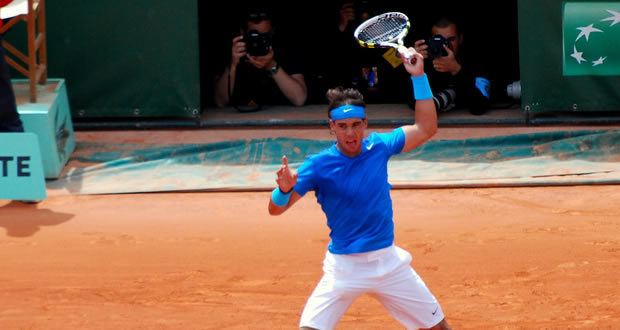
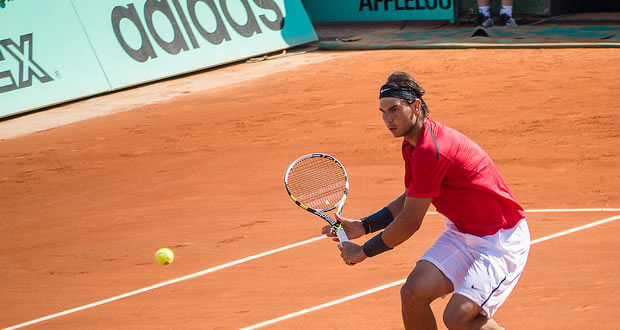
    The homogenization of the courts at the turn of the millennium made the change a little less extreme, and baseline tennis gradually became an all-surface norm. That, however, did not spell an end to the clay-induced hierarchical restructures at the top of the game. Like Pete Sampras before him, Roger Federer, the new tennis golden boy, struggled to make his mark on the red stuff early on. And while the number of true “specialists” around him was slowly decreasing, he was soon left with a far greater challenge to surmount. As Federer finally began to adapt his game to the courts he reportedly grew up on, a new specialist emerged – one so good that he exceeded the term itself; one whose game (and results) was too good to be that of a mere specialist. A king of clay had emerged, and the clay court season became the time of the year when Rafael Nadal sits, runs, grunts, and slides his way across his clay-covered throne.

    It didn’t matter whether Federer was enjoying near unthinkable runs of dominance, Novak Djokovic was breaking out in spectacular fashion to win his first Grand Slam, or Nadal himself was riding eleven months title droughts, come the Monte Carlo Masters, the Spanish bull was the man to beat. In fact, at some point, he became the man to avoid, as other top players made it a habit to skip the tournament altogether. In fairness, their decisions were certainly motivated by other, more important factors, but the inevitability of the outcome couldn’t have helped. Eventually, Rafael Nadal winning the tournament year after year ceased being special, despite the outrageous nature of the accomplishment. It simply became the tournament where Nadal reminded the world who the winner of the next major was going to be, just in case they’d forgotten.

    Nadal’s near absolute dominance on the surface was not without the occasional blemish, but his very few clay court losses were considered to be anomalies. Any intrigue created by his loss to Federer at Hamburg in 2007 was quickly killed off three weeks later when he vanquished his rival in Paris once more, while his shocking 2nd round exit in Rome the following year was largely blamed on blisters, with next to no mention of the man who beat him (it was Juan Carlos Ferrero, just in case you’re wondering). And why wouldn’t people so easily dismiss his losses when Nadal made sure to quickly restore order at the following tournament? His 2009 loss to Federer in Madrid received similar treatment, with Federer himself quickly playing down the significance of his win. After all, we had seen Federer and Nadal square off in enough French Open finals to know how their eventual meeting was going to unfold.

    Then, that loss happened. On a surreal Sunday afternoon in Paris, Robin Soderling produced what could well be the biggest upset in tennis history and handed Nadal his first loss at Roland Garros. The world was in shock, and it took Roger Federer finally completing his career slam to provide the tennis universe with a different subject to touch on, before the attention shifted back to Nadal once again when the words “knee injury” were uttered. The clay court season, as if there was any doubt, had become the Nadal season, in triumph or disaster. He was the one constant variable; the man whose wins are praised, and losses overshadow other players’ victories.

    In fact, 2009 was the year that proved just how reluctant we are to accept change. We might openly yearn for it or secretly wish it, but we only want it on our terms. There is a reason the post-Sampras/pre-Federer days are not remembered fondly. For as much as many complain about a status quo, they prefer it to chaos. People might enjoy upsets when they happen, but they want official “passing of the torch” moments, as opposed to “flukes.” People so willingly accepted Nadal as the best player in the world following his 2008 Wimbledon final triumph over Federer because they knew he was here to stay, and had already seen the signs a year before. We desire big picture narratives – moments which we look back on and pinpoint as an official changing of the guard, as opposed to wondering, “How the hell did he lose to that guy?”

    The neutrals wouldn’t want Nadal to dominate on clay forever, how could they? But as exciting as huge upsets are, they generally mean little in the long run. Those who wish for Nadal’s clay court dominance to cease would likely prefer to see the King of Clay removed from his throne, as opposed to momentarily pushed aside. When Nadal bounced back the following year to storm through the clay court season undefeated, the tennis world almost collectively embraced the familiarity of it all. Nadal stomped Soderling in the French Open final, the previous year’s debacle was put to rest, and all was right in the world.

    Enter Novak Djokovic…

    The man tipped to be Fedal’s (that’s Federer and Nadal, for the two of you who are unfamiliar with the term) successor for three years had finally gotten back on track, and this time, he wasn’t going anywhere. An unprecedented start to the season saw Djokovic clinch every tournament he participated in, and racked up a combined five victories over Federer and Nadal in the process, but the big question remained whether his dominance would translate to clay. Djokovic chose to skip Monte Carlo, and Nadal was handed his usual winner’s trophy and shook Prince Albert’s hand for the umpteenth time. However, two clay court victories over Nadal later, Djokovic had shown he meant business. He was far and away the best player in the world, and entered the French Open with a gigantic wave of momentum. For the first time in six years, Rafael Nadal was not the overwhelming favorite to win Roland Garros.

    And yet, as always, when it comes to attention and headlines, the clay court season remained all about Nadal. As Djokovic was silently making quick work of his early round opponents, Nadal was conducting melodramatic press conferences in which he was asked to make sense of his losses to Djokovic as well as going five sets (for the first time ever at Roland Garros) with big serving American John Isner. Nadal bizarrely sounded like a man burned out with tennis, and it looked increasingly likely that Djokovic would strike a lethal blow. Unfortunately for the Serb, a cruel twist of irony would dictate otherwise, as Roger Federer rolled back the years with a breathtaking display to bring Djokovic’s winning streak to a halt, essentially handing Nadal another “Coupe de Mousquetaires” in the process. Sure enough, Nadal was taking a trademark bite off of his favorite trophy two days later. The following year, Nadal enjoyed a far more peaceful European spring, steamrolling through the competition in typical fashion, while recording three victories over Djokovic to boot. The King of Clay was not to be dethroned yet.

    While injury soon put Nadal on shelf for seven months, a strong return indicated that the Spaniard would be picking up right where he left off. After a great display at Indian Wells and a wise scheduling choice to skip Miami, Nadal entered the Monte Carlo Masters as a strong favorite. Uncertainty surrounding Novak Djokovic’s participation due to an ankle injury further intensified Nadal’s status, but a sensational display in the final reminiscent of their 2011 matches saw Djokovic become the first man in nine years to hand Nadal a defeat in Monte Carlo. To state the obvious: the win was monumental.

    For the next month, this will be Nadal’s season. His wins will be cherished, his losses will be over-analyzed, and his comments will be beaten to death. However, more so than any other time, his status as the undisputed King of Clay is in jeopardy. If Djokovic is able to replicate his 2011 wins over Nadal at the upcoming Masters 1000 events, it could officially spell the end of an era. People might be reluctant to accept change, but for the past two years, Novak Djokovic has given them little choice but to. If the world number one finally puts an end to Nadal’s French Open monopoly, the changing of the guard that first started on other surfaces in 2011 would be completed at last. One could think of easier tasks, though…

    Click here to discuss this and more with fellow tennis fans on our discussion boards.
  • “Nadal, Criticizing Operation Puerto” (From: Puntodebreak)

    “Nadal, Criticizing Operation Puerto” (From: Puntodebreak)

    [divider]

    Translated from: “Nadal, crítico con la Operación Puerto” (Puntodebreak.com, May 3, 2013)

    Discuss this and more with fellow tennis fans in our community forums.

    [divider]

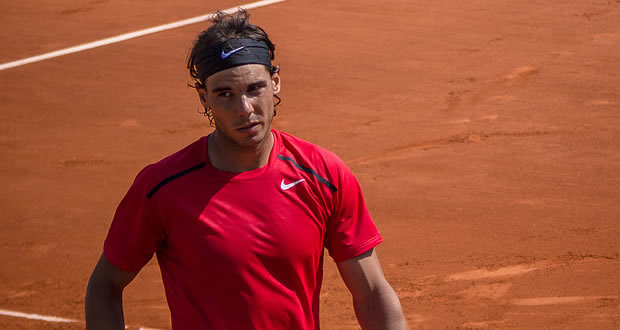
    Rafa Nadal was intractable, commenting on the decisions over the Puerto Case.  From the Santo Domingo Social Club (Madrid), the Majorcan didn’t hold back on his opinion.

    “I can’t judge.  My opinion is that the resolution is not positive for anyone.  The only ones who come out on top are those who have cheated, and it seems unfair to me that, on such a serious matter, and one that damages the image of sport, in general; we who feel most affected are the Spaniards, and, the sport,” the Majorcan said.

    The current #5 in the world, accompanied by the NBA player, José Manuel Calderón, thought it was outrageous that those implicated would never see the light of day.  “Personally, it seems an injustice that they won’t expose the names of those who’ve cheated, be they Spaniards or not.  José (Calderón) and I know what this is doing to the image of our country, and it’s not favorable.  Maybe the best thing is to stop talking about it.  To me, it seems a mistake that they won’t give out the names of those who have cheated; they deserve, at least, the denigration of all athletes.  (However) that’s not how it went, and we have to work towards a 100% clean sport, and hope that in the future, this never happens again.”

    The Majorcan, with his head in the Madrid Open, was asked how he felt returning to competition, having reached 6 finals in 6 tournaments played…if he had expected such good results as he has seen.  “No, not at all.  When you come back, you just want to see how you’re going to find yourself.  If you’d asked anyone on my team, and me, more than anyone, if we’d have had these results, we’d have told you you were crazy,”  he said.

    “Things have been going well.  We’re in a place we couldn’t have imagined.  I appreciate it a lot, and we just keep working, day-by-day, to get the feeling back on a regular basis…it’s the only way forward.  Work and belief, effort to continue in every tournament, in every point, in every year,” Nadal said, signing off from Madrid.

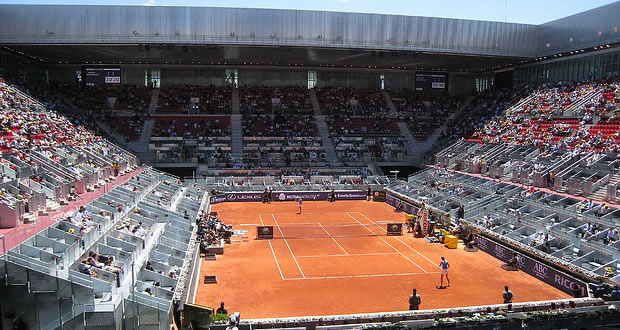
    In terms of expectations in the Mutua Madrileña (MS 1000), Nadal called the conditions that he finds in the Magic Box an extra challenge to get past.  “The desire and sweetness to play in Spain is very important, and special to the Spanish players.  That’s always a motivation for all Spanish players. Always a motivating situation, and Madrid has always been amazing, especially with me.  I appreciate the opportunities they’ve given me, and I hope that on Wednesday, I’m well-prepared to compete, and make a good tournament of it.

    As one of the tennis players most critical of the blue clay last year, his opinion of the surface is radically different this year.  “It’s very good.  The court is in perfect shape.  It’s the best clay court since we started playing (on clay) in Madrid.  This is great news for the event, the players, for everyone.  I’m happy to play in Madrid.”

  • Mutua Madrid Open Draw 2013 (ATP)

    Mutua Madrid Open Draw 2013 (ATP)

    The draw for the ATP Mutua Madrid Open:

    Djokovic – BYE
    Dimitrov – Marti
    Qualifier – Klizan
    Copil – Wawrinka
    Raonic – Davydenko
    Goffin – Verdasco
    Qualifier – Dolgopolov
    Tsonga – BYE

    Murray – BYE
    Bellucci – Mayer
    Chardy – Zeballos
    Benneteau – Simon
    Tipsarevic – Monaco
    Anderson – Qualifier
    Janowicz – Querrey
    Berdych – BYE

    Nadal – BYE
    Qualifier – Paire
    Fognini – Youzhny
    Qualifier – Almagro
    Haas – Seppi
    Baghdatis – Robredo
    Qualifier – Istomin
    Ferrer – BYE

    Gasquet – BYE
    Lopez – Gimeno-Traver
    Isner – Qualifier
    Andujar – Cilic
    Nishikori – Melzer
    Troicki – Granollers
    Tomic – Stepanek
    Federer – BYE

    Discuss this and more with fellow tennis fans in our community forums.

  • Nadal Signs Up To Play Basel

    Nadal Signs Up To Play Basel

    Yahoo Sports is reporting that Rafael Nadal has signed up to play Roger Federer’s hometown tournament, The Basel Open.

    It will be the first time in nine years that the Spaniard has played the event, where Juan Martin del Potro is the defending champion.

    Read more on Yahoo Sports: “Nadal to play at Federer’s hometown Swiss Indoors

    Discuss this and more with fellow tennis fans in our community forums.

  • “Verdasco, In Crisis”  (From: El Pais)

    “Verdasco, In Crisis” (From: El Pais)

    [divider]

    Translated from: “Verdasco, en crisis” (El Pais, April 23, 2013)

    Click here to discuss this and more with fellow tennis fans.

    [divider]

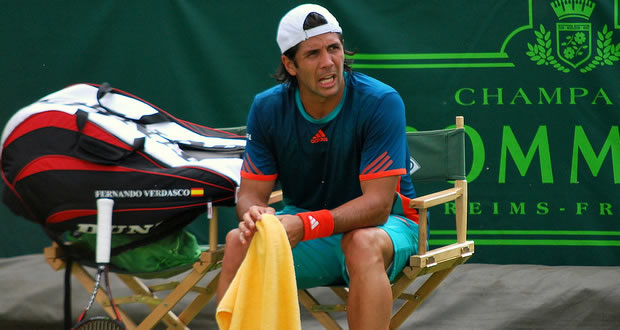
    To be an ex-champion is no assurance of repeating in a world as competitive as tennis.  Tommy Robredo and Fernando Verdasco can attest to that.  Robredo was, in 2004, the last winner of the Open Banc Sabadell before the interruption of one Rafa Nadal, who wrote his name on the trophy 5 consecutive times before injury made him decide not to play in 2010, allowing Fernando Verdasco to win the tournament (that year.)  The return of the Mallorcan in 2011 augmented his reign:  his trophies grew to 7, to date.  (In the current tournament,) Robredo has got through the first round, beating Marc Lopez, but Verdasco succumbed to Ernests Gulbis, dropping him out of the Top 40, and adding one more loss to a bleak period, (he’s only won 3 matches in 8 tournaments.)

    Robredo and Verdasco are two champions who frame Nadal’s domination in Barcelona.  And they are 2 champions with issues, struggling to find a way back to an elite level that they used to be part of.  Robredo, within touching-distance of 31, got as high as #5 in the world, when he regularly found himself in the last 8 of Grand Slams.  Verdasco, 29, had his career high in April 2009, when he reached #7 in the world, after making the semi-finals of the Australian Open, where he lost to Nadal in 5 sets.

    At the time, the future looked rosy.  Verdasco was still working with Andre Agassi’s ex-trainer, Gil Reyes, in Las Vegas, and had made a big leap in the rankings.  Robredo was displaying some of the best tennis of his career.  But then things went sour.  Verdasco changed the structure of his team, abandoning Las Vegas, and modifying his work habits.  He changed his methodology, and, probably, his mentality.   In 2010, he won the Open Banc Sabadell in Barcelona and was quarterfinalist at the USO.  Since then, however, he hasn’t won a single trophy.

    Robredo’s case is more dramatic, because he spent 2 years laid low by an injury that doctors couldn’t identify.  His left leg hurt, but he kept hobbling along on the circuit.  Until (one) Dr. Vilaró decided that he needed an operation on the ischiotibial muscle in the leg.  “It took a year to figure out what it was,” explains Robredo.  “But when they operated on me, Vilaró did something magic.  After a week, I was more flexible than a girl they’d operated on 6 months earlier.  And the pain has disappeared.  It’s a struggle to get back to my competitive level, but that’s a question of time and matches.  The injury is completely forgotten.”

    Robredo is now #43 in the world, while Verdasco is #35, though he’ll give up his place in the top 40 with this loss.  They’re both a long way away from the positions they enjoyed in their best moments.  Now the expectations fall on David Ferrer and Nadal, who start their campaigns in Barcelona against Dmitry Tursunov and the Argentine Carlos Berlocq, respectively.


    [Note:  Clearly this is old news, as Barcelona was won by Rafael Nadal, defeating Nico Almagro.  I chose it for the insight into these two players.  I know we have Verdasco fans on the boards, and everyone has been happy for the resurgence of Tommy Robredo.  I hope this tells you something you didn’t know.]

  • Nadal claims Eighth Barcelona title

    Nadal claims Eighth Barcelona title

    Rafael Nadal was crowned the Barcelona Open champion, for the eighth time in nine years as he beat fellow spaniard Nicolas Almagro in straight sets 6-4 6-3.

    In heavy conditions and constant drizzle, Almagro started quickly, breaking Nadal early in the first set twice and racing out to a 0-3 lead. This prompted the Mallorcan to up his own game and he fought back, breaking Almagro in 3 of his next 4 service games to take command of the match. He served out the first set and broke early in the second.

    Almagro had never beaten Nadal in 9 previous matches and the final followed the same pattern. Nadal closed out the second set to improve his record in the tournament to 40-1.

    Nadal has made all six finals of the tournaments he has participated in since returning from a lengthy layoff, winning four of them. The next stop is Madrid.

    Discuss this and more with fellow tennis fans in our community forums.

  • Lukas Rosol wins first ATP Tour title

    Lukas Rosol wins first ATP Tour title

    Lukas Rosol, who shot to instant fame by defeating Rafael Nadal in the second round at Wimbledon last year, has won his first ATP tour title with a straight sets (6-3 6-2) victory over Guillermo Garcia-Lopez in Bucharest, Hungary.

    In the nine months since defeating Nadal, Rosol has now won an ATP tour title, broken into the Top 40 and been a key Davis Cup player.

    Discuss this and more with fellow tennis fans in our community forums.

  • Wimbledon splashes the cash

    Wimbledon splashes the cash

    The All England Club has announced a significant increase in prize money for the Wimbledon Championships 2013.

    Players can look forward to a hike of 40%,making Wimbledon the most lucrative of all the four major championships.

    The tournamount winners will each receive £1.6 million (a jump from £1.15 million in 2012) and the overall price fund has increased by £6.5 million to a bumper £22.6 million booty.

    In percentage terms, the biggest increases are focused on players who lose either in qualifiers or the early rounds of the tournament. Doubles players also enjoy a 22% increase in their share of the loot.

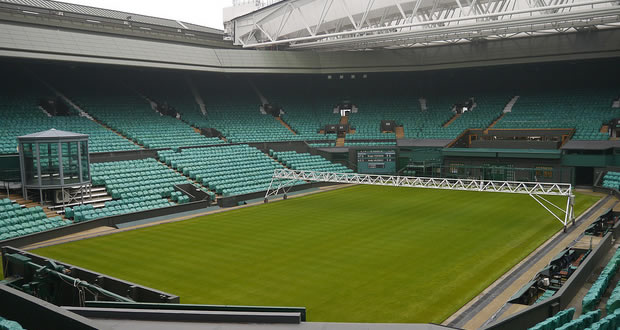
    The historic club also announced plans to install a roof over the second showcourt. Court No. 1 will enjoy a retractable roof by the 2019 tournament.

    Discuss this and more with fellow tennis fans in our community forums.