Tag: andy murray

  • Wimbledon Day 1: Monday, June 24 – Order of Play & Scores

    Wimbledon Day 1: Monday, June 24 – Order of Play & Scores

    [divider]

    Click here to discuss Men’s Day 1 action with fellow tennis fans.

    Click here to discuss Women’s Day 1 action with fellow tennis fans.

    [divider]

    [Scores will be added as known.]

    [divider]

    Centre Court – 1:00 PM

    Roger Federer (SUI) (3) d Victor Hanescu (ROU) 6-3, 6-2, 6-0

    Maria Sharapova (RUS) (3) d Kristina Mladenovic (FRA) 7-6(5), 6-3

    Andy Murray (GBR) (2) d Benjamin Becker (GER) 6-4, 6-3, 6-2

    Garbine Muguruza (ESP) d Anne Keothavong (GBR) 6-4, 6-0

    [divider]

    No. 1 Court – 1:00 PM

    Victoria Azarenka (BLR) (2) d Maria Joao Koehler (POR) 6-1, 6-2

    Steve Darcis (BEL) d Rafael Nadal (ESP) (5) 7-6(4), 7-6(8), 6-4

    Lleyton Hewitt (AUS) d Stanislas Wawrinka (SUI) (11) 6-4, 7-5, 6-3

    [divider]

    No. 2 Court – 11:30 AM

    Ana Ivanovic (SRB) (12) d Virginie Razzano (FRA) 7-6(1), 6-0

    Marin Cilic (CRO) (10) d Marcos Baghdatis (CYP) 6-3, 6-4, 6-4

    Jo-Wilfried Tsonga (FRA) (6) d David Goffin (BEL) 7-6(4), 6-4, 6-3

    Petra Kvitova (CZE) (8) d Coco Vandeweghe (USA) 6-1, 5-7, 6-4

    [divider]

    No. 3 Court – 11:30 AM

    Flavia Pennetta (ITA) d Elena Baltacha (GBR) 6-4, 6-1

    Jerzy Janowicz (POL) (24) d Kyle Edmund (GBR) 6-2, 6-2, 6-4

    Viktor Troicki (SRB) d Janko Tipsarevic (SRB) (14) 6-3, 6-4, 7-6(5)

    Caroline Wozniacki (DEN) (9) d Estrella Cabeza Candela (ESP) 6-0, 6-2

    Andrea Petkovic (GER) d Pauline Parmentier (FRA) 6-3, 6-2

    [divider]

    Court 12 – 11:30 AM

    Jurgen Melzer (AUT) d Fabio Fognini (ITA) (30) 6-7(5), 7-5, 6-3, 6-2

    Jelena Jankovic (SRB) (16) d Johanna Konta (GBR) 6-2, 7-5

    Yen-Hsun Lu (TPE) d James Ward (GBR) 6-7(4), 6-4, 7-6(11), 7-6(4)

    [divider]

    Court 18 – 11:30 AM

    Monica Puig (PUR) d Sara Errani (ITA) (5) 6-3, 6-2

    Mikhail Youzhny (RUS) (20) d Robin Haase (NED) 6-4, 7-5, 7-5

    Nicolas Almagro (ESP) (15) d Jurgen Zopp (EST) 6-4, 7-6(2), 7-5

    Sloane Stephens (USA) (17) d Jamie Hampton (USA) 6-3, 6-3

    [divider]

    Court 4 – 11:30 AM

    Karin Knapp (ITA) d Lucie Hradecka (CZE) 6-3, 6-4

    Vesna Dolonc (SRB) d Yanina Wickmayer (BEL) 3-6, 6-2, 6-4

    Rajeev Ram (USA) d Lukas Lacko (SVK) 7-5, 6-4, 6-7(2), 6-2

    [divider]

    Court 5 – 11:30 AM

    Eva Birnerova (CZE) d Varvara Lepchenko (USA) (26) 6-2, 4-6, 6-4

    Su-Wei Hsieh (TPE) d Tatjana Maria (GER) 6-1, 6-0

    Adrian Mannarino (FRA) d Pablo Andujar (ESP) 6-1, 6-2, 6-3

    Nicolas Mahut (FRA) d Jan Hajek (CZE) 6-2, 6-4, 6-3

    [divider]

    Court 6 – 11:30 AM

    Stephane Robert (FRA) d Alejandro Falla (COL) 6-3, 7-6(5), 7-5

    Carla Suarez Navarro (ESP) (19) d Lourdes Dominguez Lino (ESP) 6-2, 6-2

    Michelle Larcher De Brito (POR) d Melanie Oudin (USA) 7-6(7), 1-6, 6-4

    Ekaterina Makarova (RUS) (25) d Johanna Larsson (SWE) 6-3, 6-3

    [divider]

    Court 7 – 11:30 AM

    Lesia Tsurenko (UKR) d Lara Arruabarrena (ESP) 6-1, 6-3

    Lukasz Kubot (POL) d Igor Andreev (RUS) 6-1, 7-5, 6-2

    Ernests Gulbis (LAT) d Edouard Roger-Vasselin (FRA) 7-6(1), 6-4, 7-5

    Petra Cetkovska (CZE) d Donna Vekic (CRO) 6-3, 6-1

    [divider]

    Court 8 – 11:30 AM

    Eugenie Bouchard (CAN) d Galina Voskoboeva (KAZ) 5-7, 7-6(5), 6-4

    Vasek Pospisil (CAN) d Marc Gicquel (FRA) 6-3, 6-2, 7-6(3)

    Dustin Brown (GER) d Guillermo Garcia-Lopez (ESP) 6-3, 6-3, 6-3

    Bojana Jovanovski (SRB) d Ajla Tomljanovic (CRO) 3-6, 6-1, 9-7

    [divider]

    Court 9 – 11:30 AM

    Sergiy Stakhovsky (UKR) d Rogerio Dutra Silva (BRA) 6-4, 6-0, 6-4

    Mirjana Lucic-Baroni (CRO) d Sofia Arvidsson (SWE) 6-1, 6-4

    Andrey Kuznetsov (RUS) d Albert Montanes (ESP) 6-3, 6-4, 3-6, 6-3

    Yaroslava Shvedova (KAZ) d Kiki Bertens (NED) 6-4, 6-3

    Ashleigh Barty (AUS) (12) / Casey Dellacqua (AUS) (12) d Valeria Solovyeva (RUS) / Maryna Zanevska (UKR) 6-2, 7-5

    [divider]

    Court 10 – 11:30 AM

    Benoit Paire (FRA) (25) d Adrian Ungur (ROU) 6-4, 4-6, 6-3, 6-1

    Camila Giorgi (ITA) d Samantha Murray (GBR) 6-3, 6-4

    Juan Monaco (ARG) (22) d Bastian Knittel (GER) 6-4, 6-2, 6-3

    Christina McHale (USA) d Alexa Glatch (USA) 6-4, 6-4

    [divider]

    Court 14 – 11:30 AM

    Alize Cornet (FRA) (29) d Vania King (USA) 4-6, 6-3, 6-1

    John Isner (USA) (18) d Evgeny Donskoy (RUS) 6-1, 7-6(5), 7-6(3)

    Julien Benneteau (FRA) (31) d Tobias Kamke (GER) 6-4, 6-7(5), 6-4, 6-2

    Marion Bartoli (FRA) (15) d Elina Svitolina (UKR) 6-3, 7-5

    [divider]

    Court 15 – 11:30 AM

    Ivan Dodig (CRO) (12) / Marcelo Melo (BRA) (12) d Santiago Giraldo (COL) / Michael Russell (USA) 6-3, 7-6(3), 6-2

    Sanchai Ratiwatana (THA) / Sonchat Ratiwatana (THA) d Aljaz Bedene (SLO) / Grega Zemlja (SLO) 6-3, 6-4, 5-7, 7-6(3)

    Not Before: 2:30 PM

    Raquel Kops-Jones (USA) (5) / Abigail Spears (USA) (5) d Shahar Peer (ISR) / Zi Yan (CHN) 6-4, 6-4

    Nicholas Monroe (USA) / Simon Stadler (GER) d Purav Raja (IND) / Divij Sharan (IND) 6-4(7), 2-6, 6-3, 6-4, 6-4

    [divider]

    Court 16 – 11:30 AM

    Silvia Soler-Espinosa (ESP) d Misaki Doi (JPN) 1-6, 6-4, 6-1

    Sorana Cirstea (ROU) (22) d Stefanie Voegele (SUI) 7-5, 7-6(3)

    Fernando Verdasco (ESP) d Xavier Malisse (BEL) 6-7(5), 6-1, 6-4, 6-3

    Kirsten Flipkens (BEL) (20) d Yulia Putintseva (KAZ) 7-5, 6-4

    [divider]

    Court 17 – 11:30 AM

    Lucie Safarova (CZE) (27) d Lauren Davis (USA) 6-4, 6-0

    Guillaume Rufin (FRA) d Marinko Matosevic (AUS) 6-1, 4-6, 6-4, 6-3

    Radek Stepanek (CZE) d Matt Reid (AUS) 6-2, 6-2, 6-4

    Tommy Robredo (ESP) (32) d Alex Bogomolov Jr. (RUS) 6-2, 6-2, 6-4

    [divider]

    Court 19 – 11:30 AM

    Julian Reister (GER) d Lukas Rosol (CZE) 6-3, 4-6, 7-6(5), 6-7(4), 6-4

    Kenny De Schepper (FRA) d Paolo Lorenzi (ITA) 7-6(6), 6-4, 6-2

    Paul Hanley (AUS) / John-Patrick Smith (AUS) d Philipp Marx (GER) / Florin Mergea (ROU) 6-3, 1-6, 7-6(5), 6-4

    [divider]
     

  • Men’s Wimbledon Draw

    Men’s Wimbledon Draw

    Roger Federer and Rafael Nadal are set to meet in the quarterfinals. Andy Murray is also on the bottom half, with world No. 1 Novak Djokovic in the top half, along with David Ferrer.

    Click here to discuss the Wimbledon draw, and more with fellow tennis fans on our discussion boards.

    The full draw is as follows:

    QUARTER 1:

    Novak Djokovic (SRB) (1)
    Florian Mayer (GER)

    Bobby Reynolds (USA)
    Steve Johnson (USA)

    Blaz Kavcic (SLO)
    Jan-Lennard Struff (GER)

    Ryan Harrison (USA)
    Jeremy Chardy (FRA) (28)

    Gilles Simon (FRA) (19)
    Feliciano Lopez (ESP)

    Ricardas Berankis (LTU)
    Paul-Henri Mathieu (FRA)

    Wayne Odesnik (USA)
    Jimmy Wang (TPE)

    Dmitry Tursunov (RUS)
    Tommy Haas (GER) (13)

    Richard Gasquet (FRA) (9)
    Marcel Granollers (ESP)

    Andreas Haider-Maurer (AUT)
    Go Soeda (JPN)

    James Blake (USA)
    Thiemo De Bakker (NED)

    Bernard Tomic (AUS)
    Sam Querrey (USA) (21)

    Kevin Anderson (RSA) (27)
    Olivier Rochus (BEL)

    Philipp Petzschner (GER)
    Michal Przysiezny (POL)

    Daniel Brands (GER)
    Daniel Gimeno-Traver (ESP)

    Martin Klizan (SVK)
    Tomas Berdych (CZE) (7)

    [divider]

    QUARTER 2:

    David Ferrer (ESP) (4)
    Martin Alund (ARG)

    Roberto Bautista Agut (ESP)
    Teymuraz Gabashvili (RUS)

    Horacio Zeballos (ARG)
    Santiago Giraldo (COL)

    Gastao Elias (POR)
    Alexandr Dolgopolov (UKR) (26)

    Milos Raonic (CAN) (17)
    Carlos Berlocq (ARG)

    Alex Kuznetsov (USA)
    Igor Sijsling (NED)

    James Duckworth (AUS)
    Denis Kudla (USA)

    Ivan Dodig (CRO)
    Philipp Kohlschreiber (GER) (16)

    Kei Nishikori (JPN) (12)
    Matthew Ebden (AUS)

    Leonardo Mayer (ARG)
    Aljaz Bedene (SLO)

    Michael Llodra (FRA)
    Jarkko Nieminen (FIN)

    Denis Istomin (UZB)
    Andreas Seppi (ITA) (23)

    Grigor Dimitrov (BUL) (29)
    Simone Bolelli (ITA)

    Grega Zemlja (SLO)
    Michael Russell (USA)

    Guido Pella (ARG)
    Jesse Levine (CAN)

    Albert Ramos (ESP)
    Juan Martin Del Potro (ARG) (8)

    [divider]

    QUARTER 3:

    Rafael Nadal (ESP) (5)
    Steve Darcis (BEL)

    Lukasz Kubot (POL)
    Igor Andreev (RUS)

    Stephane Robert (FRA)
    Alejandro Falla (COL)

    Adrian Ungur (ROU)
    Benoit Paire (FRA) (25)

    John Isner (USA) (18)
    Evgeny Donskoy (RUS)

    Pablo Andujar (ESP)
    Adrian Mannarino (FRA)

    Dustin Brown (GER)
    Guillermo Garcia-Lopez (ESP)

    Lleyton Hewitt (AUS)
    Stanislas Wawrinka (SUI) (11)

    Nicolas Almagro (ESP) (15)
    Jurgen Zopp (EST)

    Marinko Matosevic (AUS)
    Guillaume Rufin (FRA)

    Radek Stepanek (CZE)
    Matt Reid (AUS)

    Kyle Edmund (GBR)
    Jerzy Janowicz (POL) (24)

    Fabio Fognini (ITA) (30)
    Jurgen Melzer (AUT)

    Julian Reister (GER)
    Lukas Rosol (CZE)

    Rogerio Dutra Silva (BRA)
    Sergiy Stakhovsky (UKR)

    Victor Hanescu (ROU)
    Roger Federer (SUI) (3)

    [divider]

    QUARTER 4:

    Jo-Wilfried Tsonga (FRA) (6)
    David Goffin (BEL)

    Edouard Roger-Vasselin (FRA)
    Ernests Gulbis (LAT)

    Fernando Verdasco (ESP)
    Xavier Malisse (BEL)

    Tobias Kamke (GER)
    Julien Benneteau (FRA) (31)

    Juan Monaco (ARG) (22)
    Bastian Knittel (GER)

    Lukas Lacko (SVK)
    Rajeev Ram (USA)

    Kenny De Schepper (FRA)
    Paolo Lorenzi (ITA)

    Marcos Baghdatis (CYP)
    Marin Cilic (CRO) (10)

    Janko Tipsarevic (SRB) (14)
    Viktor Troicki (SRB)

    Andrey Kuznetsov (RUS)
    Albert Montanes (ESP)

    Marc Gicquel (FRA)
    Vasek Pospisil (CAN)

    Robin Haase (NED)
    Mikhail Youzhny (RUS) (20)

    Tommy Robredo (ESP) (32)
    Alex Bogomolov Jr. (RUS)

    Nicolas Mahut (FRA)
    Jan Hajek (CZE)

    James Ward (GBR)
    Yen-Hsun Lu (TPE)

    Benjamin Becker (GER)
    Andy Murray (GBR) (2)

    [divider]


  • The King of Queens: Murray wins the Aegon Championships

    The King of Queens: Murray wins the Aegon Championships

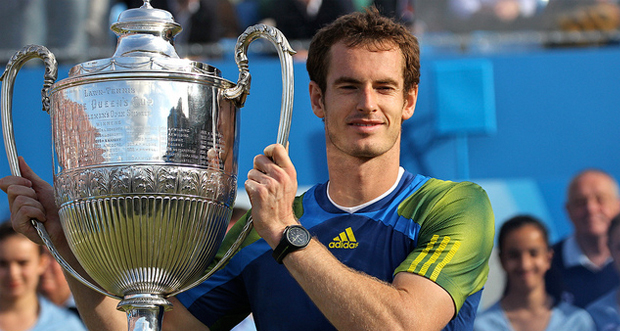
    Andy Murray celebrated the capture his third Queen’s Club title defeating the defending champion Marin Cilic 5-7, 7-5, 6-3 in a closely contested match interrupted by rain delays.

    It was the Scot’s first tournament since missing the French Open, and ideal preperation for his forthcoming Wimbledon campaign.

    Cilic won the first set, breaking for a 6-5 lead and fended off two break points to serve out the set. The fifth-seeded Croat, who won the title last year following David Nalbandian’s default by kicking a line judge, continued the momentum into the second set, but Murray had tightened up his service game and finally broke Cilic in the 12th game to level the match.

    The deciding set saw some moments of brilliance from the top-seeded Murray as he increased the tempo and placed Cilic under huge pressure. He finally got his rewards and took the set 6-3 to win the match, with Cilic netting a forehand on match point.

    Murray donated his winnings to the Rally Against Cancer. His close friend and fellow Briton Ross Hitchens was diagnosed with the illness six years ago.

    “Ross is one of my best friends, so whether I won or lost, it wasn’t going to change the fact that we were still doing something really good,” said Murray, who moves into Wimbledon with a grass court title under his belt.

    Click here to discuss the Queen’s Club Tournament and Murray’s title with fellow tennis fans.

  • Inside Out: The Era of Forehand and Movement

    Inside Out: The Era of Forehand and Movement

    As Rafael Nadal and Roger Federer prepared for their thirtieth meeting, a familiar sense of nostalgia grew inside tennis fans. Still very much among the top three best players in the game – rankings notwithstanding – Federer and Nadal were once the undisputed rulers of the tennis world. They’ve given us classics, drama, and dominance, and their rivalry transcended the sport. Despite the lack of animosity, it has been so universally appealing in large part due to the contrast in styles. Beyond how they look, dress, and act, it was the way they play that was so different, and therefore, so captivating.

    And yet, despite the multiple nuances in their games, the different attributes, and the very few weaknesses, both Federer and Nadal made a living off one particular weapon – the forehand. Their games couldn’t be more different: Federer was always more complete, more aggressive-minded, had a better serve, took more offensive court positioning, and attacked the net; Nadal was a one-of-a-kind physical specimen, a defensive wall, stood farther behind the baseline, and took control of points through engaging in longer rallies where he would gradually wear out his opponent. None of that changes the fact that, regardless of the adjustments they’ve made throughout the years – Nadal has become more aggressive and well-rounded; Federer had to readjust some aspects of his game to better operate with age – when push came to shove, they cemented their spots in tennis history due to their respective forehands.

    Like the rest of their games, their forehands bore very few similarities: Different grips, different spins, and a different follow-through. And yet, whether Federer was running around his backhand to hit an inside out winner, or Nadal was pummeling his opponent’s weaker wing relentlessly, the result was often the same. In what will inevitably go down as the “Fedal era,” one of the most memorable phases in tennis history will be defined by one shot.

    Increased racquet technology, homogenization of the surfaces, and the rise of a new breed of phenomenal athletes have altered the game considerably, with serve and volley taking a backseat to a noticeable shift towards baseline tennis. The change has been characterized by a strong emphasis on the forehand. In fact, it is hardly a coincidence that the last couple of world number one’s before the Federer era were Juan Carlos Ferrero and Andy Roddick, two men who, in their heyday, possessed two of the most lethal forehands on tour. And yet, fearsome as those shots were, they paled by comparison to the brilliance that the Swiss Maestro’s racquet would later produce.

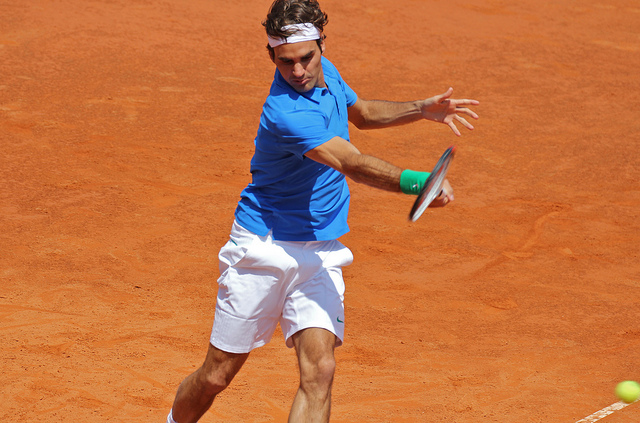
    Simply put, Roger Federer’s forehand revolutionized the sport. Widely tipped to be the greatest ground stroke in tennis history, Federer re-set the standards of what constitutes a world-class forehand. It wasn’t merely his ability to fire winners off that side that set him apart – after all, James Blake, Fernando Gonzalez, and Andy Roddick hardly struggled to rip out inside-out bullets – but rather, Federer’s combination of power, spin, versatility, taking the ball early, and the ability to hit it on the run that made him a nightmare to deal with.

    None of this would be possible had it not been for Federer’s most characteristic trait: his otherworldly movement. Federer’s ability to glide effortlessly on a tennis court was poetry in motion. He always put himself in perfect position to take the ball precisely when he meant to, and the results were devastating. The mixture of movement, precision, and taking the ball on the rise rendered his forehand near unplayable. Lleyton Hewitt had laid the foundations a couple of years earlier by running circles around his opponents, but he lacked the necessary weapons and offensive tools. Federer, on the other hand, didn’t.

    In fairness, cat-like quickness wasn’t exclusive to Federer, as the man who previously dominated the world of tennis, Pete Sampras, remains one of the best athletes the sport has ever seen. Meanwhile, the likes of Davydenko, Blake, the above mentioned Hewitt, and others were all great movers in their own right. However, Federer’s footwork was so utterly unique in its fluidity, quickness, smoothness, and efficiency.

    Then came Rafael Nadal, arguably the greatest pure athlete in tennis history. He redefined the word “speed,” covered every inch of the court like nobody before him, displayed unprecedented levels of explosiveness, and showed a level of physicality that no one else could match. When he first burst onto the scene, Nadal’s game was, to put it bluntly, fairly limited. His serve was harmless, his backhand was solid but, ultimately, did little offensive damage — beyond the trademark open-stance passing shots — and his return of serve was meant to neutralize points above anything else (which applies even today).

    If there is a prime example of how great movement and an elite forehand dominate today’s men’s game, it’s Nadal. Better than anyone in history, he was able to mask his weaknesses with a dominant forehand and unparalleled movement. Even more so than Federer, Nadal based much of his game around running around his backhand wing. However, the Spaniard lacked his rival’s serve and variety, making his forehand an even more integral part of his game.

    His entire early success is attributed almost entirely to his forehand and movement. Even as his game developed into something far more polished, Nadal’s bread-and-butter remained intact. Unlike anyone else, Federer included, Nadal is able to find his forehand wing time and time again. The amount of effort required to run around his backhand at every possible opportunity meant the Mallorcan had to work particularly hard in each rally, but Nadal was all too willing to make the effort. Like Federer, his forehand is actually deadlier from his backhand wing, where he can put it pretty much anywhere on the court. Once Nadal is able to find a forehand early in the rally, unless your name was Novak Djokovic, Nikolay Davydenko, and a select others, you weren’t wrestling the point away from him.

    No Title

    No Description

    The man who ultimately broke the Fedal monopoly was, unsurprisingly, Novak Djokovic. Long tipped to be the future of tennis, the Serb may have differed from his great rivals in that he possessed one of the best backhands the games has ever seen — a shot many deem to be his strongest. However, it wasn’t until Djokovic recaptured the magic on his forehand side that he became the world’s finest player. Following a very strong 2008, Djokovic’s results became increasingly inconsistent. The reasons were numerous, from struggles with fitness, focus, and serve, but above all else, it was his forehand that grew more erratic, and the results underwhelmed accordingly.

    Djokovic moves as well as anyone on a tennis court, but the quality of his backhand provides him with far more options, therefore, he doesn’t need to run around that shot as frequently as Federer and Nadal. And yet, you often see him doing just that these days, to great effect. Good as his backhand is, the basic mechanics of the forehand mean he has more options off that wing. Additionally, Djokovic’s backhand being his better shot often clouds the fact that his forehand is easily one of the best on tour, and when playing well, it is the side that does the bigger damage. Yes, it remains the shot that is more likely to break down and fail him when things go south, as opposed to his always rock solid backhand, but offensively, it is slowly becoming his most potent shot.

    A quick look at today’s top 10 players shows just how essential it is to possess a great forehand. Beyond the aforementioned players, almost all of the world’s elite players share a world-class forehand: Ferrer, Berdych, Tsonga, Del Potro, etc. Naturally, there are exceptions, but even those, quite ironically, reinforce the rule. Richard Gasquet, for instance, was initially thought to be destined for greatness, only to fail to live up to the hype, in large part due to his unreliable forehand. Even previous one-of-a-kind shot-makers like Nalbandian and Davydenko occasionally suffered due to an inconsistent forehand.

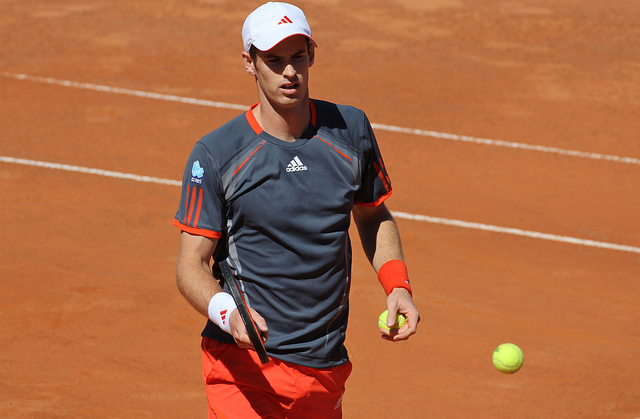
    The most notable aberration, of course, is current world number 2, Andy Murray. Far from being a bad shot, Murray’s forehand remains nevertheless below the level of Federer, Nadal, or Djokovic. However, the Brit is able to make amends through fantastic movement, tennis IQ, tactical awareness, counter-punching, and a backhand that is easily among the very best in the men’s game. Nevertheless, it is hard not to attribute some of his shortcomings to his main rivals’ ability to expose his forehand. Djokovic has repeatedly dominated Murray in forehand-to-forehand cross-court exchanges and drew short replies, Nadal’s flattened-out cross-court backhands and inside out forehand have historically troubled Murray on faster surfaces — surprisingly enough — while Federer’s offensive onslaught has robbed Murray of three additional grand slam titles to his resume.

    A quick glance at the current crop of up-and-coming players shows no real candidate that fits the description of a modern day champion — a great mover with a world-class forehand. For now, at least, the status quo at the top of the men’s game seems safe.

    Click here to discuss this and more with fellow tennis fans on our discussion boards.

  • Murray, Del Potro And Others Pull Out Of Roland Garros

    Murray, Del Potro And Others Pull Out Of Roland Garros

    Andy Murray has pulled out of Roland Garros. He said in a statement: “It’s a really tough decision and I love playing in Paris, but after seeking medical advice I am not fit to compete,” adding “now my complete focus is on getting back on the court as soon as possible.”

    World #2 Murray has been troubled with a lower-back injury that caused him to retire from his second-round match in Rome. He has also stated that Wimbledon is his main priority.

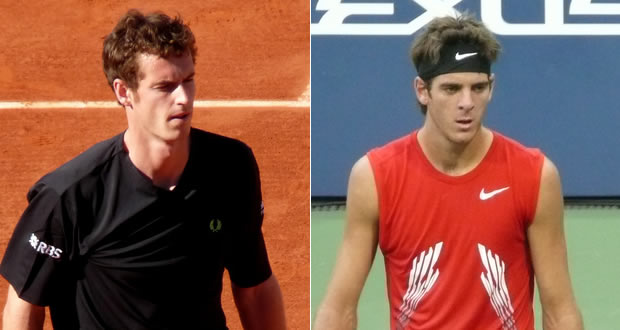
    Juan Martin Del Potro has also pulled out. The World #6 and a former French Open semi-finalist has been suffering with a bronchial infection since appearing at the Monte Carlo Open. He was forced to sit out scheduled events at the Portuguese Open and Madrid Masters. He returned for the Italian Open in Rome but was below his best in a poor outing against the Frenchman Benoit Paire. Following the Paire loss, Del Potro returned to Argentina.

    Other Roland Garros casualties also include the Americans Mardy Fish and Brian Baker. They will be replaced in Friday’s draw by Joao Sousa of Portugal, and Guido Pella of Argentina.

    Additionally, John Millan, an Australian wild card, has withdrawn due to shoulder injury, and will be replaced by Nick Kyrgios of Australia.

    Click here to discuss this story on our discussion board with fellow tennis fans.

  • Murray: Fuentes Doping Ruling “The Biggest cover up in sporting history”

    Murray: Fuentes Doping Ruling “The Biggest cover up in sporting history”

    Britain’s Andy Murray has labelled the court ruling by Madrid judge Julia Santamaria, “Beyond a joke” following the trial of Dr Eufemiano Fuentes. Fuentes was in the dock after a seven year sports doping investigation known as “Operation Puerto”.

    The Spanish sports medicine doctor was handed a suspended one-year jail term and banned from practising sports medicine for four years. The offences relate blood doping athletes for performance enhancement. Doping in sports was not a crime in Spain at the time of the investigation, so Fuentes was arrested and charged for offences relating to public health.

    He will not spend any time behind bars as Spanish law dictates that if the guilty party has no previous convictions then any sentence of less than two years will be commuted. The court also sentenced former cycling team official Ignacio Labarta to four months in jail, and acquitted three others, including Fuentes’s sister Yolanda.

    A controversial element of the case revolved around an initial ruling that Fuentes did not need to name any of his clients outside of the sport of cycling, despite having confirmed that athletes from football, boxing, track and field and tennis were also members of his clientele.  Judge Santamaria resisted pressure throughout the trial to provide the names of non-cycling athletes implicated in the scandal.

    Despite repeated requests from WADA (the world anti-doping body) for access to the blood bags, Santamaria ordered that the bags and any other evidence including all computers used in the investigation be destroyed.

    Murray used Twitter to express his astonishment at the ruling – “The Biggest cover up in sporting history?”, clearly bemused  that all the evidence must be destroyed without further investigation. “Why would the court order blood bags to be destroyed?”

    Andy Parkinson, chief executive of UK Anti-Doping also slammed the decision by the spanish judge: ‘We are disappointed. Dr Fuentes has admitted to having been involved in multiple prohibited doping activities, and linked with multiple unnamed athletes.
    ‘It therefore cannot be right that these names will remain unknown and no immediate action can be taken.’

    It would seem for now that the guilty will escape and the innocent will be tarred with suspicion.

    Click here to discuss this and more with fellow tennis fans on our discussion boards.

  • Wawrinka wallops Murray at Monte Carlo

    Wawrinka wallops Murray at Monte Carlo

    Stanislas Wawrinka inflicated a straight sets 6-1, 6-2 in the third round of the BNP Paribas Masters, Monte Carlo.

    Going into the match with an 8-4 Head to Head advantage, Murray had a poor service day and was severely punished by the Swiss Number 2.

    Murray’s game was uncharacteristically littered with unforced errors.  In all, twenty four and he highlighted this during the post match press conference as the main reason for the manner in which he capitulated.

    Wawrinka, who showcased his talent during a tough loss to World #1 Novak Djokovic in Australia, again showed that when at his best, he is more than capable.  After a tough opening service game, where was forced to save a break point, he went on to dominate the match convincingly, breaking Murray on  three consecutive occasions during a one sided opening stanza.

    Murray was better in the second set, but not good enough to check a range of winners from all around the court as Wawrinka refused to take the foot of the gas.  A miserable performance was brought to an end by the scot netting for Wawrinka to take the match 6-1, 6-2.

    Stan now takes on JW Tsonga in Round 4, while Murray flies to Madrid to prepare for the next masters event in the European clay swing.