Tag: andy murray

  • Roland Garros French Open Day 7

    Roland Garros French Open Day 7

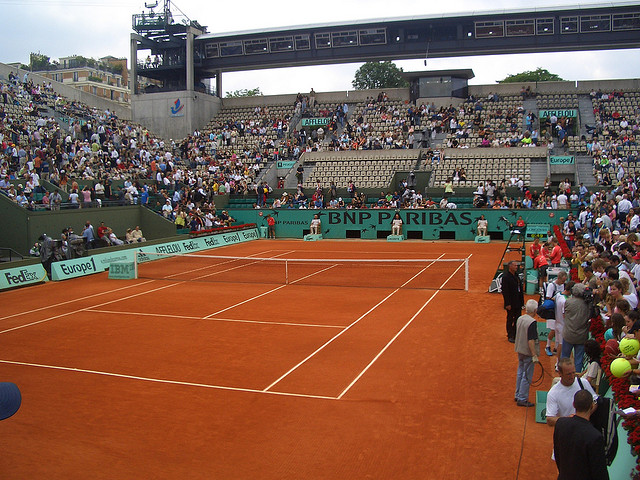
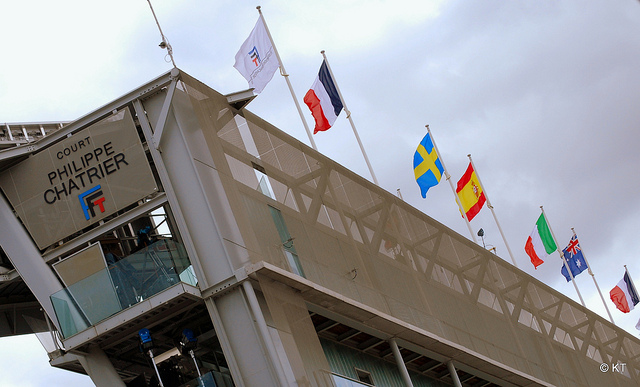
    Day 7 of the French Open, at Roland Garros, kicks off with 2009 champion Svetlana Kuznetsova (27), facing off against 2011 Wimbledon champion Petra Kvitova (5). They will be followed by defending champion and World No. 1 Rafael Nadal playing the Argentine Leonardo Mayer. Local favorite Richard Gasquet (12) and the Spaniard Fernando Verdasco (24) will conclude the day’s action on Court Philippe Chatrier.

    Up first on Court Suzanne Lenglen, the promising American Sloane Stephens (15) will meet the Russian Ekaterina Makarova (22). Next up are Lucie Safarova (23) and the 2008 Roland Garros champion Ana Ivanovic (11). The final match on Lenglen features last year’s Wimbledon champion Andy Murray (7), who will play the veteran German Philipp Kohlschreiber (28).

    The full schedule for Day 7 is listed below (Results to follow)…

    [divider]

    Court Philippe Chatrier – 11:00 A.M.  

    Women’s Singles – Round 3
    Svetlana Kuznetsova (RUS) (27) d. Petra Kvitova (CZE) (5) — 6-7(3), 6-1, 9-7

    Men’s Singles – Round 3
    Rafael Nadal (ESP) (1) d. Leonardo Mayer (ARG) — 6-2, 7-5, 6-2

    Women’s Singles – Round 3
    Andrea Petkovic (GER) (28) d. Kristina Mladenovic (FRA) — 6-4, 4-6, 6-4

    Men’s Singles – Round 3
    Richard Gasquet (FRA) (12) vs. Fernando Verdasco (ESP) (24) — To Finish: 3-6, 2-6, 2-2

    [divider]

    Court Suzanne Lenglen – 11:00 A.M.

    Women’s Singles – Round 3
    Sloane Stephens (USA) (15) d. Ekaterina Makarova (RUS) (22) — 6-3, 6-4

    Women’s Singles – Round 3
    Lucie Safarova (CZE) (23) d. Ana Ivanovic (SRB) (11) — 6-3, 6-3

    Men’s Singles – Round 3
    Gael Monfils (FRA) (23) d. Fabio Fognini (ITA) (14) — 5-7, 6-2, 6-4, 0-6, 6-2

    Men’s Singles – Round 3
    Andy Murray (GBR) (7) vs. Philipp Kohlschreiber (GER) (28) — To Finish: 3-6, 6-3, 6-3, 4-6, 7-7

    [divider]

    Court 1 – 11:00 A.M.  

    Men’s Singles – Round 3
    David Ferrer (ESP) (5) d. Andreas Seppi (ITA) (32) — 6-2, 7-6(2), 6-3

    Women’s Singles – Round 3
    Jelena Jankovic (SRB) (6) d. Sorana Cirstea (ROU) (26) — 6-1, 6-2

    Men’s Singles – Round 3
    Guillermo Garcia-Lopez (ESP) d. Donald Young (USA) — 6-2, 6-4, 2-6, 6-7(4), 6-4

    Men’s Doubles – Round 3
    Bob Bryan (USA) (1) / Mike Bryan (USA) (1) d. Jamie Murray (GBR) (15) / John Peers (AUS) (15) — 6-3, 6-1

    [divider]

    Court 2 – 11:00 A.M.    

    Women’s Singles – Round 3
    Simona Halep (ROU) (4) d. Maria-Teresa Torro-Flor (ESP) — 6-3, 6-0

    Men’s Singles – Round 3
    Kevin Anderson (RSA) (19) d. Ivo Karlovic (CRO) — 6-3 Ret.

    Women’s Singles – Round 3
    Sara Errani (ITA) (10) d. Julia Glushko (ISR) — 6-0, 6-1

    Men’s Doubles – Round 3
    Marcel Granollers (ESP) (12) / Marc Lopez (ESP) (12) d. Mate Pavic (CRO) / Andre Sa (BRA) — 6-2, 6-1

    [divider]

    Court 3 – 11:00 A.M.    

    Men’s Doubles – Round 3
    Maximo Gonzalez (ARG) / Juan Monaco (ARG) d. Andre Begemann (GER) / Robin Haase (NED) — 6-1, 3-6, 6-3

    Not Before: 12:30 P.M.

    Men’s Doubles – Round 3
    Daniel Nestor (CAN) (3) / Nenad Zimonjic (SRB) (3) d. Jean-Julien Rojer (NED) (13) / Horia Tecau (ROU) (13) — 6-4, 7-5

    Women’s Doubles – Round 2
    Julie Coin (FRA) / Pauline Parmentier (FRA) d. Ekaterina Makarova (RUS) (3) / Elena Vesnina (RUS) (3) — 6-3, 5-7, 6-3

    Mixed Doubles – Round 2
    Timea Babos (HUN) / Eric Butorac (USA) d. Sania Mirza (IND) / Horia Tecau (ROU) — 1-6, 6-4 [10-7]

    [divider]

    Court 6 – 11:00 A.M.    

    Women’s Doubles – Round 2
    Liezel Huber (USA) (15) / Lisa Raymond (USA) (15) d. Yung-Jan Chan (TPE) / Hao-Ching Chan (TPE) — 6-4, 6-2

    Not Before: 12:30 P.M.

    Women’s Doubles – Round 2
    Ashleigh Barty (AUS) (7) / Casey Dellacqua (AUS) (7) d. Jana Cepelova (SVK) / Stefanie Voegele (SUI) — 6-1, 6-2

    Mixed Doubles – Round 2
    Alize Cornet (FRA) / Jonathan Eysseric (FRA) d. Klaudia Jans-Ignacik (POL) / Dominic Inglot (GBR) — 7-6(10), 3-6 [11-9]

    [divider]

    Court 7 – 11:00 A.M. 

    Men’s Singles – Round 3
    Dusan Lajovic (SRB) d. Jack Sock (USA) — 6-4, 7-5, 6-3

    Men’s Singles – Round 3
    Marcel Granollers (ESP) d. Martin Klizan (SVK) — 6-7(5), 6-2, 7-6(4), 7-5

    Men’s Doubles – Round 3
    Lukasz Kubot (POL) (9) / Robert Lindstedt (SWE) (9) d. Jonathan Erlich (ISR) / Marcelo Melo (BRA) — 6-4, 7-6(5)

    Women’s Singles – Round 3
    Kiki Bertens (NED) d. Silvia Soler-Espinosa (ESP) — 6-2, 6-1

    Women’s Doubles – Round 2
    Madison Keys (USA) / Alison Riske (USA) d. Dominika Cibulkova (SVK) / Kirsten Flipkens (BEL) — Walkover

    [divider]

    Court 16 – 11:00 A.M.    

    Women’s Doubles – Round 2
    Kveta Peschke (CZE) (4) / Katarina Srebotnik (SLO) (4) d. Oksana Kalashnikova (GEO) / Katarzyna Piter (POL) — 7-6(2), 6-4

    Not Before: 12:30 P.M.

    Women’s Doubles – Round 2
    Lucie Hradecka (CZE) / Michaella Krajicek (NED) d. Kimiko Date-Krumm (JPN) / Barbora Zahlavova Strycova (CZE) — 6-3, 3-6, 6-3

    Mixed Doubles – Round 2
    Katarina Srebotnik (SLO) (2) / Rohan Bopanna (IND) (2) d. Cara Black (ZIM) / Robert Farah (COL) — 6-3, 3-6 [10-7]

    Mixed Doubles – Round 2
    Julia Goerges (GER) (8) / Nenad Zimonjic (SRB) (8) d. Liezel Huber (USA) / Juan Sebastian Cabal (COL) — 6-0, 6-1

    [divider]

    Court 17 – 11:00 A.M.  

    Women’s Doubles – Round 2
    Cara Black (ZIM) (5) / Sania Mirza (IND) (5) d. Gabriela Dabrowski (CAN) / Alicja Rosolska (POL) — 6-1, 6-2

    Not Before: 12:30 P.M.

    Women’s Doubles – Round 2
    Irina-Camelia Begu (ROU) / Karin Knapp (ITA) d. Raquel Kops-Jones (USA) (6) / Abigail Spears (USA) (6) — 4-6, 7-5, 7-5

    Women’s Doubles – Round 2
    Garbine Muguruza (ESP) / Carla Suarez Navarro (ESP) d. Andreja Klepac (SLO) / Maria-Teresa Torro-Flor (ESP) — 0-6, 6-2, 6-2

    Mixed Doubles – Round 2
    Arantxa Parra Santonja (ESP) / Santiago Gonzalez (MEX) d. Abigail Spears (USA) (1) / Alexander Peya (AUT) (1) — 5-7, 6-3 [10-4]
  • Roland Garros French Open Day 5

    Roland Garros French Open Day 5

    Eight-time champion and World No. 1 Rafael Nadal (ESP) plays the young, Austrian rising star Dominic Thiem on Court Philippe Chatrier on Day Five of the French Open, at Roland Garros. Former champion Ana Ivanovic (SRB) will play Elina Svitolina, of the Ukraine.

    On Court Suzanne Lenglen, last year’s finalist and the No. 5 seed David Ferrer (ESP) faces off against the veteran Italian Simone Bolelli. The 2011 Wimbledon champion Petra Kvitova (5) plays Marina Erakovic, of New Zealand.

    The American Sloane Stephens will play Polona Hercog (SLO) on Court 1. Later, Andy Murray, the No. 7 seed and defending Wimbledon champion, will meet the Australian Marinko Matosevic. The final match on Court 1 will be the talented Romanian Simona Halep (4) playing Heather Watson (GBR).

    The full schedule for Day 5 is listed below (Results to follow)…

    [divider]
    Court Philippe Chatrier – 11:00 A.M.    

    Women’s Singles – Round 2
    Jelena Jankovic (SRB) (6) d. Kurumi Nara (JPN) — 7-5, 6-0

    Men’s Singles – Round 2
    Rafael Nadal (ESP) (1) d. Dominic Thiem (AUT) — 6-2, 6-2, 6-3

    Men’s Singles – Round 2
    Richard Gasquet (FRA) (12) d. Carlos Berlocq (ARG) — 7-6(5), 6-4, 6-4

    Women’s Singles – Round 2
    Ana Ivanovic (SRB) (11) d. Elina Svitolina (UKR) — 7-5, 6-2

    [divider]

    Court Suzanne Lenglen – 11:00 A.M.    

    Men’s Singles – Round 2
    David Ferrer (ESP) (5) d. Simone Bolelli (ITA) — 6-2, 6-3, 6-2

    Women’s Singles – Round 2
    Kristina Mladenovic (FRA) d. Alison Riske (USA) — 7-6(5), 3-6, 6-3

    Women’s Singles – Round 2
    Petra Kvitova (CZE) (5) d. Marina Erakovic (NZL) — 6-4, 6-4

    Men’s Singles – Round 2
    Gael Monfils (FRA) (23) d. Jan-Lennard Struff (GER) — 7-6(4), 6-4, 6-1

    [divider]

    Court 1 – 11:00 A.M.  

    Women’s Singles – Round 2
    Sloane Stephens (USA) (15) d. Polona Hercog (SLO) — 6-1, 6-3

    Men’s Singles – Round 2
    Guillermo Garcia-Lopez (ESP) d. Adrian Mannarino (FRA) — 6-4, 6-3, 4-6, 6-0

    Men’s Singles – Round 2
    Andy Murray (GBR) (7) d. Marinko Matosevic (AUS) — 6-3, 6-1, 6-3

    Women’s Singles – Round 2
    Simona Halep (ROU) (4) d. Heather Watson (GBR) — 6-2, 6-4

    [divider]

    Court 2 – 11:00 A.M.    

    Women’s Singles – Round 2
    Svetlana Kuznetsova (RUS) (27) d. Camila Giorgi (ITA) — 7-6(5), 6-3

    Women’s Singles – Round 2
    Paula Ormaechea (ARG) d. Monica Niculescu (ROU) — 2-6, 7-5, 6-2

    Women’s Singles – Round 2
    Sara Errani (ITA) (10) d. Dinah Pfizenmaier (GER) — 6-2, 6-4

    Men’s Singles – Round 2
    Fernando Verdasco (ESP) (24) d. Pablo Cuevas (URU) — 4-6, 6-7(6), 7-5, 6-4, 6-3

    [divider]

    Court 3 – 11:00 A.M.    

    Men’s Singles – Round 2
    Donald Young (USA) d. Feliciano Lopez (ESP) (26) — 6-3, 7-6(1), 6-3

    Men’s Singles – Round 2
    Andreas Seppi (ITA) (32) d. Juan Monaco (ARG) — 6-2, 6-4, 6-4

    Women’s Singles – Round 2
    Sorana Cirstea (ROU) (26) d. Teliana Pereira (BRA) — 6-2, 7-5

    Men’s Singles – Round 2
    Fabio Fognini (ITA) (14) d. Thomaz Bellucci (BRA) — 6-3, 6-4, 7-6(2)

    [divider]

    Court 4 – 12:00 P.M.    

    Women’s Singles – Round 2
    Maria-Teresa Torro-Flor (ESP) d. Magdalena Rybarikova (SVK) — 6-2, 2-6, 6-2

    Women’s Doubles – Round 1
    Shuko Aoyama (JPN) / Renata Voracova (CZE) d. Amandine Hesse (FRA) / Mathilde Johansson (FRA) — 6-1, 6-4

    Women’s Doubles – Round 1
    Dominika Cibulkova (SVK) / Kirsten Flipkens (BEL) d. Julia Goerges (GER) (8) / Anna-Lena Groenefeld (GER) (8) — 7-5, 2-6, 7-5

    Mixed Doubles – Round 1
    Sania Mirza (IND) / Horia Tecau (ROU) d. Kveta Peschke (CZE) (4) / Marcin Matkowski (POL) (4) — 4-6, 6-3 [10-7]

    [divider]

    Court 5 – 11:00 A.M.    

    Women’s Singles – Round 2
    Kiki Bertens (NED) d. Anastasia Pavlyuchenkova (RUS) (24) — 5-7, 6-4, 3-0 Ret.

    Women’s Singles – Round 2
    Ekaterina Makarova (RUS) (22) d. Coco Vandeweghe (USA) — 6-4, 6-3

    Women’s Doubles – Round 1
    Yung-Jan Chan (TPE) / Hao-Ching Chan (TPE) d. Kurumi Nara (JPN) / Anna Schmiedlova (SVK) — 7-5, 6-0

    Women’s Doubles – Round 1
    Julie Coin (FRA) / Pauline Parmentier (FRA) d. Irina Buryachok (UKR) / Vladimira Uhlirova (CZE) — 6-3, 6-3

    [divider]

    Court 6 – 11:00 A.M.    

    Women’s Singles – Round 2
    Julia Glushko (ISR) d. Kirsten Flipkens (BEL) (21) — 6-4, 3-6, 6-4

    Women’s Singles – Round 2
    Lucie Safarova (CZE) (23) d. Casey Dellacqua (AUS) — 6-1, 5-7, 6-3

    Men’s Singles – Round 2
    Philipp Kohlschreiber (GER) (28) d. Denis Istomin (UZB) — 6-3, 7-6(5), 6-2

    Women’s Doubles – Round 1
    Kristina Mladenovic (FRA) (12) / Flavia Pennetta (ITA) (12) d. Alize Cornet (FRA) / Caroline Garcia (FRA) — 3-6, 6-1, 6-2

    [divider]

    Court 7 – 11:00 A.M.    

    Men’s Singles – Round 2
    Kevin Anderson (RSA) (19) d. Axel Michon (FRA) — 6-2, 6-3, 6-2

    Women’s Singles – Round 2
    Pauline Parmentier (FRA) d. Yaroslava Shvedova (KAZ) — 1-6, 6-3, 6-3

    Women’s Singles – Round 2
    Andrea Petkovic (GER) (28) d. Stefanie Voegele (SUI) — 6-2, 4-6, 6-2

    Men’s Singles – Round 2
    Jack Sock (USA) d. Steve Johnson (USA) — 7-5, 6-4, 6-2

    Men’s Doubles – Round 2
    Bob Bryan (USA) (1) / Mike Bryan (USA) (1) d. Jonathan Eysseric (FRA) / Marc Gicquel (FRA) — 6-3, 6-3

    [divider]

    Court 8 – 11:00 A.M.    

    Mixed Doubles – Round 1
    Arantxa Parra Santonja (ESP) / Santiago Gonzalez (MEX) d. Lisa Raymond (USA) / John Peers (AUS) — 7-6(2), 6-2

    Men’s Doubles – Round 1
    Treat Huey (PHI) (7) / Dominic Inglot (GBR) (7) d. Santiago Giraldo (COL) / Alejandro Gonzalez (COL) — 6-3, 3-6, 6-3

    Not Before: 2:00 PM

    Men’s Doubles – Round 2
    Daniel Nestor (CAN) (3) / Nenad Zimonjic (SRB) (3) d. Roberto Bautista Agut (ESP) / Igor Sijsling (NED) — 6-3, 6-7(5), 6-3

    Mixed Doubles – Round 1
    Cara Black (ZIM) / Robert Farah (COL) d. Alla Kudryavtseva (RUS) / Treat Huey (PHI) — 6-4, 6-4

    Men’s Doubles – Round 2
    Marcel Granollers (ESP) (12) / Marc Lopez (ESP) (12) d. Guillermo Garcia-Lopez (ESP) / Philipp Oswald (AUT) — 4-6, 6-0, 6-3

    [divider]

    Court 9 – 12:00 P.M.

    Women’s Doubles – Round 1
    Raquel Kops-Jones (USA) (6) / Abigail Spears (USA) (6) d. Sandra Klemenschits (AUT) / Yvonne Meusburger (AUT) — 6-3, 6-3

    Women’s Doubles – Round 1
    Gabriela Dabrowski (CAN) / Alicja Rosolska (POL) d. Ajla Tomljanovic (CRO) / Shuai Zhang (CHN) — 6-1, 6-3

    Women’s Doubles – Round 1
    Garbine Muguruza (ESP) / Carla Suarez Navarro (ESP) d. Mirjana Lucic-Baroni (CRO) / Sloane Stephens (USA) — 7-5, 6-4

    Women’s Doubles – Round 1
    Ekaterina Makarova (RUS) (3) / Elena Vesnina (RUS) (3) d. Alix Collombon (FRA) / Chloe Paquet (FRA) — 6-2, 6-3

    [divider]

    Court 10 – 11:00 A.M.  

    Mixed Doubles – Round 1
    Liezel Huber (USA) / Juan Sebastian Cabal (COL) d. Stephanie Foretz Gacon (FRA) / Edouard Roger-Vasselin (FRA) — 6-3, 6-2

    Men’s Doubles – Round 2
    Jean-Julien Rojer (NED) (13) / Horia Tecau (ROU) (13) d. Nicholas Monroe (USA) / Simon Stadler (GER) — 6-3, 6-0

    Women’s Doubles – Round 1
    Su-Wei Hsieh (TPE) (1) / Shuai Peng (CHN) (1) d. Svetlana Kuznetsova (RUS) / Samantha Stosur (AUS) — 6-2, 6-4

    Women’s Doubles – Round 1
    Klara Koukalova (CZE) (14) / Monica Niculescu (ROU) (14) d. Monica Puig (PUR) / Yanina Wickmayer (BEL) — 6-7(1), 6-0, 6-3

    [divider]

    Court 11 – 12:00 P.M.   

    Women’s Doubles – Round 1
    Cara Black (ZIM) (5) / Sania Mirza (IND) (5) d. Daniela Hantuchova (SVK) / Shahar Peer (ISR) — 6-3, 6-3

    Women’s Doubles – Round 1
    Irina-Camelia Begu (ROU) / Karin Knapp (ITA) d. Mona Barthel (GER) / Virginie Razzano (FRA) — 6-4, 6-3

    Women’s Doubles – Round 1
    Ashleigh Barty (AUS) (7) / Casey Dellacqua (AUS) (7) d. Polona Hercog (SLO) / Paula Ormaechea (ARG) — 6-2, 6-3

    Mixed Doubles – Round 1
    Anna-Lena Groenefeld (GER) / Jean-Julien Rojer (NED) d. Jie Zheng (CHN) / Scott Lipsky (USA) — 7-5, 6-3

    [divider]

    Court 14 – 12:00 P.M.   

    Men’s Doubles – Round 2
    Lukasz Kubot (POL) (9) / Robert Lindstedt (SWE) (9) d. Jeremy Chardy (FRA) / Oliver Marach (AUT) — 6-4, 6-1

    Men’s Singles – Round 2
    Dusan Lajovic (SRB) d. Jurgen Zopp (EST) — 6-2, 6-4, 6-4

    Mixed Doubles – Round 1
    Raquel Kops-Jones (USA) / Raven Klaasen (RSA) d. Anastasia Rodionova (AUS) / Colin Fleming (GBR) — 3-6, 6-3 [10-8]

    Women’s Doubles – Round 1
    Andrea Petkovic (GER) / Magdalena Rybarikova (SVK) d. Claire Feuerstein (FRA) / Alize Lim (FRA) — 6-1, 6-3

    [divider]

    Court 16 – 11:00 A.M.    

    Men’s Singles – Round 2
    Ivo Karlovic (CRO) d. Andreas Haider-Maurer (AUT) — 7-5, 6-3, 6-4

    Men’s Doubles – Round 2
    Jonathan Erlich (ISR) / Marcelo Melo (BRA) d. Rohan Bopanna (IND) (6) / Aisam-Ul-Haq Qureshi (PAK) (6) — 6-3, 6-4

    Women’s Doubles – Round 1
    Kimiko Date-Krumm (JPN) / Barbora Zahlavova Strycova (CZE) d. A. Medina Garrigues (ESP) (11) / Yaroslava Shvedova (KAZ) (11) — 6-4, 6-2

    Women’s Doubles – Round 1
    Sara Errani (ITA) (2) / Roberta Vinci (ITA) (2) d. Timea Babos (HUN) / Varvara Lepchenko (USA) — 6-1, 6-3

    [divider]

    Court 17 – 11:00 A.M.    

    Women’s Singles – Round 2
    Silvia Soler-Espinosa (ESP) d. Yanina Wickmayer (BEL) — 6-2, 6-4

    Men’s Singles – Round 2
    Leonardo Mayer (ARG) d. Teymuraz Gabashvili (RUS) — 6-2, 4-6, 6-4, 6-4

    Men’s Doubles – Round 1
    Andre Begemann (GER) / Robin Haase (NED) d. Fabrice Martin (FRA) / Hugo Nys (FRA) — 6-3, 4-6, 6-3

    Women’s Doubles – Round 1
    Jarmila Gajdosova (AUS) / Janette Husarova (SVK) d. Karolina Pliskova (CZE) / Kristyna Pliskova (CZE) — 1-6, 6-3, 6-3

    Men’s Doubles – Round 1
    Feliciano Lopez (ESP) / Jurgen Melzer (AUT) d. Pierre-Hugues Herbert (FRA) / Albano Olivetti (FRA) — 7-6(4), 6-3

  • Roland Garros French Open Day 3

    Roland Garros French Open Day 3

    On Day Three of the French Open, Wimbledon champion Andy Murray will play his first round match against Andrey Golubev (KAZ). World No. 5 David Ferrer, of Spain, faces off against Igor Sijsling, of the Netherlands. Local favorite Richard Gasquet (12) plays the young Australian Bernard Tomic.

    On the women’s side, the Romanian Simona Halep (4) will meet Alisa Kleybanova, of Russia. The 2008 Roland Garros champion Ana Ivanovic (11) plays Caroline Garcia (FRA). Li Na (2), the 2001 champion, and winner of this year’s Australian Open, will face Kristina Mladenovic, of France.

    The full schedule for Day 3 is listed below (Results to follow)…

    [divider]

    Court Philippe Chatrier – 11:00 A.M.

    Women’s Singles – Round 1
    Simona Halep (ROU) (4) d. Alisa Kleybanova (RUS) — 6-0, 6-2

    Men’s Singles – Round 1
    David Ferrer (ESP) (5) d. Igor Sijsling (NED) — 6-4, 6-3, 6-1

    Women’s Singles – Round 1
    Ana Ivanovic (SRB) (11) d. Caroline Garcia (FRA) — 6-1, 6-3

    Men’s Singles – Round 1
    Gael Monfils (FRA) (23) d. Victor Hanescu (ROU) — 6-2, 4-6, 6-4, 6-2

    [divider]

    Court Suzanne Lenglen – 11:00 A.M.

    Women’s Singles – Round 1
    Kristina Mladenovic (FRA) d. Na Li (CHN) (2) — 7-5, 3-6, 6-1

    Men’s Singles – Round 1
    Richard Gasquet (FRA) (12) d. Bernard Tomic (AUS) — 6-2, 6-1, 7-5

    Men’s Singles – Round 1
    Andy Murray (GBR) (7) d. Andrey Golubev (KAZ) — 6-1, 6-4, 3-6, 6-3

    Women’s Singles – Round 1
    Sara Errani (ITA) (10) d. Madison Keys (USA) — 7-5, 3-6, 6-1

    [divider]

    Court 1 – 11:00 A.M.

    Men’s Singles – Round 1
    Ivo Karlovic (CRO) d. Grigor Dimitrov (BUL) (11) — 6-4, 7-5, 7-6(4)

    Women’s Singles – Round 1
    Sloane Stephens (USA) (15) d. Shuai Peng (CHN) — 6-4, 7-6(8)

    Men’s Singles – Round 1
    Fernando Verdasco (ESP) (24) d. Michael Llodra (FRA) — 6-2, 7-6(4), 7-6(3)

    Women’s Singles – Round 1
    Lucie Safarova (CZE) (23) d. Mandy Minella (LUX) — 6-3, 7-5

    [divider]

    Court 2 – 11:00 A.M.

    Women’s Singles – Round 1
    Anastasia Pavlyuchenkova (RUS) (24) d. Kimiko Date-Krumm (JPN) — 6-3, 0-6, 6-2

    Men’s Singles – Round 1
    Juan Monaco (ARG) d. Lucas Pouille (FRA) — 6-3, 6-1, 6-4

    Women’s Singles – Round 1
    Yanina Wickmayer (BEL) d. Caroline Wozniacki (DEN) (13) — 7-6(5), 4-6, 6-2

    Men’s Singles – Round 1
    Jan-Lennard Struff (GER) d. Albano Olivetti (FRA) — 6-1, 6-4, 6-4

    [divider]

    Court 3 – 11:00 A.M.

    Women’s Singles – Round 1
    Svetlana Kuznetsova (RUS) (27) d. Sofia Shapatava (GEO) — 6-3, 6-1

    Men’s Singles – Round 1
    Philipp Kohlschreiber (GER) (28) d. Pere Riba (ESP) — 7-5, 6-4, 6-1

    Men’s Singles – Round 1
    Jurgen Zopp (EST) d. Tommy Haas (GER) (16) — 2-5 Ret.

    Women’s Singles – Round 1
    Ekaterina Makarova (RUS) (22) d. Shelby Rogers (USA) — 6-2, 6-3

    [divider]

    Court 4 – 11:00 A.M.

    Women’s Singles – Round 1
    Camila Giorgi (ITA) d. Bojana Jovanovski (SRB) — 6-4, 6-3

    Men’s Singles – Round 1
    Denis Istomin (UZB) d. Sergiy Stakhovsky (UKR) — 6-3, 6-4, 2-6, 6-3

    Women’s Singles – Round 1
    Dinah Pfizenmaier (GER) d. Estrella Cabeza Candela (ESP) — 4-6, 6-3, 6-3

    Women’s Singles – Round 1
    Coco Vandeweghe (USA) d. Iveta Melzer (CZE) — 7-6(6), 6-2

    [divider]

    Court 5 – 11:00 A.M.

    Women’s Singles – Round 1
    Teliana Pereira (BRA) d. Luksika Kumkhum (THA) — 4-6, 6-1, 6-1

    Men’s Singles – Round 1
    Andreas Haider-Maurer (AUT) d. Daniel Brands (GER) — 4-6, 4-6, 6-2, 6-3, 6-4

    Men’s Singles – Round 1
    Marinko Matosevic (AUS) d. Dustin Brown (GER) — 7-6(5), 6-4, 6-7(1), 7-5

    [divider]

    Court 6 – 11:00 A.M.

    Women’s Singles – Round 1
    Heather Watson (GBR) d. Barbora Zahlavova Strycova (CZE) — 6-3, 6-4

    Men’s Singles – Round 1
    Kevin Anderson (RSA) (19) d. Stephane Robert (FRA) — 7-5, 6-3, 6-4

    Men’s Singles – Round 1
    Jack Sock (USA) d. Nicolas Almagro (ESP) (21) — 5-0 Ret.

    Women’s Singles – Round 1
    Maria-Teresa Torro-Flor (ESP) d. Klara Koukalova (CZE) (30) — 7-6(4), 6-2

    Women’s Singles – Round 1
    Casey Dellacqua (AUS) d. Lourdes Dominguez Lino (ESP) — 7-5, 6-3

    [divider]

    Court 7 – 11:00 A.M.

    Men’s Singles – Round 1
    Carlos Berlocq (ARG) d. Lleyton Hewitt (AUS) — 3-6, 6-2, 6-1, 6-4

    Women’s Singles – Round 1
    Jelena Jankovic (SRB) (6) d. Sharon Fichman (CAN) — 5-7, 6-1, 6-3

    Women’s Singles – Round 1
    Kirsten Flipkens (BEL) (21) d. Danka Kovinic (MNE) — 7-6(6), 6-2

    Men’s Singles – Round 1
    Steve Johnson (USA) vs. Laurent Lokoli (FRA) — Postponed

    [divider]

    Court 8 – 11:00 A.M.

    Women’s Singles – Round 1
    Sorana Cirstea (ROU) (26) d. Aleksandra Wozniak (CAN) — 6-7(3), 7-5, 6-2

    Men’s Singles – Round 1
    Simone Bolelli (ITA) d. Andrea Arnaboldi (ITA) — 6-4, 6-4, 6-2

    Women’s Singles – Round 1
    Magdalena Rybarikova (SVK) d. Urszula Radwanska (POL) — 4-6, 6-4, 3-0 Ret.

    Men’s Doubles – Round 1
    Nicholas Monroe (USA) / Simon Stadler (GER) d. Martin Klizan (SVK) / Dominic Thiem (AUT) — 6-3, 7-5

    [divider]

    Court 10 – 11:00 A.M.

    Women’s Singles – Round 1
    Alison Riske (USA) d. Mirjana Lucic-Baroni (CRO) — 7-6(2), 6-3

    Women’s Singles – Round 1
    Polona Hercog (SLO) d. Jana Cepelova (SVK) — 6-2, 6-3

    Men’s Singles – Round 1
    Pablo Cuevas (URU) d. Matthew Ebden (AUS) — 6-1, 6-2, 6-3

    Men’s Doubles – Round 1
    Mate Pavic (CRO) / Andre Sa (BRA) d. Ken Skupski (GBR) / Michael Venus (NZL) — 6-2, 6-3

    [divider]

    Court 11 – 11:00 A.M.

    Men’s Doubles – Round 1
    Henri Kontinen (FIN) / Jarkko Nieminen (FIN) d. Juan Sebastian Cabal (COL) (10) / Robert Farah (COL) (10) — 6-4, 6-3

    Men’s Doubles – Round 1
    Marcel Granollers (ESP) (12) / Marc Lopez (ESP) (12) d. Johan Brunstrom (SWE) / Frederik Nielsen (DEN) — 7-5, 6-2

    Men’s Doubles – Round 1
    Santiago Gonzalez (MEX) / Scott Lipsky (USA) d. Colin Fleming (GBR) / Ross Hutchins (GBR) — 7-6(6), 6-4

    Men’s Doubles – Round 1
    Jeremy Chardy (FRA) / Oliver Marach (AUT) d. Mathias Bourgue (FRA) / Paul-Henri Mathieu (FRA) — 6-1, 7-5

    [divider]

    Court 14 – 11:00 A.M.

    Women’s Singles – Round 1
    Kiki Bertens (NED) d. Alexandra Cadantu (ROU) — 7-6(5), 6-1

    Women’s Singles – Round 1
    Silvia Soler-Espinosa (ESP) d. Chanelle Scheepers (RSA) — 6-2, 6-3

    Men’s Singles – Round 1
    Dusan Lajovic (SRB) d. Federico Delbonis (ARG) — 6-3, 6-2, 6-3

    Men’s Doubles – Round 1
    Jamie Murray (GBR) (15) / John Peers (AUS) (15) d. Vasek Pospisil (CAN) / Rajeev Ram (USA) — 6-1, 4-6, 7-6(2)

    [divider]

    Court 16 – 11:00 A.M.

    Men’s Singles – Round 1
    Andreas Seppi (ITA) (32) d. Santiago Giraldo (COL) — 6-3, 7-5, 6-3

    Women’s Singles – Round 1
    Elina Svitolina (UKR) d. Petra Martic (CRO) — 5-0 Ret.

    Men’s Doubles – Round 1
    Jean-Julien Rojer (NED) (13) / Horia Tecau (ROU) (13) d. Adrian Mannarino (FRA) / Benoit Paire (FRA) — 6-4, 6-0

    Men’s Doubles – Round 1
    Teymuraz Gabashvili (RUS) / Mikhail Kukushkin (KAZ) d. Bradley Klahn (USA) / Neal Skupski (GBR) — 7-6(5), 6-4

    [divider]

    Court 17 – 11:00 A.M.

    Men’s Singles – Round 1
    Axel Michon (FRA) d. Bradley Klahn (USA) — 6-1, 6-7(4), 5-7, 6-1, 6-4

    Women’s Singles – Round 1
    Julia Glushko (ISR) d. Donna Vekic (CRO) — 7-5, 2-6, 6-4

    Men’s Doubles – Round 1
    Julien Benneteau (FRA) (11) / Edouard Roger-Vasselin (FRA) (11) d. Benjamin Becker (GER) / Yen-Hsun Lu (TPE) — 6-3, 4-6, 6-0

  • Luxilon Borg’s Davis Cup Photos – US v. GB 2014

    Luxilon Borg’s Davis Cup Photos – US v. GB 2014

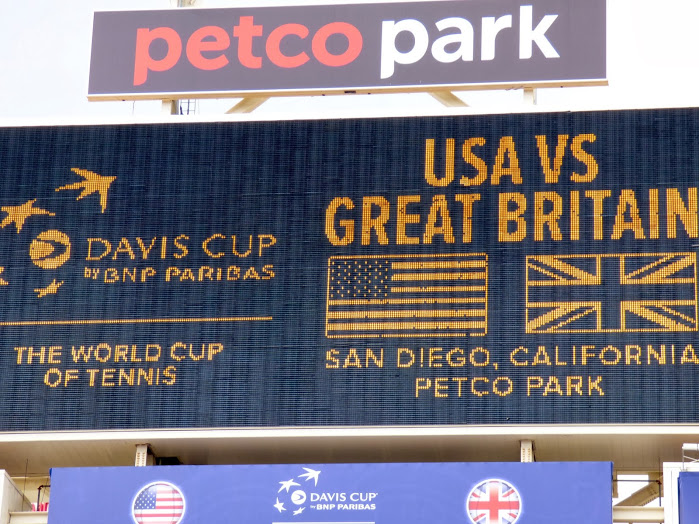
    Luxilon Borg was in attendance when Great Britain beat the US team 3-1 in San Diego this year.  He offered these photos:

    MurrayMurray2Murray3Murray4MurrayserveQuerryCourierWideshotCourierCourier1CourierMurrayDonaldyoungMurrayMurray3Murray4Murray5Murray6Murray7Murray8MurrayCU.jpg.MurrayinterviewMurrayserve1MurraywatchingQuerrey2CourierQuerryQuerryservingScoreboardteambritainCourierCourier1CourierMurrayDonaldyoungDonaldyoung1


  • The Big Four by Winning Percentage

    The Big Four by Winning Percentage

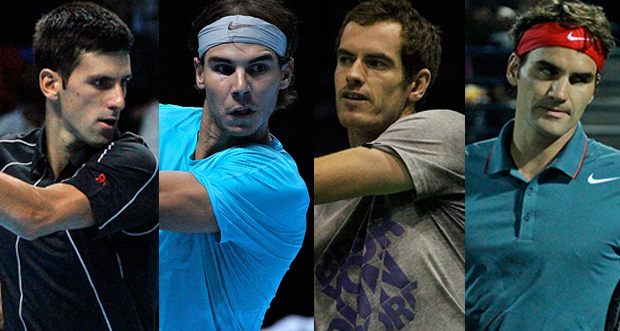
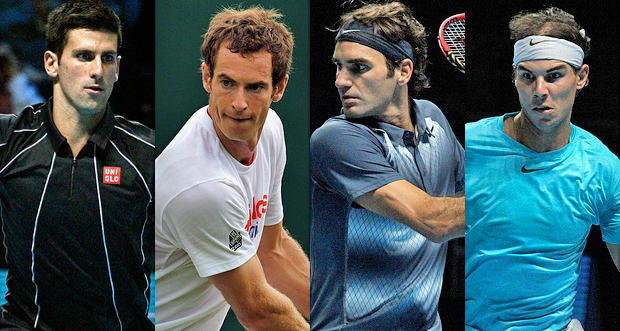
    Novak Djokovic Rafael Nadal Andy Murray Roger Federer

    I was looking at Wikipedia pages for a variety of players and was surprised to notice that Roger’s win percentage this year is the same as 2012, which supports the notion that he’s really resurged well. Certainly he’s only played 23 matches this year, but that’s already more than a third of his total from last year (62) so gives us a large enough sample size to get a sense of his performance level so far. For comparison, through Indian Wells last year he was 13-4 (76%).

    Anyhow, this isn’t meant to be about Roger but the Big Four, and to look at their careers through the lens of win percentage.  Without further ado, here’s a chart:

    20140322063149
    A few notes on each player:

    Roger Federer – this chart really displays a clear peak in 2004-06, with the downturn beginning in 2007, although this could also be because by 2007 both Djokovic and Murray were on the map, with year-end rankings of No. 3 and No. 11, respectively, although Roger had winning records against both Nadal (3-2) and Djokovic (3-1), with no matches against Murray in 2007, so his overall win percentage without those two only goes down a few percentage points.

    Anyhow, the big thing to notice about Roger now is that he’s playing at a similar clip this year as he did in 2012. Hopefully this means we’re back to “post-peak plateau Roger,” as he’s been relatively consistent in terms of winning percentage since 2008, ranging between 81% and 86%, except for 2013’s 73%.

    Rafael Nadal – The thing that really stands out for me is just how consistent Rafa has been in his win percentage since 2005, never dipping below 82% or rising above 91%. In other words, no matter his ups and downs and injuries, he’s been consistent and steady in his performance level. His dip in 2009 is well chronicles because of Robin Soderling and injury, and then in 2011 it was entirely due to Novak’s 6-0 record against him that year. Remove those six matches and he’s at 88% for the year.

    Novak Djokovic – The most interesting part of this chart for Novak is what happened between 2009 and 2011. In 2009 he had finished his third straight year as the clear third best player in the game, and then in 2010 – while he retained his No. 3 ranking – he slipped a bit, winning only two titles and appearing in only four finals. And then 2011 happened. Was it going gluten free or something else? Regardless, it is easily the best year other than Roger’s three great seasons, and in many ways rivals those – certainly one of the ten best seasons in Open Era history. His fans may be disappointed that he’s dropped a notch since, but this chart shows that his level has remained very high – and that he’s been a better player after his career year than he was before.

    Andy Murray – the red-headed stepchild in the family of contemporary greats, both the least loved and least hated of the Big Four – perhaps because he’s the clear No. 4. This chart brought out a couple of minor, but interesting, points. First of all, he had the best debut year by win percentage of the four. It isn’t by much, and it isn’t all that significant, but it’s worth mentioning. Secondly, I was surprised to notice that in 2009 he had the highest win percentage of the Big Four. While 2012 or 2013 are certainly considered his best years because of his Slam wins, in 2009 he won six titles (a career high) and lost only 11 matches, winning 66 (again, a career high).

    Anyhow, it will be interesting to see what this chart looks like by year’s end.

    [divider]

    Image courtesy of rainycat via Creative Commons license

  • One Hope Too Many

    One Hope Too Many

    Novak Djokovic

    Indian Wells Masters 1000, Final

    (2) Djokovic d. (7) Federer, 3-6, 6-3, 7-6(3)

    Novak Djokovic has won the 2014 Indian Wells Masters, embedding himself even more firmly in that group of men who are able to generate endless copy thanks to their records alone. With the great champions, it gets to a point where you can find yourself just going on about the numbers. Arguably the greatest of these was across the net for today’s final, and looked for a time as though he would be the man to triumph once more, thus increasing many of his various records by one. In the end, but only in the end, Djokovic held off the resurgent Roger Federer to claim his third consecutive Masters 1000 title, going back through the Paris Indoors and Shanghai last year. It is also his third Indian Wells title, and seventeenth Masters title overall, and places him equal-third with Andre Agassi on the all-time leader board. As I say, eventually the numbers speak for themselves.

    Aside from the final, the story of the tournament was surely Alexandr Dolgopolov. He startled everyone by beating Rafael Nadal in a third set tiebreak, then delivered an arguably more profound shock by not going down meekly in the following round. I have no statistics at hand, but it has become standard practice to follow up a stunning upset with a dismal loss. Ever the iconoclast, Dolgopolov continued to outpace custom by handily upending Fabio Fognini and Milos Raonic, both in straight sets. Custom finally caught up with him in his first Masters semifinal, when the shreds he was blown to by Federer’s artillery whipped fitfully in the insistent breeze. Nevertheless, the Ukrainian’s ranking has risen from No. 31 to No. 23, with almost nothing to defend for the foreseeable future. Higher seedings beckon, but he’ll always be a dangerous floater. Being Dolgopolov, there’s no sound reason to believe that three strong tournaments in a row and a win over Nadal necessarily mean anything has changed. All in all, enjoy him for what he is worth, for you’ll rarely see his like. Just don’t bank on it lasting.

    Reaching the final guaranteed Federer’s re-ascent to the Top 5, while a victory in the final would have seen him leap over David Ferrer back into the Top 4. Alas, he lost, and languishes about a hundred points adrift. The odds are strong that he will return sooner rather than later, however. Ferrer has finalist points to defend in Miami next week, and one doubts, given his injuries, whether his defence will be sufficiently stout to prevent a tumble from the elite group. Federer didn’t play Miami last year, and thus would likely return to the Top 4 even if he skipped it again this year, an amusing yet not especially significant quirk of the 52-week ranking system.

    Andy Murray, currently ranked at No. 6, will seek to defend the Miami title. After yet another disappointing performance at Indian Wells – he fell to Raonic with all due fuss – it would be easy enough to insist Murray won’t fare any better in Miami than Ferrer. But there’s just no knowing what the Scot will do at the moment, and his perennially execrable level in California no longer necessarily presages similar form in Florida. All that is certain is that his return from surgery has been less smooth than had been anticipated. With the clay season about to commence, now would be a good time to give up expecting too much from Murray for a while. Let any strong results be a pleasant surprise. Come Wimbledon there will be ample opportunity to pile the pressure back on.

    There was a time when John Isner was considered to be his nation’s sturdiest hope on clay, based largely on a few strong Davis Cup performances, and once taking Nadal to five sets at Roland Garros. This probably revealed more about America’s bleak chances on dirt – as an Australian I’m hardly crowing from the high ground – than anything about Isner’s actually prowess. Indian Wells, however, seems to suit him well. Mechanically, it’s no stretch to see why. The thin air and grippy surface combine to render one of the sport’s mightiest weapons if anything more potent: it cuts through the air faster, and explodes off the surface. The desperate home crowd support certainly doesn’t hurt, as opposed to Miami, where North American players come a distant second to those from South America. Nor does the best-of-three format hurt, which ensures Isner cannot indulge his self-defeating passion for endless exertion.

    Still, the stark spectre of impending national irrelevance haunts the US men at every home tournament these days. They (and therefore we) are constantly reminded of the possibility that for the first time no US male might, say, make it to the third round, or be seeded, or ranked in the Top 20. (Again, it’s a wide trail the Australian men blazed years ago.) It usually falls to Isner to save the day, and often he does. Once the smoke has cleared, and Ryan Harrison has provided a meticulous explanation for his latest early round loss, Isner is generally the last one towering, toiling away, interleaving all-American service games with a return style so passive it induces Gilles Simon to yawn. He’s a mystery. Sometimes he perks up and blasts a few big forehand returns, but never for long. Djokovic was less than thrilled when Isner pulled this trick several times as the Serb tried to serve out their semifinal yesterday. Isner then tore through the second set tiebreak, briefly twitterpating the locals. Djokovic only had himself to blame. Once he’d finished admonishing himself he pushed through the third set without hassle. Djokovic hasn’t played well all week, but he has been very good at maintaining his equilibrium. This, more than anything, is probably why he’s the one hoisting the trophy.

    Calmness was fundamental again today in the key moments. There were the usual assortment of bellows, exultant or frustrated as the situation allowed, but when the match coiled tightest he was a picture of equanimity. After a patchy first set, in which Federer played all over him, Djokovic tightened his game up considerably in the second set, doubtless in the hope that if he hung around long enough something fruitful might eventuate. He was rewarded by a poor service game from Federer at 3-4, broke, and then served out the set. He broke early in the third set when Federer’s forehand went momentarily haywire, and rode that almost all the way until the end. As with Isner in the semifinal, however, Djokovic was broken while serving for the match, this time at 5-4. If he erred in this case, though, it was only in attempting greater margin. Federer put together his finest return game of the match, broke lustily to 15, and then held once more to love. From 3-5, he’d won fifteen of sixteen points. Djokovic must have been more than a touch rattled, but maintained his composure beautifully, and, vitally, held comfortably for the tiebreak.

    There was a reasonable hope that what had thus far been a fine and dramatic final might conclude with a fine and dramatic breaker, but this turned out to be one reasonable hope too many. The game whereby Djokovic had held for 6-6 seemingly broke Federer’s momentum, and the Swiss was never to regain it. Djokovic, meanwhile, confined his mood to that narrow band between over-attentiveness and exuberance, and made a virtue out of simply executing the shots he was meant to. The match ended with a weak pair of Federer errors, the first of which put them level on 98 points apiece, the second of which put Djokovic ahead. Statistically it was a terrifically close match – both had even winner/error ratios, served in the mid-sixties, and produced six aces – but it was Djokovic who won two sets to one.

    Both men spoke graciously on the dais. Federer broke new ground by praising the camera operators. Perhaps he was impressed by the new ‘FreeD’ images, although one cannot imagine he was half as impressed as the commentators. I haven’t heard Robbie Koenig sound so enthusiastic since they began measuring the RPMs on Nadal’s forehand. Federer also admitted he was overall pretty pleased with his own form. As exciting as his third set resurgence was today, his resurgence across the first few months of 2014 has mattered more, especially given his poor 2013. Greg Rusedski suggested Federer might be intending to peak for Roland Garros and Wimbledon. It’s the kind of thing Rusedski is, for some reason, paid to say.

    Djokovic for his part conceded that it was “an incredible match – an incredibly difficult match.” For all that it cleaved to the usual format – with Federer leaping out early and Djokovic gradually reeling him back – the subtleties and contrasts inherent to the match-up as ever inspired some great tennis. I find it to be the most consistently interesting of the elite rivalries (others will certainly disagree). Djokovic plays Federer differently to how he plays just about everyone else, which is a testament to his versatility, as is the fact that, despite never consistently playing at his highest level, he is once against the Indian Wells champion.

    [divider]

    Cover Photo (Creative Commons License): Marianne Bevis

  • Davis Cup Results

    Davis Cup Results

    James Ward

    Great Britain moved into the quarterfinals of the Davis Cup for the first time in over 27 years following Andy Murray’s defeat of Sam Querrey to clinch the tie over their American hosts. Murray had already defeated Donald Young in an earlier singles rubber.

    The crucial breakthrough for the British team came when unheralded James Ward shocked Querrey to put the UK in the driving seat going into the final day.

    Full Results:

    Czech Republic 3; Netherlands 2
    Japan 4; Canada 1
    Germany 4; Spain 1
    France 5; Australia 0
    USA 1; Great Britain 3
    Argentina 1; Italy 3
    Kazakhstan 3; Belgium 2
    Serbia 2; Switzerland 3

    [divider]

    Cover Photo: Carine06, Creative Commons License (James Ward, GB)

  • 2014 – Out With The Old, In With The New (But Some Things Don’t Change)

    2014 – Out With The Old, In With The New (But Some Things Don’t Change)

    2014 Masterclass

    2013 is clearly behind us, but it’s worth taking a glance back at some of the successes and some surprises at the top of the tennis world. Just when it looked like Mr. Novak Djokovic and Mr. Andy Murray had ascended as the two top players in the sport, dethroning Mr. Rafael Nadal and Mr. Roger Federer, with a one-two finish at the 2013 Australian Open,  Mr. Nadal defied the odds and came back after a seven month respite, and rather amazingly achieved top form quicker than anyone had a right to expect. He not only achieved it, he maintained it, and continued it for the rest of the slam season and was the year end No. 1 player on the ATP tour,  winning two out of three of the Grand Slam events he played, including his record eighth title on the red clay of Roland Garros and his second US Open victory. In doing so, he removed Novak Djokovic from his pedestal, defeating him at the Roland Garros semifinal and the US Open final.

    It was not only in majors where Rafael Nadal had success. He won 10 titles and was a finalist in two others out of 13 events from February to September, his only misstep being a first time first round exit in a major at the Wimbledon Championships to Steve Darcis, No. 135 in the world. That shock loss, after the previous year’s second round shock loss to Lukas Rosol, had many people wondering if Rafa had again suffered some injury. But he quickly recovered from the slippery turf, and returned with a vengeance, recovering his form on the hard courts of North America and captured the rare triple in the Canada and Cincinnati Masters series and the US Open trophy. He finished the year very respectably, albeit without a title, making two semifinals, and two finals including the season ending tournament at the World Tour Finals in London where he lost to a resurgent Novak Djokovic.

    Though the Return of Rafa was undoubtedly the story of the year, the highlight was probably Andy Murray’s Wimbledon Championships triumph, the first one by a gentleman from Great Britain’s soil in 77 years when Fred Perry won the event. After winning, Mr. Andy Murray also received the rank as an Officer of the Most Excellent Order of the British Empire (OBE). Andy defeated a game Novak Djokovic in the final who had just endured a titanic struggle with the Tower of Tandil,  Mr. Juan Martin del Potro from Argentina. With this win, Andy basically said he had achieved his ultimate dream. Unfortunately for him, later in the year, after being unable to defend his 2012 US Open title, losing to an improved and confident Stanislas Wawrinka, Mr. Murray, OBE, left the tour for back surgery.

    Novak Djokovic started 2013 in fine form, winning the Australian Open for the third consecutive, and fourth time in all, over Andy Murray. Though he would not win another major, Novak was very consistent the whole year.  He won six other titles including three of the Masters 1000 series in Monte Carlo, Shanghai, and Paris, and continued his run at the final event of the year at the World Tour Finals in London. He made two other Grand Slam finals at Wimbledon and the US Open, and lost a close match in the semifinals at Roland Garros to Rafael Nadal. It was an excellent year by anyone’s standards, even if somewhat disappointing to his fans.

    Roger Federer perhaps had the most surprising and disappointing year of the “Big Four”. After his outstanding run in late 2011 to the summer of 2012 where he won nine titles, including Wimbledon and extended his weeks at No. 1 to 302, Federer only captured the Halle title in 2013, was ousted in the second round at Wimbledon by Stakhovsky, and to Robredo in the fourth round of the US Open, and only made one semifinal early at the Australian Open. But in retrospect, should we have been surprised? Federer clearly said 2013 was going to be a transitional year at the start. Not many bothered to ask what that meant, but it was evident that he was going to ease up somewhat from the year before. Also, he suffered a back injury rather early in the season at Indian Wells, which he said bothered him until around Hamburg, just before the US Open, preventing him from playing well and perhaps more importantly, training properly. But for his fans, and fans of tennis around the world, he did not leave the tour. He was still playing events, drawing crowds and audiences on television, perhaps realizing just how important he is to the tennis world.  So one has to credit him for sticking in there, even when the going was tough and while taking a lot of criticism. By the end of the year, Roger had slipped from No. 2 to No. 6, and many people were saying he was in full decline and were even calling for him to retire, again. But Federer said he was happy playing,  enjoying the tennis life, his health was better,  and that he expected 2014 to be a much better year. This writer, for one, will never count Mr. Federer out as long as he plays. He’s simply a magician on the court, and at his best, can still beat any player in the world. Those moments may not come as often as they once did, but one believes his remaining time on tour should be cherished like the last bottles of vintage wine from the cellar, to be sipped slowly, filled with memories of past glory, savoring each of his remaining better performances until the end of his career.

    Other notable player performances of 2013 have to include those of Mr. Juan Martin del Potro who challenged the very best during the year and won four titles and was a semifinalist at Wimbledon losing gamely in a close five set match with Novak Djokovic, which may have been the second best match of the year. The best match of the year was likely the fourth round of the Australian Open between Mr. Stanislas Wawrinka and Novak Djokovic, where the Swiss No. 2 had the best performance of his career, and was so close to winning, but was finally beaten 12-10 in the fifth and deciding set by the No. 1 player in the world. Wawrinka would later make the semifinals at the US Open after beating Andy Murray in the quarterfinals, but was again beaten by Djokovic in a hard fought five sets. Stan only won one title, but obviously played consistently throughout the year to earn his placing in the World Tour Finals in London among the best eight in the world, where he made it to the semifinals, losing again to the eventual winner, Novak Djokovic.

    The 23-and-under players finally made an impact, with Canadian Milos Raonic finishing at No. 11. The future also appears bright for Jerzy Janowicz from Poland, who finished at No. 21 and made it to his first major semifinal, at the Wimbledon Championships, finally losing to Andy Murray in four sets. Bulgarian rising star Grigor Dimitrov was close behind him at No. 23 in the world as he became more consistent, going deeper into tournaments, losing in competitive battles to the very best players. Vasek Pospisil, also from Canada, finished the year at No. 32 after starting at No. 125. Pablo Carreno-Busta of Spain finished at No. 64 after starting the year at No. 654. One would likely expect to see more from these players in the next two to four years.

    [divider]

    Now it’s a new year of high expectations and hopes. Many players would like to pick up from where they left off last year, while many want to throw out last year and start anew. We have new tennis coaches for some of the top players, highly successful players from the old days, as players have probably been influenced by the Ivan Lendl effect on Andy Murray. They are Boris Becker for Djokovic, Stefan Edberg for Federer, Michael Chang for Kei Nishikori. Not surprisingly, world No. 1 Nadal has not changed, keeping his trusted coach and family member, Toni Nadal. From what we’ve seen so far, it seems that we are in for an interesting year in men’s tennis.

    The story of the Australian Open for the men so far has been the scintillating success of Stan Wawrinka, who has continued his fine play from 2013 and defeated no less than No. 2 Novak Djokovic in the quarterfinal, and No. 7 Tomas Berdych in the semifinal to make his first Grand Slam final. The popular Swiss player finally overcame Djokovic in the fifth set 9-7, after losing two tough battles in the Australian Open and US Open in 2013. He has his first chance to win it all on the major stage. One wishes him the best. Some may say that Novak Djokovic may have had too easy a draw up to Stan and was undercooked, but others would say that it was just Stan’s moment.

    In the other half of the draw it seems that some things never change. Once again, we have a match between Roger Federer and Rafael Nadal, this time in the semifinal. Federer, who had been dismissed by many as a fading force after his admittedly weak 2013 results (for him), appears to have had a resurgence and is in his best form in at least a year or more. In arguably one of the tougher draws in the tournament, he has emerged from the problematic path relatively unscathed and hardened, dropping only one set. Along the way, he has steadily improved his play, beating Jo-Wilfried Tsonga, with whom he had played a tough five-set match last year, in a relatively easy three sets, and Andy Murray, to whom he had lost in the semifinal last year, in a slightly more difficult four sets. His serve has been excellent, only being broken twice along the entire way with a key high percentage of second serves won. He is definitely more aggressive, coming to net 41 times in the Tsonga match with 84% success, and 66 times in the Murray match with 74%  success. One has to believe that his additional part-time coach, Stefan Edberg, has been a positive and effective influence so far.

    Federer’s play against Murray in the first two sets and nine games was impeccable. Murray didn’t reach a break point on the Federer serve and looked lost as to what to do to turn things around. However, Roger suffered a little hiccup in the tenth game where his first service percentage dipped a bit, Murray stepped up to take full advantage, and Federer failed to serve for the match at 5-4, and failed to convert two match points in the tiebreak to lose the third set. However, it was also encouraging for him to recover from that setback to come back and win the fourth. He changed tactics, and made the match more of a physical effort, extending Murray’s service games, one of them to 10 deuce points, and it paid off as Murray visibly tired as the set wore on. In Murray’s defense, he came into the Australian Open with only two tour matches since he left the tour for back surgery just after the 2013 US Open. He had a very easy first four rounds, facing nobody in the Top 25, and was simply not ready for as tough and determined an opponent as Federer.

    Rafael Nadal has come through, albeit not quite as smoothly. Though his initial draw looked tough, it opened up a bit. Bernard Tomic suffered an injury early in their first round match and retired after one set. Then the next top seed in Nadal’s quarter, Juan Martin del Potro, lost to Roberto Bautista Agut in the second round. Nadal’s third round opponent, No. 25, Gael Monfils, didn’t play well at all. Nadal’s fourth round and quarterfinal were rather tight affairs, with Nishikori losing in two tiebreaks and 7-5. In the quarterfinal, Nadal was hampered by a bandage for a blister on his palm, but he played just well enough to win in four sets, winning two tiebreaks, and was fortunate to win the one in the third set where Dimitrov sailed a easy set point long. Dimitrov couldn’t recover after that. Nadal did not look comfortable in the match, hitting many balls short, and was errant with his usually dependable forehand.

    One looks forward to their 33rd meeting on Friday. Roger will need to continue to play at the excellent level he displayed in the Tsonga and Murray matches to have a good chance. Has he left his old 2013 form totally behind and brought in a new outlook via his new coach, Stefan Edberg? Rafa will have to improve his level from his last match and when he meets Roger, he usually does. Will he be able to contend with the new, more aggressive Roger? Weather may be a factor as Friday’s forecast calls for relatively cool and rainy conditions during the day, though the rain may be over by the time they play. In any case, the tennis world awaits the latest chapter in their long history. Some things don’t change. But whomever wins will have to face a new player in the final in this new year. One hopes that more new and exciting results await in 2014. May the best players win.

    [divider]

    Discuss this article with fellow tennis fans in the tennis forums

    [divider]

  • Lessons Learned

    Lessons Learned

    Australian Open, Quarterfinals

    (8) Wawrinka d. (2) Djokovic, 2-6, 6-4, 6-2, 3-6, 9-7

    It presumably surprised no one when Channel 7’s hype-department went into overdrive at the prospect of another blockbuster match between Novak Djokovic and Stanislas Wawrinka. As with all commercial television networks, Australia’s tennis broadcaster subscribes to the crude conceit that any memorable event must inevitably be repeated if even a few of its defining conditions are present. In this case the defining conditions were the players involved and the best-of-five format. These men played two five-set classics last year, and according to Channel 7 this ensured their next effort was destined to be another. Being steadier and wiser, I wasted no opportunity to inform anyone near me – family members, buskers, stalkers – that there is more to professional tennis than the Majors, and that Djokovic easily dispatched Wawrinka twice at the end of last year, in Paris and London. Only an unredeemed ignoramus, I maintained, would expect another classic. Djokovic would win easily. My son, who has decided that he and Djokovic are going to become friends, was particularly thrilled by this news. As it transpired, the match was a classic. Channel 7 was right, and I was wrong. That may not be the hardest sentence I’ve ever had to write – “Mr Becker, I regret to inform you that your brain condition is inoperable.” – but it’s certainly on the shortlist.

    At least for the first set, it looked as though I’d be proved right. Djokovic was looking exactly like the guy who hadn’t lost a match of any kind since the US Open final in September, who was currently enjoying the second longest Grand Slam semifinal streak in the Open Era. Wawrinka, meanwhile, looked like he couldn’t quite work out where his baseline was, or why it was important that he position himself closer to it. He figured it out in the second set, however, though it still came as a surprise to everyone in the stadium when he finally broke Djokovic, and served it out.

    Crowd sympathy within Rod Laver Arena had slightly favoured Djokovic as the players sauntered on to court, though it could have been that the Serbian fans were more punctual. By the time Wawrinka broke in the third set, twice, there was no doubt which man the crowd preferred. Djokovic was too content to rally with the Swiss, especially crosscourt on the backhand, and rediscovered that this shot doesn’t break down the way other single-handers can. Nonetheless, Djokovic took the fourth comfortably, and broke at the start of the fifth. A reprise of their US Open appeared more likely than their extravagant 12-10 effort from Melbourne last year.

    Then, for reasons ungraspable by rational minds, Djokovic compiled a service game of cosmic awfulness, sturdily mounted on four forehand errors, and was broken back. Both men settled into a long sequence of holds, interrupted briefly by a rain delay. Djokovic went back to holding comfortably. Wawrinka did it harder, but, somehow, legs and mind constricted, he did it. Blithely ignoring the concept of momentum, he finally broke Djokovic with the Serb serving to stay in the match for the fourth time, at 7-8. Djokovic’s brain-wave to serve-volley on match point down has already blossomed into legend. To volley was, to put it mildly, a rash choice, and it was rashly played. He swung at it, pushed it wide, and the three-time defending champion was out. He left the court to a wave of warm regard, which heated to radiant affection once Wawrinka took his chance to speak. He pronounced himself “very, very, very, very happy.” He’d proved me wrong, but in the moment I found it hard to begrudge him his joy. My son was less impressed when I told him the result, but learned a vital first lesson in parental fallibility. It had to happen some time. I won’t complain if he gains something of Djokovic’s perfect grace in defeat, but I do dream he’ll somehow acquire a backhand like Wawrinka’s.

    (1) Nadal d. (22) Dimitrov, 3-6, 7-6(3), 7-6(7), 6-2

    If he falls in with a bad crowd, he may end up with a backhand more like Grigor Dimitrov’s, a doom no parent would wish upon their child. For the first set of today’s match between Dimitrov and Rafael Nadal, the Bulgarian did an excellent job of shielding his backhand wing from the Spaniard’s merciless attention. Mostly he did this by breaking early and serving well.

    This was an unusual match, easily the strangest of the round; not particularly enjoyable to watch, nor, from what I could tell, to play. It boasted little of the drama of Djokovic’s loss to Wawrinka, and none of the quality. Nadal began poorly and never hit full stride. Dimitrov began well, but immediately subsided into woeful inconsistency. He broke early, but thereafter could barely land a return, and saw out the first set on the strength of his first serve alone. Breaks were donated and whimsically re-gifted in the second set. Nadal sought to fire himself up, and succeeded in whipping the crowd into some sort of startled frenzy through the sheer force of his personality, or at any rate the lustiness of his bellows, which for duration and incongruity were a fitting homage to the departed Djokovic. Either man could have taken the second set, but naturally only Nadal did, with a lovely combination of passes.

    The third set was more or less the second set with all the settings dialed up. Breaks each way, flailing inefficiency from both men – Nadal’s serve in particular was heavily affected by a blister on his left hand, which Channel 7 took great delight in showing in dynamic detail, with Spidercam swooping in – an expertly curated selection of beautifully framed forehands, and the inability of both men to sustain pressure. This point from the third set tiebreak encapsulates the overall dynamic quite perfectly: Dimitrov’s tweener lob is the brilliant moment fated to resonate, but observe how once he has re-established himself in the rally he undoes his good work with a sequence of weak, short backhands. Nevertheless, Dimitrov had three set points in total, including one on his own serve. It was a big serve, too – 205kph out wide – leaving him with an attractively pristine acre of court to hit into, or out of, as it transpired. That forehand miss will certainly stay with him for a long time. It was certainly still on his mind in the press conference, as he shed hot tears of frustration. Nadal later admitted to Jim Courier that he’d simply been lucky in that moment, with a relief that had hardly faded in the intervening hour. The fourth set saw Dimitrov fade in the usual manner. He hadn’t played especially well, though he had fought well, and his tournament was over. If he’d been able to land those forehands it might have been a different match, though probably not a different result. If he’d been able to regulate the depth on his backhand better, it certainly would have been.

    (6) Federer d. (4) Murray, 6-3, 6/4, 6/7(7), 6/3

    Nadal will face Roger Federer in the second semifinal, another installment in the most famous rivalry in the sport, an exalted status reflected in its recourse to Roman numerals. This will be their XXXIIIth meeting. Whereas last year’s matches were dominated by Nadal, there is some reason to believe that Friday’s meeting will be more competitive. Federer, with his new racquet and mended back, is back to playing the kind of aggressive tennis he was once famed for, at least for the opening sets of each match. After that his boldness erodes sharply. Two rounds ago he tore through Blaz Kavcic in fearsome fashion, before the third set devolved into an unnecessary dogfight. The same pattern threatened to recur in the fourth round against Jo-Wilfried Tsonga; that it didn’t owed mostly to the Frenchman’s sense of timing, which is not commensurate with his sense of occasion. Tsonga left his run too late, and Federer was permitted to coast over the line. Andy Murray almost committed the same mistake, only coming truly to life as Federer served for the match at 5-4 in the third set.

    Federer commenced in majestic fashion, his forehand and serve both devastating, his backhand impenetrable, and his excursions into the forecourt frequent and decisive. Murray had ambled to the quarterfinals thanks to the most generous draw since, well, his last Australian Open. Federer was thus his first true test, not only of the tournament, but since last year’s US Open. He missed four months of tennis, and last night appeared fatally short of big match practice. I’m not sure anyone besides those ardent Federer fans who exist in a state of perpetual anxiety truly expected Murray to maintain a high level for long enough, in perfect contrast to last year’s semifinal. On paper it was the most appealing of all the men’s quarterfinals, but when it came down to it the stakes somehow didn’t feel very high.

    The Scot finally found his feet in the second set, like Wawrinka the night before forcing himself to venture up onto his baseline. Federer continued to be aggressive, and this was probably the best period in the match, until Murray threw in a poor game to be broken. We can put this lapse down to shortage of match play, but Djokovic had already proved that even the best players don’t really need a reason. Federer served out the set. The third was much the same, with the Swiss entirely untouchable on serve, at least until he stepped up to serve for the match, and thoughtfully reminded us that pressure has internal obligations of its own. Federer tried to coast over the line, but Murray, to his enormous credit, was having no part of it. Invited to step in, he did, heavily augmenting the pace on his groundstrokes, and forcing Federer into error. Federer gained a couple of match points in the tiebreak, and once more reverted into passivity, and was made to pay.

    The fourth set began in much the same manner – Murray’s first service game lasted about a quarter of an hour, and saw Federer gain half a dozen break points, which he mistook for an ideal opportunity to work on his sliced forehand returns. His personal challenge appeared to be to see how many of them he could bunt onto Murray’s service line. It turned out to be a lot. Murray by this point was largely spent, his first serve shorn of pace, and his movement to the forehand corner sluggish. But he was rarely stretched, and made the most of his opportunities to move forward. Federer finally attacked a forehand return on a break point late in the set, and was presumably the only person surprised to learn that this markedly enhanced his chance of winning the subsequent rally. Obliged once more to serve it out, he fell quickly to 0-30, but extricated himself with a bold rally and a brave second serve, before taking the match a few points later.

    Afterwards, forced to explain himself to Courier, he sounded about as relieved as Nadal had, though one was left to wonder if he realises just how weighed-down he lately seems by pressure. At times this tournament he has looked like his old self, not merely the statesman who returned to No. 1 in 2012, but the reckless youth who dominated the world in 2006. At other times, however, he has looked exactly like a man who has learned by heart the lesson that all things must pass, that one’s moments of greatness don’t become less precious the more of them you’ve accumulated, but more precious the fewer of them you have left.

  • Federer Defeats Murray to Set Up Nadal Semifinal Clash

    Federer Defeats Murray to Set Up Nadal Semifinal Clash

    Brisbane - Federer

    Roger Federer advanced to the Australian Open semifinals after defeating Britain’s Andy Murray 6-3, 6-4, 6-7 (6), 6-3 in 3 hours and 20 minutes in Rod Laver Arena.

    A revitalised Federer dominated the first two sets and much of the third where he served for the match at 5-4 before Murray gatecrashed the party to break serve and force the set into a tiebreak. The fourth seeded Scot made the most of the opportunity and went on to win the tiebreak after Federer squandered two match points.

    The momentum shift was short-lived as Federer regrouped to take the fourth and final set breaking Murray in the eighth game.

    Federer will now face old nemesis Rafael Nadal in the semifinal.

    “I’m looking forward to it,” he smiled when asked about renewing hostilities with the Mallorcan World No. 1. It is the first meeting at a Major of the two tennis greats since they met in the semifinals at Melbourne in 2012.

    [divider]

    Cover Photo (Creative Commons License): Marianne Bevis