Tag: andy murray

  • The Open Era Top Twenty at the End of 2016

    The Open Era Top Twenty at the End of 2016

    4446582661_b188f82f3c_b

    By Jonathan Northrop

    With another year in the books, and encouraged by an email from a reader of Tennis Frontier, I thought I’d offer a highly subjective but statistically informed list of the greatest players of the Open Era. Another factor in deciding to do this is, of course, Andy Murray’s epic and—for most—unexpected rise to #1. I was curious where he might rank, or if he would make it into the top twenty at all.

    A few preliminary thoughts and clarifications. First of all, the Open Era spans from the 1968 French Open to the present. Some of the players on this list—most notably Rod Laver and Ken Rosewall, but also John Newcombe and Arthur Ashe—had careers spanning that turning point of modern tennis, even winning Slams before and after. Actually, Laver and Rosewall are the only two players to win Professional, Amateur, and Open Era Slams. In compiling such a list I am left with a judgement call: Do I include these players and, if so, do I include only their Open Era record or their entire career? I have chosen the latter; to include them, but to use their entire career. I feel that we cannot penalize Laver and Rosewall for playing the bulk of their careers—and their best years, for the most part—before the Open Era. Both were great enough in the Open Era that they should be included simply by virtue of their Open Era accomplishments, but I just can’t stomach the idea of ranking them lower on this list, as would be required if we only considered their Open Era careers. I have excluded such greats as Roy Emerson and Pancho Gonzales, both of whom played during the Open Era but whose best years were before.

    The other thing I want to talk about is methodology. I rank players by a statistical formula which accumulates points for every Slam result, every title, and year-end rankings. But I don’t stop there; if I did, I’d have Jimmy Connors and Ivan Lendl ranked ahead of Pete Sampras, and that just doesn’t feel right. I also look at a variant that more strongly weighs certain factors (e.g. giving far more weight to Slams and #1 rankings, for example). And then I make a subjective adjustment based upon what I know about the context in which that player played. Any serious historian of tennis knows that the two Grand Slams won by Johan Kriek are far less impressive than any of those won by Novak Djokovic, or that Jan Kodes three Slams are less impressive than Stan Wawrinka’s. But it is difficult (even impossible) to objectively account for that, so I’ve just used my best judgement.

    A major aspect of methodology is how to weigh peak vs. longevity. Most analysts tend to emphasize the former, which I generally agree with, but it isn’t an either/or matter. The key is finding the right balance, which unfortunately only really can be done subjectively. For example, I’ve created several variations of my formula and they all rank Connors and Lendl ahead of Borg, which I find problematic.  Even TennisBase.com, which uses a far more sophisticated formula than I do, ranks those two ahead of not only Borg, but Sampras as well. While I don’t want to overly focus on Slam titles, I cannot so easily ignore the +6 lead Sampras has over those two. Tennis Base also ranks Andy Murray ahead of Mats Wilander and John Newcombe, because they emphasize depth of records and longevity. Again, I don’t think we can rank Andy ahead of those two seven-Slam winners, at least not yet. But given the rest of their careers, it is reasonable to think that if Andy can win even just a couple more Slams, his overall record would push him ahead of those two. But we’ll cross that bridge when we come to it.

    Finally, I’m ranking them in clusters or tiers, because there are gaps in terms of which players are closer in their overall greatness. This will be discussed below.

    All that said, the curtain is pulled back and here is the list…

    1. Rod Laver
    2. Roger Federer
    3. Ken Rosewall

    These are the big three. For awhile it looked like Rafa was going to be joining them, but it seems that ship has sailed unless, of course, he (re)discovers the Fountain of Youth in 2017. For Rafa to get in, he probably needs at least a couple more Slams. Novak is also a contender for this tier, but the jury is still out. But as of this writing, these three stand above the rest of the pack by a solid margin. If we were doing an all-time list I’d probably put Bill Tilden as the fourth, with Pancho Gonzales also a candidate, but possibly in the next group down.

    Why Laver first? No player has had as dominant a decade as Laver, from 1960-1969. During those ten years he was about as dominant as Federer was for his best four, 2004-07. Add to that not one but two calendar year Grand Slams and 200 titles! That’s almost 70 more than the next guy down, Rosewall, and more than double Federer. If we want to find one chink in Laver’s armor, it is that he stopped winning Slams in 1969. But this is largely due to his scheduling and some of the politics of the early 70s; he only played in eight Slams from 1070-77, although remained a top 10 player through 1975.

    It is tempting to put Rosewall above Roger due to the massive accumulation of statistics. In fact, if we look at longevity, no one comes even close to what Rosewall accomplished. Rosewall was a freak, winning Slams across over 22 years—double the range of Laver—winning his first Slam in 1951 at age 18 and his last in 1972 at age 37. That would be like Rafael Nadal winning his first Slam in 2005 at age 19 (which he did), but winning his last in 2024 at age 38! Rosewall was the Jimmy Connors of his era; he was very, very good for a very long time, but there was (almost) always someone better than him. First it was Pancho Gonzales, then Lew Hoad, then Laver, then Connors. Still, no one has the breadth of his career, except for perhaps Martina Navratilova and Serena Williams, and no one has the Slam count: 23 including Pro, Amateur, and Open (Laver’s total is 19).

    4. Novak Djokovic
    5. Pete Sampras
    6. Rafael Nadal

    Perhaps the most controversial thing here is that I rank Novak higher than both Pete and Rafa, but understand that it is very, very close, and I think there are arguments to be made for any arrangement of the three. Pete still has a slight edge with his 14 Slams to Novak’s 12 and 6 year-end #1s to Novak’s four, but Novak is building a stronger overall resume, with more titles, almost triple the Masters, and better overall Slam results. Part of this is due to the era; Pete played during a time in which courts were more diverse, and had serious trouble on clay. That said, we cannot penalize Novak for playing in the time he has; one of the core qualities of greatness is adapting to the context you play in, and Novak has done that in an almost unparalleled fashion. I think it is also worth mentioning that Novak–unlike Rafa, Pete, and even moreso, Roger–doesn’t have many “gimme” Slam titles. In fact, he only has one: Jo-Wilfried Tsonga. Sampras had quite a few, Rafa several, and Roger even more.

    Of course the book isn’t closed on Novak or Rafa. Perhaps Rafa has one more surge in him, another Slam (or even two), and several more Masters. I think just one more Slam that would put him ahead of Sampras, who gets the edge over Rafa because of his greater consistency and year-end #1s; but right now, I give the edge to Pete. If Novak wins just two more Slams, I think my ranking will be more fully justified. If he wins 3+ more and maybe another year-end #1, he enters the top echelon of greats.

    7. Bjorn Borg
    8. Ivan Lendl
    9. John McEnroe
    10. Jimmy Connors
    11. Andre Agassi

    Here also you can play with the rankings a bit, although I’d always leave Agassi last among these five. He just didn’t have as strong a peak as any of them. Borg is one of the great “What if” stories: what if he hadn’t retired at age 25? How many Slams would he have finished with? It is easy to imagine several more and him being in the first tier; on the other hand, he retired when it was clear he was no longer the best player in the sport. I do think he would have won two or three more, but not four or more. But we’ll never know.

    Still, I have to rank Borg ahead of the rest. Some also might take issue with my ranking Lendl ahead of McEnroe, but despite the latter having greater virtuoso brilliance and a higher level of dominance, I must respect the workman-like consistency of Lendl, which saw him playing in 19 Slam finals during one of the most competitive eras in tennis history. In fact, Lendl is the only player to have played against three groups of greats playing at or near their peaks; Connors, Borg and McEnroe in the late 70s to early 80s; Wilander, Edberg, and Becker in the 80s; and Sampras and Agassi in the early 90s. That’s a tough context to play in.

    12. Boris Becker
    13. Stefan Edberg
    14. John Newcombe
    15. Mats Wilander

    This is another group that could be ranked differently, but I do think Becker and Edberg are closely paired, with Newcombe and Wilander a bit behind. I give a slight edge to Boris, but have gone back and forth. Edberg has the edge in the rankings, with two year-end #1s and 72 weeks at #1 to Boris’ mere 12 weeks, but Boris’ non-Slam title count is significantly better, and of course he had a huge edge in the head-to-head.

    Newcombe is hard to rank because he played within a very different context and won several of his seven Slams in the weak era of the Australian Open when mainly only Australians played, but he also is one of the few players to win all four Slams and was a consistent great for a decade; he is perhaps the most understated, least known great player of the Open Era, at least today. Plus, there’s the handle-bar mustache.

    john_newcombe_c1974Photo by Unknown, from Wikimedia Commons courtesy of Creative Commons License.

    As for Wilander, he had that terrific 1988, in which he was the only player between Jimmy Connors in 1974 and Roger Federer in 2004 to win three Slams in a year, and was really good for the half decade before that, but he just collapsed at the age of 24 and his overall record is weakened for it.

    16. Andy Murray
    17. Guillermo Vilas
    18. Arthur Ashe
    19. Ilie Nastase
    20. Jim Courier

    This ordering might generate controversy, but I now think that Andy Murray is the “best of the near-greats.” I also rank Nastase ahead of Courier, despite the 2-to-4 Slam deficit. But Nastase is another player—like Newcombe—that is too easily forgotten. He only won two Slams, but he won 58 ATP events and several more in the early Open Era during a time when Slams weren’t quite as prestigious as they are today. Ashe is also difficult to rank, because he only has those three Slams across a long career. But he won a ton of titles before the ATP era, and of course also had a harder context to play in than any player on this list, due to the color of his skin.

    Back to Andy for a moment. As of this writing he really has an unusual record. His stats, if you count everything and look at Slam finals rather than wins, is very much closer to that of the next tier up. He played in one more Slam final (11) than Becker and Newcombe (10 each), and as many Slam finals as Stefan Edberg, Mats Wilander and John McEnroe, but has gone 3-8 instead of 6-5, 7-4 and 7-4, respectively. The reason? Well, consider who Andy lost eight times to: three times to Roger Federer and five times to Novak Djokovic. He beat Novak twice and beat Milos Raonic at Wimbledon this year. In other words, of his 11 chances only once did he not face one of the five or so best players of the Open Era. Consider that 10 of Roger’s 17 Slam titles were played against players that are not on this list; he beat Agassi in one Slam final, Rafa in two, Novak in one and Andy in three, and the rest were against lesser players. This isn’t to downplay Roger’s greatness, as his match-ups were more consistent with historical norms, but to point out just how hard Andy’s lot has been.

    Rafa and Novak have also had some tough Slam finals, but even Rafa had more (relatively) easy match-ups: Mariano Puerta, Robin Soderling, Tomas Berdych, and David Ferrer. Novak’s only had Tsonga, which accounts for his lower win percentage in Slam finals: 12-9 (57%) vs Rafa’s 14-6 (70%) and Roger’s 17-10 (63%).

    My point is not that Andy is as good as the other members of the Big Four—he isn’t—but that he is better than his three Slams account for, even much better, and that if he can win another Slam or two, he’ll move up to the next group and possibly even surpass them.

    Honorable Mentions: Stan Smith, Thomas Muster, Michael Chang, Gustavo Kuerten, Yevgeny Kafelnikov, Lleyton Hewitt, Andy Roddick, Stan Wawrinka.

    There’s a significant (and convenient) gap between the top twenty and this next group, who would be the next tier down. None of these players really even come close to the top 20. That said, if Stan Wawrinka wins another Slam it will be hard not to seriously consider him. He has such an anomalous record, similar to Jan Kodes in that aside from the three Slam titles there isn’t a huge amount of career accomplishments; Stan’s record aside from those three Slams is more like Tomas Berdych’s than Andy Murray’s and unlike Kodes, all three of his titles are against great opponents (twice Novak, once Rafa); Kodes beat Nastase in one, but Zeljko Franulovic and Alex Metreveli in the other two, players comparable to contemporaries like Nicolas Almagro or Gilles Simon.

    Final Word
    I’ll take another look at this list a year from now as a few things could alter the rankings. If Stan wins another Slam, he could put pressure on Courier and Nastase. If Andy wins another Slam or two, he could be passing Wilander and Newcombe and be looking at surpassing Becker and Edberg before he’s through (although probably not Agassi). If Rafa wins another Slam, he passes Pete; if Novak wins another Slam or two, his ranking is stabilized and he could be looking at making the Open Era Big Three a Big Four. Finally, if Roger wins another Slam…well, I’m not sure I’m quite ready to rank him above Laver, but it would be tempting. If he is able to win #18 (possible, if unlikely), and re-take #1 if only for a week (very unlikely) and reach 100+ titles, then I think I’d have to slide him past Laver. But that’s a lot to ask for a 35 year old.

    Over Photo by mirsasha, courtesy of Creative Commons License.
  • My Journal Essay: Andy Murray

    My Journal Essay: Andy Murray

    Andy Murray

    By Martin Young

    While the dust settles on the remarkable milestone of Novak Djokovic winning the French Open and thus becoming one of only 5 men in the modern era to win all 4 major titles, and being the first man since Rod Laver to hold all 4 at the same time it would be easy to overlook the relative achievements of his opponent at Roland Garros and his own story and legacy, not least because it is actually likely to be one the key factors in Djokovic’s own story and legacy…

    Let me explain!

    Ever since Murray had a breakthrough summer in 2008, the most pertinent question from analysts and tennis fans is to ask whether or not there was such a thing as the ‘big 4’ or a ‘big 3 + 1’ in men’s tennis.

    Whilst to those outside the inner sanctum of the game, this might seem like a pointless discussion for board posters to debate, to those who live and breathe the sport it is absolutely at the heart of how Murray and his legacy will be remembered long after he retires and crucially how we will order Djokovic, Nadal and Federer and everyone else worthy of inclusion.

    For Murray, at face value 2 slam titles an Olympic Gold and a Davis Cup win, suggests a player who on his day was able to produce the goods but in the main was never really a force to be reckoned with. Since the mid to late 70’s and early 80’s right through today, the players we remember with such fond nostalgia are all players with multiple slam titles across various surfaces and define themselves and their era not just with the titles they won, but who they beat to win those titles. The list is a who’s who of men’s tennis and seamlessly demonstrates the evolution of the game across the sporting generations and evokes memories of rivalries and their names are synonymous with greatness. From Connors, Borg, Vilas, McEnroe, Wilander, Lendl, Edberg, Becker, Courier, Sampras, Agassi, Federer, Nadal through to Djokovic, 40 years of Tennis evolutionary history is appropriately defined just by this roll call of names.

    So why is Murray important to this discussion? His record of wins certainly does not merit inclusion in the above roll call but when you look beyond just the win column you realise that here lies a unique player who deserves a wide lensed appraisal of his career, not only as stated for helping to decide where Djokovic sits but also to ensure that Murrays own place in history is understood and appreciated appropriately.

    So how to go about this? Stats? References? Technical appraisal? Even gut? Perhaps a mixture of all, or perhaps none – I mean as I write this it is clear to me that I have formed my own opinion already but am I doing this for you the reader to agree and to convince you of some unknown truth or am I using this piece to help me justify what I already believe???? It is important at this point to make you aware that I am a big Andy Murray fan and have been since he won the US Open Junior title in 2004. As a Scotsman who was more of a watcher than player, I’d actually heard of the Murray brothers even before this win – there really was not much a precedent of any kind of success in Scottish tennis so naturally among those that were involved we invested early and at every stage through the Junior ranks he continued to deliver and “we” (“we” being the collectively small band of tartan tennis fans – and when I say “fans”, I mean the true fans like you !!!) continued to invest. This very day I sit dejected after watching Murray being well and truly defeated by Djokovic but instead of lamenting his play in sets 2 & 3, or bemoaning his bad luck to be playing in this era I feel compelled to get under the bonnet (or hood if you are not Anglicised) of what I have thought for a long time and that is, the feeling that the world of tennis continues to ‘under-appreciate’  Murray the tennis player, Murray the man and thus the legacy he will leave on the sport in a global sense.

    The complexities of sport often boil down to the binary and in 1 vs 1 tennis this truly is the case – there are probably fewer sports where this is more pronounced – even in the top individual athlete sports, there are few that really follow the seeding/ranking like men’s tennis where the best are the best and they have to prove it by beating the best with so little room to hide. So when you boil down the numbers: 2 GS, 1 Olympic Gold, 1 Davis Cup and a career high ranking of 2, it makes the case for Murray being considered for the era defining list much much harder.

    So beyond the emotional investment that I made early in this Scottish sportsman, there has to be something else that leads me to believe that he has a place amongst the pantheon of evolutionary defining tennis greats? Or am I gripped with blinkered fandom? Am I seduced by nationalistic pride? Is it that I feel some kind of need to protect the now not so young man from the cruelty of tennis fans who I believe under-appreciate his tennis but also don’t appreciate the virtues of the man himself?

    Well clearly it is all these things, but to understand it and admit it is not to say my argument is wrong. Before delving deeper into the tennis, I feel the need to exhort the virtues of the man and to counter his critics. Humility, awareness, preparation and his insatiable work ethic are all on display and known by most. His humour is perhaps less obvious to the casual observer as he is quite introverted when in public, due in part to his nature and also in part to being very unfairly portrayed as anti-English by UK tabloid media when still a teenager – but still to those in the inner sanctum of the game his humour and likability is no secret. The biggest virtue that perhaps gets missed or misunderstood with Murray is his honesty. This honesty can easily be seen through his work ethic, his preparation and that insatiable need to get better and better but it is honesty on the court that actually makes him very appealing to me and very unappealing to many people. He shouts at those in his box, he berates them when things are not going well (even when things in the grand scheme of things are actually going pretty well!). But herein lies the absolutely stripped bare honesty of the man. He is not berating those in his box, he is 100% berating himself – they are merely the face of his own self-loathing and his fear that he is not able or worthy to execute the detailed plans they have collectively agreed on and put in place. There are many who are put off by his ‘antics’ on account of taste and decency; there are many who are put off as it is seen as disrespectful to those on the team. I am not saying anyone is wrong if they feel like this but they perhaps don’t appreciate that this is pure honesty and it is all directed at his own need to try and be the best he can be. The manifestation of this virtue is actually something that many in Scotland and the UK actually understand and ultimately appreciate – it’s the raw and obvious human imperfections that draw us in.

    It is actually something that is acutely juxtaposed with Novak Djokovic and is very interesting as he also pursues his legacy. Has a top tennis player ever tried as hard to be liked on the court as much as Novak Djokovic? He works the crowd so beautifully (apart from the now very occasional outburst) when playing and being interviewed (very often in local tongue), he is polite, humble and in the case of the rare defeat is always very gracious in praising the good play of his opponent – You could construe me mentioning this as being the juxtaposition of Murrays honesty and think in some way I am calling what Djokovic does as fraudulent. This is absolutely not the case instead it is actually a reflection of how 2 men playing the same sport born a week apart are at very different points in their career and pursuit of legacy. Murray probably feels like he has under-achieved, not necessarily because he has, but because he pursues perfection and does so not to enjoy winning but because of the hatred of losing. Novak on the other hand has moved on from this and instead of being driven by a fear of losing he fights a different battle. That is because no matter how hard he has worked, what talent he has displayed and what wonderful achievements he has to date, there probably hasn’t been a commensurate amount of love and recognition thrown his way from the casual fan right through to the diehard tennis fan. That he isn’t Federer or Nadal is not his fault, but you can sense it is actually what drives him. Murray will get the love when playing in the UK and that is obviously a boost, but love is not what he seeks – he seeks his own perfection and unless that comes in the next few years it will not be the pursuit of love but the honest management of his own self-loathing that will drive him on.

    So that’s Murray the man, and although it is cathartic to write this and to perhaps offer a view of him that makes people think differently it really doesn’t do anything in isolation to make a case for his place in the pantheon of greats… So what about Murray the player? Technical advances in equipment and surfaces make comparisons across the eras difficult (and potentially foolhardy – I have no doubt that the vast majority of people taking the time to read this actually have better appreciation of technique than I have)!   Nonetheless I will forego the fear of ridicule and give it a go!

    He possess incredible reflexes and anticipation on the return of serve, so often getting the ball in and deep off first serve.  His ability to immediately take the upper hand on second serve makes him a physical and mental nightmare for a lot of players. His defensive positioning and anticipation are perhaps only ever bettered by Djokovic himself. His 2 handed crosscourt backhand has depth, bite and metronomic reliance – these skills allied to a very good in-match tennis brain makes him make a top player in this era and I believe would match up very well with any player in that list above. Like any top player of any era he has no major weaknesses in his game though his DTL forehand and recently his DTL backhand (a previous strength) can go missing at big moments – and he also has a huge differential between his A game serving and his B/C game serving (perhaps more so than most at the top level) – but again these are not particularly new or insightful observations and again don’t help me make or break the central case, merely they help in painting the landscape.

    So what really underpins the central argument has to come down to the numbers, but instead of boiling them down to the bones, perhaps I can sway the argument with a gentle reduction to bring out the hints of flavour.

    There are perhaps more elegant ways to portray the numbers, but to you the sports fan I think I can just as easily and effectively list the salient achievements and key points to articulate his legacy beyond what we know from above:

    • 10 Slam finals reached – In all finals he has either faced Roger Federer (0-3) or Novak Djokovic (2-5) unarguably 2 of the greatest players to have ever played the game. This has him equal 12th in the open era with Boris Becker
    • Equal 10th all-time on the number of semi-finals at 19 (with McEnroe, Edberg, Emerson and Crawford) – Equal 8th in the Open era
    • Finalist at all 4 slams – Only 10th man to do so
    • 10th on the Open era list of Masters series titles with 12 when reaching a Masters series final (18 times), he has only been beaten 6 times (5 by Djokovic and once by Nadal – exactly the same winning record against each opponent in reverse – beaten Djokovic 5 times and Nadal once)
    • The ‘weight of a nation’ factor though difficult to judge, clearly had some kind of effect on him – his conversion rate of Masters finals (though clearly not as important as slams) of 12-6 vs his slam success rate of 2-8 suggests that he has not fulfilled his potential at the crucial points in those biggest of big matches and that some demons exist.
    • All of this at a time when his main competitors are not just fighting for their legacy to be considered alongside the very best, they have fought and continue to fight to be considered the very best of the best. Perhaps the challenge of this era has spurred Murray onto a performance level that he otherwise would never have reached or perhaps being part of this era has deprived him from the wins that he otherwise would have got? Who knows?

    Perhaps this is the appropriate moment to summarise the argument and come full circle back to the question that I think is rightly posed by many about Murray and his position in the ‘Big 4’. It is perhaps that inability to have done it enough times at the biggest of big moments that will ultimately define Murrays place in tennis history. Just 2 or 3 more conversions and there wouldn’t really be the need to debate – instead there is a pantheon of open era greats with 14 tennis gods inside and Murray, as has so often been the case in all of these hypothetical discussions, is leading the charge of those on the porch banging the door to get in. In other words there is not an open era ‘big 15’, there is instead the big 14 + 1, but 1 who perhaps still has some time left to get a few more slams and force through the door to take his place with everyone else or else could always remain that unique outlying enigma as the best of the rest…

    So where does that leave Novak? Ok this piece is clearly about Murray, but when Novak’s career does come to an end it is likely that the majority of his achievements will have come at a time when Murray will be his primary challenger. And should he get close to, equal or surpass Roger Federer’s titles it might just be that Murray’s inability to have won more against Djokovic, might ironically actually be the most compelling argument against his own place at the very top of that list. That is to say the success of Andy Murray is arguably the most important factor in where Djokovic sits in terms of overall greatness.

  • Open Era Generations, Part Thirteen: Gen 11 (1984-88) – Reign of Spain, err, Serbia

    Open Era Generations, Part Thirteen: Gen 11 (1984-88) – Reign of Spain, err, Serbia

    Rafael Nadal Novak Djokovic

    Generation Nada…kovic?
    Just a little over a year ago we could have safely called this Generation Nadal. After Djokovic’s remarkable 2011—and even more remarkable 2015—he is now vying with Rafa for the best player of their generation.

    Expectations around Novak keep changing. When he won the 2008 Australian Open at the tender age of 20, sneaking a Slam title at the height of Fedal dominance, it looked like the sport had a third superstar. But then the next few years were a disappointment, with Novak unable to win another Slam or break out of his No. 3 role through 2010. Ending that year, it looked like Novak would be an “almost-great,” not unlike his closest contemporary, Andy Murray. But then 2011 happened and Novak stole the mantle of the game’s top player from a peaking Nadal. After Novak plateaued as merely the “first among equals” from 2012-14, expectations settled in as an all-time great, but more akin to Edberg/Becker than Sampras/Nadal. But then he had what is now widely considered the best season in Open Era history in 2015, and looks to continue the trend in 2016, having just won the Australian Open and with a 12-0 match record as of this writing. But the year is early.

    Best Players by Birth Year
    1984: Robin Soderling (SWE), Mario Ancic (CRO), Gilles Simon (FRA), Janko Tipsarevic (SER), Juan Monaco (ARG), Andreas Seppi (ITA)
    1985: Stan Wawrinka (SWZ, 2), Jo-Wilfried Tsonga (FRA), Tomas Berdych (CZE), Nicolas Almagro (ESP), John Isner (USA), Marcos Baghdatis (CYP)
    1986: Rafael Nadal (ESP, 14), Gael Monfils (FRA), Richard Gasquet (FRA)
    1987: Novak Djokovic (SER, 11), Andy Murray (UK, 2), Fabio Fognini (ITA)
    1988: Juan Martin del Potro (ARG, 1), Marin Cilic (CRO, 1), Ernest Gulbis (LAT), Roberto Bautista Agut (ESP)

    This is one of the strongest generations in Open Era history. In fact, I think you could make the argument that it is the second strongest after the first, or at least comparable to the great 1969-73 generation. I would also argue that it has the best 1-2 punch of any generation since Laver-Rosewall.

    Much has been written about Nadal and Djokovic. Nadal was, for the better part of a decade, the most fearsome opponent on a specific surface that the game has ever seen. Consider his 70-2 (97%) record at the French Open – he’s lost only two matches in eleven years! Or consider his 346-31 (91.8%) overall record on clay. Compare that to the second best record on a specific surface, Roger Federer’s 142-20 (87.7%) on grass – Rafa’s is over 4% points higher. Rafa dominated clay like no other player has dominated a particular surface, and was pretty good on other surfaces as well.

    Rafa’s 14 Slams are tied with Pete Sampras, and his 27 Masters are an ATP record, although one which Novak will likely break this year. He is also well-known for his utter dominance of Federer, with a 23-11 record in the head-to-head against the player who is still the most popular choice for the GOAT label. His naysayers claim that while he was great on clay, he was merely very good on other surfaces. This isn’t exactly true, considering he won 5 Slams and 8 Masters on other surfaces. The real hole in his resume is probably his lack of a World Tour Finals trophy – he’s been to two finals, but lost both.

    We’ll talk about Novak more in a moment when we look at the generational rankings.

    After Nadal and Djokovic, there’s a strong supporting cast that begins with Murray, then Wawrinka, del Potro, Cilic, Tsonga, Berdych, and Soderling. It drops steeply after that to “third tier” players like Monfils, Gasquet, Almagro, and Isner, but overall it is a very talented bunch. Murray in particular is on the shortlist of players whose overall career accomplishments have been most impacted by his own peers. Still, as much as people like to criticize Andy for being the weakest of the Big Four, he has had quite a career in his own right: two Slam titles, one Olympic gold medal, eleven Masters, and 35 titles overall – and counting. He is unlikely to enter the inner circle of Open Era players who won six or more Slams, but he could end his career as the best of the rest. How fitting would that be?

    This is also a generation of Slam-less players who might have won Slams if they had been born at a different time. Tsonga, Berdych, and Soderling fit this profile in particular.

    Underachievers and Forgotten Players
    I’d like to first mention two players that aren’t so forgotten: Robin Soderling and Juan Martin del Potro. Soderling was the fifth wheel of the Big Four for a couple years, between Nikolay Davydenko and David Ferrer, and best known for upsetting Nadal in the fourth round of the 2009 French Open. Unfortunately his career was derailed by mononucleosis while in his prime, so we’ll never know if he could have won a Slam.

    In 2009, after defeating Roger Federer in the US Open final, del Potro looked like he was ready to vie with Andy Murray for at least the “best of the rest” category. But injuries have derailed his career and he’s never been the same since.

    Soderling and del Potro aren’t truly forgotten, but I would like to mention one player who probably is: Mario Ancic. A 22-year old Ancic finished 2006 ranked No. 9 on account of two Slam quarterfinals and two ATP 250 titles, and looked to at least be a Top 10 fixture for years to come. But he missed the US Open that year due to a back injury and then contracted mononucleosis early in 2007. He struggled onward for a few years but couldn’t recovery, finally calling it quits in 2011. He’s definitely in the “what could have been” category. Maybe not an elite player, but certainly a regular in the Top 10.

    Several others could be considered disappointments: Richard Gasquet, Gael Monfils, Alexander Dolgopolov, and Ernests Gulbis all come to mind. I’d even mention Jo-Wilfried Tsonga, who has the big game to win a Slam but has not managed to do so.

    Did You Know?
    Gael Monfils has played in 18 finals, including 2 Masters, 5 ATP 500s, and 11 ATP 250s. He’s won only 5 of them, all ATP 250s. That’s a 5-13 record in professional finals, and 0-7 in finals higher than an ATP 250. In fact, Monfils wasn’t the only Frenchman of this generation to struggle in finals of big tournaments. While the top four Frenchmen of this generation—Tsonga, Gasquet, Simon, and Monfils—played very well in ATP 250 finals, with a combined 38-21 record, they have not faired well in ATP 500s (2-9), Masters (2-9), World Tour Finals (0-1), and Slams (0-1), for a combined 4-20 record in finals ATP 500 or higher.

    Top Ten Players of the Generation

    1. Novak Djokovic
    2. Rafael Nadal
    3. Andy Murray
    4. Stan Wawrinka
    5. Juan Martin del Potro
    6. Tomas Berdych
    7. Jo-Wilfried Tsonga
    8. Marin Cilic
    9. Robin Soderling
    10. Richard Gasquet

    Honorable Mentions: Gael Monfils, Mario Ancic, Janko Tipsarevic, Gilles Simon, Juan Monaco, Andreas Seppi, Nicolas Almagro, John Isner, Marcos Baghdatis, Kevin Anderson, Fabio Fognini, Ernests Gulbis, Juan Bautista Agut, Alexandr Dolgopolov.

    Yes, I did it: I ranked Novak Djokovic over Rafael Nadal. Why? When I first started working on this series several months ago, I would have given Nadal the edge in terms of current (at the time) career accomplishments. But there are two reasons why I now consider Novak as the best player of his generation:

    1. Most importantly, I think his overall career accomplishments are better, right now. In other words, if both retired today, I’d rank Novak higher (although just by a hair). More on that in a moment.
    2. I’m taking the liberty to speculate a bit as this generation is far from through. Even if I focus only on Rafa’s 14 Slams to Novak’s 11, I feel confident predicting that Novak will surpass Rafa before not too long, probably some time in 2017. So given current performance level and even accounting for inevitable decline on Novak’s part, his career numbers will soon surpass Rafa’s – and perhaps even Roger’s.

    And why do I think Novak holds the edge even now, especially considering that Rafa leads in both Slams (14 to 11), Masters (27 to 26), and overall titles (67 to 61)? Well, to start, Novak has four year-end No. 1’s to Rafa’s two, and, barring something unforeseen, will almost certainly get at least one more. Novak also has five World Tour Finals to Rafa’s zero and has been a far more consistent performer at Slams, reaching the QF or later in the last 27, and only two first-week losses going back to his first SF appearance in the 2007 French Open. Furthermore, Novak also already has 45 more weeks at No. 1 and counting, and is the only member of the “Big Four” who has a winning record against the other three.

    Given their current respective levels of play, Novak will surpass Rafa in Slams, Masters, and overall titles within the next year or two. He is the greatest player of his generation, if only by a slight and arguable margin right now, but will almost certainly have surpassed him in every meaningful category.

    After these two, Andy and Stan are the clear #3 and #4. If Wawrinka is able to win another couple Slams and Andy none, then “Stanimal” might surpass him as the third greatest player of the generation, but right now Andy’s overall career is significantly better. In fact, they’re a good comparative case study as to why Slam count alone is not a good indicator of overall greatness.

    Del Potro very well could have been #3 on this list if it hadn’t been for injury. After him, Tsonga and Berdych are closely linked. Tsonga has had brighter moments of brilliance, but Berdych is aging a bit better and is more consistent – so I’m giving Tomas the edge. Then we have Soderling and Cilic, with Gasquet a good bit behind. Soderling was a more brilliant player than Cilic, but the big Croat has his Slam and is far from done – so he gets the edge. Gasquet is the best of the rest of the pack.

    [divider]

    Cover Photo (Creative Commons License): Marianne Bevis

  • Australian Open Final Preview: The Tilted Mirror

    Australian Open Final Preview: The Tilted Mirror

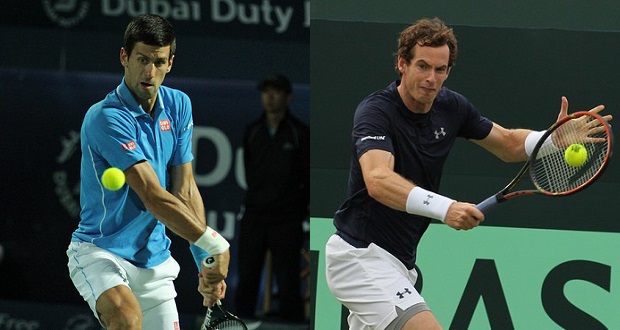
    Novak Djokovic Andy Murray

    When Novak Djokovic and Andy Murray contest a tennis match, it brings to mind to me Djokovic staring at a tilted mirror. Both players are in essence counterpunchers. Both rely on superior movement, low error rates, and superior defensive skills to confound most opponent’s efforts. Novak looks across the net and will see much of himself reflected back in Andy. It is a tilted reflection, though, as Murray will often seem further back than Djokovic in their baseline exchanges, Novak’s own strokes sending the ball farther than those that are being sent back. That is the essence of the matchup: The offensive counterpuncher in Djokovic doing pretty much everything the defensive counterpuncher Murray can do, only better.

    [divider]

    Click here to discuss the Djokovic/Murray Australian Open final in the Discussion Forum.

    [divider]

    Djokovic is perhaps playing the best tennis the men’s tour has witnessed in many years. He looks untouchable. Although he lacks the flare of Federer in his prime, the explosiveness of Nadal in his heyday, he looks somehow more complete than either in their own periods of domination, less liable to upsets or struggles on a specific surface. Nadal could always be counted upon to trouble Federer, whilst a Davydenko or Blake could make Rafa look amateur on a hard court at times. Nobody comes to mind that can be a regular thorn in Novak’s side, rather the current status quo of a Wawrinka pummelling him on rare occasions, or Federer seizing the initiative on fast courts in the Middle East or North East America.

    Seizing the initiative sums up rather nicely what Djokovic is doing. Though a counterpuncher, he is continuing to show his natural ability as an offensive baseliner. He is serving big, stepping into the court, and unloading on balls with natural and seemingly increasing power. He is not content to ride out storms against Federer or Nadal; he is actively seeking to deny their like of getting any momentum at all by attacking with controlled aggression.

    Needless to say this presents Murray with an instant uphill climb. He will be able to stay with Djokovic physically better than arguably anyone else on tour. Little separates the two in terms of speed and conditioning, but Murray I believe will suffer on two counts of positioning. Firstly, Murray does not hog the baseline, rather stands well behind it. This allows Novak to dictate from the off, sending his man into the far reaches of the court and opening up space for easy winners, regardless of Murray’s speed. The other is the position of Murray’s shots. Unlike the Lendl days, Murray is content again to revert back to rallying mode. The shots are often pushed into play, particularly with his weaker forehand, sitting up in the centre of the court where the Serb can merrily swat them away for winners or forcing Murray into the defensive.

    Murray’s last win at a Major against Novak was in 2013; he is 0-3 against him in them since, and has won just one of their last eleven matches overall. Furthermore, he is 9-21 in their entire head-to-head series — not a terrible number, but hardly encouraging, especially as Djokovic has grabbed their rivalry by the scruff of the neck since Murray’s 2013 Wimbledon triumph. Murray’s biggest wins against Novak have also occurred on the slicker surfaces of London’s grass or the fast hard courts of Canada, Cincinnati, and New York. He is no slouch on the slower hard courts, reaching four finals in Melbourne, as well as winning two Miami Masters titles. His relative lack of power and defensive style, though, leave him with his work cut out on slower surfaces.

    All is not lost for Murray. I think his first serve at its best is better than the Serb’s, albeit less reliable. I think Murray also has softer hands, and choice attacks at the net could prove bountiful for him. The Australian crowd are definitely the most sporting of the four Majors, and definitely have taken to Djokovic more than their three counterparts. From experience, though, they have always backed Murray more when the two have met here, perhaps out of the Aussie appreciation for the underdog, as well as for a fellow member of the Anglosphere. Crowd support for Murray could spur him on if he were to take an early lead, as well as rile Djokovic, often acutely sensitive to the biases of those in the audience. Murray fans could also take heart from the Djokovic vs. Simon match. The Frenchman, my favourite defensive counterpuncher on tour, has sometimes been labelled derogatorily as a ‘poor man’s Murray’. Both play similar styles, though Murray has more weapons and variety. If Simon can stretch Djokovic to five sets and make him produce 100 errors, it’s more than conceivable Murray could better that.

    All things being equal, such is Novak’s form, dominance of the tour and of Melbourne; it is hard to see him not triumphing tomorrow. I believe Murray will contest and win a couple more Major finals before his career is over, but I feel the only haul he will add to in this year’s Australian Open is his runner-up plates.

    Novak to win in four sets.

    [divider]

    Cover Photo (Creative Commons License): Marianne Bevis

  • Murray Vs. Raonic: Australian Open Semifinal Preview

    Murray Vs. Raonic: Australian Open Semifinal Preview

    Andy Murray Milos Raonic

    Raonic vs. Murray has the potential to be a very interesting match. It’ll certainly provide a nice contrast of styles.

    Murray is the game’s consummate defensive counterpuncher — his speed, efficient groundstrokes, and low error rate all combine to make him a shoe-in for the latter rounds of this Major, played on a medium-to-slow variant of his favourite hard surface.

    [divider]

    Click here to discuss the Murray/Raonic semifinal in the Discussion Forum.

    [divider]

    Raonic’s eight titles to date have also been on his favoured surface of hard courts. Although his height and relative lack of mobility aren’t helpful on a slower surface, as in Australia, his serve — up there in the top four in the world, arguably — combined with a renewed commitment to dictate offensively with his forehand, as well as attacking the net, do much to nullify the surface’s pitfalls. He is enjoying quite a streak in Australia, winning in Brisbane this month and progressing through five rounds in Melbourne to contest his second Major semifinal.

    Both players are tied at three wins apiece in their head-to-head series, although Murray has won their sole meeting at Slam level. The Scot certainly starts off as clear favourite in this match, a two-time Major Champion, four times a finalist in Melbourne, and owning four times as many trophies in his cabinet than his Canadian opponent. He will be the last person, though, to underestimate Raonic Mark III that we have been seeing of late.

    Although Murray stands to benefit if this becomes a baseline war of attrition, where he can move his man about and outfox him as he has done so many times before to taller, slower opponents, it would be folly to revert to his passive comfort zone. Raonic is likely to be able to hold the majority of his service games, even against Murray, a player with returning prowess second only to Djokovic. Also, if Raonic sees a lot of Murray’s weak second serves to swat away at leisure, as well as the Scot’s weaker forehands landing in the middle of the court as they often are liable to do, he will be able potentially to dictate the rallies and put Murray on the defensive.

    I like what I have been seeing from Raonic of late, and I hope he continues this rich vein of form into the rest of the season. Such is the calibre and experience of Murray, though, I believe that this will alas be a bridge too far for the amiable Canadian.

    Murray to win in four sets.

    [divider]

    Cover Photo (Creative Commons License): Marianne Bevis

  • 2015 Davis Cup Final: Belgium vs. Great Britain Preview

    2015 Davis Cup Final: Belgium vs. Great Britain Preview

    18878832862_91772508ae_z

    This year has been a strange one for the Davis Cup. The usual contestants all disappeared early as France, the Czech Republic, and defending champion Switzerland all lost before the semifinals. As the dust settles, we are left with an unlikely matchup of unseeded teams in the final. Both Great Britain and Belgium upset several higher-ranked teams to get where they are. For Great Britain, it is their first final since 1978; if they win, it will be their first Davis Cup title since 1936. For Belgium, it is their first final since 1904; if they win, it will be their first-ever Davis Cup title.

    [divider]

    Click here to discuss the Davis Cup Final in the discussion forum.

    [divider]

    The Great Britain team starts and ends with Andy Murray. He has won all five singles matches, as well as the two doubles matches he has played this year. James Ward was the hero in the first round when he defeated John Isner 15-13 in the 5th set to give Great Britain a 2-0 lead. In the final, the No. 2 spot will be between Ward and Kyle Edmund. It’s pretty obvious that the Murray brothers will be teaming up for the doubles after their heroics against France and Australia.
    In a similar way, David Goffin is the center of the Belgian team. They need two wins from their star player if they hope to take home one of the best trophies in all of sports. Steve Darcis may be more important in the No. 2 singles slot than their doubles team.

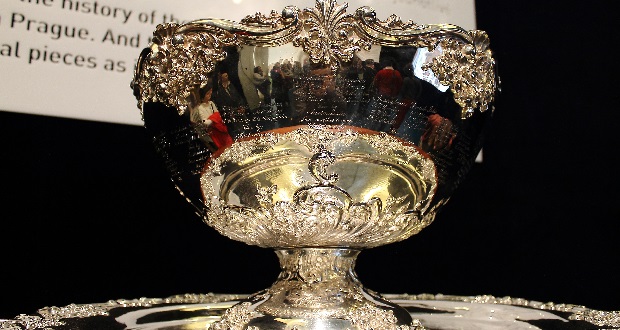
    The Davis Cup Trophy
    The Davis Cup Trophy

    How They Got Here:
    Great Britain defeated the United States 3-2, and then upset top-seed France in the quarterfinals. After tying it up with a win over Jo-Wilfried Tsonga on clay, the Murray brothers fought out a tough four-set doubles win over Tsonga and Nicolas Mahut.  Murray’s amazing determination to get a comeback win over Gilles Simon seemed to be the turning point for the British team. It was suddenly from this point that a Davis Cup championship for Great Britain didn’t seem like such a crazy idea. I still don’t know how Murray won that match, but that was the pivotal point of the season for this team.
    In the semifinals, Great Britain may have been lucky with all the hoopla surrounding Bernard Tomic (on the team, off the team, on the team) and Nicholas Kyrgios (timeout for you!). With Kyrgios excused from the team, Murray took care of Tomic and Kokkinakis, and in the doubles teamed up with Jamie to come from a set down to get the win. That five-set doubles match may have been the match that decided the 2015 Davis Cup champion. Lleyton Hewitt was playing in his final Davis Cup, and alongside Sam Groth, threw everything they had at the Murray Brothers, but the Murrays came from behind to win 4-6, 6-3, 6-4, 6-7(6), 6-4.

    As for Belgium, they were also the underdogs in every round. They were fortunate to draw a Federer/Wawrinka-less No. 2 Swiss team in the first round but still barely won 3-2. In the quarterfinals against the No. 8 team, Canada, they were again fortunate in that Raonic and Pospisil were out with injuries, so they won easily 5-0.
    Against the No. 5 team, the favored Argentina, Goffin won both of his singles matches, but they dropped the doubles and it looked over, but somehow Darcis came through for the Belgians and defeated the higher-ranked Federico Delbonis and sent the Belgians to the final for the first time in 111 years.

    Both teams have been fortunate in getting to the final but here they are. There is no mistaking that this is Murray’s and Goffin’s teams. Each team has needed their unlikely heroes (Ward and Darcis), but whether they win or not depends on the performances of their star players.

    Predictions:
    Singles: Andy Murray (2) vs. David Goffin (16)
    Murray leads the head-to-head 2-0. Goffin has yet to win a set off Murray. We all saw the beat down that Murray put on Goffin at the Paris Masters where he allowed Goffin only one game. Murray is definitely the favorite here. The things Belgium must count on are the clay court, Murray’s fatigue from the World Tour Finals, and the home-court advantage. That probably won’t be enough for Goffin to be able to upset a determined Murray. Great Britain 1-0 Belgium

    Singles: Steve Darcis (84) vs. Kyle Edmund (100) or James Ward (159)
    Darcis has to win here to give Belgium a chance. Neither Edmund nor Ward have played Darcis before, but just from Davis Cup experience and ranking, you would have to give the edge to Darcis. But it’s a small edge. Tied 1-1

    Doubles: Andy and Jaime Murray vs. Rueben Bemelmans and Kimmer Coppejans (or Steve Darcis)
    After their heroics in the last two rounds, you have to expect Great Britain will go with the Murray Brothers. Belgium has gone with a different team each time. Bemelmans (doubles ranking No. 160) had three different partners in the first three rounds, so it’s tough to guess with whom he will team up. Coppejans (doubles ranking No. 501) might be our best bet but the Belgian team might go with Darcis (doubles ranking No. 596). Still, Great Britain has Jamie Murray, one of the best doubles players at the moment, so the British look good here. Great Britain leads 2-1

    Singles: Andy Murray vs. Steve Darcis
    This is their first meeting but it’s difficult to imagine Murray going down to Darcis after the solid, consistent season he had and with so much riding on the line. Great Britain leads 3-1

    Singles: David Goffin vs. Kyle Edmund or James Ward
    Goffin has never met either British player, but he would have to be favored in this one. That is to say, if there is a fifth match. Great Britain leads 3-2

    Past Records:
    Great Britain will be playing in its first final since 1978, and they will be trying to win their first Davis Cup title since 1936 (their 10th overall). Belgium is in its first final since 1904, and it would be their first title if they win. The two countries have met in Davis Cup competition 11 times. Great Britain has won seven of the meetings, but Belgium won their most recent meeting in 2012.

    Fun Fact:
    Team Great Britain has defeated the top three teams with the most Davis Cup championships to get to the final: United States (32), France (9), and Australia (28).

    Prediction:
    Great Britain wins 3-2 on the strength of three Murray wins for its first Davis Cup championship in 79 years.

    Request:
    If Great Britain does win, they better give Judy Murray a Davis Cup trophy of her own!

    Prayer:
    May there be no terrorism and may all the players, fans, and people working at the venues be safe.

    [divider]

    Cover Photo (Creative Commons License): Marianne Bevis (Andy Murray), Tatiana (David Goffin) and elPadawan (Davis Cup trophy).

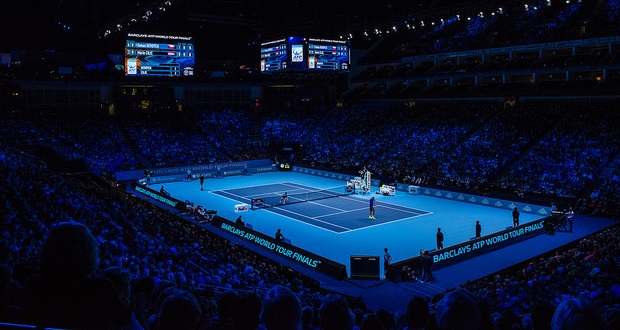
  • 2015 ATP World Tour Finals Preview

    2015 ATP World Tour Finals Preview

    15612895007_1565dcee0d_z

    ‘The end is here’ ‘The Final showdown’ ‘The Stage Is Set’ ‘Insert overdramatic cliché’. Yes, ATP overkill at its finest. But cynicism aside, I am of course looking forward to the season ending shindig in London. It is a pleasure to see the best players in the world battle it out for a colossal sum of money and ranking points. Not bad for a week’s work, that’s for sure.

    There is little change in the line-up since last year’s event, with Nadal and Ferrer replacing Milos Raonic and Marin Cilic in the eight man field, although Ferrer was an alternate last year. The event is a great yardstick of both season long consistency, but even more so of longevity. This shall be Berdych’s sixth straight year of qualification, Ferrer’s fifth, Djokovic’s ninth and one Mr Roger Federer’s fifteenth. The other four meanwhile have all made multiple appearances, again a testament to the depth and quality atop the men’s game.

    On the subject of depth and quality, Novak Djokovic stands a head higher than even his closest competitors at the event, and as I breakdown the draws and offer my thoughts, it becomes clear: All roads pass through Novak in the quest to haul in the trophy a week from Sunday.

    Group A

    This group, consisting of Djokovic, Federer, Berdych and Nishikori, is for me the more likely of the two to see the big names advancing.

    Novak leads Berdych a lopsided 20-2 in their head to head, never having lost to the Czech on a hard court. Berdych has enjoyed some form this autumn, but even his biggest shots seem to make little indentations in the Serb’s defences. Nishikori has enjoyed a bit more success against Djokovic, winning two of their six matches, including at the US Open last year. In addition, Nishikori pushed Novak at the World Tour Finals last year in one of the few matches that weren’t duds. With Kei’s lack of matches lately though, and Djokovic’s imperious form, I suspect Djokovic to come through these two hassle free.

    Federer, although not as dominant over the afore mentioned pair as Djokovic, still enjoys healthy head to heads against both. Against Berdych the Swiss leads 14-6. Berdych does not seem to have as big a block against Roger compared to the more defensive members of the ‘big four’, his big game when clicking can overcome him, including twice in Slams. Federer has not lost to Tomas though since an injury plagued 2013, winning the last three matches. I think Berdych could trouble the Swiss, especially when one looks at his recent loss to the big hitting Isner in Paris, but the court in London has in recent years yielded a slower bounce, which should aid Federer in nullifying Berdych’s power.

    What of the marquee matchup between the two most successful players of the season? It seems strange for Novak and Roger to meet in the round robin stage of the tournament, but that is the nature of rolling rankings and contributes towards the excitement of this unique event. There is little to choose between the pair going into the tournament, Federer triumphing in Basel, Djokovic a week later in Paris. Both are in fine fettle, and play some of their best indoors. Based on his sheer dominance in the last few months, Novak for me edges their encounter.

    Group Winner: Djokovic

    Group Runner Up: Federer

    Group B

    The other group, consisting of Murray, Wawrinka, Nadal and Ferrer, offers more in the way of unpredictability and intrigue than the first.

    Murray is in a rich vein of form, reaching the Paris Masters final before falling tamely to Djokovic. He will benefit from home crowd support, and is a fine indoor player. Although trailing Nadal 6-15 in their head to head, this is not the same Nadal of late, Murray beating him on the home clay of Madrid in their last meeting this year. Murray has had a better season, and I think in terms of speed, fitness and form the Scot starts out as favourite against Rafa. In his last meeting with Ferrer, recently in Paris, he overcame him in two straight forward sets, and leads their series 11-5, as well as having won their last three indoor meetings. Ferrer has enjoyed a successful autumn, but Murray would start as a clear favourite. Murray’s match with Wawrinka should prove to be the hardest. While he leads the Swiss 8-4, Stan won their last two encounters in 2013, and they have not met since in a period where he became a two time slam winner. I would not be surprised to see Wawrinka power through the Scot, as he did last time they met.

    Stan Wawrinka comes to London having enjoyed the best year of his career. Nadal was long a nemesis for him, leading their head to head 13-3. Stan has put things to rights in recent years however, winning three of their last four meetings,  including on Nadal’s beloved clay earlier this year, and then in two pulsating sets in Paris in similar conditions to London last week. If Wawrinka hits his offensive stride, I see him edging the Spaniard. Against Ferrer meanwhile, Stan, whilst trailing 6-7, he has won their last three meetings. Ferrer can certainly hang in there with the more powerful Swiss, still prone to bouts of inconsistency, but Stan remains the favourite.

    Nadal has done well in making the finals in London, having a rather modest year by his lofty standards, winning just three minor titles. He has qualified the hard way, but qualified all the same. He has shown some good form in the indoor season, stretching Federer, perhaps the greatest indoor player in history, to three sets in the Basel Final, before falling in a tight quarterfinal last week in Paris. I have already above given two opponents an edge over Nadal in his group, and I struggle to see him making the semi-finals this year. All the same, it would be a great end to the year for Nadal to score a win against his friend and rival, the dogged David Ferrer. Rafa enjoys a 23-6 lead in their matches, and won their sole meeting this year in Monte Carlo. Ferrer is nevertheless an effective indoor player, coming into London with two trophies at indoor events. Furthermore, four of his six wins against his compatriot were on hard courts, two of them indoors. This match represents both men’s best chances of a win in London, and the accompanying $167,000 and 200 ranking points. Expect an entertaining slugfest in their final encounter of the year.

    Group Winner: Murray

    Group Runner Up: Wawrinka

    Semi-Finals

    Federer Defeats Murray

    Djokovic Defeats Wawrinka

    Final

    Djokovic Defeats Federer

    [divider]

    Link to author Daniel Edwards’ blog

    Cover Photo (Creative Commons License): Marianne Bevis

  • 2015 Paris Masters Final Preview

    2015 Paris Masters Final Preview

    16488000050_dd1b349571_z

    Novak Djokovic increasingly looks as if he has this rivalry with Andy Murray by the scruff of the neck. The Serb leads their head to head series 20-9, and has won nine of their last ten matches since Murray triumphed over him at Wimbledon in 2013. It was looking increasingly like one way traffic until the Scot stopped the rot with a win last August in the title match of the Rogers Cup. Make no mistake though; Djokovic seemingly has Andy’s number nowadays.

    I think when these two contest best of three matches; they are as a rule higher quality affairs compared to their best of five encounters. Both men play pretty similar games, predicated on defence, drawing the error and creating openings for more aggressive plays. I have noticed that in some of their Slam encounters, in Australia or at Flushing Meadows in particular, the buffer created by a finish line that is farther away can lull both into a defensive complacency, leading neither in the early stages to take charge and resulting instead in rallying affairs. In contrast, the three set matches seem to inject in both men a sense of urgency, and thus willingness to be the aggressor and forced the issue. Two of the best matches the pair have contested were contested in the three set format, their 2012 encounters at The Olympics and Shanghai were high octane matches where both players came out guns blazing, eager to put away each other.

    It remains to be seen whether today’s clash in the final of the Paris Masters shall deliver the same quality. In their last meeting, the semi-finals of Shanghai, Murray surrendered rather tamely to Djokovic in two lopsided sets. In addition, Novak likes these courts, medium paced for an indoor event; he is the two time defending champion. I will always give Novak an edge on a medium to slow hard court against Murray, especially in controlled indoor conditions. One wonders as well what motivation Murray will have to go all out, what with the World Tour Finals looming, not to mention the Davis Cup final, an event he is prioritising.

    I believe two key shots of Murray’s will lead to a Djokovic victory this afternoon. The Scot’s forehand is liable to landing in the middle of the court, and I think Novak will waste little time in taking charge of the rally when this inevitably happens. In addition, whilst Murray possesses a good first serve, it is not a high percentage shot, thus he will have to hit a fair number of second serves. This shot is arguably the Scots weakest, often only hit at around 80 miles per hour. Against the greatest returner in the world, and perhaps in the history of the sport, he is more often than not punished when attempting the second delivery. All is not lost for the second seed though. He won his semi-final against Ferrer in routine fashion, earlier in the day than when Novak beat Wawrinka in three sets. He should be fresh for this encounter. Nevertheless, I expect Novak to continue in his rich vein of form and make it three Paris titles in a row.

    Djokovic to win in straight sets.

    [divider]

    Cover Photo (Creative Commons License):  Marianne Bevis


  • 2015 Rogers Cup Review

    2015 Rogers Cup Review

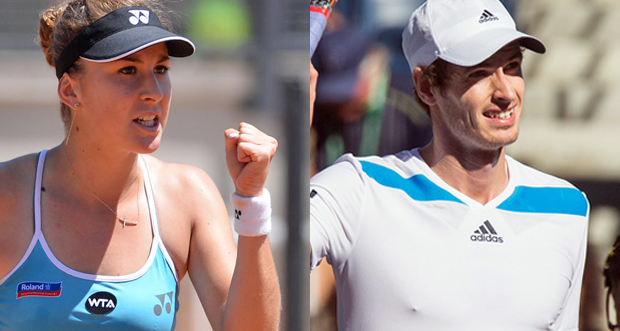
    Andy Murray Belinda Bencic Rogers Cup

    One week ago, as the men began play in Montreal and the women started play in Toronto, the main talking points were about the performances of Novak Djokovic and Serena Williams and how they would start their preparation for the upcoming U.S. Open, as well as the performances of the Canadian stars playing in their home country’s Masters/Premier event. But the tennis fans were treated to a whole lot more than they ever expected this week.

    Finally, At Long Last, About Time!
    The numbers were repeated over and over again. Andy Murray had not beaten Novak Djokovic since his dramatic win at Wimbledon in 2013. The losing streak had built up to eight consecutive losses. Murray would play outstanding tennis in a tournament, only to be turned away time and again by Djokovic. Even when Murray demolished Kei Nishikori in the semifinals, there was still the feeling that Murray may challenge Djokovic but in the end fall short as always. The turning point came in the fifth game of the third set. The 18-minute game went to deuce 10 times and Djokovic had six break points, but on this day Murray refused to surrender. Somehow, he held on to that game. Still, Djokovic fought off three match points serving at 2-5, and then had his own chance to get back on serve in the next game but Murray finally sealed the 6-4, 4-6, 6-3 win on his fifth championship point. A big old monkey jumped off Murray’s back and the upcoming U.S. Open just got a whole lot more interesting.

    A New Star Arrives
    We have another Swiss Superstar coming onto the scene. This may not have been a Grand Slam, but when you defeat the home crowd’s darling and former Wimbledon finalist in round one, a former World No. 1 and the current No. 5 in round two, another former Wimbledon finalist in round three, another former World No. 1 and the current No. 6 in the quarterfinals, the World No. 1 and the holder of all four Grand Slams in the semifinals, and finally a former French Open finalist and World No. 3 in the final, people are going to notice. Belinda Bencic won her second title of the year and will move up to No. 12 in the new rankings. There is no doubt all eyes will be on her at the U.S. Open. Bencic could be the real deal.

    World No. 1’s Denied
    Most expected Djokovic and Serena to come away with the titles this week, but shockingly, both were denied. Djokovic just couldn’t finish off Murray in his usual style, and Serena let Bencic back into the match after dictating things through most of the first set. Still, even though they left town without a title, you get the feeling that they will fine tune their tennis in Cincinnati, and will be raring to go when the year’s last Grand Slam rolls around. They are still the ones to beat and that’s not going to change any time soon.

    Home-Ain’t-So-Sweet Home
    Clicking on the website of the Rogers Cup last week, tennis fans’ computer screens were immediately covered with huge pictures of Milos Raonic and Eugenie Bouchard. Along with Vasek Pospisil and six other wild cards to represent Canada, expectations were there despite Raonic’s recent struggles and Bouchard’s dismal season. Raonic was upset by Ivo Karlovic in his first match, Bouchard lost to eventual champion Bencic in the first round, and the only Canadian wildcard to win a match, Vasek Pospisil, lost in the third round to John Isner. It was a tournament to forget for the Canadians.

    The Walking Wounded
    We’re only halfway through August but there are a disturbing number of absences, dropouts, retirements, and injuries. Both World No. 2’s Roger Federer (cutting back on schedule) and Maria Sharapova (injury) were absent. Simona Halep had to retire in the final set of the women’s final. Kei Nishikori was clearly hampered in his one-sided loss to Murray in the semifinals. Raonic still does not seem to be fully recovered from his foot injury. Stan Wawrinka retired during his infamous match with Nick Kyrgios. Caroline Wozniacki was also struggling with an injury in her early round loss. The hard-court season only gets tougher from here so this could be a chance for some young players to break out of the early rounds and even score some upsets, just as Bencic did in Toronto.

    The Sledge
    How many people really knew what “sledge” meant before this tournament? Everyone has seen multiple reports of what happened whether they wanted to or not. In one of the ugliest matches in recent memory, Kyrgios managed to insult Stan Wawrinka, fellow Australian Thanasi Kokkinakis, a young WTA player from Croatia, and pretty much the entire tennis community. He was fined $10,000, and still could be suspended by the ATP. There are some serious problems with Kyrgios, and it appears that no one really knows what to do with him. Tennis Australia has asked fellow Australian and veteran Lleyton Hewitt to act as an advisor for the young Australian, but boy does Hewitt have his work cut out for him.

    In the End, It’s All About Tennis
    Despite all of the media storm over one comment made by a misguided player, tennis proved to be a sport that wipes away the sludge and the sledges with inspiring performances. With Murray’s spirited effort to finally break through Djokovic and Bencic’s fantastic string of wins, the hard-court season finally seems like it’s here — and it’s only going to get more interesting.

    [divider]

    Cover Photo (Creative Commons License): kulitat / mirsasha

  • 2015 Davis Cup Quarterfinals Review

    2015 Davis Cup Quarterfinals Review

    Davis Cup

    The 2015 Davis Cup quarterfinals were held across the world during July 17-19. As usual, they provided drama, comebacks, upsets, and promise. There was a country crumbling without its injured top players, and a heroic performance by a two-time Major champion playing his last season. There were two brothers carrying the hopes of a country on their shoulders, and a country getting closer to the title it has never won but so desperately wants. It was a great week for the sport of tennis, no matter who was playing.

    Middelkerke, Belgium: Injury-riddled No. 8 Canada loses to Belgium. Canada was the higher seed, but with No. 8 Milos Raonic and No. 30 Vasek Pospisil out with injuries, the Canadians were the clear underdogs. Belgium, led by No. 14 David Goffin, had absolutely no trouble. They dropped only two sets on the way to a 5-0 sweep, allowing Belgium to advance to its first semifinal since 1999.

    Buenos Aires, Argentina: No. 5 Argentina knocks out Djokovic-less No. 4 Serbia. Without Serbia’s World No. 1 Novak Djokovic in the lineup, Serbia and Argentina looked to be pretty evenly matched. It looked like things would be going down to the fifth match on Sunday, but then Delbonis happened. Argentina won the first match of the day but Viktor Troicki looked to have Serbia right back in it when he won the first two sets against the Argentine. Then a Wimbledon flashback occurred: Just as he had done in the fourth round against Pospisil, Troicki couldn’t finish the job, and Delbonis scored a huge comeback win and a massive blow to Serbia’s hopes of getting through without their No. 1 player. Argentina took a surprisingly easy three-set win in the doubles on Saturday, and advanced to their first semifinal since 2013.

    Darwin, Australia: Australia’s youth drop the ball, but the veterans save the day. Australia seemed to have a bright future in Davis Cup at the beginning of the year, but those hopes have taken a bit of a hit lately. Australian No. 1 Bernard Tomic got kicked off the team and then managed to get himself arrested in Miami, Florida, a few days before competition began. Nick Kyrgios carries drama wherever he goes. Aussie Captain Wally Masur, eye firmly on the future, went with his young stars in the first two matches: No. 41 Nick Kyrgios, and No. 69 Thanasi Kokkinakis. They managed to win one set between them. Australia was suddenly staring at a 0-2 hole. Sam Groth and Lleyton Hewitt teamed up to win the doubles point, and now Masur had a decision to make: youth or experience. He went with experience. He ditched Australia’s future for the time being and sent out Groth for the first match. It was very close and a few points would have changed the outcome but Groth gutted out a hard-fought four-set victory to tie everything up at 2-2. Then Lleyton Hewitt took the court. His ranking has dropped to No. 279, and it looked like Australia might be heading home early. But never count out Hewitt. In what could have been his 77th and final Davis Cup match, Hewitt took a first set tiebreak and never looked back, winning in straight sets and sending Australia to their first semifinal since 2006.

    London, England: Standing on the shoulders of Murrays. The No. 1 team in the world, France, with its loaded lineup and Davis Cup experience, had to be thinking this year was going to be the year they finally lifted (or sat on it, actually, since it’s so huge) the Davis Cup for the 10th time, and for the first time since 2001. After splitting the first two matches, Great Britain’s captain Leon Smith decided to go with Andy and Jaime Murray. It was a big gamble but the Brits absolutely needed this doubles match to have a chance. The Murray brothers came through. Jaime, with his world doubles ranking of No. 20 and a recent runner-up finish in the men’s doubles at Wimbledon, led the way and played some inspired tennis to grab the win after dropping the first set. Suddenly, Great Britain had a 2-1 lead and only needing a win by Andy Murray over Gilles Simon on Sunday to beat France for the first time since 1978. Simon had been playing very well lately, with a quarterfinal finish at Wimbledon. For the first two sets, Simon played brilliantly and Murray was tentative, no doubt feeling all the pressure from his home country on his shoulders. With Simon up a set and leading 4-1 in the second set tiebreak, things looked a bit bleak for Great Britain. Then Murray gritted his teeth and somehow, someway took the second set tiebreak. With that behind him, he started playing much better and Simon was the one who became tentative. Murray quickly wrapped up the match in four sets. The enormous pressure finally got to Murray and he broke down on court-side after the match. One thing is for certain: if Great Britain actually wins the Davis Cup this year, they had better send Mama Judy Murray a trophy of her own.

    The semifinals of the 2015 Davis Cup will be on September 18-19, with Great Britain hosting Australia, and Belgium hosting Argentina.

    [divider]

    Cover Photo (Creative Commons License): elPadawan