Blog

  • National Tennis Careers – Part Six: Summing Up

    National Tennis Careers – Part Six: Summing Up

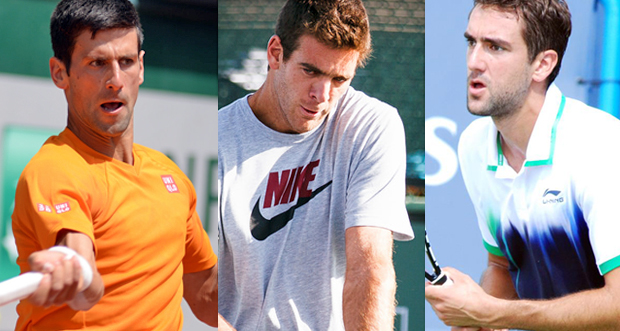
    Novak Djokovic Juan Martin del Potro Marin Cilic

    After surveying Open Era tennis through the five nations with the highest Slam totals, we’re left with a few questions and unexplored areas which I’ll try to tackle in this concluding segment.

    [divider]

    Click here to discuss National Tennis Careers – Part Six: Summing Up in the discussion forum.

    [divider]

    Who’s left?
    The “big five” tennis nations include many, even most, of the all-time greats of the Open Era. Let’s take a look at the other nations and their players by Slam count:

    Czechoslovakia/Czech Republic (12): Ivan Lendl (8), Jan Kodes (3), Petr Korda (1).
    Serbia (9): Novak Djokovic (9)
    Germany/West Germany (7): Boris Becker (6), Michael Stich (1)
    Argentina (6): Guillermo Vilas (4), Gaston Gaudio (1), Juan Martin del Potro (1)
    Russia (4): Yevgeny Kafelnikov (2), Marat Safin (2)
    Brazil (3): Gustavo Kuerten (3)
    Croatia (2): Goran Ivanisevic (1), Marin Cilic (1)
    Romania (2): Ilie Nastase (2)
    South Africa (2): Johan Kriek (2)
    United Kingdom (2): Andy Murray (2)
    Austria (1): Thomas Muster (1)
    Ecuador (1): Andres Gomez (1)
    France (1): Yannick Noah (1)
    Italy (1): Adriano Panatta (1)
    Netherlands (1): Richard Krajicek (1)

    Before Djokovic is through, Serbia’s Slam count should surpass that of the Czechs as a whole.

    Slavic Surge?
    I almost titled this last part “Slavic Surge!” because it would seem that the tennis from Slavic countries has been on the rise. But it wasn’t quite as extreme as I thought. There are some strong Slavic players currently in their peaks, namely Djokovic, Berdych, Cilic, and Karlovic. There are some younger players with some upside, including Damir Dzumhur (23, No. 100), Grigor Dimitrov (24, No. 16), and Jiri Vesely (22, No. 45). But there is only one player that looks like a potential future star, and that is the 18-year-old Croatian Borna Coric, who is currently ranked No. 37. So while Slavic tennis is strong, it is hardly dominant (Novak aside).

    Possible Future Slam Winning Countries
    So who might the next Slam winners be? Specifically, which countries have the most possible future Slam winners? Well, that is for a future study that I’m working on. But I will say that as we’ve seen in the previous segments, there isn’t much on the horizon for Spain or Switzerland, and only really the Ymer brothers in Sweden; in the US there are a few prospects, and Australia at least has “K&K”: Kyrgios and Kokkinakis.

    All in all there doesn’t seem to be a central location for tennis right now or the foreseeable future. We can sum up the Open Era by looking at early dominance by Australians, namely Ken Rosewall, Rod Laver, and John Newcombe, then the rise of Americans in Jimmy Connors and John McEnroe, and Sweden in Bjorn Borg, Mats Wilander, and Stefan Edberg. Along with German Boris Becker and Czech Ivan Lendl, Americans and Swedes dominated tennis from the mid-70s into the early 90s, with Sweden dropping off as Edberg retired, but the United States remained dominant into the 21st century, led by Pete Sampras and Andre Agassi. But then the US dropped off precipitously, and Switzerland and Spain took up the rulership of men’s tennis, with Serbia playing its part.

    What the future will bring, well, it is a truly global world out there. There’s no sign of any of the five great tennis nations regaining their dominance. There are some glimmerings of improvement in Australia, and a bit in the US, but nothing substantial or worthy of the term “future dominance.” We’re going to see a shared effort, it would seem.

    [divider]

    Cover Photo (Creative Commons License): kulitat / mirsasha / Kiu Kaffi
  • 2015 Davis Cup Quarterfinals Review

    2015 Davis Cup Quarterfinals Review

    Davis Cup

    The 2015 Davis Cup quarterfinals were held across the world during July 17-19. As usual, they provided drama, comebacks, upsets, and promise. There was a country crumbling without its injured top players, and a heroic performance by a two-time Major champion playing his last season. There were two brothers carrying the hopes of a country on their shoulders, and a country getting closer to the title it has never won but so desperately wants. It was a great week for the sport of tennis, no matter who was playing.

    Middelkerke, Belgium: Injury-riddled No. 8 Canada loses to Belgium. Canada was the higher seed, but with No. 8 Milos Raonic and No. 30 Vasek Pospisil out with injuries, the Canadians were the clear underdogs. Belgium, led by No. 14 David Goffin, had absolutely no trouble. They dropped only two sets on the way to a 5-0 sweep, allowing Belgium to advance to its first semifinal since 1999.

    Buenos Aires, Argentina: No. 5 Argentina knocks out Djokovic-less No. 4 Serbia. Without Serbia’s World No. 1 Novak Djokovic in the lineup, Serbia and Argentina looked to be pretty evenly matched. It looked like things would be going down to the fifth match on Sunday, but then Delbonis happened. Argentina won the first match of the day but Viktor Troicki looked to have Serbia right back in it when he won the first two sets against the Argentine. Then a Wimbledon flashback occurred: Just as he had done in the fourth round against Pospisil, Troicki couldn’t finish the job, and Delbonis scored a huge comeback win and a massive blow to Serbia’s hopes of getting through without their No. 1 player. Argentina took a surprisingly easy three-set win in the doubles on Saturday, and advanced to their first semifinal since 2013.

    Darwin, Australia: Australia’s youth drop the ball, but the veterans save the day. Australia seemed to have a bright future in Davis Cup at the beginning of the year, but those hopes have taken a bit of a hit lately. Australian No. 1 Bernard Tomic got kicked off the team and then managed to get himself arrested in Miami, Florida, a few days before competition began. Nick Kyrgios carries drama wherever he goes. Aussie Captain Wally Masur, eye firmly on the future, went with his young stars in the first two matches: No. 41 Nick Kyrgios, and No. 69 Thanasi Kokkinakis. They managed to win one set between them. Australia was suddenly staring at a 0-2 hole. Sam Groth and Lleyton Hewitt teamed up to win the doubles point, and now Masur had a decision to make: youth or experience. He went with experience. He ditched Australia’s future for the time being and sent out Groth for the first match. It was very close and a few points would have changed the outcome but Groth gutted out a hard-fought four-set victory to tie everything up at 2-2. Then Lleyton Hewitt took the court. His ranking has dropped to No. 279, and it looked like Australia might be heading home early. But never count out Hewitt. In what could have been his 77th and final Davis Cup match, Hewitt took a first set tiebreak and never looked back, winning in straight sets and sending Australia to their first semifinal since 2006.

    London, England: Standing on the shoulders of Murrays. The No. 1 team in the world, France, with its loaded lineup and Davis Cup experience, had to be thinking this year was going to be the year they finally lifted (or sat on it, actually, since it’s so huge) the Davis Cup for the 10th time, and for the first time since 2001. After splitting the first two matches, Great Britain’s captain Leon Smith decided to go with Andy and Jaime Murray. It was a big gamble but the Brits absolutely needed this doubles match to have a chance. The Murray brothers came through. Jaime, with his world doubles ranking of No. 20 and a recent runner-up finish in the men’s doubles at Wimbledon, led the way and played some inspired tennis to grab the win after dropping the first set. Suddenly, Great Britain had a 2-1 lead and only needing a win by Andy Murray over Gilles Simon on Sunday to beat France for the first time since 1978. Simon had been playing very well lately, with a quarterfinal finish at Wimbledon. For the first two sets, Simon played brilliantly and Murray was tentative, no doubt feeling all the pressure from his home country on his shoulders. With Simon up a set and leading 4-1 in the second set tiebreak, things looked a bit bleak for Great Britain. Then Murray gritted his teeth and somehow, someway took the second set tiebreak. With that behind him, he started playing much better and Simon was the one who became tentative. Murray quickly wrapped up the match in four sets. The enormous pressure finally got to Murray and he broke down on court-side after the match. One thing is for certain: if Great Britain actually wins the Davis Cup this year, they had better send Mama Judy Murray a trophy of her own.

    The semifinals of the 2015 Davis Cup will be on September 18-19, with Great Britain hosting Australia, and Belgium hosting Argentina.

    [divider]

    Cover Photo (Creative Commons License): elPadawan

  • National Tennis Careers – Part Five: Switzerland

    National Tennis Careers – Part Five: Switzerland

    Roger Federer Stan Wawrinka

    The Maestro, Stan, and Some Other Guys

    When I began this series I was curious about Swiss tennis before Roger Federer took the tennis world by storm; I wondered whether there was some hidden jewel in the past who went under the radar due to lack of Slam wins but perhaps still had a strong career, perhaps the Swiss version of an Alex Corretja or Thomas Enqvist? Well, the simple answer is this: No, there wasn’t. There are a couple players who had decent careers, but really Swiss tennis began with Roger. And then Stan. And then…well, that’s about it.

    Let’s take a look at the Swiss tennis career:

    Switzerland Career

    That’s a pretty extreme picture. Consider that no Swiss player reached the 4th round of a Slam in the first ten years of the Open Era — not until Colin Dowdeswell made the 4th round of the US Open in 1978, defeated by a teenage John McEnroe. But even Dowdeswell was English-born, playing for Switzerland from 1977-81.

    Fast forward to 1985 and we have the first appearance by a Swiss player in a Slam quarterfinal in the Open Era, one Heinz Günthardt, who also appeared in the US Open quarterfinal that year, but never another Slam quarterfinal.  Günthardt won five career titles and had a career high ranking of No. 22; he was a better doubles player, with 30 titles to his name and a career high ranking of No. 3.

    1991 saw Jakob Hlasek reach the French Open quarterfinal where he was defeated by a 21-year-old Andre Agassi, and then five years later Marc Rosset reached the semifinal of the French Open where he was defeated by Michael Stich. Rosset also reached the quarterfinal of the 1999 Australian Open.

    So before Roger Federer, in the Open Era Swiss players only reached one semifinal and four quarterfinals.

    For those of us looking back, it is easy to forget the impact that Roger Federer had on the tennis world. He was a strong junior player, winning the 1998 US Open Junior final and ending the year with the No. 1 junior world ranking. His first professional tournament was also in 1998: Gstaad, where he lost in the first round to No. 88 Lucas Arnold Ker. To put that in historical context, Roger’s first pro tournament was when Bill Clinton was in the White House, Boris Becker was still playing tennis (he lost in that Gstaad final to Alex Corretja); it was also Pete Sampras’s last year as No. 1. Saving Private Ryan, There’s Something About Mary, and The Big Lebowski were in the movie theaters. In other words, it was a long time ago!

    A lot has been written about Federer elsewhere so I won’t go into too much detail, but over the next five years he gradually worked his way up, entering the Top 100 in 1999, then perhaps really gaining attention when he defeated a declining No. 6-ranked Pete Sampras in the 4th round of the 2001 Wimbledon. We didn’t know it at the time, but it was the passing of the baton from the only two seven-time Wimbledon champions (well, along with William Renshaw in the 19th Century). 2002 saw Federer enter the Top 10 and win his first Master’s, but it wasn’t until 2003 when he was almost 22-years-old that Federer won his first of seventeen Slams and the first of seven Wimbledon titles. He then proceeded to win 12 of the next 18 Slams, including all but five in the four years from 2004-07. It was a level of dominance not really seen in the Open Era.

    Roger’s reign was tarnished only by a young Spaniard named Rafael Nadal, who repeatedly kept him from winning the French Open and had the match-up edge overall. The baton was finally passed in 2008, a year that saw Roger suffer from mononucleosis. Roger regained the No. 1 ranking in 2009, but lost it again in 2010 and only gained it back for a short period in 2012. We can see now that Roger’s peak lasted from late 2003/early 2004 to early 2010, and he has been one of the two or three best players in the sport from 2003 to the present day – thirteen years of incredible consistency and elite performance perhaps unequaled in Open Era history.

    Five Greatest Swiss Players of the Open Era
    1. Roger Federer
    2. Stan Wawrinka
    3. Marc Rosset
    4. Jakob Hlasek
    5. Heinz Günthardt

    No. 1 and No. 2 are easy. Even before Stan’s rise to the top over the last few years, he’d probably rank as No. 2 – or at least similar to Rosset and Hlasek. But Wawrinka has been somewhat of a meteor recently, winning the two Slam finals he’s been in — over Nadal and Djokovic no less. He is 30 years old but shows no sign of declining. After that Rosset and Hlasek are close, but Rosset has eight titles to Hlasek’s two, although Hlasek’s Slam results and ranking history are slightly better, but just slightly. The two are very close. Gunthardt is a solid No. 5, and then there’s a huge drop-off.

    After those five, there really are no significant Swiss players in the Open Era. George Bastl was not a great player by any means, with a career high ranking of No. 71. But he is known for one thing: defeating Pete Sampras in the first round of the 2002 Wimbledon, one of the greatest upsets in Slam history. There are a few others: Claudio Mezzadri, Roland Stadler, Marco Chiudinelli, and others – but few even broke into the Top 50, and other than the five listed above, as far as I can tell only Mezzadri won a  tournament.

    The Future
    As with Spain, there really are no Swiss prospects on the horizon. After Federer and Wawrinka, the next highest ranked Swiss is 23-year-old Henri Laaksonen who is ranked No. 289. There are no Swiss teenagers in the Top 1,000 players, with 20-year-old Enzo Sommer being the youngest in the Top 1000 (No. 929). The point being, there is no one on the horizon to replace Federer and Wawrinka once they’re gone.

    And when will they be gone? Roger turns 34 in a few weeks, and Wawrinka turned 30 earlier this year. Wawrinka should be around at least for another couple years, if not longer. Roger, despite no longer being the player he was five or six years ago, is still ranked No. 2 in the world. He will seemingly play as long as he wants to, as long as he takes joy in playing. He is already approaching Andre Agassi longevity; Agassi remained an elite player through 2005, the year he turned 35, and retired in 2006; the equivalent to Federer of Agassi’s 2005 would be next year, 2016. Jimmy Connors is another comparable player in terms of possible longevity; Federer’s current year is, age-wise, equivalent to Connors’s 1986; Jimmy would have two more years in the Top 10, 1987-88, and of course had that semifinal run at the 1991 US Open just a bit shy of his 39th birthday.

    Yet while Roger seems immortal, at some point he’s probably going to slip enough that he won’t want to play anymore. I suspect that we have at least through next year of Roger playing at a high level, and maybe a year or two beyond that. But who knows? What we do know is that Roger is still here, and we should enjoy him while we can.

  • Wimbledon Review 2015

    Wimbledon Review 2015

    14456980118_7dfc83dbab_o


    Wimbledon has always been a tournament steeped in history and tradition. Every year, a little more history is added to the legend and charm to the greatest tournament in the world. This year was no different, with the top players fighting off challenges and establishing their positions as the greatest in the world.

    Manic Monday: One of the Best Days of the Tennis Year. The middle Sunday of Wimbledon is almost a bit of a downer, with no action and an extra day when we are forced to anticipate and wait for the upcoming fourth round matches. But the crazy, non-stop action of eight men’s and eight women’s matches all crammed into one day makes for one of the most exciting and exhausting days in tennis. On the men’s side, No. 1 seed and defending champion Novak Djokovic almost got an early vacation when Kevin Anderson took the first two sets, but after winning the next two sets to tie it up, thanks to the English curfew, the last set was played on Tuesday, and Djokovic quickly finished the match to move on. Thomas Berdych, however, fell a round early before his anticipated match with Roger Federer. On the women’s side, the marquee match was between the two players who have won eleven of the last sixteen Wimbledon titles. Venus Williams was playing extremely well this tournament and there were some experts saying that she just might be the one to beat Serena Williams and end her sister’s chance for a Grand Slam. But after that close encounter with Heather Watson, Serena was in no mood to fool around. Serena defeated Venus for the 15th time in 26 matches to advance. The biggest surprise was French Open finalist and No. 6 seed Lucie Safarova being upset by American Coco Vandeweghe. That left three American women (Serena, Vandeweghe, and Madison Keys) in the quarterfinals.

    Nick Kyrgios and Vasek Pospisil: The Good and the Ugly. After Milos Raonic went down in the 3rd round, fellow Canadian Vasek Pospisil took up the banner and surprised everyone, probably even himself. The 2014 Wimbledon doubles champion came back from two sets down to shock No. 22 Viktor Troicki in the fourth round and advance to his first ever Grand Slam quarterfinal. With his doubles matches going the distance as well, he didn’t have much left against Andy Murray but it was an encouraging result for Pospisil and Canada’s future Davis Cup hopes. Meanwhile, a player who went the extra mile to make a fool out of himself was Nick Kyrgios. In his 4th round match against No. 21 Richard Gasquet, Kyrgios clearly tanked during the second set; sat down during a game to change his socks, and got into an argument with the umpire; was almost disqualified when the racket he flung bounced into the stands, narrowly missing hitting someone; and finally hugged a ball boy in a desperate attempt to grab a laugh. His post-match interview was just as embarrassing. After kicking Bernard Tomic off the Davis Cup team, now Tennis Australia is going to have to figure out how to teach their young players on- and off-court manners. It’s a shame, because they have a group of young men who could bring Australia back to the top. But right now an implosion seems just as likely.

    Maria Sharapova and Victoria Azarenka: The Invisible Champions. They are both Grand Slam champions. They have both been ranked No. 1. And they are a combined five wins and thirty-five losses against Serena. In Grand Slam tournaments alone, they are a combined one win and sixteen losses. Watching their matches, you get the impression that Maria Sharapova no longer has any chance against Serena, but with Victoria Azarenka, there is some hope that someday she will finally beat Serena on the big stage and a true rivalry will be born. But as it stands, their failure to beat Serena — or, depending on your point of view, Serena’s brilliance against these two — are big reasons for Serena’s march through the tour during the last few years.

    Andy Murray: A Whole Lot of Questions Are Answered. It looked so good for Andy Murray. His successful clay court season and his fourth Queen’s Club title had everyone thinking that Wimbledon would be the place where he would finally find the success he was enjoying before his back surgery. He even got lucky in avoiding his nemesis Djokovic until the final. But then he ran into Federer. The level of tennis between Federer and Murray was not bad, but Federer had a answer for everything Murray threw at him. He played the big points better, and shut down Murray in a rather shocking straight-set match. At this point, it’s obvious that while Murray is a great player, he is nowhere near the level of Djokovic or Federer. Several things would have to work in his favor if he is going to have a chance to beat them and win another Slam. Murray may have another major or two left in him before his career is over, but luck will have to play a part. He may prove that assumption wrong in the upcoming U.S. Open, but after this Wimbledon match, he is starting to look more and more like the ATP version of Sharapova.

    Doubles: Twice the Stories, Twice the Fun! The doubles draws had a lot of interesting stories this year as well. Bethanie Mattek-Sands and Lucie Safarova had won the first two Slams of the year, and were going for a calendar Slam of their own, but they were defeated in the quarterfinals. The title was won by none other than 34-year-old Martina Hingis and India’s Sania Mirza. They teamed up earlier this year and after taking several titles, they finally won their first slam together. This was Hingis’s 18th overall Slam title (5 singles, 10 doubles, 3 mixed) but perhaps the even bigger story was Mirza. She became the first female Slam winner from India. On the men’s side, Andy Murray’s older brother, Jamie, made it to the men’s doubles final with teammate John Peers. Murray was going for his second Wimbledon title after winning the mixed doubles with Jelena Jankovic back in 2007. With Andy watching from the stands, Jamie and Peers went down in straight sets to Jean-Julien Rojer and Horia Tecau.

    Garbine Muguruza: Gutsy Garbi’s Grand Slam Breakthrough. When Garbine Muguruza defeated Serena and advanced to the quarterfinals of the 2014 French Open, it looked like she was getting ready to bust out of the lower ranks of young players and come right up to the Top 10. She stalled a bit after that and struggled the first half of the year, but thanks to the bottom half of the draw opening up, she took advantage of the opportunity and defeated a revitalized Agnieszka Radwanska in the semifinals to reach her first Grand Slam final. She had a lead in the first but let Serena pull away. However, after falling behind 4-6, 1-5, she pulled out all the stops and broke Serena twice to pull within 4-5 before Serena was finally able to finish the match. If Garbi had won that game to get to 5-5, who knows what could have happened? But tennis fans everywhere were impressed with her big game and mental strength on the biggest stage in the world of tennis. She will be ranked in the Top 10 when the new rankings are released Monday. Instead of Simona Halep or Eugenie Bouchard, Muguruza could be the one who challenges Serena in the next few years.

    Roger Federer: Denied No. 8 and No. 18 — Once Again. Like Murray, Roger Federer had a perfect grass court season. He won his eighth Halle title in Germany and then went through the early rounds of Wimbledon without much fuss. His serve wasn’t broken until Giles Simon managed to do it once in the quarterfinals. Before the semifinals, six out of 10 experts were predicting a Murray win, but Federer once again went on to show us how far Murray has to go before he can start winning Slams again. It was a well-contested match and Murray did everything he could, but Federer stepped up when he had to and broke Murray at the end of each set to grab his fourth straight win over the Scot. In the final, Federer did not have the same level he brought to the Murray match. But that could also be blamed on the fact that Djokovic was a much better opponent. Federer had two set points on Djokovic’s serve in the first set, but ended up losing a tiebreak badly to fall behind. In the second, Federer fought off an amazing seven set points to take the second set tiebreak. But that was all he had left in him. A short rain delay wasn’t long enough for Federer to find a second wind and Djokovic seemed to have no fuss in grabbing the final two sets. At the age of 33, what Federer has accomplished is amazing, but you get the feeling that his chances of winning Grand Slams are beyond him now. Nevertheless, he is still No. 2 in the world, and if Djokovic trips up somewhere, Roger could definitely take a surprise Slam in the way Pete Sampras took the U.S. Open in 2002.

    Serena Williams: Wins Second “Serena Slam” Twelve Years After the First. Twenty-first Grand Slam. Sixth Wimbledon. Thirty-nine wins and one loss for the year. Twenty-eight straight Grand Slam wins. The list goes on and on. What Serena is doing at the age of 33 boggles the mind. She has gone up against long-time rivals, new rivals, her sister, and anyone else tennis can throw at her — and she just keeps finding ways to win. If her win over Timea Bacsinszky in last month’s French Open wasn’t proof enough, Serena’s third round win over Heather Watson was a true showcase of just how tough she is when the chips are down. Serena is very aware of what is at stake and she now has New York squarely in her sights. This is a player we will be telling our grandkids about someday, and it is a privilege to watch her go for the first calendar Grand Slam since 1988. She may make it; she may not — but every tennis player on the planet will be watching to see if history will be made at the U.S. Open.

    Novak Djokovic: Supremacy Reestablished. After being shocked at the French Open by Stan Wawrinka, and being denied again his first title at Roland Garros, everyone wondered what sort of state Djokovic would be in when he came to London. He skipped the pre-Wimbledon tournaments and only took part in an exhibition where he was beaten by youngster Alexander Zverev. He came into Wimbledon and after three easy matches was almost ousted by Kevin Anderson but somehow he was able to come back after dropping the first two sets. After that close call, he took care of Marin Cilic and surprise semifinalist Gasquet in straight sets. Against Federer, he seemed to be in control the entire match, even after dropping the second set tiebreak. Djokovic now has nine Grand Slams, good for sixth place on the all-time list. With Rafael Nadal struggling to regain his form, Federer showing his age, and Murray failing to find another level, Djokovic could very well be ruling the tour for the next couple of years and adding to his Grand Slam trophies until the next generation of players such as Thanasi Kokkinakis and Borna Coric come up to take his place.

    Wimbledon: The Grandest of Grand Slams. While each Grand Slam tournament has its own history, traditions, and charms, every year Wimbledon comes around to prove once again that there is no tournament like it. With the strengthened grass court season this year, it made its position even stronger. Novak Djokovic and Serena Williams solidified their positions as the No. 1 players in the world, and Wimbledon did the same, reminding everyone that it truly is the greatest tournament, of the greatest sport, in the world.

    [divider]

    Cover Photo (Creative Commons License): Si:robi / Marianne Bevis / Si:robi / Carine06

  • National Tennis Careers – Part Four: Australia

    National Tennis Careers – Part Four: Australia

    Rod Laver Patrick Rafter John Newcombe Lleyton Hewitt

    A Long Time Ago, Down Under…

    Of the five nations discussed, Australia peaked the earliest. Truly, Australia dominated men’s tennis in the late 1950s to the early 1970s led by two of the very greatest players of all time: Rod Laver and Ken Rosewall. Australia remained strong at the beginning of the Open Era, with Laver’s Calendar Slam in 1969, and the baton partially passed to John Newcombe, who was one of the few amateur stars that was able to maintain a similar level during the Open Era.

    Other top Australians before the Open Era include Frank Sedgman, Lew Hoad, Fred Stolle, Ashley Cooper, and Roy Emerson. Emerson held the Grand Slam record of 12 until Pete Sampras broke it, although it’s often considered overrated due to the fact that he dominated the Amateur Slams when the best players were playing pro – namely his countrymen Laver and Rosewall. Hoad is another “what if” story; Jack Kramer compared him to Ellsworth Vines as players with immense talent but lacking drive. Pancho Gonzales claimed that Hoad was the only player who could beat Gonzales when he was playing his best; others, including Ken Rosewall, voiced similar sentiment. Regardless, Hoad’s career was plagued by injury and even if he was arguably the most talented player of all time, his record places him as a lesser great: with five total majors to his name.

    [divider]

    Click here to discuss “National Tennis Careers – Part Four: Australia” in the discussion forum.

    [divider]

    Let’s take a look at the Open Era record:

    Australia Career

    As you can see, Australia dominated for the first few years of the Open Era then gradually petered out in the mid to late 70s and never recovered. There were a few bright spots – Pat Cash in the mid-80s with Australia’s lone Slam between 1976 and 1997, and then a short era of strength during the late 90s and early 2000s, when number ones Patrick Rafter and Lleyton Hewitt won two Slams each. Yet after Hewitt’s early peak and quick decline, Australian men’s tennis has been at a low during the last half decade or so. But there may be hope, but more on that in a moment…

    Ten Greatest Australian Players of the Open Era
    1. Rod Laver
    2. Ken Rosewall
    3. John Newcombe
    4. Lleyton Hewitt
    5. Patrick Rafter
    6. Tony Roche
    7. Pat Cash
    8. Mark Philippoussis
    9. Mark Edmondson
    10. John Alexander

    Honorable Mentions: Malcolm Anderson, Dick Crealy, Phil Dent, Kim Warwick, Mark Woodforde, John Marks, Roy Emerson.

    It is a bit tricky ranking the Australians of the Open Era as the top three all saw large portions of their careers before the Open Era, with Laver and Rosewall both seeing the bulk of their accomplishments happening before. But even if we rank them only by what they accomplished after the Open Era began, the top three remain the same.

    A brief word on Rosewall and Laver. The two are forever linked, not unlike Borg and McEnroe or Sampras and Agassi or Federer and Nadal. If we look at all-time greatness as merely a combination of longevity and accumulated career statistics, then Ken Rosewall would probably be considered the greatest player of all time due to his all-time best 23 Slam titles, including 8 Grand Slams and 15 Pro Slams. Perhaps even more remarkable is the fact that in all major tournaments, Rosewall played in 55 semifinals; consider that Bill Tilden (37), Roger Federer (36), Pancho Gonzales (34), Rod Laver (32), and Jimmy Connors (31) all made it to 31-37 Slam semifinals — all more than four year’s worth less than Rosewall.  Certainly, many of those were Pro Slams, which were shorter than today’s Grand Slams, but the fact that he is so far above everyone else is remarkable. But Laver had the greater peak – the two Grand Slams and the overall dominance during the 1960s and over Rosewall. Also, Laver’s 200 titles is by far the most in tennis history. Regardless, both men are on the very short list of GOAT candidates.

    John Newcombe is a bit underappreciated historically. I think this is partially because he played alongside the greater Laver and Rosewall, although was quite a bit younger than both, but also that he was surpassed later in his career by Connors and Borg. But Newcombe was, along with Arthur Ashe, the “bridge player” of the Amateur and Open Eras and was a top player for almost twenty years, including a shared No. 1 ranking in both 1970 and ’71. His overall record is comparable to players like Boris Becker and Stefan Edberg.

    There’s a big drop-off from Newcombe to the rest, with Lleyton Hewitt and Pat Rafter easy No. 4 and No. 5 picks. In a way the two have opposite careers: Rafter’s much shorter, only about a decade, and with a later peak, his last five years being his best; Hewitt’s has been quite long, with his best years early on. Having witnessed the diminished version of Hewitt over the last eight or nine years it is easy to forget that for a short period of time he was a truly great player. He is known for being the youngest world No. 1, at 20 years old, and if you looked at his career through 2002 when he was finishing his second year-end No. 1 ranking, at just 21 years of age, with two Slams and two World Tour Finals under his belt, you’d think he would be one of the all-time greats. But he never won another Slam and was eclipsed not only by Roger Federer, but Andy Roddick and a number of other players. Where Rafter retired as the No. 7 ranked player in the world, it has been a decade now since Hewitt has finished in the Top 20.

    Tony Roche’s peak was before the Open Era started, although he remained a good player deep into the 70s. Some might argue with the ranking of Philippoussis over Edmondson given that the latter won a Slam while the former did not, but Philippoussis was a superior player with an overall better career, and could be considered an underachiever. The last spot goes to John Alexander just edging out Phil Dent.

    The Future
    Let’s take a look at the Australian men in the Top 100, through Wimbledon:

    25. Bernard Tomic (22)
    41. Nick Kyrgios (20)
    68. Sam Groth (27)
    69. Thanasi Kokkinakis (19)
    84. James Duckworth (23)
    97. John Millman (26)

    Kyrgios dropped 12 spots when he couldn’t repeat last year’s quarterfinal appearance, although he still made it to the fourth round this year and has shown improvement overall this year, with a good chance of approaching the Top 20 by year’s end. Kokkinakis also shows some promise, being one of four teenagers currently in the Top 100. Bernard Tomic is also having his best year yet, although he has less upside. He is best known for reaching the Wimbledon quarterfinal in 2011, losing to Novak Djokovic. Tomic has still not reached the second week of a Slam since then, and is known to be somewhat of a playboy, but now ranked No. 25 he seems at least primed to be a Top 20 player. Groth is already 27 but looks to be a late-bloomer; his powerful serve might see him around for awhile. Duckworth is another interesting name, someone who was more highly regarded a few years ago but has progressed slowly. The top ranked 18-year old is Omar Jasika, ranked around No. 300, who won the Junior US Open and has won two ITF tournaments this year so far, so he bears keeping an eye on.

    There is hope for Australian men’s tennis, with Kyrgios and Kokkinakis possibly the best young prospects since Lleyton Hewitt came up 15 years ago, and Tomic, Groth, and Duckworth a solid supporting cast. Some have criticized Kyrgios for his diva antics, but as Jan Kodes just reminded us, Kyrgios is only just 20 years old, and many greats were also temperamental at that age. Kodes believes that Kyrgios has what it takes to win a Slam and is about “three years away.” We shall see.

    [divider]

    Cover Photo (Creative Commons License): Duncan

  • Wimbledon Final: A Rematch of 2014

    Wimbledon Final: A Rematch of 2014

    Novak Djokovic Roger Federer

    The 2015 men’s singles Wimbledon final will be contested between Novak Djokovic and Roger Federer, like last year. The World No. 1 and defending champion, Djokovic, has won his matches comfortably in three sets with the exception of the five-setter in the Round of 16 against Kevin Anderson. The World No. 2, Federer, has been impressive so far; he has dropped only one set, against Sam Groth, in the Round of 32, and the only time his serve was broken was in the quarterfinal against Gilles Simon.

    Federer comes to the final after an impressive semifinal win against Andy Murray. Federer was rock-solid in his service games. He served 20 aces and won 84% of points on his first serve and in the second set he won all of those.

    [divider]

    Click here to discuss “Wimbledon Final: A Rematch of 2014” in the discussion forum.

    [divider]

    Djokovic had big trouble against Kevin Anderson in the Round of 16. Anderson had played a good grass season, making the final at the Queen’s Club, so his good performance wasn’t quite so surprising. Anderson, with his big serve and net play, took the first two sets and was able to trouble Djokovic till the end of the match.

    Great serving (in a different way to Anderson) and net play are also Federer’s strengths, so I think he has the tools to beat Djokovic. And Anderson showed Djokovic is vulnerable. So did Stan Wawrinka in the French Open final, although on clay. Both matches showed offensive game puts Djokovic in trouble. Of course, Djokovic returns well and has a great defense but so does Murray, too, whom Federer just impressively beat. If Federer serves like today, he will be very hard to break and Djokovic can’t afford bad service games.

    The head-to-head is 20-19 to Federer. He used to be a difficult match-up for Djokovic; for example, he was the first to defeat Djokovic in 2011, in the French Open semifinal. Later Djokovic got good wins over Federer, such as the World Tour Finals final in 2012 and the Wimbledon final last year. Since 2014 the head-to-head is 5-4 to Djokovic, including Federer’s withdrawal from the World Tour Finals final. But on faster surfaces (Dubai, Wimbledon, Shanghai), Federer has fared well against Djokovic; matches 3-1 and sets 8-4 to Federer. So this is surely a great chance for Federer.

    Djokovic came to Wimbledon as the runner-up of the French Open. He had finally beaten Rafael Nadal at Roland Garros but got outplayed in the final against Stan Wawrinka. Being denied the French Open title once again may have hurt him but I don’t think it’s hurting his self-confidence here. He didn’t throw a win away; he simply got outplayed. He got outplayed by Anderson for two sets, yet he didn’t fold but won in five. That sort of consistency can pay dividends in best-of-five. Still, those Wawrinka and Anderson matches have showed he can get outplayed, and Federer surely can do that for an entire match. Also, Djokovic’s Grand Slam final record isn’t particularly great for a player of his caliber: 8-8. Playing all but two of those finals against a non-Big Four opponent partly explains that, but also shows some vulnerability; after all he isn’t so dominant.

    Federer is playing for a record eighth Wimbledon title, currently sharing the record of seven with Pete Sampras and William Renshaw. While he looked ageless in the semifinal against Murray, he’ll be 34 in a month and he’s the oldest Wimbledon finalist in 41 years. He won’t have many more chances to break the threeway tie, plus get to 18 total Grand Slam titles, furthering himself one more from Nadal, who has 14. But I don’t think pressure from that will be a factor on Sunday; Federer knows how to win, especially at Wimbledon.

    I think this is on Federer’s racquet. If he plays his best tennis, he will outplay Djokovic. He must serve well against Djokovic’s great return, be aggressive, and avoid getting into long baseline rallies where Djokovic is too solid. Djokovic must defend well against Federer’s offensive game but he must not be too passive, otherwise he’s giving the keys to victory to Federer and can only hope Federer starts missing his shots.

    Of course, Djokovic beat Federer last year in the Wimbledon final and Federer is probably the one facing the effects of aging faster now. But still, I think Federer is better prepared for the final this year. He had been coached by Stefan Edberg only since the start of the last season and I think his game reached its peak later that year when he won the Shanghai Masters, defeating Djokovic in two sets in the semifinal. Federer can still be the best player on fast surfaces; on Sunday he must be that to win the Wimbledon final.

    [divider]

    Cover Photo (Creative Commons License): Marianne Bevis

  • National Tennis Careers – Part Three: Spain

    National Tennis Careers – Part Three: Spain

    Sergi Bruguera Juan Carlos Ferrero Rafael Nadal Carlos Moya

    Rafa & The Conquistadores

    Among the five greatest tennis nations in this series, Spain and Switzerland share something in common: they are completely dominated by a single player, one who is head and shoulders above the rest of the field. These two players will be forever linked, not only as two of the greatest ever to play the game, but because of their evocative (albeit lopsided) rivalry.

    [divider]

    Click here to discuss “National Tennis Careers – Part Three: Spain” in the discussion forum.

    [divider]

    Before getting to Rafa, let’s look at Spanish tennis before the King of Clay. Before the Open Era, only three Spanish players appeared in Slam finals, Pro or Amateur: Manuel Santana, Andres Gimeno, and Juan Gisbert Sr. The first two are well known as top players of the 1960s, but Gisbert Sr is not so well known – he lost to William Bowrey in the 1968 Australian Open final, the last Slam before the Open Era began. Santana won four Amateur Slams in the 1960s and was ranked No. 1 among Amateurs in 1966 when he won Wimbledon, but never entered the professional circuit, so didn’t play the top players in the game.

    Andres Gimeno was one of the best players from the 60s that wasn’t Australian. He had a long career, beginning as an amateur in 1956, turning pro in 1961, and playing until 1973. While he never won a Pro Slam, he played in four finals – losing to Rod Laver three times, Ken Rosewall once. He is perhaps best known for winning the 1972 French Open at the ripe age of 34.

    Spanish tennis became stronger during the Open Era, but didn’t see its first truly great player until Rafael Nadal emerged from the clay of Manacor, fully formed like some Mediterranean deity. Let’s take a look at the Open Era Slam record:

    Spain Career

    As you can see, before Nadal seven Slams were won by Spanish players: one each by Gimeno, Manuel Orantes, Albert Costa, Carlos Moya, and Juan Carlos Ferrero, and two by Sergi Bruguera. The weakest era for Spain was the 1980s, after Manuel Orantes retired, but then picked up in the 90s with Bruguera, then later Moya and Ferrero, among others. It is also worth noting that of the seven Spanish Slam winners of the Open Era, only Orantes and Nadal won Slams on a surface other than clay.

    Ten Greatest Spanish Players of the Open Era
    1. Rafael Nadal
    2. Manuel Orantes
    3. Juan Carlos Ferrero
    4. Carlos Moya
    5. Sergi Bruguera
    6. David Ferrer
    7. Andres Gimeno
    8. Alex Corretja
    9. Albert Costa
    10. Tommy Robredo

    Honorable Mentions: Jose Higueras, Emilio Sanchez, Felix Mantilla, Carlos Costa, Albert Berasategui, Francisco Clavet, Feliciano Lopez, Fernando Verdasco, Nicolas Almagro, Albert Portas, Juan Aguilera.

    Number one is easy, but after that it gets really dicey. Orantes, Ferrero, Ferrer, Moya, Bruguera, and Gimeno could be ranked in any number of ways. Gimeno would probably be second if we counted his whole career, but his Open Era career wasn’t as impressive as the others. Albert Costa is, along with Thomas Johansson and Gaston Gaudio, a one-Slam wonder who benefited from playing in the weak early years of the 21st century. Alex Corretja is among the better players never to win a Slam – along with later countryman David Ferrer.

    Spanish tennis has been strong over the last ten years, although with one player dominating. But David Ferrer, Feliciano Lopez, Tommy Robredo, Fernando Verdasco, and Nicolas Almagro have all had very good careers.

    A bit on Rafael Nadal. There is little doubt that he is the most dominant clay court player in the history of the game, and there has been no harder task than beating Rafa at Roland Garros where he holds a 70-2 record. Rafa was the clear World No. 2 for 2005-07 but then stole not only Wimbledon but the No. 1 ranking from Roger Federer in 2008. He has struggled with injury through much of his career, so there’s an element of “what if” to Rafa’s career. Some say that if he had been healthy he’d have surpassed Federer’s Slam count by now, while others say that we cannot separate Rafa’s penchant for injury from his greatness due to his style of play. Either way, his record is what it is: Regardless of what his future accomplishments might be, right now he is one of the greatest players in tennis history.

    The Future
    Troubled times may be ahead for Spain. Consider the Spanish players current (as of July 6) in the Top 100 with their ages:

    7. David Ferrer (33)
    10. Rafael Nadal (29)
    16. Feliciano Lopez (33)
    19. Tommy Robredo (33)
    22. Roberto Bautista Agut (27)
    32. Guillermo Garcia-Lopez (32)
    37. Pablo Andujar (29)
    43. Fernando Verdasco (31)
    63. Daniel Gimeno-Traver (29)
    65. Albert Ramos (27)
    67. Pablo Carreno Busta (23)
    72. Marcel Granollers (29)

    Notice something? Nine of the twelve players are 29 or older. We could chalk this up to the way of things these days, but there’s a disturbing lack of young players on that list. In other words, of those twelve players only Carreno Busta and possibly Bautista Agut and Ramos have room to improve, however none of them are likely to be future elite players.

    There is also the question of Rafa’s decline. Clearly he is not the player he was in 2008-13, his peak range. Rafa has a tendency to play well, get injured, then surge back to the top again – a cycle that has repeated itself a few times. But this latest round hasn’t seen a surge (yet), and we’re now almost eight months from his appendicitis surgery. Does Rafa have another surge him? Who knows? Many, including myself, have long speculated that when the end comes for Rafa it will come quickly. But I, for one, am not ready to relegate him to the history books. Not yet. I doubt we’ll see another 2013, but we could see a lesser version.

    But other than the players listed above, is there a future for Spanish men’s tennis? Let’s take a look at the youth.

    Highest Ranked Player By Age
    23: Pablo Carreno Busta (No. 67)
    22: Roberto Carballes Baena (No. 169)
    21: David Perez Sanz (No. 305)
    20: Albert Alcaraz Ivorra (No. 481)
    18/19: Jaume Munar (No. 690)
    17: Carlos Taberner (No. 970)

    So consider that – the highest ranked Spanish teenager is No. 481 in the world. Even the United States has three teenagers ranked higher. History has shown us that great players are usually pretty good while still in their teens – meaning in or near the Top 100 – and there’s no player even close to that. Even if we say that players are starting their peaks more in the 23-25 range rather than 20-22, as in the past, there’s no young Spanish player who looks to be on the trajectory for greatness. Surprise weather patterns happen, but the forecast as of right now is not positive for Spanish men’s tennis – at least not over the next few years. What we are likely going to see is a gradual and then quick diminishing of Spanish tennis as Nadal, Ferrer, Lopez, Verdasco, Robredo, and Almagro all fade away and then retire, with perhaps only Bautista Agut and Carreno Busta carrying the torch as Spanish players in the Top 20-30 range in a few years time. Whether they can carry that torch long enough to pass to the next great Spaniard remains to be seen.

    [divider]

    Cover Photo (Creative Commons License): bourgol / Carine06 / Marianne Bevis / conson

  • Wimbledon First Week Review

    Wimbledon First Week Review

    Wimbledon Week One Review

    Wimbledon has wrapped up its first week of competition and the final 16 for both the men and the women have been decided. There have been plenty of surprises, upsets, and new heroes during this first week. Tennis Frontier looks back at the Top 10 moments, and some foolish yet brave predictions for the final.

    Serena Williams escapes another close one. Boy, that was close! Serena won the first set pretty handily and looked to be cruising for a change but then she tightened up for whatever reason, and local favorite Heather Watson played a really smart, tough game to come that close to ending Serena’s Grand Slam dreams. When Watson was up two breaks and serving at 3-0 in the third, or serving for the match at 5-4, how many thought it was over for Serena? She clearly was flustered by the home crowd cheering for their heroine, but Williams screamed, hollered, fought, and willed herself back into the match. She looked almost in tears when the match was over. Is the pressure of a Grand Slam getting to her? She has fought 17 Grand Slam matches this year. She has won them all but eight have gone to three sets, and she has dropped the first set six times. And now comes maybe her toughest test left in the tournament: her sister Venus. They will meet in a Grand Slam for the first time since 2009 Wimbledon. Venus is playing extremely well and she just might be the one, ironically, to end Serena’s Grand Slam.

    Roger Federer is aiming for his eighth Wimbledon title. Federer has looked very solid in his first three matches. He did drop a set against Sam Groth but the other two were relatively easy straight-set wins. He won his eighth title at Halle, and his preparation for this year’s Wimbledon went perfectly. If seeds go to form, he’ll face Roberto Bautista Agut, Tomas Berdych, Andy Murray, and then finally Novak Djokovic in the final. Whether he can win the tournament or not depends on how fast he can win his matches. He cannot afford to get into a long battle with Murray in the semifinals if he hopes to be able to take on Djokovic at full strength.

    Rafael Nadal handed another early round loss. From the minute the draw came out, everyone pointed to the second round and a potential upset of Dustin Brown over Nadal. With dreadlocks flying, Brown did what he does best on his favorite surface and sent Nadal home in four sets. For any other player, two titles, two quarterfinal finishes in Grand Slams, and a Top 10 ranking would be a rather successful year, but Nadal is not your average player. He is one of the greatest players of all time and a two-time Wimbledon champion, so it has been alarming to see him struggling the way he has been this year. He now has one more chance at the U.S. Open to extend his record of at least one Slam win a year since 2005. As for Brown, the curse of the victor of Nadal falling in the next round continued and he could not build on his win, but it was probably a career moment for him.

    Petra Kvitova shocked by a veteran. Who saw this one coming? Kvitova looked absolutely dominating in her first two matches in her defense of her Wimbledon crown. Her 35-minute win in the first round had her apologizing to her parents who had come from the Czech Republic to see her play. But then Jelena Jankovic happened in the third round. Jankovic has seen her best days but at times she can prove to be a tough opponent for any top player, as she proved by her runner-up finish at Indian Wells back in March. She stayed with Kvitova, played her own game, got Kvitova frustrated, and finally outlasted her in three sets. How far will Jankovic go now?

    Kei Nishikori, Milos Raonic, and Grigor Dimitrov continue to disappoint. At the end of 2014, it looked as though the next generation was finally making its move to oust the Top 4 from their decade-long dominance of men’s tennis. Their challenge this year has been colder than a bucket of ice water. Nishikori had to withdraw from his second round match with a hamstring injury. Raonic has not recovered from his injury during the clay season, and was beaten by Nick Kyrgios in the third round. Dimitrov has just been floundering the entire season and lost in straight sets to the original Baby Fed, Richard Gasquet. They are all still young at 24 to 25 years of age so there is still time, but they had better get busy because there is a whole new generation of young players starting to make their mark on the tour. If they are not careful, they could be passed by before winning a single Major.

    Simona Halep and Eugenie Bouchard fail to build on their 2014 successes. Just as the men’s young trio has stalled, Halep and Bouchard have not taken the steps forward that many fans were expecting and hoping they would. Halep has had some success here and there since her 2014 French Open final appearance, but she was ousted in the second round of this year’s French Open and now in the first round of Wimbledon. Bouchard is even more alarming. After her quarterfinal finish at the Australian Open in January, last year’s Wimbledon finalist has three wins and eleven losses. She will now be ranked in the mid-20s, and will have to face the top players in the early rounds again. She definitely needs to find some answers before it gets even worse.

    James Ward almost makes it to the second week. Wildcard entry James Ward rode a bit of luck and his country’s cheers to the brink of the fourth round. The Briton, ranked No. 110, caught a break when his opponent, 7th seeded David Ferrer, dropped out of the tournament and left Ward facing lucky loser Luca Vanni in the first round. He went on to win his first two matches and came oh-so-very-close to the final 16 before going down in the third round, 8-6 in the fifth, to Vasek Pospisil. This will move Ward up to around No. 90 in the rankings — a career high.

    Venus Williams is suddenly the one who could stop Serena’s Grand Slam run. It is so great to see five-time Wimbledon champion Venus playing well at Wimbledon again. It’s a bit cruel that the Williams sisters have to meet so early but here they are. This will be their 26th meeting, with Serena leading the head-to-head 14-11. However, Venus won their most recent encounter last summer. If Venus takes the first set, she just might do it, but she will need to win in straight sets to pull it off.

    The young players and some new faces rise up. On the men’s side, we have last year’s quarterfinalist Nick Kyrgios (defeated No. 7 Raonic in the third round), Denis Kudla (faces No. 9 Marin Cilic in the fourth round), Vasek Pospisil (2014 Wimbledon doubles champ will take on No. 22 Victor Troicki), and David Goffin (in his first Grand Slam fourth round since the 2012 French Open). It will be interesting to see how much damage they can do on Monday. On the women’s side, there is 18-year-old Belinda Bencic (she’ll take on Victoria Azarenka), Zarina Diyas (defeated Andrea Petkovic), Coco Vandeweghe (in her first Grand Slam fourth round), Garbine Muguruza (first time in the Wimbledon fourth round), Monica Niculescu (in only her second appearance in a Grand Slam fourth round), Olga Govortsova (past the second round of Wimbledon for the first time ever), and Madison Keys (aiming for her second Grand Slam quarterfinal). The women’s side could really open up and we just might see a couple of new faces in the final come Sunday.

    Don’t forget about us! Andy Murray, Stan Wawrinka, Maria Sharapova, and Caroline Wozniacki are quietly putting together very solid runs. Wawrinka has yet to drop a set, Murray looks strong but that shoulder issue during the Andreas Seppi match is a bit concerning. Maria Sharapova has quietly (if that’s possible) moved through the rounds and could face Serena or Venus in the semifinals. Wozniacki has struggled this season but she has played well the first week here. She has a tough test in the fourth round, though, against Muguruza.

    Predictions: The men looked formidable and it’s hard to imagine anyone other than one of the Top 4 taking the title. The semifinals should see Djokovic get some revenge against Wawrinka for his defeat in the French Open final. Murray looks ready to finally get to the final and end his losing streak against Djokovic. Serena has proved time and time again that she is tough to beat when her back is up against the wall. Once she gets past Venus, she could see a new face in the final, such as Muguruza or Keys. Murray and Serena should be taking the titles one week from today. But this is Wimbledon and the unexpected often happens. So set those alarm clocks, and get ready for some history to be made!

  • TENNIS QUIZ: Wimbledon Champions

    TENNIS QUIZ: Wimbledon Champions

    Novak Djokovic Petra Kvitova

    Test your knowledge of Wimbledon! See if you can name every champion since the Open Era began in 1968! You have to have all 48 champions in order! (For those of you who need to cheat a little bit, if you click on the year you can answer, the quiz will accept it. ;) )

    Wimbledon Men’s Champions

    Wimbledon Women’s Champions

    [divider]

    Cover Photo (Creative Commons License): Marianne Bevis / Carine06

  • Wimbledon Preview

    Wimbledon Preview

    Wimbledon

    Wimbledon, the granddaddy of Grand Slams, is set to commence on Monday, June 29. The grass has been cut, the strawberries have been picked, the whites have been pressed, the champagne is bubbling: Wimbledon is ready to begin! The grass court season has had several upgrades this year but it is finally time to get down to the one everyone is after. As usual, there is plenty of drama and intrigue this year. Here’s a look at some of the players who could be lifting the cherished trophies.

    When predicting the men’s champion at Wimbledon, there is no other place to start than the Big Four: Roger Federer, Rafael Nadal, Novak Djokovic, and Andy Murray. Between them, they have won the last twelve titles. Wimbledon is the only tournament where the other players have failed to break through the toughest quartet ever to rule tennis. In the last ten years, only two players (Andy Roddick and Tomas Berdych) have even managed to make it to the final, only to lose to one of the Big Four.

    [divider]

    Click here to discuss the men’s chances at Wimbledon in the Discussion Forum.

    Click here to discuss the women’s chances at Wimbledon in the Discussion Forum.

    [divider]

    Novak Djokovic (Serbia): Djokovic is coming off a very disappointing Roland Garros final. He was expected to finally win his first title there, but he was blown off the court by Stan Wawrinka. It will be interesting to see how he bounces back after losing in Paris, which may have been the best chance he will ever have of winning a calendar Grand Slam. He has advanced to at least the quarterfinals of the last 24 Majors, so it will be a complete shocker if he doesn’t get that far again. He is the defending champion and will be going for his third Wimbledon title, and ninth Grand Slam overall. Djokovic is projected to face Nishikori in the quarterfinal, and then his nemesis Wawrinka in the semifinal.

    Roger Federer (Switzerland): Federer has his pre-Wimbledon routine perfected. He just won his eighth Halle title and will now be going for his eighth Wimbledon. A title here would break his tie with Pete Sampras, making Federer the undisputed grass court king of all time. He has not won a Major since the 2012 Wimbledon, and he has advanced to a Major final only once in the last 11. He came so close last year in a five-set loss to Djokovic in the final. Does he have it in him to fight through seven best-of-five set matches during the next two weeks? Federer is expected to face Berdych in the quarterfinal, and then Murray in the semifinal.

    Andy Murray (Great Britain): Since his Wimbledon triumph two years ago, Murray has struggled. He finally underwent back surgery in the fall of 2013, and has since been slowly climbing back to his former level. After finishing as runner-up at the Australian Open in January, he won two clay court tournaments (including the Madrid Masters), advanced to the semifinals of the French Open, and just won a fourth time at Queen’s Club in London. A lot of experts are picking the newlywed Murray to lift his second Wimbledon trophy. There’s only one problem: Novak Djokovic, who has won their last eight encounters. But the feeling is that if Murray is to win again, Wimbledon will be the place. The Scot will have to get through Nadal or David Ferrer in the quarterfinal, and then Federer before getting to the final.

    Stan Wawrinka (Switzerland): Wawrinka is flying high after his incredible performance at Roland Garros. However, grass is not a surface he craves and his quarterfinal showing from last year was his best result. But if Stan the Man gets into a groove, no one can stop him. An early round loss or a deep run — it’s anyone’s guess. One thing we can be sure of: Wawrinka won’t be wearing his boxer shorts this time. Wawrinka is slated to play Milos Raonic in the quarterfinal, and then a possible rematch with Djokovic in the semifinal.

    Rafael Nadal (Spain): Yes, he’s fallen to No. 10 in the rankings and hasn’t advanced past the fourth round since 2011. But you can never overlook a 14-time Grand Slam champion, even if he has been struggling this year. A third Wimbledon title for the Spaniard would be quite a story. If he can make it to the quarterfinal, he could be dangerous. He will play David Ferrer in the fourth round, and if he gets through that, Murray should be waiting for him in the quarterfinal.

    The best of the rest: Kei Nishikori, Tomas Berdych, Milos Raonic, David Ferrer, Marin Cilic, and Grigor Dimitrov. Of these, only Cilic has been able to break through the Big Four to win a Major. Nishikori has had injury issues and is still looking for the next big win. Berdych can beat all under him, yet none above him. Raonic got bumped up a spot over Ferrer in the seedings but he has been troubled as well. After missing the French Open with a foot injury, he is still struggling to find his form. Ferrer is not at his best on this surface, so getting to the quarterfinals would be pretty surprising. Cilic has struggled to regain his form and has made the quarterfinals here only once (last year) so not much is expected. Dimitrov has had a season to forget. He has struggled up to this point, with no titles and a 19-12 win-loss record. Now would be a good time to get back into the later stages of a tournament.

    As for the women, the list of candidates is shorter. There are young and exciting players coming up but they are still struggling to make that breakthrough.

    Serena Williams (United States): It’s all about Serena Williams now. She has won the last three Majors, and will be going for her sixth Wimbledon and 21st Major to complete her “Serena Slam”. I’m sure she would like a win here to erase those bizarre images of her stumbling around court last year.

    Petra Kvitova (Czech Republic): Kvitova is the defending champion and No. 2 seed this time. Last year, she kind of went under radar until she finally blew Eugenie Bouchard off the court in the final for her second Wimbledon title. Kvitova is a very hard-to-predict player, but if she gets into the groove on grass, her favorite surface, two weeks from now, she could be lifting her third Wimbledon dish.

    Simona Halep (Romania): There was a lot of buzz around Halep before the clay season started, but that has fizzled out with her poor results. No one is talking about Halep winning the title here so it would be a huge surprise. She could be facing Kvitova in the semifinal, but she could be gone before then.

    Maria Sharapova (Russia): It’s been 11 years since we saw Sharapova come out of nowhere to shock Serena in the Wimbledon final to win her first Major. Since then she has added four more Majors and loads of other tournaments but she has one problem: she can’t beat Serena. They are slated to face off in the semifinal, but it’s very difficult to imagine an upset. But one thing Sharapova does not lack is determination, so you can bet she is going to give it everything she has. If she makes it that far, that is.

    The best of the rest: Some of the women who could pop up in the semifinal or final would include Caroline Wozniacki, Lucie Safarova, and Ana Ivanovic. Wozniacki is still searching for her first Grand Slam title since making the U.S. Open final way back in 2009. She has played decently this year but has struggled at times. If Serena or Kvitova are upset, she could surprise us, but grass is not Wozniacki’s best surface. Safarova had a fantastic French Open, finishing as runner up in the singles and winning the doubles title with Bethanie Mattek-Sands. It will be interesting to see if she can follow it up. Ivanovic is in year seven of looking for a second Grand Slam. She made it to the semifinals of Roland Garros, so we’ll see if she can build on that.

    Get ready for some great tennis, sleepless nights, and matches that will last a lifetime!

    Projected Quarterfinals:

    Men:
    Djokovic – Nishikori
    Wawrinka – Raonic
    Murray – Ferrer
    Federer – Berdych

    Women:
    Williams – Ivanovic
    Sharapova – Safarova
    Halep – Wozniacki
    Kvitova – Makarova

    [divider]

    Cover Photo (Creative Commons License): yvettemn