Blog

  • Hot on the Frontier: Is This the Beginning of The Decline?

    Hot on the Frontier: Is This the Beginning of The Decline?

    imageedit_1_9869538754

    Our hottest new topic in our discussion forumThis Is the Beginning of The Decline

    Roger Federer, the Shanghai Masters defending champion, suffered a shocking second-round upset at the hands of Spain’s Albert Ramos-Vinolas. One of our members, Luxilon Borg, started this week’s hot topic about the status of Roger Federer, and the question as to whether or not he is nearing the end of his career. It started an interesting debate on one of the greatest players of all-time. Come check it out!

    [divider]

    avatar_187


    Luxilon Borg
    Tennis Frontier Member since: July 2013

    Some questions for Luxilon Borg!

    1. Who is your all-time favorite tennis player?
      Bjorn Borg, followed by Jimmy Connors.
    2. If you could have one professional tennis player’s ability or stroke, what would it be?
      The ability of Roger Federer to stay amazingly calm. Stress is a killer.
    3. What is your favorite food to eat while watching a tennis match?
      Tacos or Burritos.
    4. Which tennis player do you think you could really get along with if you could hang out with him/her?
      Novak Djokovic. Great sense of humor.
    5. What is your biggest tennis pet-peeve?
      Too much toweling off.
    6. If you could attend any Grand Slam tournament, which one would you like to go to?
      Roland Garros for sure. Clay is real tennis.
    7. If you could slip back in time and see one match, which would it be?
      Easy. Battle of the  18-16 Tie Break, Borg vs McEnroe, Wimbledon Final, 1980.
    8. Which two players would you like to see playing doubles together?
      Fedal.
    9. Describe your affection for tennis in one word.
      Life.
    10. Your opponent bounces the ball 20+ times before serving. You would:
      1. Wait patiently (To a point)
      2. Curse under your breath
      3. Complain to the umpire
      4. Tell the player to shove the ball up where the sun doesn’t shine.

    A message for everyone on Tennis Frontier (if you have one):

    This is amazing forum filled with very passionate followers. Tennis is like no other sport. It requires skill sets, both mental and physical, far beyond any other. The level of intelligence and character required eliminates a good part of the population from being involved. We should be proud that we are absorbed and consumed by a sport that has such high standards and is 100% merit based.

    [divider]

    Check back for next week’s Hot Topic on the Frontier!

    [divider]

    Cover Photo (Creative Commons License: Marianne Bevis.

  • Open Era Generations, Part Three: Gen 1 (1934-38) – Dominance from Down Under

    Open Era Generations, Part Three: Gen 1 (1934-38) – Dominance from Down Under

    11861575603_154b1987a0_o

    The Great Australians

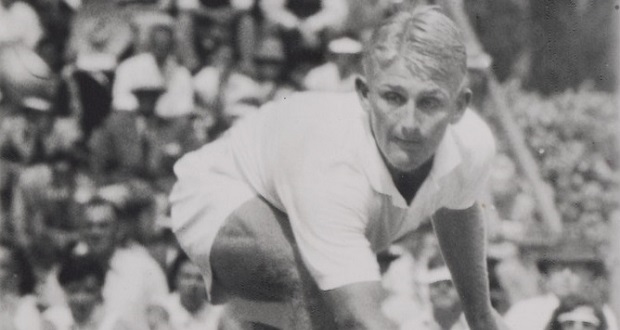
    The generation of players born between 1934 and 1938 was, in a way, more accurately the last generation before the Open Era as it peaked in the 1960s. Yet it was also the generation that was “in power” when the Open Era began, so I am considering it the first of the Open Era.

    When the Open Era began in 1968, the youngest players of this generation were turning 30 years old. The generation still dominated for the first few years, winning six of the first seven Slams (two to Rosewall, four to Laver) through 1969, but then the decline really started with the new decade in 1970. While Laver remained a strong player for several more years (top 10 through 1975),  he never won another Slam. Rosewall won three more, one in each year during 1970-72, and was in or near the top 10 through 1977, which he finished at #12 at the ripe age of 43, but clearly the baton had been passed in the 70s.

    This first generation was dominated by the Australians, with 66 of the 76 Slams won by the men from Down Under. In tennis history the late 50s and 60s is possibly the greatest period of dominance by a country, perhaps only revivaled by the last and greatest period of American dominance in the 1990s.

    Best Players by Birth Year (with Slam total):
    1934: Ken Rosewall 23 (AUS), Lew Hoad 5 (AUS)
    1935: Mal Anderson 2 (AUS)
    1936: Roy Emerson 12 (AUS), Ashley Cooper 4 (AUS), Alex Olmedo 3 (USA)
    1937: Andres Gimeno 1 (ESP)
    1938: Rod Laver 19 (AUS), Manuel Santana 4 (ESP), Fred Stolle 2 (AUS), Rafael Osuna 1 (MEX)

    Total Slams: 76 (best of the 13 Gens and all-time), including 50 Grand Slams and 26 Pro Slams.

    File:Hoad Rosewall Wimbledon.jpg

    Lew Hoad and Ken Rosewall playing doubles at the Wimbledon Championships in 1954 or 1955. (courtesy Wikimedia Commons: State Library of Victoria).

    Discussion
    It would be hard to argue that this is not the “GGOAT” – greatest generation of all time, in 139 years of tennis history from 1877 to 2015. Rosewall and Laver alone would make it a contender with any generation, but adding in Hoad, Emerson, not to mention Santana, Cooper, Stolle and Olmedo, and it is head and shoulders above every other generation in terms of Slam count. Of course part of this is due to the “doubling up” of Amateur and Pro Slams during the 50s and 60s, but regardless, 76 majors is a lot –  more than double that of any generation of the Open Era.

    Rosewall and Laver are on the very short list of greatest players. Laver had a higher peak, being the dominant player of the 1960s, bookended by Calendar Slams in 1962 (as an Amateur) and 1969 (the first full year of the Open Era), but Rosewall had greater longevity, with an incredible span of 20 years between his first Slam title in 1953 and his last in 1972 – four years longer than the second longest record of Bill Tilden’s sixteen years (1920-35), twice that of contemporary Rod Laver’s ten years (1960-69) and far more than the longest of the Open Era, Pete Sampras’ thirteen years (1990-2002). To put it another way, Rosewall’s first Slam title came seven years before Laver’s first, and his last came three years after Laver’s last. During those 20 years he won 23 majors in all, eclipsing Laver’s 19. Yet at their best, Laver was more dominant, not only over Rosewall but the rest of the sport. Laver won a record 200 titles, well surpassing Rosewall’s 133.

    Roy Emerson is both over and under-rated, depending upon who you ask. All 12 of his Slam titles came before the Open Era, and most when the best players in the sport—including his contemporaries Rosewall and Laver—were on the pro tour. Yet Emerson held his own against the young Laver, and still dominated the amateur tour for a few years. Yet in terms of career greatness he is perhaps more comparable to players with half his Slam count.

    Underachievers and Forgotten Players
    Many who saw Lew Hoad play, or played against him, claim that he is the most talented player in tennis history. For instance, Pancho Gonzales claimed that Hoad’s “game was the best game ever. Better than mine. He was capable of making more shots than anybody. His two volleys were great. His overhead was enormous. He had the most natural tennis mind with the most natural tennis physique.” Gonzales also said that Hoad “was the only guy who, if I was playing my best tennis, could still beat me.”[1]

    Hoad was plagued by injury and, according to Jack Kramer, laziness and lack of interest [1]. Kramer also claimed that despite the mystique around Hoad, saying “when you sum Hoad up, you have to say that he was overrated. He might have been the best, but day-to-day, week-to-week, he was the most inconsistent of all the top players” [1]. In other words, if we read between the lines a bit, it would seem that while Hoad was one of the most talented players of his generation, with his best level being as good or better than anyone, he did not have the consistency and focus to make him a truly great player, which is why he is less remembered than players with higher Slam counts.

    While a career that included five Slams can hardly be considered disappointing, we can easily see a player in Hoad that was as talented as his more successful contemporaries in Gonzales, Rosewall and Laver, yet without the career achievements.

    Did You Know?:  Rod Laver and Ken Rosewall played each other 144 times in all, including 46 times in 1963. Laver won the head-to-head 80-64. Rosewall led 34-12 their first year of playing each other in 1963, with Laver dominating most years after. However, Rosewall won their last two matches in 1976. For some of the only available footage of this great rivalry, check out this video here.

    File:Rod Laver 1976.jpg

    Rod Laver at the 1976 ABN World Tennis Tournament in Rotterdam (courtesy Wikimedia Commons: Rob Bogaerts, Nationaal Archief Fotocollectie Anefo)

    Top Ten Players of Generation One

    1. Rod Laver (AUS)
    2. Ken Rosewall (AUS)
    3. Lew Hoad (AUS)
    4. Roy Emerson (AUS)
    5. Manuel Santana (ESP)
    6. Ashley Cooper (AUS)
    7. Alex Olmedo (USA)
    8. Fred Stolle (AUS)
    9. Mal Anderson (AUS)
    10. Andres Gimeno (MEX)

    Honorable Mention: Rafael Osuna (Mex).

    Due to limited records it is difficult to give accurate rankings before the Open Era. But it is relatively easy to see the above players in groups. The first group is comprised of Laver and Rosewall; the two are very close, with Rosewall having superior longevity but Laver having a higher peak. Actually, Rosewall—along with Pancho Gonzales–is perhaps the least mentioned inner circle great, but by any reasonable way of accounting he is certainingly one of the five or so greatest players of all time – this despite the Tennis Channel’s egregious ranking of him as only the 13th greatest male tennis player of all time in their “100 Greatest of All Time” in 2012, behind the likes of Roy Emerson and Andre Agassi, among others [2].

    The next group is another pair, Hoad and Emerson. Many would rank Emerson over Hoad, but Hoad was a much better player. Then we have another pair, “Manolo” Santana and Ashley Cooper, both with four amateur Slams, both very strong players but not the very best of the generation, the Andy Murrays and Guillermo Vilases of their time.

    The final group includes Olmedo, Stolle, Anderson and Gimeno. Olmedo has the edge in Slam totals with three, Stolle and Anderson with two each, and Gimeno with only one – that one being the 1972 French Open which he won at 34 years of age. Actually, Gimeno is the only player other than Rosewall who who won a Slam after the age of 32 during the Open Era. Anderson had a long and storied career. He won only two Slams – the 1957 US Open and the 1959 Wembley Pro, but made a Slam final as late as 1972 at age 36, losing to the 37-year old Ken Rosewall in the Australian Open.

    Regardless of the exact ranking, it is a very strong group – dominating tennis from the late 50s into the 70s, perhaps partially due to the weakness of the following generation, which we will look at in the next installment.

    Works Cited:
    [1] Quote from https://en.wikipedia.org/wiki/Lew_Hoad
    [2] http://admin.tennischannel.com/goat/71.aspx

    [divider]

    Cover Photo (Creative Commons License): State Library Victoria Collections

    Hoad/Rosewall and Rod Laver photos: Wikimedia Commons
  • Tennis Generations, Part Two: Before the Open Era

    Tennis Generations, Part Two: Before the Open Era

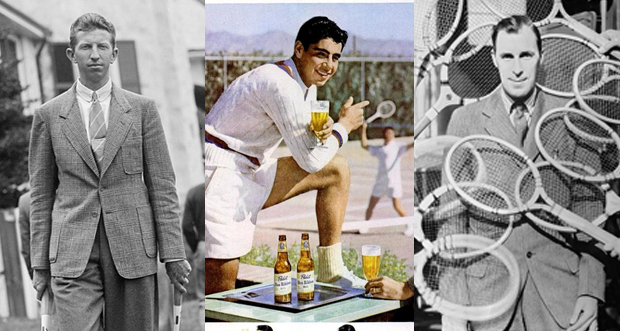
    Don Budge Pancho Gonzales Bill Tilden

    If we were to look at each tennis generation as a player with a count of Major titles—either pro, amateur, or Open Era Grand Slams—by far the greatest would be the generation born from 1934 to 1938, mainly on account of two players: Ken Rosewall and Rod Laver. This generation was, in many ways, the generation that brought tennis from the amateur/pro split into the modern Open Era in 1968.

    But tennis didn’t begin with this generation. Before focusing further on the First Generation of the Open Era, let’s take a brief look at what came before…

    Generations before the Open Era
    The oldest player in terms of birth year to win a Slam was John Hartley, born in 1849 – he won the third Wimbledon in 1879; the first Wimbledon in 1877 belongs to Spencer Gore, born a year later in 1850. This makes the first tennis generation of the entirety of its history being those players born in 1849-53, with possibly older players playing but none winning a major. Given that there were at least seventeen generations before Rosewall’s and Laver’s, this makes the current youngest generation–those players born 1994-98 like Nick Kyrgios, Borna Coric, and Alexander Zverev–the 30th five-year generation in tennis history. We are just starting to see players of the 31st generation, born in 1999-2003, appear deep in the rankings. As of this writing, the highest ranked player of Gen. 31 is No. 757, Felix Auger Aliassime, born in August of 2000.

    The main point here is that while modern tennis can be seen to have begun with the Open Era in 1968, it was actually past the mid-point of tennis history as a whole. Or to put that chronologically, we’re in the 48th year of the Open Era, which began in the 92nd year of Wimbledon, thus the Open Era began almost exactly two-thirds of the way into tennis history as a whole.

    I will not attempt to detail every generation, but thought it worthwhile to list some of the better players as they arrange within pre-Open Era generations, with their Slam title count—including Amateur and Pro—in parentheses:

    1849-53: John Hartley (2), Spencer Gore (1)
    1854-58: Frank Hadow (1)
    1859-63: William Renshaw (7), Richard Sears (7), Andre Vacherot (4), Henry Slocum (2), Ernest Renshaw (1)
    1864-68: Arthur Gore (3)
    1869-73: William Larned (7), Reginald Doherty (4), Paul Aymé (4), Robert Wrenn (4), Wilfred Baddeley (3), Oliver Campbell (3)
    1874-78: Lawrence Doherty (6), Norman Brookes (3), Malcolm Whitman (3)
    1879-83: Anthony Wilding (9), Max Decugis (8), Maurice Germot (3)
    1884-88: Rodney Heath (2)
    1889-93: Bill Tilden (15), Maurice McLoughlin (2), R Norris Williams (2), Robert Lindley Murray (2), Pat O’Hara Wood (2)
    1894-98: Jean Borotra (4), William Johnston (3), Gerald Patterson (3), James Anderson (3)
    1899-1903: Henri Cochet (11)
    1904-08: Frank Crawford (6), Rene Lacoste (7)
    1909-13: Fred Perry (10), Ellsworth Vines (8), Hans Nusslein (6), Adrian Quist (3), Gottfried von Cramm (2)
    1914-18: Don Budge (10), Bobby Riggs (6), Frank Parker (4), John Bromwich (2), Don McNeill (2)
    1919-23: Jack Kramer (5), Pancho Segura (4), Jaroslav Drobný (3), Vic Seixas (2), Ted Schroeder (2)
    1924-28: Pancho Gonzales (17), Frank Sedgman (7), Budge Patty (2), Dick Savitt (2)
    1929-33: Tony Trabert (7), Neale Fraser (3), Mervyn Rose (2), Nicola Pietrangeli (2)

    I tried to account for every Slam winner, although if I missed someone I apologize to their grand- or great-grandchildren.

    Top 10 Greatest Players Before the Open Era
    1. Pancho Gonzales
    2. Bill Tilden
    3. Don Budge
    4. Fred Perry
    5. William Renshaw
    6. William Larned
    7. Ellsworth Vines
    8. Anthony Wilding
    9. Henri Cochet
    10. Jack Kramer

    Honorable Mentions: Laurence Doherty, Bobby Riggs, Frank Sedgman, Reggie Doherty, Pancho Segura, Jack Crawford, Tony Trabert, Rene Lacoste, Hans Nusslein, Jean Borotra, Bill Johnston, Gottfried Von Cramm, Jaroslav Drobný, Vic Seixas, and many others.

    This is a hard list to compile, because it spans about a hundred years. But it is relatively easy to rank Gonzales and Tilden as No. 1 and No. 2, respectively, both being among the very best players in tennis history – on the short list of GOAT candidates. Tilden had a remarkable career that spanned three decades. He didn’t win his first Major until he was 27 years old, and won his last in his early 40s, making the 1945 US Pro semifinal at the age of 52. Pancho Gonzales remains one of the most underappreciated greats in the history of the game, perhaps largely because historical memory tends to be shallow and only notices “two Grand Slams” in his tally. But Gonzales also won 12 Pro Slams and 3 of the 4 Tournament of Champions, which are consider Majors by some – so he has a total of 17 Major titles, tied with Roger Federer and behind only Ken Rosewall and Rod Laver. He was, by a significant margin, the greatest player of the 1950s before Rosewall took over in the later part of the decade.

    Don Budge is perhaps best known as the only player other than Rod Laver to win the Calendar Slam. While he won all of his 10 Majors during a relatively short six-year span, he was as dominant in the late 30s as any player has ever been over a few-years span. Perry and Renshaw round out the Top 5, and then it becomes tricky to rank players, as the context of the game was so different and we can’t look at tennis records of, say, the 30s and 40s with the same criteria as we can the Open Era. But regardless, the above 10 are probably the 10 greatest players before the Open Era, with a handful of honorable mentions fleshing out the list.

    Up next, we’ll look at the great generation of players, born between 1934 and 1938, who dominated tennis from the late 50s into the early 70s, and the dawn of the Open Era.

    [divider]

    Cover Photo (Creative Commons License): boston_public_library / killingtime2 / boston_public_library

  • 2015 US Open Review

    2015 US Open Review

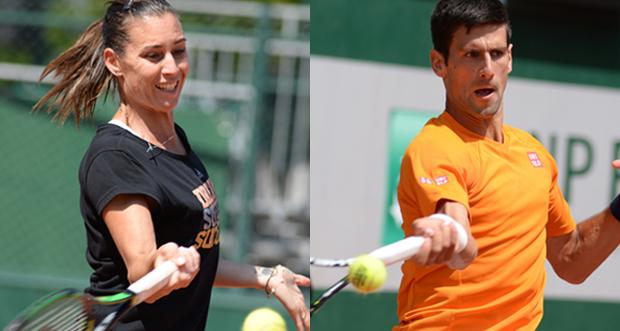
    Novak Djokovic Flavia Pennetta

    As the 2015 U.S. Open approached, there were two questions that tennis fans wanted answered: Would Serena Williams achieve the first Calendar-Year Grand Slam in 27 years, and who would challenge Novak Djokovic for the men’s title? The tournament gave us the answers in some very unexpected ways.

    Embracing the Role of the Villain. Djokovic came into this year’s tournament as the frontrunner, but after losing the Montreal and Cincinnati Masters titles to his two closest rivals, he looked a bit more vulnerable than in recent Majors. He was rarely challenged before the final, and his demolition of last year’s champion Marin Cilic was brutal. In the final against crowd-favorite Roger Federer, he was clearly the villain, the top dog that everyone wanted to see defeated. It is a testament to Djokovic’s mental strength how he handled the adversity from the stands and the threat of Federer’s new “SABR” attack. He fought off repeated attempts to be broken, refusing to let Federer take the match from him. Everyone loves a veteran champion — and Djokovic may be in Federer’s position someday — but for now he will have to wait to be embraced by the public. With this U.S. Open title, Djokovic now has 10 Grand Slam titles, a mark only seven others have achieved in the history of tennis. And he isn’t done yet.

    The Dream of a Calendar-Year Grand Slam Vanishes. The pressure on Serena must have been immense. So close to tennis immortality. The first Calendar-Year Grand Slam in 27 years. After she got through a brief challenge from Bethany Mattek-Sands, she fought off Madison Keys and Venus Williams to advance to the semifinals. Two matches away. And with so many rivals falling by the wayside in earlier rounds, it looked almost inevitable that Serena would be lifting her fourth consecutive (and seventh overall) U.S. Open trophy on Saturday. And then Roberta Vinci happened. No one, not even Vinci herself, expected the veteran Italian to pull off the upset. There is no doubt that Serena played tight and was clearly mentally stressed in the semifinal, but Vinci played the best tennis of her career, pulling off one of the greatest upsets in tennis history. Vinci said it best during the interview. When asked, “When did you believe that you could beat Serena?”, Vinci’s responded, “No.”

    Mamma Mia! No one — not a single person on earth — predicted an all-Italian women’s final. It still doesn’t sound right, but that’s what we got with the 26th seed Flavia Pennetta and the unseeded Vinci. After Serena lost, tickets for the women’s final dropped in value by over 80%. Fans were expecting to see history made; instead, they were treated to two women playing in the first Grand Slam final of their careers. After a few nervous games and a first set tiebreak, Pennetta asserted herself and won her first Grand Slam title. And then she shocked everyone by announcing that she would “say goodbye to tennis” at the end of the season. Mamma Mia, indeed.

    The Lack of a True Rival. Who is going to step up to challenge Djokovic for the Grand Slam titles next year? This year, we saw Stan Wawrinka take the French Open, but so far he has failed to follow it up in any of the other Majors or Masters. Roger Federer and Andy Murray seemed ready to make a challenge, but Murray didn’t even make the fourth round in New York, while Federer again seemed to be outmatched by Djokovic in another major final. Nadal failed even to make the final four of a single Slam this year. It looks like the Djokovic era will continue for another couple of years until one of the younger players steps up.

    Five-Set Matches Are tough! The number of retirements in the men’s draw was ridiculous. There were 14 before the quarterfinals. A lot of factors were involved but there were even retirements by players who were winning when they had to drop out. The humidity certainly played a factor, but this could add some momentum to the debate about changing the men’s Majors to best-of-three set matches like the women. Mamma Mia.

    Wanted: A New Female Star. As this tournament proved, there is a big flux after Serena. She was so dominant and winning everything that is was hard to notice, but the performances by the Top 10 women were abysmal. Seven of the Top 10 were gone after the second round. Petra Kvitova ran out of gas against Pennetta in the quarters, and Simona Halep was blown off the court by Pennetta in the semis. New rising stars Garbine Muguruza and Belinda Bencic were gone by the third round. Here’s to hoping that someone will rise up and be more than a one-time wonder in 2016.

    Doubles Dominance. Martina Hingis’s collection of doubles titles in 2015 is truly impressive. After getting warmed up with a mixed doubles title with Leander Paes at the Australian Open, she then teamed up with Sania Mirza and took the two doubles titles at Wimbledon and did the same thing again at the U.S. Open. She now has 20 Grand Slam titles and doesn’t look like she’ll retire again any time soon. On a side note, the French team of Nicolas Mahut and Pierre-Hugues Herbert, seeded a lowly 12th, took home the men’s doubles title. It’s always nice to see two players who have come so close in the past finally win a big one.

    A Final Look Across the Frontier… So the final Slam of the year is over. We saw a No. 1 reassert his dominance and enter the top-level of greats, we saw the dream of a Calendar-Year Grand Slam destroyed by a perky Italian nobody gave a chance of winning, we saw a Hall-of-Fame member take all the doubles titles, we saw a pair of unheralded Frenchmen take home a Grand Slam title, and we saw the final rain delay at Arthur Ashe Stadium. The Australian Open is only four months away!

    [divider]

    Cover Photo (Creative Commons License): kulitat

  • TENNIS QUIZ: US Open Champions

    TENNIS QUIZ: US Open Champions

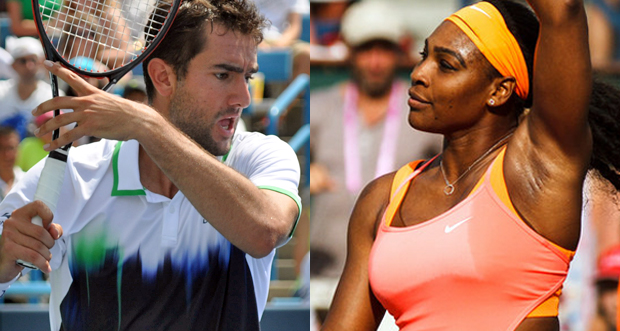
    Serena Williams Marin Cilic US Open

    Test your knowledge of the US Open! See if you can name every Open Era champion — in order!

    US Open Men’s Champions

    US Open Women’s Champions

    [divider]

    Cover Photo (Creative Commons License): Kiu Kaffi / mirsasha

  • Open Era Generations, Part One: Introduction

    Open Era Generations, Part One: Introduction

    Open Era Generations 01 - Tennis Hall of Fame


    Preamble

    While I’ve followed tennis in a very casual way going back to vague memories of Bjorn Borg and John McEnroe, it is only in the last half decade or so that I’ve become a serious fan. I mark the beginning of my interest in tennis back to a vague memory of liking Bjorn Borg and disliking this new young upstart named John McEnroe who seemed to have his number. While I was only around seven years old at the time and cannot pinpoint the exact date, I imagine that this was due to either of McEnroe’s defeats of Borg at Wimbledon or the US Open in 1981. My favorite players in the 1980s and 90s were Ivan Lendl, Stefan Edberg, and Pete Sampras; I remember enjoying Edberg’s defeat of Jim Courier in the 1991 US Open, memorable because my friend and classmate (this was senior year in high school) had played with Courier and was cheering for the American.

    My tennis fandom remained casual until just a few short years ago. There isn’t an exact moment when I went from “casual” to “serious” fan, as it was a gradual transition over a year or two, but it happened sometime in the 2008 to 2011 range. While I had been a (casual) fan of Roger Federer, my all-time favorite player, since early on, it is interesting (for me, at least) to consider that during my tenure as a diehard tennis fan—someone who follows all of the big tournaments and some of the smaller ones—I have only really truly loved the game while my favorite player has been past his highest peak. In fact, it could be the legendary 2008 Wimbledon final that drew me into a greater interest in the sport, the match that saw the baton of greatest player passed from Roger to Rafa. So I cannot be accused of being a fair weather fan!

    Anyhow, the reason I offer an overview of my tennis biography is to lay the groundwork for what is to follow – to provide context and perhaps a sense of why I am writing what I’m writing, and why I write this blog at all, for that matter. It is simply this: I write these articles to share my own learning experience. I am very curious and autodidactic by nature and because I’ve only followed tennis closely for about half a decade, I am constantly researching this or that tidbit from the past. In a way I’m both trying to fill in my own limited (but growing) knowledge of the sport’s history, but also enjoy taking variant angles using statistical analysis to better understand the game. This blog is my sharing my journey with you, the reader.

    And now for the caveat: I am not a tennis player, not an expert on the game itself or its history. I am, first and foremost, a fan of the game. None of these statistics are meant to be definitive in any way; a common misunderstanding about statistical analysis in sports—particularly in baseball, if only because no other sport is as statistically analyzed (and fetishized) as baseball—is that statistical models and advanced metrics are somehow meant to replace firsthand knowledge of the game and/or be definitive. Now some “statnerds” might take this a bit too far, but for the most part it is generally understood that statistics are secondary and complementary to real knowledge of the game.

    That said, statistics have their uses and are neglected in the tennis world. There are a few pockets on the internet where tennis is analyzed statistically, but it is rare.

    [divider]

    Generation Theory
    So what’s this all about, you might be asking? Well, I’m going to be starting a series on tennis generations, using what I call “Generation Theory,” which is a tool or lens that is quite useful for understanding tennis history. The theory is based upon the idea that a generation is roughly five years in length, that once you have two players that are more than a few years apart they are of a different generation.

    This begs a couple questions: One, where to draw the line between generations? This is pretty arbitrary. At first I was going to use half-decades, neatly dividing each decade into two generations. But I soon found that it wasn’t the optimal way of grouping players. I then decided to use Roger Federer as a baseline. Federer was born in August of 1981, so I asked what would happen if we used him as the middle of a five-year generation? That made Generation Federer those players born between January 1, 1979, and December 31, 1983. This also lined up well with Rafael Nadal, born in May of 1986 — the midpoint of the next generation, 1984-88. It was almost too perfect, but what better two players to center Generation Theory on? I then went forward and back and found that players grouped well within those parameters, with few exceptions.

    Again, generational divisions are arbitrary. In this model Juan Martin del Potro and Kei Nishikori are of two different generations, which may seem strange considering that they were born in consecutive years; in this system, del Potro is of the same generation as Robin Soderling, who was born in 1984. We could look at “Generation del Potro” as being those players born within a couple of years of him, thus 1986-90. So in that sense we could use a five-year tennis generation: in a player-centered way, that is spreading out a five-year umbrella centered on an individual player’s birth-year, or in a static way, which is based upon Federer (and, conveniently enough, both Nadal and Pete Sampras) and spreading the generations out from there, each generation beginning with the year that ends with either a 4 or a 9 (e.g., 1974-78 and 1979-83). This series is based on the static approach, although at different times and in other articles I might use the player-centered approach.

    This series will be focused on the Open Era, beginning with the 1968 French Open, which has technically seen 16 different generations play in it. The oldest player that I could find who played in an Open Era Grand Slam was Pancho Segura, who was 49 years old when he played in the 1970 US Open. Segura, if you’re not familiar with him, is a lesser great of the 40s and 50s – who we could call “The Other Pancho” after the greater Pancho Gonzales. Segura had one of the longest careers in tennis history, being a top college player in the mid-1940s before going professional in 1947, and then playing his last professional singles match at the 1970 US Open, at 49 years old, although he played doubles until 1975 when he was 54 years old. A different era, no doubt!

    [divider]

    Thirteen Generations of the Open Era
    For the sake of this study, I am going to focus on those generations that made a significant impact in the Open Era. My criteria for the first generation will be a Slam title within the Open Era, which would be the great 1934-38 generation that included Ken Rosewall and Rod Laver, two of the very greatest players in tennis history. So 1934-38—bookended by Rosewall’s birth in 1934 and Laver’s in 1938—is the First Generation of the Open Era, with the youngest generation of players on tour born in 1994-98 the Thirteenth Generation (although as of this writing there are actually a few ranked players from the 1999-03 generation, including Canadian Felix Auger Aliassime ranked No. 751 as of August 24, 2015; Aliassime was born in August of…wait for it…2000).

    [divider]

    This Series
    After this introductory piece, each article will be dedicated to a different generation, with the first briefly discussing older generations and then focusing on the First Generation of the Open Era, those players born between 1934 and 1938. I will probably do a summarizing piece, so this means that this will be in fifteen parts and likely spread out over two or three months. It will be my intention to publish one or two articles a week, so stay tuned and I hope you enjoy joining me on my journey through the thirteen generations of Open Era tennis!

    Author Note (9/2/2015): I timed this series poorly, starting right before the US Open, so with my apologies I’ve decided to push it back until after the US Open is finished. Look for the next part in this series a day or two after the US Open finals. Best regards ~JN.

    [divider]

    Cover Photo (Creative Commons License): wallyg

  • 2015 Western & Southern Open – Cincinnati Review

    2015 Western & Southern Open – Cincinnati Review

    Roger Federer Serena Williams Cincinnati

    The Western & Southern Open in Cincinnati was a relatively calm and orderly affair compared to the Rogers Cup the week before. There were no sledges made, very few rain delays, and no newcomers making major breakthroughs. But there is always plenty of history and positioning for the upcoming U.S. Open on the line, so the W&S Open is one of the most important tournaments on the tennis calendar, and this year was no different.

    The Unbreakable Maestro
    Before the summer started, Roger Federer announced that he would skip the Rogers Cup, stunning tennis fans from Albania to Zimbabwe. Surely he would lose his World No. 2 ranking and the No. 2 seed at the U.S. Open for this foolish decision. And sure enough, Federer fell to No. 3 after Andy Murray’s victory in Montreal, and when Murray made the semifinals at Cincinnati, the only way for Federer to get the No. 2 ranking back was to win the tournament. What Federer did in this tournament surprised pretty much everybody. He was never broken once in the tournament, did not drop a set, and played a style of tennis that was bold, majestic, and age-defying. The man is 34 years old yet just beat the No. 1 and 2 players in the world successively for the first time in his career. He never dropped his serve in 44 service games. He practically returned serves from the service line. His volleys were Edbergesque. And he now has seven Cincinnati flower vases sitting on his mantle. With Murray’s Montreal win and Federer’s in Cincinnati, the upcoming U.S. Open has become a lot more interesting and unpredictable.

    Survival of the Strongest
    Watching Serena Williams march through a tournament to another title brings back the scene when Scarlet O’Hara was stepping through the wounded soldiers in Atlanta as she looked for someone. Will anyone be fit, healthy, and ready to challenge Serena in New York? Simona Halep seems to be back on track after early losses at Roland Garros and Wimbledon but with her incredibly hard schedule, one has to wonder when she will break down again like she did in the Toronto final against Belinda Bencic. The fact remains that the only person who can beat Serena is Serena herself. The mounting pressure must be incredible, but if anyone can do it, it’s Ms. Williams. And she gets another Cincinnati vase to put on her very crowed mantlepiece.

    Another Record Denied
    Back in June, Novak Djokovic was one win away from completing his career Grand Slam at the French Open. It seemed like it was destiny after finally beating Rafael Nadal for the first time in seven tries. But Stan Wawrinka stood in his way and denied him a record only a few have accomplished. This week, Djokovic was going for another record: a Masters 1000 box set. No one has ever won all nine Masters 1000 tournaments. Federer lacks Rome and Monte Carlo, Nadal has never won Miami and Paris (Bercy), and Andre Agassi is also two titles short of a set. Amazingly, Djokovic has never won in Cincinnati but after his defeat in the Montreal final last week, most thought he would make a statement before the U.S. Open started. But a new and improved Federer, on one of his favorite courts, once again kept Djokovic from making history. Djokovic is at a special place in his career right now. Every time he wins, he takes one more step to glory, but the other side of the coin is that every time he loses, he is denied another record of some sort. It’s an enviable place to be in, and it’s tough to win everything. Djokovic will definitely be looking to make a statement in New York now.

    The Walking Wounded of the WTA
    The number of players who have been injured, dropped out of the tournament, or retired from their matches is becoming alarming. Maria Sharapova (leg injury), Petra Kvitova (mono), Caroline Wozniacki (leg), Belinda Bencic (wrist), Victoria Azarenka (leg), and Venus Williams (illness) are some of the top players who have been struggling with injuries or health during the summer months. At this rate, there won’t be anyone to challenge Serena Williams as she marches full steam ahead to her calendar Grand Slam at the U.S. Open. It’s been disappointing to see and leaving a whole lot of questions for the final Grand Slam of the year.

    Nadal’s Struggles
    For the last 10 years, Rafael Nadal has won at least one Grand Slam every year. Since 2004, when he won his first French Open, he has left his teeth marks on one of the major titles’ trophies, but his record run is in serious jeopardy. After going out in the second round of Wimbledon, Nadal went over to Hamburg and won a tournament on his beloved clay and then was destroyed by Nishikori in the quarterfinals in Montreal, and defeated in the third round in Cincinnati by compatriot Feliciano Lopez. The Nadal we know and expect has just not appeared this year and it looks like his record run of major titles is finally over.

    SledgeGate Continues
    The tournament changed but the uproar over the brash Nick Kyrgios refuses to go away. He said he had apologized to Stan Wawrinka in person, but then Wawrinka said that no such thing happened. He said, he said. After giving out a $10,000 fine, the ATP has been quiet, but Federer, Nadal, and Djokovic condemned the remarks. Kyrgios has really isolated himself from the tennis community and will have to really work hard to gain some trust and acceptance on the tour. He was very quiet in Cincinnati this week, taking only three games from Richard Gasquet.

    Fasten Your Seatbelts Because Here Come the U.S. Open
    There are two more warm-up tournaments in Connecticut and North Carolina this week, and then the final Grand Slam tournament finally comes. The two weeks in Canada and Ohio have given us more questions than clues or answers about what is going to happen on the men’s side, while on the women’s side, the results thus far look like a dress rehearsal. But as is so often the case with the greatest sport on earth, it hasn’t been boring.

    [divider]

    Cover Photo (Creative Commons License): mirsasha

  • TENNIS QUIZ: Western & Southern Cincinnati Champions

    TENNIS QUIZ: Western & Southern Cincinnati Champions

    Roger Federer Serena Williams Western & Southern Open Cincinnati Masters

    Test your knowledge of the Western & Southern Open! See if you can name every Open Era champion!

    Western & Southern Men’s Champions

    Western & Southern Women’s Champions

    [divider]

    Cover Photo (Creative Commons License): Henrik Gustavsson/ SweTennis / kulitat

  • 2015 Rogers Cup Review

    2015 Rogers Cup Review

    Andy Murray Belinda Bencic Rogers Cup

    One week ago, as the men began play in Montreal and the women started play in Toronto, the main talking points were about the performances of Novak Djokovic and Serena Williams and how they would start their preparation for the upcoming U.S. Open, as well as the performances of the Canadian stars playing in their home country’s Masters/Premier event. But the tennis fans were treated to a whole lot more than they ever expected this week.

    Finally, At Long Last, About Time!
    The numbers were repeated over and over again. Andy Murray had not beaten Novak Djokovic since his dramatic win at Wimbledon in 2013. The losing streak had built up to eight consecutive losses. Murray would play outstanding tennis in a tournament, only to be turned away time and again by Djokovic. Even when Murray demolished Kei Nishikori in the semifinals, there was still the feeling that Murray may challenge Djokovic but in the end fall short as always. The turning point came in the fifth game of the third set. The 18-minute game went to deuce 10 times and Djokovic had six break points, but on this day Murray refused to surrender. Somehow, he held on to that game. Still, Djokovic fought off three match points serving at 2-5, and then had his own chance to get back on serve in the next game but Murray finally sealed the 6-4, 4-6, 6-3 win on his fifth championship point. A big old monkey jumped off Murray’s back and the upcoming U.S. Open just got a whole lot more interesting.

    A New Star Arrives
    We have another Swiss Superstar coming onto the scene. This may not have been a Grand Slam, but when you defeat the home crowd’s darling and former Wimbledon finalist in round one, a former World No. 1 and the current No. 5 in round two, another former Wimbledon finalist in round three, another former World No. 1 and the current No. 6 in the quarterfinals, the World No. 1 and the holder of all four Grand Slams in the semifinals, and finally a former French Open finalist and World No. 3 in the final, people are going to notice. Belinda Bencic won her second title of the year and will move up to No. 12 in the new rankings. There is no doubt all eyes will be on her at the U.S. Open. Bencic could be the real deal.

    World No. 1’s Denied
    Most expected Djokovic and Serena to come away with the titles this week, but shockingly, both were denied. Djokovic just couldn’t finish off Murray in his usual style, and Serena let Bencic back into the match after dictating things through most of the first set. Still, even though they left town without a title, you get the feeling that they will fine tune their tennis in Cincinnati, and will be raring to go when the year’s last Grand Slam rolls around. They are still the ones to beat and that’s not going to change any time soon.

    Home-Ain’t-So-Sweet Home
    Clicking on the website of the Rogers Cup last week, tennis fans’ computer screens were immediately covered with huge pictures of Milos Raonic and Eugenie Bouchard. Along with Vasek Pospisil and six other wild cards to represent Canada, expectations were there despite Raonic’s recent struggles and Bouchard’s dismal season. Raonic was upset by Ivo Karlovic in his first match, Bouchard lost to eventual champion Bencic in the first round, and the only Canadian wildcard to win a match, Vasek Pospisil, lost in the third round to John Isner. It was a tournament to forget for the Canadians.

    The Walking Wounded
    We’re only halfway through August but there are a disturbing number of absences, dropouts, retirements, and injuries. Both World No. 2’s Roger Federer (cutting back on schedule) and Maria Sharapova (injury) were absent. Simona Halep had to retire in the final set of the women’s final. Kei Nishikori was clearly hampered in his one-sided loss to Murray in the semifinals. Raonic still does not seem to be fully recovered from his foot injury. Stan Wawrinka retired during his infamous match with Nick Kyrgios. Caroline Wozniacki was also struggling with an injury in her early round loss. The hard-court season only gets tougher from here so this could be a chance for some young players to break out of the early rounds and even score some upsets, just as Bencic did in Toronto.

    The Sledge
    How many people really knew what “sledge” meant before this tournament? Everyone has seen multiple reports of what happened whether they wanted to or not. In one of the ugliest matches in recent memory, Kyrgios managed to insult Stan Wawrinka, fellow Australian Thanasi Kokkinakis, a young WTA player from Croatia, and pretty much the entire tennis community. He was fined $10,000, and still could be suspended by the ATP. There are some serious problems with Kyrgios, and it appears that no one really knows what to do with him. Tennis Australia has asked fellow Australian and veteran Lleyton Hewitt to act as an advisor for the young Australian, but boy does Hewitt have his work cut out for him.

    In the End, It’s All About Tennis
    Despite all of the media storm over one comment made by a misguided player, tennis proved to be a sport that wipes away the sludge and the sledges with inspiring performances. With Murray’s spirited effort to finally break through Djokovic and Bencic’s fantastic string of wins, the hard-court season finally seems like it’s here — and it’s only going to get more interesting.

    [divider]

    Cover Photo (Creative Commons License): kulitat / mirsasha

  • TENNIS QUIZ: Rogers Cup Champions

    TENNIS QUIZ: Rogers Cup Champions

    Jo-Wilfried Tsonga Agnieszka Radwanska Rogers Cup

    Test your knowledge of the Rogers Cup! See if you can name every champion since 1969!

    Rogers Cup Men’s Champions

    Rogers Cup Women’s Champions

    [divider]

    Cover Photo (Creative Commons License): Marianne Bevis / Dave Rubenstein