Blog

  • Open Era Generations, Part Six: Gen 4 (1949-53) – It’s Jimmy’s Show

    Open Era Generations, Part Six: Gen 4 (1949-53) – It’s Jimmy’s Show

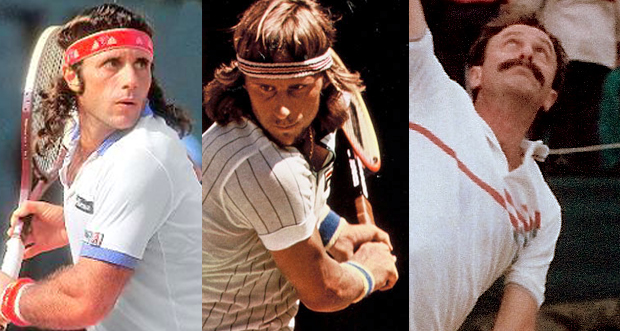
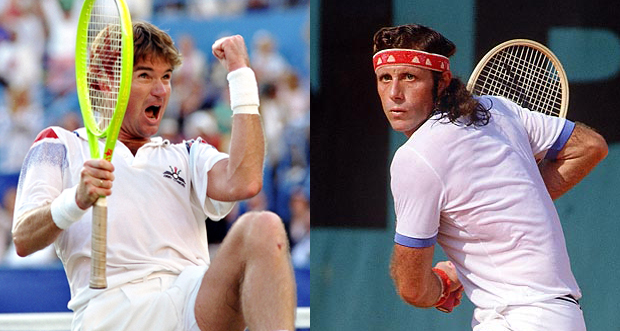
    Jimmy Connors Guillermo Vilas

    Open Era Natives
    Once we get to the generation of players born from 1949 to 1953, we are firmly in the Open Era. The oldest players of this generation were still teenagers when the Open Era began. Take generation elder statesman Manuel Orantes, born at the very beginning of the timespan in February of 1949: his first Slam was the 1968 Australian Open, the last of the amateur era.
    With apologies to Stan Smith, this generation also saw the first American superstar since Pancho Gonzales in Jimmy Connors. Pancho was the greatest tennis player of the 1950s but was past his prime and in his 40s when the Open Era began, although still ranking in the Top 10 as late as 1968. He played long enough to pass the baton to Jimmy Connors, their careers overlapping for a few years (more on that in a moment).

    [divider]

    Click here to discuss “Open Era Generations, Part Six: Gen 4 (1949-53) – It’s Jimmy’s Show” in the discussion forum.

    [divider]

    Best Players by Birth Year (Country, Slam Count)
    1949: Manuel Orantes (ESP, 1)
    1950: Adrian Panatta (ITA, 1), Phil Dent (AUS)
    1951: Roscoe Tanner (USA, 1), Eddie Dibbs (USA), John Alexander (AUS), Dick Stockton (USA)
    1952: Jimmy Connors (USA, 8), Guillermo Vilas (ARG, 4), Brian Gottfried (USA), Harold Solomon (USA), Wojtek Fibak (POL), John Marks (AUS), Kim Warwick (1952)
    1953: Raul Ramirez (MEX), Jose Higueras (ESP), Corrado Barazzutti (ITA)

    Discussion
    This generation, that owns a rather middle-of-the-road 15 Slam titles—the same as the previous generation—was dominated by hot-headed American Jimmy Connors, who was the first superstar that belonged entirely to the Open Era. In a way Jimmy had two careers, known equally for both: his peak in the 70s and his incredible longevity that saw his career stretch past two decades and into the 90s. Jimmy was a Top 10 player from 1973 to 1988, a remarkable span of 16 years. Only Andre Agassi has surpassed this span by a single year, from 1988 to 2005, although Andre dropped out of the Top 10 twice while Jimmy’s streak was unmarred (if you’re wondering, Roger’s streak is at 14, so will equal Jimmy if he remains in the Top 10 through 2017).

    I like to think of Guillermo Vilas as the gatekeeper to all-time greatness: if you’re better than Vilas, you’re a true all-time great. Vilas was in a way the Andy Murray of his era; he played alongside the peaks of better players like Connors, Borg, and then McEnroe and Lendl. Yet Vilas has a special record to his name: He still holds the most titles for a single year in the more fully documented ATP era (1973 to present), with 16 in 1977 (Rod Laver won 18 titles in 1969, the most in the Open Era). 1977 remains a controversial year as he finished No. 2 behind Connors in the ATP rankings, despite those sixteen titles and two Slams compared to Connors’ eight titles and zero Slams. It is the general consensus that Vilas had the better year and deserved the No. 1 ranking, but in a recent ruling the ATP decided not to reverse previous calculations, so Guillermo will remain the greatest player of the Open Era never to be ranked No. 1.

    The rest of the generation is not as well remembered, but includes some strong players, including the lone Italian Grand Slam winner of the Open Era, Adrian Panatta (who is also only one of two Italian Grand Slam winners in tennis history, along with two-time French Open champion Nicola Pietrangeli). Other Slam winners were hard-hitting Roscoe Tanner, whose 153mph serve in 1978 was the fastest recorded until Andy Roddick’s 155mph at the 2004 Davis Cup, and Manuel Orantes, who defeated a peak Connors at the 1975 US Open.

    Underachievers and Forgotten Players
    There’s no clear underachiever in this generation; no player who seemingly should have won more Slams, no Slam-less player who should have won one. That said, this category is also for forgotten players and I would like to mention Brian Gottfried, Harold Solomon, and Raul Ramirez as the “Slam-less three” of this generation – the three best players of this generation not to win a Slam. These three combined for 67 titles (or 25, 22, and 19, respectively), and 5 Masters equivalents among them. All three are among the twenty or so best Slam-less players of the Open Era; Gottfried could be in the Top 5.

    Did You Know?
    Jimmy Connors’ first final was at the age of 19 in the 1971 Los Angeles Open, equivalent to a Masters tournament today. His opponent? 43-year-old Pancho Gonzales, who beat Jimmy 3-6, 6-3, 6-3. They had actually played earlier that year at a lesser tournament, which Pancho also won.

    Top Ten Players of the Generation

    1. Jimmy Connors
    2. Guillermo Vilas
    3. Manuel Orantes
    4. Roscoe Tanner
    5. Brian Gottfried
    6. Harold Solomon
    7. Adrian Panatta
    8. Raul Ramirez
    9. Eddie Dibbs
    10. Jose Higueras

    Honorable Mentions: John Alexander, Phil Dent, Dick Stockton, Wojtek Fibak, Corrado Barazzutti.

    As with the generations before it, the top of the list is easy – no one would argue against Connors and Vilas, and Orantes is a pretty easy No. 3. Tanner gets the edge for No. 4 over Gottfried, Solomon, and Ramirez, but the “Slam-less Three” are relatively close – they were the Tomas Berdychs and Jo-Wilfried Tsongas of their era. I rank Adrian Panatta behind Gottfried and Solomon in a similar way that I will rank Marin Cilic behind Tsonga and Berdych (at least for now). While we all know that a single Slam title is more coveted than any number of lesser titles, when ranking overall career greatness, Slams titles must be contextualized with other factors—non-win Slam results, other titles, and rankings. Panatta simply wasn’t as good as the players ranked ahead of him. Dibbs and Higueras round out the Top 10.
  • 2015 ATP World Tour Finals Preview

    2015 ATP World Tour Finals Preview

    15612895007_1565dcee0d_z

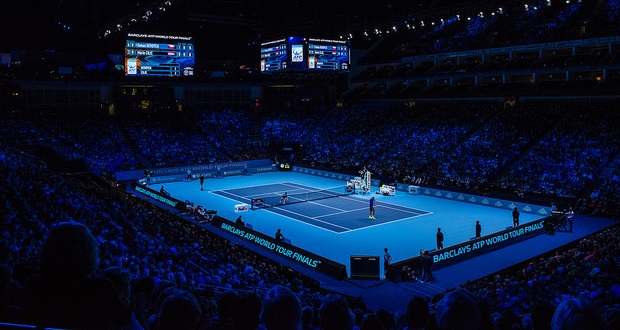
    ‘The end is here’ ‘The Final showdown’ ‘The Stage Is Set’ ‘Insert overdramatic cliché’. Yes, ATP overkill at its finest. But cynicism aside, I am of course looking forward to the season ending shindig in London. It is a pleasure to see the best players in the world battle it out for a colossal sum of money and ranking points. Not bad for a week’s work, that’s for sure.

    There is little change in the line-up since last year’s event, with Nadal and Ferrer replacing Milos Raonic and Marin Cilic in the eight man field, although Ferrer was an alternate last year. The event is a great yardstick of both season long consistency, but even more so of longevity. This shall be Berdych’s sixth straight year of qualification, Ferrer’s fifth, Djokovic’s ninth and one Mr Roger Federer’s fifteenth. The other four meanwhile have all made multiple appearances, again a testament to the depth and quality atop the men’s game.

    On the subject of depth and quality, Novak Djokovic stands a head higher than even his closest competitors at the event, and as I breakdown the draws and offer my thoughts, it becomes clear: All roads pass through Novak in the quest to haul in the trophy a week from Sunday.

    Group A

    This group, consisting of Djokovic, Federer, Berdych and Nishikori, is for me the more likely of the two to see the big names advancing.

    Novak leads Berdych a lopsided 20-2 in their head to head, never having lost to the Czech on a hard court. Berdych has enjoyed some form this autumn, but even his biggest shots seem to make little indentations in the Serb’s defences. Nishikori has enjoyed a bit more success against Djokovic, winning two of their six matches, including at the US Open last year. In addition, Nishikori pushed Novak at the World Tour Finals last year in one of the few matches that weren’t duds. With Kei’s lack of matches lately though, and Djokovic’s imperious form, I suspect Djokovic to come through these two hassle free.

    Federer, although not as dominant over the afore mentioned pair as Djokovic, still enjoys healthy head to heads against both. Against Berdych the Swiss leads 14-6. Berdych does not seem to have as big a block against Roger compared to the more defensive members of the ‘big four’, his big game when clicking can overcome him, including twice in Slams. Federer has not lost to Tomas though since an injury plagued 2013, winning the last three matches. I think Berdych could trouble the Swiss, especially when one looks at his recent loss to the big hitting Isner in Paris, but the court in London has in recent years yielded a slower bounce, which should aid Federer in nullifying Berdych’s power.

    What of the marquee matchup between the two most successful players of the season? It seems strange for Novak and Roger to meet in the round robin stage of the tournament, but that is the nature of rolling rankings and contributes towards the excitement of this unique event. There is little to choose between the pair going into the tournament, Federer triumphing in Basel, Djokovic a week later in Paris. Both are in fine fettle, and play some of their best indoors. Based on his sheer dominance in the last few months, Novak for me edges their encounter.

    Group Winner: Djokovic

    Group Runner Up: Federer

    Group B

    The other group, consisting of Murray, Wawrinka, Nadal and Ferrer, offers more in the way of unpredictability and intrigue than the first.

    Murray is in a rich vein of form, reaching the Paris Masters final before falling tamely to Djokovic. He will benefit from home crowd support, and is a fine indoor player. Although trailing Nadal 6-15 in their head to head, this is not the same Nadal of late, Murray beating him on the home clay of Madrid in their last meeting this year. Murray has had a better season, and I think in terms of speed, fitness and form the Scot starts out as favourite against Rafa. In his last meeting with Ferrer, recently in Paris, he overcame him in two straight forward sets, and leads their series 11-5, as well as having won their last three indoor meetings. Ferrer has enjoyed a successful autumn, but Murray would start as a clear favourite. Murray’s match with Wawrinka should prove to be the hardest. While he leads the Swiss 8-4, Stan won their last two encounters in 2013, and they have not met since in a period where he became a two time slam winner. I would not be surprised to see Wawrinka power through the Scot, as he did last time they met.

    Stan Wawrinka comes to London having enjoyed the best year of his career. Nadal was long a nemesis for him, leading their head to head 13-3. Stan has put things to rights in recent years however, winning three of their last four meetings,  including on Nadal’s beloved clay earlier this year, and then in two pulsating sets in Paris in similar conditions to London last week. If Wawrinka hits his offensive stride, I see him edging the Spaniard. Against Ferrer meanwhile, Stan, whilst trailing 6-7, he has won their last three meetings. Ferrer can certainly hang in there with the more powerful Swiss, still prone to bouts of inconsistency, but Stan remains the favourite.

    Nadal has done well in making the finals in London, having a rather modest year by his lofty standards, winning just three minor titles. He has qualified the hard way, but qualified all the same. He has shown some good form in the indoor season, stretching Federer, perhaps the greatest indoor player in history, to three sets in the Basel Final, before falling in a tight quarterfinal last week in Paris. I have already above given two opponents an edge over Nadal in his group, and I struggle to see him making the semi-finals this year. All the same, it would be a great end to the year for Nadal to score a win against his friend and rival, the dogged David Ferrer. Rafa enjoys a 23-6 lead in their matches, and won their sole meeting this year in Monte Carlo. Ferrer is nevertheless an effective indoor player, coming into London with two trophies at indoor events. Furthermore, four of his six wins against his compatriot were on hard courts, two of them indoors. This match represents both men’s best chances of a win in London, and the accompanying $167,000 and 200 ranking points. Expect an entertaining slugfest in their final encounter of the year.

    Group Winner: Murray

    Group Runner Up: Wawrinka

    Semi-Finals

    Federer Defeats Murray

    Djokovic Defeats Wawrinka

    Final

    Djokovic Defeats Federer

    [divider]

    Link to author Daniel Edwards’ blog

    Cover Photo (Creative Commons License): Marianne Bevis

  • Open Era Generations, Part Five: Gen 3 (1944-48) – Newcombe and the Class of ’46

    Open Era Generations, Part Five: Gen 3 (1944-48) – Newcombe and the Class of ’46

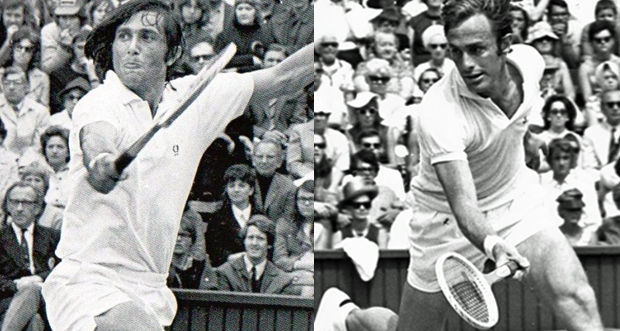
    Ilie Nastase John Newcombe

    A Transitional Generation
    The generation born between 1944 and 1948 began establishing itself in the mid-60s but was in peak form during the early years of the Open Era. This was the last generation that saw some players with a significant portion of their careers before the Open Era began, although it is also the first generation that saw the majority of its players peak in the Open Era.

    Best Players by Birth Year
    1944: John Newcombe (AUS, 7), Tom Okker (NED), Alex Metreveli (USSR)
    1945: Tony Roche (AUS, 1)
    1946: Jan Kodes (CZE, 3), Ilie Nastase (ROM, 2), Stan Smith (USA, 2), Cliff Richey (USA)
    1947: Bob Lutz (USA), Zeljko Franulovic (CRO), Gerald Battrick (UK)
    1948: Brian Fairlie (NZ), John Bartlett (AUS), Vladimir Korotkov (USSR)

    Discussion
    There are several players in this generation that have a lasting heritage. John Newcombe, as will be discussed, is a bit of an underrated great, standing in the shadow of his greater predecessors, Ken Rosewall and Rod Laver. But he was the best player of this generation, and tied with Jimmy Connors for second most Slam titles in the 1970s (5) after Bjorn Borg (8).

    After Newcombe, the class of 1946 presents a strong year of tennis births, with multi-Slam winners Nastase, Kodes, and Smith, who split seven Slams among them.

    Nastase is a player whose Slam count doesn’t adequately reflect how good he was. He is perhaps best known for being the first ATP ranked year-end No. 1 player in 1973. He was a Top 10 player for most of the 70s and won a huge total of 58 titles overall, or by some accounts as many as 87—one less than Roger Federer—due to the fact that records were not fully accurate before the ATP in 1973.

    Underachievers and Forgotten Players
    The first player I’d like to mention is this generation’s greatest player, John Newcombe. While Newcombe, with seven Slams, cannot be considered an underachiever, he is a bit forgotten, for a couple reasons. One, he wasn’t as great as his Australian predecessors in Rosewall and Laver. Secondly, he didn’t quite have the cachet and sex appeal of later tennis superstars Jimmy Connors, Bjorn Borg, and John McEnroe. Yet Newcombe was a great player; while he won three Australian Opens during an era when the field was still weaker than the other Grand Slams, he also won Wimbledon and the US Open twice each, defeating champions as diverse in range as Ken Rosewall (b. 1938) in the 1970 Wimbledon, to Jimmy Connors (b. 1952) in the 1975 Australian Open. Furthermore, Newcombe was one of the few top players of the amateur era whose success translated to the Open Era. With apologies to Patrick Rafter and Lleyton Hewitt, Newcombe is the last truly great Australian male tennis player.

    I wouldn’t call Tom Okker an underachiever as much as a nearly-great player that never won a Slam. In a way he was his generation’s version of David Ferrer – a player always in the mix, with great results and many titles, but no majors. In fact, as discussed in one Tennis Frontier discussion thread, Okker is a good candidate for the best Slam-less player of the Open Era.

    Finally, we have Stan Smith, who is probably the best suited to the title of underachiever, or at least a peak that didn’t match his total career. First of all he was a relatively late bloomer, although less so by his era’s standards. He didn’t reach his first Slam QF until 1970 when he was 23 years old, and won his first of two Slams a year later at 24. For a few years—the first half of the 70s—he was a Top 10 player, and for a couple years—1971-72—he was either No. 1 or co-No. 1. But after 1974 his performance dropped substantially. Throughout the late 70s and into the 80s he was a borderline Top 20 player, but no longer a star. Smith was one of the greatest Davis Cup players, being part of seven US titles. In my National Tennis Careers blog series, I ranked him as the 8th greatest American male tennis player of the Open Era right between No. 7, Andy Roddick, and No. 9, Michael Chang.

    Did You Know?
    1946 saw three multi-Slam winners born. While many years since then have had two multi-Slam winners born, or multiple Slam winners born, you have to go all the way back to 1921 to find another year that had three multi-Slam winners: Jack Kramer (5, 3 Grand, and 2 Pro), Pancho Segura (4 Pro Slams), and Jaroslav Drobny (3 Grand Slams).

    Top Ten Players of the Generation

    1. John Newcombe
    2. Ilie Nastase
    3. Stan Smith
    4. Jan Kodes
    5. Tony Roche
    6. Tom Okker
    7. Cliff Richey
    8. Alex Metreveli
    9. Zeljko Franulovic
    10. Onny Parun

    Honorable Mentions: Bob Lutz, Brian Fairlie, Vladimir Korotkov, John Bartlett, Gerald Battrick.

    The first two spots are easy. Newcombe has a record head and shoulders above the rest, his seven Slams — as much as Kodes, Nastase, and Smith combined. Nastase is a clear No. 2. He had one less Slam than Kodes, but his career was much better. Not only was he the first year-end No. 1 of the ATP era but he won an impressive 58 titles (or 87 by some accounts). Smith also was a stronger peak player than Kodes, although had a weak second half of his career, as mentioned. I was tempted to put Roche above Kodes as he probably had a better overall career, with 26 titles versus Kodes’ 11; but it is hard to argue with Kodes’ three Slams to Roche’s one, even if one of Kodes’ was the 1973 Wimbledon which the majority of top players boycotted due to the banning of Nikola Pilic. But Roche’s lone Slam was during the pre-Open Era in a relatively weak field, defeating Alexander Metreveli, Francois Jauffret, and Istvan Gulyas in the last three matches on the way to the title (who? That’s the point!). Roche also had a Murray-esque 1-5 record in Slam finals.

    After the top five, Tom Okker is an easy pick; I was even tempted to edge him over Roche but controlled myself. Cliff Richey is also a relatively easy next pick, but after that the rankings and talent gets murky. But the gap between the top five and Okker is far slimmer than Okker and the rest of the generation, which is pretty weak from that point on and difficult to rank.

  • 2015 Paris Masters Final Preview

    2015 Paris Masters Final Preview

    16488000050_dd1b349571_z

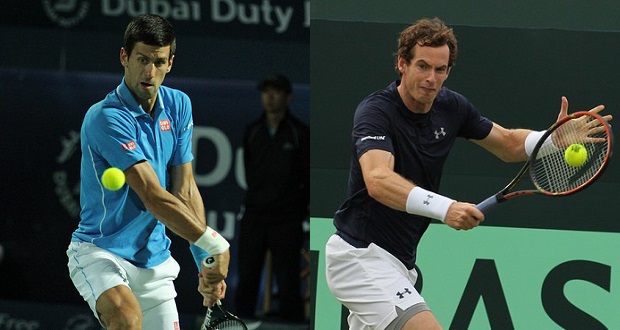
    Novak Djokovic increasingly looks as if he has this rivalry with Andy Murray by the scruff of the neck. The Serb leads their head to head series 20-9, and has won nine of their last ten matches since Murray triumphed over him at Wimbledon in 2013. It was looking increasingly like one way traffic until the Scot stopped the rot with a win last August in the title match of the Rogers Cup. Make no mistake though; Djokovic seemingly has Andy’s number nowadays.

    I think when these two contest best of three matches; they are as a rule higher quality affairs compared to their best of five encounters. Both men play pretty similar games, predicated on defence, drawing the error and creating openings for more aggressive plays. I have noticed that in some of their Slam encounters, in Australia or at Flushing Meadows in particular, the buffer created by a finish line that is farther away can lull both into a defensive complacency, leading neither in the early stages to take charge and resulting instead in rallying affairs. In contrast, the three set matches seem to inject in both men a sense of urgency, and thus willingness to be the aggressor and forced the issue. Two of the best matches the pair have contested were contested in the three set format, their 2012 encounters at The Olympics and Shanghai were high octane matches where both players came out guns blazing, eager to put away each other.

    It remains to be seen whether today’s clash in the final of the Paris Masters shall deliver the same quality. In their last meeting, the semi-finals of Shanghai, Murray surrendered rather tamely to Djokovic in two lopsided sets. In addition, Novak likes these courts, medium paced for an indoor event; he is the two time defending champion. I will always give Novak an edge on a medium to slow hard court against Murray, especially in controlled indoor conditions. One wonders as well what motivation Murray will have to go all out, what with the World Tour Finals looming, not to mention the Davis Cup final, an event he is prioritising.

    I believe two key shots of Murray’s will lead to a Djokovic victory this afternoon. The Scot’s forehand is liable to landing in the middle of the court, and I think Novak will waste little time in taking charge of the rally when this inevitably happens. In addition, whilst Murray possesses a good first serve, it is not a high percentage shot, thus he will have to hit a fair number of second serves. This shot is arguably the Scots weakest, often only hit at around 80 miles per hour. Against the greatest returner in the world, and perhaps in the history of the sport, he is more often than not punished when attempting the second delivery. All is not lost for the second seed though. He won his semi-final against Ferrer in routine fashion, earlier in the day than when Novak beat Wawrinka in three sets. He should be fresh for this encounter. Nevertheless, I expect Novak to continue in his rich vein of form and make it three Paris titles in a row.

    Djokovic to win in straight sets.

    [divider]

    Cover Photo (Creative Commons License):  Marianne Bevis


  • Historical Smash Shots 1: Generational Diversity in the 1974-75 Rankings

    Historical Smash Shots 1: Generational Diversity in the 1974-75 Rankings

    Guillermo Vilas, Bjorn Borg, John Newcombe

    While researching Part Five in my Open Era Generations series (coming later this week), I ran across an interesting little tidbit that I wanted to share (and in so doing decided to start a new segment for this blog, with random statistical bits or “smash shots” that provide angles on tennis today and in the past). Using my Generation Theory, in most years anywhere from two to four generations inhabit the Top 10, with three being the most common; but in 1974 and 1975 fully five different generations were represented in the Top 10 – the only time this has happened in the Open Era.

    Take a look at the 1974 year-end Top 10 with their birth years:

    1. Jimmy Connors (1952)
    2. John Newcombe (1944)
    3. Bjorn Borg (1956)
    4. Rod Laver (1938)
    5. Guillermo Vilas (1952)
    6. Tom Okker (1944)
    7. Arthur Ashe (1943)
    8. Ken Rosewall (1934)
    9. Stan Smith (1946)
    10. Ilie Nastase (1946)

    What are we looking at here? On first glance it looks like a bunch of all-time greats. But notice a couple things. First, as an aside to the point of this article, notice the sheer talent. If we include Pro, Amateur, and Open Era Slams, the above Top 10 includes a whopping 79 major titles. OK, that amazing fact aside, the main point is to look at the wide range of players – the youngest being Bjorn Borg, the oldest Ken Rosewall. The difference? 22 years.

    [divider]

    Click here to discuss “Historical Smash Shots 1: Generational Diversity in the 1974-75 Rankings” in the Discussion Forum.

    [divider]

    Now here’s the fun part. Let’s translate that to today. Let’s place players of a similar age differential in the above list into a hypothetical Top 10 for 2015. Jimmy Connors was 22 in 1974, so we need someone born in 1993 for the number one spot. Swapping age-appropriate players, we get something like this:

    Jiri Vesely, Dominic Thiem, Alexander Zverev

    “Fantasy 2015”

    1. Dominic Thiem (1993)
    2. Stan Wawrinka (1985)
    3. Alexander Zverev (1997)
    4. James Blake (1979)
    5. Jiri Vesely (1993)
    6. Jo-Wilfried Tsonga (1985)
    7. Robin Soderling (1984)
    8. Marcelo Rios (1975)
    9. Novak Djokovic (1987)
    10. Andy Murray (1987)

    Look at that range – A 40-year old Marcelo Rios still in the Top 10, with 18-year old Alexander Zverev No. 3 in the world — two players 22 years apart!

    We really haven’t seen anything like this in some time. The closest thing in recent years, and the last time there were four generations in a year-end Top 10, was 2005 – when Federer’s generation (b. 1979-83) ruled the rankings, with a young teenage upstart named Rafael Nadal (b. 1986) finishing No. 2, and 35-year-old Andre Agassi (b. 1970) making his last appearance in the Top 10. Before that you have to go all the way back to the 80s when it was relatively common for four generations to be represented, although this was mainly due to the anomaly that was Jimmy Connors.

    It would require a longer study to look further into historical trends, and when we get to more recent generations in the Open Era Generations Theory we will look at how things look now compared to in the past. But for now I think it is clear that there is much greater “generational homogeneity” at the top of the men’s game, with seven of the Top 10 being in the generation born 1984-88, with only Roger Federer and David Ferrer from the older generation (b. 1979-83), and only Kei Nishikori from the younger generation (b. 1989-93). As I will discuss later, this is likely to change relatively soon.

    [divider]

    Cover Photo (Creative Commons License): cwkarl / patrickpeccatte / 43555660@N00

    (Photo (Creative Commons License): mirsasha / mirsasha / stevenpisano)

  • Hot on the Frontier: When will Djokovic lose the #1 ranking (and can he surpass Federer’s 302 weeks at #1)?

    Hot on the Frontier: When will Djokovic lose the #1 ranking (and can he surpass Federer’s 302 weeks at #1)?

    16025286603_4bcbf1bc8b_z

    This Week’s “Hot on the Frontier” topic is “When will Novak lose the #1 ranking (and can he surpass Roger’s 302 weeks at #1)?” This topic was started by Tennis Frontier member El Dude. It certainly got a lot of fans thinking about how long Novak Djokovic would hang on to the No. 1 ranking and if were possible for him to break Roger Federer’s record. Come on in and take a look to see what the Frontier crowd had to say about Djokovic’s stay at No. 1! And thanks to El Dude for starting a great topic!

    avatar_6

    El Dude
    Tennis Frontier Member since: April 2013

    Some questions for El Dude:

    1. Who is your all-time favorite tennis player?
    Answer: Roger Federer. Has there ever been a player who played with such grace, elegance and beauty?

    2. What is your biggest tennis pet-peeve?
    Answer: I dislike the homogenization of courts, namely the slowing down of courts. I’d like to see a greater diversity of court types, which would in turn broaden the spectrum of players. I’m kind of tired of the dominance of “war of attrition tennis.”

    3. If you could go watch any Grand Slam tournament, which one would you like to go to?
    Answer: Wimbledon, of course! The US Open is closer and would be easier, but Wimbledon is–and likely always will be–the premier tennis tournament.

    4. If you could slip back in time and see one match in tennis’ history, which match would it be?
    Answer: Two things come to mind. First of all, one of the great Borg-McEnroe matches – maybe 1981 Wimbledon. Secondly, I would have loved to see a classic matchup of Rod Laver and Ken Rosewall, or maybe Pancho Gonzales and Rosewall.

    5. Which two players would you like to see playing doubles together?
    Answer: Rafa and Roger! Can you imagine that?!

    6. Describe your affection for tennis in one word.
    Answer: Impossible to do that. But a few words come to mind: elegance, brilliance, skill.

    7. Your opponent bounces the ball 20+ times before serving. You would:
    Answer: I would yell, “Vamos, Rafa!”

    A message for everyone on Tennis Frontier (if you have one):
    This is a great little community that is open to a diverse number of viewpoints. It has its share of generally minor squabbles, but there’s an underlying sense of camaraderie and community that makes it worth coming back to, again and again. Its like a parlor in which friends come and go and return again, and the conversation keeps going. Thank you all for making Tennis Frontier such a great place to hang out and talk tennis!

    Thanks to everyone who always contributes to Tennis Frontier! Keep the topics coming and hopefully you’ll put the hottest topic on the Frontier out!

    [divider]

    Cover Photo (Creative Commons License): Marianne Bevis.

  • Hot on the Frontier: Is This the Beginning of the Incline?

    Hot on the Frontier: Is This the Beginning of the Incline?

    imageedit_1_7870310887

    Our hottest new topic in our discussion forum this week: Is This the Beginning of The Incline?

    Nobody can dispute the fact that Rafael has had, by his own lofty standards, a rough year. He lost his French Open crown, lost several times to lower ranked players, saw his 10-year streak of at least one Grand Slam title end, and saw his ranking slip down to No. 8. Many were predicting that Nadal was finished, that he would soon retire, or at least get a new coach. So far none of that has happened. And during the Asian Tour, we saw Nadal get to the finals in Beijing and the semifinals in Shanghai. From these results, many fans think he is on the rise and will take his place back in the Top Three of Four soon. Our member GameSetAndMath started this week’s Hot Topic that got everyone debating over Nadal’s future. Congratulations to GameSetAndMath for starting this week’s Hot Topic on the Frontier, “Is This the Beginning of the Incline?” Come check it out!

    avatar_170


    GameSetAndMath
    Tennis Frontier Member since: July 2013


    Some questions for GameSetAndMath!
    1. Who is your all-time favorite tennis player?
        Answer: Roger Federer
    2. If you could attend any Grand Slam tournament, which one would you like to go to?
        Answer: Wimbledon
    3. If you could slip back in time and see one match, which would it be?
         Answer: Bjorn Borg vs. John McEnroe 1980 Wimbledon final
    4. Which two players would you like to see playing doubles together?
         Answer: Fedal
    Check back for next week’s Hot Topic on the Frontier!
    [divider]
    Cover Photo (Creative Commons License): Marianne Bevis
  • Tennis Quiz: WTA Finals Champions

    Tennis Quiz: WTA Finals Champions

    15631516211_fd95cecb29_zThe WTA Finals are set to played in Singapore from October 25th to November 1st. The tournament has gone through many different names, formats and venues, but it has consistently crowned a year-end champion every year since 1972 (twice in 1986!). While most of the winners are the well-known greats, there have been some surprises here and there. See how many of the 44 champions you can name in five minutes!

    WTA FINALS WINNERS (1972-2014)

    [divider]

    Cover Photo (Creative Commons License): VOXSPORTS VOXER


  • Open Era Generations, Part Four: Gen 2 (1939-43) – Arthur Ashe and…Who?

    Open Era Generations, Part Four: Gen 2 (1939-43) – Arthur Ashe and…Who?

    File:Arthur Ashe.jpg

    After the Glory, the Fall

    After the greatest tennis generation came arguably the worst, with only one true standout player in Arthur Ashe who, while being an excellent player, is more historically important as a pioneering black tennis player, still remaining the only black man to win the Australian Open, Wimbledon, or the US Open. After Ashe the pickings become slim, indeed, as we can see here:

    Best Players by Birth Year
    1939: Wilhelm Bungert (GER), Christian Kuhnke (GER), Nikola Pilic (CRO)
    1940: Butch Buchholz (USA), Martin Mulligan (AUS), Bob Hewitt (AUS), Ken Fletcher (AUS), Mike Sangster (UK)
    1941: Chuck McKinley (USA, 1 Major), Cliff Drysdale (USA), Marty Riessen (USA), Pierre Barthes (FR), Roger Taylor (UK), Ronald Barnes (BRA)
    1942: Frank Froehling (USA), Dennis Ralston (USA)
    1943: Arthur Ashe (USA, 3 Majors), William Bowrey (AUS, 1 Major), Clark Graebner (USA), Owen Davidson (AUS)

    That’s 5 total Majors, or 6.6% of the previous generation’s total (!). Of the eleven Open Era generations with Slam counts, it is the lowest total – just a bit more than half that of the second lowest (1974-78, with nine Slams). Every other generation other than those two has 14 or more.

    [divider]

    Click here to discuss “Open Era Generations, Part Four: Gen 2 (1939-43) – Arthur Ashe and…Who?” in the discussion forum.

    [divider]

    Discussion
    At the risk of belaboring the point, Gen 2 is almost certainly the weakest generation of the Open Era, at least until we get to Gen 12 (1989-93). In truth, this is one generation that is less of a generation and more of a transitional phase from the great 1934-38 generation, which in a way was the last of the pre-Open Era, to the 1944-48 generation which was, in a similar sense, the true first generation of the Open Era. If we were able to nudge Arthur Ashe’s 1943 birth year into that latter generation, we’d have a four year transitional period of 1939-42, which saw no great or even near-greats, and only one Slam winner in Chuck McKinley.

    This is also the only generation – aside from the current youngest two – that never saw a year-end No. 1 player (although Harry Hopman ranked Ashe as the No. 1 player in 1968, but this didn’t include professionals). Laver is generally considered No. 1 overall in 1968-69, and then it skipped a generation to Newcombe, Smith, and Nastase from 1970-73, before Connors took over in 1974.

    As with other poor generations, this one’s lack of combination is not only because of weak talent, it is also because of nearby great talent – namely, the previous generation. Consider that Gen 2 started entering its prime in the early 1960s when Rod Laver was at the peak of his powers, Ken Rosewall was still an elite player, and Roy Emerson was dominating the amateur tour. This didn’t change, with Gen 1 not really showing signs of decline until around 1970, when Gen 2 was turning 27-31. The point being, by the time Gen 1 was declining, Gen 2 was also showing signs of age. We are possibly going to see a similar phenomena with the current Gen 11 (1984-88) and Gen 12 (1989-93).

    As far as Ashe goes, his career spans over two decades from his first appearance at the US Open in 1959 to his retirement in 1979. He drew greater public attention in the late 60s, especially after winning the 1968 US Open, upsetting Tom Okker. He won the Australian Open a couple years later, and then had his perhaps most memorable victory in 1975 at the tender age of 32 when he surprised the tennis world at Wimbledon by beating Bjorn Borg, Tony Roche, and then the world No. 1 Jimmy Connors in the final.

    It is difficult to find comparable players to Ashe in terms of achievements. He belongs among the “lesser greats” like Jim Courier, Guillermo Vilas, and Andy Murray – although unlike the latter two he reached No. 1 in the world, but unlike Courier he did so only in brief moments without Courier’s dominance of a couple years. Regardless, Ashe was an excellent player whose legacy is perhaps most important as both a pioneering black player but also the work he did off-court as an activism for social issues, AIDS, and apartheid.

    Underachievers and Forgotten Players
    We’ll just say the entire generation, except for Ashe. While it is difficult to pinpoint an underachiever, we can call the generation—again, aside from Ashe—as a forgotten one.

    That said, if I were to pick out one player as an underachiever it would be Chuck McKinley, who was one of the best amateurs of the early 1960s, including a 48-2 record from 1960-63. He made the 1961 Wimbledon final as a college sophomore in the strong tennis program at Trinity University. He was soundly defeated in straight sets by a 22-year-old Australian by the name of Rod Laver. A couple years later in 1963 he won Wimbledon, defeating Fred Stolle in the final.

    That was pretty much it for McKinley. After graduating from Trinity in 1963, he opted to become a stockbroker, playing tennis only sparingly. All told, he played only 67 matches on the circuit, with a 52-15 record including one Wimbledon title (1963), several US Open semifinal appearances (1962-64), and two US Men’s Clay Court Championships (1962-1963), as well as three doubles titles at the US Open (1961, 1963, 1964). He died young at age 45 in 1986 from a brain tumor.

    Did You Know?: Arthur Ashe retired from tennis in 1979 after having a heart attack. After undergoing a quadruple bypass surgery that year, he had a second bypass in 1983. Then, in 1988, he had emergency brain surgery after experiencing paralysis in his right arm. A biopsy revealed that he had contracted AIDS from a blood transfusion given to him in the second bypass in 1983. Ashe would die of AIDS five years later in 1993.

    Top Players of the Generation
    1. Arthur Ashe
    2. Chuck McKinley
    3. William Bowrey
    4. Martin Mulligan

    Honorable Mentions: Butch Buchholz, Wilhelm Bungert, Cliff Drysdale, Frank Froehling, Clark Graebner, Bob Hewitt, Nikola Pilic, Dennis Ralston, Marty Riessen, Roger Taylor.

    Aside from Ashe, this is an almost impossible generation to rank. It is the last generation for which there aren’t good records and really once you get to No. 4 or No. 5, they blur together in historical hindsight. Consider that only Ashe, McKinley, and Bowrey won Slams, and only Ashe and McKinley were ranked No. 1 – and the latter only as an amateur. None of the other players won Slams or were ever ranked higher than No. 4. Martin Mulligan had the highest titles with 16, so slips away from the crowd a bit. At least I tried to narrow down the honorable mentions to all players that are possible considerations for being among the ten best of the generation, but how they exactly rank would just be too difficult to determine.

    [divider]

    Cover Photo (Creative Commons License): Nationaal Archief Fotocollectie Anefo