Blog

  • WTA: Week No. 2

    WTA: Week No. 2

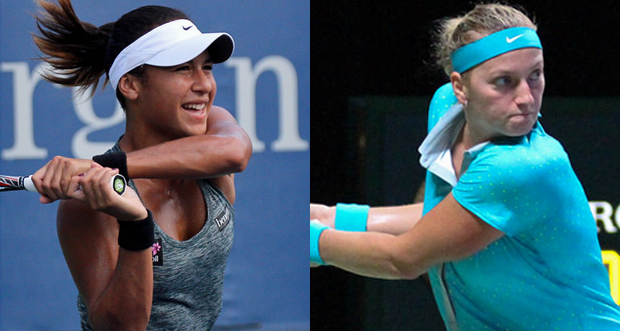
    Heather Watson Petra Kvitova

    The second week of the season included a Premier-level event in Sydney, and an International-level event in Hobart. They were the final warm-ups to the Australian Open in Melbourne.

    Our own Correspondent Margaret McAleer watched as Petra Kvitova scored her 15 WTA title in Sydney. She faced fellow Czech Karolina Pliskova in the final and won in two straight tiebreaks, dodging a late surge by Karolina in the second set. Final score: 7-6(5), 7-6(6).

    Kvitova has now scored the most points during the first two weeks of the season, with 590. Currently ranked No. 4, she has an outside chance of becoming No. 1 if she wins the Australian Open, and Serena Williams has an early exit.

    Also, it’s worth noting that Simona Halep withdrew from Sydney due to illness.

    [divider]

    Click here to discuss the Sydney tournament in the discussion forum.

    [divider]

    Surprise results came out of a rainy and windy Hobart. Heather Watson became the first British woman in 30 years to score her second WTA title. She overcame a shaky first set to defeat American qualifier Madison Brengle. Final score: 6-3, 6-4. Watson did not drop a set during her run to victory, beating three seeded players, and winning the title on her first match point.

    [divider]

    Click here to discuss the Hobart tournament in the discussion forum.

    [divider]

    Cover Photo (Creative Commons License): Marianne Bevis / VOXSPORTSdotNET

  • Australian Open Day 1: Order of Play & Scores

    Australian Open Day 1: Order of Play & Scores

    Australian Open

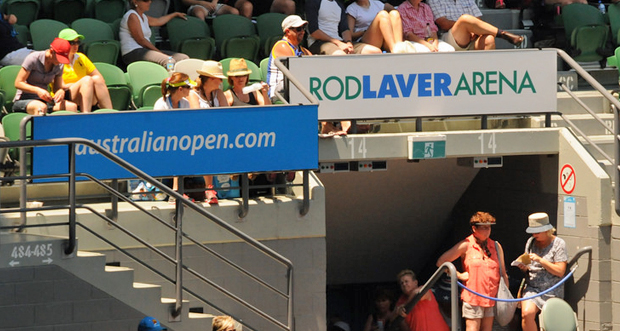
    Action on Rod Laver Arena on Day 1 of the 2015 Australian Open begins with Simona Halep (ROU), the No. 3 seed, taking on the Italian Karin Knapp. They will be followed by Ana Ivanovic (SRB), the No. 5 seed, who will play Lucie Hradecka (CZE). Up next, the men’s No. 3 seed, Rafael Nadal (ESP), plays the veteran Russian Mikhail Youzhny. The night session begins with Roger Federer (SUI), the No. 2 seed, who will face Yen-Hsun Lu (TPE). The final match pits the women’s No. 2 seed, Maria Sharapova (RUS), against Petra Martic (CRO).

    The full schedule for Day 1 is listed below (Results to follow).  All times are local.

    [divider]

    Rod Laver Arena — 11:00am

    Women’s Singles – Round 1
    Simona Halep (ROU) (3) d. Karin Knapp (ITA) — 6-3, 6-2

    Women’s Singles – Round 1
    Lucie Hradecka (CZE) d. Ana Ivanovic (SRB) (5) — 1-6, 6-3, 6-2

    [divider]

    Click here to discuss the Men’s Day 1 matches in the discussion forum.

    Click here to discuss the Women’s Day 1 matches in the discussion forum.

    [divider]

    Not Before: 2:00pm

    Men’s Singles – Round 1
    Rafael Nadal (ESP) (3) d. Mikhail Youzhny (RUS) — 6-3, 6-2, 6-2

    Not Before 7:00pm

    Men’s Singles – Round 1
    Roger Federer (SUI) (2) d. Yen-Hsun Lu (TPE) — 6-4, 6-2, 7-5

    Women’s Singles – Round 1
    Maria Sharapova (RUS) (2) d. Petra Martic (CRO) — 6-4, 6-1

    [divider]

    Margaret Court Arena — 11:00am 

    Women’s Singles – Round 1
    Jarmila Gajdosova (AUS) d. Alexandra Dulgheru (ROU) — 6-3, 6-4

    Men’s Singles – Round 1
    Andy Murray (GBR) (6) d. Yuki Bhambri (IND) — 6-3, 6-4, 7-6(3)

    Women’s Singles – Round 1
    Irina-Camelia Begu (ROU) d. Angelique Kerber (GER) (9) — 6-4, 0-6, 6-1

    Not Before 7:00pm

    Women’s Singles – Round 1
    Eugenie Bouchard (CAN) (7) d. Anna-Lena Friedsam (GER) — 6-2, 6-4

    Men’s Singles – Round 1
    Nick Kyrgios (AUS) d. Federico Delbonis (ARG) — 7-6(2), 3-6, 6-3, 6-7(5), 6-3

    [divider]

    Hisense Arena — 11:00am

    Women’s Singles – Round 1
    Julia Goerges (GER) d. Belinda Bencic (SUI) (32) — 6-2, 6-1

    Women’s Singles – Round 1
    Kristina Mladenovic (FRA) d. Sabine Lisicki (GER) (28) — 4-6, 6-4, 6-2

    Men’s Singles – Round 1
    Bernard Tomic (AUS) d. Tobias Kamke (GER) — 7-5, 6-7(1), 6-3, 6-2

    Not Before: 5:00pm

    Men’s Singles – Round 1
    Sam Groth (AUS) d. Filip Krajinovic (SRB) — 6-3, 7-6(4), 6-4

    [divider]

    Show Court 2 — 11:00am 

    Men’s Singles – Round 1
    Grigor Dimitrov (BUL) (10) d. Dustin Brown (GER) — 6-2, 6-3, 6-2

    Women’s Singles – Round 1
    Caroline Garcia (FRA) d. Svetlana Kuznetsova (RUS) (27) — 6-4, 6-2

    Men’s Singles – Round 1
    Tomas Berdych (CZE) (7) d. Alejandro Falla (COL) — 6-3, 7-6(1), 6-3

    Women’s Singles – Round 1
    Monica Puig (PUR) d. Arina Rodionova (AUS) — 6-0, 6-3

    Women’s Singles – Round 1
    Yaroslava Shvedova (KAZ) d. Lucie Safarova (CZE) (16) — 6-4, 2-6, 8-6

    [divider]

    Show Court 3 — 11:00am 

    Men’s Singles – Round 1
    Marinko Matosevic (AUS) d. Alexander Kudryavtsev (RUS) — 6-4, 6-7(5), 4-6, 7-5, 6-3

    Women’s Singles – Round 1
    Yanina Wickmayer (BEL) d. Anastasia Pavlyuchenkova (RUS) (23) — 4-6, 6-3, 6-3

    Women’s Singles – Round 1
    Ekaterina Makarova (RUS) (10) d. An-Sophie Mestach (BEL) — 6-2, 6-2

    Not Before: 6:00pm

    Men’s Singles – Round 1
    Thanasi Kokkinakis (AUS) d. Ernests Gulbis (LAT) (11) — 5-7, 6-0, 1-6, 7-6(2), 8-6

    [divider]

    Court 6 — 11:00am

    Women’s Singles – Round 1
    Shuai Peng (CHN) (21) d. Tatjana Maria (GER) — 6-4, 7-5

    Men’s Singles – Round 1
    James Duckworth (AUS) d. Blaz Kavcic (SLO) — 6-2, 5-7, 7-6(7), 3-6, 6-2

    Women’s Singles – Round 1
    Sara Errani (ITA) (14) d. Grace Min (USA) — 6-1, 6-0

    Men’s Singles – Round 1
    Simone Bolelli (ITA) d. Juan Monaco (ARG) — 6-3, 3-6, 6-3, 6-1

    [divider]

    Court 7 — 11:00am 

    Women’s Singles – Round 1
    Klara Koukalova (CZE) d. Storm Sanders (AUS) — 7-5, 6-4

    Men’s Singles – Round 1
    David Goffin (BEL) (20) d. Michael Russell (USA) — 6-3, 6-3, 5-7, 6-0

    Women’s Singles – Round 1
    Zarina Diyas (KAZ) (31) d. Urszula Radwanska (POL) — 3-6, 6-4, 6-2

    Not Before: 6:00pm

    Men’s Singles – Round 1
    Viktor Troicki (SRB) d. Jiri Vesely (CZE) — 6-3, 3-6, 6-2, 6-3

    [divider]

    Court 8 — 11:00am

    Men’s Singles – Round 1
    Martin Klizan (SVK) (32) d. Tatsuma Ito (JPN) — 7-6(6), 6-2, 6-4

    Women’s Singles – Round 1
    Polona Hercog (SLO) d. Qiang Wang (CHN) — 3-6, 6-3, 6-2

    Men’s Singles – Round 1
    Leonardo Mayer (ARG) (26) d. John Millman (AUS) — 6-3, 6-3, 6-2

    Women’s Singles – Round 1
    Kiki Bertens (NED) d. Daria Gavrilova (AUS) — 7-6(8), 5-7, 6-2

    [divider]

    Court 10 — 11:00am 

    Women’s Singles – Round 1
    Magdalena Rybarikova (SVK) d. Ana Konjuh (CRO) — 6-4, 6-4

    Women’s Singles – Round 1
    Anna Schmiedlova (SVK) d. Chanelle Scheepers (RSA) — 6-4, 4-6, 6-2

    Men’s Singles – Round 1
    Lukas Rosol (CZE) (28) d. Kenny De Schepper (FRA) — 4-6, 6-2, 6-7(4), 6-3, 6-4

    Not Before: 6:00pm

    Men’s Singles – Round 1
    Malek Jaziri (TUN) d. Mikhail Kukushkin (KAZ) — 6-2, 6-3, 2-6, 7-6(3)

    [divider]

    Court 11 — 11:00am 

    Men’s Singles – Round 1
    Lukas Lacko (SVK) d. Maximo Gonzalez (ARG) — 4-6, 6-2, 7-5, 6-7(4), 6-1

    Women’s Singles – Round 1
    Bethanie Mattek-Sands (USA) d. Ying-Ying Duan (CHN) — 6-4, 3-6, 6-3

    Men’s Singles – Round 1
    Jurgen Melzer (AUT) d. Victor Estrella Burgos (DOM) — 6-1, 6-4, 6-2

    Women’s Singles – Round 1
    Carina Witthoeft (GER) d. Carla Suarez Navarro (ESP) (17) — 6-3, 6-1

    [divider]

    Court 12 — 11:00am 

    Men’s Singles – Round 1
    Ricardas Berankis (LTU) d. Igor Sijsling (NED) — 2-6, 6-4, 7-6(2), 6-7(6), 6-4

    Women’s Singles – Round 1
    Stefanie Voegele (SUI) d. Pauline Parmentier (FRA) — 6-1, 3-6, 6-2

    Men’s Singles – Round 1
    Philipp Kohlschreiber (GER) (22) d. Paul-Henri Mathieu (FRA) — 6-2, 6-2, 6-1

    Women’s Singles – Round 1
    Roberta Vinci (ITA) d. Bojana Jovanovski (SRB) — 7-5, 6-1

    [divider]

    Court 13 — 11:00am

    Men’s Singles – Round 1
    Joao Sousa (POR) d. Jordan Thompson (AUS) — 6-4, 7-6(5), 6-4

    Men’s Singles – Round 1
    Marcos Baghdatis (CYP) d. Teymuraz Gabashvili (RUS) — 6-2, 6-7(5), 3-6, 6-4, 6-4

    Women’s Singles – Round 1
    Silvia Soler-Espinosa (ESP) d. Annika Beck (GER) — 7-5, 6-4

    [divider]

    Court 15 — 11:00am 

    Men’s Singles – Round 1
    Jeremy Chardy (FRA) (29) d. Borna Coric (CRO) — 3-6, 6-4, 7-5, 6-4

    Women’s Singles – Round 1
    Karolina Pliskova (CZE) (22) d. Evgeniya Rodina (RUS) — 7-5, 6-1

    Women’s Singles – Round 1
    Christina McHale (USA) d. Stephanie Foretz (FRA) — 6-4, 1-6, 12-10

    Men’s Singles – Round 1
    Ivo Karlovic (CRO) (23) d. Ruben Bemelmans (BEL) — 6-4, 6-2, 6-4

    [divider]

    Court 19 — 11:00am

    Men’s Singles – Round 1
    Kevin Anderson (RSA) (14) d. Diego Schwartzman (ARG) — 7-6(5), 7-5, 5-7, 6-4

    Women’s Singles – Round 1
    Katerina Siniakova (CZE) d. Elena Vesnina (RUS) — 6-2, 7-5

    Men’s Singles – Round 1
    Edouard Roger-Vasselin (FRA) d. Tommy Robredo (ESP) (15) — 2-3 (Ret.)

    Women’s Singles – Round 1
    Alexandra Panova (RUS) d. Sorana Cirstea (ROU) — 7-5, 6-0

    [divider]

    Court 20 — 11:00am

    Women’s Singles – Round 1
    Lara Arruabarrena (ESP) d. Renata Voracova (CZE) — 6-1, 6-2

    Men’s Singles – Round 1
    Richard Gasquet (FRA) (24) d. Carlos Berlocq (ARG) — 6-1, 6-3, 6-1

    Men’s Singles – Round 1
    Tim Smyczek (USA) d. Luke Saville (AUS) — 7-6(2), 7-5, 6-4

    [divider]

    Court 22 — 11:00am

    Men’s Singles – Round 1
    Andreas Seppi (ITA) d. Denis Istomin (UZB) — 5-7, 6-3, 2-6, 6-1, 6-4

    Women’s Singles – Round 1
    Oceane Dodin (FRA) d. Alison Riske (USA) — 7-6(5), 3-6, 6-3

    Men’s Singles – Round 1
    Dudi Sela (ISR) d. Jan-Lennard Struff (GER) — 6-4, 4-6, 3-6, 6-3, 7-5

    [divider]

    Cover Photo (Creative Commons License): Phil’s Fotos
  • 2015 Australian Open Men’s Draw

    2015 Australian Open Men’s Draw

    Australian Open

    The men’s draw for the 2015 Australian Open was released today. In the top half are the No. 1 seed, Novak Djokovic (SRB), and the No. 4 seed, Stan Wawrinka (SUI). In the bottom half are the No. 2 seed, Roger Federer (SUI), and the No. 3 seed, Rafael Nadal (ESP).

    [divider]

    Click here to discuss the 2015 Australian Open Men’s Draw in the discussion forum.

    [divider]

    First Quarter

    Novak Djokovic (SRB) (1)
    Aljaz Bedene (SLO)

    Andrey Kuznetsov (RUS)
    Albert Ramos-Vinolas (ESP)

    Go Soeda (JPN)
    Elias Ymer (SWE)

    James Ward (GBR)
    Fernando Verdasco (ESP) (31)

    John Isner (USA) (19)
    Jimmy Wang (TPE)

    Laurent Lokoli (FRA)
    Andreas Haider-Maurer (AUT)

    Pablo Carreno Busta (ESP)
    Gilles Muller (LUX)

    Dominic Thiem (AUT)
    Roberto Bautista Agut (ESP) (13)

    Feliciano Lopez (ESP) (12)
    Denis Kudla (USA)

    Blaz Rola (SLO)
    Adrian Mannarino (FRA)

    Hiroki Moriya (JPN)
    Jerzy Janowicz (POL)

    Lucas Pouille (FRA)
    Gael Monfils (FRA) (17)

    Julien Benneteau (FRA) (25)
    Benjamin Becker (GER)

    Lleyton Hewitt (AUS)
    Ze Zhang (CHN)

    Donald Young (USA)
    Tim Puetz (GER)

    Illya Marchenko (UKR)
    Milos Raonic (CAN) (8)

    [divider]

    Second Quarter

    Stan Wawrinka (SUI) (4)
    Marsel Ilhan (TUR)

    Marius Copil (ROU)
    Pablo Andujar (ESP)

    Jarkko Nieminen (FIN)
    Andrey Golubev (KAZ)

    Matthias Bachinger (GER)
    Pablo Cuevas (URU) (27)

    Alexandr Dolgopolov (UKR) (21)
    Paolo Lorenzi (ITA)

    Sam Querrey (USA)
    Vasek Pospisil (CAN)

    Guillermo Garcia-Lopez (ESP)
    Peter Gojowczyk (GER)

    Alejandro Gonzalez (COL)
    Fabio Fognini (ITA) (16)

    David Ferrer (ESP) (9)
    Thomaz Bellucci (BRA)

    Sergiy Stakhovsky (UKR)
    Dusan Lajovic (SRB)

    Marcel Granollers (ESP)
    Stephane Robert (FRA)

    Robin Haase (NED)
    Gilles Simon (FRA) (18)

    Santiago Giraldo (COL) (30)
    Jan Hernych (CZE)

    Kyle Edmund (GBR)
    Steve Johnson (USA)

    Ivan Dodig (CRO)
    Joao Souza (BRA)

    Nicolas Almagro (ESP)
    Kei Nishikori (JPN) (5)

    [divider]

    Third Quarter

    Tomas Berdych (CZE) (7)
    Alejandro Falla (COL)

    Jurgen Melzer (AUT)
    Victor Estrella Burgos (DOM)

    Jiri Vesely (CZE)
    Viktor Troicki (SRB)

    John Millman (AUS)
    Leonardo Mayer (ARG) (26)

    Philipp Kohlschreiber (GER) (22)
    Paul-Henri Mathieu (FRA)

    Tobias Kamke (GER)
    Bernard Tomic (AUS)

    Sam Groth (AUS)
    Filip Krajinovic (SRB)

    Thanasi Kokkinakis (AUS)
    Ernests Gulbis (LAT) (11)

    Kevin Anderson (RSA) (14)
    Diego Schwartzman (ARG)

    Ricardas Berankis (LTU)
    Igor Sijsling (NED)

    Blaz Kavcic (SLO)
    James Duckworth (AUS)

    Carlos Berlocq (ARG)
    Richard Gasquet (FRA) (24)

    Lukas Rosol (CZE) (28)
    Kenny De Schepper (FRA)

    Jan-Lennard Struff (GER)
    Dudi Sela (ISR)

    Luke Saville (AUS)
    Tim Smyczek (USA)

    Mikhail Youzhny (RUS)
    Rafael Nadal (ESP) (3)

    [divider]

    Fourth Quarter

    Andy Murray (GBR) (6)
    Yuki Bhambri (IND)

    Alexander Kudryavtsev (RUS)
    Marinko Matosevic (AUS)

    Jordan Thompson (AUS)
    Joao Sousa (POR)

    Tatsuma Ito (JPN)
    Martin Klizan (SVK) (32)

    David Goffin (BEL) (20)
    Michael Russell (USA)

    Marcos Baghdatis (CYP)
    Teymuraz Gabashvili (RUS)

    Maximo Gonzalez (ARG)
    Lukas Lacko (SVK)

    Dustin Brown (GER)
    Grigor Dimitrov (BUL) (10)

    Tommy Robredo (ESP) (15)
    Edouard Roger-Vasselin (FRA)

    Malek Jaziri (TUN)
    Mikhail Kukushkin (KAZ)

    Federico Delbonis (ARG)
    Nick Kyrgios (AUS)

    Ruben Bemelmans (BEL)
    Ivo Karlovic (CRO) (23)

    Jeremy Chardy (FRA) (29)
    Borna Coric (CRO)

    Andreas Seppi (ITA)
    Denis Istomin (UZB)

    Juan Monaco (ARG)
    Simone Bolelli (ITA)

    Yen-Hsun Lu (TPE)
    Roger Federer (SUI) (2)

    [divider]

    Cover Photo (Creative Commons License): skamaica

  • 2015 Australian Open Women’s Draw

    2015 Australian Open Women’s Draw

    Australian Open

    The women’s draw for the 2015 Australian Open was released today. In the top half are the No. 1 seed, Serena Williams (USA), and the No. 4 seed, Petra Kvitova (CZE). In the bottom half are the No. 2 seed, Maria Sharapova (RUS), and the No. 3 seed, Simona Halep (ROM).

    [divider]

    Click here to discuss the 2015 Australian Open Women’s Draw in the discussion forum.

    [divider]

    First Quarter

    Serena Williams (USA) (1)
    Alison Van Uytvanck (BEL)

    Vera Zvonareva (RUS)
    Ons Jabeur (TUN)

    Olivia Rogowska (AUS)
    Nicole Gibbs (USA)

    Jana Cepelova (SVK)
    Elina Svitolina (UKR) (26)

    Garbine Muguruza (ESP) (24)
    Marina Erakovic (NZL)

    Daniela Hantuchova (SVK)
    Saisai Zheng (CHN)

    Kimiko Date-Krumm (JPN)
    Anna Tatishvili (USA)

    Timea Bacsinszky (SUI)
    Jelena Jankovic (SRB) (15)

    Dominika Cibulkova (SVK) (11)
    Kirsten Flipkens (BEL)

    Tsvetana Pironkova (BUL)
    Heather Watson (GBR)

    Romina Oprandi (SUI)
    Denisa Allertova (CZE)

    Shuai Zhang (CHN)
    Alize Cornet (FRA) (19)

    B.Zahlavova Strycova (CZE) (25)
    Timea Babos (HUN)

    Jie Zheng (CHN)
    Kai-Chen Chang (TPE)

    Sloane Stephens (USA)
    Victoria Azarenka (BLR)

    Taylor Townsend (USA)
    Caroline Wozniacki (DEN) (8)

    [divider]

    Second Quarter

    Petra Kvitova (CZE) (4)
    Richel Hogenkamp (NED)

    Donna Vekic (CRO)
    Mona Barthel (GER)

    Lesia Tsurenko (UKR)
    Madison Keys (USA)

    Yvonne Meusburger (AUT)
    Casey Dellacqua (AUS) (29)

    Samantha Stosur (AUS) (20)
    Monica Niculescu (ROU)

    Francesca Schiavone (ITA)
    Coco Vandeweghe (USA)

    Irina Falconi (USA)
    Kaia Kanepi (EST)

    Madison Brengle (USA)
    Andrea Petkovic (GER) (13)

    Flavia Pennetta (ITA) (12)
    Camila Giorgi (ITA)

    Tereza Smitkova (CZE)
    Mirjana Lucic-Baroni (CRO)

    Lauren Davis (USA)
    Aleksandra Krunic (SRB)

    M.Torro-Flor (ESP)
    Venus Williams (USA) (18)

    Varvara Lepchenko (USA) (30)
    Vitalia Diatchenko (RUS)

    Shelby Rogers (USA)
    Ajla Tomljanovic (AUS)

    Alla Kudryavtseva (RUS)
    Johanna Larsson (SWE)

    Kurumi Nara (JPN)
    Agnieszka Radwanska (POL) (6)

    [divider]

    Third Quarter

    Ana Ivanovic (SRB) (5)
    Lucie Hradecka (CZE)

    Polona Hercog (SLO)
    Qiang Wang (CHN)

    Storm Sanders (AUS)
    Klara Koukalova (CZE)

    Julia Goerges (GER)
    Belinda Bencic (SUI) (32)

    Karolina Pliskova (CZE) (22)
    Evgeniya Rodina (RUS)

    Alison Riske (USA)
    Oceane Dodin (FRA)

    Roberta Vinci (ITA)
    Bojana Jovanovski (SRB)

    An-Sophie Mestach (BEL)
    Ekaterina Makarova (RUS) (10)

    Sara Errani (ITA) (14)
    Grace Min (USA)

    S.Soler-Espinosa (ESP)
    Annika Beck (GER)

    Renata Voracova (CZE)
    Lara Arruabarrena (ESP)

    Yanina Wickmayer (BEL)
    A.Pavlyuchenkova (RUS) (23)

    Sabine Lisicki (GER) (28)
    Kristina Mladenovic (FRA)

    Ying-Ying Duan (CHN)
    Bethanie Mattek-Sands (USA)

    Jarmila Gajdosova (AUS)
    Alexandra Dulgheru (ROU)

    Karin Knapp (ITA)
    Simona Halep (ROU) (3)

    [divider]

    Fourth Quarter

    Eugenie Bouchard (CAN) (7)
    Anna-Lena Friedsam (GER)

    Kiki Bertens (NED)
    Daria Gavrilova (AUS)

    Stefanie Voegele (SUI)
    Pauline Parmentier (FRA)

    Caroline Garcia (FRA)
    Svetlana Kuznetsova (RUS) (27)

    C.Suarez Navarro (ESP) (17)
    Carina Witthoeft (GER)

    Stephanie Foretz (FRA)
    Christina McHale (USA)

    Elena Vesnina (RUS)
    Katerina Siniakova (CZE)

    Irina-Camelia Begu (ROU)
    Angelique Kerber (GER) (9)

    Lucie Safarova (CZE) (16)
    Yaroslava Shvedova (KAZ)

    Monica Puig (PUR)
    Arina Rodionova (AUS)

    Ana Konjuh (CRO)
    Magdalena Rybarikova (SVK)

    Tatjana Maria (GER)
    Shuai Peng (CHN) (21)

    Zarina Diyas (KAZ) (31)
    Urszula Radwanska (POL)

    Anna Schmiedlova (SVK)
    Chanelle Scheepers (RSA)

    Alexandra Panova (RUS)
    Sorana Cirstea (ROU)

    Petra Martic (CRO)
    Maria Sharapova (RUS) (2)

    [divider]

    Cover Photo (Creative Commons License): brassynn

  • What to Expect from Stan Wawrinka in 2015? / Kalle Tyynelä

    What to Expect from Stan Wawrinka in 2015? / Kalle Tyynelä

    Stan Wawrinka

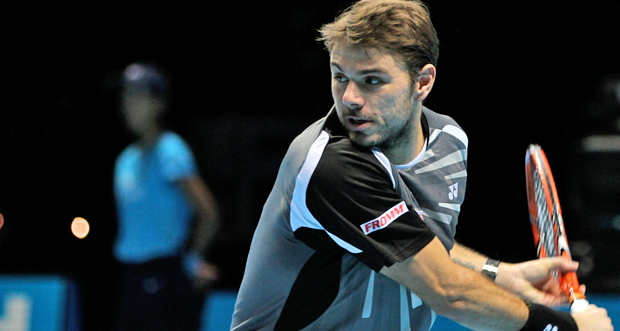
    Stan Wawrinka has been a late-bloomer. Not many, if any, people expected him to be the first new Grand Slam champion after 2013, despite Stan having broken back into the Top 10, and showing skills to challenge the best players. But he was able to take the step forward and beat the best players in the world to win the Australian Open title. Still, he couldn’t reach late stages with the consistency the Big Four used to do but his Monte Carlo title, World Tour Finals semifinal, and the performances in the victorious Davis Cup finals show he isn’t a one-hit wonder. When Stan plays his best tennis, he is one of the best players in the world.

    But what to expect from him in 2015? He lost to Novak Djokovic and Rafael Nadal in the Abu Dhabi exhibition tournament. Yet, while those two lost on the following week to weaker players, Stan won the Chennai tournament. While Chennai didn’t have the strongest field, winning without dropping a set is a good sign; he must be playing some consistent tennis. That is good to see after last year when he had some upset losses to players with low rankings.

    [divider]

    Click here to discuss “What to Expect from Stan Wawrinka in 2015?” in the discussion forum.

    [divider]

    One can wonder if his new status as a Grand Slam champion affected to his performances last year. In 2013 he didn’t win big titles but was more consistent than last year. After titles in Chennai and the Australian Open, he couldn’t play two good events in a row before the World Tour Finals and the Davis Cup final.

    Now he is starting a tournament with maybe more pressure than ever. For the first time, he is defending a Grand Slam title. And those 2,000 points are very important for his ranking. It is very likely he will fall from the Top 4; even successfully defending the title doesn’t guarantee his retaining the ranking of No. 4. Failing to make the quarterfinals could see him falling out of the Top 10. And even making the semifinals doesn’t guarantee him staying in the Top 8, which would be important for the draws.

    Having to deal with tougher draws can make this season a bit more difficult for him. But as the usual Big Four are facing strong contention from players like Nishikori and Cilic, it seems like a Top-4 seeding doesn’t anymore guarantee a safe quarterfinal. Staying in the Top 8 would still be important. Facing non-Top-8 players in quarterfinals would help a lot.

    Then, what do I think he will achieve this year? I am pretty confident he will end the year in the Top 8, and his usual level is enough to take him into the quarterfinals or semifinals of a big event. Can he win a Slam or a Masters this year? I don’t know but surely he has the skills for that. Nobody can afford a bad day against a well-playing Wawrinka. And his Australian Open and Monte Carlo titles are proof he can play a big tournament without a bad day, something that is needed for a tournament win.

    But what Wawrinka is missing to be a constant title favorite and a real contender for the No. 1 ranking is the ability to turn tight matches into his favor, something the very best players can do. So often last year, Stan couldn’t find a way to win when he faced adversity. And to win big titles, he must win matches like last year’s World Tour Finals semifinal against Federer, when he served for the match, yet ended up losing.

    The surface where I think Stan has the best chance to win something big is hard courts. Clay may be his preferred surface and some of his best performances have happened on clay — for example, the Monte Carlo semifinal against Ferrer or the Davis Cup final against Tsonga. But I think he has better chances against Nadal’s or Djokovic’s defense in faster conditions. While Stan is more vulnerable on faster surfaces, he has a better chance to hit through best defenses on hard courts.

    So, Top 8 is my expectation for Wawrinka in 2014. I believe he will make some semifinals in big events, and even big finals and titles are possible.

    [divider]

    Cover Photo (Creative Commons License): Marianne Bevis

  • Down the T #7: An Interview with Troy Deighton, Lines Umpire / Margaret McAleer

    Down the T #7: An Interview with Troy Deighton, Lines Umpire / Margaret McAleer

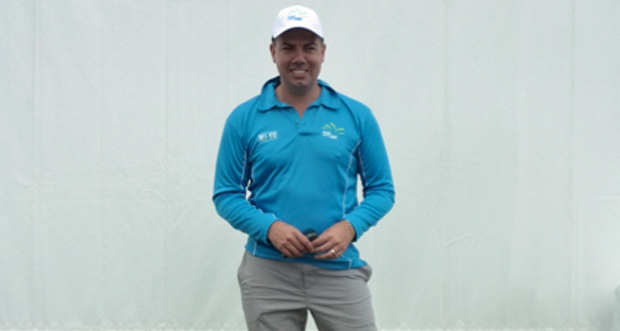
    Troy Deighton

    “Team work is the key to becoming a successful lines umpire. Not only do they call all shots related to their assigned line, they also work together with the Chair Umpire so that the match is played in a professional manner.”

    I would like to introduce Mr Troy Deighton, a lines umpire, to the readers of Tennis Frontier. I interviewed him at Apia International, Sydney, on the 12th of January.

    Mr Deighton has been umpiring tennis professionally since 1999-2000 — approaching fifteen years. In that time he has worked his way up through junior tennis, amateur tournaments at NSW level in Sydney, Australia, right up to Grand Slams. He has officiated at one dozen Australian Open finals, the last two U.S. Open finals in New York, as well as many Davis Cup and Fed Cup ties. I had the pleasure of posing many questions to him regarding the role of a lines umpire. He gave his opinion on Hawkeye, and the foot fault rule, giving informed and insightful answers, as the readers of Tennis Frontier will no doubt find out, when they read the full interview.

    [divider]

    Question: Can you explain the training for becoming a lines umpire?

    Deighton: The training is not overly extensive. It’s a matter of knowing if a ball is in or out. Obviously that depends on how good your eyesight is, to be honest. You need to understand the basic rules of tennis, go through an introductory course about the basics, in terms of the rules. When you are first starting out, it’s more about learning the technique of calling lines, whether you are on the side lines, or the cross lines on the court. There are differences in the way you call lines, knowing whether the ball is in or out to start with, and what constitutes the ball being in or out, is what you need to know when you are starting out.

    [divider]

    Question: How does a lines umpire work his/her way up to be able to work at Master Series and Grand Slam tournaments?

    Deighton: You start out with your national association. Here in Australia it’s Tennis Officials Australia, which is separate to Tennis Australia. Tennis Australia obviously pour a lot of money into developing officials, but there is also Tennis Officials Australia which is basically for nurturing new recruits and developing umpires at the early stage, and you work your way through the tournaments. Once you have done your introductory course, you become a lines umpire at a local level doing junior tournaments, amateur adult tournaments, you work your way through Australian money tournaments, Pro tours, Pro circuits, Challengers. After maybe twelve months or two years you might get a gig like this at the Apia International, in Sydney. After a couple more years you might get into your first Grand Slam, being the Australian Open. Then it is just a matter of developing your skills, your techniques, developing your grades. When your grades are good enough you may get selected for other professional events like Fed Cup and Davis Cup and other Grand Slams.

    [divider]

    Question: Do lines umpires at Master Series and Grand Slam tournaments get paid well? Do they have to cover their own traveling and accommodation costs?

    Deighton: The conditions which lines umpires work vary from tournament to tournament. At a local level, when you are starting out, you might make enough money to cover your petrol to and from that tournament for the day. So there is not a lot of money when you are first starting out. It’s more about being a hobby; if you are interested in tennis it’s a good way to get involved. Not everyone can hit a tennis ball, but they love tennis and find this sort of work as a way to get involved, being in the game that they love. It’s not all about the money, even at the top end of the sport, when you have been on the circuit traveling the world for many years; many umpires find it very hard to break even. So they are basically paying their way around the world. Yes, you could probably make money out of it, if you are very good and stick at it for a while, but most people see it as a second job or a hobby. You can get some cool tennis clothes out of it and shoes at tournaments. There is a little bit of money which I guess is nice as well.

    [divider]

    Question: Is there any age when a lines umpire has to retire?

    Deighton: Not in Australia. I can’t speak for other tournaments around the world. We have lines umpires from mid-teens to their eighties here in Sydney. The gentleman who is in his eighties is calling the ball as well as anyone else at the tournament. It goes on your ability. We have off-court assessors who watch our technique and monitor our accuracy, as well as the chair umpires who evaluate you from the chair as well. So long as you are performing and up to scratch in Australia at least there is no reason why you can’t continue working to a ripe old age.

    [divider]

    Question: I have noticed lines umpires spend a lot of time bending over. Do you personally suffer from a bad back? Do you have some sort of fitness program in place?

    Deighton: I don’t have a fitness program to be a lines umpire, especially on days like yesterday when you are sitting around all day and you tend to eat a lot because there is not much to do at tournaments, while you are waiting for the rain to stop and getting on court. I sort of hit the fitness regime after the summer of tennis when I have a few kilos to shed. You do bend over a lot and it can get quite uncomfortable. If you are on the cross lines, base lines, service lines you tend to be sitting down a lot as well. I think it just goes with the territory and I don’t have a program that I follow.

    [divider]

    Question: Can you tell us who assigns the lines umpires’ positions on the tennis court? Have you a favourite position?

    Deighton: The lines umpires’ positions again comes down to their grading. There are three different grades you have as a lines umpire. You get graded on the long line, which are the side lines of the court. The far line being the furthest from the chair, the near line being the closest to the chair. So you have an overall long line grading, a service line grading, and a baseline grading. Depending on how your grades are and what your rating is on those lines, you are more likely, if you have a high grading on serve or base, you are more likely to get assigned those lines. When you are starting out, usually you start on the near line which is nearest the chair umpire. Obviously it is easier for the chair umpire to call that line and overrule if you make a mistake, then move to the far line and then the cross lines on the court. My favourite line, I like doing serve. You get more involved in a match having to do the ball changes; you are the point of contact for the chair umpire if they need something, so there is more responsibility, in terms of your role in the match. You call the serve and you get to enjoy the rest of the rally. It’s a good line to be on.

    [divider]

    Question: I believe one of the requirements of a lines umpire is to have excellent eye sight. Are lines umpires allowed to wear glasses or contact lenses on court?

    Deighton: The requirement for lines umpires in Australia is to have 20/20 vision and every couple of years we are required to undergo eye test and to provide a certificate to say that we have either 20/20 vision or corrected vision. Yes, you are allowed to wear glasses on court, or prescription sunglasses or contact lenses.

    [divider]

    Question: One of your duties is to go with a player who takes a bathroom break or changes of attire break, to ensure the player does not use the break for any other purpose. In your experience have there been any unusual incidents that you can recall?

    Deighton: No. I haven’t encountered any unusual incidents or behaviour during a toilet break or alike. It’s unusual when you see a player dart off the court during the television coverage with a lines umpire in tow. You think, Why is that person running after the player? It is just to make sure that the bathroom break is used for what it is, therefore to go to the toilet and nothing else — the players not receiving coaching or doing anything else which is out of sorts. Usually at Major tournaments like Grand Slams you will have a Tour Supervisor or a Grand Slam Supervisor there as well. Your job as a lines umpire is there to report any suspicious activity or irregular behaviour back to the chair umpire. It is up to them to determine when any further action is to be taken.

    [divider]

    Question: What is your opinion on Hawkeye?

    Deighton: I love Hawkeye. I think there was a lot of angst and I guess worry from lines umpires, and possibility chair umpires as well, when it was first introduced. I remember my first encounter with Hawkeye; it was the first year it was introduced in Melbourne, at the Australian Open. I was standing on the far line and it was either the first or second match on Rod Laver Arena. Andy Roddick challenged one of my calls on the far line, and then came back and stood shoulder to shoulder to me, as we watched the big screen to see whether I was right or not. It turned out that my call was correct, and he sort of gave me a pat on the back and said, “Oh, well done.” Hawkeye takes a bit of the pressure out of the matches, and I think players used to dwell on calls that they were unsure about for a few further points on. Now they have the ability to challenge, see what the result was, and then they can move on. So it takes a bit of the heat out and relieves a bit of the tension on court.

    [divider]

    Question: Have you ever been overruled by Hawkeye?

    Deighton: Yes, I have. It’s not good to be wrong, I guess, but it happens to everyone. We accept that and just as the players do, you accept that and move on. You’re only as good as your next call.

    [divider]

    Question: There has been a lot of discussion of late to use Hawkeye on clay courts, your opinion?

    Deighton: I am probably not the best to talk about clay courts because we don’t have many clay courts in Australia, and I haven’t really officiated on anything, or any professional event on clay. In terms of Hawkeye on hard courts or Rebound Ace, I think it is great. From my experience on clay and watching clay court tennis the ball mark is there for all to see. So I think it’s just doubling up. I don’t see the need.

    [divider]

    Question: Do you think with the technology we have, you are going to be obsolete soon, or do you think there will always be room for a lines umpire, even with technology?

    Deighton: I tend to think that the lines umpires are a part of professional tennis. I think the players respect them, I think the crowd respect the job they do. I think if we were to go to a system where the players were calling their own lines, relying on Hawkeye more — more than we are now — the game, in general, would just slow down completely. We would be forever going to the video. Replacing lines umpires would be to the detriment of the sport.

    [divider]

    Question: The Foot Fault Rule clearly states, “A player who is serving must stand behind the baseline, between the centre mark and the sideline. A foot fault takes place when your foot touches the ground on — or forward of — the service line before you strike the ball.”

    There has been a lot of controversy in our game with the foot fault rule. The most famous incident to date would be Serena Williams at the 2009 U.S Open, with her outburst towards the lines umpire over being foot faulted. In your opinion is it just a lack of focus and concentration, and, say, lazy footwork that causes a player to foot fault at times?

    Deighton: I think foot faulting comes down to technique and if a player is foot faulted, constantly or regularly, or even occasionally, possibly, when it is occasionally it may be a lack of concentration. It is obviously their technique that needs to be reviewed. As a lines umpire on the baseline, you can be foot faulted across the centre service line. The important thing is to call a foot fault when you see it, when you’re certain it is a foot fault — if they’re touching the line, or they have crossed the line, and at no other times. If there is any doubt in your mind that the foot fault is touching the line, you don’t call it. That saves the controversy. The rule is there. It’s there to be enforced and unfortunately for Serena that was the call that was made against her.

    [divider]

    Question: What is personally the best match you’re been a part of as a lines umpire?

    Deighton: I have been blessed. I have been doing this for fifteen years or so. I have had enormous opportunities. I have been to South Africa for an ATP event, all expenses paid, and I was very lucky to have that opportunity. I have been to Samoa for a Davis Cup tie — again, everything was covered. That event was just a great event to be a part of. Most recently I have been to three U.S. Opens and done the last two women’s finals, on the baseline on Arthur Ashe stadium. I love Melbourne Park. I don’t think there is anything better than walking through the gates of Melbourne Park on the first day at the Australian Open. Seeing tens of thousands of people pouring through the gates. It’s just a buzz. Compare that to walking onto Arthur Ashe Stadium in New York. I remember the first time I went out on Arthur Ashe for a night match three years ago, I was too scared to look up into the crowd, because my heart was racing. I was sitting on the service line and I didn’t want to look up. It took me about three games before I actually had the courage to, like, look at the chair umpire and acknowledge them, let alone look up into the stands, and they just seem to go up into the sky forever. It is an amazing spectacle, and looking down onto the court from the top, it’s just amazing. I also think American tennis fans are just unlike any others in the world. They tend to constantly talk, there is a constant buzz in the stadium, where we in Australia seem to be more mindful of the tennis etiquette. Where it is dead silent while the rallies are going on and then the stadium erupts. I love the buzz of going to the Australian Open and Melbourne Park every year. I love Rod Laver Arena under a closed roof, but there is just something special about New York and Flushing Meadows and being on Arthur Ashe.

    [divider]

    Question: In your opinion, in general, do players treat lines umpires well on court?

    Deighton: I think gone are the days where a player will launch a tirade at the lines umpire. I think we have seen it in occasional incidents where a player has erupted. I think they are very few and far between these days. I think Hawkeye has a lot to do with that. I think Hawkeye takes a lot of heat out of the moment and instead of erupting over a questionable call, at a crucial point in the match, the players are able to challenge, should they have any left, to resolve that situation there and then, and get on with the match. I also think that Hawkeye has a lot to do with the fact we don’t see as many lines umpires being verbally abused by players anymore. I also think the Code of Conduct is also being enforced a bit more, so players aren’t allowed to get away with as much as they used to. I think that the ITF, WTA, and ATP have a lot to be thanked for.

    [divider]

    Question: Final question, what is the best part of being a lines umpire in your opinion?

    Deighton: I will be completely honest with you and say it has nothing to do with tennis. It has nothing to do with what happens on court. What has sustained me for the past fifteen years umpiring, you know, after having done many Grand Slams and many Davis Cup and Fed Cup ties, ATP and WTA events and the like, are the friends that I have made, and the friends from around the world. You might see once every year, but you know when they walk through the door at the tournament, at the start of January and you haven’t seen them for twelve months, it just feels like you haven’t been apart. I think it is the friends. There is a real camaraderie between officials, particularly here in Australia. I think our typical Aussie laid-back attitude, the visiting officials from overseas, really love that and that is why they keep coming back. I think the Australian Open is known globally as The Happy Slam or The Friendly Slam, and it really is. Not just for the players who love coming here; the officials as well. I have had some amazing times on court, so many wonderful experiences and opportunities, but it is the friendships I have made from all around the world I really cherish.

    [divider]

    I would like to thank Troy Deighton for graciously giving his time in between his on-court duties at Apia International, Sydney for this interview.

    To Nicola Abercrombie: my thanks to you, for all your help in my initial request for interviewing a lines umpire and organizing my media pass. I would also like to thank Mr Glenn Toland, President of ANSW and Assistant Chief of Officials, Apia International, Sydney for choosing such an informative and affable lines umpire in Troy Deighton for me to interview.

    Margaret McAleer

  • Roger Federer Joins Elite 1,000 Match Winner Club

    Roger Federer Joins Elite 1,000 Match Winner Club

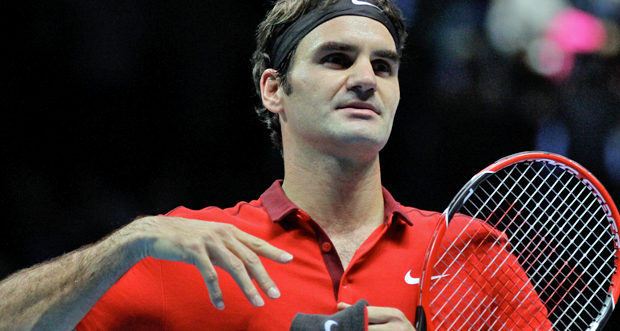
    Roger Federer

    Today’s final in Brisbane brought Roger Federer the chance to win his 1,000th match. It also meant he could add win his 83rd title — the most of all active players. With a three-set victory over Milos Raonic, Federer earned all of above. He now joins only two other players who have achieved this feat in the Open Era: Jimmy Connors (1,253) and Ivan Lendl (1,071).

    [divider]

    Click here to discuss Roger Federer’s Brisbane win in the discussion forum.

    [divider]

    Going into the Australian Open, the 33 year old is also now firmly seated at No. 2 in the world, ahead of Rafael Nadal and trailing only Novak Djokovic, both multiple Slam winners. Roger Federer has been in the Top 10 since October of 2002. He also has a tour leading 17 Grand Slam titles though he hasn’t won a Major since 2012. (He last won the Australian Open in 2010.)

    Considering he posted a 73-12 record in 2014, Federer is now projected to get past Ivan Lendl late this year or early next year.

    Cover Photo (Creative Commons License): Marianne Bevis

  • 15 Up-and-Coming Players to Watch in 2015 / Jonathan Northrop

    15 Up-and-Coming Players to Watch in 2015 / Jonathan Northrop

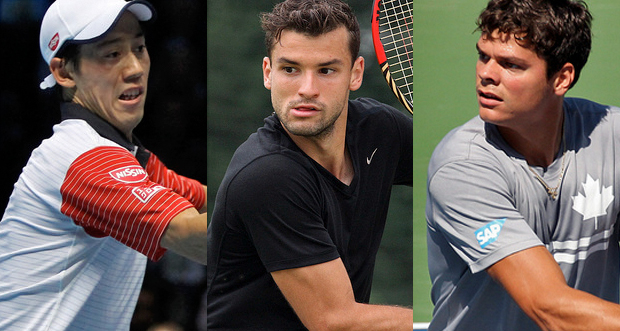
    Kei Nishikori Grigor Dimitrov Milos Raonic

    As the first tournaments of 2015 wrap up, it is almost shocking to think that the Australian Open is just around the corner on January 19. As always, we’ll all be watching the top players with the usual questions: How healthy will Rafael Nadal be and will it be enough to supplant Novak Djokovic at the top of the rankings? Can Novak maintain his focus? Will Father Time catch up with Roger Federer, who turns 34 later this year? Can Andy Murray find his 2012-13 form again? Will Juan Martin del Potro be healthy enough to rise again? And so on.

    But what about the rest of the pack? We focus so much on the “Big Four” and a few dark-horse candidates, while there are a lot of interesting stories and players beyond the big name elite. Let’s take a look at these other players, in particular those who bear watching in 2015 for whatever reason – but mainly as players poised to rise in the rankings. Some may be knocking at the door of the elite, while others may simply be establishing themselves as players to know, while others yet might be potential future stars.

    There are, of course, many other players worth watching – but I wanted to highlight these fifteen as particularly interesting, for a variety of reasons. Let’s take a look.

    [divider]

    Click here to discuss “15 Up-and-Coming Players to Watch in 2015” in the discussion forum.

    [divider]

    THE ALMOST BIG THREE
    Grigor Dimitrov

    Let’s start with Grigor Dimitrov, who may have been so overrated in the past in terms of expectations that he’s now being underrated (although his recent Brisbane demolishing at the hands of Federer is not exactly encouraging). Let us not forget that Grigor has improved in each year he’s been on tour; consider his year-end rankings since 2008: 493, 288, 106, 76, 48, 23, 11. Notice the trend? If Grigor keeps it up in 2015 he will possibly make it as high as the edge of the Top 5. But of course at some point he’s going to even out, and it is hard to imagine him supplanting Novak, Rafa, or even Roger. But it seems that he can beat anyone else, or at least remain competitive among the rest of the near-elites of the game. The problem with Grigor seems to be that, while he’s very good at almost every facet of the game, he doesn’t have any truly killer weapons – and seemingly lacks a killer instinct altogether.

    Prediction: The book is still open for Grigor. He needs something else — a killer shot and perhaps more of a killer instinct — to fully actualize his potential, otherwise he’ll remain more of a pretty player to watch, but not a true elite. In 2015 I think we’ll see continued incremental gains as Grigor creeps into the Top 10. He’ll continue to go deeper in Slams, being relevant at Masters tournaments, with a chance of winning one late in the year (Paris?), eventually earning his way to the World Tour Finals next November.

    Kei Nishikori
    On one hand, we may have seen the best of Kei in 2014. On the other, he seems to keep getting better and better, and of the rest of the field seems like he has what it takes to upset one of the Big Three. Kei is now a legit candidate to win a Masters and a dark horse at the Slams. Whether he has the stamina to make it through remains to be seen; despite his strong year, it should be remembered that he still only made it to the second week once.

    Prediction: Kei settles in within the second half of the Top 10. For some reason Nikolay Davydenko comes to mind – a player that never really challenged at Slams, but won a couple Masters and was always around. Perhaps Kei will have a similar peak.

    Milos Raonic
    At first I excluded Mighty Milos from this list but then I decided that it would be unfair. The big Yugo-Canadian is, quite frankly, a bit underrated at this point. Like Dimitrov it is hard to imagine him beating any of the Top 3 when it really counts, but he did just that versus Roger Federer at the Paris Masters. Milos continues to make small gains, as evidenced by his year-end rankings: 373, 156, 31, 13, 11, 8. If the pattern holds he’ll finish 2015 in the No. 5-6 range. At the least, though, I think Milos is a fixture to hand out in the latter half of the Top 10 for years to come, playing a similar role in the next half decade as Tsonga and Berdych have for the last half decade.

    Prediction: Something good for Milos in 2015. Will it be a Masters? A Slam even? Hard to imagine, but he’s knocking at the door. I think he wins several titles in 2015, maybe even a Masters. He feels close.

    DON’T FORGET ABOUT THE OTHER TWO
    Jiri Vesely & Dominic Thiem

    For some reason I pair these two players. Well, the reasons are pretty clear: they’re of a similar age, on the younger side of “Generation Raoshitrov”; Vesely’s advancement was steady but perhaps a bit disappointing, going from No. 85 to No. 66, while Thiem jumped 100 ranks from No. 139 to No. 39.

    Prediction: I expect continued steady progress from both. Both, I think, will fully establish themselves in the Top 40, and Thiem might even challenge for the Top 20. I think we’re still a couple years away from their peaks, but both should eventually be fixtures in the Top 20 and may even challenge for the Top 10 as players like Ferrer, Berdych, Wawrinka, and Tsonga age themselves out of it. But that’s probably a couple years away.

    THE BOYS ARE GROWING UP
    Nick Kyrgios

    The first of two up-and-comers to beat Rafael Nadal in 2014. Nick Kyrgios is a big kid (6’4”) with a big game and a big serve (14.8 ace %, good for No. 6 among the Top 50); I can’t help but think of Juan Martin del Potro when I see him out there. Ironically enough, the last time a teenager upset the world No. 1 at a Grand Slam was Rafa over Roger Federer at the 2005 French Open. Anyhow, great things are ahead for the Australian – he finished the year at No. 52 up from No. 182 in 2013, so he made quite a jump. He turns 20 years old in April, so still has some room to grow.

    Prediction: Nick makes steady progress but doesn’t quite jump into the elite. That said, he fights for, and at least comes close to, a year-end Top 20 ranking. While he may play the spoiler in 2015 again, he probably won’t be in the mix for big titles until 2016.

    Borna Coric
    No young player has me quite as excited as Borna Coric. I just see him having the highest upside of any player currently on the radar (that is, in the Top 300 or so). We all know him for taking out Rafael Nadal at Basel, but let’s not forget that he also beat Ernests Gulbis in that tournament and lost to red-hot David Goffin in three sets. Coric is for real and his advancement should be steady from here on, although at this point we should remain patient – he did just turn 18 a couple months ago, after all.

    That said, it is important to note that most truly elite players were ranked somewhere in the second half of the Top 100 or so at Coric’s age, and most jumped into the Top 20 the year after. Compare the year-end rankings for recent all-time greats at age 18 and 19:

    Djokovic: 78, 16
    Nadal: 51, 2
    Federer: 64, 29
    Sampras: 81, 5
    Agassi: 3, 7

    (Prior greats – starting with Agassi, but including Becker, Edberg, Wilander, etc., tended to have their break-out a year earlier, with age 17 being the first in the Top 100 and age 18 the big jump; one could speculate that perhaps we’re going ahead another year, with Nick Kyrgios’ trajectory being closer to the norm for elite players – first year in the Top 100 at age 19, big jump at age 20).

    Now compare the next tier down:
    Del Potro: 92, 44
    Murray: 65, 17
    Roddick: 156, 14
    Hewitt: 25, 7
    Kuerten: NA, 188
    Kafelnikov: 275, 102
    Courier: 43, 24

    As you can see, the next tier tends to rise a bit later, or at least more slowly.

    The point here is that if Coric is going to be great—as in an all-time great—then he needs to rise fast. Given the fact that players seem to be taking longer to develop these days with later peaks, I think we can go a bit easier on him and not expect a Rafa-like or Pete-like rise, but for me the benchmark would be a Top 40 or 50 ranking by year’s end. If he makes it into the upper half of the Top 100, then I think it is a sign that he has a chance to be special, even a truly great player. If he sticks around No. 100 or slips out of the Top 100, then we might need to temper our expectations a bit.

    Prediction: Borna will continue to rise, with some bumps in the road, but his overall trajectory will be clear. He finishes somewhere in the No. 40-50 range, although I would be surprised if he wins anything more than maybe an ATP 250.

    Alexander Zverev
    The second youngest player on this list, 17-year-old Zverev finished the year ranked No. 136. That might not sound all that impressive, but consider that of the active players who have ranked in the Top 10, only Tomas Berdych (No. 103), Lleyton Hewitt (No. 100), and Rafael Nadal (No. 49) ranked higher at the end of the year they turned 17. Novak was No. 186, Roger No. 301, and many players weren’t even on tour yet. While we should be moderate in our expectations at this point, it is hard not to get excited about this kid. If Nick Kyrgios and Borna Coric are the top two candidates to be the next elite players, then Zverev is No. 3 and not far behind.

    Prediction: Baby steps. Zverev doesn’t turn 18 until April, so has a lot of room to grow – both as a human body and as a player. I think he has a good shot at the Top 100 this year, but I wouldn’t expect much more than a year-end No. 80-100 ranking.

    OTHERS TO KEEP AN EYE ON
    Ernests Gulbis:
    Long viewed as an underachiever, Ernests (named after Hemingway) had his best year, challenging at one point for the Top 10. But questions remain: After an erratic career, can he maintain his current level? Can he take it a step higher? Or is he in the vein of up-and-down perennial underachievers like Alexandr Dolgopolov and Richard Gasquet? Who knows with Ernests. I suspect he’ll have more upsets like the fourth round French Open victory over Roger Federer, but not be consistent enough to break into the elite. That said, I think he’ll flirt with the Top 10 and maybe dip into it briefly, but then fall back and finish somewhere in the latter half of the Top 20. I’d prefer not to be so specific in my predictions, but for some reason No. 15-18 sounds about right.

    Jack Sock: While it is hard to become too excited about a 22-year old ranked No. 42 and with no titles to his name, consider that Sock is now the fourth highest ranked American and only one of five in the Top 100. Not only that, he’s the youngest American ranked in the Top 200, just a month younger than No. 121 Denis Kudla, and a few months younger than No. 190 Ryan Harrison. But here is where there is some hope: Sock’s rise has been strong and steady – consider his year-end rankings from 2010 to the present: 878, 381, 150, 102, 42. We probably can’t expect Sock to be the next Andy Roddick, but he could be the next John Isner or Mardy Fish.

    Stefan Kozlov: Stefan who? Well, a year or two from now he could be front and center in our minds. Who is Stefan Kozlov, you ask? He’s the youngest player to finish in the Top 500 this year at No. 468. No. 468?! Who cares? Well, I care – because Stefan Kozlov was born in 1998. Yes, 1998. Kozlov is 16-years old, turns 17 in February. He hasn’t done much yet, but he did play in the qualification rounds of the US Open, defeating his first round opponent, Mitchell Frank, before losing in three sets to “old man” Borna Coric. Kozlov is a long way away, but I wanted to introduce him as he’s a player worth keeping an eye on. Oh yeah, and best of all, while he’s Macedonia-born, he’s technically American (I know, it feels like cheating – but tell that to the Canadians re: Milos).

    Yoshihito Nishioka: In the shadow of similarly named (at least to a Westerner) top-ranked and fellow Japanese player, Kei Nishikori, Nishioka is 19 years old and ranked No. 156, and could be a real sleeper to break into the Top 100 next year and a player to watch.

    Thanasi Kokkinakis: Another member of the “Class of ’96,” which is turning out to have some talent. Kokkinakis is the third highest ranking teenager at No. 150, behind only Coric and Zverev. Another Australian to watch.

    Jared Donaldson: Ranked all the way down at No. 261, 18-year-old Jared Donaldson is worth mentioning not as much because he’s the sixth highest ranking teenager, but mainly because he’s the highest ranking American teenager; actually, he’s the highest ranking American age 21 or younger, which makes him arguably America’s Great Hope to return to relevance. But let’s check in next year to see where he is.

    Hyeon Chung: Korean-born, the fourth member of the Class of ’96 on this list (along with Coric, Kokkinakis, and Donaldson). I don’t know what his upside is but at No. 173 he’s the highest ranked Korean by a good margin, and well-situated on the career trajectory towards a strong career.

    ADDENDUM: Another 15 to the Mix
    I’d like to add a few more names to keep an eye on. Again, remember that the above list is not meant to be comprehensive, but a the same time I’d be remiss not to give at least an honorable mention to a few others.

    Roberto Bautista Agut: A surprising rise from No. 58 to No. 15 in 2014, can he maintain a top 20 ranking for a few years?
    David Goffin: After a disappointing 2013, Goffin had a tremendous rise in 2014, going from No. 110 to No. 22.
    Jerzy Janowicz: Let’s not forget about Jerzy, but’s he fast becoming a cautionary tale, a least for those of us that got excited a year or two ago. He’s still young enough to turn it around.
    Pablo Carreno Busta: It seemed that he was a cult favorite to be excited about a year ago, but after only a moderate rise in 2014–to a solid No. 49–I think expectations have cooled. Still, he’s a name to get used to as he could be a regular in the top 40 for years to come.
    Dusan Lajovic: Best known for making it the 4R at Roland Garros where he lost to Rafa, but not before beating Delbonis and Sock to get there. I think he’s a sleeper to be a solid player.
    Bernard Tomic: Oh Bernie, it is hard to root for you. You’re like a playboy superstar that isn’t a star. Time to grow up if you want a decent career.
    Victor Estrella Burgos: In contrast to Tomic, how can we not cheer for this guy? Starting on the ATP tour at age 33-34, and he made it as high as No. 65! Who knows what’s ahead but I’m cheering him on.
    Lucas Pouille: Another sleeper – seems talented.
    Luke Saville: Ditto. These guys aren’t future elites, but they are probably future top 50 players.
    Diego Schwartzman: At 5’7″ you’ve got our attention. Seems like another sleeper.
    Elias Ymer, Christian Garin, Roman Safiullin, Andrey Rublev, Gianluigi Quinzi: More young ‘uns to keep an eye on, all born in 1996-97.

    OK, that’s it. The problem with trying to be semi-comprehensive with this second list is that there is no way to draw the line. No Vasek Pospisil? Federico Delbonis? Well, I had to draw the line somewhere and it is “15 + another 15.”

  • WTA: Week No. 1

    WTA: Week No. 1

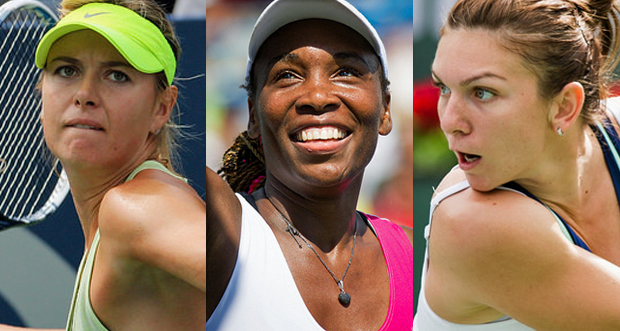
    Maria Sharapova Venus Williams Simona Halep

    The 2015 tennis season started with multiple events in different cities. Brisbane, Auckland, and Perth in Australia, plus Shenzhen in China were all hosting events. All this serving as warm-up to the first Grand Slam of 2015 in Melbourne, Australia.

    The first title of the season went to one of the oldest players on tour. Venus Williams scored her 46th career title in Auckland in a drama-filled three-set encounter against Caroline Wozniacki. The two former world No. 1’s delighted a packed crowd on a bright, windy, sunny afternoon for close to two hours. The final score was 2-6, 6-3, 6-3 in favor of Venus.

    Ana Ivanovic was in the same position as Venus, but she was competing in Brisbane, the only Premier-level event of the week, though Ana was the second seed and across the net was the top seed again. Maria Sharapova and Ana Ivanovic delivered and made the final in a dream match-up. Both former No. 1’s fought for 2 and 1/2 hours before Maria finished first in the three-set match. The first set alone took over an hour. Final score:  6-7(4), 6-3, 6-3.

    With Li Na’s retirement, Shenzhen was left without a defending champion in its third year of existance but WTA delivered two Top 10 stars in the form of Simona Halep and Petra Kvitova. In the end, the two stars delivered. Simona Halep won her first title of 2015, and her ninth overall in a little over an hour via straight sets; Petra Kvitova lost the semifinals to eventual runner-up Timea Bacsinszky.

  • Brisbane International – Monday, January 5 – Order of Play & Scores

    Brisbane International – Monday, January 5 – Order of Play & Scores

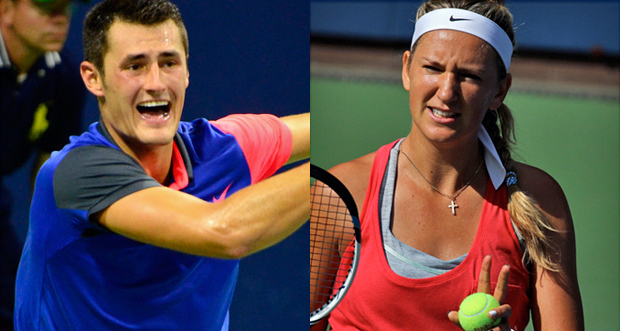
    Victoria Azarenka Bernard Tomic

    The night session on Pat Rafter Arena features two matches. Up first, Victoria Azarenka (BLR) takes on Karolina Pliskova, followed by local boy Bernard Tomic, who will play the American Sam Querrey. The full schedule is below.

    [Scores added as known. All times are local.]

    [divider]

    Monday, January 05, 2015

    Pat Rafter Arena — Start 11:00 am

    (4) Dominika Cibulkova (SVK) v Madison Keys (USA)

    (6) Gilles Simon (FRA) v (WC) James Duckworth (AUS)

    (8) Julien Benneteau (FRA) v (WC) Thanasi Kokkinakis (AUS)

    Not Before 7:00 pm

    Victoria Azarenka (BLR) v Karolina Pliskova (CZE)

    Bernard Tomic (AUS) v Sam Querrey (USA)

    [divider]

    Click here to discuss the ATP matches in the discussion forum.

    Click here to discuss the WTA matches in the discussion forum.

    [divider]

    Show Court 1 — Start 11:00 am

    (WC) Jarmila Gajdosova (AUS) v Shuai Zhang (CHN)

    (Q) Yaroslava Shvedova (KAZ) v Sabine Lisicki (GER)

    (3) Angelique Kerber (GER) v Caroline Garcia (FRA)

    Chris Guccione (AUS) / Lleyton Hewitt (AUS) v (WC) James Duckworth (AUS) / Marinko Matosevic (AUS)

    [divider]

    Show Court 2 — Start 11:00 am

    (Q) Daria Gavrilova (RUS) v Alison Riske (USA)

    (8) Garbine Muguruza (ESP) v Bethanie Mattek-Sands (USA)

    Jeremy Chardy (FRA) v Andrey Golubev (KAZ)

    (2) Rohan Bopanna (IND) / Daniel Nestor (CAN) v Alexandr Dolgopolov (UKR) / Kei Nishikori (JPN)

    (4) Eric Butorac (USA) / Sam Groth (AUS) v Jurgen Melzer (AUT) / Gilles Simon (FRA)

    [divider]

    Court 6 — Start 11:00 am

    Rhyne Williams (USA) v Matt Reid (AUS)

    Not Before 1:00 pm

    (2) Viktor Troicki (SRB) v (6) Denis Kudla (USA)

    Mirjana Lucic-Baroni (CRO) v Christina McHale (USA)

    (Q) Lesia Tsurenko (UKR) v (Q) Madison Brengle (USA)

    [divider]

    Court 14 — Start 11:00 am

    Frank Dancevic (CAN) v Lukasz Kubot (POL)

    (3) Marsel Ilhan (TUR) v Marius Copil (ROU)

    Jelena Jankovic (SRB) / Arantxa Parra Santonja (ESP) v Raluca Olaru (ROU) / Shuai Zhang (CHN)

    (2) Raquel Kops-Jones (USA) / Abigail Spears (USA) v Alla Kudryavtseva (RUS) / Alexandra Panova (RUS)

    Cover Photo (Creative Commons License): Steven Pisano / Marianne Bevis