Category: News

General Tennis News from the Tennis Frontier

  • NextGen 2016 in Review and 2017 Outlook — Part Two: The Sun Also Rises (1997-2000)

    NextGen 2016 in Review and 2017 Outlook — Part Two: The Sun Also Rises (1997-2000)

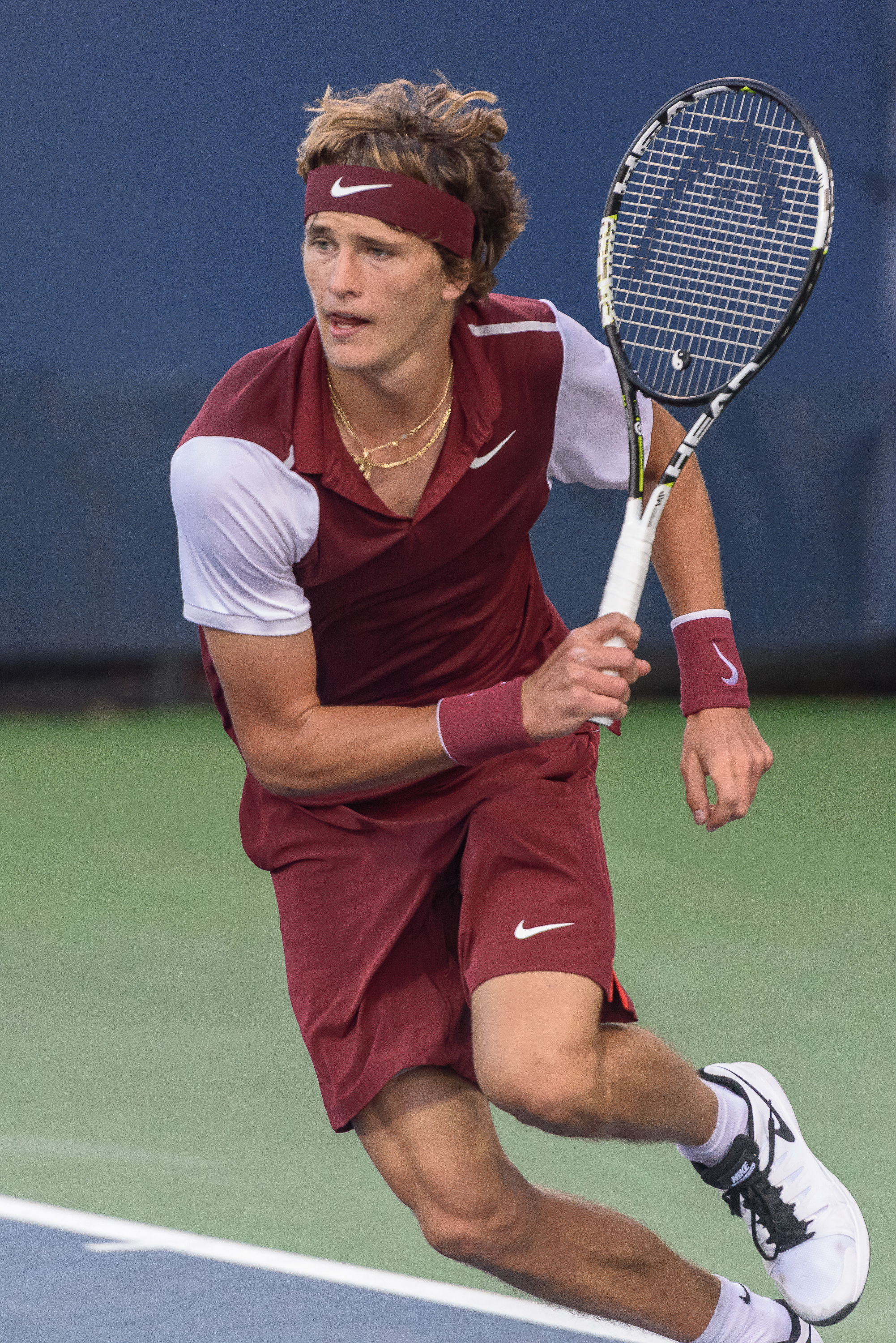
    2015_us_open_tennis_-_qualies_-alexander_zverev_ger_2_def-_nils_langer_ger_21124934580

    In Part One we looked at the players born from 1993 to 1996, with a resulting outlook which was pretty grim. There are several players who should be good players, even possible Slam contenders, but in general they continue a trend of weak talent from the 1989-92 group, with no clear future elite players. Let’s take a look at the players born in 1997 to 2000, the teenagers who turned 16 to 19 in 2016.

    CLASS OF ’97
    24. Alexander Zverev
    76. Taylor Fritz
    156. Andrey Rublev
    204. Reilly Opelka
    205. Alexander Bublik

    The sun will always rise. Here we see arguably the brightest young player in the game: Alexander Zverev. If I had to put money on any one young player being a future multi-Slam winner, it would be Zverev. He may or may not be a future great, but he should at the least be very, very good. Consider that the last players to finish their age 19 season ranked in the top 25 were Novak Djokovic and Andy Murray in 2006, ranked #16 and #17, respectively. In other words, Zverev is the first teenager to finish in the top 25 in ten years. In fact, the list of teenagers in the Open Era who have finished in the top 25 is a relatively short one:

    2016: Alexander Zverev (24)
    2006: Novak Djokovic (16), Andy Murray (17)
    2005: Rafael Nadal (2), Richard Gasquet (16)
    2001: Andy Roddick (14)
    2000: Lleyton Hewitt (7), (Roger Federer 29)
    1999: Marat Safin (24), Lleyton Hewitt (25)
    1995: Marcelo Rios (25)
    1993: Andrei Medvedev (6)
    1992: Andrei Medvedev (24)
    1991: Michael Chang (15)
    1990: Pete Sampras (5), Goran Ivanisevic (9), Michael Chang (15)
    1989: Michael Chang (5), Andre Agassi (7), Jim Courier (24)
    1988: Andre Agassi (3), Guillermo Perez Roldan (18)
    1987: Kent Carlsson (12), Guillermo Perez-Roldan (19), Andre Agassi (25)
    1986: Boris Becker (2), Kent Carlsson (13)
    1985: Stefan Edberg (5), Boris Becker (6)
    1984: Pat Cash (10), Aaron Krickstein (12), Stefan Edberg (20)
    1983: Mats Wilander (4), Jimmy Arias (6)
    1982: Mats Wilander (7), Jimmy Arias (20)
    1980-81: Insufficient data
    1979: Ivan Lendl (21)
    1978: John McEnroe (4)
    1977: John McEnroe (21)
    1975: Bjorn Borg (3)
    1974: Bjorn Borg (3)
    1973: Bjorn Borg (18)

    That’s 26 individual players in the ATP Era (1973-2016) who have finished a year ranked in the top 25 as a teenager. That may seem like quite a few players, and certainly there are several players on that list who didn’t have exactly stellar careers, but the majority of them were very good, and every applicable 6+ Slam winner—those who were teenagers during the ATP Era—is there, all except one: Roger Federer, who finished 2000—the year he turned 19—ranked #29; so he was close.

    Furthermore, consider the aging of the tour: In the last 26 years, a teenager has ranked in the top 25 only 13 times  by 11 players; in the previous 28 years (1973-1990) it was done 28 times by 16 players. Zverev is the first player in ten years to accomplish this.

    All of this is to point out that Zverev’s accomplishment is quite rare. Secondly, it points to likely future success. Of those 26 players, 20 of the went on to win at least one Slam (77%), 14 won multiple Slams (54%), and 10 won 6+ Slams (38%). The Slamless players are Krickstein, Carlsson, Perez-Roldan, Medvedev, Rios, and Gasquet. Of those six only Krickstein, Perez-Roldan, and Gasquet didn’t win at least a Masters. If we look at only the last 26 years, of the ten players previous to Zverev, only three didn’t win Slams (Medvedev, Rios, Gasquet), five won 1-3 Slams (Chang, Hewitt, Safin, Roddick, Murray) and two became truly great players (Nadal, Djokovic). Going purely on percentages, that’s a 70% probability of at least one Slam title and a 50% probability of at least two. Of course this isn’t enough data to go on, but it gives us a sense of possible outcomes.

    All that said, Zverev had a very good year, going from #83 to #24, and winning his first ATP title in his third final of the year, defeating Stanislas Wawrinka in three sets in St. Petersburg, an ATP 250 event. He didn’t make it past the third round of a Slam, but he had consistent results overall and situated himself to be seeded in Slams going forward.

    Among the other players, Taylor Fritz is another exciting young player to watch. After starting the year ranked #174, he surged in early 2016, winning an early Challenger title and then gaining larger attention by a strong run at the ATP 250 Memphis Open, defeating second-seeded Steve Johnson en route (#29) to the final, which he lost to Kei Nishikori. He rose as high as #53 in late August, including a memorable three-set loss to Roger Federer at the Mercedes Cup, but then faded a bit later in the year, finishing at #76.

    https://www.youtube.com/watch?v=GMzCJ9RkgjQ

    The big disappointment for me is Andrey Rublev, who is exactly the same age as Fritz but after winning his first Challenger title in March, stalled out and didn’t progress, going from #185 in 2015 to #156 in 2016. Big server Reilly Opelka shows some promise and could be the next John Isner. He rose from virtually unranked in 2015 (#981) to #204, including his first Challenger title in November.

    2017 Outlook: After going from #83 to #24, including his first title, I’d like to say that Zverev—who turns 20 in April—is poised to enter the elite. But I think we’ll be talking that way more likely a year from now. In 2017 I predict stabilization and further modest gains, with an outside chance of sneaking into the top 10 and a World Tour Final berth, but more likely finishing in the 10-15 range. Look for him to be win more low level titles, maybe even compete for a Masters. More importantly, he needs to go deeper into Slams; he still hasn’t made it past the third round, which he made it to at both Roland Garros and Wimbledon. While 2018 might be the year he breaks through into the true elite and Slam contention, he is going to be a dangerous opponent in 2017, and not someone the elite will take for granted. I think that at some point this year, there will be a tournament that we look back on as breakthrough. It may be a second week run at a Slam, or a Masters final – but at some point this year, the big boys will take notice of him.

    Fritz is exactly half a year younger than Zverev, and is probably more like a year behind him developmentally; expect to see him do in 2017 what Zverev did in 2016. His gains might be a bit more modest, but he should be in the top 40 by the end of the year, if not higher, and is a good candidate to win his first title. Fritz also will start getting more and more attention as he starts to upset top 20 players, and going deeper in tournaments.

    I do expect both Rublev and Opelka to reach the top 100 this year; they just seem a year or so behind their two more successful peers. I do still hope that Rublev figures it out; he seems the type that could do it quickly, but his candidacy as a future elite is now greatly reduced. I see him more as a potential tier two or three player, which is still pretty good.

    CLASS OF ’98
    108. Francis Tiafoe
    116. Stefan Kozlov
    143. Duck Hee Lee
    198. Michael Mmoh
    209. Stefanos Tsitsapis
    231. Casper Ruud

    This is a subtly strong group, with no players that look like future greats but at least six—those listed above—who could be top 40 types. The jury is still out on Tiafoe; he made good strides this year, and some see him as a future star, but others are worried about his erratic serve and play. I don’t have much to say about Lee except that he continues to progress. Kozlov looks promising and between the first and final draft of this piece, moved up thirty ranks on account of winning his first Challenger title, which was the fifth won by an American teenager in 2016, after Fritz, Tiafoe, Opelka, and Mmoh, who is another promising young American. In those five players, the United States has the most talented group of young players since at least 2003, when Andy Roddick, Mardy Fish, Taylor Dent, and Robby Ginepri were all 22 or younger and ranked 33 or better. But more on that in another article.

    Tsitsapis, a #1 ITF Junior, made good progress, as did Ruud. Another player to keep an eye on is Mikael Ymer (#492), who missed most of the year to injury but still holds promise.

    2017 Outlook: These players are still quite young so expectations should be modest, but we could see several of them enter the top 100 in 2017, maybe even win a title. Of all of the “classes,” this one has perhaps the deepest talent—at least that we can see so far—so bears watching in 2017. Tiafoe, Kozlov, and Lee should all reach the top 100 sooner than later, and I wouldn’t be surprised to see Mmoh, Tsitsipas, and Ruud all approach the top 100 by year’s end. If Ymer stays healthy, he could rise quickly and be on the cusp of the top 100 as well. So that is at least seven players who bear watching.
    CLASS OF ’99
    250. Denis Shapovalov
    354. Alex De Minaur
    519. Corentin Moutet
    806. Miomir Kecmanovic
    926. Yibing Wu

    Denis Shapovalov is the big revelation here, with none of the others standing out yet. Shapovalov won his first Junior Slam at Wimbledon, defeating De Minaur, and also won three Futures titles, but it was at the Rogers Cup that he garnered more attention, upsetting Nick Kyrgios in the first round before losing to Grigor Dimitrov in the second.

    2017 Outlook: Look for Shapovalov to move steadily up the rankings as he focuses on the Challenger tour. Good progress would be for him to reach the #100-150 range by year’s end, winning a Challenger title or two. It is possible that he breaks into the top 100 as soon as this year, although that is probably unlikely.

    CLASS OF ’00
    601. Felix Auger Aliassime
    789. Nicola Kuhn
    925. Yshai Oliel
    1063. Rudolf Molleker
    1066. Alen Avidzba

    It is hard not to be excited about Felix Auger Aliassime, who just turned 16 in August shortly before winning the Junior title at the US Open, as well as winning his first Futures title just a couple weeks ago. And how about this: his birthday is August 8, the same day as a certain Swiss great you might have heard of….although Aliassime is 19 years younger than Federer. To put that in context, when Aliassime was born on August 8, 2000, Roger Federer was ranked #38 in the world and rising.

    Aliassime is, by all accounts, an immense talent. There is also some room for concern, as it was revealed earlier this year that he has a heart condition that will almost certainly impact his career, although the question is to what degree (for reference, Mardy Fish had a similar condition). Let us cross our fingers and hope.

    As for the others on the list, there isn’t a lot to know right now—but they’re the top players born in 2000. But chances are this list will look very different in  year, when we should have a better sense who the true prospects of this year are.

    2017 Outlook: Given that these players enter 2017 as 16-year olds, there isn’t much to expect and we just don’t know enough about any of them except for Aliassime, so we’ll have to revisit this group in a year or two. But Aliassime does bear watching, both because of his prodigious talent but also his health concerns. Aliassime will focus on the Junior tour and should be dominant; look for him to win a Slam or two, and start playing in more Futures. A year-end ATP ranking in the 200s is not out of the question.


    Cover Photo by Steven Pisano from Wikimedia Commons, Courtesy of Creative Commons License
  • NextGen 2016 In Review and 2017 Outlook — Part One: The Weak Classes of 1993 to 1996

    NextGen 2016 In Review and 2017 Outlook — Part One: The Weak Classes of 1993 to 1996

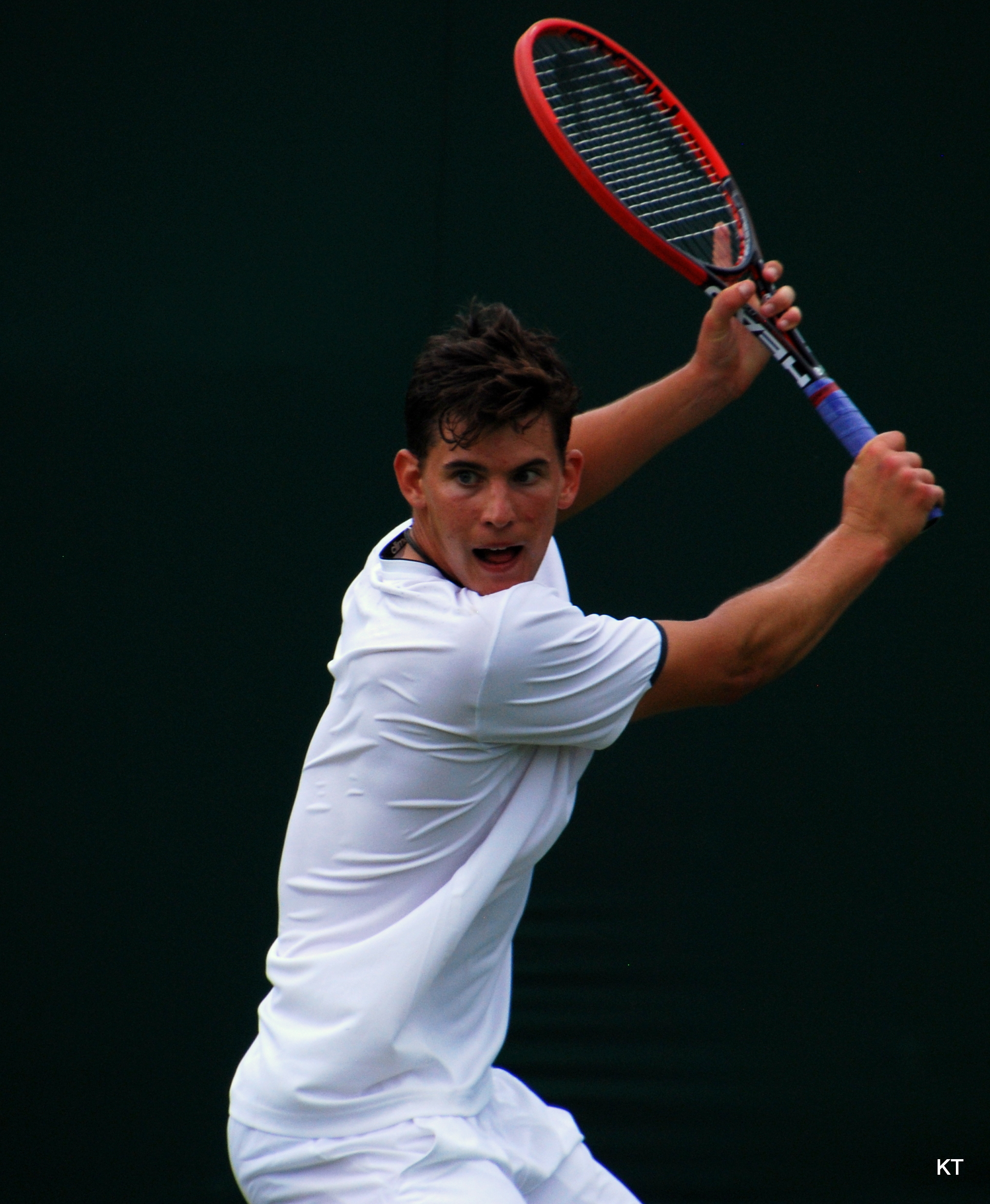
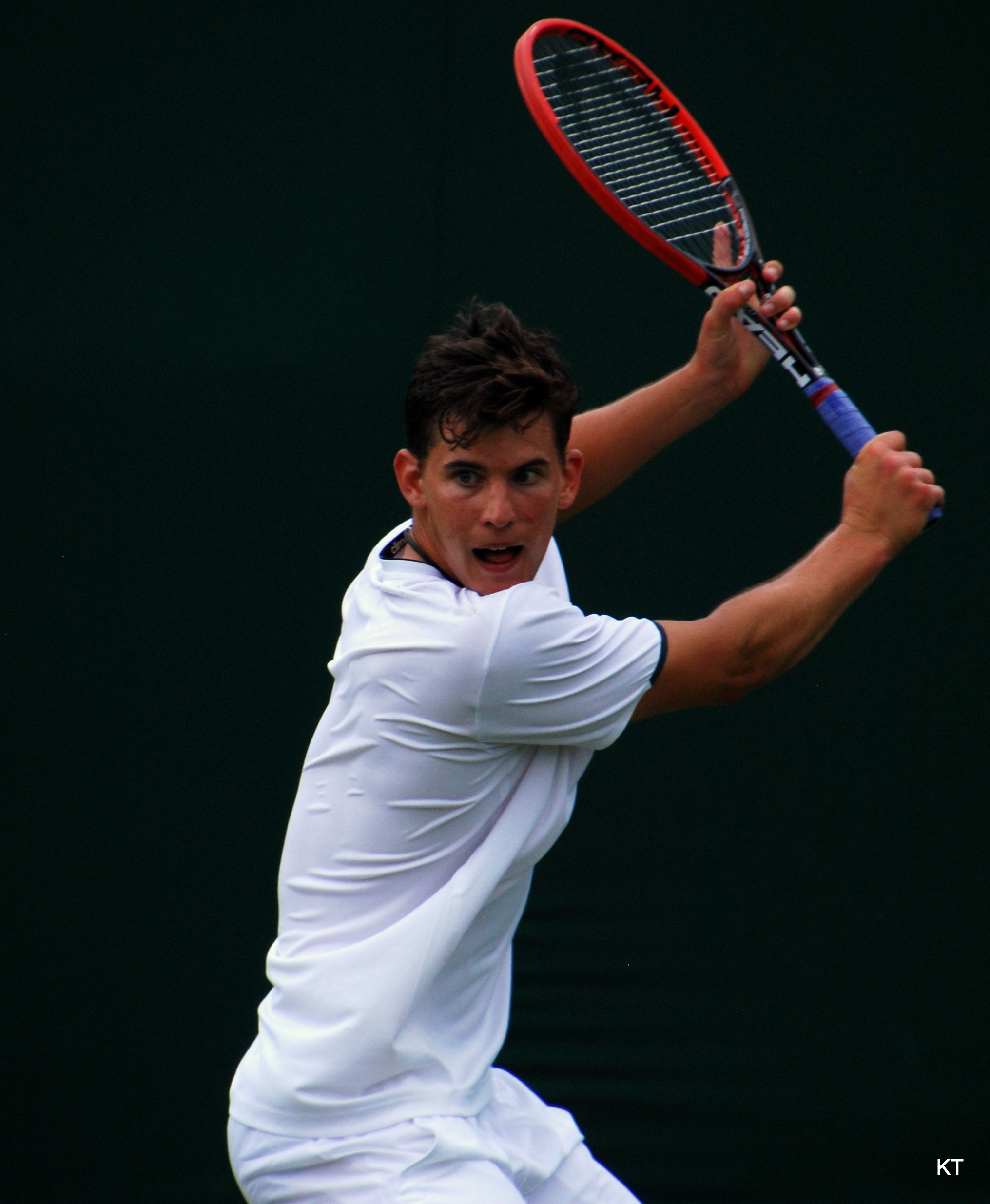
    https://upload.wikimedia.org/wikipedia/commons/7/71/Dominic_Thiem_%2814523555506%29.jpg

    Introduction

    It wasn’t so long ago that the up-and-coming “Young Guns” on the ATP tour were players like Grigor Dimitrov and Bernard Tomic, born in 1991 and 1992, respectively; now, after half a decade of anemic results and no elite prospects, there have been some promising young players showing up on tour over the last year or two. I discussed this new generation back in April in a two-part series, Looking for the Next Great Player, but with seven months of tennis and the year ending, I thought it was time to take stock and see how the “Younger Guns” did in 2016.

    Consider that the youngest players to win Grand Slam titles were born in 1988: Juan Martin del Potro and Marin Cilic. We are amidst the worst dry spell in tennis history, with no Slam title-holders that are age 27 or younger. Kei Nishikori and Milos Raonic have birthdays in December, turning 27 and 26, respectively; no-longer-a-baby Dimitrov is 25, and Tomic is 24. These are no longer young players, but all in the peak range of tennis players. Historically speaking, these are the players that should be dominating now; in fact, Nishikori is the same age that Roger Federer was in late 2008, when he was starting to show signs of slippage. Perhaps even worse than the lack of a Slam title, is the lack of even a Masters title: Marin Cilic, at age 28, remains the youngest Masters titleist and Slam winner.

    The point being, barring an unprecedented development, it is now absolutely clear that we won’t be seeing any elite players from this group. At best we might see a stray Slam or two won when no one else is looking, and at the very least it is hard to imagine that one of Raonic or Nishikori won’t win at least a Masters. Or we can look to Stanislas Wawrinka, the only multi-Slam winner in Open Era history who won his first Slam at the geriatric age of 28. There is always hope, and certainly it isn’t too late for a Raonic or Nishikori to win a Slam or two, but the chances of any become an actual great are virtually none.

    Regardless of whether or not any of this group wins a Slam or not, or even “does a Stanimal,” we have to chalk the players born from 1989 into the early 90s as a lost generation and our hope for the future lies in the next group, those born in the mid to late 90s. In what follows, I’m going to look at players born in each year from 1993 to 2000, both reviewing their year in 2016 but also looking at 2017 with an eye for what to expect (or hope for).

    For each year, or “class,” I will include the top five ranked players, using the year-end 2016 rankings. The rankings are as of November 28, which include all ATP Tour and Challenger tournaments of 2016, but don’t include Futures tournaments to be played in December, so there may be some very minor adjustments for players ranked outside of the top 150-200, but the general rankings should remain similar. These top five aren’t necessarily the best five players of their class, but they give us a starting point.

    CLASS OF ’93
    8. Dominic Thiem
    55. Jiri Vesely
    114. Bjorn Fratangelo
    127. Taro Daniel
    145. Roberto Carballes Baena

    In my generation series, 1993 is grouped with the very weak 1989-93 “Lost Generation,” yet I am including it in this discussion because of the emergence of one player: Dominic Thiem. The second best player of this class, Jiri Vesely, is quite a bit behind Thiem, with a career high ranking of #35—and that back in 2015; Vesely’s claim to fame this year was upsetting #1 Novak Djokovic in the second round of the Monte Carlo Masters.

    But back to Thiem, he went from #139 in 2013 to #39 in 2014, then to #20 in 2015. His steady rise continued in 2016, as he finished the year #8 in the world after making his first World Tour Finals as an alternate for Rafael Nadal; Thiem repaid Rafa by winning a Round Robin match to sneak ahead of him in the year-end rankings. He was strongest earlier in the season, as he showed himself to be a real threat on the clay courts, including a Semifinal appearance at Roland Garros – his only second week Slam result thus far.  He also won his first ATP 500 at Acapulco in February and three ATP 250s. But he fizzled out after mid-year. After winning his fourth title in Stuttgart, he held an 42-11 record for the year, or 79%. From that point on he went 16-13, or 55%. To put that another way, for two-thirds of the year he played like a top five player, then after Stuttgart he looked more like a #20-40 player.

    2017 Outlook: After strong gains the last few years, from #139 in 2013 to #8 in 2016, the question is how much higher Thiem can go. He seemed to hit a ceiling this year, his results cooling off in the second half, although whether this was due to exhaustion and a heavy first half schedule, or perhaps his strength on clay vs. the other courts, or maybe he simply reached his ceiling. Thiem just turned 23, which is an age when players should be in their prime, so on one hand we shouldn’t expect much more from him. On the other hand, players may be developing at a slower pace these days, so Thiem could develop a bit further. At this point I think we should enjoy him for what he revealed in 2016: a solid second tier player who is very dangerous on clay. Look to Thiem to stabilize his current level in the lower half of the top 10, and maybe compete for a Master’s title (likely clay) as well as continue to win several low level titles. He’s exactly the type of player who could win a Slam if the context is right, but is unlikely to get past a true elite player like Novak Djokovic or Andy Murray in their primes. In other words, if there’s a Slam title in his future, it probably isn’t in 2017.

    As for the others, Vesely could still have a mini-breakthrough and stabilize in the 20-40 range; he may even dive into the top 20 at some point, but I wouldn’t expect much more. It seems that Fratangelo and Daniel have been hovering around #100 for ages, so I wouldn’t expect much.

    CLASS OF ’94
    15. Lucas Pouille
    75. Adam Pavlasek
    79. Jordan Thompson
    82. Thiago Monteiro
    179. Kimmer Coppejans

    As you can see, this is another weak class, with only one player in the top 50: Lucas Pouille, whose 2016 echoed Thiem’s 2015. Thiago Monteiro may deserve watching, however. The Brazillian showed some early promise in 2011-12 as a 17-18 year old, winning a couple Futures, and then a strong showing on the Challenger circuit in 2013. But then he struggled with injury for a couple years. In 2016 he began the year ranked #463 and moved all the way into the top 100, including his first Challenger title against veteran Carlos Berlocq. He also gained some attention after beating #9 Jo-Wilfried Tsonga in the first round of Rio, before losing to eventual champion Pablo Cuevas in the 2R.

    Pouille is the obvious standout, with a consistent trajectory over the last few years: finishing #204 in 2013, #133 in 2014, #78 in 2015, and #15 in 2016. Some have claimed that he is a limited player and won’t get any better, yet his results speak otherwise: a quick rise in the rankings and two Slam QF appearances, including a five-set upset of Rafael Nadal in the fourth round of the US Open.

    No Title

    No Description

    Pavlasek and Thompson both made strong gains, rising from #160 and #154, respectively. Coppejans seems to be stagnating.

    2017 Outlook: Look for Pouille to stabilize in the top 20 and creep up to the cusp of the top 10, maybe even sneaking in. He needs to start winning tournaments; his ranking is largely based upon those two QF results and modest consistency in Masters tournaments, and a lone ATP 250 title. He’s a good candidate to win an ATP 500 and/or several ATP 250s, although would be a surprise to win a Masters or Slam, at least in 2017. But he looks to join Thiem as another second tier player of the next era, and should be near or even in the top 10 for years to come.

    Pavlasek and Thompson could breach the top 50, but I wouldn’t expect much more than that. They are likely going to be future top 20-50 players. Monteiro bears watching, but we should also be moderate in our expectations.

    CLASS OF ’95
    13. Nick Kyrgios
    45. Kyle Edmund
    100. Yoshihito Nishioka
    172. Stefano Napolitano
    177. Maximillian Marterer

    Another weak class overall, but we shouldn’t underrate Kyrgios. It seems many are writing him off as a bust already, even though he is still only 21. Consider also that he went from #30 to #13 in 2016, also winning his first three titles (two ATP 250s and one ATP 500) and 72% of his matches, versus 56% the year before. Yet despite clear and significant forward progress, there’s a veneer of disappointment around Kyrgios. I think it is for two reasons: One, after reaching quarterfinals in both the 2014 Wimbledon and 2015 Australian Open, Kyrgios has not made it past the 4R in the last seven Slams. Two, he is clearly a player of prodigious talent, yet he is also a head-case. Yet we must remember that Kyrgios is still quite young—he doesn’t turn 22 until next April—and he is a very dangerous player. He’s probably the most talented player born in the “lost years” between 1989 and 1996 and the only thing keeping him from being an elite player is himself.

    Edmund has given Great Britain a second player to root for, at least in the top 50. He’s young enough to be somewhat excited about, but probably not good enough to be anything more than a top 20 player. Still, he went from #102 at the end of 2015 to #45 now, so should continue to rise.

    2017 Outlook: If there is a player who has never ranked in the top 10 that I think has a chance to be a new Slam or Masters titleist in 2017, it is Kyrgios. Now it is hard to imagine him winning a Slam…yet. But I could definitely see him winning a Masters, and perhaps as soon as this coming year. Look for him to break into the top 10 and be a spoiler that no one wants to face. He has the game to challenge for a ranking in the top 5, but it remains to be seen whether he can harness it enough to get there. His upside remains that of a multi-Slam winner, although probably more in the 2-4 range than 5+, and only if all goes right. But what is exciting about Kyrgios is it is so unclear how he’ll turn out. Ten years from now he could be looking back at a Slamless career of continual frustration but occasional moments of brilliance, or we could be looking at a handful of Slam titles and even a #1 ranking. Regardless, he looks to be the next top player that people will love to hate.

    On the other hand, as Jeff Sackmann of the Heavy Topspin blog points out, very few players with sub-par return of serve’s like Kyrgios end up winning multiple Slams. He compares him to Mark Philippoussis, who was another relatively one-dimensional but dangerous player who came up empty in Slam titles.

    Edmund also bears watching. The optimistic view is that he’ll “do a Pouille” (just as Pouille “did a Thiem”) and vault into the top 20. That said, my sense is that his upside is a bit lower than Thiem and Pouille and I could also see him stagnating in the #20-40 range ala someone like Borna Coric, Bernard Tomic, or Jack Sock. He seems a similar caliber player, but given his relatively youth, still deserves the benefit of the doubt. He almost certainly won’t be an elite, but he could be a second tier type if all goes well, or perhaps more likely in the third tier Nicolas Almagro/Gilles Simon range.

    CLASS OF ’96
    48. Borna Coric
    53. Karen Khachanov
    99. Daniil Medvedev
    104. Hyeon Chung
    105. Jared Donaldson

    Yet one more relatively weak year, which makes eight in a row (starting with 1989) that are historically weak. It goes beyond the bounds of this study, but begs the question: What happened? One thought that comes to mind is that these years—born 1989-96—are players who started playing tennis in the early 00s, when Pete Sampras was fading and retired, and Agassi not far behind. American tennis fell flat, and we can see few Americans in these group. In fact, if you look at the best Americans born from 1989 to 1996, you find a lackluster list that includes Donald Young, Ryan Harrison, Jack Sock, Denis Kudla, and Jared Donaldson.

    Anyhow, Coric has been around for so long—breaking into the top 100 two years ago—that it is easy to forget that he just turned 20. Yet he completely stagnated this year, even dropping a few rankings. Chung has fallen far—and the third in the group that finished last year in the top 100, Thanasi Kokkinakis—has completely vanished (he’s been injured all year, playing only one professional match). Donaldson—after a brief moment where it seemed he might be progressing—has also stagnated (a word which seems quite descriptive of this group, for the most part).

    That said, there is some good news: Karen Khachanov has emerged, rising quickly up the rankings, and Daniil Medvedev has made solid progress. Right now Khachanov seems like the best of the bunch.

    2017 Outlook: Expect continued progress from Khachanov. He doesn’t look like a future star, but he could be a legit top 20 player, maybe even top 10; he could be on the Thiem-Pouille track. I’m not sure what to expect from Coric at this point, whose 2016 was quite disappointing. After 2015 it became clear that he was unlikely to be a star, but at least he looked like a top 20 player. Now he may not even be that, but it still seems likely that he has another surge in him…he is just 20 years old, after all. But he reminds me of a similarly weaponless player, Bernard Tomic.

    I don’t expect much from Donaldson and Chung, who could be lower-half top 100 players. Medvedev bears watching, but it is too soon to tell. I would also keep an eye out for Kokkinakis. Not a top tier talent, but he should be back in the top 100 if healthy.

    Summary
    As you can see, the prospects are pretty grim among the players born from 1993 to 1996, a continuation of the “lost generation” of 1989 to 1992. There are a bunch of players who look like perennial second tier players and darkhorse Slam candidates, but none that look like sure-fire elites: Dominic Thiem, Lucas Pouille, Kyle Edmund, Nick Kyrgios, and possibly Karen Khachanov, Borna Coric, and one or two others.

    In Part Two we will look at the players born from 1997 to 2000.

    Cover Photo by Carine06 from Wikimedia Commons, Courtesy of Creative Commons License
     

  • Preview: Indian Wells Men’s Final

    Preview: Indian Wells Men’s Final

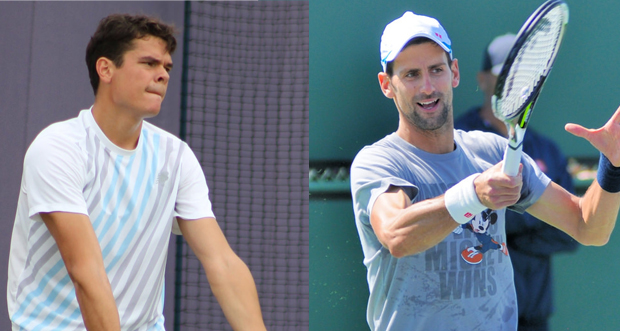
    Milos Raonic Novak Djokovic

    There can be little doubt that Novak Djokovic goes into today’s title match against Milos Raonic as the clear favourite.

    The World Number One is a two time defending champion at the event, and remains unbeaten on slow, grittier hard court surfaces the event takes place on of late. Raonic is a great hard court player, the booming server enjoying a title run in slow conditions in Brisbane this year, before stretching Andy Murray to five sets in the Australian semifinals a few weeks later. Both men enjoy their best results on hard courts, but their head-to-head stats make for grim reading for Milos.

    The Canadian has gone down in all his five meetings against Novak, taking just one of the fourteen sets they’ve contested. More crucial still, his last two losses, late 2014 in the Paris Masters, and last year in the Australian Open quarters, Raonic was beaten in straight sets on hard courts of comparable speed to those in Indian Wells.

    It is a bad matchup for the Canadian. Although he has improved other facets of his game in recent years, his entire game is predicated on his gargantuan serve. When this has been on song, Raonic has been able to dictate and attack against Federer, Nadal, and Murray, enjoying wins against each of these hall of famers. Djokovic, though, widely regarded as the best returner in the game, is able to nullify this shot, and thus dictate the rallies himself. This is the worst possible thing that can happen to Raonic. Although fitter, and possessing a better ground game than when he relied purely on his serve, at six foot five inches he is not going to be able to chase down shot after shot against Novak. The Serb is inevitably going to try to put his man on the defensive wherever possible.

    All is not lost for Milos. He is arguably playing the tennis of his life, backing up his big serve with choice attacks at the net, and ripping the backhand where once this was a passive rallying shot. He is a markedly improved player in the year and two months since their last meeting. Furthermore, his opponent has not looked entirely convincing this week, losing a set in a sluggish opening match, before almost losing a set to Nadal in yesterday’s semifinal.

    I back Djokovic to win today. He is good at bringing his best to bear in finals, even after less than convincing results en route to them. The slower variant of hard courts is where he is at his best, and his style is the closest thing to a roadblock the Canadian will face on the tour. I do not write Raonic off, though. He has looked mostly sharp this week, is in a rich vein of form of late, and if he serves and attacks well, stretching the Serb to tiebreaks, it is anyone’s match.

    Djokovic to win in three sets.

    [divider]

    Cover Photo (Creative Commons License): sirobi / Christian Mesiano

  • Indian Wells-Miami Double. The Fifth Grand Slam?

    Indian Wells-Miami Double. The Fifth Grand Slam?

    Indian Wells Masters

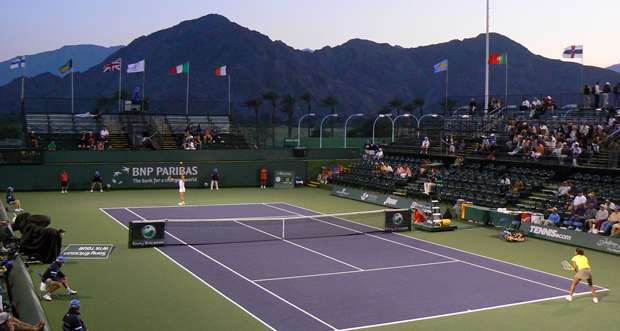
    In recent years the Indian Wells tournament in California, the first Masters event of the tennis season, has been regarded in some circles as the fifth Grand Slam.

    The tournament boasts state of the art facilities, a giant stadium and has recently been voted by male players as their favourite Masters event out of the nine they play, no small part of this being down to billionaire investor Larry Ellison’s investment. Further still, the tournament is dual gender and boasts a draw of 96 in each field, second along with Miami which follows after to the 128 player fields at the Slams and extending the tournament to eleven days. All this has contributed towards Indian Wells being the premier event just below the Slams.

    It was not so very long ago however that Indian Wells’ aforementioned cousin, Miami, was considered the fifth Grand Slam. Andy Murray hailed it as such after winning the event in 2009 against Djokovic. The reason for this turnaround is down to several factors. Firstly, Indian Wells has better facilities as a result of more investment. One just has to look at the different stadiums and show courts to see that Indian Wells trumps Miami; the latter looking dated and cramped. Secondly, pros prioritise the event for the most part, either after a deep run at the event pulling out of Miami, which follows immediately after, or skipping altogether due to factors such as age and avoiding fatigue, like Federer last year aged 33. Finally, and this is more gut feeling, Miami is awkwardly placed on the calendar, barely finishing before many minds are focused on the fast approaching clay court season, sticking out like a sore thumb, another week and a half slog on slow hard courts in an event that mirrors its more prestigious Indian Wells cousin.

    I am not trying to dump on Miami. I love the event, which has boasted some of the matches I am more emotionally tied to. Federer’s win in a best of five hard court against Nadal win in 2005, Djokovic’s final set triumph against Nadal in 2011, having bested him previously the fortnight before in Indian Wells, Roddick’s third and final win against Federer in 2012, the year of his retirement. The fact remains that they are not held in equal regard by many players.

    I myself however do hold them in equal measure, and I think winning both events back to back is the fifth hardest achievement in tennis after the Slams. Slow hard court events in hot conditions, played one after another. A top player who receives a bye in the first rounds who goes on to win both will still have to play twelve matches in three weeks against the best players in the world. Such is the toughness of this only seven players in the men’s game have achieved it, including retired all time greats Sampras and Agassi, and active ones Federer and Djokovic, both of whom have achieved the feat twice.

    For me then neither of the two events in isolation, with a 96 player draw and best of three set matches can be viewed as a fifth Slam. Winning both in the same year however for me ranks as a de facto fifth Slam; such are the requirements of physical and mental application and skill to achieve this rare feat.

    All of this is of course ultimately academic. One can argue endlessly if neither, one, or both qualify as a fifth Major or not. The most important thing about the tournaments of Indian Wells and Miami is that they gather most of the best players in the world in the same places, alleviating the dullness of mid March to early April for the dedicated tennis fan.

    [divider]

    Cover Photo (Creative Commons License): askbal

  • Passing of the Torch? Brief Musings on Thiem’s Win Against Nadal

    Passing of the Torch? Brief Musings on Thiem’s Win Against Nadal

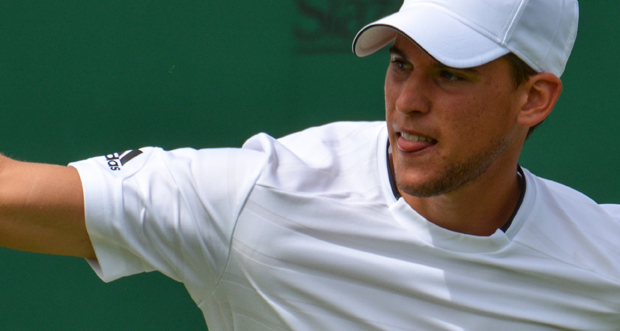
    Dominic Thiem

    I have been touting the prospects of Dominic Thiem for some time. Standing at 6’1″, well built, and possessing heavy and penetrating groundstrokes and a serve to match, I believe he is the best prospect of the current crop of players in their late teens to early twenties.

    He first caught my attention in 2014 when he recorded an impressive win over Wawrinka, then a recent Grand Slam and Masters Champion, in Madrid. He went on to continue his fine clay pedigree, falling to Goffin in his first final at just age twenty, before backing it up last year with three titles on the red stuff.

    [divider]

    Click here to discuss Thiem’s win over Nadal in the Discussion Forum.

    [divider]

    His win in the semifinals in Argentina against Nadal, indisputably the greatest clay court player in history, was no flash in the pan. Yes, the Spaniard is perhaps past his best, lacking a step and some of the zip of old on his forehand, but he is competitive. Fifth ranked in the world, a recent finalist in Qatar, and semifinalist in the World Tour Finals, it took Thiem a deciding set tiebreak after facing down a match point against him to win through to the final.

    Thiem represents a style of play that is one of two that can and increasingly do from the baseline. Wawrinka, Almagro, Soderling have on days of inspiration literally been able to bully Nadal on a clay court. Consistently heavy shots with big serves to set them up have left Nadal listless. The other, applied by Djokovic with regularity since 2011, and more recently by Ferrer and Murray, is to hang back with Nadal and rely on speed and defence, Rafa’s own hallmarks, and attack a short ball or draw the error. Thiem is needless to say a practitioner of the former style and crept over the line with it against Nadal.

    In the Austrian’s fearless display he maintained the offence throughout. He hit over ten aces, and enough serves that were not outright winners that produced a short return he could in turn pummel away for a winner or force the error. Nadal in turn played some great defence, but unlike in years prior he was unable to do so consistently and lacked a killer instinct. When Thiem went down whilst serving to stay in the match at 5-6 in the third my thought was ‘curtains’. Too many times in the past have I seen a younger and inspired player push Nadal to the brink only to let inexperience tell and fall at the final hurdle. Thiem kept admirably cool headed, not least in saving a match point that game with aggressive consistency. In the tiebreak that ensued it was Nadal who looked the younger and inexperienced one, double faulting and playing tentatively, whilst Thiem recorded aces and blistering groundstrokes to build up what proved to be an insurmountable lead.

    Does this represent a passing of the torch? Not just yet. The Austrian needs to record these kinds of wins regularly and at larger, more prestigious events. The forehand broke down at times, his signature backhand, rightly lauded, was shanked at times and looked vulnerable when he was rushed, as is inevitable with a long take-back. I believe that these creases will be ironed out with experience, and that we shall see Thiem become one of the preeminent clay court players on the tour come his mid to late twenties, challenging for and winning the biggest events on the surface, as well as on the increasingly slower hard courts that make up large sections of the calendar. With such huge hitting I wouldn’t bet against him.

    [divider]

    Cover Photo (Creative Commons License): Carine06

  • Australian Open Final Preview: The Tilted Mirror

    Australian Open Final Preview: The Tilted Mirror

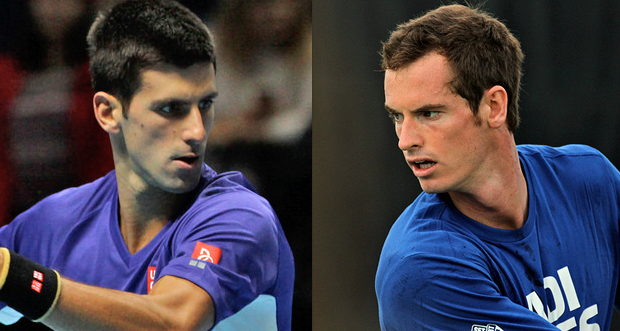
    Novak Djokovic Andy Murray

    When Novak Djokovic and Andy Murray contest a tennis match, it brings to mind to me Djokovic staring at a tilted mirror. Both players are in essence counterpunchers. Both rely on superior movement, low error rates, and superior defensive skills to confound most opponent’s efforts. Novak looks across the net and will see much of himself reflected back in Andy. It is a tilted reflection, though, as Murray will often seem further back than Djokovic in their baseline exchanges, Novak’s own strokes sending the ball farther than those that are being sent back. That is the essence of the matchup: The offensive counterpuncher in Djokovic doing pretty much everything the defensive counterpuncher Murray can do, only better.

    [divider]

    Click here to discuss the Djokovic/Murray Australian Open final in the Discussion Forum.

    [divider]

    Djokovic is perhaps playing the best tennis the men’s tour has witnessed in many years. He looks untouchable. Although he lacks the flare of Federer in his prime, the explosiveness of Nadal in his heyday, he looks somehow more complete than either in their own periods of domination, less liable to upsets or struggles on a specific surface. Nadal could always be counted upon to trouble Federer, whilst a Davydenko or Blake could make Rafa look amateur on a hard court at times. Nobody comes to mind that can be a regular thorn in Novak’s side, rather the current status quo of a Wawrinka pummelling him on rare occasions, or Federer seizing the initiative on fast courts in the Middle East or North East America.

    Seizing the initiative sums up rather nicely what Djokovic is doing. Though a counterpuncher, he is continuing to show his natural ability as an offensive baseliner. He is serving big, stepping into the court, and unloading on balls with natural and seemingly increasing power. He is not content to ride out storms against Federer or Nadal; he is actively seeking to deny their like of getting any momentum at all by attacking with controlled aggression.

    Needless to say this presents Murray with an instant uphill climb. He will be able to stay with Djokovic physically better than arguably anyone else on tour. Little separates the two in terms of speed and conditioning, but Murray I believe will suffer on two counts of positioning. Firstly, Murray does not hog the baseline, rather stands well behind it. This allows Novak to dictate from the off, sending his man into the far reaches of the court and opening up space for easy winners, regardless of Murray’s speed. The other is the position of Murray’s shots. Unlike the Lendl days, Murray is content again to revert back to rallying mode. The shots are often pushed into play, particularly with his weaker forehand, sitting up in the centre of the court where the Serb can merrily swat them away for winners or forcing Murray into the defensive.

    Murray’s last win at a Major against Novak was in 2013; he is 0-3 against him in them since, and has won just one of their last eleven matches overall. Furthermore, he is 9-21 in their entire head-to-head series — not a terrible number, but hardly encouraging, especially as Djokovic has grabbed their rivalry by the scruff of the neck since Murray’s 2013 Wimbledon triumph. Murray’s biggest wins against Novak have also occurred on the slicker surfaces of London’s grass or the fast hard courts of Canada, Cincinnati, and New York. He is no slouch on the slower hard courts, reaching four finals in Melbourne, as well as winning two Miami Masters titles. His relative lack of power and defensive style, though, leave him with his work cut out on slower surfaces.

    All is not lost for Murray. I think his first serve at its best is better than the Serb’s, albeit less reliable. I think Murray also has softer hands, and choice attacks at the net could prove bountiful for him. The Australian crowd are definitely the most sporting of the four Majors, and definitely have taken to Djokovic more than their three counterparts. From experience, though, they have always backed Murray more when the two have met here, perhaps out of the Aussie appreciation for the underdog, as well as for a fellow member of the Anglosphere. Crowd support for Murray could spur him on if he were to take an early lead, as well as rile Djokovic, often acutely sensitive to the biases of those in the audience. Murray fans could also take heart from the Djokovic vs. Simon match. The Frenchman, my favourite defensive counterpuncher on tour, has sometimes been labelled derogatorily as a ‘poor man’s Murray’. Both play similar styles, though Murray has more weapons and variety. If Simon can stretch Djokovic to five sets and make him produce 100 errors, it’s more than conceivable Murray could better that.

    All things being equal, such is Novak’s form, dominance of the tour and of Melbourne; it is hard to see him not triumphing tomorrow. I believe Murray will contest and win a couple more Major finals before his career is over, but I feel the only haul he will add to in this year’s Australian Open is his runner-up plates.

    Novak to win in four sets.

    [divider]

    Cover Photo (Creative Commons License): Marianne Bevis

  • Murray Vs. Raonic: Australian Open Semifinal Preview

    Murray Vs. Raonic: Australian Open Semifinal Preview

    Andy Murray Milos Raonic

    Raonic vs. Murray has the potential to be a very interesting match. It’ll certainly provide a nice contrast of styles.

    Murray is the game’s consummate defensive counterpuncher — his speed, efficient groundstrokes, and low error rate all combine to make him a shoe-in for the latter rounds of this Major, played on a medium-to-slow variant of his favourite hard surface.

    [divider]

    Click here to discuss the Murray/Raonic semifinal in the Discussion Forum.

    [divider]

    Raonic’s eight titles to date have also been on his favoured surface of hard courts. Although his height and relative lack of mobility aren’t helpful on a slower surface, as in Australia, his serve — up there in the top four in the world, arguably — combined with a renewed commitment to dictate offensively with his forehand, as well as attacking the net, do much to nullify the surface’s pitfalls. He is enjoying quite a streak in Australia, winning in Brisbane this month and progressing through five rounds in Melbourne to contest his second Major semifinal.

    Both players are tied at three wins apiece in their head-to-head series, although Murray has won their sole meeting at Slam level. The Scot certainly starts off as clear favourite in this match, a two-time Major Champion, four times a finalist in Melbourne, and owning four times as many trophies in his cabinet than his Canadian opponent. He will be the last person, though, to underestimate Raonic Mark III that we have been seeing of late.

    Although Murray stands to benefit if this becomes a baseline war of attrition, where he can move his man about and outfox him as he has done so many times before to taller, slower opponents, it would be folly to revert to his passive comfort zone. Raonic is likely to be able to hold the majority of his service games, even against Murray, a player with returning prowess second only to Djokovic. Also, if Raonic sees a lot of Murray’s weak second serves to swat away at leisure, as well as the Scot’s weaker forehands landing in the middle of the court as they often are liable to do, he will be able potentially to dictate the rallies and put Murray on the defensive.

    I like what I have been seeing from Raonic of late, and I hope he continues this rich vein of form into the rest of the season. Such is the calibre and experience of Murray, though, I believe that this will alas be a bridge too far for the amiable Canadian.

    Murray to win in four sets.

    [divider]

    Cover Photo (Creative Commons License): Marianne Bevis

  • Starts As He Means To Go On: Two Mini-Milestones For Novak In Qatar With Potentially Large Consequences

    Starts As He Means To Go On: Two Mini-Milestones For Novak In Qatar With Potentially Large Consequences

    Novak Djokovic

    On the face of it, Novak Djokovic’s 6-1, 6-2 defeat of Rafael Nadal in the relatively minor ATP 250 event of Qatar does not seem either significant or surprising. Novak is world No. 1, the preeminent hard-court player on the men’s tour, and he has owned Nadal in the last year and a half. I believe, though, that two milestones achieved in this encounter by the Serb are of particular note.

    Firstly, in their forty-seven match, nine-year rivalry, Novak Djokovic took the lead in their head-to-head for the first time, edging it 24-23. Throughout the pair’s storied rivalry whenever Novak looked to be in the ascendancy Nadal has managed to find some fresh inspiration and push back in front. I get the sense that Djokovic is now going to pull away from Rafa, extending his newly acquired lead. He has won against him in their last five meetings without dropping a set. Such was Djokovic’s dominance against a by his own admission of late injury free Nadal in Qatar, I can only see future matches between the pair, especially on hard courts, being equally one-sided in favour of Djokovic.

    [divider]

    Click here to discuss Djokovic’s win in Doha in the discussion forum.

    [divider]

    A second milestone Djokovic achieved by winning the title match was winning his sixtieth title, tying fellow counterpunching great Andre Agassi at ninth in the all-time list. I think the two players make for an interesting and fitting comparison. Agassi was also a hard-court specialist, both are considered the greatest returners of their respective eras, and both are famed for their prowess on the backhand wing.

    Djokovic has more of an upside, I believe, than the retired American great, though, after his own sixtieth trophy. Agassi’s sixtieth was at age thirty five, during his last career surge that would include finalist appearances in Canada and New York, but not contesting another final thereafter. Djokovic, at title number sixty, in his prime at twenty eight, and atop the world rankings by some margin, looks only to add to his title haul. Agassi was aged thirty two when he won his eighth and final Grand Slam in 2003; Djokovic is already on ten and looks set to win several more for at least for a few years yet. Agassi, meanwhile, won his last Masters title, an impressive seventeenth, at the advanced age in tennis of thirty four, whilst Djokovic is on twenty six, just one behind record holder Nadal, and on current form seems likely to win thirty of these lucrative titles sooner than later.

    To be on sixty titles whilst enjoying the form of his life, Djokovic has put himself within striking distance of retired greats Vilas (62), Borg and Sampras (64), as well as rival Nadal, currently with sixty seven. If Djokovic dominates like he did last year, and Nadal’s struggles continue, I would not be at all surprised to see him surpass all these legends past and present come the season’s end.

    [divider]

    Cover Photo (Creative Commons License): mirsasha

  • 2015 Davis Cup Final: Belgium vs. Great Britain Preview

    2015 Davis Cup Final: Belgium vs. Great Britain Preview

    18878832862_91772508ae_z

    This year has been a strange one for the Davis Cup. The usual contestants all disappeared early as France, the Czech Republic, and defending champion Switzerland all lost before the semifinals. As the dust settles, we are left with an unlikely matchup of unseeded teams in the final. Both Great Britain and Belgium upset several higher-ranked teams to get where they are. For Great Britain, it is their first final since 1978; if they win, it will be their first Davis Cup title since 1936. For Belgium, it is their first final since 1904; if they win, it will be their first-ever Davis Cup title.

    [divider]

    Click here to discuss the Davis Cup Final in the discussion forum.

    [divider]

    The Great Britain team starts and ends with Andy Murray. He has won all five singles matches, as well as the two doubles matches he has played this year. James Ward was the hero in the first round when he defeated John Isner 15-13 in the 5th set to give Great Britain a 2-0 lead. In the final, the No. 2 spot will be between Ward and Kyle Edmund. It’s pretty obvious that the Murray brothers will be teaming up for the doubles after their heroics against France and Australia.
    In a similar way, David Goffin is the center of the Belgian team. They need two wins from their star player if they hope to take home one of the best trophies in all of sports. Steve Darcis may be more important in the No. 2 singles slot than their doubles team.

    The Davis Cup Trophy
    The Davis Cup Trophy

    How They Got Here:
    Great Britain defeated the United States 3-2, and then upset top-seed France in the quarterfinals. After tying it up with a win over Jo-Wilfried Tsonga on clay, the Murray brothers fought out a tough four-set doubles win over Tsonga and Nicolas Mahut.  Murray’s amazing determination to get a comeback win over Gilles Simon seemed to be the turning point for the British team. It was suddenly from this point that a Davis Cup championship for Great Britain didn’t seem like such a crazy idea. I still don’t know how Murray won that match, but that was the pivotal point of the season for this team.
    In the semifinals, Great Britain may have been lucky with all the hoopla surrounding Bernard Tomic (on the team, off the team, on the team) and Nicholas Kyrgios (timeout for you!). With Kyrgios excused from the team, Murray took care of Tomic and Kokkinakis, and in the doubles teamed up with Jamie to come from a set down to get the win. That five-set doubles match may have been the match that decided the 2015 Davis Cup champion. Lleyton Hewitt was playing in his final Davis Cup, and alongside Sam Groth, threw everything they had at the Murray Brothers, but the Murrays came from behind to win 4-6, 6-3, 6-4, 6-7(6), 6-4.

    As for Belgium, they were also the underdogs in every round. They were fortunate to draw a Federer/Wawrinka-less No. 2 Swiss team in the first round but still barely won 3-2. In the quarterfinals against the No. 8 team, Canada, they were again fortunate in that Raonic and Pospisil were out with injuries, so they won easily 5-0.
    Against the No. 5 team, the favored Argentina, Goffin won both of his singles matches, but they dropped the doubles and it looked over, but somehow Darcis came through for the Belgians and defeated the higher-ranked Federico Delbonis and sent the Belgians to the final for the first time in 111 years.

    Both teams have been fortunate in getting to the final but here they are. There is no mistaking that this is Murray’s and Goffin’s teams. Each team has needed their unlikely heroes (Ward and Darcis), but whether they win or not depends on the performances of their star players.

    Predictions:
    Singles: Andy Murray (2) vs. David Goffin (16)
    Murray leads the head-to-head 2-0. Goffin has yet to win a set off Murray. We all saw the beat down that Murray put on Goffin at the Paris Masters where he allowed Goffin only one game. Murray is definitely the favorite here. The things Belgium must count on are the clay court, Murray’s fatigue from the World Tour Finals, and the home-court advantage. That probably won’t be enough for Goffin to be able to upset a determined Murray. Great Britain 1-0 Belgium

    Singles: Steve Darcis (84) vs. Kyle Edmund (100) or James Ward (159)
    Darcis has to win here to give Belgium a chance. Neither Edmund nor Ward have played Darcis before, but just from Davis Cup experience and ranking, you would have to give the edge to Darcis. But it’s a small edge. Tied 1-1

    Doubles: Andy and Jaime Murray vs. Rueben Bemelmans and Kimmer Coppejans (or Steve Darcis)
    After their heroics in the last two rounds, you have to expect Great Britain will go with the Murray Brothers. Belgium has gone with a different team each time. Bemelmans (doubles ranking No. 160) had three different partners in the first three rounds, so it’s tough to guess with whom he will team up. Coppejans (doubles ranking No. 501) might be our best bet but the Belgian team might go with Darcis (doubles ranking No. 596). Still, Great Britain has Jamie Murray, one of the best doubles players at the moment, so the British look good here. Great Britain leads 2-1

    Singles: Andy Murray vs. Steve Darcis
    This is their first meeting but it’s difficult to imagine Murray going down to Darcis after the solid, consistent season he had and with so much riding on the line. Great Britain leads 3-1

    Singles: David Goffin vs. Kyle Edmund or James Ward
    Goffin has never met either British player, but he would have to be favored in this one. That is to say, if there is a fifth match. Great Britain leads 3-2

    Past Records:
    Great Britain will be playing in its first final since 1978, and they will be trying to win their first Davis Cup title since 1936 (their 10th overall). Belgium is in its first final since 1904, and it would be their first title if they win. The two countries have met in Davis Cup competition 11 times. Great Britain has won seven of the meetings, but Belgium won their most recent meeting in 2012.

    Fun Fact:
    Team Great Britain has defeated the top three teams with the most Davis Cup championships to get to the final: United States (32), France (9), and Australia (28).

    Prediction:
    Great Britain wins 3-2 on the strength of three Murray wins for its first Davis Cup championship in 79 years.

    Request:
    If Great Britain does win, they better give Judy Murray a Davis Cup trophy of her own!

    Prayer:
    May there be no terrorism and may all the players, fans, and people working at the venues be safe.

    [divider]

    Cover Photo (Creative Commons License): Marianne Bevis (Andy Murray), Tatiana (David Goffin) and elPadawan (Davis Cup trophy).

  • 2015 ATP World Tour Finals: Title Match Preview

    2015 ATP World Tour Finals: Title Match Preview

    16055198803_c453b99b81_z

    As predicted in the tournament preview here this time last week, Novak Djokovic and Roger Federer shall contest today’s final of the season ending finale. It is fitting that the two best players of the year, who have contested six finals this season, should lock horns in the final tour match of the year.

    Unlike last year, with the spectre of the Davis Cup Final lurking in the background, Federer can go into this match knowing that he can go flat out with no playing obligations until January of next year. Neither has he exerted himself physically nor emotionally in his semi-final against Wawrinka as he did last year, the result of which was a precautionary pull out of the final due to a tender back and representing his country in the Davis Cup final the following weekend. Federer has many incentives to win. Posting two wins in a week against Novak would be quite a punctuation mark with which to close the season out with. He would also have some momentum going into next season, being undefeated in five matches against his top eight peers. Furthermore, were he to haul the trophy tonight, he would climb back to number two in the world, crucial with regards to being seeded high at the Australian Open in January and avoiding meeting Djokovic before the final, and the potential of threatening rivals all being clumped together on the opposite side of the draw.

    Djokovic meanwhile has masses to play for in tonight’s match. He can add a career best eleventh title in a season to cap off his best season in which the smallest title he won was a lucrative 500 point event in Beijing. He can also match Sampras’ and Lendl’s haul of five year end championships, putting him within striking distance of record holder Federer’s six. Finally, today is an opportunity to once again tie Federer in their head to head tally, and with the opportunity to face his Swiss nemesis on favourable slow hard courts and clay in the first third of next season, surely there has never been a better opportunity to put himself in a position to inch ahead of Roger for the first time in their nine year rivalry?

    In terms of their form there is little to choose between the pair. Both suffered blips in form in the group stages, Federer losing a set in a scrappy affair against Nishikori, whilst Novak lost his sole match of the tournament against Roger earlier in the week. Both have looked imperious though in all other matches besides, saving some of their best for yesterday’s semi-final clashes. Novak beat Nadal for the fourth time this season in an increasingly one-sided rivalry, Whilst Roger vanquished Wawrinka after initially losing an early break, extending his lead over his countryman to 18-3.

    I expect a thrilling match this evening. Both are excellent indoor players, each has won a title in these conditions in recent weeks. I will give the edge to Djokovic in this encounter. I think that he is a quick learner, he will thus have analysed how Federer hurt him in Tuesday’s clash, and will make a concerted effort to hurt him on the return, hit with depth to pin Federer back, and hit his signature backhand down the line at every available opportunity. The longer he stretches out the match, turns it into a war of attrition, the more errors he will draw from the Swiss. If Federer comes out of the blocks quickly though, serves at a high percentage, dictates from on top of the baseline, and is able to be at his slicing and dicing best, attacking the net intelligently and with purpose, he could frustrate the Serbs rhythm sufficiently to snatch the victory.

    Novak to win in three sets.

    Author’s Blog: danopines22

    [divider]

    Cover Photo (Creative Commons License): Marianne Bevis