Category: Brian Canever

Brian Canever is a freelance soccer and tennis writer living in Knoxville, Tennessee. This spring he will be writing a book on the University of Tennessee’s men’s tennis team and their season.

  • Alexandr Dolgopolov – A Brian Canever Profile

    Alexandr Dolgopolov – A Brian Canever Profile

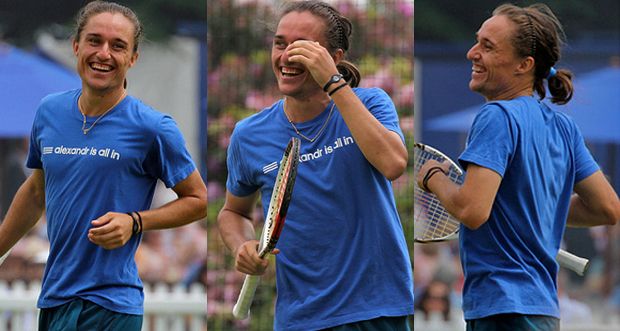
    Alexandr Dolgopolov

    Despite falling to Roger Federer in a merely one-hour long semifinal, Alexandr Dolgopolov’s run at Indian Wells was still one of the stories of the tournament.

    The Ukrainian all-courter made headlines when he defeated world No. 1 Rafael Nadal in the third round 6-3, 3-6, 7-6 (5) – only one month after losing in straight sets to the Spaniard in the final of the inaugural Rio Open.

    It wasn’t the victory on its own that caught the eye, but the manner in which Dolgopolov achieved it.

    On one hand, the 25-year-old hustled Nadal around the court on every point, swatting at every return ball and powering vicious, angled forehands to set himself up for easy volleys or drop shots; the latter his weapon of choice, as Viktor Troicki experienced first-hand at the 2011 French Open.

    When he wasn’t winning points, however, he was committing the simplest of unforced errors, often digging himself into unnecessary holes, as has been the norm throughout his career. By the end of the match, he had 49 unforced errors to Nadal’s 23, despite hitting 19 more winners.

    In California, “Dolgo” then went on to upset world No. 13 Fabio Fognini, followed by No. 12 Milos Raonic in straight sets to secure his ill-fated encounter with the Swiss, who went on to lose a three-set final to Novak Djokovic 6-3, 3-6, 6-7 (3).

    Dolgopolov’s explosive, entertaining showing at the highest level of the ATP Tour is not surprising considering his indisputable talent – though unexpected based on his tournament record in the past year.

    After bursting onto the scene in 2011, defeating first Jo-Wilfried Tsonga and then Robin Söderling on his way to the Australian Open quarterfinals, and winning titles at the 2011 Umag Open and 2012 Citi Open, Dolgopolov failed to make it past the third round of any Masters or Grand Slam event until Indian Wells.

    During this period, he also parted ways with previous coach Jack Reader of Australia, who once claimed, “You wouldn’t try to teach this,” when referring to the player’s unpredictable mix of trick shots – a feature that, along with his unique choice of headband, makes him one of the more unique players in professional tennis.

    Nevertheless, after the run at Indian Wells and earlier at the 500-level Rio Open, this looks to be Dolgo’s year.

    The exuberant player will next feature at the Miami Masters, where he is the 22nd seed and has a bye in the first round. In the second round, he will face the winner of the match between Jarkko Nieminen and Bernard Tomic.

    Cover Photo (Creative Commons License): Marianne Bevis

  • Giants of Serve Do Battle at Delray Beach

    Giants of Serve Do Battle at Delray Beach

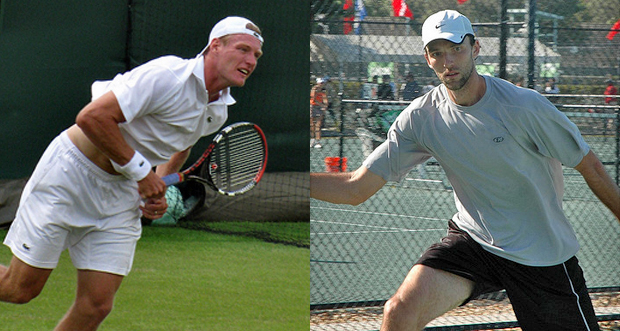
    Sam Groth Ivo Karlovic

    In a meeting between two of professional tennis’s giants of serve, Ivo Karlović, of Croatia, defeated the Australian Sam Groth 7-6(4), 6-3 in the first round of the Delray Beach Open.

    It was the first encounter between the two men, who stand 6 ft. 10 and 6 ft. 4, respectively. And it was probably the most unique of the first-round matches in Las Vegas, not only for the serve-and-volley style that both players employed, but for the fact that Groth was the first man to surpass the Croatian’s record for biggest serve in a professional tournament in 2012.

    Although the ATP doesn’t officially recognize serve speed records because of the diversity of radar equipment used on the tour, the Australian earned the unofficial honor at a Challenger event in Busan, South Korea, in 2012. In his second-round match against Uladzimir Ignatik, Groth blasted a 163.7 mph serve to break Karlović’s earlier record of 156 mph registered at the 2011 Davis Cup.

    Since then, the Croat’s prior record has been equaled or bested by two others. But it was that first record-breaker from Groth that was the more interesting because of the discourse that ensued. Legendary former player and coach Paul Annacone jumped in, saying, “I can’t believe it. I’ve seen Groth play. I haven’t seen him play in a year, but I’ve seen him. It’s got to be the radar gun.” Fellow big server Milos Raonic added that readings do vary depending on the tournament and location, though in the end he believed players cared little about the actual figures.

    Interestingly enough, the technology used at the Busan tournament, FlightScope, is the same implemented at many ATP World Tour events. A representative from the company verified that the reading was accurate.

    In Grand Slam tournaments, IBM provides the radar guns used to measure serve speed. For those who doubted Groth’s big serve potential because of his status in the second-tier of pro tennis, he actually recorded the fastest serve in Australian Open history this year with a 145.4 shot against Vasek Pospisil. Across the Slams, only two serves have been faster: Andy Roddick, 2004 US Open, 152 mph; Taylor Dent, 2010 Wimbledon, 148 mph.

    While it’s easy to get lost in the numbers, suffice it to say that both Karlović and Groth are some of the biggest servers in the game. To some extent, they are also breaths of fresh air with their willingness to come to the net and volley rather than hug the baseline like most modern-day pros.

    The Australian is certainly the more athletic, though both are enjoying very good starts to the year. Groth reached as high as world No. 157 in January after years outside the Top 200. At 34 years old, Karlović reached the final in Memphis last week, however he did retire after only one game today, while playing fellow giant Kevin Anderson of South Africa.

  • Viña del Mar Finalist Leonardo Mayer Books Fognini Rematch in Buenos Aires

    Viña del Mar Finalist Leonardo Mayer Books Fognini Rematch in Buenos Aires

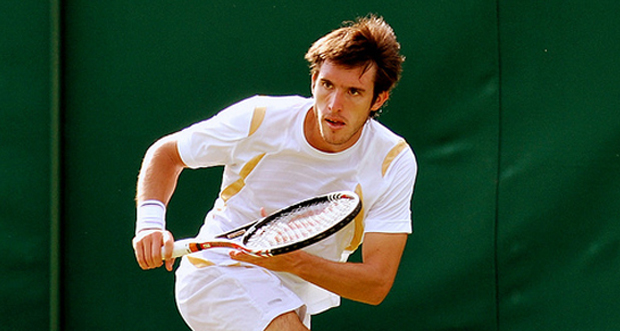
    Leonardo Mayer
    On Sunday, a number of tennis fans who tuned in to the Viña del Mar final without having followed the rest of the tournament were probably curious what a tall, lanky Argentine was doing standing crosscourt from Fabio Fognini. Two hours later, despite a 6-4, 6-2 loss to the top-seeded Italian, everyone watching had a much clearer idea.

    Leonardo Mayer is one of a group of promising Argentine players that began to emerge in the past half-decade to replace fellow countrymen David Nalbandian, Gaston Gaudio, and Juan Ignacio Chela near the top of the ATP rankings. However, until the tournament in Chile last week, the all-court specialist seemed to have slowly faded from memory, surpassed since his emergence in 2009 by his compatriots.

    Of those, Horacio Zeballos has made the biggest splash on the tour, winning the 2013 Viña del Mar in spectacular fashion against Rafael Nadal. In doing so, he became only the third man to defeat the Spaniard on his surface of choice after Roger Federer and Novak Djokovic. Carlos Berlocq, Eduardo Schwank, and Juan Mónaco have been vital parts of Argentina’s Davis Cup teams for years, while Mayer has been only a sporadic presence for his country. In fact, most people who have recognized his surname have quickly had to be redirected to another, realizing they were thinking of German No. 3 Florian Mayer.

    But, all of that isn’t meant to discredit the athletic and agile 26 year old. It’s just that the tennis world hasn’t seen the best of him until now. And I’m convinced that 2014 might finally be the year Mayer actually makes the jump from contender to victor.

    The son of a banker and teacher, Mayer picked up his first tennis racket at the age of nine. Although he has called soccer his first love and Diego Maradona his greatest idol, he stuck with tennis and went on to a highly-accomplished junior career, reaching the quarterfinals of the 2005 US Open, where he lost to eventual winner Ryan Sweeting, and winning the 2005 French Open doubles with Emiliano Massa. He reached as high as No. 2 in the ITF rankings before turning professional.

    Mayer quickly rose from the Futures circuit to the Challenger tour, making three quarterfinals in addition to a final in Puebla, Mexico in 2006. The following year he would win his first two singles titles: one in Cuenca against Thomaz Bellucci, and another against Dawid Olejniczak in Puebla, reaching No. 189 in the world rankings.

    From 2008-2010, Mayer would really start to emerge as one of the most promising players in South America, collecting singles and doubles titles on the Challenger tour and making his first ATP-level appearance at the Austrian Open in 2008. In 2009, he reached the second round of the US Open, French Open, and Wimbledon. By the end of 2010, he was No. 51 in the world and had reached his first ATP semifinal at the Nice Open, where he lost to Fernando Verdasco, advanced one round further at the French Open, where he lost to Marin Čilić, and was a member of the Argentina Davis Cup team.

    Then it seems stagnation hit. Despite reaching the third round at Roland Garros again in 2011 and 2012, most of Mayer’s success came on the Challenger tour, winning five more titles by the end of that year. Though he remained in the Top 100 and won his first ATP doubles title with Pablo Andujar at Winston-Salem, he could not manage more than two quarterfinal appearances at São Paulo and Los Angeles on the ATP tour, and a third-round showing at the US Open in 2012 to accompany first-round eliminations in Australia and Wimbledon.

    2013 brought much of the same, though Mayer received greater attention when he took a set off defending champion Andy Murray in the second round of the US Open. He finished off the year by winning a Challenger title against Pedro Sousa in Guayaquil.

    And now to the past two months, arguably Mayer’s best start to the year at the top level.

    At the Aussie Open, Mayer defeated then world No. 60 Albert Montañés in straight sets before he was ousted in convincing fashion by Novak Djokovic. The potential was there, however, with his forehand looking strong and his long, swift backhand looking particularly effective.

    The tournament in Chile last week was considerably more impressive, as Mayer, ranked No. 91 at the time, defeated opponents of higher ranks in all but the Round of 32. His most noteworthy victory was against Tommy Robredo, who he came from one set down to beat 3-6, 7-6(8), 6-4 in the Round of 16.

    Fognini exposed his inconsistent return game in the final, though Mayer did save a match point with a stunning crosscourt forehand (video above) before going down in straight sets, 2-6, 4-6.
    Mayer, however, has a chance for redemption today in Buenos Aires.

    The 26-year-old defeated compatriot Facundo Arguello 6-3, 6-4 in the first round of the Copa Claro yesterday, thus securing a rematch against Fognini to be played at 6:00 P.M. EST.

    Although the Italian has only lost once in his last 21 matches on clay, it wouldn’t be an absolute gaffe to put some money on Mayer adding a second loss to that impressive tally.

    Below is a video of Mayer’s loss to Juan Martin del Potro in the 2012 US Open that highlights some of his greatest assets: a willingness to come to net, good volleys, and a variety of angled shots on the forehand and backhand to stretch his opponent.

    Cover Photo (Creative Commons License): Carine06
  • Italy Soars in Davis Cup; Argentina Risks Relegation from World Group

    Italy Soars in Davis Cup; Argentina Risks Relegation from World Group

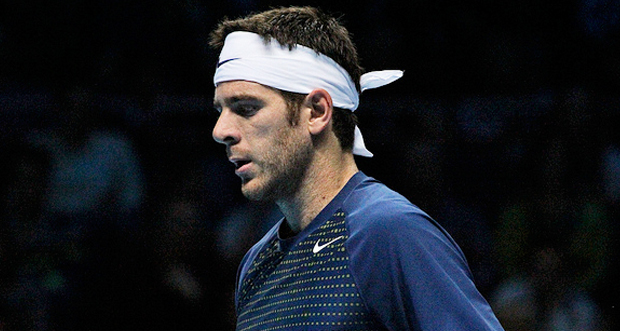
    Canever DC blog post

    In a shock Davis Cup result in Buenos Aires this weekend, Argentina fell 3-1 to Italy and now run the risk of relegation from the World Group only one year after losing a tight semifinal to eventual winners Czech Republic.

    Without world No. 4 Juan Martin del Potro and recently-retired David Nalbandian in the lineup, the hosts were forced to depend on world No. 44 Carlos Berlocq and No. 40 Juan Monaco to carry them forward to the quarterfinals for the thirteenth consecutive year.

    Berlocq won his opening match against world No. 31 Andreas Seppi in four sets (4-6, 6-0, 6-2, 6-1), but Monaco was soundly defeated by an on-fire Fabio Fognini in the second rubber (7-5, 6-2, 6-2).

    Fognini, world No. 15, is fresh off a fourth-round appearance at the Australian Open and showed a newfound level of confidence as he anchored the Italian team. He went on to secure victory with a 7-6(5), 4-6, 6-1, 6-4 triumph over Berlocq after partnering with Simone Bolelli to win the doubles, 6-7(6), 7-6(8), 7-6(3), 6-4, on Saturday.

    Italy will now host Great Britain in the quarterfinals held from April 4-6. The nation will be in search of its second ever Davis Cup trophy, after defeating Chile 4-1 to clinch the title in 1976. Italy only returned to the World Group in 2011 following a victory over the same opponent in a playoff.

    Argentina has been playing in international tennis’s top tier since 2001, when it defeated Belarus 5-0 in Cordoba. The country then went on a phenomenal run that included finals in 2006, 2008, and 2011, although all three ended in defeats: first to Russia and twice to Spain. The South Americans will now face a playoff against one of the eight Zonal Group 1 qualifiers in September to stay in the World Group.

    Perhaps the biggest influence in Argentina’s defeat was the failure to convince 2009 US Open winner del Potro to return to the team following a dispute with team captain Martin Jaite and officials from the Argentine Tennis Association (ATA). His last appearance was in the 2012 semifinal loss to the Czechs, where he won the opening rubber against Radek Stepanek in straight sets.

    Del Potro is upset about the initial selection of Jaite as captain in 2011, and a lack of consultation in regards to surfaces and locations by the ATA. The Olympic bronze medalist also spoke in the open letter (see link above) to Jaite and ATA president Arturo Grimaldi about the hypocrisy of the organization for attempting to make him look bad in the public eye while awaiting his response for the Italy tie.

    Tennis fans in Argentina are split over the stance of their top player, with a number of those inside the stadium during the Berlocq loss that clinched the Italian victory singing, “This is for you, del Potro, watching on TV.” Others displayed signs saying, “Volvé del Potro” — “Come back del Potro”.

    Grimaldi was quick to hit the damage control button and released a statement saying that he would do anything within reason to get del Potro back on the team for the crucial playoff. He was followed by Berlocq, who also spoke about how vital his compatriot is to every tie and how much more potent Argentina is with him in the team.

    Thus far, there has been no response from the world No. 4, who is currently undergoing treatment for an injury to his left wrist. But with the risk of sinking out of the World Group so soon after becoming the most dominant South American team in recent memory, all will be hoping that somehow del Potro and the AFA figure out a solution sooner rather than later.