Author: Susan DePalma

  • Li Na Defends Title in All-Chinese Final at Shenzhen Open

    Li Na Defends Title in All-Chinese Final at Shenzhen Open

    Li Na 2014

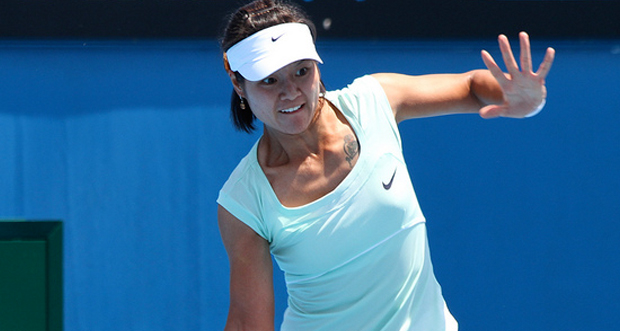
    The top two Chinese players faced off in a home tournament, with Li Na coming away the winner over the second best player in China, Peng Shuai, 6-4, 7-5. This was only the second-ever all-Chinese final in WTA history. The match featured dramatic swings of fortune: Li trailed 3-4 in the first, then won 7 of the next 8 games to lead 6-4, 4-1 when Peng rattled off 4 games of her own to lead the second 5-4, but the world No. 3 came back to finish her countrywoman off in straight sets, and capture her 8th career title. Peng was competing in her 6th final, and has yet to come away with the hardware.

    Li Na, 31, will be hoping to carry this momentum into the Australian Open where she has been a finalist twice in the last three years.

    Cover Photo (Creative Commons License): globalite

  • Nadal Tops Monfils at Qatar Open

    Nadal Tops Monfils at Qatar Open

    Doha - Nadal

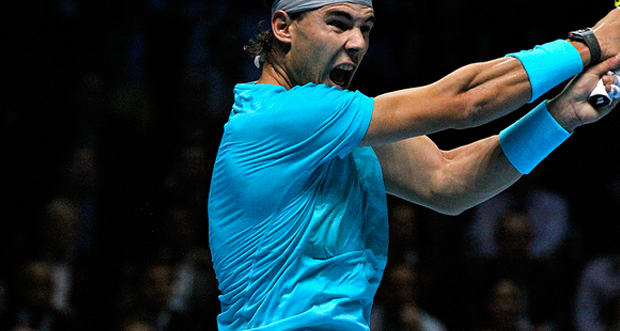
    Rafael Nadal overcame Gael Monfils to capture his first title of 2014 at the Qatar Open in Doha, his maiden trophy here in five attempts, where it was Monfils himself who twice sent the Spaniard packing in previous years, but couldn’t make it a third time today.

    Nadal raced through the first set while Monfils appeared to still be gathering himself, but the Frenchman led the entertaining second by a break for most of it. The Spaniard broke back, but Monfils took it in the tiebreak. Nadal broke early in the third, and didn’t look back, winning the match and the trophy: 6-1, 6-7(5), 6-2.

    This is the world No. 1’s 61st career title, one behind Guillermo Vilas’s total, putting him 7th on the all-time list. The only active player with more titles is Roger Federer, who is looking for his 78th tomorrow in Brisbane versus Lleyton Hewitt. The Frenchman has reached 20 career finals, but has won just four.

    Photo credit: Marianne Bevis (Creative Commons License)

  • David, Rafa and Nole’s Excellent Adventure in South America

    David, Rafa and Nole’s Excellent Adventure in South America

    Adventure

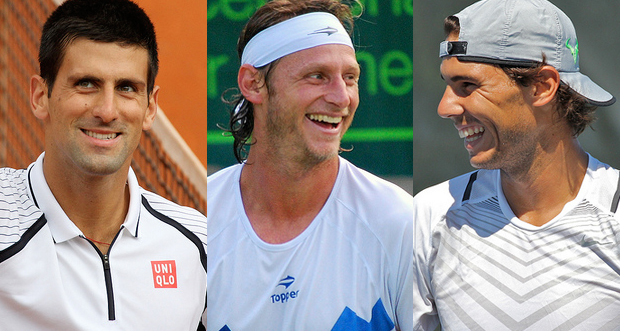
    This part of the off-season is about sending off David Nalbandian, and to a lesser extent, Nicolas Massú. Nadal and Djokovic, the world’s numbers 1 and 2, have joined in for exhibition matches and festivities. Here’s some of the news from the front in the Spanish-language press.

    The red-carpet was rolled out in Chile. The tennis players were received by President Sebastian Piñera. Nicolas Massú, who has also retired this year, was quoted as saying, “To have the honor of sharing this with Rafa, Novak, and David is a pleasure for anyone who cares about tennis.” Massú has now signed on as the Chilean Davis Cup captain. Chilean future hopeful Christian Garin was also in attendance. Also while in Chile, during a presser with Djokovic, Nalbandian, and Massú, Rafael Nadal offered to translate for Novak, and, hilariously, started restating what Nole said…in English. He had to be reminded that he was speaking English. He excused himself in Spanish, then saying, “At this point, I think English is my first language.” Likely it’s his first “press-conference” language, anyway.

    [divider]

    They also played some tennis in Córdoba, Nalbandian’s home town. Massú beat Nalbandian, 6-4, 6-2, and Djokovic got it over Nadal 7-6(3), 6-4. According to the Chilean press: “That never seemed like an exhibition, except for in the second set, where they joked about some fantastic points.” Otherwise the press in Spanish reckoned that they took it very seriously, for a “friendly.” The only break of serve came in the penultimate game of the second set. Interesting. I guess it’s not so easy for them to leave all the competitiveness aside.

    In his home town, Nalbandian also beat Nadal 6-4, 7-6(6).

    This is a particularly great point from the match:

    [divider]

    In between the exhibitions, Nalbandian and Nadal appeared together on the Susana Gutierrez show, a major talk show in Argentina. King David looked tanned and relaxed, and sartorially resplendent in a navy shirt, pink jacket, and red shoes. Nadal, according to the hostess, looked surprising tall. (“They always tell me that,” he said.) The conversation was light and full of humor. When asked about some of the longest matches they’d ever played, Nalbandian mentioned the six-and-a-half hour doubles match he’d played vs. Russia in Davis Cup. “Even I got bored,” said Nalbandian, to much laughter. Nadal said his was in Australia, lasting six hours, vs. Djokovic. “You must have won,” says la Susana. “No, I lost,” admitted Nadal, with a smile.

    When the hostess told David that everyone was heartbroken that he was retiring, he said, “Don’t be sad. Anyway, it was a great excuse to get Rafa to Argentina.” The two do seem to be very genial friends.

    You can see the videos of their appearance on the show here:

    [divider]

    Before everyone got back together in Buenos Aires, Nadal and Djokovic met in Patagonia for a hit-around with the glaciers as background. They took part in an exhibition on Friday, hitting on a barge in front of the Perito Moreno Glacier, near the southern extremity of Argentina. From Nadal: “I’ve just been in one of the most spectacular places that I’ve ever seen before, the Perito Moreno! Really amazing!”

    [divider]

    Novak and Rafa also got to hit goals in the Boca stadium in Buenos Aires. Not sure why River couldn’t get their attention, but:

    In the rematch between Nadal and Djokovic in Buenos Aires, Nadal prevailed, 6-4, 7-5.

    (Listening to Djokovic’s speech in Spanish, it seems clear he was coached by Rafa, because he used the Spanish idioms!)

    Nadal and Djokovic then combined to play doubles against Nalbandian and Monaco. By all accounts, they had a very good laugh. At one point, Djokovic threw himself to the ground so as not to be hit by Rafa’s serve. Nalbandian feigned arguments with the chair, and Monaco tried to hit his opponents at the net.

    Clearly, Nalbandian was well sent-off. The Chilean and Argentinian fans were greatly entertained, and Rafa and Novak seemed to have more-than-a-little fun. An Excellent Adventure, indeed.

  • Czech Republic Repeats in Davis Cup

    Czech Republic Repeats in Davis Cup

    8705871692_1c393ac441_z e

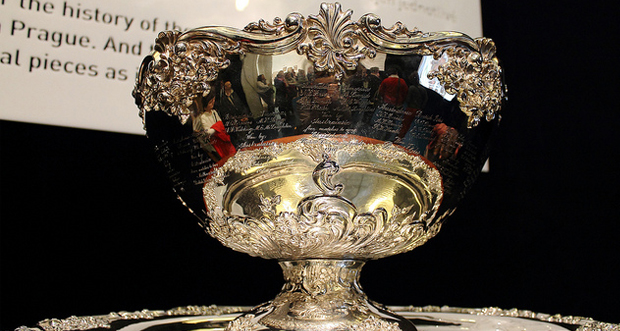
    For the second straight year, the Czechs have won the Davis Cup trophy, this year defeating the host team Serbia, 3-2.

    The Serbian team was hamstrung by the losses of Janko Tipsarevic (injury) and Victor Troicki (serving a ban for missing a drug test), forcing them to play the unknown No. 117-ranked Dusan Lajovic in two of the singles matches.  Having the world No. 2 Novak Djokovic on their side was not enough for Serbia to repeat their 2010 victory.

    For the Czech Republic, it was again their stalwarts, Tomas Berdych and Radek Stepanek, who were the two-man show all weekend, as they had been in defeating Spain this time last year.  When the teams split the singles rubbers on Friday, the Czech’s decided to press Berdych-Stepanek, a proven combination (14-1 total Davis Cup record as a doubles team) into service again on Saturday, when it seemed that the doubles might decide the eventual winner, given the weakness and inexperience of Lajovic.  Somewhat controversially, Djokovic was not substituted in to play with Nenad Zimonjic (at 37, the oldest man ever to play in a Davis Cup final), who teamed with Ilija Bozoljac, in what was indeed a losing effort against the crafty Czech pair.  Today, Djokovic defeated Berdych to assure a live rubber for the 5th match.  And just as he did last year, Stepanek clinched for his team.

    [divider]

    Scores:

    Novak Djokovic d. Radek Stepanek: 7-5, 6-1, 6-4

    Tomas Berdych d. Dusan Lajovic: 6-3, 6-4, 6-3

    Berdych/Stepanek d. Bozoljac/Zimonjic: 6-2, 6-4, 7-6 (4)

    Djokovic d. Berdych: 6-4, 7-6 (5), 6-2

    Stepanek d. Lajovic: 6-3, 6-1, 6-1

    Photo credit:  elPadawan (Creative Commons License)

  • Down the T #4:  David Nalbandian Interview

    Down the T #4: David Nalbandian Interview

    Nalbandian Collage II

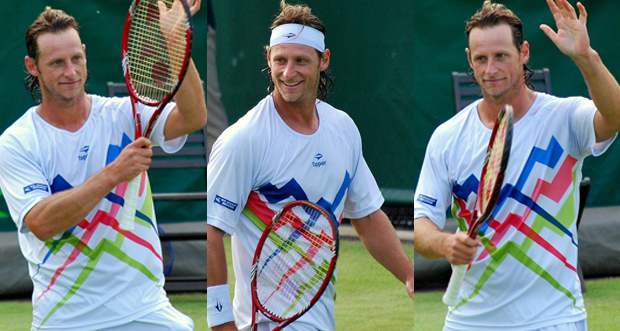
    Our latest “Down the T” features an interview with David Nalbandian, the 2002 Wimbledon finalist, winner of the 2005 Tennis Masters Cup, and numerous other titles, including the 2007 Madrid and Paris Masters.

    [divider]

    Tennis Frontier:  So to start, after a very successful junior career, you turned pro in 2000, and won Basel and Estoril in 2002, by age 20. What was it like to attain such early success, and have you noticed that it’s very rare now?

    David Nalbandian:  The truth is that at that time I wasn’t very aware of the magnitude of the things that were happening to me in my first steps of my career. Nowadays I look back and I remember those times with pride and affection.

    [divider]

    TF:  You have played across several different eras of the game, by your own description. How would you characterize the evolution of the game in the time you played it?

    DN:  When I started playing, the game was less physical. Today the players are more skilled, meaning hit the ball from both sides with almost the same accuracy. Back then, players used to have a good serve or a good back hand or a good fore hand. What I see now is that players are much better from this perspective.

    [divider]

    TF:  What are your most memorable wins/losses?

    DN:  The win that I remember with greatest pride is the final match of the Masters in 2005, when I won against Federer in 5 sets.

    And the most painful losses I remember are all the series of the Davis Cup that we couldn’t achieve, especially the final series we played in Mar del Plata against Spain. That was the one that hurt me the most.

    [divider]

    TF:  Our members tend to cite Madrid and Paris 2007 as an apex of your career. You became the first player ever to defeat Federer and Nadal in back to back tournaments. You also beat players such as Berdych, del Potro, Djokovic, and Ferrer on the way to those titles. It was an amazing run. Up until then your year hadn’t been stellar. What happened? And what happened just after, in terms of capitalizing on those wins?

    DN: At that time I was playing my best tennis. It was an exceptional end of the year. Besides I finally could play without injuries at all.

    [divider]

    TF:  What was it like to play Federer and Nadal in their prime form? Not many have found the solution for them, and you have. Notably, you beat Federer at the YEC, when you were down 2 sets to love. Can you talk about that?

    DN:  Winning against Federer and Nadal is a very difficult task; they are two of the best of all times. To win against them it is important to play perfectly throughout the game, and during those years I was playing my best tennis. The truth is that it was very satisfactory; I remember those years with a lot of pride.

    Regarding the Shanghai Masters final, even though I had lost the first two sets, I knew that I could have won those sets, so I felt pretty close. When the first set began, I knew that I could turn up side down the score, and I did it.

    [divider]

    TF:  What players have you enjoyed playing the most?

    DN:  The truth is that I enjoyed playing with almost every player in the circuit. I had the luck to play in an era in which there are great players, the best in history. I remember many matches with Roger, Rafa, Marat Safin, etc.

    [divider]

    TF:  Many of our posters have mentioned the beauty of your back-hand. Do you have an opinion about the greatest back-hands of all-time? And how do you rate Djokovic’s?

    DN:  I think it’s very effective. He hits the ball naturally, and the ball bounce is also very hard to read.

    [divider]

    TF:  What was your favorite Slam? And despite best results at Wimbledon, do you think you might have done better at Roland Garros?

    DN:  Even though I reached semifinals in all four Grand Slams, it was at Wimbly where I reached the final game. So I have a good memory of those days.

    [divider]

    TF:  Do you believe that the surfaces have been slowed down to the detriment of the game? Do you regret that carpet has been eliminated from the calendar?

    DN:  Yes, I do, even in Wimbledon. Regarding carpet surfaces, I loved playing indoors on those surfaces.

    [divider]

    TF:  When you see what Ferrer is doing at his age, and Tommy Haas and others, do you consider that you might come back from retirement?

    DN:  After many years playing on the circuit I have decided to retire, since after the operation, the shoulder isn’t allowing me to train with the requirement which the circuit demands. I’m not going to play professionally any more, I plan to devote myself to my family.

    [divider]

    TF:  Is there coaching in your future? Do you see yourself coaching Davis Cup? You have to know that there is a huge groundswell of notion that you should.

    DN:  I suppose that I will continue linked to tennis, but I still don’t know how. I don’t see myself as a coach.

    [divider]

    TF:  As you leave off your career in tennis, do you have any regrets? What will you miss? What will you not miss?

    DN:  I don’t regret anything in my career; I always tried to give the best of me. I know I will miss the trips, being with other tennis players, the tournaments and the competition, but I’m also happy to be able to spend more time with my family, my daughter and friends. Not winning the Davis Cup is the only thing hard to swallow.

    [divider]

    Cover Photo (Creative Commons License): Carine06

  • Djokovic Tops Nadal in London to Win Year-End Title

    Djokovic Tops Nadal in London to Win Year-End Title

    WTF Winner - Djokovic 2

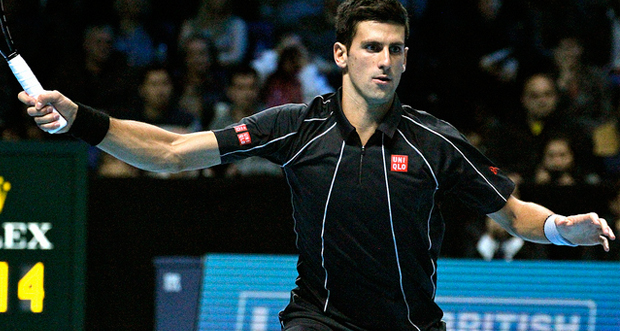
    Novak Djokovic, who has rediscovered his drive and motivation since losing his world No. 1 ranking seven weeks ago, exacted revenge again today against the man who took it from him by beating Rafael Nadal convincingly, 6-3, 6-4, to take the ATP World Tour Finals title.  This was Djokovic’s third title at the year-end tournament, and Nadal’s second loss in a final, having never taken this trophy.

    The Serbian came out strong from the start, while the Spaniard started looking nervous, and was broken in his opening service game.  Nadal got the break back, but was committing too many unforced errors on his trusty forehand side, and too many double-faults, trying for a bit too much to combat, futilely, in the end, the Djokovic A-game.

    Djokovic, looking nimble and assured throughout, broke again early in the second set.  Nadal kept his nerve, fending off championship points in each of the last two games.  He held serve despite having been down, and got Djokovic to deuce at the last, but couldn’t hold off the inevitable any longer.  Djokovic served an ace, and then a Nadal shot sailed wide to end the match.

    The win evens their head-to-head this year to two wins a piece, and closes the gap on the overall to 22-17.  It also sends a big salvo across the bow at Nadal for the season to come.  Djokovic is gunning for him again.

    [divider]

    Fernando Verdasco and David Marrero beat Mike and Bob Bryan for the doubles title:  7-5, 6-7(3), 10-7.  They were the surprise Spanish duo to pull it off, passing the higher-ranked Spanish team of Granollers/Lopez, who beat the Bryans at this tournament last year.

    Photo credit:  Marianne Bevis (Creative Commons License)

  • Djokovic Defeats Wawrinka to Set Showdown With Nadal

    Djokovic Defeats Wawrinka to Set Showdown With Nadal

    WTF SF - Djokovic

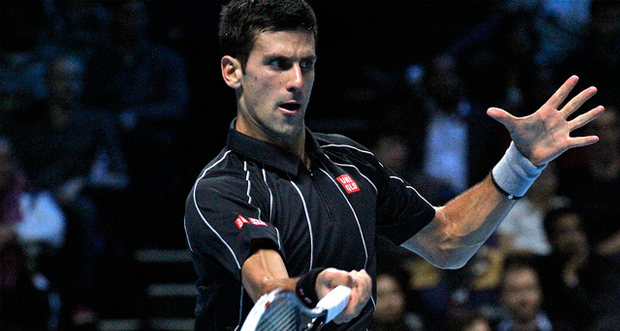
    In his most convincing win of this ATP World Tour Finals, the Serbian Novak Djokovic beat Stan Wawrinka of Switzerland to set up the final that most had anticipated, with Rafael Nadal having won his semifinal earlier in the day.

    The 28-year-old Swiss has been enjoying the most successful year of his career, and was making his debut at the ATP World Tour Finals.  He came out looking to start strong, threatening Djokovic’s first serve, and breaking his second. But the Serbian broke back immediately, and then seemed to kick things up a notch to counter any significant threats that Wawrinka threw at him.  In the end, Djokovic blew past him, 6-3, 6-3.

    The final will be played in London’s O2 Arena tomorrow at 8pm GMT.  It will be the 38th meeting between Djokovic and Nadal, a record, and their sixth match of 2013.  Nadal leads on the year 3-2, though the most recent win went to the Serb.

    Photo credit:  Marianne Bevis (Creative Commons License)

  • Nadal Denies Federer in London

    Nadal Denies Federer in London

    WTF SF - Nadal

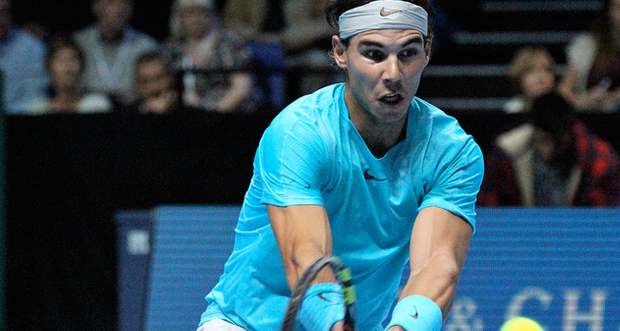
    In the 32nd meeting of this storied rivalry, Rafael Nadal prevailed over Roger Federer, 7-5, 6-3.

    The first semifinal of the day started with each man playing well and holding serve.  They traded breaks three times in succession in the 9th-11th games of the set, which Nadal served out at 6-5. The second set was more squarely on Nadal, who broke Federer’s serve in the 6th game, and again with the Swiss serving in the final game at 3-5, to close out the match.  It was the Spaniard’s first win over the former No. 1 on indoor hard courts.

    This was Federer’s 12th consecutive year playing in the ATP World Tour Finals, which he has won six times.  For Nadal, it is his fifth appearance, and only his second time to make the finals.  He lost in the finals to Federer in 2010.

    Photo credit:  Marianne Bevis (Creative Commons License)

  • Andre Agassi and Stefanie Graf on the Mysteries of Success

    Andre Agassi and Stefanie Graf on the Mysteries of Success

    “It is an illusion to think that setting goals and achieving them makes you happy.”

    By Stefan Wagner.

    Reprinted with permission from The Red Bulletinredbull-com-logo 80

    [divider]

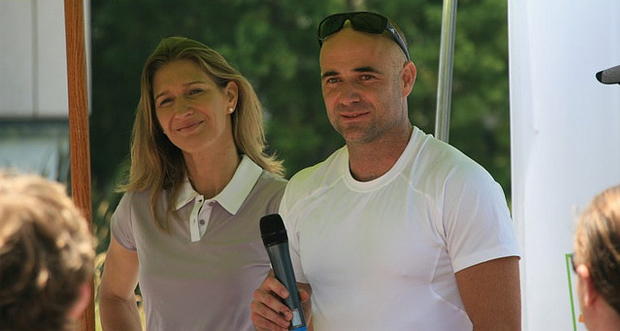
    THE RED BULLETIN: Together you’ve won 30 Grand Slam tournaments, earned fortunes, achieved worldwide popularity and business success.  You raise millions for children’s charities, look after young tennis players, have a strong marriage and are bringing up happy children.  Everything you touch seems to be successful, but what was it like after the end of your tennis careers?  Did you have to relearn what success is? A tennis tournament begins on a Monday, the goal is victory in the finals on Sunday:  that’s relatively straightforward.

    STEFANIE GRAF: And on the Monday you get the new rankings, which tell you where you stand. When I was still playing tennis, a friend once said to me, “You’re so lucky, you can say that you are the best in something.” Today I understand better than ever what he meant. This phrase provides a certain kind of security. A doctor or a therapist never knows exactly how good he really is, there’s always the question of whether or not he could be better.

    Was it easier for you playing sport than it was afterwards?

    SG: No, there were different questions.  For example, whether the success that you have achieved is actually what you wanted to achieve. For a sports player these questions go even deeper with age.

    ANDRE AGASSI: I have my own view of success.

    Which is?

    AA: I believe success is an illusion.

    But you won all four Grand Slams, over $31 million in prize money and were world number one. That is an illusion?

    AA: Success in itself, as an end in itself, is an illusion. Whether it’s in sport or a charitable foundation. Let me put it this way: in the last year, Stefanie has helped 1,000 children with her Children for Tomorrow foundation – and even if it were 2,000, there are still umpteen thousand out there that she can’t help.  Would you describe that as success?

    It would be crazy not to.

    AA: It wouldn’t, because you describe something as success that isn’t actually success. In tennis I learned that the final isn’t the goal, it can’t be. That would have meant, ‘Shit, on Monday it all starts again.’

    Following your logic, Roger Federer isn’t a successful tennis player.

    AA: He is, of course – but not because he’s won the most Grand Slam titles, but because he’s the all-time best, which he is beyond a doubt, and yet he still tries to develop. True excellence is the person who understands that success won’t come sometime in the future, but rather here, now. As soon as I understood that, a few important things became clear: it’s not what I do that’s important, it’s how I do it. I won’t accept not giving my best.  I won’t accept not wanting to be better.  Every day, I have to try to be better, no matter what the scoreboard says or what the world rankings say, or how much I’ve raised in donations.

    But you can’t separate ‘success’ from goals which are objectively set and attained.

    AA: Yes you can. In fact you have to. Try it! Set yourself a goal, work hard to achieve it – will it make you happy? No. It’s an illusion to think that setting goals and achieving them makes you happy.

    How much money have you raised in the last 15-20 years for your charity projects?

    SG: I concentrate on the necessary amount year by year. In total it’s millions, many millions.

    AA: For me, over the years it’s been almost exactly $175 million.

    And do you know how many children you’ve helped?

    SG: In the past year it was 1,000 children, which was our highest number for 15 years.

    AA: Recently we had 1,300 children per year in our academy.

    But you must regard that as success?

    AA: Success isn’t what comes out, but what you put in. Doing things completely or not at all. Caring about what you do. When it comes to charity:  invest yourself in your project. Find out how you can make something exceptional out of it. Does your fame help? Do you have to collect donations yourself? Will you have to spend time away from your children to give interviews? Then you have to do it with all your heart. When it comes to tennis: find out what you’re responsible for, and concentrate on that. Work on your fitness, on your stroke. Don’t lie to yourself and look for shortcuts. Success isn’t a result. Success is a way of living you choose for yourself.

    So success is subjective, not objective?

    SG: Absolutely.

    AA: When you see success as a goal, you’ll never be successful. Because it becomes like an addiction, you can never have enough. Never.

    But how do you measure success?

    SG: By how you feel when you go to bed at night.

    More and more tennis pros come to you in Las Vegas to learn from you.  What can you teach these players, some of whom are world class?

    SG: Actually sometimes it is about technique. Not the basics, sure, but there’s often room for tips.

    You once said that you could teach a young player in 10 minutes what you learnt in 10 years. What would happen in those 10 minutes?

    AA: There are a few things that are important to me, simple things. For example, that there is only one important point you play in life, that is, the next one. And that you should concentrate on the things that you can influence –you can control your attitude, your work ethic, your concentration. If it’s windy or hot or something aches or you’re tired from the match yesterday, then you have to accept it. I also try to teach young players that tennis isn’t a sport where you’ll get perfection. There’s no 100 per cent tennis. There is only the 100 per cent that is within you on the day. It’s all about bringing out your own 100 per cent.

    SG: I can’t put it as succinctly as Andre, I couldn’t fit it all in 10 minutes. Also I see my task a little differently:  I don’t give life lessons. I prefer listening to talking.

    Feature_AgassiGraf_EN-1 125

    In Open [Agassi’s gripping and brutally honest autobiography], there are descriptions of depressive episodes, even after winning Wimbledon and becoming number one in world rankings. Was the pain of losing really stronger than the joy of triumph?

    AA: Yes, and that still applies.

    How do you deal with it?

    AA: I’ve learned to enjoy every moment.  A good day with a major final, that’s a good moment. But you have to learn to value all the moments before that led to it. The moment of victory can’t be better than the moment of preparation. Learning that is pretty much a question of survival for a tennis player.

    SG: Andre’s right. The feeling you have after a victory fades so quickly. What we call success has a terribly short half-life.  You would have been amazed if you’d seen Andre or me after a major victory.  There was some relief, maybe, but no rejoicing or excitement. After a major victory there’s an emptiness, a routine, ‘Let’s go home, we’re done here.’

    That sounds really sad.

    AA: Oh, it is. Learning to see things differently is utterly essential. The day in the weight room, on the training court– that has to count just as much as finals day at Wimbledon. Not understanding that can be dangerous, because you make bad mistakes. So you think, for instance, that money is important, but money is nothing more than an expansion of opportunities for spending your time. Money can’t make you happy. When you’re happy with the opportunities that come with less money, money completely loses its significance. Money is a means to an end, not an end in itself. Exactly the same as what you’ve been describing as success: Success isn’t an end in itself. Success doesn’t mean winning.

    Not many world-famous sportspeople would say that. How does an athlete come to think like that?

    SG: Life is a good teacher, whether you’re a tennis player or not. You just have to ask yourself one question and answer it honestly: is the life I live the life that I want to live?

    Did you already have that attitude during your career?

    AA: At 27 I was number one in the world, I had won Grand Slams, I had taken drugs, I was divorced, I fell to number 141. I was unhappy.  And I had to make a decision: do I keep playing tennis or not? That was the moment when I thought, even if I didn’t choose tennis for myself, because my father did that for me, perhaps tennis will give me the opportunity to get my life together. To do that I needed some meaning in my life. The school I built was that meaning. And so tennis had a purpose, tennis allowed me to create and maintain something which is really important. Suddenly it was all completely simple:  tennis became a tool with which I could do something I really wanted to do.

    You said that fear is a great motivator.  Given your life story, what you suffered as a child through fear and pressure – did you really mean that?

    AA: The fear of losing is an important motivator. Fear of not making the best of a situation.

    It seems as if you raise your children without fear. With your charities you try to make the lives of others easier.

    AA: But the fear of losing stays. That doesn’t go away. Ignoring the fear doesn’t help. I have a fear of failing my children: that fear is good and right, because it keeps me alert.

    Is there such a thing as a life without fear?

    AA: We humans can love and hate, we feel joy and fear, all these emotions are within us. It would be wrong to try and turn one of them off. Quite apart from the fact that it would be impossible.

    Can you raise a child to be successful in the conventional sense of the word?

    SG: No.

    AA: But you can screw it up.

    SG: That’s something we’re really afraid of, that we screw up with our kids.

    AA: You can teach someone to put the scoreboard ahead of everything. But that would be wrong. Children have to learn to push themselves every day.  For themselves, not for anyone else, certainly not for a scoreboard. When you see the result on the scoreboard, that’s a bonus. But what’s on the scoreboard shouldn’t be the meaning of life. Life is bigger than any scoreboard.

    www.childrenfortomorrow.de

    www.agassifoundation.org

    Photography: Longines
  • Errani Leads Italy to Fed Cup Over Russia; Halep Wins in Sofia

    Errani Leads Italy to Fed Cup Over Russia; Halep Wins in Sofia

    Errani

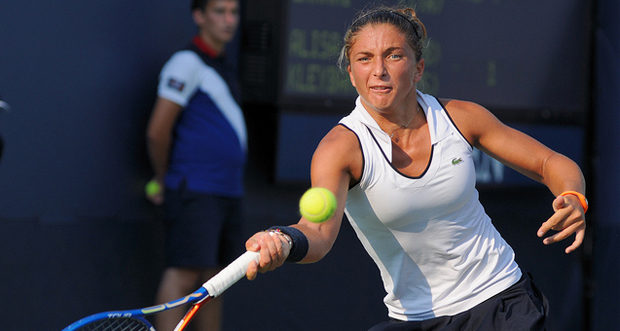
    Sara Errani defeated Alisa Kleybanova 6-1, 6-1 to seal the Fed Cup title for the Italian Women, 4-0 over Russia.

    [divider]

    Simona Halep of Romania defeated Samantha Stosur to take the WTA Tournament of Champions title in Sofia, Turkey:  2-6, 6-2, 6-2.  This is Halep’s sixth title in what has been a breakout year for her.  She began the year ranked No. 49, and finishes No. 11.  The Romanian is the only player of the year to win titles on clay, grass, hard, and indoor courts, as well as the second most successful player behind Serena Williams in terms of number of titles won this year.

    [divider]

    Photo credit: Christian Mesiano (Creative Commons License)