Author: John Masters

  • 2014 – Out With The Old, In With The New (But Some Things Don’t Change)

    2014 – Out With The Old, In With The New (But Some Things Don’t Change)

    2014 Masterclass

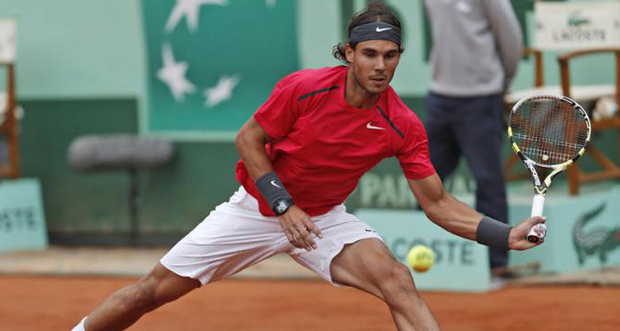
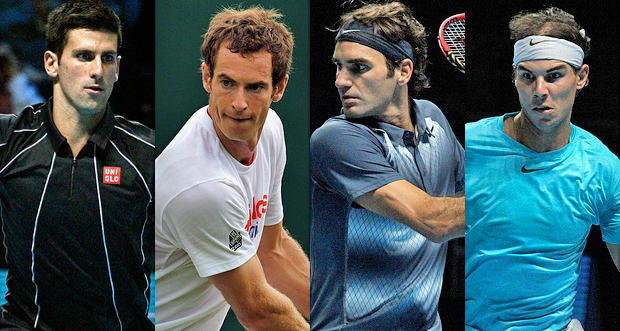
    2013 is clearly behind us, but it’s worth taking a glance back at some of the successes and some surprises at the top of the tennis world. Just when it looked like Mr. Novak Djokovic and Mr. Andy Murray had ascended as the two top players in the sport, dethroning Mr. Rafael Nadal and Mr. Roger Federer, with a one-two finish at the 2013 Australian Open,  Mr. Nadal defied the odds and came back after a seven month respite, and rather amazingly achieved top form quicker than anyone had a right to expect. He not only achieved it, he maintained it, and continued it for the rest of the slam season and was the year end No. 1 player on the ATP tour,  winning two out of three of the Grand Slam events he played, including his record eighth title on the red clay of Roland Garros and his second US Open victory. In doing so, he removed Novak Djokovic from his pedestal, defeating him at the Roland Garros semifinal and the US Open final.

    It was not only in majors where Rafael Nadal had success. He won 10 titles and was a finalist in two others out of 13 events from February to September, his only misstep being a first time first round exit in a major at the Wimbledon Championships to Steve Darcis, No. 135 in the world. That shock loss, after the previous year’s second round shock loss to Lukas Rosol, had many people wondering if Rafa had again suffered some injury. But he quickly recovered from the slippery turf, and returned with a vengeance, recovering his form on the hard courts of North America and captured the rare triple in the Canada and Cincinnati Masters series and the US Open trophy. He finished the year very respectably, albeit without a title, making two semifinals, and two finals including the season ending tournament at the World Tour Finals in London where he lost to a resurgent Novak Djokovic.

    Though the Return of Rafa was undoubtedly the story of the year, the highlight was probably Andy Murray’s Wimbledon Championships triumph, the first one by a gentleman from Great Britain’s soil in 77 years when Fred Perry won the event. After winning, Mr. Andy Murray also received the rank as an Officer of the Most Excellent Order of the British Empire (OBE). Andy defeated a game Novak Djokovic in the final who had just endured a titanic struggle with the Tower of Tandil,  Mr. Juan Martin del Potro from Argentina. With this win, Andy basically said he had achieved his ultimate dream. Unfortunately for him, later in the year, after being unable to defend his 2012 US Open title, losing to an improved and confident Stanislas Wawrinka, Mr. Murray, OBE, left the tour for back surgery.

    Novak Djokovic started 2013 in fine form, winning the Australian Open for the third consecutive, and fourth time in all, over Andy Murray. Though he would not win another major, Novak was very consistent the whole year.  He won six other titles including three of the Masters 1000 series in Monte Carlo, Shanghai, and Paris, and continued his run at the final event of the year at the World Tour Finals in London. He made two other Grand Slam finals at Wimbledon and the US Open, and lost a close match in the semifinals at Roland Garros to Rafael Nadal. It was an excellent year by anyone’s standards, even if somewhat disappointing to his fans.

    Roger Federer perhaps had the most surprising and disappointing year of the “Big Four”. After his outstanding run in late 2011 to the summer of 2012 where he won nine titles, including Wimbledon and extended his weeks at No. 1 to 302, Federer only captured the Halle title in 2013, was ousted in the second round at Wimbledon by Stakhovsky, and to Robredo in the fourth round of the US Open, and only made one semifinal early at the Australian Open. But in retrospect, should we have been surprised? Federer clearly said 2013 was going to be a transitional year at the start. Not many bothered to ask what that meant, but it was evident that he was going to ease up somewhat from the year before. Also, he suffered a back injury rather early in the season at Indian Wells, which he said bothered him until around Hamburg, just before the US Open, preventing him from playing well and perhaps more importantly, training properly. But for his fans, and fans of tennis around the world, he did not leave the tour. He was still playing events, drawing crowds and audiences on television, perhaps realizing just how important he is to the tennis world.  So one has to credit him for sticking in there, even when the going was tough and while taking a lot of criticism. By the end of the year, Roger had slipped from No. 2 to No. 6, and many people were saying he was in full decline and were even calling for him to retire, again. But Federer said he was happy playing,  enjoying the tennis life, his health was better,  and that he expected 2014 to be a much better year. This writer, for one, will never count Mr. Federer out as long as he plays. He’s simply a magician on the court, and at his best, can still beat any player in the world. Those moments may not come as often as they once did, but one believes his remaining time on tour should be cherished like the last bottles of vintage wine from the cellar, to be sipped slowly, filled with memories of past glory, savoring each of his remaining better performances until the end of his career.

    Other notable player performances of 2013 have to include those of Mr. Juan Martin del Potro who challenged the very best during the year and won four titles and was a semifinalist at Wimbledon losing gamely in a close five set match with Novak Djokovic, which may have been the second best match of the year. The best match of the year was likely the fourth round of the Australian Open between Mr. Stanislas Wawrinka and Novak Djokovic, where the Swiss No. 2 had the best performance of his career, and was so close to winning, but was finally beaten 12-10 in the fifth and deciding set by the No. 1 player in the world. Wawrinka would later make the semifinals at the US Open after beating Andy Murray in the quarterfinals, but was again beaten by Djokovic in a hard fought five sets. Stan only won one title, but obviously played consistently throughout the year to earn his placing in the World Tour Finals in London among the best eight in the world, where he made it to the semifinals, losing again to the eventual winner, Novak Djokovic.

    The 23-and-under players finally made an impact, with Canadian Milos Raonic finishing at No. 11. The future also appears bright for Jerzy Janowicz from Poland, who finished at No. 21 and made it to his first major semifinal, at the Wimbledon Championships, finally losing to Andy Murray in four sets. Bulgarian rising star Grigor Dimitrov was close behind him at No. 23 in the world as he became more consistent, going deeper into tournaments, losing in competitive battles to the very best players. Vasek Pospisil, also from Canada, finished the year at No. 32 after starting at No. 125. Pablo Carreno-Busta of Spain finished at No. 64 after starting the year at No. 654. One would likely expect to see more from these players in the next two to four years.

    [divider]

    Now it’s a new year of high expectations and hopes. Many players would like to pick up from where they left off last year, while many want to throw out last year and start anew. We have new tennis coaches for some of the top players, highly successful players from the old days, as players have probably been influenced by the Ivan Lendl effect on Andy Murray. They are Boris Becker for Djokovic, Stefan Edberg for Federer, Michael Chang for Kei Nishikori. Not surprisingly, world No. 1 Nadal has not changed, keeping his trusted coach and family member, Toni Nadal. From what we’ve seen so far, it seems that we are in for an interesting year in men’s tennis.

    The story of the Australian Open for the men so far has been the scintillating success of Stan Wawrinka, who has continued his fine play from 2013 and defeated no less than No. 2 Novak Djokovic in the quarterfinal, and No. 7 Tomas Berdych in the semifinal to make his first Grand Slam final. The popular Swiss player finally overcame Djokovic in the fifth set 9-7, after losing two tough battles in the Australian Open and US Open in 2013. He has his first chance to win it all on the major stage. One wishes him the best. Some may say that Novak Djokovic may have had too easy a draw up to Stan and was undercooked, but others would say that it was just Stan’s moment.

    In the other half of the draw it seems that some things never change. Once again, we have a match between Roger Federer and Rafael Nadal, this time in the semifinal. Federer, who had been dismissed by many as a fading force after his admittedly weak 2013 results (for him), appears to have had a resurgence and is in his best form in at least a year or more. In arguably one of the tougher draws in the tournament, he has emerged from the problematic path relatively unscathed and hardened, dropping only one set. Along the way, he has steadily improved his play, beating Jo-Wilfried Tsonga, with whom he had played a tough five-set match last year, in a relatively easy three sets, and Andy Murray, to whom he had lost in the semifinal last year, in a slightly more difficult four sets. His serve has been excellent, only being broken twice along the entire way with a key high percentage of second serves won. He is definitely more aggressive, coming to net 41 times in the Tsonga match with 84% success, and 66 times in the Murray match with 74%  success. One has to believe that his additional part-time coach, Stefan Edberg, has been a positive and effective influence so far.

    Federer’s play against Murray in the first two sets and nine games was impeccable. Murray didn’t reach a break point on the Federer serve and looked lost as to what to do to turn things around. However, Roger suffered a little hiccup in the tenth game where his first service percentage dipped a bit, Murray stepped up to take full advantage, and Federer failed to serve for the match at 5-4, and failed to convert two match points in the tiebreak to lose the third set. However, it was also encouraging for him to recover from that setback to come back and win the fourth. He changed tactics, and made the match more of a physical effort, extending Murray’s service games, one of them to 10 deuce points, and it paid off as Murray visibly tired as the set wore on. In Murray’s defense, he came into the Australian Open with only two tour matches since he left the tour for back surgery just after the 2013 US Open. He had a very easy first four rounds, facing nobody in the Top 25, and was simply not ready for as tough and determined an opponent as Federer.

    Rafael Nadal has come through, albeit not quite as smoothly. Though his initial draw looked tough, it opened up a bit. Bernard Tomic suffered an injury early in their first round match and retired after one set. Then the next top seed in Nadal’s quarter, Juan Martin del Potro, lost to Roberto Bautista Agut in the second round. Nadal’s third round opponent, No. 25, Gael Monfils, didn’t play well at all. Nadal’s fourth round and quarterfinal were rather tight affairs, with Nishikori losing in two tiebreaks and 7-5. In the quarterfinal, Nadal was hampered by a bandage for a blister on his palm, but he played just well enough to win in four sets, winning two tiebreaks, and was fortunate to win the one in the third set where Dimitrov sailed a easy set point long. Dimitrov couldn’t recover after that. Nadal did not look comfortable in the match, hitting many balls short, and was errant with his usually dependable forehand.

    One looks forward to their 33rd meeting on Friday. Roger will need to continue to play at the excellent level he displayed in the Tsonga and Murray matches to have a good chance. Has he left his old 2013 form totally behind and brought in a new outlook via his new coach, Stefan Edberg? Rafa will have to improve his level from his last match and when he meets Roger, he usually does. Will he be able to contend with the new, more aggressive Roger? Weather may be a factor as Friday’s forecast calls for relatively cool and rainy conditions during the day, though the rain may be over by the time they play. In any case, the tennis world awaits the latest chapter in their long history. Some things don’t change. But whomever wins will have to face a new player in the final in this new year. One hopes that more new and exciting results await in 2014. May the best players win.

    [divider]

    Discuss this article with fellow tennis fans in the tennis forums

    [divider]
  • Goodbye Mr. Hyde, Welcome Back Roger Federer – 2013 Paris SF

    Goodbye Mr. Hyde, Welcome Back Roger Federer – 2013 Paris SF

    Masterclass Fed

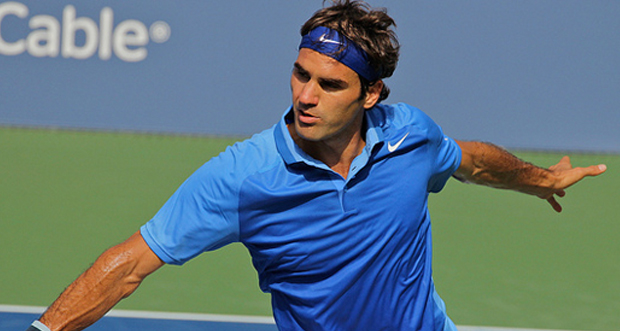
    That Mr. Hyde impostor that we have seen most of the year in Roger Federer’s shoes appears to have finally departed.  Is it because Roger has finally overcome some of his physical problems with his back?  Did he simply need more practice and play without pain to raise his level?  Is it because he has returned from a mental vacation?  Has he found new motivation despite his countless accomplishments?  Did he need to dismiss Paul Annacone to find himself?  To play indoors again in Basel to find his game?  One doesn’t know for sure, but one hopes that Mr. Hyde is gone for a good while.

    The Juan Martin Del Potro-Roger Federer match today in the Paris-Bercy quarterfinal was played at a very good level throughout, a little higher level than last week’s Basel final, mostly because Federer played better tactically and executed well.

    Del Potro did well to hang in the first set as well as he did. I don’t think any player in the game would have stayed with Federer at that level he showed in the first set.  I think some of the best would have been served a bakery item.

    Del Potro upped his level a bit in the second and Federer’s level dropped a bit due to mostly tactical mistakes (not hitting enough slice and not moving Del Potro around enough horizontally and vertically as he had done in the first set), so it became a very even set. It probably should have gone to a tiebreak, but Federer’s level dipped a bit in his last service game and Del Potro continued to play well and snatched his opportunity to break Federer’s serve and win the second set with a flourish.

    The third set started with momentum on Del Potro’s side but he couldn’t cash in.  Federer stayed with him, then broke rather determinedly going back to his first set tactics, but then Del Potro put in a great effort to break back.  Then Federer broke Del Potro rather easily with a dip in level by Del Potro.  I think with that, Federer had his mental second wind, held serve, and Del Potro couldn’t recover his level and basically gave way in the final game.

    [divider]

    [#2] Novak Djokovic (SRB) vs. [#5] Roger Federer (SUI)

    Let’s see what level Roger Federer and Novak Djokovic bring to their next match. Djokovic looked in excellent form from the start vs. Stan Wawrinka, and then played well enough to finish it in two sets.  Federer had a chance to take his match with Juan Martin Del Potro in two sets, faltered a bit at the end of the second to lose it, but finished well to take it in three.  Will that blip cost him against Djokovic?

    Federer is playing well enough to beat Djokovic if he can stay at the level he had against Del Potro.  Djokovic doesn’t hit as brilliantly hard as Del Potro, but is more consistent.  So Federer mustn’t slip up against Djokovic as Djokovic will take any chance and run with it to the bank.

    Federer needs to use his good Djokovic tactics and execution to beat him.  Give Novak little rhythm, keeping points fairly short like he has done in many of his wins.  But he must choose good moments to create and execute his winning plays, not haphazardly rush his shots.  Djokovic, on the other hand, has to try to impose his game, and lure Federer into that metronome rallying game.  Federer will need a bit more patience against Djokovic, as Djokovic will get more balls into play with his ultimate retrieving game, but I don’t think Federer wants to get into long rallies and should go for the winner at the first good opportunity.

    The problem for Federer is that when Nole is on, he plays excellent defense, generally doesn’t send back too many short balls, and pins one at or behind the baseline.  Federer will need to vary his game, lure Djokovic to the net with some short slice to the mid-backhand side, but not necessarily wide.

    Against Djokovic, I believe one is better off hitting in the middle third of the court, width wise, and more right at him with depth a majority of the time, varied with slices inside the service line, and force him to use good footwork to get at the proper distance from the ball.  He often gets discombobulated balance wise more often when the balls are hit at him, whereas he may be the best player in the world when he is able to stretch far left or right for balls with his near elastic reach, as he seems either to slap them on the side lines at will, or defensively get the ball on or near the baseline almost every time.  Djokovic is not as good when he has to move vertically up and down the court – short slice and high mid-court lobs a bit behind him make him uncomfortable.

    Keys:  Variety and Explosiveness from Federer.  Consistency and Physicality from Djokovic.

    I’m pretty sure Novak Djokovic’s form his good enough to execute his plan if he gets the chance.

    The question mark for many is Roger Federer.  Is he close enough to the form that led him to convincing wins over Novak Djokovic at Cincinnati and Wimbledon in 2012, and Roland Garros in 2011?  Or will he be prone to what I call his “Mr. Hyde Performances” of 2013 and some of his other losses to Djokovic in the past two to three years?

    The one who can assert his game over the other should win.

    Good luck to both players.

    [divider]

    Discuss this article with fellow tennis fans in the tennis forums

    [divider]

  • Roger Federer’s Yesterdays and Tomorrows – A Champion’s Fate

    Roger Federer’s Yesterdays and Tomorrows – A Champion’s Fate

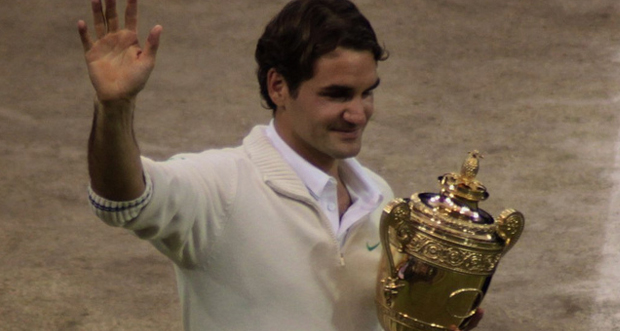
    Roger Federer has achieved so much in his career it boggles the mind. He holds or shares hundreds of records, achievements, and awards in tennis. Led by his record 17 Major titles in the Grand Slam arena, and over 300 weeks ranked the No. 1 player in the world, one wonders what is left for him to do in the future? What is his motivation to continue? He has said he loves the sport, so one might think he will play as long as he is physically able to play, within the limits of his family priorities, and as long as he is happy playing.

    [divider]

    Discuss this article with fellow tennis fans in the tennis forums

    [divider]
    I would not be surprised to see Roger play more doubles as he ages.  I think it benefits and compliments his particular game. There is much more precision required in doubles, including serving and returns.  If played correctly, it obviously helps one’s net play and confidence at the net. Quick thinking tactics and execution are extremely important to set up a winner. Quick footwork and agility are more at a premium in doubles than pure side-to-side movement.

    Overall, I think some more doubles play would help him accentuate his strengths and improve some of his weaknesses.

    Doubles obviously doesn’t require nor would it help much with fitness or endurance, but Federer’s game was never really based on that, and at this stage in his career, I don’t see that changing.  He doesn’t have to change his game to a grinding style and constantly rally for 15+ shots as that isn’t his strength. My guess is that he will work on as many of his strengths as his health allows. These strengths are what set him apart and made him the competitor he is.

    First, he can work on his serve. According to the ATP’s Match Facts statistics, as recently as 2012, he won 91% of his service games, third highest on the tour, while playing 80 matches. (Raonic was first with 93%, and Isner second with 92% but playing fewer matches — 62 and 60, respectively.)  Federer’s 91% last year was higher than his career average of 88%, and the second highest in his career (92% in 2004).  This year, Federer has won 88% of his service games. Yes, it is his career average, but I think it needs to be higher to have an edge these days.  And if one looks inside the numbers, the biggest difference is his second serve winning percentage. Last year, he topped all players on tour with an excellent 60% of second serves won.  (Nadal was second with 57%.)  So far this year, Federer has dropped to 56% (his career avg.-2nd), while Nadal is second with 57% (his career avg.- 1st) and Djokovic leads with 59% (career avg. 55%-6th).  Interestingly, Murray and Berdych are 26th and 27th with only 52% (also their career avg.).  These percentage differences may look small, but the differences are small among the top players and any edge is vital.  Finally, serving well gives Federer confidence in the rest of his game. Confidence is obviously important.

    Second, Federer undoubtedly realizes that he needs to focus on the key points more. His break points converted (39%) and break points saved (65%) this year have both dipped. Last year, they were 42% and 69%. Career wise, he has averaged 41% and 67%.

    Curiously, his return statistics this year are about the same as last year and for his career, maybe even very slightly better.

    Federer does have to have enough fortitude to have the patience when required to set up a point and then go for the clean winner when there is an opening.  But even then, his tactics and execution have to improve from some of the play he has recently exhibited.  He can’t set up the point perfectly, and then hit right back to the opponent instead of the open court.  The “hit behind the player” tactic should be used more sparingly to surprise a player. He also can’t bungle shots when he has the opponent at his mercy.  He did this kind of thing against Robredo, and it cost him the match as he admittedly self-destructed.

    Despite that result, I don’t think he is far off the mark; just more inconsistent and a bit below normal. Perhaps that can partially be explained by his not playing as much this year.  His back appears to have bothered him more during the year.  He also announced that this would be a transition year (whatever that means), so perhaps some of this is self-imposed.

    Will Roger Federer turn it around in 2014?  Only time will tell.  One day, no one can say for sure when, he won’t be able to play at a high enough level to win big tournaments or remain near the top.  Some believe it has already happened this year, and perhaps it has, but only history will tell us for sure.  I, for one, believe it’s pretty unreasonable to say that “he is finished” less than a year after he was No. 1 in the world. After all, people have been predicting his imminent demise since 2008 when he “only” won one Major and again in 2011, when he hadn’t won a Major since the 2010 Australian Open, and look what happened in 2012.  Though he could win anywhere with some fortune, one would think that the Wimbledon lawn is his best chance to win another Major. The competitive ability on it is more sparse, the surface suits his game, especially if it is not too sun-baked and high bouncing, and he is co-record holder along with Pete Sampras with seven winner’s trophies.

    Still, he is 32 years old and has some high mileage, fifth (only 21 matches short of Agassi) in the Open Era in matches played, and what is certain is that nobody plays men’s singles on this tour forever.

    But even when Roger Federer can no longer reach the highest levels consistently, what is wrong with Roger playing on for the love of the game?  Unfortunately, I believe that there are too many these days that cannot accept or appreciate performances that don’t continuously match or exceed a player’s best.  Media, fans, and even the tour promoters alike seem only too eager to look at the most recent results – in a “what have you done lately” syndrome – and bury champions that still have exciting moments to give to the sport. In this writer’s eyes that is just plain wrong.

    One mustn’t forget that some of the great players in the game have risen to the heights on occasion, even in the dimming twilight of their careers.

    In my fading memories, I still recall a nervous almost 42-year-old Richard “Pancho” Gonzalez beating 1969 Grand Slam Champion Laver in a winner-take-all best-of-five set match in 1970 at Madison Square Garden.  Gonzalez said that night he was always frightened of playing there, because it was frightening to think he might play a bad match at MSG.

    Gonzalez taping his fingers before Laver MSG match

    I recall 36-year-old Ken Rosewall winning the 1971 Australian Open against a strong field (he would win again at 37, but against a very depleted field), beating Emerson in the quarterfinals, Okker in the semifinals, and Ashe in straight sets in the final.  At 41 and 42, in 1976 and 1977, Rosewall would make it to the semifinals in Australia.

    1971 Australian Open Final – Rosewall beats Arthur Ashe

    And who can forget 39-year-old Jimmy Connors’s run in the 1991 US Open coming from two sets to one down to beat Aaron Krickstein in the deciding set tiebreaker in the fourth round, then playing Paul Haarhuis at night in the quarterfinals, and whipping the crowd into a frenzy behind some incredible defending to break Haarhuis serving for a 2-0 lead, to tie the set, and eventually win the match in four sets. He finally succumbed to Jim Courier in the semifinal, but it was a most memorable run.

    1991 US Open – Amazing point where Connors breaks Haarhuis in the second set to begin comeback

    Enjoy them all while you still can. Like our children, they learn, they play, they struggle, they succeed to our delight much more than they fail to our sorrow, and finally they get older and leave our admiring gaze.  ‘Tis ever a champion’s fate.

    Credits: Cover Photo: anonlinegreenworld (Creative Commons License)

  • Johan Kriek’s “Drugs in Sports” — A Masterclass Perspective

    Johan Kriek’s “Drugs in Sports” — A Masterclass Perspective

    Mr. Kriek wrote a wonderful article on this site in his Johan Kriek Drugs in Sport blog entry. He is to be commended for having the courage to write it.  It goes a long way in demonstrating why one should not accept performance enhancing drug (PED) use or doping as part of any sport, and how the penalties should be severe to discourage the doper.

    However, as much as I admire the article, I believe more needs to be said.  One cannot only place blame on the athletes, though they of course make their own decisions on whether to dope or not.  But let’s get real, the risk right now of doing time for doping is minuscule compared to the potential reward.  Let’s see.  “Hmm, I’m a good athlete, but I could be much better, even the best, and make millions, have fame, and with my smart doping program and the current testing regime, I won’t get caught. In fact, if I’m near the top who will want to catch me and destroy the sport?”  Well, perhaps players with high moral standards will refuse such a temptation. But how many will not?

    [divider]

    Discuss this blog post and the subject in the discussion forums.

    [divider]

    The management of the sport and management of anti-doping controls share in the responsibility with the players in keeping the sport clean.  But I firmly believe that no sport’s organization should be responsible for anti-doping control within their own sport.   There is an obvious conflict of interest with those who manage it, market it, and promote the players, also being given the responsibility of controlling management and testing of anti-doping in their own sport. The trouble is that no sport wants to give up this control.  Why would they? They are the proverbial fox managing the chicken coop.  If some independent international authority were given control over managing anti-doping, who knows what would happen? Some top athlete or many might actually get caught and publicly be outed.  What would that do to the sport?  A sport may claim to be diligent in their management and may produce examples of such, but the inherent conflict of interest is too great.

    The best response from a sport’s organization would be that they shouldn’t have the responsibility for managing anti-doping in their own sport in the first place and hand it over to an independent authority.  But which sport would have the courage to do that?  As long as each individual sport has control over anti-doping nobody will know what is actually happening. Transparency is kept at a minimum, ostensibly to protect players’ rights, but in the eyes of the sport’s management, it obviously protects the sport if the sport can control what kind of testing is done, how often, at what times both in and out of competition, who gets tested, and how much of what is known is released to the public.

    WADA (World Anti-Doping Agency) should do all they can to separate the interests. I don’t know if they have the power to do this. Maybe they need to get individual governments where the sport is being played to mandate the separation of interests.  See their most recent report on the lack of effectiveness in testing programs. Please pay particular attention to Appendix A and #2. International Sports Organizations.

    [divider]

    Obviously, the sport of tennis is not immune.  Drugs won’t make a major champion out of someone who has little ability in the sport, but among the top 500 players, there is not a great deal of difference in the abilities of players that play the sport.  The differences are small, especially within each tier – Top 10, 20, 30, etc.  Use of drugs for extra power, for endurance, recovery, and growth can obviously give the edge to that player within his tier level,  or perhaps even a few levels difference.  And not only in the actual physical effect like strength and endurance, but moreover in confidence and therefore mental strength, which, as any top player will tell you, is what mostly differentiates the players at a certain level.

    Additionally, when one combines the drug effects with the conditions present in the sport, the effects can be augmented or diminished.  Ask yourself, “Are playing conditions generally slower today, or faster?  Will they favor those with artificially increased endurance, recovery ability, power, etc., or those that play with better tactics and aggressive shotmaking skills?”

    Someone who is making superior shots should be able to win points without having to hit three or more winning shots, only to see them come back back again and again, point after point.  Superior shotmaking and tactics over the match should be able to tire the other player sufficiently to win the match.

    As an example, I am disturbed when I observe a match like yesterday’s men’s semifinal at the 2013 US Open between Stanislas Wawrinka and Novak Djokovic.  Here are some relevant quotes from the players in their post-match interviews or press conferences that also disturbed me.

    Stan Wawrinka [about Novak]:  “He was f*****g strong.”

    Novak Djokovic:  “Wawrinka was a better player for most of the better part of the match because he was aggressive and played better tennis. Other hand, me, I just tried to hang on and fight and be mentally tough and believe all the way through I can actually win.  And I sincerely believed that as the match progresses and longer it goes, I felt I have maybe that physical edge over him…”

    Sadly for many tennis purists, strong endurance and almost endless retrieval ability on these slowed hard courts of the US Open triumphed over tactics and aggressive shotmaking yet again.  It’s generally accepted that a clay court should have these attributes, but the US Open? Traditionally one of the faster hard courts?  Not only does the slowing of hard courts or grass (by causing a higher bounce) diminish a player’s superior shot making results, it also can produce more injuries.  The hard courts are not as forgiving on the joints as the natural surfaces.  Long matches on hard courts are not conducive to a player’s well being in the short term, and the effect is probably cumulative over the long term.

    These days, Arthur Ashe Stadium’s DecoTurf 2 court in Flushing Meadows, New York, plays barely faster than Rod Laver Stadium’s Plexicushion court in Melbourne, Australia.  When they repaint the court before the event, they use enough grit in the top layer of paint to slow it down from its standard medium-fast pace.  There is also a lack of transparency in advertising the conditions.  In my opinion, the adjusted court pace rating  should be displayed prominently, say on the court’s scoreboard,  at every ITF/ATP/WTA event.  There are standard machines that calculate the pace and bounce characteristics, as well as a formula to adjust the calculation based on weather conditions (temperature and humidity).  It should not be a guessing game for the fans and players.

    But those in power (ITF, ATP, WTA) realized there is more money in having marathon matches, so what else can one expect?  Tournaments and sponsors are also culpable in this regard.

    In slower conditions, if a player has sufficient skills to hit the ball back in the court decently, and possesses an extraordinary ability to run balls down for as long as it takes, then he can be a winner.  He doesn’t have to play better tennis.  He just has to run more and outlast his opponent.  When two such similar players play against each other, it’s anyone’s guess who will be the last one standing — the winner.

    [divider]

    Worst of all, one can’t be sure if athletes naturally have superior endurance and recovery attributes via genetics and hard training, or are being artificially enhanced.

    Why can’t one be sure? Because those who currently manage anti-doping controls hardly test off-season when the drugs’ benefits can be used to their greatest affect, they rarely use blood testing, sometimes don’t test top players at all, or test using known methods with loopholes. For example, the T/E test used for steroid-testosterone detection won’t catch dopers that use micro-dosing or other methods to fly in under the established limits, or those genetically predisposed to not exhibit a high ratio, instead of using more definitive but more expensive tests like CIR (carbon isotope ratio).   The lack of funding argument to perform better and increased testing doesn’t fly with the millions being earned by the sport.  With the lax or inept management, a doper with knowledge and common sense or with access to a knowledgeable professional will not get caught via the current testing regime.  You don’t have to look further than the USADA report on Lance Armstrong and the US Postal Team for how canny the doper culture can be in avoiding getting caught.  And if a doper makes a mistake (usually those that may not have the best professional advice), there is every chance that they may be able to serve their time quietly (provisional ban) while their case is argued, and under the right circumstances it won’t be publicly revealed.  At worst, an occasional scapegoat not in the top echelon may be exposed to demonstrate the effectiveness of the testing regime and be publicly banned for a time.

    If a doping athlete is accused or suspected of doping based on his appearance or incredible performances, he can simply say that he has never used anything illegal and never tested positive.

    On the other hand, if someone is not doping, but they have the natural strength/endurance attributes and/or excellent training programs, they may still be suspected of doping due to their performance, and it’s difficult for them to prove themselves innocent to a suspicious public, because the anti-doping controls are so suspect for all of the reasons already given.

    Victor Conte, the former BALCO head who served time in prison in 2005 for his part in a conspiracy to distribute steroids and money laundering, but since then has admirably educated people about doping methods and joined the fight against doping in sports, said that PED use in tennis is “likely rampant because testing is inept.” I believe he has used figures of 30% or more when describing rampant.  Thirty percent or more of the top players are doping?  Shocking to us perhaps, but not Victor Conte.  He’s been around and has usually been on target with his assessments.

    There are remedies for all of this, and one doesn’t  pretend to have all the answers, but it will certainly take time and the will to make changes.  The public also has a responsibility.  We have to do our part to convince those in charge that we don’t want doped athletes cheating those who do not dope, even if the former provide great entertainment.  We cannot turn a blind eye to this.  We cannot be conveniently naive or bury our heads in the sand and say it’s not happening.  Athletes that don’t use PEDs are being cheated by those that do.  It discredits all involved in all sports from all eras if we cannot be sure who is doping and who is not.

    Credits: Cover Photo: Russell Bernice (Creative Commons License)

  • Masterclass Match of the Day: Novak Djokovic vs. Stanislas Wawrinka

    Masterclass Match of the Day: Novak Djokovic vs. Stanislas Wawrinka

    A Breath of Fresh Air, Or The Same Old Song?

    As we approach the business end of the US Open, some of the same top names appear in the semifinal matches.  Race to London leader and world No. 2  Rafael Nadal continues to be on a tear, and the current No. 1 player in the world, Novak Djokovic, marches on.  But their opponents are in rather new territory.  Current world No. 8, Richard Gasquet, has never made it past the Round of 16 at the US Open, and has only made it to the semifinals of a major once in his career at Wimbledon 2007.  He has the tough task of taking on Rafael Nadal.  Stanislas Wawrinka has never made it past the quarterfinals of any major and faces Novak Djokovic, but I believe Stan’s recent play this year warrants him having a fair chance of upsetting the world No. 1 of the last two years.

    Let me put it this way: I wouldn’t put my own money on this match if I were a betting man.  But if I had some money given to me, I would put it on Stan Wawrinka and hope he plays as well as he did against Andy Murray.

    [divider]

    Discuss this article and the match with fellow tennis fans in the forum.

    [divider]

    Novak Djokovic has certainly dominated their head-to-head in the past, but every match is different.

    Based on their prior record, few if any would have picked Stan to come as close as he did in Australia to removing the three-time Plexicushion prize-winner from the premises.

    I think these days the US Open Arthur Ashe Stadium surface unfortunately plays only slightly faster than the Australian Open’s Rod Laver Arena.  It seems to have a little less grit and not quite as high a bounce.  I don’t see Djokovic sliding as much in New York as in Melbourne.  I think this will reduce Novak’s ability to defend as well as he does down under.

    Novak has been prone to concentration lapses this year.  Hard courts are no longer a bastion of certainty as they had been for the most part since 2011.  How has he done on hard courts this year?

    He started out extremely well by winning the Australian Open and Dubai.  But then something happened.  He allowed Juan Martin Del Potro to come from behind and beat him in the semifinals at Indian Wells, and followed that up with a Round of 16 straight-set loss to Tommy Haas.  His next hard court tourney was in Montreal, where he lost to Nadal in three sets in the semifinals, and followed that up with a three-set loss in Cincinnati to John Isner.

    Again, every match is different.  But Djokovic’s recent trend does not bode as well for him.

    Thus far at the US Open, he has not played any difficult opponents, easily beating unseeded opponents Berankis, Becker, Sousa, Granollers, and No. 21 seed Mikhail Youzhny in four sets.  I think the rather weak draw thus far might not be to his benefit.

    Wawrinka had not played that much on hard courts this year, choosing to focus on clay.  Aside from his Round of 16 loss to Djokovic at the Australian Open, he lost a tough one to Federer in the Round of 16 in three sets at Indian Wells, and lost to Paire and Robredo in the Round of 32 at both Montreal and Cincinnati.  So his preparation for the US Open definitely has been light.

    However, thus far in the US Open, his path has been rather difficult, and I believe it has only benefited him and he has improved his play as the tournament has progressed.  He beat Stepanek while dropping a set, defeated a tough Karlovic in a not so easy three sets, held off a tenacious Baghdatis in four sets, stepped it up another level to down Berdych who had been playing very well, and, as many saw, played a very intelligent and strong match to down Andy Murray in three sets. Thus, I feel Stan Wawrinka is much better prepared in terms of his play for this match with Djokovic.

    I think the match up is quite similar as to the one with Andy.  Stan must play with variety to Djokovic as he did with Murray, and not let Djokovic get into any good rhythm.  I think Stan would do better to go to body serves against Djokovic, since he stretches so well to get to balls.  Nole must try to get Stan into a power struggle from the baseline for him to have a good chance.

    Andy beat Novak last year in five sets at the US Open.  Stan beat Andy this year in three sets.

    I believe Stan could force Nole out in three or four sets if he plays like he has been considering the level of opponents they have both played and their level during this tournament, and if he can use similar tactics and execution as he did against Murray.

    The only problem with Stan is lack of a strong mental stability.  He has been known to suddenly go walkabout or get down on himself and go away in a match.  Additionally, one cannot be certain that he will not have a bit of  letdown after beating Andy.  These are the chief reasons why I would not bet money on the match, if I were a betting man.  Also, Nole has been known to raise his game occasionally and refuse to lose.  So though I stick by my call, I would never be surprised to see Novak Djokovic win.

    As always I hope for a good, entertaining match and wish good luck to both players and their fans!

  • Masterclass Match of the Day – Juan Martin del Potro vs. Lleyton Hewitt

    Masterclass Match of the Day – Juan Martin del Potro vs. Lleyton Hewitt

    US Open 2013 – [6] Juan Martin del Potro (ARG) vs. Lleyton Hewitt (AUS)
    Arthur Ashe Stadium – 7 pm EDT

    Tonight’s marquee match will feature 2 former US Open winners. It has been a few years since either man won it, with Juan Martin winning most recently in 2009 and Hewitt winning 12 years ago in 2001.

    [divider]

    Discuss this article and the match with fellow tennis fans in the forums.

    [divider]
    Why has neither man been able to win it since? There are two main reasons. The competition and their injury problems.

    In many tourneys between 2003 and 2008, Hewitt was beaten at various stages by the eventual champion, usually Federer, sometimes Nadal or Roddick. In 2004, Hewitt became the first man in history to lose to the eventual champion at each of the slam events. Lleyton Hewitt also had a host of major injury problems since 2008, where he incurred an injury to his left hip in March, which eventually required surgery after further damage to it at the Olympics. Hewitt eventually came back to form in 2009 at the US Men’s Clay Court Championships where he won his first title since 2007. He then played at Wimbledon where he beat Juan Martin del Potro in straight sets in the second round and went all the way to the quarterfinals where he was defeated by eventual finalist, Andy Roddick in a 5 set thriller with two tiebreaks. He then lost to eventual finalist Roger Federer in the 2009 US Open.

    In 2010, he suffered a hip injury to his right side after the Australian Open where he lost in the 4th round to Federer again. Again it required surgery. He returned eventually, and finally won a title in Halle, defeating Roger Federer, snapping a 15 match losing streak since 2003. He lost at Wimbledon to Djokovic in the 4th round. He suffered a leg injury in Washington DC., and lost in the first round of the US Open. He then suffered a season ending wrist injury in a Davis Cup loss to Belgium. In 2011, Hewitt underwent surgery on his left foot, returned after 3 months, and suffered an injury to his ankle defending his title at Halle. In Atlanta, he again injured his foot, and it ended his season. He returned in 2012, and had a good run to the 4th round, defeating Andy Roddick and Milos Raonic before finally losing in 4 sets to Novak Djokovic. After the succeeding Davis Cup, Hewitt finally had surgery to insert a plate into his left toe. I think you have the idea of Mr. Hewitt’s misery.

    2013 started off nicely for Hewitt where he won an exhibition, the AAMI Kooyong Classic, defeating Raonic, Berdych, then Juan Martin del Potro in the final on hard courts. But he disappointed in the Australian Open losing to Janko Tipsarevic in the first round. He finally found form on the grass at Queens Club, where he beat Querrey, Dimitrov, and Del Potro to advance to the semifinal, but lost in 3 sets to Marin Cilic who would shortly thereafter be apparently facing a doping suspension. At Wimbledon, Hewitt upset #10, Stan Wawrinka, in the first round, but inexplicably fell to Dustin Brown in the second round. He made it to the final in Newport, but was defeated by Nicolas Mahut after serving for the match. His form continued to look good in Atlanta where he made it to the semifinals.

    After Juan Martin Del Potro won his 2009 US Open, great things were expected of the gentle giant. Unfortunately in 2010, as he advanced to world #4, he suffered a right wrist injury very early, which he tried to play with at the Australian Open, and it got worse. It persisted, and he finally decided to have surgery in early May. Del Potro was not to return till 9 months later where his rank had fallen to close to #500. In 2011, he finally won again at Delray Beach. He also won in Estoril on clay, and then in Davis Cup helped defeat Serbia in the semifinal winning both rubbers versus Tipsarevic and Djokovic. Later in the year, he suffered a slight shoulder injury, but returned to play the final in Davis Cup against Spain, where he had a heartbreaking 5 set 5 hour loss to David Ferrer, and then a 4 set loss to Rafael Nadal. Del Potro ended 2011 at #11 and was named 2011 ATP Comeback Player of the Year.

    2012 was a very successful year for Del Potro, especially toward the latter stages where he beat Federer in Basel, who had previously dominated the results during the year, beating Del Potro in the finals or semifinals or quarterfinals of their previous 6 tournaments during the year. These results included a marathon 4 and a half hour loss to Federer at the Olympics and a 5 set loss at Roland Garros. In 2012, Del Potro still won 4 titles in Marseilles, Estoril, Vienna, and Basil, and finished the year as #7 in the world. During the year he had some minor problems with his knee and left wrist, but overcame them.

    In 2013, Del Potro won in Rotterdam, then at Indian Wells successively beat Tommy Haas, Andy Murray and Novak Djokovic, before succumbing to Rafael Nadal in the final. Del Potro withdrew from Roland Garros with a viral infection, but returned to Wimbledon and advanced past David Ferrer to battle in a fine but ultimately losing effort against Novak Djokovic in a 5 set, 4 hour and 43 minute semifinal thriller, the longest semifinal in Wimbledon men’s singles history. He came back to win the Washington, DC, CitiOpen tournament, beating John Isner in 3 sets.

    Against each other, they have split 4 ATP/ITF tour matches, Hewitt beating Del Potro on grass easily at Wimbledon 2009 and in 3 sets at Queens just this year, but losing on hard courts of Washington, DC in three sets in 2009 and San Jose in two in 2011. Hewitt did defeat Del Potro rather easily at this years AAMI Kooyong Classic exhibition on hard courts, but read into that what you may.

    I believe it will be a good battle. Both men appear to be in good form and in relatively good health.
    They both won in 4 sets, though it appeared that Del Potro had the tougher time with Guillermo Garcia-Lopez that included two tiebreakers.

    One has to favor Del Potro on hard court as one would favor Hewitt on grass, but Hewitt can give a good account of himself on hard courts. They’ll be playing at night with forecast of nearly 80 F./26 C. and breezy conditions but relatively low humidity.

    I think this match comes down to a couple of keys. Will Hewitt be able to force Del Potro to hit enough shots to make errors, and use enough variety to move Del Potro around the court out of his comfort zone, or will Del Potro be able to use his fearsome forehand to blast Hewitt off the court?

    Hewitt definitely moves better on grass than Del Potro, but on hard court it is a bit different story. Hewitt has the better return. Del Potro probably the better serve. Each player has a high degree of mental toughness, but I think Del Potro may have a bit higher at this stage in their career, and has consistently been playing better opponents. Del Potro has had better results in New York.

    For those last two reasons, I’m going to give a slight edge to Juan Martin Del Potro, but Lleyton Hewitt is certainly able to beat Juan if Juan Martin is off a bit and Lleyton is firing on all cylinders.

    Juan Martin del Potro to defeat Lleyton Hewitt in 4 or 5 sets.

    Good luck and good health to both players!

  • 2013 US Open and Draw Analysis

    2013 US Open and Draw Analysis

    It is the final week in August.  Workers are eager to escape from their tedium to play in the remaining sun baked summer warmth.  Beaches and pools teem with families and friends who enjoy the last days of summer before the school year begins.  Barbecues and grills still sizzle with the aroma of an array of culinary delights, while fresh salads and sumptuous fruits lay in tempting displays on picnic tables.  For tennis fans and players alike, though, these seasonal festivities lead to a single focal point.  We and they are swooping in on the New York City borough of Queens, at Flushing Meadows, and the hard courts of the US Open, the year’s final slam event in tennis.

    [divider]

    Discuss this article, the match and lots more with fellow tennis fans in the forums.

    [divider]

    The context of this year’s US Open for the men is similar to last year.  So far the first 3 Majors have produced 3 different winners: Novak Djokovic at the Australian Open; Rafael Nadal at Roland Garros (French Open); and Andy Murray at Wimbledon. However, the most in-form and consistent player of the year is without a doubt Rafael Nadal. Since his comeback to the tour in February after a seven-month absence, he has won an astonishing 9 titles, winning all but 2 finals out of 12 tournaments played, including Roland Garros and 5 Masters 1000 tournaments – 3 of those on hard courts.

    Nadal’s results since his comeback are in the words of the struggling Mardy Fish “not normal”.  As Andre Agassi has noted, historically, players that have been off a significant amount of time usually take approximately double the time to return to previous form.  How and why Nadal has been able to get to a level that is seemingly above his peers in such a short time is a subject for another discussion.  But there it is. His form cannot be ignored.  If he can maintain his form for the duration of the US Open, while also taking into considering his draw, he has to be considered the favorite, though he would probably never admit that.

    And yet, there can always be surprises in a Major.  128 players and 7 best of 5 set rounds over two weeks can introduce roadblocks to ultimate success.  The key for every player is overcoming all of the roadblocks to gain the title.  Players can underperform and over perform; players can get hurt.  Court/ball conditions may be different from the previous year.  Weather conditions can change abruptly leading to different playing conditions each day.  There are many variables, many intangibles. One can be the favorite, but it is definitely no sure thing.

    Much the same can be said about draw predictions before a single match has been played.  We can make a good analysis made on the basis of the past, but since humans and varying conditions are involved, we can never be sure of the future.  We can make predictions based on seeding, based on past performances of individual match-ups, based on overall class, based on consistency, based on favorite players of the moment.  And it’s almost impossible to avoid one’s own biases, even though one makes an effort to be unbiased. But in the knock-out system of tennis, anyone can be eliminated and change the nature of the draw, thus invalidating one’s original prediction.  It can be said that one may have as much success of predicting the outcome simply by choosing their favorite player or players.

    But let’s pretend that on average, a reasoned analysis, even with the unknowns, can lead to better predictions than simply picking your favorite top player or players.  So here it is:

    Top Half and 1st Quarter

    1st section – Novak Djokovic should have little trouble in the first two rounds getting past Ricardas Berankis and probably Benjamin Becker.  His 3rd round opponent will likely be either Jarkko Nieminen or Grigor Dimitrov.  Nieminen has not lost to Dimitrov in their only two meetings.  Either one will probably be Novak’s earliest roadblock.  He’s had a loss to each of them, and Nieminen has played him pretty close in his losing matches.

    2nd section – #16 seed Fabio Fognini should get past Rajeev Ram and Granollers over Zopp, but then it can go either way between those two winners.  The winner will likely prevail over any of the other 4 in this section, probably Benoit Paire, but one never knows with Paire as he can play wonderfully one day and atrociously the next.

    In any case, the winner of the first section is likely to prevail against the winner of the second section in the 4th round and get through to the quarterfinal.  I’ll pick Novak Djokovic over Nieminen or Dimitrov to make it to the quarterfinals.

    3rd section – Tommy Haas plays Paul-Henri Mathieu in the first round.  Mathieu beat Haas both times they played, way back in 2005. But Tommy is having a fairly solid year, while Mathieu’s ranking has plummeted.  I’ll pick Tommy here despite the head-to-head record.  The winner will likely beat either Lu or Gimeno-Traver. The other part of this section has David Goffin vs. Alex Dolgopolov, and Nicolas Mahut vs. Mikhail Youzhny.  I see Youzhny coming out of here to play probably Haas.  Their hardcourt record against each other is 3-2 in favor of Haas, but Tommy demolished Mikhail in their only slam meeting at Roland Garros this year.  It could go either way, but I’ll pick Haas to advance in this section.

    4th section – I can’t see anyone beating a healthy Juan Martin del Potro.  He might play former #1 Lleyton Hewitt, but Hewitt would have to roll back the years to beat del Potro and I don’t see that happening.

    Del Potro has never lost to Haas in 5 meetings all on hardcourts.  He stands out to win here and make it to the quarterfinals against Novak Djokovic.

    Quarterfinal – Juan Martin del Potro vs. Novak Djokovic

    The last meeting between Djokovic and del Potro went the distance on grass at the Wimbledon semifinal, with Djokovic barely prevailing.  But del Potro took their previous meeting on hardcourt at Indian Wells.  It’s a toss up, but I think Djokovic’s confidence is a bit shaken, and as long as del Potro is healthy, he should be fresh for this battle.

    1st Quarterfinal – Juan Martin del Potro to upset Novak Djokovic

    [divider]

    Top Half and 2nd Quarter

    1st Section – Murray heads this quarter and has a fairly easy road all the way to the quarterfinals.  He should go through the first 3 rounds without too much trouble as he plays Michael Llodra in the first round, probably Hanescu in the 2nd, and a little tougher battle in the 3rd, probably against Florian Mayer, who hasn’t played badly this year.

    2nd section – The highest seed in this section, Nicolas Almagro, is not a lock to win his first round match.  He plays Dennis Istomin, who has beaten Almagro on both clay and grass in their only two meetings, both in 2010.  Still, Istomin’s record at the US Open is not as good as Almagro’s.  But no matter, whether it’s Almagro, Istomin, Malisse, or anyone else in this section, I don’t see anyone beating my projected 1st section winner, Andy Murray, who should make it to the quarterfinals.

    3rd section – #9 seed Stan Wawrinka plays nemesis Radek Stepanek, who has beaten Stan all 4 times they have played.  But the last match was in 2009, and Stepanek has fallen to world #58, while Stan is #10.  This is actually a tricky section.  James Blake plays Ivo Karlovic, who has done reasonably well after being out for a few months. Marcos Baghdatis plays Go Soeda, and Daniel Brands plays Kevin Anderson.  I’ll go with Stan to win this section, but it wouldn’t surprise me if one of the other big servers gets through.

    4th section – #5 seed Tomas Berdych tops this section, and I don’t see anyone troubling him here, with the possible exception of Julien Benneteau. That’s the likely 3rd round match, and I see Berdych winning that to advance to the 4th round, and probably play Wawrinka for the right to get into the quarterfinals.  I can’t call this battle.

    Quarterfinal – Murray vs. Berdych/Wawrinka  – This quarterfinal match is difficult to call.  Murray beat Berdych in a windy semifinal here last year, but Berdych can beat Murray when he is on as well — and just did in Cincinnati.  A similar situation exists for Wawrinka vs. Murray. Stan beat Andy in their last US Open match in a tough 4 sets, but Andy has beaten Stan more on hardcourts.  If one goes on the most recent form on hardcourts, Berdych is the man to beat even though Murray won Wimbledon. But then if Wawrinka and Berdych have a tough match, Murray might gain the advantage.

    2nd Quarterfinal – Berdych/Murray/Wawrinka – Too close to call, but the order here is just a gut feeling.  I believe Murray has more mental strength than the others, but the others can still hurt him with their game.  This is a combination I would prefer to call before the quarterfinal.

    Top Half Semifinal – Juan Martin del Potro d. Berdych/Murray/Wawrinka

    Juan Martin might be tired after the Djokovic match, but the same goes for the other possible quarterfinalists.  I think whomever wins this semifinal is likely to be quite exhausted for the final vs. the winner of the bottom half.  I’m going to flip a coin and pick Juan Martin del Potro, but anyone could win this, and I would really prefer to wait till the semifinal to pick the match.

    [divider]

    Bottom Half and 3rd Quarter

    David Ferrer heads the undoubtably weakest quarter of the lot, which has a fair chance of producing a surprise quarterfinalist.  With 8 qualifiers, a lucky loser, and 2 wild cards in this quarter, one shouldn’t wonder at the level of difficulty required to forge through.

    1st section –  I expect this to come down to Richard Gasquet and Dmitry Tursunov.  Tursunov has had Gasquet’s number over the years, and I expect the 32nd seed to upset the number 8 seed.

    2nd section – Milos Raonic  and Feliciano Lopez should meet in the 3rd round. Lopez has beaten Raonic in their only meeting on clay, and could upset Raonic.

    If Lopez beats Raonic, I believe he will beat Tursunov to advance to the quarterfinal, but in any event, I think the winner will go down to the winner from the other sections.

    3rd section – This ultimately looks like a Jerzy Janowicz vs. Janko Tipsarevic match in the 3rd round. Tipsarevic is falling, and Janowicz is rising.  Janowicz should take this section.

    4th section – David Ferrer and Ernests Gulbis would be hard pressed to lose this section before meeting in the 3rd round.  They have only played each other one time, 6 years ago when Gulbis was just under 19 and Ferrer 25.  Ferrer won handily, but I think we have to forget that.  Ferrer has been unsteady of late, and Gulbis is always unpredictable.  I can’t call the winner of this match, but I think that player will lose to Janowicz.

    Ferrer beat Janowicz in the Paris final last year, but Janowicz played his 8th match in 9 days and was clearly exhausted.  I think Jerzy can beat David if he plays near his best level.  Gulbis and Janowicz would be a very interesting match and either could win.

    Quarterfinal – Lopez vs Janowicz/Gulbis/Ferrer

    I think Lopez will lose to whomever wins the 4th round from the other side. I favor Janowicz over Ferrer, while Janowicz vs. Gulbis is a toss up. In a very open quarterfinal, I’m going to give the edge to Jerzy Janowicz who should have more confidence and less nervousness after getting to his first semifinal at Wimbledon.  If it’s not Jerzy, it will be either Gulbis or Ferrer, but in any event, I believe they will lose to the winner of the 4th quarterfinal.

    3rd Quarterfinal – Jerzy Janowicz d. Feliciano Lopez

    [divider]

    Bottom Half and 4th Quarter

    I’m not going to bother with analysis of each section in this quarter.   World #2 Rafael Nadal has a fairly easy first couple of rounds (I don’t see Harrison troubling him), but the third could be tricky depending on the health and energy of Nikolay Davydenko.  Davydenko has only lost once to Nadal on a hardcourt in 7 matches (their first meeting, in 2006), and he leads their overall head-to-head 6-5. The other 4 wins by Nadal were on clay. They last played in 2012 in Madrid on the blue clay. Their last hardcourt match was in Doha in 2011, where Nadal lost 3 and 2. But in their relative form right now, it’s still difficult to pick Davydenko.  If Nadal gets past Davydenko, he will probably face Fernando Verdasco in the 3rd round, and Verdasco can be tough on Nadal on hardcourts. If Nadal gets past Verdasco, he could have to deal with John Isner again in the 4th round, and we saw how close that was on the high bouncing courts this year in Cincinnati. The trouble for Isner is the amount of energy he will have left by the 4th round to fight Nadal in a best-of-5 match. Should Nadal get past the 3 roadblocks mentioned, Roger Federer will probably be there in the quarterfinal, as I don’t see anyone in Federer’s sections who should be beating him before then — though this year, with Federer’s inconsistent form, I guess anything is possible.

    Quarterfinal – Rafael Nadal vs. Roger Federer
    Nadal and Federer have never met at the US Open, even though Federer has 5 USO titles and a final to his credit, and Nadal 1 USO title and a final to his. It would be an interesting battle. Nadal certainly is riding high, and has definitely been the best player during 2013 so far, despite missing the AO and exiting early at Wimbledon. Their last match in Cincinnati was closer than it appeared, and the bounce was higher there this year than in the past, as many players mentioned.

    The bounce makes all the difference to me in matches between these two. Nadal wins close to 100% when the bounce is higher as Federer cannot be as aggressive, especially on the backhand side, without making lots of errors, and Federer nearly 100% when the bounce is lower. Fortunately for Nadal, the trend overall on tour in the last few years favors higher bouncing surfaces, and they have mostly met on higher bouncing surfaces, and Rafa has a 2-to-1 ratio of matches won. How will it be in New York on Arthur Ashe at night? Arthur Ashe has been slowed over the past 3 years. Weather could also play a factor. Still, they both have to make the quarterfinals for this to play out.

    As previously mentioned, Nadal is without a doubt the most in-form player on the planet right now. Will his form continue to hold?  Will he be able to get past the 4th round without injury to his knees?

    Roger Federer is very light on matches this year, between his back, racquet experimentation, and some poor matches. He has only played 43 matches up to the US Open, his lightest year since his first full-time year on the tour in 2000 where he played 41 leading to the US Open. In his winning US Open years, he played at least 64 matches prior to playing the US Open with the exception of 2007, where he only played 52. Still, his Cincinnati performance was encouraging for him, probably his best level since the Australian Open this year, or the World Tour Final in 2012. If he doesn’t have any problems with his back, then with his draw, he has a good chance. Only Nadal stands in his way.

    Based on their most recent 2 or 3 tournaments, one would probably have to favor Nadal over Federer if they met in the quarterfinal, but I would never count Federer out at the US Open, even though his recent play has not been stellar, and he hasn’t won the title since 2008. But then again, nobody has won the US Open more than once since Federer won 5 in a row.  Again, this is a match I would prefer to pick just beforehand. Conditions are such a factor in this match up. Nadal will take it if it’s high bouncing; if it’s low bouncing, Federer. Since it is a toss up to me at this point, I won’t separate them.  But regardless, I think the winner of the bottom half will win the tournament as long as the draw does not open up in the top half, which would provide an easier path for the winner of that half.

    4th Quarterfinanal – Rafael Nadal – Roger Federer – toss up

    If I were forced to pick one or the other, I would probably have to go with Rafael Nadal, considering their relative form of late and the trend toward higher bouncing surfaces at most tournaments over the last few years.

    Bottom Half Semifinal – Rafael Nadal/Roger Federer d. Jerzy Janowicz

    Note that if Nadal and Janowicz meet, it could be a very interesting semifinal.  It would not surprise me to see Janowicz  pulled off an upset.  If it’s Federer vs. Janowicz, I think Federer will take it.

    Final – Rafael Nadal/Roger Federer d. a tired Juan Martin del Potro

    That’s how I see it as of now, dear readers.  The implications are clear.  Anything other than a Djokovic, Nadal, or Murray win would mean no multiple slam winners this year.  A Nadal win would probably seal a #1 ranking for the end of the year.   A Murray or Djokovic win would help their cause.   A first time winner would be a pleasant surprise.  Anything is possible in tennis.  Let’s hope for some great tennis, and wish health and good play to all of the players.

    Credits: Cover Photo: Wallyg, (Creative Commons License)

  • The Curious Case of Rafael Nadal’s Absence and Incredible Comeback Continues

    The Curious Case of Rafael Nadal’s Absence and Incredible Comeback Continues

    The Curious Case of Rafael Nadal’s Absence and Incredible Comeback Continues and in tonight’s quarterfinal he faces defending champion and 5 time Cincinnati titlist, Roger Federer.

    Even though Nadal has won twice as many matches against Federer as he has lost, most of those wins have been on clay, and normally, many would have favored Federer against Nadal on the speedier hard court surface of Cincinatti.

    Just one year ago in Cincinnati, Roger Federer established a Masters 1000 record by being the first player to win a Masters 1000 tournament without being broken in any game. Along the way, the #1 player in the world, Federer, beat a very good Mardy Fish on that day, an excellent Stan Wawrinka the following day, and in the final, dismantled the #2 in the world, Novak Djokovic, with a bagel set and a tiebreak set to win his record 5th Cincinnati title.

    In the meantime Rafael Nadal was in the early stages of his what would be a prolonged 7 month absence from the tour. Prior to Cincinnati last year, he had to withdraw from the 2012 Olympics at Wimbledon and the Toronto edition of the Rogers Cup.

    As the months dragged on, many players and fans were wondering not only how long it would take for Nadal to return to action on the tennis court, but how long it would be before he would be competitive with the top players in the game.

    During the 2013 Australian Open, former world #1 and 8 time major winner Andre Agassi said:

    I found whatever time you take away from the game you need that time to double to be fully where you were when you left, that’s my experience.”

    ”If he comes back in the first half of the year, you won’t see him at his best, historically speaking with my experience, until this tournament next year.” — Read more

    A good example would be the 2009 US Open winner, and world #4 Juan Martin Del Potro, who went out of action after the Australian Open in 2010, not returning until almost October that year after injuring his wrist. But he only played two tournaments in what remained of the year. His ranking dropped down to a low of #485 at the 2011 Australian Open, and he finally returned to the top 10 a year later at the 2012 Australian Open, close to the time frame Andre Agassi indicated.

    But incredibly, and some would say miraculously, Rafael Nadal returned to action in early February of 2013 in South America, where he had only fallen to #5 in the world during his absence, and since then has stormed his way through the tour with 8 titles and 2 finals in 11 tournaments, including his eighth Roland Garros, and 4 masters, 2 on hard courts and 2 on clay. His only real “blip” during this time was on the fresh grass of Wimbledon where he was upset in the first round by Steve Darcis. A little over a year after he left the tour, and about 6 months after his return, he has returned to #3 in the world. It is theoretically possible for him to ascend to #1 in the world if he wins in Cincinnati and the US Open.

    American veteran Mardy Fish, who is relatively early in his comeback after his heart problems forced him to stop, had this to say after losing to Philipp Kohlschreiber in the first round of Cincinnati this year:

    Fish:

    I feel all right, I just have an awful long way to go tennis wise,” said Fish. “It just kind of shows you how amazing Rafa (Nadal) has been coming back after seven months off. To do what he’s done is just not normal.” — Read More

    So we have a clearly above normal Nadal playing against a Federer who has said that this is a transition year for him, and who has won a only a single title this year on the grass in Halle and lost in his last 3 tournaments to players ranked 116, 114, and 55.

    What will the result of tonight’s match be?

    A Roger Federer win in Cincinnati would normally not be considered surprising, but this year is anything but normal. Roger will have to conjure up last year’s form to have a good chance of beating Rafa, or Rafa will have to suddenly fall apart. I don’t see either happening, but on any given day in tennis, anything is possible. If this year’s happenings are any indication, the match should be anything but normal, but one hopes it is entertaining.

    [divider]

    Dicuss the Nadal/Federer Quarter-Final at the Cincinnati Masters on our tennis forum.