Author: Colin Chambers

  • Australian Open Final Review: Wawrinka v Nadal

    Australian Open Final Review: Wawrinka v Nadal

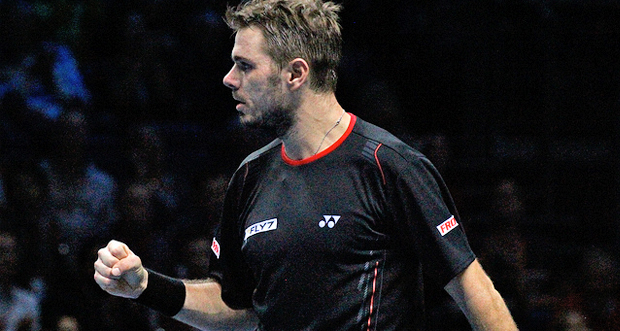
    AO ATP Winner - Stan 2

    What an amazing final it was. I know it wasn’t such an epic on court. More of a drama of sorts but as a culmination of an amazing path to glory it was a real feat of Tennis.

    Stan swept past three Top 10 players to clinch the trophy. Beating the No. 1 and 2 players in the world. En route he overcame the reigning champion of three years and swept aside a former champion in the final. He weathered the extreme heat and changeable conditions like everyone else but he managed to do all this without getting injured. Still standing and strutting until the end.

    What I had forgotten was that I was at their last match at the World Tour Finals. I know exactly what it is like to see both men in full flight. I can appreciate just what Stan has achieved and how he did it.

    I had been wondering over Christmas just how close Stan had come to the Top 4. I had completely forgotten the score line at the O2. Had I not then I really would have favoured Stan much more given his consistent progress during 2013.

    The seeds were there in the Millennium Dome. Stan pushed Rafa as hard as he possibly could without winning a set, with the score being 7-6(5), 7-6(6) to Rafa. It truly was one of those results where the score does not reflect the story of the match. Stan broke Rafa twice. At times he literally owned him. You could see he was starting to realise that the very top players like Rafa actually fear him because their strength plays into his strength.

    Rafa particularly likes to get the ball high to an opponent through his spin. That troubles most people but not Stan. That is just where he wants it. Put it high to his backhand and he couldn’t thank you enough. You’ve served him his favourite opportunity on a platter.

    Stan doesn’t need to run around his backhand like his colleagues in the Top 10. He loves a chance to express his creative skills with his beautifully-crafted technique. He just steps up to it and releases his aggression through the ball, trusting his well-honed technique. The rest is just a blur.

    So from this spectacular experience in London I can testify to how big Stan hits. Only Berdych rivals him in the Top 8 for pure power. They’re both just powerhouses. The type that have had wins against Rafa his whole career. It is only now that they are both realising just what this could mean for them in their best years.

    So the result on Sunday wasn’t as much as a surprise to those who have seen Stan play, particularly those who still remembered last year’s match against Novak. He pushed the eventual winner of this trophy right to the wire. If he had won the match then a route to the final was open. This time he did and it was. So let us see where this leads.

    Nadal still impressed me and I think won many new followers. Clearly injured he pressed on. I’ve always wondered what is best in this case. Should he just surrender and proclaim Stan champion? Does he have that right? I’ve read many of the debates with the issue getting cloudier and more complex instead of clearer.

    Though now, if Tennis is to proclaim itself a profession then I like to draw parallels from other professions to gain some perspective. If a chief executive were struggling during negotiations with a migraine, severe back trouble or whatever, then they would take painkillers or anything prescribed to get through. Taking a rest some other time. Peoples’ jobs and the future of the company are at stake. What is the difference here with a tennis player?

    This of course isn’t an answer; it’s more a question. Yet it simply places each player as CEO of their brand providing a performance for their company on the biggest stage possible. The fans have played their part, paying their money and making their own sacrifices to be there. They have a right to see the match they paid for.

    That is what made Nadal’s effort respectful. He gave all he could. Enough to win a set, in fact. He gave the crowd and his opponent the best of himself. Getting on with his job and doing it as best he could.

    I learnt a lot more about Rafa from this match and I liked it. I still don’t know what is best when a player is injured, but I am learning that the show must go on. Rafa didn’t steal the limelight and showed deep respect throughout, by treating others as he would like to be treated. He was professional.

    On his worst days as much as on his best he is a professional to admire. He, and the band of brothers he tours the globe with on this Tennis tour, are bringing an impressive breed of professionalism to the tour. As a professional myself it’s nice to see.

    A truly exciting time for the tour. An exceptional start to 2014.

    Cover Photo (Creative Commons License): Marianne Bevis
  • Rafa and Toni Nadal: What Makes It Work?

    Rafa and Toni Nadal: What Makes It Work?

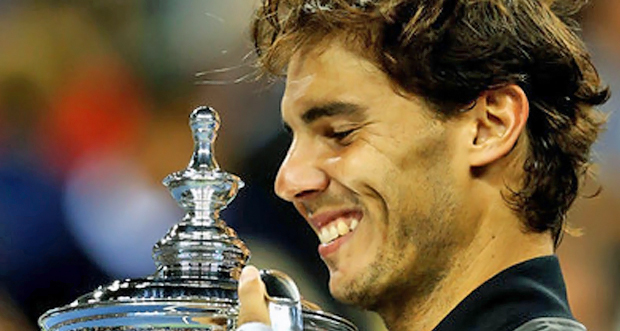
    Rafael+Nadal+US+Open+Day+15+go6yAA32giVl e_edited-2

    As part of a series of posts looking at the impact of coaching, who better to start with than the current No. 1 player and his coach, Rafael and Toni Nadal. As a long term coaching partnership it seems a good place to start asking the question: What does a coach add? Would Rafa have had as much success without Toni?

    While most reports set Toni up as the hard task master and Rafa as the poor hard working nephew I can’t help but feel it is a little more equal than it first seems, pretty much because Rafa is hardly the laid back, relaxed guy, either. He strikes me as every bit as intense and calculating as his uncle. He just presents it differently, probably because, being a player not a coach, his job isn’t about talking, it’s about doing.

    I believe the process of coaching is about empowering a player. Teaching them about their game and also about themselves. I can’t help but watch players and see how their private, off-court persona influences their public, on-court style. Rafa is famously shy, quiet, and nervous off-court. Supposedly the polar opposite of his on-court powerful, loud, and confident play. A proper Jekyll and Hyde, you would think. When I look deeper I see an extremely intelligent, sensitive, and passionate person who treats the tennis court differently to real life.

    On the tennis court his endless passion makes every point life or death. He only knows how to give everything. He cannot give less because he doesn’t know how. His sensitivity helps him see into the soul of your game. He wants to know what you like and what you don’t like. Off-court he would give you what you like, always showing respect. On-court, he uses it against you giving you exactly what you don’t want. Even worse. He gives you exactly what you do want as bait, to get you right where he wants you. This is where his intelligence shows. He doesn’t try to beat you; he lets you beat yourself. He has learned to enjoy the mental challenge where most enjoy simply the physical. They outrun or out-hit their opponents; he simply out thinks them.

    This works on court because intense, unforgiving competition is expected, a sign of respect and what each player has submitted to so Rafa doesn’t have to fear hurting his fellow competitors. In the tennis arena his intensity is admired.

    In the real world outside the confines of the court the rules change. If he were to act the same way he would hurt many and most often it would be those he loved. This is because real life is not about competing at all times. Most often it’s about fitting in and complementing others. His sensitivity and intelligence make him acutely aware of the effects his intense passion has on others so it is tempered and redirected. He spends much of his energy keeping his composure, reigning in the raging bull that is so admired on court.

    While this will seem like over analysis it is crucial to understand the resulting game forged by Rafa and Toni. My interpretation is that it perfectly fits his personality which is why it is unique to him being built around his strengths and weaknesses like a suit of armour. I can’t help but notice how this is the same for all players in any sport who are at their best when they are themselves. When they know how to translate who they really are onto the court. Playing without fear and without question. Their thought process is at one with their game. They don’t second guess themselves.

    Toni’s job has been to help Rafa get to this point but the coach can only work through the player. They cannot and should not do the work for them. So it is as important for Rafa to implement his uncle’s advice as it is for Toni to give it. At the same time it is as important for Toni to understand his pupil and deliver the right advice at the right time, as it is for the player to understand what the coach means and how to apply the advice.

    Looking from this angle you can start to see why Rafa and Toni are such a perfect match. Rafa loves to work and Toni loves to talk. At least that is what we hear about. More than that, though, they love tennis. They understand that they need every edge they can get to win so they openly accept advice from others like Carlos Moya. Yet I see intense debate and consideration between them.

    When Rafa was young I expect Toni lectured, while Rafa listened and applied. As Rafa matures I expect he is much more involved and starting to make many more of his own decisions. I feel that, particularly with Rafa’s injuries compared to Roger and Novak’s relative health, Rafa is starting to see that his style is causing as many problems as it solving. No player can afford the amount of injury time outs that he has sustained.

    I have to wonder if this is putting a lot of pressure on Nadal to be more and more involved in the development of his game. As a coach Uncle Toni can carry on being a coach when Rafa retires but as a player Rafa only gets one shot. Few get a second chance.

  • Learning Goals: Practice or Pressure

    Learning Goals: Practice or Pressure

    How do you approach practice?
    How do you approach practice?

    My question in this article is, how do you practice and what goals do you set?

    Most people I meet focus on technique, some on strategy, but all isolate a specific part of their game and work on it.

    Is that the best way to improve? I feel it depends on what you want to achieve. If you just want good strokes and to look good on court, then great; but if you want to win matches, then I question this approach. I think you need to practice matches. Even learn to improve strokes and plays within matches.


    The Reason: Pressure

    I put it to you that any player in the Top 100 of the men’s or women’s tour is capable technically of beating any other player on their day. By that I mean that if you just got them to hit shots to a target and measured how well they did they would all be amazing. Many would beat the top players in certain stats: serve speed, amount of spin, or physical endurance.

    The reason the top players are ranked where they are is generally down to how they handle the pressure of matches. The choices they make on the big points, how they hold a lead, or chase a leader. They aren’t the best at everything. The leading men are tall but not John Isner huge. Their serves are good to O.K., but they don’t lose their serve often. They don’t have the biggest shots on each wing.

    O.K., Nadal has an amazing forehand but my point is that they have so much more. If Nadal were just a forehand, he wouldn’t have dominated Fed like he did. The top players have complete games and they don’t fold under pressure. They all face break, set, and championship points at times during tournaments. The top players deliver under that pressure. The others don’t. In the end that’s always the difference.

    I could debate this forever, as I’m sure you could, too. The point was to question what your goals are in practice. Mine are now to learn what to do under pressure. Trust my game at all other times and learn to enjoy it. Build a belief in myself under pressure so that I’m free at other times to play what comes. At the same time I must compete enough that I have experience. Each opponent and match becomes a coach and a lesson on how to play against a certain opponent.


    Learning From The Best

    This is what my sports science studies taught me and also what the best in each sport has taught me. The best generally value matches simply because shots are just tools to them. Opponents and matches are the problem at hand. Figuring out how to solve the problems of the match is the focus of a champion. So they don’t see good technique as an end point but a start. They focus on putting that technique into practice.

    When you do this you quickly discover that matches feature all types of shots. Not the static stuff you find in practice but perfection, junk, and randomness, too. Your technique has to be able to bend but not break in all these situations. Matchplay forces you to learn how to apply good technique on the fly to a ball and situation you have never met before and still give the opponent a ball they can’t attack.

    Now that’s what I call practice. Putting it on the line and learning not to worry about it. What do you think? How do you approach practice? What is going through your mind and what goals do you have? Post your comments below.

  • Drug Testing: Would You Postpone a Breath Test?

    Drug Testing: Would You Postpone a Breath Test?

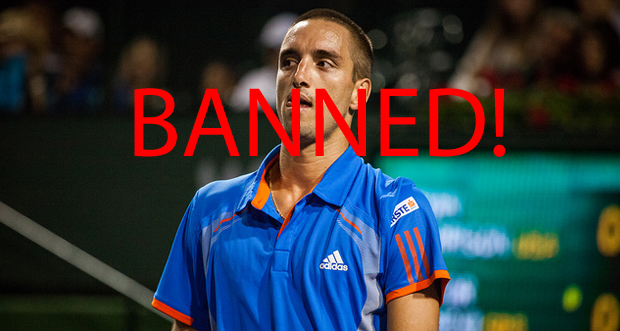
    With the high profile drug related bans this year from Viktor Troicki and Marin Cilic among others the whole concept of drug use, testing, and the issue of cheating in tennis is back in the spotlight.

    I don’t know about you but the more I learn about the area of cheating, particularly in the context of drugs, the more I realise how complex the issue really is. In particular my eyes were opened while studying sport science where I learnt that all the banned drugs have very serious side effects. By serious I mean life threatening. There are also known performance-enhancing drugs that are not banned, like creatine, because they do not pose a risk to health in the quantities the drugs are used.

    [divider]

    Discuss this article in the Tennis Frontier Forum

    [divider]

    This changed my view from drugs being a performance-enhancement issue to a health and safety one because their ability to enhance performance was irrelevant. Only their ability to cause harm was relevant. Banning them puts them off limits to protect the health and safety of athletes taking part in sport, just like banning or limiting the use of alcohol while driving to make roads safer.

    Obviously this is a huge statement but I wanted to expand on this in a later post. For now I just wanted to introduce drug regulation as a health and safety challenge where boundaries are set and penalties are imposed for crossing the boundaries, and making the sport unsafe or even dangerous for those involved. The aim is to encourage safe competition. The level playing field being that only safe acceptable risks should be taken. The health of athletes should be paramount.

    So I started to think along lines we all understand. First I considered work and the workplace. What would be expected of us in a similar situation?

    Tennis players at the top level are workers like the rest of us, and the ATP, the tournaments, and everything related is either an employer or a market for services. So in any market or employment contract there become legally binding contracts and levels of service that should be maintained by both parties. Boring but key. My point is that all of us turn up for work, often when we really don’t want to, because if we don’t we could be fired. In the same way we also expect to be treated equally in our work. If someone else is doing something dangerous to get the job done, then they should be stopped. As workers, contractors, or suppliers there should be a system that ensures high standards but not at a human cost. Pushing boundaries and getting more from ourselves on a daily basis is what we should all be doing, but not when there is strong evidence it will harm us or others.

    That is how I am viewing all these cases. Once I see them as part of a market like any other I can then start to think of what is fair and right on a much more general and real scale, and one I can understand with real experience and insight. All of us work, have worked, or will work. So what is fair to expect of us? How many things at work would you reschedule if you were ill? A meeting or presentation? Maybe. But an interview or product release or court date? Probably not. Definitely not a hearing where you obtain your license to practice your profession. I don’t think I would let anything intervene. What do you think?

    Then I started thinking about whether I accept Troicki’s explanation that he wasn’t well which led me to the idea that failing a drugs test is like failing a breathalyser test when you are driving. This is another thing that we are all subject to. Driving is a privilege and not a right. In the UK I understand that refusing a breath test could be grounds for an instant driving ban. However, if you submit to the test but the test is inconclusive or even positive you have a right to appeal and should ask to be tested with a more accurate device at the station.

    My point is that a breath test is to prevent dangerous driving and save lives so the rules and regulations are strictly enforced. A drug test in tennis is to prevent the dangers of the substances being tested for both on the individual and his peers. The reasons for the tests are similar. Shouldn’t their enforcement be similar, too?

    Should you be able to postpone a breath test or at least tell the officer that you’re ill and agree to take the test later? Not something that I believe is allowed by law. You must submit to the test there and then regardless. The point being that ignorance of the law is not a defence and neither is illness. There is a big difference between refusing a test and not being able to produce a sample.

    You can see that I consider this a criminal issue because the side effects of banned drugs are so serious. I don’t consider it as simple as cheating. I consider it as important as life and death because of that. Remember, if adult athletes are taking such dangerous substances, then what are child athletes taking and who is protecting them? See it in that light and you might change your view on drugs. I certainly have.

    In summary, by participating in competition all athletes must accept they will be tested. Regulating health and safety must be part of any sport. To compete safely must be a given, not a hope. Regulation is part of all industries for the exact same reason that CEOs of companies must take medical tests, on-call surgeons and doctors must respond when they are needed, and we all must make a court date if we have one. We don’t get to reschedule these things for our own reasons.

    Regulating drugs is such a complex issue that sport should not try to find its own solution. There are plenty of known, tried and trust approaches devised by experts in other industries. Learn from these instead. Hence my example of a breathalyser test. My point simply being that anyone at any point could be stopped while driving to be tested. It happens to us all. Should we be able to postpone it or should we be deemed guilty for refusing? I personally cannot see a reason I would not take the test. We are all subject to this so you form your own opinion.

    You may start to understand why I would suggest they introduce a license to play tennis on tour — something that could be revoked for not passing a test, and something you must achieve in order to be on tour. The licence is your privilege, and your right to practice. Much like becoming a doctor, barrister, or accountant, your fitness to practice is continually assessed and rigorously enforced.

  • US Open 2013 Review: Men’s Final: Solving Problems

    US Open 2013 Review: Men’s Final: Solving Problems

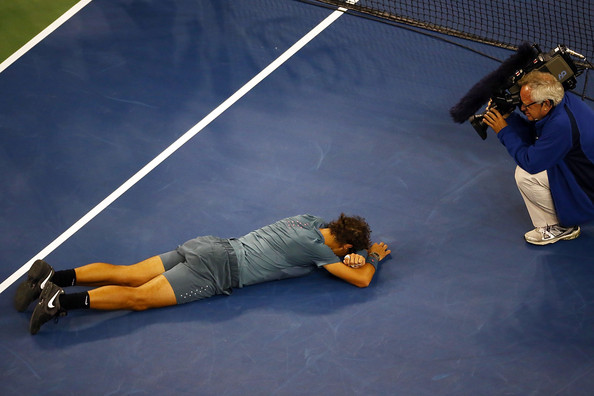
    I don’t know about you but I am slowly becoming a fan of Rafa. I have always been impressed by him of course but I naively concluded that his game was built on muscle.

    The closer I look the more I notice the attention to detail. I first noticed it early in this year’s US Open. To be a contender Rafa had to serve well.  He did that when he won in 2010 but it put too much strain on his knees, so naturally I wondered whether he would have an answer this time.  It turns out that he does. His answer is to trade pace for spin, saving his knees but creating big problems for his opponents. The extra spin is most obvious on TV in his swinging slice serve. The amount of movement he got looked like he was hitting a forehand for his serve and I liked it. The result of these changes is that in the final we saw that Rafa is currently the player that is better at solving the big problems. He backed up everything we have seen throughout 2013 to cement his claim as the best player of the year.

    Technically and even tactically there really is not that much between the top two players. Rafa has won their two Major meetings this year but Novak has looked dominant many times during these matches. One thing Rafa hasn’t looked is desperate. That was how Djokovic looked for most of the match. Particularly when he was up in the third set. Not a calm man confident of success but a man celebrating as if he has to convince everyone, including himself, of his ability.

    Rafa clearly put in diligent study, tennis R&D, during his seven months out exploring ways to compete with his obvious limitations. He used the injuries to improve his technique and strategy. Now that he is back on tour he is putting the R&D to work and taking the theory and molding it into a polished product.

    What I mean here is that Rafa knows both himself, the tennis court, and his rivals. As a tennis player he knows what is available to both him and his opponents in any given situation. He uses that knowledge to formulate a plan of both attack and defense, where he can attack to setup a winning shot but also defend so that the attack doesn’t expose weakness. That is what I see. The specific shots and technical weaknesses are important mainly because they become the targets at which each player aims their strategy. What I see is that Rafa has built a huge castle around his game where he can rush in and attack yet quickly retreat to safety. He is using time and the art of surprise to his advantage at a level we haven’t seen before.

    I see it most in his serve but it permeates his whole game. He doesn’t just use his shots and the court to apply pressure; he uses time itself. Controlling the rhythm of play can be a very useful weapon. It is complicated to achieve this by changing your effort, how hard you hit the ball because it affects your timing. Spin is one of the best ways to adjust the rhythm of a point without affecting the effort you put in and thus your timing. Rafa is addicted to spin and he has begun to use it to control the rhythm and timing of the point. That is his weapon. Things like his slice backhand can also be a weapon when used effectively to alter the rhythm of a point.

    Like any gladiator it is not necessarily what that weapon is that matters, but how well he masters it. This battle is all about location, location, location. What I see is Rafa varying the pace of every shot through spin to defend when he has a weak position and attack when he has a good position. At the same time spin allows him to hit a very hard, very complicated shot with little risk of missing. The ball may go short or sit up but the effect of the spin creates an extra challenge for his opponent to overcome, adding to the defensive quality of the shot — something we noticed particularly in the fourth set with Novak missing several sitters with heavy spin.

    Rafa also uses slice to slow the point down so that he can retreat to a good position or top spin to speed the point up and rush the ball past Novak. Slice can also keep it low and force Novak to hit up or Rafa’s topspin forehand can get the ball up high and make him stretch.

    The use of spin and its effects are not new in this story between Rafa and Novak; Novak does exactly the same to Rafa and has had great success. What is new is how well Rafa is using the element of time to take the best positions and remove all but the riskiest opportunities. Just like classical warfare it is he who takes the best position most often that is most likely to win. That is what we have seen this tournament and this year.

    Rafa understands more than anyone that odds and averages are everything, and he and Uncle Tony are happy to trawl through any data they can find to shift the odds their way. All the while they are just finding ways to create more pressure on their opponent over time. Attackers like Federer apply a lot of pressure in a short time but often run out of energy or start missing. This is true for mind, body, and spirit. Fed can literally run out of ideas. Rafa applies less pressure but keeps applying it for much longer. Novak is the same. They are used to applying pressure on every point. The physical side isn’t what matters to them; it’s the mental and emotional side.

    Rafa handles that better than anyone. Many have better shots and physical attributes than he does, but no one has a better mind, and since tennis is 90% mental and a game of problem solving that’s the perfect recipe for success.

    Edit September 16th

    I watched the French Open Semi Final match between these two over the weekend. I forgot just how dominant Novak was at times. He was a break up in the fifth set until the eighth game. There are lots of ways to explain the ebbs and flows. The commentators put it all down to who hit the hardest. As a player myself with my own Rafa (Spin master) to train with I find the opposite to be the answer. Both were pushing their attack to its limits throughout the match. When we do that we often push too far and error, often tiring ourselves aswell and getting out of position. Djokovic was just giving lots of points away for this reason. Many more than he was winning with his all out attack. Nadal just defends too well and uses his attack against him.

    Dialling back on the attack even just a couple of percent means you get much more in but also you are ready for the opponents response much sooner. Combine this with the concept of directionals and you see how getting the ball quickly to your opponent while at the same time putting yourself in bad position is giving them the key to open the door to your defence.

    So, my interpretation of the ebbs and flows is that when a player patiently built a point focusing on consistently good position they generally did well. Novak particularly can attack off both wings and when he used this balanced attack he did well. It was much less effort and less risky. However Novak kept panicking and overplaying, often using Federers favourite, the inside out forehand, this is what Rafa wants, it creates a lot of space to aim at in Novaks forehand side and Novak is slow to recover from his big attack. Novak won less of these exchanges than he realises. Rafa won because maintaing position and waiting for the right ball and establishing a pressurising defence instead of risky and exciting attack demands patience and discipline. Two things Rafa did better than Novak in both the French and US open finals.

    I say this mainly because I am finding this a much more efficient way to win. Particularly as I meet higher level opponents. Expecting longer points and having a strategy built for it is powerful. Using the opponents pace and spin against them becomes more and more important and ensures you have an answer even against much higher ranked opponents. They often get lulled into the belief that you don’t possess power and invariably hit harder against you giving you more to work with. I learnt the concepts from Fuzzy Yellow Balls which consider this the sneakiest weapon in tennis. Now I have learnt how to use it I agree and I am using it more and more. Seeing it work at the highest level really shows its value to me.

  • US Open 2013 Preview: Womens draw so unpredictable

    US Open 2013 Preview: Womens draw so unpredictable

    The women’s draw is generally the hardest to predict and this year there really is a lot to consider. Along with Serena Williams, Azarenka and Sharapova we have newcomers like Sloane Stephens and Laura Robson rising fast and fearing nobody, and previous slam winners like Li Na trying new aggressive tactics.

    I think the brevity of women’s matches is an undervalued asset making the women’s game harder to dominate and upsets much easier. While it has become customary to consider it as Serena vs the rest of the world. Serena should win it barring injury. The women have not dominated like the men have. The share of the slam crowns has been much more democratic in the women’s game than the men’s. I lay that squarely with the women’s more middle distance, some times sprint nature of 3 sets compared to the men’s marathon of 5. For me it makes the men’s far too predictable and the women’s very unpredictable. Wimbledon 2013 Women’s finalists anyone?

    Alongside that, as a working father, I find it hard to keep up with the men’s game at the slams. The matches are just too long. The women’s game is fine and so I watch it throughout. I only watch the men’s game in the final stages. I just do not have the time. Even then I rarely watch the full match. Even though I find the quality of the men’s game higher the sheer quantity I have to watch is too much and there are few upsets. The women’s game encourages upsets so while the quality is lower the excitement is higher in general. It is reasons like this that some are considering whether men’s 5 set matches should be reduced?. I just don’t think the women realize how good their product is. The quality is not up with the men’s but the drama certainly is.

    [divider]

    WHAT CAN WE EXPECT?

    Serena Williams

    In terms of Serena’s dominance that just is not the case anymore. There seem to be more genuine contenders, if not to win, then to go very deep and cause upsets along the way and open up the field including challenging Serena. So let us look at some of the prospects.

    For the women Serena does not look invincible any more. She has lost to Azarenka twice on hard courts this year and almost lost to her in the final last year and of course she lost to Stosur the year before so it is hardly a given that Serena will win it. Of course the women’s has always been wide open but rarely has Serena had so much to prove. However given the Wimbledon results everyone also has so much to prove as well.

    Normally Serena goes into a slam with a dominant record against all comers. This year though she has lost more than she is used to. Particularly deep in slams. To Sloane Stephens in the quarters of Australia and Sabine Lisicki in the fourth round of Wimbledon. Then twice to Victoria Azarenka. So there are quite a few players who will feel they have a chance against her. A further twist is that she has never won this title twice in a row. Of course that stat could easily change but it could reflect the challenges of a player who is dominant on all surfaces. She does not get a rest all year and must be tired in the final stretch compared to other players who specialize. So there are a number of reasons that Serena may not be the most likely to win this time.

    She will potentially meet Sloane Stephens in the quarters again here and of course Serena won’t be getting all the home support against a fellow American player. That is a fascinating potential match. Before that it is possible Serena could meet Yaroslava Shvedova who pushed her to three sets in last years Wimbledon. Yaroslava hasn’t had the same form this year and has recently pulled out of matches indicating injury or other problems but she is a very exciting prospect who showed she isn’t afraid of Serena and has the game to push her.

    That said Serena is the best battler on tour. Her quarterfinal at the Australian Open against Sloane Stephens showed me how hard she is to beat. She got injured during the match and could not move well but Sloane still had to use everything she had to get past Serena. I do not see many female players able to narrow the court so well and put up an impenetrable wall. So, while Serena has the best weapons on tour in her serve and forehand I still feel it is how well she uses this defense that will determine her fortunes. I expect her to be pushed more than we have seen for years so how she adapts to the situation is what matters.

    [divider]

    Victoria Azarenka 

    Victoria Azarenka (Vika) is surely the WTA version of Novak Djokovic. She is supremely consistent, hits hard all the time and is in the form of her life. She no longer fears anyone in a final. Bring on Serena, bring on any one. She showed me in the Australian Open her professional attitude. How she beat Sloane Stephens was not pretty. It was not worthy of the world number one but she also showed Sloane’s lack of experience.

    In the final Vika faced not one but two injury time outs. How about that for disrupting your rhythm. Vika just got on with it. Where Sloane sat down, Victoria kept her feet moving. Practiced a few shots and kept her mind active. She is prone to choking but she handled it and you can not ask for more.

    So, on hard courts and where she served for the US Open title last year I expect her to do well this year. If she makes the final and is fit then it is hard to bet against her.

    Maria Sharapova is in that place where Andy Murray used to be. She can dominate all below her except the number one. She just can not beat Serena. Of course you can point out that all streaks come to an end. Masha’s game is perfect for hard courts and she has won here before so in theory she could beat Serena here. Especially if Serena has her usual lull in the second set. Of course if Serena does not make the final then Maria fears no one else. She will be ready and it could go either way.

    [divider]

    Agnieska Radwanska

    Agnieska Radwanska has an amazing game but without adding power I think she has reached her limit. She is an amazing counter puncher able to use an opponents weapons against them but she lacks the ability to dictate. 7 matches in a world class field is too much for her game. She will always have at least one poor game during the tournament. Who doesn’t but there will always be someone ready to hit her off the court or just not miss anything and leave nothing for her. Agga will most likely fall to that player. I hope I am wrong because she is a breath of fresh air but, at least for now I do not see that she has enough answers on the biggest stages against the top players.

    [divider]

    Li Na

    Last night I watched Li Na in her first round encounter against Sofia Arvidsson. What a difference Carlos Rodriguez has made. Li Na was using serve and volley and I could not believe my eyes. It worked very well against her lower ranked opponent. I certainly agree with the tactic but only time will tell if it is ready for the big time yet. Li is a slam champion and always a contender. I include her here simply because she is trying something different with a legendary coach. She is already potent from the back. This surprise factor at the net could pose serious questions for her opponents if she makes it deep in the draw. Probably too early for the new tactic to be reliable but very exciting for the future if she sticks with it.

    [divider]

    Sloane Stevens

    I find Sloane Stephens very exciting. She is a precocious rising star that plays well on a big stage. She is deceptively powerful. but uses her opponents strengths against them ala Radwanska. She is a threat not only due to her ranking but her Semi final appearance at the Australian Open this year. She was taught a lesson by Victoria Azarenka that I do not think she will forget quickly.

    I find she reads the game very well and has a good balance between risk and recovery. She can dictate when she needs but has fantastic defence and deceptively great footwork. I am certainly hoping she goes deep this year. Especially on her home ‘turf’. I don’t expect her to win the tournament but she could make the final if lots of things go her way. Particularly her scheduled encounter with Serena. She could certainly cause an upset.

    [divider]

    Laura Robson

    Of course being a Brit I have been following Laura Robson’s results for a while. But then since she won an Olympic silver medal and went deep in the US open last year who has not. We learnt that she rises to the occasion just like Sloane. While she has less variety in terms of her shots she does have a strong mind and the ability to boss the point and match. Like Sloane she has been coming to terms with her success but she seems to have a good off court approach to help her work through this part of the journey.

    Her US Open run last year where she beat former number one and US Open champ Kim Clijsters, then Li Na and pushed Former Champion Sam Stosur. So I am obviously excited for a repeat this year. To make it even sweeter Laura’s next opponent in the third round is Li Na. Both are coming from straight set wins both have power games and enjoy hard courts. What an exciting match we have in prospect.